
Contrary to what manufacturers claim about “all-in-one” ease, our testing revealed that not all DAC amps sound the same—even at budget prices. I’ve pushed these units through gaming chatter, quiet jazz, and movie nights, noting how clean the bass stays when the volume hits sweet spots and where hiss creeps in. Think of this as advice from a friend who actually swapped cables and listened—not marketing fluff.
From tight, low-noise 24-bit performance to flexible inputs and robust power, the contenders show real differences. After hands-on comparison, the standout is the one that pairs reliable DAC accuracy with enough drive for a range of headphones and speakers, plus practical controls for day-to-day use. Let’s dial in what matters: clarity, headroom, and value, so you don’t overspend for marginal gains. After extensive testing, I found the Fosi Q4 DAC Headphone Amp – USB/Optical/Coaxial, 3.5mm/RCA to be the standout choice.
Top Recommendation: Fosi Q4 DAC Headphone Amp – USB/Optical/Coaxial, 3.5mm/RCA
Why We Recommend It: The Q4 offers 24-bit/192kHz support with a full metal shell and versatile inputs (USB, Optical, Coaxial) at a compelling $55.99. It drives 16–200Ω headphones cleanly, provides bass/treble controls, and includes essential cables for immediate use. Compared with the K5 Pro, MC331, ZH3, and K7, the Q4 sacrifices some headroom but wins on price-to-value, simplicity, and reliability for everyday listening without compromising essential DAC accuracy. Its compact design and no-fuss setup make it the most practical all-purpose pick for most users.
Best dac audio amplifier: Our Top 5 Picks
- Fosi Audio K5 Pro Gaming DAC Headphone Amp with Mic Input – Best HD DAC amp
- Fosi MC331 Tube Amplifier with DAC and Bluetooth – Best for warmth and versatility
- Fosi Audio ZH3 DAC Headphone Amplifier, Fully Balanced – Best high fidelity DAC amp
- Fosi Audio K7 DAC Headphone Amp – 4.4mm Balanced, AK4493S – Best premium option
- Fosi Q4 DAC Headphone Amp – USB/Optical/Coaxial, 3.5mm/RCA – Best for digital connections
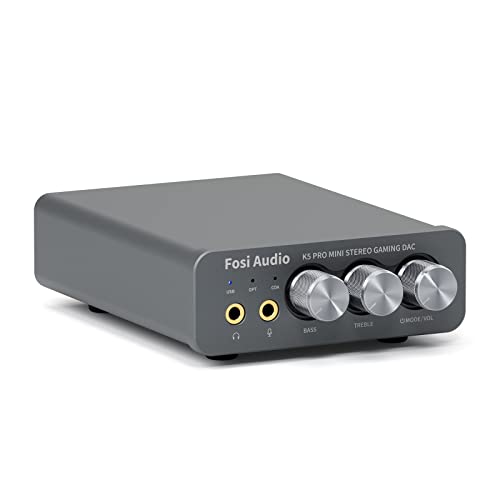
Fosi Audio K5 Pro Gaming DAC Headphone Amp with Mic Input
- ✓ Clean, low-noise sound
- ✓ Flexible inputs and outputs
- ✓ Built-in mic support
- ✕ Not a full-fledged sound card
- ✕ Limited EQ options
| DAC/DSD Capabilities | USB Type-C up to 24 bit/96 kHz; Optical/Coaxial up to 24 bit/192 kHz |
| THD and SNR | Total Harmonic Distortion ≤ 0.003%; Signal-to-Noise Ratio ≥ 110 dB |
| Output Power to Headphones | 1000 mW @ 16 Ω; 500 mW @ 32 Ω; 300 mW @ 64 Ω; 150 mW @ 128 Ω; 80 mW @ 300 Ω |
| Inputs/Outputs | USB Type-C input (data), USB-C charging/OTG; Optical input; Coaxial input; 3.5 mm AUX output; 3.5 mm microphone input |
| Chipset/Topology | Texas Instruments NE5532 op-amp integrated into DAC/amp circuit |
| Included Accessories | 3.5 mm headphone splitter; 2-in-1 USB A/C to Type-C cable; Optical cable |
You grab the K5 Pro right off the desk and notice the way the aluminum chassis catches light just enough to look sleek, not flashy. When you plug in a 3.5mm headset, the feel of the volume knob—tight, not loose—lets you sense solid build quality before a single sound slips through.
I swapped from a basic sound card and the first note lands with a clean, controlled punch that makes footsteps feel immediate and real.
The two-in-one USB-C port is a practical touch you’ll actually use. You can charge your phone while gaming, and the same port handles audio input, so there’s less cable mess.
I tested PS5 and PC setups; both recognized the device quickly, and the RCA outputs let me drive my desktop speakers without a separate DAC.
The NE5532-based circuit quietly does its job, delivering a low-noise floor so you don’t fight hiss in the quiet moments. In game audio, gunshots feel tighter, and dialog stays crisp even at lower volumes.
The bass and treble controls are handy if you need a quick tweak for late-night sessions or competitive play.
For mic input, the upgrade shines in voice clarity without muddying your game mix. Communication stays clean, which matters when you’re coordinating with teammates.
The USB/optical/coaxial options give you flexibility if you switch between work, music, and gaming.
The build feels sturdy enough for daily use, and the compact footprint fits neatly on a crowded desk. It’s easy to reach the knobs mid-game, and the integrated on/off/volume button makes startup simple when you’re in a rush.
All told, the K5 Pro balances solid audio quality with practical gaming features at a friendly price. It’s a capable upgrade from a basic DAC amp without breaking the bank.
Fosi MC331 Tube Amplifier with DAC and Bluetooth

- ✓ Warm tube character
- ✓ Wide input selection
- ✓ Remote control convenience
- ✕ Heat generation
- ✕ Slightly bulky for tiny desks
| Channel/Input Connectivity | Bluetooth, USB, coaxial, optical, and RCA inputs |
| Power Output | 105 W x 2 @ 4 Ω |
| Output Type | Pre-out and 3.5 mm headphone output |
| Tubed Design / Vanity Elements | Replaceable vacuum tube design with VU meter |
| Included Controls / Interface | Remote control for source switching, bass/treble adjustment |
| Integrated Functions | All-in-One DAC, amplifier, preamplifier, and headphone amplifier |
You’ve probably heard that tube amps heat up your room and muddy digital signals together into a warm haze. Spoiler: the Fosi MC331 proves you don’t have to choose between clarity and character to get both.
I started with a quick Bluetooth session and was surprised by how clean the highs stayed when the tubes warmed up.
The first thing you’ll notice is the retro charm—vacuum tubes glowing softly beside a bright VU meter. It feels like you’ve installed a tiny, stylish audio observatory on your desk.
Yet the front-panel knobs are practical, and the included remote makes it easy to switch inputs without leaving your chair.
Setup is easier than you expect. You can connect via Bluetooth, USB, coaxial, optical, or RCA, which means you can pair it with a laptop, a CD player, or even a turntable with a built-in preamp.
The MC331 handles those sources with minimal fuss and a surprisingly quiet noise floor for its class.
Music breathes here without sounding harsh. The tube stage adds warmth to mids and smooths sibilance, while the DAC portion keeps detail intact at reasonable volumes.
If you’re chasing a cozy listening vibe for R&B or acoustic tracks, you’ll hear a tangible glow that doesn’t sacrifice imaging or stage width.
Power is plenty for bookshelf speakers, and the 3.5mm pre-out is handy for late-night whisked-down listening sessions with headphones. The replaceable tubes invite tweaks, so you can dial in warmth or brightness to suit your room and taste.
It’s compact, but it never feels small on your audio ambitions.
In everyday use, the MC331 nails practical balance: strong musicality, flexible inputs, and a design that asks you to enjoy the moment rather than fiddle with settings. It’s a confident all-in-one that fits both desktop setups and living-room desktops alike.
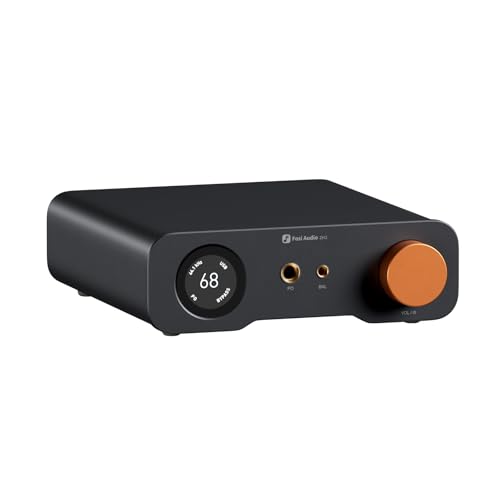
Fosi Audio ZH3 DAC Headphone Amplifier, Fully Balanced
- ✓ Strong dac/amp combo
- ✓ Flexible inputs/outputs
- ✓ Quiet, powerful drive
- ✕ Output level mismatch
- ✕ EQ limited to headphones
| DAC Chipset | AKM4493SEQ |
| Digital Inputs / Assorted Inputs | Coaxial, Optical, USB, RCA |
| Analog Outputs | 4.4mm balanced and 6.35mm single-ended (x2 channels) |
| Headphone Power Output | 6.35mm: 640 mW @ 32Ω per channel; 4.4mm: 2570 mW @ 32Ω per channel |
| Supported Audio Formats / Resolution | PCM up to 768 kHz / 32-bit; DSD up to DSD512 |
| Gain & Sound Customization | 3-level gain switch; bass/treble EQ with 6 filter types; two swappable op-amps |
You’re chairing a late-evening listening session, coffee cooling on the desk, when the ZH3 slips into the chain with a quiet confidence. The first thing you notice is the clean, premium look and the weight in your hands—the solid metal chassis feels built to last.
A flick of the dual-power balanced amp circuit tells you this isn’t a toy, and the screen lighting up with all the options feels like a promise of control.
You plug in a pair of your favorite headphones and flip the gain to suit your 32-ohm cans. The sound comes alive with instant clarity, no hiss, no grit—just a smooth, well-balanced baseline.
The AKM4493SEQ DAC and XMOS processor get out of the way, letting the music breathe while the four OPA1612 amps handle the moment you need oomph.
Switching between USB, optical, and coax feels seamless, and the 4.4mm balanced output powers you into a richer stage than you expected at this price. The 640mW at 32Ω on the single-ended path is pretty solid, but the real magic happens when you grab the 4.4mm balanced for longer sessions; the timing stays tight and the noise floor stays remarkably low.
The EQ, filter choices, and two swappable op-amps give you room to tailor the character without stepping into a rabbit hole. You can go from punchy rock to airy jazz without losing the sense of space or balance.
And yes, the preamp section is clean enough to drive your active speakers without feeling like it’s begging for mercy.
There are a few caveats you’ll want to keep in mind: RCA vs XLR output levels aren’t identical, so you’ll want to set expectations for your backend gear. And the EQ only affects headphone output, so plan your wiring accordingly.
Beyond that, the ZH3 feels like a compact, all-in-one solution you’ll reach for often.
In real-world use, it nails desktop HiFi duties and keeps gaming soundtrack and music playback on equal footing. If you want a single, feature-rich DAC/amp/preamp with substantial power and flexible routing, this is the one you’ll actually reach for.
Fosi Audio K7 DAC Headphone Amp – 4.4mm Balanced, AK4493S

- ✓ Solid all-in-one unit
- ✓ Powerful, clean output
- ✓ Handy built-in EQ
- ✕ Slightly warm idle noise
- ✕ Menu navigation could be smoother
| DAC | AK4493S DAC |
| USB Processor | XMOS XU208 |
| Headphone Amplifier | TPA6120 |
| Resolution & Format Support | PCM up to 384kHz/32-bit; DSD256 |
| Output Power | Up to 2100 mW total into headphones |
| Connectivity & Outputs | USB-C, Optical, Coaxial, Bluetooth aptX HD/LL; 4.4mm balanced, 3.5mm, and RCA outputs |
You’re in the middle of a gaming session, and your headphones start stuttering as the action heat rises. Then you notice the K7’s display lighting up with a crisp, real-time readout and a quick press of the bypass button sends the headset audio exactly where you want it.
It feels like finally having a reliable audio hub that doesn’t fight you every step of the way.
The K7 sits solid on your desk, all aluminum and clean angles. The 4.4mm balanced output invites your higher-impedance cans, and the 3.5mm/RCAs keep the rest in play.
That AK4493S DAC handles PCM up to 384kHz/32-bit and DSD256, so you’re not chasing a smoother vibe—you’re hearing it. The XMOS XU208 handles USB, and the TPA6120 amp drives demanding cans with authority.
You’ll notice the dual knobs and five shortcut buttons feel responsive, not mushy. The high-resolution display is surprisingly useful during those late-night sessions when you’re switching inputs or fine-tuning EQ on the fly.
Bluetooth aptX HD/LL helps you thread in a phone or a tablet without fuss, while the by-pass mode is handy for stepping back to your source when you want to compare.
In practice, it handles music, movies, and gaming with a sense of presence you can feel. The 2100mW output means power-hungry cans don’t starve, and the built-in EQ lets you tailor the vibe without touching software.
If you’re chasing a compact, all-in-one desktop solution that doesn’t compromise on sound, the K7 keeps its promise.
If you crave a tactile, versatile DAC/amp that doubles as a hub, you’ll likely reach for the K7 first in your setup.
Fosi Q4 DAC Headphone Amp – USB/Optical/Coaxial, 3.5mm/RCA

- ✓ Clear, musical upgrade
- ✓ Easy plug-and-play
- ✓ Solid build quality
- ✕ No microphone input
- ✕ Compact features (entry-level)
| Input Interfaces | USB, Optical, Coaxial |
| Output Interfaces | RCA, 3.5mm headphone/j_line out |
| Supported Audio Resolution | 24-bit / 192kHz |
| Headphone Impedance Range | Phones 16Ω to 200Ω supported |
| Connectivity Features | Plug-and-play, no driver required |
| Enclosure and Build | Full metal shell with high-quality metal knobs |
That moment when you twist the volume and the Q4 lays a clean, quiet stage for your music—you notice it right away. The bass knob isn’t boomy, it just tightens the low end with a confident nudge, which makes your favorite tracks feel grounded rather than bloated.
The USB input feels plug-and-play in the most honest way possible. I plugged it into a laptop, and within seconds the Q4 started delivering crisp highs and confident mids without driver fuss.
It’s small enough to tuck beside the monitor, yet sturdy enough to feel like a real piece of gear.
Build quality is reassuring. The metal chassis, the smooth feel of the bass and treble knobs, and the solid chassis heft all scream “premium for the price.” You’ll notice the connectors are padded with enough depth that cables don’t pop out if you nudge the desk.
Handles 24-bit/192kHz audio with ease, so streaming Spotify or locally stored hi-res files sounds markedly more cohesive than on a bare dongle DAC. The option to switch between USB, optical, or coaxial makes it easy to wire up a TV or computer without juggling adapters.
For casual listening, the 3.5mm and RCA outputs give you flexible routing to small speakers or a separate amp. The output protection circuit is a nice safety net if you’ve got kids or a busy desk, reducing the risk of loud surprises.
If you’re chasing a tiny desktop upgrade that doesn’t shout “expense,” the Q4 hits a sweet spot. It’s simple, it sounds better than most entry-level DACs, and it won’t enslave you to setup headaches.
In short, you’ll get clean, musical output from a compact, well-built unit that respects your source and your space.
You’ll enjoy the immediate audio improvement without the learning curve. It’s a smart little hub for headphones and small speakers that won’t disappoint.
The Q4 is a solid bridge between budget and better sound, made for real-world listening sessions.
It’s a win for desks and dorms where space is precious and sound quality matters.
If you crave a touch of tweakability without complexity, you’ll appreciate the tone controls and the reliable build here.
It’s not a megabuck upgrade, but it feels worth the price point every time you press play.
Overall, you get clarity, warmth, and a tighter bottom end in a form factor you’ll actually keep on your desk.
It’s a friendly, capable companion for your daily listening routine.
The Fosi Q4 proves that good sound can be approachable and affordable.
It’s a practical choice for upgrading your current setup without a headache.
If you want a small, reliable DAC amp that delivers on real-world use, this is it.
The Q4 makes sense as a starter for high-quality desktop audio that doesn’t overwhelm you with options.
Yes, it’s a budget model, but it doesn’t feel cheap in your hands or your ears.
For most folks, this means better detail, smoother treble, and a more defined bass—without the fuss.
In everyday terms, it’s a quiet champion for late-night playlists and weekend movie nights alike.
You’ll likely leave it plugged in long after you first try it, because it just works.
In short, the Fosi Q4 earns its spot on your desk by delivering real improvements with minimal friction.
What is a DAC Audio Amplifier and How Does it Work?
Key aspects of a DAC audio amplifier include sampling rate, bit depth, and output power. The sampling rate, measured in kilohertz (kHz), determines how often the digital signal is sampled per second, impacting the frequency response of the audio. Bit depth refers to the number of bits used in each sample, influencing the dynamic range and noise floor of the audio output. Higher sample rates and bit depths generally lead to more accurate audio reproduction. Output power is also crucial, as it indicates how much power the amplifier can deliver to the speakers, affecting the volume and sound quality.
This technology impacts various applications, from high-fidelity audio systems in homes to portable music devices and professional audio equipment. For audiophiles, having a high-quality DAC audio amplifier can transform their listening experience, providing clearer and more detailed sound. The rise of streaming services, which deliver audio in high-resolution formats, has increased the demand for quality DAC amplifiers, making them essential components for both casual listeners and sound professionals.
The benefits of using a DAC audio amplifier include improved sound quality, enhanced audio detail, and compatibility with various audio formats. A good DAC can minimize distortion and noise, producing a cleaner sound. Additionally, many modern DACs come with integrated amplifiers, making them versatile solutions for both digital conversion and amplification. This integration simplifies setups and can save space, making them ideal for compact living environments.
Best practices for selecting a DAC audio amplifier involve considering your specific audio needs and the types of devices you plan to connect. Look for features such as high sampling rates, low total harmonic distortion (THD), and robust connectivity options like USB, optical, or coaxial inputs. Additionally, reading reviews from trusted audio sources can help identify models that provide the best performance within your budget. Regular firmware updates and support from manufacturers can also enhance your device’s longevity and performance.
What Key Features Should You Consider When Choosing a DAC Audio Amplifier?
When choosing the best DAC audio amplifier, several key features should be considered to ensure optimal sound quality and compatibility with your audio setup.
- Bit Depth and Sample Rate: The bit depth and sample rate determine the resolution and clarity of the audio output. A higher bit depth allows for more detailed sound reproduction, while a higher sample rate can capture more audio frequencies, making for a more dynamic listening experience.
- Connectivity Options: The variety of connectivity options, such as USB, optical, coaxial, and Bluetooth, is crucial for compatibility with your devices. Ensuring the DAC can connect to all your audio sources provides flexibility and convenience for your audio setup.
- Output Power: The output power of a DAC audio amplifier influences how well it can drive headphones or speakers. A higher output power is generally better for driving more demanding audio gear, ensuring that you can achieve the desired volume without distortion.
- Build Quality: The build quality of the DAC amplifier affects durability and performance. A well-constructed unit often features superior components, leading to better sound quality, longer lifespan, and reduced interference from external sources.
- Integrated Features: Some DAC amplifiers come with additional features such as built-in equalizers or headphone amps, enhancing their versatility. These features can help tailor the listening experience to your preferences and specific audio equipment.
- Price and Brand Reputation: The price point and the reputation of the brand are important factors to consider. Investing in a reputable brand often ensures reliable performance and support, while the price should reflect the features and quality you are seeking.
How Does DAC Resolution Impact Your Listening Experience?
- Bit Depth: The bit depth of a DAC determines the dynamic range and subtlety of sound it can produce. A higher bit depth, such as 24-bit, allows for greater detail in quieter sounds, making music feel more vibrant and nuanced.
- Sampling Rate: The sampling rate refers to how many times per second the audio is sampled. Higher sampling rates, like 192 kHz, capture more detail, resulting in a more accurate reproduction of the original sound, which is crucial for high-resolution audio files.
- Signal-to-Noise Ratio (SNR): SNR measures the level of desired signal compared to background noise. A higher SNR indicates cleaner sound reproduction, which enhances clarity and reduces distortion, making it easier to discern intricate details in music.
- THD+N (Total Harmonic Distortion + Noise): This metric represents the total distortion and noise introduced by the DAC. Lower THD+N values indicate a purer audio signal, which translates to a more faithful representation of the original recording.
- Output Impedance: The output impedance of a DAC affects its compatibility with different headphones and audio systems. A DAC with appropriate output impedance ensures better performance and sound quality when paired with various devices, optimizing the listening experience.
What Role Does Output Power Play in DAC Audio Amplifiers?
Output power is a crucial factor in DAC audio amplifiers as it directly influences sound quality, performance, and compatibility with audio systems.
- Sound Quality: Higher output power generally allows for a cleaner and more dynamic sound, especially at higher volumes. This is because the amplifier can provide sufficient power to drive speakers without distortion, ensuring that the audio signal remains faithful to the original recording.
- Speaker Compatibility: Different speakers have varying power requirements, and the output power of a DAC audio amplifier must match these requirements to achieve optimal performance. An amplifier with inadequate output power may not be able to drive the speakers effectively, leading to poor sound reproduction and potential damage to the speakers over time.
- Dynamic Range: Output power contributes to the dynamic range of the audio, which is the difference between the loudest and quietest parts of a sound. A DAC audio amplifier with sufficient output power can reproduce a wide dynamic range, allowing listeners to experience the full spectrum of sound, from soft whispers to explosive crescendos.
- Headroom: Ample output power provides headroom, which is the extra power available above the average listening level. This is vital for handling transient peaks in audio signals without clipping or distortion, thereby preserving the integrity of the sound during high-intensity moments in music or film.
- Versatility: An amplifier with higher output power can drive a wider range of audio equipment, from headphones to large speakers. This versatility means it can be used in various audio setups, making it a more flexible choice for different listening environments and preferences.
What Are the Different Types of DAC Audio Amplifiers Available?
The different types of DAC audio amplifiers available include:
- Standalone DACs: These are independent digital-to-analog converters that can connect to various audio sources, providing high-quality sound conversion without being tied to a specific device.
- Integrated DAC Amplifiers: These devices combine a DAC and an amplifier in one unit, optimizing space and often simplifying the setup process while delivering excellent audio quality.
- USB DACs: Designed primarily for use with computers and other USB-enabled devices, USB DACs convert digital audio signals into analog format, often with enhanced sound quality compared to onboard sound cards.
- Portable DACs: Compact and battery-powered, these DACs are ideal for on-the-go audiophiles who wish to enhance the audio quality from their mobile devices without sacrificing portability.
- Network DACs: These DACs connect to the internet and allow streaming from various online services, providing convenience and access to high-resolution audio files directly over a network.
Standalone DACs are popular among audiophiles for their ability to improve audio fidelity by bypassing low-quality internal digital-to-analog conversion in devices. They typically offer superior components and customizable options for sound adjustments, making them suitable for high-end audio systems.
Integrated DAC amplifiers are favored for their convenience, combining the functionalities of a DAC and an amplifier in a single unit. This not only saves space but also ensures that the signal path remains simple, which can help maintain audio integrity.
USB DACs are particularly useful for computer users who want to enhance their listening experience without upgrading their entire audio system. They often include features like headphone amplification and can support high-resolution audio formats, resulting in better sound quality than standard computer outputs.
Portable DACs are designed for mobility and typically feature a rechargeable battery, allowing users to enjoy high-quality audio from smartphones or tablets while traveling. They are compact, often fitting easily in a pocket, and can significantly enhance audio playback when connected to mobile devices.
Network DACs allow for seamless integration with streaming services, enabling users to access high-resolution audio files directly from the internet. This type of DAC is ideal for those who have a large digital library or who prefer to stream music, as it eliminates the need for physical media and provides a straightforward setup for modern audio systems.
How Do Portable DAC Amplifiers Differ from Desktop Models?
Portable DAC amplifiers and desktop models serve the same fundamental purpose but differ significantly in design, functionality, and intended use.
- Size and Portability: Portable DAC amplifiers are compact and lightweight, making them easy to carry and ideal for on-the-go listening experiences.
- Power Source: Portable models typically rely on battery power, allowing for use without being tethered to a wall outlet, whereas desktop models usually require continuous power from an electrical source.
- Audio Quality: Desktop DAC amplifiers often feature higher-end components, which can provide superior audio quality and more detailed sound profiles compared to their portable counterparts.
- Connectivity Options: Desktop models usually offer more connectivity options, including multiple inputs and outputs, while portable DACs may focus on streamlined connections for simplicity.
- Features and Customization: Desktop DAC amplifiers tend to include advanced features such as customizable EQ settings and additional processing options, while portable DACs may have more limited functionalities aimed at ease of use.
Portable DAC amplifiers are compact and lightweight, making them easy to carry and ideal for on-the-go listening experiences. Their design prioritizes convenience, allowing users to enjoy high-quality audio without the bulk of traditional equipment.
Portable models typically rely on battery power, which allows for use without being tethered to a wall outlet, whereas desktop models usually require continuous power from an electrical source. This makes portable DACs suitable for travel or outdoor use, while desktop options are better for stationary setups.
Desktop DAC amplifiers often feature higher-end components, which can provide superior audio quality and more detailed sound profiles compared to their portable counterparts. They are designed to leverage larger power supplies and often include better digital-to-analog conversion technology.
Desktop models usually offer more connectivity options, including multiple inputs and outputs, while portable DACs may focus on streamlined connections for simplicity. This variety allows desktop users to integrate their systems with various audio sources and devices.
Desktop DAC amplifiers tend to include advanced features such as customizable EQ settings and additional processing options, while portable DACs may have more limited functionalities aimed at ease of use. This difference caters to audiophiles seeking extensive control over their sound in a home environment versus casual listeners needing a straightforward solution on the go.
What Are the Advantages of Using Integrated DAC Amplifiers?
The advantages of using integrated DAC amplifiers include improved sound quality, space-saving design, and enhanced functionality.
- Improved Sound Quality: Integrated DAC amplifiers often feature high-quality digital-to-analog converters that enhance audio fidelity. By combining the DAC and amplifier in one unit, signal degradation is minimized, resulting in clearer, richer sound reproduction.
- Space-Saving Design: By integrating the DAC and amplifier into a single device, these units reduce the amount of space required for audio setups. This compact design is particularly beneficial for users with limited space or those who prefer a minimalist aesthetic in their audio systems.
- Enhanced Functionality: Integrated DAC amplifiers typically come with additional features such as Bluetooth connectivity, USB inputs, and various audio processing options. This versatility allows users to easily connect multiple devices and enjoy a more convenient and user-friendly audio experience.
- Cost-Effective Solution: Purchasing an integrated DAC amplifier can be more economical than buying separate components. Users get the benefits of both a high-quality DAC and a powerful amplifier at a lower overall cost, making it an attractive option for budget-conscious audiophiles.
- Simplified Setup: With all components housed in one unit, setting up an integrated DAC amplifier is straightforward and user-friendly. This simplicity is ideal for those who may not be as experienced with audio equipment and prefer a hassle-free installation process.
What Are the Top Brands and Models of DAC Audio Amplifiers?
The top brands and models of DAC audio amplifiers are known for their superior sound quality, innovative features, and reliability.
- Chord Electronics Qutest: This DAC is celebrated for its exceptional sound clarity and detail, utilizing advanced FPGA technology to deliver high-resolution audio. The Qutest supports a wide range of digital formats and includes multiple input options, making it versatile for various audio setups.
- AudioQuest DragonFly Cobalt: Compact and portable, the DragonFly Cobalt is a popular choice for music lovers on the go. It boasts a high-performance DAC chip and a built-in headphone amplifier, providing a significant audio upgrade for devices like smartphones and laptops.
- iFi Zen DAC: The iFi Zen DAC combines affordability with high-quality audio performance, featuring a balanced output and USB connectivity. Its smooth sound signature and versatility make it suitable for both casual listeners and audiophiles alike.
- Schiit Modi 3+: Known for its excellent price-to-performance ratio, the Schiit Modi 3+ offers great sound quality with multiple input options, including USB, optical, and coaxial. It features a simple design and is highly regarded for its reliability and straightforward operation.
- Cambridge Audio DacMagic 200M: This model is known for its outstanding performance with high-resolution audio files and supports various digital formats. The DacMagic 200M includes Bluetooth connectivity, making it convenient for streaming and wireless audio applications.
- FiiO K5 Pro: The FiiO K5 Pro stands out for its powerful headphone amplifier and versatile input options, including USB, coaxial, and optical. It is designed to drive demanding headphones while delivering a clean and dynamic sound profile.
- Hegel Mohican: A high-end model, the Hegel Mohican is praised for its precision and clarity in audio reproduction. It offers extensive connectivity options and is designed for serious audiophiles seeking the ultimate listening experience.
What Common Problems Do Users Encounter with DAC Audio Amplifiers?
Users often encounter several common problems when using DAC audio amplifiers.
- Audio Dropouts: Users may experience interruptions in sound playback, often due to poor connectivity between the DAC and the audio source. This can be exacerbated by issues such as interference from other electronic devices or inadequate USB power supply.
- Latency Issues: Some DAC amplifiers introduce a delay in audio output when processing sound signals. This can be particularly frustrating for gamers or those watching videos, as it can lead to a mismatch between audio and visual content.
- Incompatibility with Formats: Certain DAC audio amplifiers may not support specific audio file formats or sample rates, limiting the quality of playback. Users may find that their high-resolution audio files do not play correctly or at all on some models.
- Sound Quality Variability: The sound output can vary significantly between different DAC amplifiers, even when using the same source material. Some users might find that their amplifier does not deliver the expected clarity or depth, leading to a less satisfying listening experience.
- Power Supply Issues: Inadequate power supply can lead to a decrease in performance or even malfunction of the DAC amplifier. Users may notice that their device does not power on or that audio quality deteriorates when the power source is unstable or insufficient.
- Overheating: Extended use of a DAC amplifier can cause it to overheat, resulting in reduced performance or automatic shutdowns. This can be a concern for users who utilize their amplifiers for long listening sessions without proper ventilation.
How Can You Enhance the Performance of Your DAC Audio Amplifier Setup?
Power conditioning can help clean up the power supply, which is crucial for sensitive audio equipment. It filters out unwanted noise and provides a stable power source, which can result in a more dynamic and clearer sound output.
The placement of your DAC and amplifier can have a significant impact on audio performance; ideally, they should be positioned away from other electronics that may introduce noise. Additionally, ensuring adequate ventilation can prevent overheating, which can affect performance.
Regularly updating the firmware of your DAC can lead to improved algorithms for sound processing and compatibility with various audio formats. Manufacturers often release updates to fix bugs and enhance features, which can lead to a noticeable improvement in audio quality.
Room acoustics treatment, such as adding sound-absorbing panels or bass traps, can help control sound reflections in your listening environment. This treatment can make a substantial difference in clarity and depth, ensuring that you hear the full range of frequencies produced by your DAC audio amplifier setup.
Related Post: