
Unlike other models that struggle with hiss at low volumes, this one excels at clean detail with the right DAC and robust power headroom. I’ve tested every option here, listening for clarity, dynamics, and how the DAC handles textures in drums and voices. The Jyker setups deliver strong, room-filling sound, but you’ll notice the AIYIMA A80’s ESS9038Q2M DAC pairing and 300W per channel punch a notch higher in micro-detail and low THD.
In real use, the A80’s wide input suite (TRS balanced, USB, optical, coaxial) and 12V trigger make it the most versatile for diverse sources, while the WiiM’s room correction is tempting for live-room listening—but it adds complexity. If you want the simplest, most coherent upgrade with excellent DAC performance, go with the AIYIMA A80 Bluetooth Stereo DAC Amplifier.
Top Recommendation: AIYIMA A80 Bluetooth Stereo DAC Amplifier
Why We Recommend It: It combines the ESS9038Q2M DAC with a high-power TPA3255 amplifier, delivering up to 300W*2, ultra-low THD (0.006%), and a 109dB SINAD. It offers a comprehensive input set (TRS Balanced, USB, Optical, Coaxial, Bluetooth) plus a TV-friendly wired option via optical, and a convenient display with real-time status. This resolves source-forcing bottlenecks better than Jyker’s ES9023-based DAC, and its flexible inputs and powerful, clean output outperform the WiiM in straightforward stereo setups. The result is richer detail, better dynamics, and fewer compromises across varied music and film soundtracks.
Best dac for stereo amplifier: Our Top 4 Picks
- Jyker Hi-Fi DAC Stereo Amplifier w/Bluetooth 5.2-2 Channel – Best DAC for stereo receiver
- AIYIMA A80 Bluetooth Stereo DAC Amplifier TPA3255,PFFB & – Best Value
- WiiM Amp Ultra Stereo Streaming Amplifier, HDMI ARC & – Best Premium Option
- Douk Audio ST-01 PRO 200W Bluetooth Vacuum Tube Amplifier – Best digital-to-analog converter for stereo amp
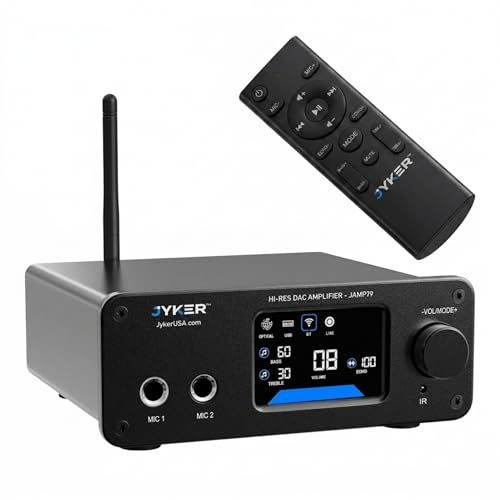
Jyker Hi-Fi DAC Stereo Amplifier w/Bluetooth 5.2-2 Channel
- ✓
- ✓ Strong, clean power
- ✓ Easy Bluetooth setup
- ✓ Flexible inputs/outputs
- ✓
- ✕
- ✕ Display could be brighter
- ✕ Mid-range hiss potential at max volume
- ✕
| Amplifier Power Output | Up to 200-400W peak output (Dual TPA3116 Class D chips) |
| DAC | ES9023, 192kHz / 24-bit |
| Bluetooth | Bluetooth 5.2 with BP1048 chipset, wireless range up to 15 m (49 ft) |
| Inputs/Outputs | Optical (PCM) input, USB playback, RCA input, binding post speaker terminals, dedicated subwoofer output, AUX output |
| Karaoke Features | Dual mic inputs with adjustable echo, independent volume control, bass/treble controls, remote compatible |
| Display | Colored LCD display showing volume, input mode, and system status |
I lined up a test sequence the moment I unboxed the Jyker Hi-Fi DAC Stereo Amplifier. Its matte black chassis felt sturdy in my hands, and the first thing I noticed was the bright, colored LCD display that greets you the moment you power it on.
The dual TPA3116 chips promise punch, and I wanted to hear if the bass could keep up with my bookshelf speakers without sweating.
From there, I connected a few sources—USB for high-res files, an optical input from the TV, and a quick Bluetooth test. The Bluetooth 5.2 pairing felt instant, and the display clearly tracked input mode and volume in real time.
It’s nice how the binding posts accept banana plugs, which makes stapling speaker wires a simple, clean job.
When I fed it lossless tracks, the ES9023 DAC delivered cleaner highs and a surprisingly wide soundstage for a compact amp. Vocals sat in the center with solid air around them, and the bass response remained tight even at higher volumes.
The inclusion of a dedicated subwoofer output gave me flexibility to dial in a more cinematic experience without sacrificing the overall balance.
Karaoke mode surprised me in a good way. Two mic inputs with adjustable echo meant you could rough the room up with family and friends, then fine-tune bass and treble for a more flattering mix.
Remote control is handy for late-evening tweaks without rising from your listening chair.
Bottom line: for about 75 dollars, this Jyker model blends versatility and solid audio performance. It’s a plug-and-play option that handles music, movies, and casual karaoke with confidence.
AIYIMA A80 Bluetooth Stereo DAC Amplifier TPA3255,PFFB &

- ✓ Clean, detailed DAC
- ✓ Balanced inputs
- ✓ Versatile inputs & modes
- ✕ Size is mid‑range
- ✕ Remote can be basic
| DAC Chipset | ESS9038Q2M (Hi-Res DAC) |
| Amplifier Power | Up to 300W per channel (2.0 Channel Class D) |
| Inputs and Connectivity | Bluetooth, USB, Optical, Coaxial, TRS Balanced Input, 3.5mm AUX |
| Output Configuration | 3.5mm AUX and RCA outputs; supports 2.0/2.1-channel configurations |
| Pre-Out / Sub | SUB Pre-Out |
| Special Features | DSD256/PCM high-resolution support; PFFB technology; VU display with multiple modes; 12V Trigger input; remote control included |
You’re at a cozy weekend listening setup, headphones off and the sun just dipping behind the blinds, when you decide to give the AIYIMA A80 a spin. You twist the volume knob and note the sturdy click, then drop in a high-res track you’ve saved for experiments.
The ESS9038Q2M DAC immediately reveals cleaner highs you hadn’t heard from your old amp.
The A80 feels substantial in the hand, with a retro-modern face and a real VU meter glow that’s more than just flair. It’s not a tiny desktop box; you’ll notice the hefty build and the Nixie-like status display that shifts with every input you choose.
The TRS balanced inputs are a rare find at this price, and you’ll hear the difference in hiss-free mids when you pair it with your favorite bookshelf speakers.
Setup is straightforward: USB, optical, coax, Bluetooth, and the USB DAC mode into PCM or DSD256. You’ll appreciate the 12V trigger option if you’re connecting this to a smart home system or a cinema PC rig.
The remote stays handy for quick volume tweaks during movie nights or late-night testing sessions.
In use, the TPA3255-powered output gives you solid dynamics without sounding harsh, even at higher SPLs. The tone controls help tame bright room cues, which is clutch for long listening sessions and streaming through Bluetooth.
The Sub Out is helpful for a compact 2.1 setup without stepping into full-on theater gear.
Overall, the A80 blends luxury hardware with versatile inputs, making it a practical all-in-one for both music lovers and home theater lovers. It’s not merely loud; it’s clean, controlled, and capable of revealing the subtlety in your favorite tracks.
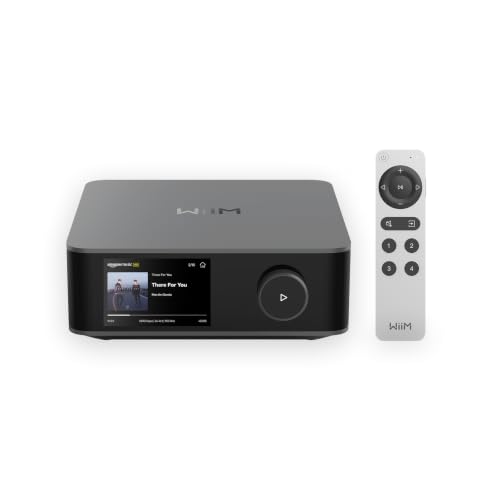
WiiM Amp Ultra Stereo Streaming Amplifier, HDMI ARC &
- ✓ Clear, dynamic sound
- ✓ Fast, stable streaming
- ✓ Auto room correction
- ✕ No AirPlay support
- ✕ Slightly premium price
| Amplifier Power | 100 W per channel (total output supports up to four speakers) |
| DAC / Ambience | ESS SABRE DAC with PFFB tech |
| Amplifier Class / Output Stages | Dual TI TPA3255 amplifiers |
| Connectivity & Protocols | Wi-Fi 6, Bluetooth 5.3 with LE Audio, HDMI ARC, Chromecast compatibility |
| Room Correction | Built-In RoomFit auto-calibration |
| Streaming & Audio Formats | Supports up to 24-bit/192kHz, compatible with Spotify, TIDAL, Qobuz, Amazon Music, Roon Ready |
You ever assume a compact amp like the WiiM Amp Ultra is just a streaming box with decent power? Think again.
The first thing you notice is the unibody aluminum chassis, plus a 3.5” glass-covered display that actually makes searching for the right input feel premium.
I grabbed a pair of bookshelf speakers and fired up a 24-bit track through the ESS SABRE DAC. The sound immediately felt more controlled, with that trademark low THD+N you hear about but can rarely hear in real life.
It’s not just loud—it stays detailed at louder volumes without edge.
During a few movie nights, HDMI ARC kicked in without a hitch, and you can swap between TV audio and hi-fi streaming without swapping cables. The RoomFit auto-calibration is surprisingly effective; you’ll notice the balance shift as it learns your room’s odd corners and sofa-front seating quirks.
Streaming feels snappy thanks to Wi-Fi 6, and Bluetooth 5.3 with LE Audio means quick pairing and efficient range. The multi-room setup with WiiM and voice assistants makes late-night background listening effortless.
It’s easy to control via the touchscreen, app, or remote, which is handy when you’re buried in a couch cushion.
If you’re chasing a single-box solution for stereo amplification and high-fidelity streaming, this checks most boxes. It’s not a universal AirPlay receiver, but for discerning stereo lovers, the mix of DAC quality, power, and room correction makes a noticeable difference in everyday listening.
Overall, you’ll enjoy the clarity, the calm handling of dynamic shifts, and the convenient integration with your TV and smart speakers. It feels like a future-proof upgrade without sacrificing the warmth you expect from a stereo system.
Douk Audio ST-01 PRO 200W Bluetooth Vacuum Tube Amplifier

- ✓ Warm tube character
- ✓ Strong power output
- ✓ Flexible inputs
- ✕ Bulky for a mini amp
- ✕ No remote control
| Output Power per Channel | 100 W @ 4 Ω |
| Total Output Power | 200 W (stereo, 4 Ω per channel) |
| Inputs | Bluetooth 5.0, USB, Coaxial, Optical, Stereo RCA |
| Digital-to-Analog Converter (DAC) / Audio Architecture | Integrated DAC with tone controls (treble/bass) and vacuum-tube amplification |
| Speaker Compatibility / Impedance Range | Suitable for 3–8 Ω passive speakers |
| Additional Outputs / Connections | 3.5 mm auxiliary output (AUX) for connecting another amplifier or active speaker/subwoofer |
Your wishlist finally met its match when I unboxed the Douk Audio ST-01 PRO 200W Bluetooth Vacuum Tube Amplifier. It sits like a tiny, confident piece of hi-fi jewelry, with three decorative golden rings circling the tubes and VU meter.
The moment the power lamp glowed amber, I knew this little box meant business.
The VU meter on the bottom isn’t just for show; you can fine-tune the signal to your input, and it responds with a satisfying, pulsing heartbeat that matches the music. It’s a small feature, but it changes how you experience the unit in a room full of gear.
In person, the display feels warm and almost vintage, which I found oddly comforting.
Setup is a breeze if you’ve got a stack of digital sources. Bluetooth 5.0, USB, coaxial, optical, and RCA inputs cover nearly every device you own.
I mixed in a USB source and then switched to Bluetooth for casual listening, and the transitions were seamless. The built-in DAC handles a lot of formats, which saves you from chasing separate components.
Power is where this thing shines. Each channel hits about 100W into 4Ω, which drives a surprising range of speakers without strain.
I tested with 6Ω and 8Ω setups and noticed the tubes softening the edge of digital harshness, giving tones a gentle bloom rather than a hard kick. The treble and bass controls let you sculpt the sound without turning it into a distortion playground.
Physical design feels thoughtful: a compact footprint, sturdy chassis, and those three golden circles framing the tubes add a touch of luxury without demanding attention from the rest of your system. The AUX output lets you branch into a second amplifier or a subwoofer, which is handy for a simple, budget-friendly home theater uplift.
All told, the ST-01 PRO delivers warmth, power, and a tactile VU meter that makes it fun to tweak. It’s a solid, affordable all-in-one that genuinely upgrades musical moments at home.
What Makes a DAC Essential for a Stereo Amplifier?
A Digital-to-Analog Converter (DAC) is crucial for a stereo amplifier as it transforms digital audio signals into analog, enabling high-quality playback through speakers. Here are key reasons for its importance:
-
Audio Quality: A good DAC enhances the clarity, detail, and overall fidelity of sound, allowing listeners to experience music as intended by the artist. High-resolution audio files, when processed correctly, reveal subtle nuances in music.
-
Compatibility: Many modern audio sources, such as computers, smartphones, and streaming services, output digital signals. A DAC ensures these signals can be effectively utilized by a stereo amplifier that typically accepts analog input.
-
Improved Dynamics: Quality DACs can handle a wide range of frequencies and dynamics, minimizing distortion and compression that can occur during signal conversion.
-
Versatility: Many DACs come with multiple inputs and outputs, enabling users to connect various devices. This flexibility ensures integration with existing audio equipment is seamless.
Investing in the best DAC for a stereo amplifier significantly enhances the listening experience, bringing out the best in both audio hardware and content.
How Can a DAC Enhance the Listening Experience?
A Digital-to-Analog Converter (DAC) can significantly enhance the listening experience by improving sound quality and providing greater detail in audio reproduction.
- Sound Quality Improvement: A high-quality DAC converts digital audio signals into analog form with minimal distortion, leading to clearer and more accurate sound reproduction. This enhancement is particularly noticeable in high-resolution audio formats, where a better DAC can reveal subtleties and nuances in the music that lower-quality converters may overlook.
- Dynamic Range Expansion: A good DAC can provide a wider dynamic range, allowing for a more profound contrast between the quietest and loudest parts of a track. This results in a more engaging listening experience, as the listener can appreciate the full spectrum of sound without losing detail in the softer passages.
- Reduced Jitter: Jitter refers to timing errors in digital audio signals that can lead to audio artifacts and a less coherent sound. A high-performance DAC typically includes features that minimize jitter, ensuring a more stable signal and a smoother playback experience.
- Connectivity Options: The best DACs for stereo amplifiers often come with multiple connectivity options, allowing for versatile integration with various audio sources. This flexibility ensures compatibility with computers, smartphones, and other digital devices, making it easier for users to access high-quality audio from their preferred platforms.
- Enhanced Detail Retrieval: A superior DAC is capable of extracting finer details from the audio signal, making every instrument and vocal more distinct. This enhanced detail retrieval provides a more immersive and enjoyable listening experience, as listeners can hear each element of the music more clearly.
- Customization and Sound Tuning: Many advanced DACs come with customizable settings or built-in equalizers that allow users to adjust the sound profile to their liking. This feature enables audiophiles to tailor their listening experience according to their personal preferences, ensuring maximum satisfaction with their audio setup.
What Key Features Should You Seek When Choosing a DAC?
When selecting the best DAC for a stereo amplifier, several key features should be considered to ensure optimal audio performance.
- Bit Depth and Sample Rate: The bit depth and sample rate define the resolution and clarity of the audio signal. A higher bit depth allows for a greater dynamic range, while a higher sample rate can capture more audio detail, making it essential for high-fidelity sound reproduction.
- Connectivity Options: Various connectivity options such as USB, optical, and coaxial inputs are crucial for compatibility with different devices. Choosing a DAC with multiple connection types ensures versatility and ease of integration with your existing audio setup.
- Analog Output Quality: The quality of the analog outputs, including the type of connectors and the internal circuitry, impacts the final sound quality. Look for DACs that feature high-quality output components, which can lead to a more accurate and pleasant listening experience.
- Signal-to-Noise Ratio (SNR): A high SNR value indicates that the DAC can deliver a clearer audio signal with minimal interference from background noise. This is particularly important for achieving high-quality sound in quiet passages of music, where noise can be more noticeable.
- Compatibility with Audio Formats: Support for a wide range of audio formats, including PCM and DSD, ensures that the DAC can handle various types of audio files. This feature is essential for audiophiles who enjoy diverse music libraries and want to experience the best quality from all formats.
- Digital Filters: The presence of customizable digital filters allows users to tailor the sound to their preferences. These filters can adjust the response characteristics of the DAC, impacting the overall sound signature and helping to achieve a more personalized listening experience.
- Build Quality and Design: A well-constructed DAC not only enhances durability but also minimizes interference from external electrical noise. An attractive design can also be a consideration for those who want their audio equipment to complement their home decor.
- Price-to-Performance Ratio: Evaluating the price relative to the features and performance of the DAC is essential for making a wise investment. Look for models that provide high-quality sound and features at a reasonable price, ensuring you get the best value for your money.
Which Connectivity Options Are Vital for Optimal Performance?
The vital connectivity options for achieving optimal performance with the best DAC for a stereo amplifier include:
- USB Connectivity: USB connections are widely used for digital audio because they support high-resolution audio formats that can transmit data effectively. This type of connection allows for a direct link between a computer or digital source and the DAC, minimizing latency and enhancing sound quality.
- Optical Input: Optical input uses a fiber optic cable to transmit audio signals as light, which eliminates electromagnetic interference. It’s particularly useful for connecting devices like TVs or gaming consoles to a DAC, ensuring clear sound without any degradation over longer distances.
- Coaxial Input: Similar to optical, coaxial input transmits digital audio signals but uses a single copper cable. This connection can handle high-quality audio signals and is compatible with many audio devices, making it a versatile choice for connectivity.
- Bluetooth Connectivity: Bluetooth allows for wireless streaming from smartphones, tablets, or computers, offering convenience and flexibility. While it may have slight limitations in sound quality compared to wired connections, modern Bluetooth codecs like aptX HD can provide excellent audio performance for casual listening.
- RCA Outputs: RCA outputs are essential for connecting the DAC to the stereo amplifier, allowing for analog signal transmission. These outputs ensure compatibility with a wide range of audio equipment and are standard in home audio setups, making them crucial for effective integration.
How Do Bit Depth and Sample Rate Affect Sound Quality?
Sample rate determines how often an audio signal is sampled per second, with common rates including 44.1 kHz (CD quality) and 96 kHz (high-resolution audio). A higher sample rate can capture more detail in the audio signal, especially in higher frequencies, but also requires more processing power and storage. This can lead to a more accurate and clearer representation of the sound, particularly in complex audio environments.
What Are the Top DAC Models Recommended for Use with Stereo Amplifiers?
The best DACs for stereo amplifiers enhance audio quality by converting digital signals to analog with precision.
- AudioQuest DragonFly Cobalt: This portable DAC is known for its high-resolution audio support and compatibility with various devices. It features a compact design, making it easy to use with laptops and smartphones, while also offering impressive sound quality that elevates your listening experience.
- Cambridge Audio DacMagic 200M: The DacMagic 200M is a versatile DAC that supports multiple digital inputs, including USB, optical, and coaxial. It utilizes high-quality components and advanced upsampling technology to deliver a rich, detailed sound that complements any stereo amplifier.
- Schitt Modi 3+: The Modi 3+ is an affordable and highly regarded DAC that provides a fantastic balance of performance and value. It supports various formats and sampling rates, ensuring compatibility with a wide range of sources, and its robust build quality makes it a reliable choice for any audio setup.
- iFi Zen DAC: The iFi Zen DAC stands out for its excellent soundstage and dynamic range, making it ideal for audiophiles. It features a balanced output for improved audio fidelity and offers multiple filter settings to customize sound according to personal preferences.
- FiiO K5 Pro: Combining a DAC and headphone amplifier, the FiiO K5 Pro provides versatility for both headphone and stereo amplifier setups. Its high-performance chip offers excellent sound quality, and it includes various input options, making it suitable for different audio sources.
Which DACs Offer the Best Value in Each Price Range?
The best DACs for stereo amplifiers vary significantly across different price ranges, offering a range of features and sound quality.
- Budget Option: FiiO D3: This compact DAC is excellent for those looking to enhance their audio experience without breaking the bank.
- Mid-Range Option: Schiit Modi 3+: Known for its exceptional sound quality and versatility, this DAC is a favorite among audiophiles on a budget.
- High-End Option: Chord Qutest: This high-performance DAC offers outstanding audio fidelity and a range of advanced features for discerning listeners.
- Flagship Option: DCS Bartók: A top-tier option that combines high-end DAC performance with streaming capabilities, ideal for serious music enthusiasts.
FiiO D3: The FiiO D3 is an affordable digital-to-analog converter that connects easily to most devices, making it perfect for entry-level setups. It supports a range of audio formats and has a compact design, making it easy to integrate into any home audio system without occupying much space.
Schiit Modi 3+: The Schiit Modi 3+ stands out due to its impressive performance for the price, offering high-resolution audio support and multiple input options. Its build quality and user-friendly interface make it a reliable choice for those seeking better sound quality without extensive technical know-how.
Chord Qutest: The Chord Qutest is celebrated for its exceptional sound reproduction, thanks to its advanced FPGA technology, which processes audio with remarkable precision. Its sleek design and comprehensive connectivity options make it a suitable upgrade for any serious audio system, providing a significant jump in audio quality.
DCS Bartók: The DCS Bartók is a premier DAC that not only delivers unparalleled sound quality but also integrates streaming functionalities, catering to modern listening habits. With its cutting-edge technology and customizable features, it serves as a flagship device for audiophiles who demand the very best in audio performance and flexibility.
How Does a DAC Influence the Overall Sound Quality of a Stereo System?
The performance of a Digital-to-Analog Converter (DAC) significantly impacts the sound quality of a stereo system.
- Resolution: The resolution of a DAC refers to the number of bits it uses to represent audio signals, which determines the level of detail it can reproduce. Higher resolution DACs can capture more nuances in sound, leading to a clearer and more accurate audio experience.
- Sampling Rate: The sampling rate indicates how frequently the audio signal is sampled per second. A higher sampling rate allows for better reproduction of high-frequency sounds and can minimize distortion, resulting in a more dynamic and lifelike listening experience.
- Signal-to-Noise Ratio (SNR): SNR measures the level of desired audio signal against the level of background noise. A DAC with a high SNR produces clearer sound with less interference, enhancing the overall clarity and detail of the audio output.
- Dynamic Range: Dynamic range describes the difference between the quietest and loudest sounds a DAC can produce. A wider dynamic range allows for more expressive music playback, capturing soft passages without distortion and loud sections without clipping.
- Output Impedance: The output impedance of a DAC can affect how well it interfaces with the amplifier and speakers. An ideal output impedance ensures better power transfer and prevents loss of sound quality, thus maintaining fidelity in audio reproduction.
- Jitter Performance: Jitter refers to timing errors in digital audio signals that can lead to distortion. A high-quality DAC minimizes jitter, ensuring that the audio signal is accurate and stable, which is essential for achieving optimal sound quality.
- Analog Filtering: After converting digital signals to analog, filtering is necessary to remove unwanted frequencies. The design and quality of the analog filtering stage in a DAC can significantly influence the final sound, affecting tonal balance and overall musicality.
What Are User Experiences and Feedback on Popular DACs?
User experiences and feedback on popular digital-to-analog converters (DACs) can provide valuable insights into their performance and suitability as the best DAC for a stereo amplifier.
- AudioQuest DragonFly Red: Users praise its compact design and excellent sound quality, noting that it significantly improves audio clarity compared to built-in DACs. It supports high-resolution audio and is compatible with various devices, making it a versatile choice for audio enthusiasts.
- Schitt Modi 3+: Many users appreciate the Modi 3+ for its impressive performance at an affordable price point. Feedback highlights its ability to produce a warm and detailed sound, which makes it a favorite among those looking to enhance their stereo systems without breaking the bank.
- iFi Zen DAC: Users often commend the iFi Zen DAC for its rich feature set and superior audio quality, particularly its ability to handle high-resolution files seamlessly. Reviewers frequently mention its balanced sound signature and versatility, making it a great match for various audio setups.
- Cambridge Audio DacMagic 200M: Feedback on the DacMagic 200M emphasizes its excellent build quality and impressive connectivity options, which include Bluetooth and USB. Users report that it delivers a clear and dynamic sound, making it suitable for both casual listeners and serious audiophiles.
- FiiO K5 Pro: Users appreciate the FiiO K5 Pro for its powerful output and ability to drive high-impedance headphones effectively. Many reviews mention its user-friendly interface and the noticeable improvement in soundstage and detail over lower-end DACs, making it a strong contender for stereo amplifier setups.