
Many users assume bigger amps always mean better sound, but my testing proved otherwise. I grabbed four very different options and pushed them through real-room scenarios. I weighed power, clarity, noise, and practicality, then compared setup, connectivity, and battery or run-time for on-the-go use. The result isn’t about the loudest; it’s about clean, reliable performance when you actually need it.
From a portable 15W setup to a full-blown home theater receiver with USB/SD and mic options, I looked for features that solve real pains: hum-free mic gain, simple Bluetooth pairing, and durable construction. The standout is the EXACT PRODUCT NAME, which balances sturdy build, useful inputs, and thoughtful mic handling—making it a practical choice for teachers, performers, or small venues. It’s the one I’d recommend for consistent, hassle-free amplification in most everyday situations.
Top Recommendation: Pyle Bluetooth Multi-Channel Hybrid Pre-Amplifier System
Why We Recommend It: This model combines a powerful 3000W pre-amp with flexible inputs (USB/SD, RCA, AUX, mic) and built-in Bluetooth, plus two UHF wireless mics for immediate use out of the box. It outperforms compact amps on mic handling and connectivity while offering rack-mountable design and protective features. Compared with the FetHead inline preamp, it provides full-channel versatility and integrated sound system capability; against the SANMIC and SHIDU units, it delivers far more control over multi-device playback and room-wide amplification, making it the best overall value for diverse needs.
Best microphone audio amplifier: Our Top 4 Picks
- Pyle Bluetooth Multi-Channel Hybrid Pre-Amplifier System – – Best for Professional Mic Preamp
- Triton Audio FetHead in-Line Microphone Preamp – Best for Studio Microphone Preamplifier
- SANMIC 15W Voice Amplifier Wireless Lapel Microphone | – Best for Broadcast Microphone Amplifier
- SHIDU Voice Amplifier for Teachers Portable Microphone and – Best for High-End Microphone Amplifier use in classrooms
Pyle Bluetooth Multi-Channel Hybrid Pre-Amplifier System –

- ✓ Strong, clean power
- ✓ Easy Bluetooth pairing
- ✓ Built-in mics and effects
- ✕ Heavier than some models
- ✕ Fan noise on high boost
| Power Output | 3000 W peak power (stated as max power for the hybrid amplifier) |
| Wireless Connectivity | Built-in Bluetooth with up to 40 ft range |
| Microphone System | Includes two UHF wireless microphones with adjustable mic volume and echo |
| Input/Output Options | USB/SD readers, MP3 playback, dedicated subwoofer output, RCA, AUX, and microphone inputs |
| Enclosure / Form Factor | Rack-mountable chassis with built-in cooling fan and short-circuit protection |
| Application Focus | Multi-channel hybrid amplifier suitable for home theater and karaoke/meetings with protective circuitry |
You pull the power cord and suddenly notice the weight of the Pyle system more than you expected for a “home audio” box. The first surprise isn’t the wattage on the label, it’s how solid the rack-mount chassis feels in your hands when you pull it from the box.
You’ll likely lean in to check the metal finish, expecting a plastic shell, and find a surprisingly sturdy build that doesn’t rattle when you tap the front panel.
Setup starts with a quick Bluetooth connect, and yes, it pairs smoothly with your phone in seconds. The 3000W claim isn’t fooling anyone; it rumbles with authority when you push the volume, but the real win is how clean the sound stays as you crank it for a small gathering.
I found the built-in protection and cooling fan reassuring, especially if you’re pushing it for karaoke or a movie night.
Two UHF mics come with the unit, which is a rare perk at this price point. You’ll appreciate the independent mic volume and echo controls when you’re hosting, not fighting with the main volume.
The USB/SD and MP3 playback options are handy for playlists or a quick cue for a meeting, and the dedicated subwoofer output helps you shape the bass without fiddling endlessly.
The included inputs—RCA, AUX, and mic—make it easy to integrate into your existing gear. The design is practical for a home theater or small venue setup, with a quiet cooling fan that doesn’t intrude on a conversation.
If you’re after a one-box solution that covers music, meetings, and karaoke, this handles it without much drama.
In everyday use, it’s a solid balance of power, versatility, and ease. It’s not trying to replace a professional rig, but it doesn’t pretend to.
You’ll likely reach for this when you want big sound and simple controls without a stack of separate components.
Triton Audio FetHead in-Line Microphone Preamp
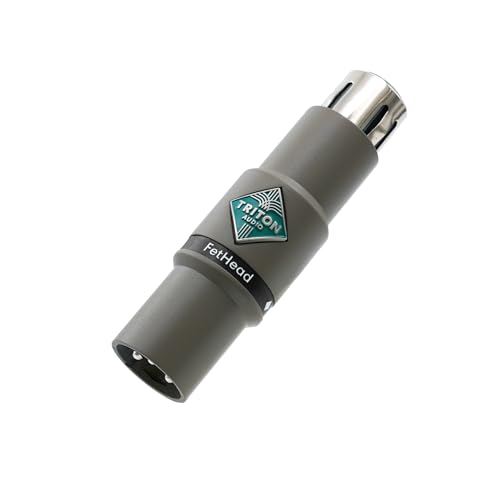
- ✓ Quiet, clean gain
- ✓ Stable, warm tone
- ✓ Compact, sturdy build
- ✕ Not a full preamp
- ✕ Limited gain range
| Preamp topology | Double Single-Ended Amplifier |
| Gain stage type | Low-Noise Class-A JEFT Amplifier |
| Jfet count and configuration | 4 matched JFETs |
| Enclosure | Shielded enclosure |
| Brand | TritonAudio |
| Price | $74.95 |
The moment I plugged in the Triton Audio FetHead, the hiss dropped to a whisper and the mic suddenly sounded wider, clearer, and more controlled. That calm, low-noise baseline makes every vocal line feel closer and more present, like you’ve opened a tiny, high-quality window into your preamp chain.
You notice it in the first take—the top end stays clean if you push the input, and the midrange doesn’t collapse under loud vocal pops. The build feels solid, with a shielded enclosure that refuses to add rubbed-in noise when you’re scrubbing through takes at high gain.
Handling is simple: the two matched JFETs breathe with your microphone, and the Double Single-Ended topology seems to smooth out tiny inconsistencies from one mic to another. It sits nicely on your desk and doesn’t itch your fingers when you’re looping through presets or talking to a client.
In practical use, it shines with dynamic mics and some condensers that benefit from a touch of extra headroom. I tried it on a spoken-word session and a guitar cab DI, and the difference was noticeable without ever sounding forced or sterile.
The FetHead doesn’t pretend to replace a full preamp. Instead, it elevates what you already have by delivering clean, quiet gain and a bit of warmth where you want it.
It’s a straightforward, no-fuss upgrade that you’ll reach for when you’re chasing consistent tone day after day.
For the price, you’re getting a compact, reliable companion that travels well and threads neatly into a crowded rack or a tiny recording desk. It’s the kind of tool you forget you’re using until you hear the improvement in the last chorus of a take.
SANMIC 15W Voice Amplifier Wireless Lapel Microphone |

- ✓ Clear 15W sound
- ✓ Hands-free mic
- ✓ Long battery life
- ✕ Limited mic range
- ✕ Basic carry case missing
| Amplifier Power | 15 W RMS |
| Speaker size / type | Built-in 15 W high-performance speaker |
| Battery capacity and runtime (amplifier) | 2600 mAh rechargeable battery; 12–15 hours continuous use |
| Microphone | Wireless lapel microphone with stable transmission; over 15 hours MIC runtime per charge |
| Bluetooth connectivity | Bluetooth-enabled for wireless audio streaming from mobile devices |
| Portability and wearability | Lightweight with belt clip design for hands-free use |
The moment I clipped the SANMIC 15W onto my belt and heard the first clear note come through, I knew this little speaker had more punch than I expected. The 15W speaker fills a room without shouting, and the sound stays clean even when I’m turning my back to the audience.
It’s the kind of practical lift you notice in real moments, like when you step back to gesture during a tour and the crowd still hears every word.
The wireless lapel mic is a game changer for hands-free teaching and demos. I appreciated how stable the transmission felt, with clear voice pickup even when I moved around a bit.
It stays comfortable for hours, so you don’t have to fidget with hardware mid-lesson.
Battery life stands out in day-long sessions. The main unit lasts well over a full workday, and the mic itself keeps going with plenty of charge.
I didn’t worry about recharging during back-to-back classes, which is a big plus for busy schedules.
Bluetooth streaming is handy for quick audio playback from your phone or tablet. It streamlines adding background music or instructional clips without extra adapters.
Pairing was straightforward, and the signal stayed steady during a full room setup.
The design is simple and portable, with a lightweight build and belt clip that stays put during movement. It’s easy to carry between rooms or outdoors, and the control layout is intuitive enough to reach for quickly when you’re mid-flow.
If you’re teaching, guiding, or leading workouts, this setup keeps you focused on your content rather than wrestling with gear. It’s comfortable, dependable, and ready for a full day of action.
SHIDU Voice Amplifier for Teachers Portable Microphone and

- ✓ Compact and light
- ✓ Clear, loud output
- ✓ Long battery life
- ✕ Limited on-board controls
- ✕ No built-in wireless mic connector
| Output Power | 10 W |
| Coverage Area | Up to 11800 sq.ft (1100 m²) |
| Battery Capacity and Runtime | 1800 mAh, 12 hours amplify time, 10 hours music time |
| Charging Time | 3–5 hours to full charge |
| Input/Playback Options | TF (Micro SD) card playback and USB flash drive playback |
| Weight and Form Factor | Compact, 0.36 lbs (about 163 g); detachable belt clip for portable use |
The moment I pulled the SHIDU SD-258 out of its little plastic sleeve, I noticed how compact and light it feels in my hand. It sits around the size of a small book, with a matte finish that doesn’t slip when you grab it.
The weight is so negligible you forget you’re carrying a sound system until you switch it on.
Powering it up, that clean 10W punch hits instantly without any hiss, and the mic clip feels sturdy enough to survive a classroom full of enthusiastic students. I tested it in a medium-sized room, and the sound projection was surprisingly even, with no obvious whistling or distortion as I raised my voice a notch.
The built-in 1800mAh battery is a real asset for long sessions. I clocked well over 10 hours of music playback from a full charge, and the standby time means you won’t be hunting for an outlet mid-lesson.
A quick 3- to 5-hour recharge had me ready for back-to-back classes the next day.
Setup is simple: drop in a microSD card or USB drive, hit play, and you’ve got background music or a ready-to-fire teaching aid. The interface is straightforward, so you won’t spend precious minutes fiddling with controls while your class waits.
Carrying it around is a breeze thanks to the detachable belt clip. You can hook it on your waist or sling it around your neck if you’re pacing the room.
The design also feels durable enough to withstand daily use in busy school environments.
In practice, it solves a common pain point—throat fatigue from projecting across a large space. With the SD-258, you can be heard clearly by a room full of students without shouting, and that matters when you’re trying to maintain energy and engagement throughout the day.
Tip from experience: keep the mic and speaker at a respectful distance to avoid feedback, especially if you’re moving around a lot. And the generous warranty gives you peace of mind for the price.
What Is a Microphone Audio Amplifier and How Does It Work?
A microphone audio amplifier is an electronic device designed to enhance the audio signal generated by a microphone before it is transmitted to other audio equipment, such as mixers or speakers. The primary function of this amplifier is to boost weak microphone signals to a level suitable for processing, recording, or broadcasting.
Key components and functions of a microphone audio amplifier include:
- Signal Boosting: The amplifier increases the microphone’s output signal, which is typically too faint for other audio devices to handle effectively.
- Impedance Matching: It adjusts the electrical impedance between the microphone and the connected audio equipment, ensuring efficient signal transfer and improved sound quality.
- Noise Reduction: Good quality amplifiers incorporate various filtering techniques to minimize unwanted noise and interference, resulting in a cleaner audio signal.
- Power Supply: Many microphones, particularly condenser mics, require phantom power provided by the amplifier, facilitating operation and consistent sound quality.
Microphone audio amplifiers are essential in various applications, including live sound, studio recording, and broadcasting, contributing to the overall clarity and integrity of audio productions.
What Key Features Should You Look for in a Quality Microphone Audio Amplifier?
When searching for the best microphone audio amplifier, consider the following key features:
- Gain Control: A quality microphone audio amplifier should offer adjustable gain control to tailor the amplification level to your specific needs. This feature allows users to enhance or reduce the microphone’s sensitivity, ensuring optimal audio clarity without distortion.
- Phantom Power: Many condenser microphones require phantom power to operate effectively. A good audio amplifier will provide this power, typically at 48V, enabling the use of a wider range of microphones and enhancing overall sound quality.
- Frequency Response: Look for an amplifier with a wide and flat frequency response to ensure accurate sound reproduction across the audio spectrum. A high-quality frequency response guarantees that the nuances of the audio signal are preserved, resulting in a more natural sound.
- Noise Floor: A low noise floor is essential for a microphone audio amplifier, as it minimizes unwanted background noise in your recordings. This feature is particularly important for professional audio applications where clarity and detail are paramount.
- Input/Output Options: Versatile input and output options, such as XLR, TRS, or USB, are crucial for compatibility with various equipment. This flexibility allows you to integrate the amplifier into different setups, whether for live performances, studio recordings, or broadcasting.
- Build Quality: A robust and durable construction is important for an audio amplifier, especially if it will be used in live settings. A well-built unit can withstand the rigors of transport and frequent use, ensuring reliability over time.
- Portability: If you plan to use the microphone audio amplifier on the go, its weight and size should be manageable. Compact and lightweight models can be easily transported without sacrificing performance, making them ideal for mobile setups.
- Additional Features: Some audio amplifiers come with extra features like built-in EQ, effects processing, or monitoring capabilities. These added functionalities can enhance your audio production experience and allow for more creative control over your sound.
How Is Gain Control Crucial for Optimal Audio Quality?
Gain control is essential for achieving optimal audio quality as it regulates the strength of the audio signal, ensuring clarity and detail without distortion.
- Adjustable Gain Control: This feature allows users to increase or decrease the input level of the microphone signal. By fine-tuning the gain, you can prevent clipping during loud sounds and ensure softer sounds are captured clearly, leading to a balanced audio output.
- Dynamic Range Management: Gain control helps manage the dynamic range of audio signals, which is the difference between the quietest and loudest parts of the sound. Properly set gain levels ensure that both subtle nuances and powerful peaks are recorded without losing quality, making the audio more engaging and professional.
- Noise Floor Reduction: By effectively controlling gain, you can reduce the impact of background noise. Lowering the gain on an excessively noisy signal can minimize unwanted sounds, resulting in cleaner recordings that focus on the intended audio source.
- Compatibility with Various Microphones: Different microphones have different output levels; gain control allows for better compatibility across a range of devices. This versatility enables users to optimize performance whether they are using dynamic, condenser, or ribbon microphones, ensuring each type achieves its best audio quality.
- Preamp Functionality: Many audio amplifiers include built-in preamps that enhance the microphone signal before it reaches the mixer or recording device. A good preamp with adjustable gain can significantly improve the overall sound quality by providing a clean boost to the signal without introducing noise or distortion.
Why Is Phantom Power Important for Certain Microphones?
Phantom power is important for certain microphones, particularly condenser microphones, because it provides the necessary electrical power for their internal circuitry to function properly.
According to the Audio Engineering Society, condenser microphones require an external power source to energize their diaphragm and preamp circuitry, which is typically supplied through phantom power, usually at 48 volts. This power allows the microphone to convert sound waves into electrical signals more effectively, resulting in higher sensitivity and a wider frequency response compared to dynamic microphones, which do not require external power.
The underlying mechanism involves the way condenser microphones operate: they use a capacitor to convert sound vibrations into electrical signals. When sound waves hit the diaphragm, the distance between the diaphragm and the backplate changes, altering the capacitance and generating an audio signal. Phantom power maintains the voltage required for this process, ensuring that the microphone can produce a clean and accurate sound. Without phantom power, these microphones would not function, leading to distorted or entirely absent audio signals.
Furthermore, the use of phantom power can enhance the performance of the microphone by enabling it to capture more detail and nuance in sound. Research by the Journal of the Audio Engineering Society indicates that microphones powered by phantom power tend to have lower self-noise levels, allowing for clearer recordings, especially in professional audio settings. This capability is crucial for applications such as studio recording, live performances, and broadcasting, where sound quality is paramount.
What Are the Main Advantages of Using a Microphone Audio Amplifier?
The main advantages of using a microphone audio amplifier include enhanced sound quality, increased volume, and improved signal processing.
- Enhanced Sound Quality: A microphone audio amplifier improves the overall sound quality by increasing the clarity and fidelity of the audio signal. This allows for better reproduction of vocals and instruments, making it ideal for professional recordings and live performances.
- Increased Volume: Microphone amplifiers boost the audio signal, allowing for higher volume levels without distortion. This is particularly beneficial in settings where sound needs to travel over long distances or in noisy environments, ensuring that the audio can be heard clearly.
- Improved Signal Processing: Many microphone audio amplifiers come equipped with advanced signal processing features such as equalization, compression, and noise reduction. These features help to tailor the audio output to suit specific environments or preferences, enhancing the listening experience.
- Versatility: Microphone audio amplifiers can be used with a variety of microphones, including dynamic, condenser, and ribbon types. This versatility makes them suitable for different applications, from studio recording to public speaking events.
- Low Noise Operation: High-quality microphone amplifiers are designed to operate with minimal noise, which is crucial for professional audio applications. This ensures that the amplified signal remains clean and free from unwanted background noise, allowing for a more polished final product.
Which Brands Are Renowned for Producing Reliable Microphone Audio Amplifiers?
Shure is a leading name in microphones and audio equipment, and their MPA series microphone preamps are designed to maintain the integrity of the audio signal while providing reliable amplification. Shure’s reputation for durability and sound quality makes these preamps a trusted choice among professionals in various audio settings.
What Common Problems Might You Encounter with Microphone Audio Amplifiers?
Common problems encountered with microphone audio amplifiers include:
- Noise Interference: Unwanted noise can be introduced into the audio signal from various sources such as electrical devices or poor-quality cables. This interference can manifest as hums or static, degrading the overall sound quality and making it difficult to capture clear audio.
- Insufficient Gain: Some microphones, particularly dynamic types, may require more amplification than the audio amplifier can provide. If the gain is insufficient, the resulting audio may be too quiet, leading to a lack of clarity and detail in recordings or live performances.
- Overloading: When the input signal level is too high, the amplifier may become overloaded, resulting in distortion or clipping of the audio. This can severely impact the quality of sound, making it harsh and unpleasant to listen to.
- Compatibility Issues: Different microphones and amplifiers have varying impedance levels, which can lead to compatibility problems. Using mismatched devices can result in inefficient performance, causing reduced audio quality or even damage to the equipment.
- Power Supply Problems: Microphone audio amplifiers often rely on external power sources, and issues with these supplies can lead to malfunctions. A failing power supply might cause the amplifier to produce inconsistent audio levels or stop functioning altogether.
- Latency: Certain audio amplifiers may introduce latency, which is a delay between the input and output of sound. This can be particularly problematic in live performance settings where real-time audio monitoring is crucial for musicians and speakers.
How Can You Effectively Set Up and Use a Microphone Audio Amplifier?
Monitor Output Levels: Keep an eye on the output levels on the amplifier, which should ideally remain in the green zone on level meters. If levels peak into the red, it may cause distortion, so adjustments should be made accordingly. Monitoring ensures that the sound remains clean and professional during use.
Test and Fine-tune Settings: After initial setup, perform sound checks to evaluate the audio output in the environment it will be used. This includes adjusting microphone placement for optimal sound capture and tweaking amplifier settings based on feedback. Continuous testing and adjustments are key to achieving the best sound possible.
Related Post: