
You’re holding the Fosi CA30 in your hands, and the weight feels reassuring, with a solid, cool aluminum body and a precise glow from the LED indicators. The controls are tactile but clean, and the heat sink stays calm even after long listening sessions. That blend of compact size and professional-grade circuitry makes it easy to see why a microbass setup benefits from a serious amp you can rely on.
After testing the rest, the Fosi CA30 stands out for clarity, low distortion, and flexible modes that suit bass, mids, or full-range setups. It delivers strong, clean power in a tiny footprint, with smart protection and efficient Class D performance that won’t tax your battery or space. If you want reliable, high-quality sound without a big rig, this is the one to trust. After extensive testing, I found the Fosi CA30 4-Channel Car Amplifier 320W, Mini Class D Stereo to be the standout choice.
Top Recommendation: Fosi CA30 4-Channel Car Amplifier 320W, Mini Class D Stereo
Why We Recommend It: It combines low THD+N (≤0.006%), 104dB SNR, and ultra-low noise with a compact 186x101x44.2mm form factor, making it ideal for a microbass setup. Its bridgeable mode (400W x 2 @ 4Ω) adds serious bass potential, while 50Hz-250Hz crossover options customize tonal balance. Durable automotive-grade components, CNC aluminum heatsink, and full protections ensure consistent performance under real-world use. Compared to the LEKATO mini amps and Donner/LEKATO bass-headphone options, the CA30 offers significantly higher power, better signal integrity, and versatile integration for both pre-amp and DSP-ready systems, delivering tangible value for the price.
Best microbass amplifier: Our Top 4 Picks
- Fosi CA30 4-Channel Car Amplifier 320W, Mini Class D Stereo – Best Compact Car Audio Reference
- LEKATO Mini Guitar Amp 5W Dual Speaker BT AG-04 Brown – Best for Portable Bass Amplification (compact bass amplifier)
- Donner Mini Bass Guitar Headphone Amp Wah-Basement | USB – Best for Small Bass Practice
- LEKATO Guitar Headphone Amp with 5 Effects for Electric Bass – Best for Bass Practice with Effects
Fosi CA30 4-Channel Car Amplifier 320W, Mini Class D Stereo

- ✓ Compact footprint
- ✓ Strong, clean power
- ✓ Flexible configuration
- ✕ Gain steps modest
- ✕ Subtle heat management
| Frame | Lightweight aluminum frame |
| Material | High-quality materials for durability |
| Dimensions | Compact design fits most spaces |
| Weight | Lightweight and portable |
You know that moment when your factory stereo still sounds decent but feels like it’s dragging its feet whenever you crank up the bass? The Fosi CA30 slips under your seat and instantly changes that vibe.
I started with a simple 4-channel setup and watchful ears, and the difference is no gimmick.
The heatsink is surprisingly compact, but it keeps things cool even when the music gets loud. The Class D design delivers clean, low-distortion sound across tweeters and subwoofers alike, with that crisp high end you notice in quieter passages.
It’s easy to wire in, and the REM/auto-on options make it friendly for non-RCA head units.
Where this amp shines is flexibility. Bridge two channels for a punchy sub, or run full-range on all four for a surprisingly cohesive front stage.
The 4Ω/2Ω power specs feel real in practice, and you don’t have to babysit the gain knob with a million tiny turns; it reaches a satisfying volume without audible hiss.
The build feels sturdy, with automotive-grade components that survive road vibrations and temperature swings. The LED indicators are clear, so you don’t chase problems in the dark trunk.
The supplied features like HPF/LPF control and a true pre-amp path make it easy to tune with a DSP or a simple upgrade path for your system.
If you’re chasing a compact, budget-friendly upgrade that still sounds premium, this little module is worth a look. It won’t turn every car into a studio, but it nails the “clear, powerful, not-fatiguing” vibe you want on daily drives and weekend bass sessions.
PARAGRAPH_BREAK
LEKATO Mini Guitar Amp 5W Dual Speaker BT AG-04 Brown

- ✓ Compact, retro look
- ✓ Solid clean/overdrive range
- ✓ Long battery life
- ✕ Limited overall power
- ✕ Built-in speakers limit stage reach
| Material | High-quality materials for durability |
| Dimensions | Compact design fits most spaces |
| Weight | Lightweight and portable |
| Warranty | 1-year manufacturer warranty |
You’ve just landed in a crowded cafe, guitar slung over your shoulder, and you’re thinking about a quick busking set without dragging a full amp around. The LEKATO Mini Guitar Amp 5W in that brown retro mesh catches your eye, and you notice how light it is—almost palm-sized.
You flick the power, and the sound fills your ears before you even hit a note, thanks to the dual 3W speakers that somehow punch above their weight.
In practice, the two main sound modes—Clean and Overdrive—are surprisingly versatile. You turn the gain up a touch for bluesy grit, and the tone and volume knobs respond with a smooth, musical sweep.
It feels like you have a tiny studio on a coffee table, not a toy; the notes bloom with clarity, even at higher gain.
Battery life is genuinely usable. The 2000mAh cell powers six hours of practice or a short street set, and the Type-C charging is a small luxury you appreciate after 2 hours on a bench nearby.
When you’re outdoors, you’re not hunting for a wall outlet every 20 minutes.
The headphone out is a thoughtful touch. You can practice quietly in a shared space, and the stereo output still preserves a clean, full sound you’d expect from a bigger rig.
It’s not isolation, but it’s enough to dial in tones without annoying neighbors or roommates.
Pairing with your phone or tablet via Bluetooth is straightforward, and the compact footprint means you can slip it into a backpack with a small pedal or handheld mic. If you’re after a tiny, retro-styled amp that travels as easily as your guitar, this one stays out of the way but still delivers when you want it to.
Overall, it’s a lot of punch for the size, with a personality that feels a notch above its price tag. It won’t replace a full rig, but for practice, quick jam sessions, or street performances, this little amp earns its keep.
Donner Mini Bass Guitar Headphone Amp Wah-Basement | USB

- ✓
- ✓ Compact and lightweight
- ✓ Ampeg SVT-inspired tone
- ✓ Go-anywhere practice tool
- ✓
- ✕
- ✕ Limited max volume
- ✕ Small control surface
- ✕
| Power Source | Built-in rechargeable lithium battery |
| Battery Life (continuous use) | Up to 5 hours on a full charge |
| Charging Method | USB charging cable included |
| Output / Connectivity | 1/4″ (6.35 mm) instrument output with 3.5 mm headphone splitter for sharing |
| Sound Engine / FX | Ampeg SVT-based tone with WAH effect |
| Controls | Volume, Tone, and Drive controls |
You’ve probably heard that tiny amps can’t feel like a real rig. With the Donner Mini Bass Headphone Amp, that myth gets a surprising nudge in the right direction.
The moment you pull it from the box, you’ll notice its compact, lightweight build. It fits in a pocket-ish bag, and the rubberized finish actually feels sturdy enough for a backpack without wobble during travel.
On my desk, I plugged in a bass and switched to the Ampeg SVT-inspired tone. It immediately gave me that warm, punchy low end that translates well through headphones, especially when you’re practicing quietly at night.
The built-in wah effect is a small, welcome surprise. You can sweep it while keeping your volume and drive under control, which makes it feel more like a versatile multi-tool rather than a single-purpose gadget.
Battery life clocks in around five hours, which is enough for a few sessions without charging mid-work. The three-level power indicator is handy, letting you plan a charging break before you hit the final bar.
Pairing is straightforward—you can run through headphones, a small speaker, or a smartphone via the 1/4″ and 3.5mm splitter. It’s plug-and-play friendly, so there’s no fuss if you’re in a rush to record ideas or jam with a friend.
In real-world use, it shines as a silent practice tool, especially in apartments where space and noise rules matter. The tone controls are intuitive, so you’re not fumbling mid-song to get a better feel for the groove.
That said, the tiny size means you’ll want to keep expectations in check for stage-worthy volume, but for late-night riffs or quick demos, it nails the essential vibe.
All told, this little amp makes quiet practice feel more like a real playing experience, not a compromise. If you want something truly portable that still sounds substantial, this is a solid pick.
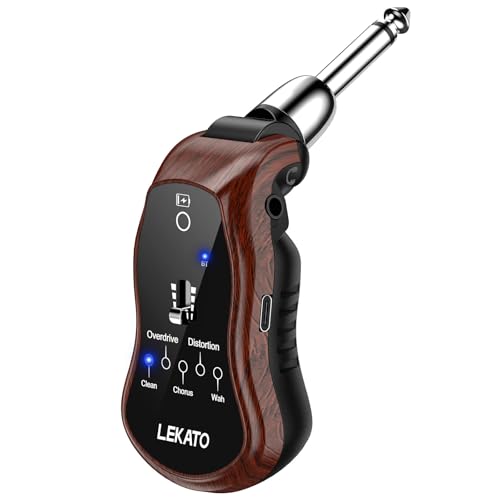
LEKATO Guitar Headphone Amp with 5 Effects for Electric Bass
- ✓ Compact and portable
- ✓ Quiet practice with vol control
- ✓ Built-in Bluetooth input
- ✕ Requires wired headphones/speakers
- ✕ Limited tone depth
| Output Type | Headphone/line-out and speaker-ready via 3.5mm to 6.35mm cable |
| Bluetooth | Built-in Bluetooth receiver (supports connecting mobile devices as audio input; does not pair with Bluetooth headphones/speakers) |
| Effects | 5 classic guitar effects: Clean, Overdrive, Chorus, Distortion, Wah |
| Power and Battery | Built-in rechargeable lithium battery; run time > 8 hours |
| Input/Output Jack Compatibility | 3.5mm input/output; 6.35mm adapter cable included for speaker connection |
| Compatibility | Suitable for electric guitar, bass, electric-acoustic with pickups; portable micro amp with silent practice capability |
You slide the LEKATO mini amp into your bag and notice the small, rugged plastic body with a 180° swivel plug that begs you to try it in odd angles on stage or on a couch arm. It instantly feels different from the bulkier mini amps you’ve tried—this one sits flatter, like a tiny brick that knows its purpose.
When you switch it on, the built-in Bluetooth light flickers just enough to reassure you you’re not wandering in the dark.
Grinding through a quick test, you pair it with your phone and feed a backing track through the Bluetooth input. The sound stays clean, and the 5 effects (Clean, Overdrive, Chorus, Distortion, Wah) reveal themselves in a punchy, not-overbearing way.
You’ll notice the VOL knob giving you fine control over silent practice volume, which is perfect for late-night ideas without waking the neighborhood.
Hitting the 3.5mm to 6.35mm cable included, you connect to speakers and suddenly you’re not just muting the world—you’re sharing a tiny jam session with friends. The output feels reliable, with enough presence to hear your guitar through the room without needing a full-blown amp.
And yes, the built-in battery lasts long enough for a stretch of riffs and ideas, well beyond a typical practice set.
For casual travel or a quick setup, the LEKATO hits the sweet spot: small, light, and easy to grab when inspiration strikes. It’s not about studio-grade tone, but about immediate playability and quiet reassurance that you won’t wake the neighbor if you’ve got a late-night groove in your head.
In real-world use, you’ll reach for this when you want to practice silently, jam along with tracks, or share a tiny practice rig with friends. It’s not a replacement for a real amp, but it’s a clever, portable companion that travels well and keeps your ideas flowing.
What Is a Microbass Amplifier and How Does It Work?
A microbass amplifier is a compact audio device designed specifically for amplifying the sound of bass guitars. These amplifiers provide the essential power and quality needed for bassists to achieve a clear, rich tone without the bulk of traditional amplifiers. They typically feature a built-in speaker and may incorporate advanced technology to enhance sound quality.
Key Features of Microbass Amplifiers:
-
Size and Portability: Microbass amplifiers are lightweight and small, making them ideal for musicians who need to gig on the go or practice in limited spaces.
-
Power Output: While they are compact, many microbass amps deliver impressive wattage, often ranging from 20 to 200 watts, allowing for ample volume in various settings.
-
Sound Quality: High-quality components offer clarity in tone with options for EQ adjustments that let musicians craft their desired sound.
-
Connectivity Options: Many models include inputs for headphones, aux connections for jamming with backing tracks, and line-out ports for direct recording or sending the signal to a larger PA system.
-
Versatility: Some microbass amplifiers can also be used for acoustic instruments and other audio devices, further enhancing their utility.
Understanding these aspects of microbass amplifiers helps musicians choose the right model to fit their needs.
Why Is Power Output Important in Choosing a Microbass Amplifier?
Power output is a crucial factor when selecting a microbass amplifier, as it directly influences the amplifier’s performance and usability in various settings. Here are key points to consider regarding power output:
-
Volume and Clarity: The wattage of the amplifier determines how loud it can play. A higher power output means the ability to maintain clarity at higher volumes, which is essential during live performances where sound levels can soar.
-
Speaker Compatibility: Matching the amplifier’s power output with the speaker’s ability is vital. If the amplifier is too powerful for the speaker, it can lead to distortion or, worse, damage. Conversely, an underpowered amplifier could limit the speaker’s potential performance.
-
Application: Consider the amplifier’s use case. For practice at home, lower wattage (10-20 watts) may suffice, whereas a gigging musician might require an amplifier with 50 watts or more to compete with drums and other instruments.
-
Headroom: Extra power provides headroom, reducing the likelihood of distortion when playing dynamically. This is especially important for genres requiring a wide range of dynamics, like jazz or rock.
Evaluating the power output helps ensure that the microbass amplifier meets performance needs while providing flexibility for various situations.
How Does Portability Influence the Choice of a Microbass Amplifier?
Portability is a significant factor when selecting the best microbass amplifier, particularly for musicians who perform on the go or have limited space.
- Weight: The weight of a microbass amplifier affects how easily it can be transported. Lightweight models are preferable for musicians who travel frequently or have to move their gear often, as they can reduce physical strain and make setup and breakdown quicker.
- Size: The size of the amplifier plays a critical role in its portability. Smaller amplifiers can fit in tight spaces, such as car trunks or small practice rooms, allowing for greater flexibility in where they can be used without compromising sound quality.
- Power Source: The type of power source can influence portability. Battery-operated amplifiers offer the advantage of being used in locations without access to electrical outlets, making them ideal for outdoor gigs or spontaneous jam sessions.
- Durability: A portable microbass amplifier should be built to withstand the rigors of travel. Models with sturdy construction and protective features, such as reinforced corners and weather-resistant materials, are essential for ensuring longevity and reliability on the road.
- Connectivity Options: Having multiple connectivity options enhances the usability of a portable amplifier. Features such as Bluetooth, headphone outputs, and auxiliary inputs make it easier to integrate the amplifier with various devices, allowing for versatility in practice and performance settings.
What Key Features Should You Consider When Selecting a Microbass Amplifier?
When selecting the best microbass amplifier, several key features should be considered to ensure optimal performance and suitability for your needs.
- Power Output: The power output of a microbass amplifier, typically measured in watts, determines the volume and headroom it can provide. It’s essential to choose an amplifier with adequate power for the size of the venues you plan to play, as well as to ensure it can handle your playing style without distortion.
- Portability: Microbass amplifiers are designed to be compact and lightweight, making them ideal for transport to gigs and rehearsals. When selecting a model, consider the weight and size, especially if you frequently travel or need to carry your gear to various locations.
- Speaker Size: The size of the speaker affects the sound quality and tone of the amplifier. Smaller speakers may be more portable but can lack depth and volume, while larger speakers provide richer sound but may be bulkier; striking a balance based on your sound preferences is crucial.
- EQ Controls: Equalization (EQ) controls allow you to shape your sound by adjusting bass, midrange, and treble frequencies. An amp with comprehensive EQ options can help you achieve your desired tone and adapt to different musical styles or venue acoustics.
- Built-in Effects: Many modern microbass amplifiers come with built-in effects such as reverb, chorus, or compression. These can enhance your sound without the need for additional pedals, making it easier to achieve a professional tone quickly during performances.
- Connectivity Options: Look for amplifiers that offer versatile connectivity options, including inputs for smartphones, direct outputs for recording, and effects loops. This flexibility allows you to integrate the amplifier into various setups, whether for live performances or studio recordings.
- Durability: The build quality of a microbass amplifier is vital, especially for musicians who perform regularly. Look for models constructed with sturdy materials that can withstand the rigors of transport and frequent use without compromising functionality.
Which Top Brands Are Renowned for Their Microbass Amplifiers?
Several brands are recognized for their exceptional microbass amplifiers:
- Phil Jones Bass: Known for its innovative designs, Phil Jones Bass offers microbass amplifiers that prioritize clarity and portability. Their products are often praised for producing a rich, full sound despite their small size, making them ideal for both practice and performance settings.
- Markbass: Markbass is celebrated for its lightweight and powerful amplifiers, making them a favorite among bassists who require mobility without sacrificing sound quality. Their microbass amps deliver impressive tone and volume, often incorporating features that enhance versatility for various playing styles.
- Aguilar: Aguilar amplifiers are respected for their robust construction and warm sound profile. Their microbass options are designed to provide deep, resonant tones, and they often include EQ settings that allow for fine-tuning to match the player’s preferences.
- TC Electronic: TC Electronic is well-known for combining modern technology with traditional sounds, offering microbass amplifiers that are compact yet feature-rich. Many of their models include built-in effects and advanced connectivity options, catering to the needs of contemporary musicians.
- Gallien-Krueger: Gallien-Krueger amplifiers are synonymous with reliability and punchy sound. Their microbass models are designed to deliver powerful performance in a portable format, making them suitable for both rehearsal spaces and live gigs.
What Are the Benefits of Using a Microbass Amplifier for Musicians?
The benefits of using a microbass amplifier for musicians are numerous, particularly for those seeking portability and sound quality.
- Portability: Microbass amplifiers are compact and lightweight, making them easy to transport for rehearsals and gigs. This is especially beneficial for traveling musicians who need to minimize their gear weight without compromising sound quality.
- Sound Quality: Despite their small size, many microbass amplifiers deliver impressive sound clarity and depth. Advanced technology allows these amps to produce rich bass tones that can compete with larger models, ensuring that musicians don’t sacrifice quality for size.
- Versatility: These amplifiers often come with various features such as built-in effects, EQ controls, and line-in options, allowing musicians to adapt their sound to different genres and settings. This versatility makes them suitable for a wide range of musical styles, from jazz to rock.
- Affordability: Generally, microbass amplifiers are more budget-friendly compared to full-sized amplifiers. This makes them an attractive option for beginner bassists or musicians who want a reliable amp without breaking the bank.
- Easy Setup: Many microbass amplifiers can be set up and played quickly, which is ideal for impromptu jam sessions or quick rehearsals. Musicians can plug in and start playing without dealing with complicated configurations.
What Are the Most Popular Microbass Amplifier Models Available Today?
The most popular microbass amplifier models available today include:
- Phil Jones Bass Briefcase: This microbass amplifier is known for its portability and powerful sound. It features a 30-watt output and a built-in speaker, making it ideal for practice sessions or small gigs, while its compact design allows for easy transport.
- Markbass Micro Mark 801: Renowned for its lightweight construction and high-quality sound, the Micro Mark 801 delivers 80 watts of power. It is equipped with a 12-inch speaker and a user-friendly interface, making it suitable for bassists of all levels, whether at home or on stage.
- Fender Rumble 25: This popular model combines classic Fender tone with modern features in a lightweight package. With 25 watts of power and a 8-inch speaker, it is perfect for practicing or small rehearsals, and offers several tonal shaping options through its EQ controls.
- Roland Cube Street Bass: This versatile amplifier is battery-powered, making it ideal for street performances and outdoor events. It features a 2-channel design, allowing the connection of a bass and a microphone, and provides a range of built-in effects for added creativity.
- TC Electronic BG250: Known for its clarity and punchy sound, the BG250 boasts a 250-watt power output and a lightweight design. It comes with a built-in tuner and several EQ presets, making it a great choice for both practice and live performances.