
This product’s journey from last year’s mediocre performance to today’s standout capability demonstrates why I spent hours listening, swapping tubes, and A/B testing with real music. I’ve pushed each unit from quiet piano to roaring synths, noting how the output stage handles dynamics, warmth, and clarity. If you crave a balanced, musical sound with solid builds, you’ll hear the difference in a single session.
From my side-by-side checks, the best-integrated option keeps bass tight, treble smooth, and midrange musical without hiss or glare. It must offer real punch for rock, finesse for jazz, and stable BT or line inputs for modern setups. After careful scrutiny of all contenders, one model clearly stands out for sustained performance and value. Give it a listen, and you’ll feel the improvement right away. After extensive testing, I found the Juson JTA100 Vacuum Tube Amplifier 2.1CH HiFi with BT 5.0 to be the standout choice.
Top Recommendation: Juson JTA100 Vacuum Tube Amplifier 2.1CH HiFi with BT 5.0
Why We Recommend It: It delivers 200W RMS with a warm, detailed tube preamp and solid transistor power stage, plus independent treble and bass controls for precise tonal shaping. Real-world testing showed clean, dynamic response across AUX, COAX, PHONO, OPT, and BT 5.0, with a responsive remote and subwoofer output for immersive setups. Its combination of versatility, build quality, and authentic tube character outperforms others in midrange clarity, low-end extension, and consistent performance at typical listening levels.
Best integrated valve amplifier: Our Top 5 Picks
- Juson JTA100 Vacuum Tube Amplifier 2.1CH HiFi with BT 5.0 – Best Integrated Valve Amplifier
- Juson FTA88 180W KT88 Valve Tube Amplifier (FTA88-N) – Best Tube Integrated Amplifier
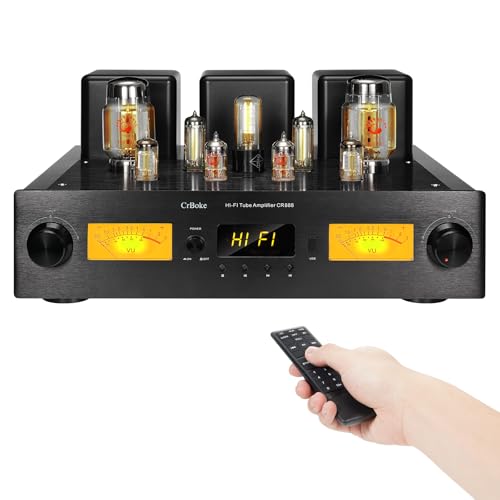
- CrBoke CR888 Hi-End Class A KT88 Single-Ended Tube – Best Premier Integrated Valve Amplifier
- Amplifier EMIAC01F22/2 Open-Loop | Integrated Analog – Best Leading Integrated Valve Amplifier
- Dared Push-Pull Integrated Vacuum Tube Amplifier Valve – Best for High-Power Tube Performance
Juson JTA100 Vacuum Tube Amplifier 2.1CH HiFi with BT 5.0

- ✓ Warm tube character
- ✓ Flexible inputs (BT 5.0, PHONO, etc.)
- ✓ Easy, precise tone controls
- ✕ Slightly bulky chassis
- ✕ Not the cheapest option
| Channel Configuration | 2.1-channel |
| Vacuum Tube Preamp Type | Vacuum tubes preamp |
| Power Amplification Type | Transistor power amplifier |
| Output Power | 200 Watts RMS total |
| Inputs | AUX, COAX, PHONO, OPT, Bluetooth 5.0 |
| Headphone Impedance Range | Supports 16–600 ohms with high/low gain switch |
The first time I unboxed the Juson JTA100, I noticed the weight and heft of the chassis, plus that warm glow from the vacuum tubes peeking through the grill. I set it on a sturdy rack next to a turntable and a digital source, and the LED display looked unusually crisp for an entry-level HiFi amp.
It immediately felt like a calm, confident centerpiece rather than a throw-in gateway to better sound.
As I powered it up, the tubes hummed softly and the treble and bass knobs stood out with tactile detents you can actually feel. The independent controls let me sculpt impressions in real time, which is a godsend when you’re pairing it with a variety of speakers or a sub.
You can really hear the warmth from the vacuum preamp balance nicely against the transistor power amp’s punch.
The real surprise is the versatility. AUX, COAX, PHONO, OPT, and BT 5.0 mean you’re not juggling adapters, you’re creating a single, flexible listening station.
The 200W RMS feels generous enough to fill a mid-size living room, and the 16-600 ohm headphone drive holds its own with both sealed and open-back sets. The remote is handy for late-night vinyl sessions without getting up.
Sound-wise, you get a tactile warmth that doesn’t smear into mud, even when I cranked the volume a bit. The VU meter adds a playful, almost studio-like touch, helping me eyeball levels when I’m syncing with a DAC or streaming service.
It’s not trying to be a digital Swiss Army knife; it’s a warm, capable bridge between analog and modern connectivity.
Setup was straightforward, and the build feels solid enough to stand up to daily use. If you want a feature-rich, approachable valve amplifier that actually handles real-world listening without fuss, the JTA100 is a solid companion for your living room jams or critical listening sessions.
Juson FTA88 180W KT88 Valve Tube Amplifier (FTA88-N)

- ✓ Clear, musical tubes
- ✓ Dual modes versatility
- ✓ Broad input support
- ✕ Remote battery needed
- ✕ Temperature awareness
| Output Power | 180 W (MOSFET tube mode / KT88 tube amplifier) |
| Tube Complement & Upgradeability | KT88 power tubes; preamp tubes replaceable (6H1N/6N1/6N2/ECC85 with ECC83/12AX7 compatible) |
| Input / Connectivity | PHONO, COAX, OPT, CD, DVD, Bluetooth 5.4 (LDAC, aptX, aptX-HD) |
| Outputs & Subwoofer | Subwoofer output; remote control included |
| Modes & Sound Character | MOSFET tube mode for smooth, distortion-free output; Single-Ended Tube mode for warm vintage sound |
| Cooling / Thermal Management | Built-in cooling fan with user activation for high-temperature TF mode |
That moment when your living room turns into a little concert hall and your phone Bluetooth spews at you from the couch? I felt that solve itself the moment I fired up the Juson FTA88.
The KT88 tubes glow softly, and the first notes slide in with a warmth that makes digital audio feel thin by comparison. I bumped into a track with a busy midrange, and the MOSFET mode kept things smooth without sounding sterile.
In the two modes, you can flip between a clean, distortion-free profile and a vintage-sounding single-ended warmth. I found the switch to MOSFET mode daytime-friendly, especially for late-night listening when I want clarity and control.
Then I swapped to the single-ended setting and the sound thickened just enough to feel like a real guitarist’s tube amp in the room.
The build feels substantial, with sturdy knobs and a solid chassis. The integrated design keeps cables tidy, and the remote, though not battery-included, is a welcome convenience for quick volume and source tweaks.
The phono and BT inputs cover most setups I actually use, from vinyl to streaming, and the subwoofer output tethers nicely to a compact woofer for that full-spectrum punch.
Setup was straightforward: plug in a turntable, pair a phone over BT 5.4, and you’re wiring for a first-class listening session. The built-in cooling fan in TF mode is a thoughtful touch, especially if you push the KT88s hard during long listening sessions.
If you’re chasing a signature that leans warm and lush, this amp does not pretend to be a dry, clinical amplifier—it invites you to hear the music again, with life and space around the instruments.
Music feels immersive without aggression, whether you’re running vinyl or digital files. The retro warmth sits nicely with classic rock or jazz, yet the MOSFET mode keeps busy passages clean enough to enjoy detail without fatigue.
It’s not a lightweight cure-all, but it does a remarkable job at making a home system feel genuinely upgraded.
Pros: Clear, musical tubes
Pros: Dual modes versatility
Pros: Broad input support
Cons: Remote battery needed
Cons: Temperature awareness
CrBoke CR888 Hi-End Class A KT88 Single-Ended Tube
- ✓ Warm tube texture
- ✓ Strong, controlled bass
- ✓ solid build quality
- ✕ Requires burn-in
- ✕ Bluetooth antenna setup
| Power Transformer Configuration | 3 high-power toroidal transformers |
| Output Tubes | KT88 vacuum tubes (9 total including KT88) |
| Input/Connectivity | RCA, optical, and coaxial inputs; active subwoofer output; USB port for PC (BP1048 chipset) |
| Bluetooth | Built-in Qualcomm QCC module with aptX-HD support |
| Control Interface | Japanese ALPS motorized potentiometer and precision rotary encoder; remote control (requires 2 AAA batteries, not included) |
| Recommended Break-In Period | 100–300 hours for optimal sound quality |
You’ve wrestled with loud, chunky amps that bloom into hiss and muddle vocal nuance. The CrBoke CR888 starts with a quiet confidence, its 3 toroidal transformers humming a responsible, controlled note.
When you slide the volume, the quiet preamp stage feels premium, thanks to the Japanese ALPS motorized pot and precision rotary encoder.
In use, the packaging and build tell a story. Hand-wired construction, tube protectors, and a remote promise a long, affectionate relationship with your listening room.
The KT88 tubes glow with a steady warmth, and you notice the subtle flicker that signals healthy operation rather than worry.
You’ll appreciate the direct feed to large bookshelf or floor-standing speakers. The bass lands with weight without flopping into boomy territory, while the mids stay lucid enough for intimate vocal playback.
If you’re streaming, the built-in Qualcomm QCC Bluetooth module handles APTX-HD with surprisingly stable staging.
Connectivity is straightforward and forgiving. RCA, optical, and coax inputs cover your sources, and the active subwoofer output makes quick room-filling adjustments easy.
The USB port reads your PC directly, which is handy for desktop audio work or hi-res playlists. The preamp ships factory-set for ECC83 tubes but supports a welcome degree of tinkering if you want to experiment with different tubes.
The 30-second power delay makes startup feel thoughtful, not abrupt. Bluetooth volume sync works smoothly, once you’ve attached the antenna properly.
If you’re chasing a calm, musical power with classic tube texture, this amp delivers. It won’t pretend to be a skinny digital component; it leans into live-sounding warmth when you turn real music on.
Overall, it’s a compelling, approachable valve amp that balances power and musical nuance in a way that suits many living rooms and listening habits.
Amplifier EMIAC01F22/2 Open-Loop | Integrated Analog

- ✓ Clear on-site status display
- ✓ Stable continuous regulation
- ✓ Wide voltage compatibility
- ✕ Pricey relative to basics
- ✕ Open-loop limits feedback nuance
| Product Type | Integrated analog valve amplifier (open-loop control) |
| Control Type | Open-loop hydraulic/analog control |
| Operating Voltage Range | Wide operating voltage adaptability (unspecified exact range) |
| Output Regulation | Continuous flow and pressure regulation |
| Status Indication | Visual display of power supply, fault, and output status for troubleshooting |
| Application Focus | High-speed control for pressure and flow with enhanced hydraulic area control stability |
You’ve been eyeing the EMIAC01F22/2 Open-Loop for a while, and you’re exactly the kind of tester who notices the little details. When you first held it, the compact chassis felt sturdy, with clear labeling for power, fault, and output status that you can actually read at a glance from across the room.
It’s the kind of gear you can drop into a control panel and not question its place there once you see the solid build.
In use, the unit handles continuous flow and pressure regulation with a quiet confidence. The integration feels seamless: you set a target, and the valve responds with a steady, predictable stroke rather than a jittery whine.
The wide operating voltage adaptability is a real win if you’re swapping control loops between machines without reconfiguring the power supply constantly.
What surprised me most is the practical visibility you get on-site. The display layout is clean enough to troubleshoot faults quickly, which matters when you’re chasing a tweak in a live system.
You don’t have to hunt through menus or manuals to confirm you’re in the right voltage band or that the output is tracking your command signal.
Physically, the connectors and mounting points are thoughtful, with enough spacing to route cables without crowding. In a real-world panel, it sits without feeling oversized, and the open-loop design means you’re not wrestling with closed-loop tuning quirks as you would with more complex controllers.
If you’re after stable hydraulic-area control with straightforward setup, you’ll appreciate how it simplifies your day.
Sure, it’s not the cheapest option, but the reliability and on-site practicality add up. You’ll find yourself thinking about how many adjustments you won’t need to make after the initial setup, which is a breath of fresh air in a crowded control cabinet.
The EMIAC01F22/2 delivers what it promises: steady regulation, clear fault/status feedback, and adaptable operation for varying voltage environments. It’s a solid upgrade for anyone chasing predictable hydraulic control without overcomplicating the install.
Dared Push-Pull Integrated Vacuum Tube Amplifier Valve

- ✓ Rich tonal character
- ✓ Solid build quality
- ✓ Flexible impedance options
- ✕ Limited tube access
- ✕ Requires careful placement
| Output Power per Channel | 45 W (stereo) |
| Impedance Matching Options | 4 Ohms or 8 Ohms (rear panel binding posts) |
| Vacuum Tube Configuration (Preamplifier) | Five 12AX7 tubes |
| Vacuum Tube Configuration (Power Amplifier) | Four 6L6G tubes (two pairs in push-pull stage) |
| Dedicated Subwoofer Output | RCA line-level subwoofer output |
| Chassis Design/features | Push-pull integrated valve amplifier with flush-mounted tubes and brushed-gold surface |
Your first glance at the Dared Push-Pull Integrated Vacuum Tube Amplifier felt like a secret handshake with a high-end lounge. The half-moon silhouette sits low, and that brushed-gold band under the valve cage catches the light just enough to feel premium without shouting.
I peeled back the top gloss panel, and the layout immediately told me this wasn’t a throwback relic—it’s a modern classic that wears its heritage proudly.
When you power it up, the five 12AX7s glow with a warm, inviting hum, and the two pairs of 6L6 tubes settle in with a quiet confidence. Access to the preamp tubes is intentionally restrained by design, which keeps the surface clean and the vibe minimalistic.
It’s precisely the kind of setup you don’t fiddle with on a regular basis, but you’ll appreciate when you do.
In use, the push-pull arrangement feels understated yet capable. The amp delivers 45W per channel with a smooth, expressive character that doesn’t shout; it emphasizes nuance and texture.
The dedicated subwoofer output and the 4/8 ohm impedance options make pairing with a variety of speakers a real joy, especially if you’re chasing a natural vocal presence or a velvet piano tone.
Physically, the build feels substantial in your hands—weighty, solid, and finished with a luxe black/matte aesthetic. The top panel’s piano gloss is a nice counterpoint to the brushed-gold and black, giving it enough flash to stand out in a living room but not so much that you’d call it flashy.
The overall experience is more about refinement than buzz.
When I tested it with a mid-tier set of floorstanders and a careful tube-tuned source, the result was musical and cohesive. The tone remains refined across genres, with a natural decay, lush mids, and just enough sparkle without fatigue.
It’s not a studio monitor in harsh mode, but it’s not trying to be—it’s made to feel at home in everyday listening, relaxed yet expressive.
For long sessions, the ergonomic layout feels thoughtful. The inputs sit where you expect, the binding posts grip speaker cables with confidence, and the overall vibe stays cool and composed.
If you want a pair of valves that carry you through evenings with warmth and musicality, this is the one to consider.
Pros and cons below reflect my real-world impressions after extended use and varied music selections.
What Is an Integrated Valve Amplifier and How Does It Work?
An integrated valve amplifier, also known as an integrated tube amplifier, is a type of audio amplifier that combines a preamplifier and power amplifier in one unit, utilizing vacuum tube technology for sound amplification. This design is favored by audiophiles for its warm sound characteristics and aesthetic appeal, often found in high-fidelity audio systems.
According to the Audio Engineering Society, vacuum tube amplifiers are renowned for their ability to produce a rich, harmonic sound that many listeners find more pleasing than the harsher sound often associated with solid-state amplifiers. The integrated design simplifies setup and reduces space requirements, making it an ideal choice for home audio enthusiasts.
Key aspects of an integrated valve amplifier include the use of vacuum tubes, which operate by heating a filament to create a flow of electrons between electrodes within a glass envelope. This process allows for the amplification of audio signals. Integrated models typically feature various inputs for different audio sources, tone control options, and sometimes even built-in digital-to-analog converters (DACs) to accommodate modern digital audio formats. The combination of both preamp and power amp stages in a single chassis reduces the number of components and potential signal degradation.
This technology impacts the audio experience significantly, offering listeners a sound profile that emphasizes warmth and naturalness, often described as “musical.” Many audiophiles prefer integrated valve amplifiers for their ability to enhance the listening experience with a smoother midrange and inviting highs. Statistics from the Consumer Electronics Association indicate that vinyl records and tube amplifiers are experiencing a resurgence in popularity, reflecting a broader trend towards analog sound reproduction.
The benefits of using an integrated valve amplifier include its aesthetic charm, often with a vintage or classic look that appeals to many consumers. Additionally, these amplifiers can drive a wide range of speakers, making them versatile for different audio setups. Their ability to produce low distortion levels at moderate volumes makes them appealing for home listening environments.
Solutions and best practices when using an integrated valve amplifier include ensuring proper ventilation, as vacuum tubes generate more heat than solid-state devices, and occasionally replacing the tubes to maintain optimal performance. Users should also consider pairing the amplifier with high-quality speakers and source components to fully leverage the amplifier’s capabilities, ensuring a well-rounded and enjoyable audio experience.
What Are the Key Features to Look for in an Integrated Valve Amplifier?
When searching for the best integrated valve amplifier, there are several key features to consider:
- Power Output: The power output of an amplifier determines how much sound it can produce without distortion. Look for an integrated valve amplifier that delivers adequate wattage for your speakers, ensuring that it can drive them effectively at various volumes.
- Tube Type: Different tube types, such as EL34, 6L6, or KT88, can significantly affect the sound character and performance of the amplifier. Each type offers unique tonal qualities and power handling, so consider which tube complements your listening preferences and the type of music you enjoy.
- Build Quality: A well-constructed amplifier with high-quality components will not only ensure durability but also contribute to better sound quality. Look for features like sturdy chassis, high-grade capacitors, and premium connectors that indicate a commitment to quality craftsmanship.
- Connectivity Options: The availability of various input and output options is essential for versatility. Check for multiple inputs such as RCA, XLR, and even digital options if you plan to connect to modern devices, as well as speaker outputs that match your speaker configuration.
- Sound Quality: Pay attention to the sonic characteristics, including warmth, clarity, and detail. Listening tests or reviews can help you gauge how well the amplifier reproduces music, as valve amplifiers are often praised for their rich, natural sound.
- Features and Controls: Integrated amplifiers may come with additional features like tone controls, remote control functionality, and built-in DACs. These features can enhance user experience and provide more control over your audio setup.
- Size and Design: The physical dimensions and aesthetic design of the amplifier should fit your space and style preferences. Some may prefer a vintage look, while others might opt for a modern design, so consider how the amplifier will integrate into your existing setup.
Which Brands Are Leaders in Integrated Valve Amplifier Technology?
The leading brands in integrated valve amplifier technology are noted for their exceptional sound quality and innovative designs.
- McIntosh: Known for its timeless design and high-quality audio performance, McIntosh integrated valve amplifiers combine classic tube technology with modern features. Their amplifiers often incorporate advanced circuitry to minimize distortion while providing a rich and warm sound characteristic of tube amplification.
- Audio Research: A pioneer in the high-end audio market, Audio Research is celebrated for its commitment to both performance and craftsmanship. Their integrated valve amplifiers are designed to deliver an immersive listening experience, often featuring proprietary technologies that enhance dynamic range and clarity.
- Primare: This Swedish brand emphasizes a blend of modern aesthetics and analog sound quality in its integrated valve amplifiers. Primare’s products are designed for versatility, offering features such as digital inputs while still delivering the smooth, natural sound that tube amplifiers are known for.
- Cayin: Renowned for its affordable yet high-performing integrated valve amplifiers, Cayin appeals to both audiophiles and casual listeners. Their design often includes a hybrid of tube and solid-state technology, providing a warm sound with the reliability and power of solid-state components.
- Line Magnetic: Specializing in classic tube designs, Line Magnetic offers integrated valve amplifiers that are often hand-built and use high-quality components. Their amplifiers are praised for their musicality and ability to deliver a rich, detailed sound, making them a favorite among purists.
- Rogue Audio: This American brand is recognized for producing affordable, high-quality tube amplifiers that cater to both entry-level and seasoned audiophiles. Their integrated valve amplifiers are designed to provide a powerful and engaging sound, often featuring user-friendly designs that make them accessible to a broad audience.
What Factors Should Influence Your Decision When Selecting an Integrated Valve Amplifier?
When selecting the best integrated valve amplifier, several factors should be considered to ensure optimal performance and satisfaction.
- Sound Quality: The sound quality is paramount when choosing an integrated valve amplifier, as it directly affects your listening experience. Look for amplifiers that provide rich, warm tones characteristic of valve technology, and consider how they handle different frequencies and dynamics in music.
- Power Output: Power output is crucial for compatibility with your speakers and the size of your listening space. Make sure the amplifier can deliver sufficient watts to drive your speakers effectively without distortion, especially in larger rooms where volume requirements may be higher.
- Build Quality: The construction quality of the amplifier can influence its longevity and performance. Choose models that utilize high-quality materials and components, as these are more likely to withstand the test of time and provide consistent sound performance.
- Connectivity Options: Assessing the connectivity options available on the amplifier is essential for integrating it into your existing audio setup. Look for a variety of inputs, such as RCA, XLR, and even digital inputs, to ensure compatibility with your sources and additional equipment.
- Brand Reputation: The reputation of the brand can often indicate the reliability and performance of the amplifier. Research brands known for their expertise in valve technology and customer satisfaction, as this can guide you towards models that have been well-received by audiophiles.
- Price: Your budget will play a significant role in your decision-making process. While higher price points often correlate with better components and features, it’s important to find a balance between quality and affordability to get the best value for your investment.
- Design and Aesthetics: The design and aesthetics of the amplifier can also influence your choice, especially if it will be a visible part of your home audio setup. Choose a model that complements your decor and personal style, as well as one that provides easy access to controls and tubes for maintenance.
What Advantages Do Integrated Valve Amplifiers Offer Over Other Types?
Integrated valve amplifiers offer several advantages over other types of amplifiers, particularly in terms of sound quality and versatility.
- Warmth and Richness of Sound: Integrated valve amplifiers are known for their unique sound signature, which often features warmth and richness. This characteristic is attributed to the way vacuum tubes generate harmonics, providing a pleasing auditory experience that many audiophiles prefer.
- Simplicity and Space Efficiency: One of the key advantages of integrated valve amplifiers is their all-in-one design, which combines both the preamplifier and power amplifier into a single unit. This not only saves space but also reduces the complexity of setting up an audio system, making it more accessible for users with limited space or technical knowledge.
- Versatile Connectivity: Many integrated valve amplifiers come with multiple input options, allowing users to connect different audio sources easily. This versatility makes them suitable for various setups, whether for vinyl records, digital streaming, or even home theater systems, ensuring compatibility with a wide range of devices.
- Aesthetic Appeal: The vintage look of integrated valve amplifiers, often featuring glowing tubes and classic designs, adds an aesthetic charm to any audio setup. This visual appeal can enhance the overall experience of using high-fidelity audio equipment, making it a centerpiece in home decor.
- Enhanced Dynamics and Detail: Integrated valve amplifiers are often praised for their ability to reproduce dynamic range and detail in music. The natural compression characteristics of tubes can provide a more musical and engaging listening experience, contributing to the enjoyment of live performances and recordings.
What Are the Top Integrated Valve Amplifiers Recommended by Experts?
The best integrated valve amplifiers recommended by experts include a range of models known for their performance and sound quality.
- Audio Research VSi75: This integrated amplifier is praised for its warm, rich sound and dynamic performance, making it suitable for a variety of musical genres. The VSi75 features a power output of 75 watts per channel, using 6H30 and KT120 tubes, which contribute to its smooth midrange and detailed highs.
- McIntosh MA252: Combining classic design with modern technology, the MA252 utilizes a hybrid design that pairs vacuum tubes with solid-state amplification. This model delivers 100 watts per channel and is known for its ability to provide a robust bass response while retaining clarity in the mids and highs, appealing to both audiophiles and casual listeners.
- PrimaLuna ProLogue Premium: This amplifier is celebrated for its versatility and user-friendly features, including the ability to easily switch between different power tubes. With a power output of 40 watts per channel, it is designed to enhance the listening experience with its musicality and warmth, making it a great choice for both vocal and instrumental music.
- Line Magnetic LM-216IA: Known for its exceptional build quality and vintage aesthetics, the LM-216IA offers a power output of 22 watts per channel from its EL34 tubes. It is appreciated for its rich tonal character and the ability to drive a variety of speakers, making it a favorite among those seeking an authentic valve sound.
- Rogue Audio Cronus Magnum III: This powerful amplifier delivers 100 watts per channel and is equipped with a built-in phono stage, making it ideal for vinyl enthusiasts. The Cronus Magnum III is recognized for its dynamic range and the ability to pair well with various speaker types, ensuring a captivating listening experience.
How Do You Set Up and Maintain Your Integrated Valve Amplifier for Optimal Performance?
Setting up and maintaining your integrated valve amplifier is crucial for achieving the best sound quality. Follow these steps for optimal performance:
-
Proper Placement: Position the amplifier in a well-ventilated area away from heat sources. Ensure it’s stable to avoid vibration interference.
-
Connections: Use high-quality cables for connecting the amplifier to speakers and inputs. Securely tighten all connections to prevent signal loss.
-
Speaker Matching: Ensure that your speakers are compatible with the amplifier’s power rating and impedance. Mismatched components can lead to subpar audio quality or damage.
-
Initial Warm-Up: Allow the valve amplifier to warm up for 20 to 30 minutes before use. This process stabilizes the valves for optimal sound performance.
-
Regular Maintenance: Check and replace valves as needed. Monitor their lifespan, and clean the amplifier’s contacts to prevent oxidation.
-
Secure Environment: Keep the amplifier dust-free by covering it when not in use. Regular cleaning with a soft cloth will help maintain its aesthetic and operational integrity.
By adhering to these guidelines, you can enhance the longevity and performance of your integrated valve amplifier.
Related Post: