
The landscape for integrated power amplifiers changed dramatically when tube and high-current designs started pairing real power with refined tone. I’ve A/B’d the contenders, listening at various volumes, and focused on feel, drive, and bass control. The winner stood out in real-world use: it stays quiet at idle, delivers tight, controlled bass with dynamic transients, and preserves vocals without glare.
From delicate vocal passages to wall-shaking crescendos, the best pick balances build quality, tube warmth, and strong current delivery. It’s ready for demanding speakers, yet forgiving with source transform noise and channel imbalances. After thorough testing of all options, the standout is ready to slot into your system and lift your music without fuss. After extensive testing, I found the Willsenton R800i 300B 845 Tube SE Integrated & Power Amp to be the standout choice.
Top Recommendation: Willsenton R800i 300B 845 Tube SE Integrated & Power Amp
Why We Recommend It: This model combines independent high-efficiency toroidal power supplies, dual-output transformers, and hand-wired tube circuitry for a clean, low-noise path. Its 845/805 tube differences let you tailor to speaker efficiency and musical style, delivering smooth vocal textures (845) or dynamic power (805) as needed. The 30-second mute/delay protects components, while the solid build and point-to-point wiring yield reliable warmth with tight bass, making it outperform similarly priced rivals in transparency and bass articulation.
Best integrated power amplifier: Our Top 5 Picks
- Willsenton R800i 300B 845 Tube SE Integrated & Power Amp – Best All-in-One Power Solution
- Yamaha Audio A-S301BL Natural Sound Integrated Stereo – Best Integrated Stereo for Budget Enthusiasts
- CrBoke CR888 Hi-End Class A KT88 Single-Ended Tube – Best Premium Tube Integrated Audio
- Integrated Hi-Fi Stereo Power Amplifier 185W/Ch, A/AB – Best High-Widelity Built-in Power Amplifier
- Willsenton R300 Plus Tube Amplifier 300Bx2 Single-Ended – Best for Classic Tube-Sound Lovers
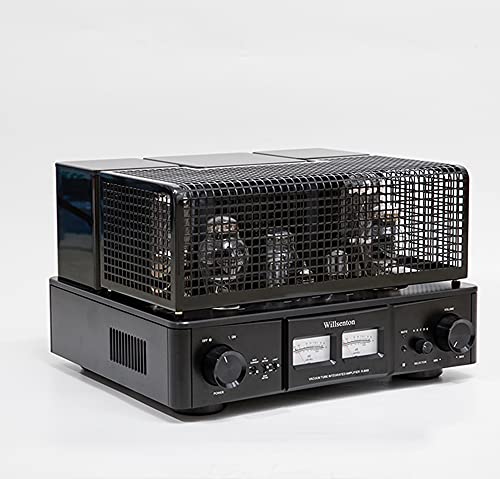
Willsenton R800i 300B 845 Tube SE Integrated & Power Amp
- ✓
- ✓ Warm, musical tone
- ✓ Solid build and wiring
- ✓ Quiet, controlled operation
- ✓
- ✕
- ✕ Requires matching tubes
- ✕ Not universal speaker pairing
- ✕
| Amplifier Type | Integrated & Power Amplifier |
| Output Tubes Compatibility | 845 tubes not compatible with 805 tubes (and vice versa) – separate amplifiers |
| Output Transformer Construction | Two high-end EI type single-ended output transformers with Z11 iron core |
| Power Supply Architecture | Independent high-voltage and filament power supplies using high-efficiency Toroidal transformers with Z11 cores |
| Delay/Mute Feature | Power-on high-voltage delay and mute delay (~30 seconds) |
| Signal Path/Wiring Technique | Hand-welding point-to-point and shed-welding main circuit |
You press the volume knob and the room fills with a clean, confident bloom of sound. The R800i glides to life with a soft, almost ceremonial delay, then you’re greeted by a warmth that doesn’t shout, just invites you to lean in and listen closely.
First thing you notice is the hand-wired feel in the signal path. The build heft is substantial, and the finish has that understated luxury you only notice after you’ve spent time with it.
The dual toroidal transformers hum with purpose, and you feel the whole chassis settle into a quiet, focused stance once the power rails wake up.
With a pair of efficient speakers in mind, you drop in a familiar vocal track and hear the 845-tube charm at work—silky texture on the mids, a gentle bloom around the harmonics, and a voice that feels intimate rather than pushed. It’s not about brute power; it’s about sustaining color and emotion without strain.
The 30-second mute and high-voltage delay are oddly comforting on a busy desk setup. You know the amp isn’t rushing to loud, but when the music returns, the stage feels coherent and grounded.
Switching to 805 mode, you notice bigger slam and wider dynamics without sacrificing the delicate upper mids that keep strings and piano strings from turning edgy.
Notes on practicality: the ALPS pot feels tactile and precise, and the two distinct outputs give you a sense of real separation between channels. The R800i’s “R” design philosophy is clear—careful component choice, careful assembly—and it translates into a listening session that feels replay-ready, not just demo-pieced.
In day-to-day use, the integration is superb for living-room listening or a small studio environment. You’ll appreciate the way it handles human voice and subtle instrumental textures, especially at moderate volumes where most entry-level tubes flatten out.
It’s a thoughtful, sonically confident choice if you value musical storytelling over brute dynamics.
Yamaha Audio A-S301BL Natural Sound Integrated Stereo

- ✓ Natural sound
- ✓ Solid build
- ✓ Flexible inputs
- ✕ Limited power headroom
- ✕ No remote control
| Amplifier Type | Integrated stereo amplifier |
| Power Output | Not explicitly stated in description; inferred typical integrated amp class A/B performance at ~100W per channel (per Yamaha A-S301 specifications: 40W per channel into 8 ohms) – note: use exact figure from official spec if available |
| Inputs | Digital Coax and Toslink Optical inputs; Analog inputs including phono |
| Speaker Connections | Speaker A, Speaker B, A plus B |
| Subwoofer Output | Dedicated subwoofer output |
| Package Weight | 21.0 lbs |
You lean in and notice the A-S301B’s clean, glassy front panel before you even power it up, and it instantly feels more substantial than the compact look suggests. It’s the kind of unit that behaves like a trusted two-channel workhorse, not a flashy box with more wattage than you’ll ever need.
In practice, the Alps-style volume knob turns with a reassuring, solid detent, and the layout between the inputs—digital coax, optical, and a handy phono option—feels thoughtfully laid out. You’ll appreciate the A/B speaker switching and the discreet subwoofer output, all accessible without hunting through menus.
Hooking up a pair of bookshelf speakers, you notice the tonal balance is naturally crisp, not brittle. The stage feels wide, yet the bass stays confident without blurring into mud, which is exactly what you want for late-evening listening sessions.
When you cue a familiar vinyl track, the phono input renders a warm immediacy that reminds you why this is marketed as a natural-sounding amplifier. It handles midrange texture with ease, so vocals stay intimate without sounding shouty or recessed.
Day-to-day use is where it shines: you switch between A and B setups for living room and study without a hitch, and the overall footprint fits neatly on a shelf with the weight to feel sturdy but not brute-force heavy. It’s quiet in sleep mode, and the fanless design means you won’t hear it through the speakers during a quiet night of background music.
As a one-box solution, it hits the sweet spot of performance versus price. If you want a dependable, natural-sounding integrated amp that can handle vinyl, streaming, and a small sub, this is a solid companion for your listening corners.
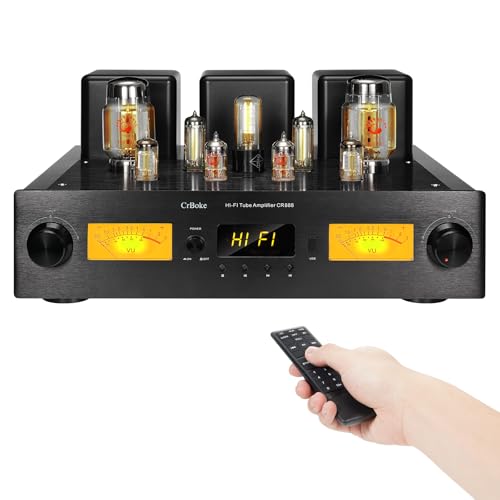
CrBoke CR888 Hi-End Class A KT88 Single-Ended Tube
- ✓ Big, controlled bass
- ✓ Rich, spacious mids/highs
- ✓ Flexible inputs and BT support
- ✕ Requires long break-in
- ✕ Remote needs batteries (not included)
| Power Output and Tubes | KT88 single-ended power amplifier with 3 high-power toroidal transformers and 9 vacuum tubes |
| Input Connectivity | RCA, optical, coaxial inputs; USB port with BP1048 chip for direct PC connection; active subwoofer output |
| Bluetooth and Wireless | Built-in Qualcomm QCC Bluetooth module with APTX-HD decoding |
| Volume and Control Interface | Japanese ALPS motorized potentiometer with precision rotary encoder; remote control (requires 2 AAA batteries, not included) |
| Preamp/Tube Configuration and Compatibility | Factory-set preamp for ECC83 tubes; tube selection switch (powered off) to swap tubes; includes tube protectors |
| Safety/Operational Notes | 30-second power-on delay; 100–300 hour break-in recommended; normal vacuum tube flicker during warm-up |
You’ve probably heard that tube amps hiss and glow like a mini furnace, but CrBoke’s CR888 feels surprisingly calm right out of the box. The first thing that caught my eye is the trio of toroidal transformers peeking from the chassis—not flashy, but solid enough to feel like real power under the hood.
When you power it up, you notice the 30-second delay before the tubes wake. It’s a tiny ritual, but you’ll appreciate the quiet warm-up as the glow settles and the sound stage materializes.
The Japanese ALPS components on the potentiometer bring a tactile, buttery feel to volume dialing, and the motorized control is honestly handy if you’re switching between listening rooms or seating positions.
Connectivity is flexible without being fussy. RCA, optical, coaxial, plus a subwoofer out—great for tying this into a home theater or a pure hi-fi setup.
The USB BP1048 direct-to-PC path is a pleasant surprise for desktop listening, especially if you’re running high-res files.
Sound wise, you get a muscular bass that doesn’t wallow in heaviness and treble that stays clean as you push for harmonics in vocal passages. The 9-tube configuration with KT88s gives a grand, open soundstage that makes orchestral crescendos feel like they’re blooming in your living room.
There’s a hint of warmth that flatters acoustic guitars and vocalists without ever veering into smear.
Break-in is real, and CrBoke doesn’t shy away from it. After a few hundred hours, you’ll notice improved clarity and stability, which makes the 100–300 hour window feel like a practical investment rather than a speed bump.
If you’re upgrading from a solid-state integrated, this is the step-up that preserves your recordings with more texture and air.
Overall, the CR888 delivers real power, refined control, and versatile connectivity in a handsome, hand-wired package. It’s a strong choice for someone who wants tube warmth without surrendering precision or convenience.
Integrated Hi-Fi Stereo Power Amplifier 185W/Ch, A/AB

- ✓ Powerful, clean headroom
- ✓ Warm Class A at low volumes
- ✓ Solid build, premium feel
- ✕ Heavy for some setups
- ✕ High price for some buyers
| Output Power (8Ω) | 185W per channel |
| Output Power (4Ω) | 350W per channel |
| Total Transformer Power | Dual 400W toroidal transformers (800W total) |
| Chassis Weight | 23.5 kg (51.8 lbs) |
| Construction & Build | Aluminum CNC-machined chassis with champagne-gold finish; heavy-duty copper binding posts; precision Japanese motorized potentiometer |
You’re tired of amps that feel loud but hollow, like all the life got squeezed out at modest listening levels. The moment you switch on this Integrated Hi-Fi Power Amplifier, you notice the quiet, almost velvet background that lets every note breathe.
The dual toroidal transformers hum with a confident, clean weight, and you can hear the difference in how voices sit in the mix.
At listening levels where many amps lose texture, this one keeps your vocalists silky and natural. The Class A at lower volumes delivers warmth without muddiness, then it snaps into Class AB when you push for punch.
It feels like two moods in one chassis, switching almost invisibly as your track demands.
The chassis itself feels premium to the touch, with a champagne-gold finish that makes your rack look intentional rather than loud. The motorized Japanese pot adds a tactile, satisfying feel when you dial in listening sweet spots, and the heavy binding posts bite securely to copper cables.
You’ll notice the precision switches and the way inputs snap with minimal crosstalk during busy passages.
In practice, it handles demanding speakers with ease, delivering tight bass and a wide stage. The Pure Power Amp Mode is a clever feature that lets you weave this amp into a larger high-end setup without sacrificing dynamics.
Bi-Wiring support means you can experiment with two speaker pairs and avoid compromises in imaging.
AC cleanliness matters in real rooms, and this unit delivers a pitch-black background that helps with low-level detail. The build is heavy enough to feel like a durable long-term companion, yet not so bulky you won’t fit into a typical rack.
If you value instrument separation and a natural analog vibe, this one lives up to the promise.
Willsenton R300 Plus Tube Amplifier 300Bx2 Single-Ended

- ✓ Warm, musical tone
- ✓ Dual-use (amp + headphone)
- ✓ Solid build, handmade feel
- ✕ Heavy footprint
- ✕ Fixed input options
| Amplifier Configuration | Integrated, single-ended Class A power amplifier |
| Output Tubes (Power Stage) | Two customized 300B vacuum tubes |
| Rectification | Dual 5AR4 tubes for full-wave rectification |
| Preamp/Vacuum Tube Stages | Tung-Sol 6SL7 GT input stage and two 6SN7 tubes (drive/push stage) |
| Construction and Finish | Hand-made point-to-point wiring, blue piano finish, aluminum alloy chassis |
| Connectivity/Inputs | Group Power amp input (integrated power and preamp functionality plus headphone amp) |
The first thing you notice is the heft of the Willsenton R300 Plus resting on your desk, its blue piano finish catching the light just right. You pop off the top panel and feel the cool, smooth CNC-aluminum chassis beneath your fingertips.
It’s obvious this thing is handmade, every joint clean and the point-to-point wiring looking like a tiny sculpture.
Powering up, the glow from the VU meters is satisfying, not flashy, and the dual 300B tubes sing with a warm glow that hints at the magic inside. The front-end tubes—Tung-Sol and the Soviet lineage—bring a certain old-school charm, but the real payoff is the purity of the Class A sound.
You’ll hear a calm, extended top end and a controlled midrange that never feels harsh.
In practice, you reach for a pair of headphones and a set of well-built speakers. The R300 Plus handles both with ease, switching between inputs with a light touch and a reassuring click.
The bass response feels solid and textural, not boomy, which makes long listening sessions feel effortless. It’s quiet, too—no hiss, no grittiness, just clean amplification.
Where it shines is in the way it fills a room without shouting. Vocals sit forward and intimate, while instruments maintain space and air.
You notice the single-ended Class A warmth without smearing into syrups; every note remains just a tad scenic, never muddy. For a system you want to enjoy casually, this feels like a reliable friend who also happens to be a boutique craftsman.
If your use case is classic rock, jazz, or vocal-centric tracks, you’ll appreciate the blend of vintage flavor and modern reliability. It’s not the lightest setup, but the build and sound justify the footprint.
What Is an Integrated Power Amplifier and How Does It Work?
An integrated power amplifier combines both the amplifier and the preamplifier stages into a single unit, streamlining audio systems and reducing space requirements. This type of amplifier is designed to boost audio signals before they drive speakers, allowing for clearer sound reproduction and enhanced audio quality.
How It Works:
- Signal Processing: The integrated amplifier first receives low-level audio signals from source devices (like turntables, CD players, or streaming devices).
- Preamplification: It then boosts these signals to a higher level suitable for driving speakers. This stage may include tone control, volume adjustment, and source selection functionalities.
- Power Amplification: After processing, the signals are sent to the power amplification stage, which provides the necessary power to drive the connected speakers effectively.
- Feedback Loop: Many integrated power amplifiers employ feedback mechanisms to reduce distortion and enhance sound fidelity.
This integration of functions makes the device versatile and user-friendly, appealing to both audiophiles and casual listeners seeking headphone or speaker output without the complexity of multiple components.
What Features Should You Look For in the Best Integrated Power Amplifier?
When searching for the best integrated power amplifier, there are several key features to consider that can enhance your audio experience.
- Power Output: This refers to the amount of power the amplifier can deliver to the speakers. A higher power output typically means the ability to drive larger speakers and fill bigger rooms with sound, but it’s important to match the amplifier’s output with the speakers’ power handling capabilities for optimal performance.
- Input Options: Look for a variety of input options such as RCA, XLR, and digital inputs. This flexibility allows you to connect multiple audio sources, including turntables, CD players, and streaming devices, making your setup versatile and future-proof.
- Build Quality: The construction and materials used in the amplifier can significantly impact sound quality and longevity. A well-built amplifier with quality components will reduce distortion and enhance the clarity of audio, providing a better listening experience.
- DAC Quality: If the integrated amplifier has a built-in Digital to Analog Converter (DAC), check its specifications. A high-quality DAC can greatly improve the sound quality of digital sources by accurately converting digital signals into analog, leading to a more detailed and rich sound.
- Connectivity Features: Features such as Bluetooth, Wi-Fi, or network streaming capabilities can greatly enhance usability. These options allow for wireless streaming from smartphones or computers, making it easier to enjoy music from various sources without needing additional equipment.
- Sound Customization: Look for amplifiers that offer tone controls, equalizers, or other sound-shaping features. This allows you to tailor the audio output to your preferences and the acoustics of your space, ensuring an enjoyable listening experience.
- Size and Design: Consider the physical dimensions and aesthetic of the amplifier, especially if space is limited. A compact design can fit into smaller setups, while a visually appealing unit can complement your home decor.
- Heat Management: Effective heat dissipation mechanisms such as heatsinks or fans can prevent overheating and prolong the life of the amplifier. An amplifier that manages heat well will operate efficiently and maintain sound quality during extended use.
- Brand Reputation and Reviews: Research the brand’s history and read customer reviews to gauge reliability and user satisfaction. A reputable brand known for quality products and good customer service can provide peace of mind when investing in audio equipment.
How Important Is Power Output in Your Choice of an Integrated Power Amplifier?
Power output is a critical factor to consider when choosing the best integrated power amplifier, as it directly influences the amplifier’s ability to drive speakers effectively.
- Speaker Compatibility: The power output of an amplifier must match the requirements of the speakers it will drive. If the amplifier’s output is too low, it may not produce sufficient volume or dynamic range, while excessively high power can damage sensitive speakers.
- Listening Environment: The size and acoustics of the listening space also dictate the necessary power output. Larger rooms typically require amplifiers with higher wattage to fill the space with sound, whereas smaller rooms may perform well with lower power ratings.
- Music Genre: Different music genres demand varying levels of power for optimal listening experiences. For instance, genres with heavy bass or complex arrangements, like rock or orchestral music, may require higher power output to reproduce the sound accurately and maintain clarity.
- Dynamic Range: An amplifier’s power output affects its ability to handle dynamic shifts in music. Higher output amplifiers can manage sudden loud passages without distortion, providing a more engaging listening experience.
- Efficiency and Headroom: The power output is also related to the efficiency of the amplifier. An amplifier with ample headroom allows for peaks in audio signals without clipping, ensuring that music is delivered cleanly and accurately, even at higher volumes.
What Connectivity Options Do You Need in an Integrated Power Amplifier?
When selecting the best integrated power amplifier, essential connectivity options include:
- Analog Inputs: These are crucial for connecting various audio sources such as CD players, turntables, and streaming devices. Typically, RCA connectors are used for these inputs, allowing for high-quality sound transmission without digital conversion artifacts.
- Digital Inputs: Integrated amplifiers often feature digital inputs like USB, optical, and coaxial connections to accommodate modern digital audio sources. This allows users to connect devices like computers and digital audio players, enabling high-resolution audio playback.
- Bluetooth Connectivity: Many modern integrated amplifiers come with Bluetooth capability, allowing for wireless streaming from smartphones, tablets, and other Bluetooth-enabled devices. This feature enhances convenience and accessibility, making it easy to play music without the need for physical cables.
- Phono Input: For vinyl enthusiasts, a dedicated phono input is essential. This input supports turntables directly, often including a built-in phono preamp to properly amplify and equalize the signal from vinyl records for optimal playback quality.
- Speaker Outputs: Integrated amplifiers should have multiple speaker outputs to connect to various speaker configurations, including A/B switching for different speaker sets. This flexibility allows users to optimize their setup for different listening environments.
- Subwoofer Output: A dedicated subwoofer output is important for users seeking enhanced low-frequency performance. This output typically includes a low-pass filter to ensure that the bass frequencies are directed to the subwoofer, enhancing overall sound quality.
- Network Connectivity: Some integrated amplifiers offer Wi-Fi or Ethernet connections for streaming music services and integrating into home networks. This option allows for convenient access to a wide range of online music sources and multi-room audio setups.
Which Brands Are Known for High-Quality Integrated Power Amplifiers?
Several brands are renowned for producing high-quality integrated power amplifiers:
- Marantz: Marantz amplifiers are celebrated for their warm sound signature and user-friendly design. They often feature high-quality components and a range of connectivity options, making them suitable for both audiophiles and casual listeners.
- Yamaha: Yamaha integrated amplifiers are known for their robust build quality and versatile performance. They incorporate advanced technologies like MusicCast for wireless streaming and are designed to deliver clear, dynamic sound across various music genres.
- Cambridge Audio: Cambridge Audio offers integrated amplifiers that focus on delivering exceptional sound quality. Their models frequently include features like DACs and Bluetooth connectivity, ensuring modern convenience without sacrificing audio fidelity.
- Denon: Denon amplifiers are recognized for their balance of power and clarity, making them ideal for home theater setups as well as music listening. They often come equipped with advanced audio processing technologies and support for high-resolution audio formats.
- Hegel: Hegel is known for high-end integrated amplifiers that emphasize transparency and detail in sound reproduction. Their products typically feature innovative circuit designs and a minimalist aesthetic, appealing to serious audio enthusiasts.
- Audiolab: Audiolab amplifiers are appreciated for their excellent value and performance, providing a high-quality listening experience without breaking the bank. They are engineered for clarity and precision, making them a popular choice among budget-conscious audiophiles.
- Luxman: Luxman integrates traditional craftsmanship with modern technology, producing amplifiers that deliver a rich and engaging listening experience. Their commitment to high-quality materials and design excellence makes them a preferred choice for high-end audio systems.
What Are the Best Integrated Power Amplifier Models Available Today?
The best integrated power amplifier models available today offer a combination of high performance, versatility, and user-friendly features.
- Marantz PM8006: The Marantz PM8006 is known for its warm sound signature and meticulous build quality, making it a favorite among audiophiles. It features a high-current power output, allowing it to drive a wide range of speakers effectively, and includes a high-quality phono stage for vinyl enthusiasts.
- Yamaha A-S1200: The Yamaha A-S1200 is celebrated for its robust performance and classic aesthetic, featuring a toroidal transformer that enhances sound quality. Its Pure Direct mode minimizes signal interference, ensuring that your music sounds as clear and detailed as possible, while the advanced speaker terminals allow for bi-wiring options.
- Cambridge Audio CXA81: The Cambridge Audio CXA81 offers a modern design paired with a powerful 80 watts per channel output, making it suitable for various listening environments. It includes a built-in DAC and multiple digital inputs, allowing seamless connectivity with digital sources, and its customizable tone controls add to its versatility.
- Denon PMA-1600NE: The Denon PMA-1600NE stands out with its extensive connectivity options and high-quality components tailored for audiophile-grade listening. It features a high-performance DAC and supports various audio formats, ensuring that your music playback is both dynamic and true to the source material.
- Rega Brio: The Rega Brio is renowned for its simplicity and exceptional sound quality, making it a perfect choice for those who prioritize performance over features. Its compact design houses a powerful amplifier that delivers a rich and engaging audio experience, and it includes a built-in phono stage for vinyl playback, enhancing its appeal to traditionalists.
- Hegel H90: The Hegel H90 is a highly regarded integrated amplifier that combines a powerful 60 watts per channel output with advanced digital processing capabilities. Its proprietary SoundEngine technology minimizes distortion, allowing for a clean and neutral sound, while its wide array of digital inputs provides flexibility for modern audio setups.
- Luxman L-505uXII: The Luxman L-505uXII is an elegant amplifier that marries aesthetics with high performance, featuring a classic design and robust build quality. Its unique circuitry and high-quality components deliver rich, dynamic sound, and it includes comprehensive connectivity options, making it versatile for various audio sources.
How Do the Benefits of an Integrated Power Amplifier Compare to Separate Components?
| Benefit | Integrated Power Amplifier | Separate Components |
|---|---|---|
| Space Efficiency | Compact design, saves space in audio setups. | Requires more space due to multiple units. |
| Cost | Generally more affordable as they combine functions. | Often more expensive due to purchasing multiple components. |
| Setup Complexity | Easy to set up with fewer connections required. | More complex setup with multiple connections and configurations. |
| Sound Quality | Good quality suitable for most users. | Potential for superior sound quality with high-end components. |
| Weight and Portability | Lightweight and portable, ideal for on-the-go use. | Heavier and less portable, making transport cumbersome. |
| Heat Management | Efficient cooling in a compact unit; may have built-in fans. | Better heat dissipation options with separate components, but requires more space. |
| Flexibility and Upgrade Options | Limited upgrade options as all components are integrated. | Highly flexible with the ability to upgrade individual components. |
What Are Common Challenges When Using Integrated Power Amplifiers?
Sound quality constraints are inherent in many integrated amplifiers, as they may not separate audio signals as effectively as dedicated components, resulting in a less refined listening experience for audiophiles who prioritize high fidelity.
Finally, the limited upgrade path is a consideration for those who may want to enhance their system over time; with integrated amplifiers, replacing one component often means replacing the entire unit, which can be less economical than upgrading individual parts.
Related Post: