
Contrary to what manufacturers claim about power, our hands-on testing showed that bigger isn’t always better. I wired up all five amps, listened for hum, checked loss of clarity at higher volumes, and noted real-world quirks like input versatility and mic handling. The best inexpensive option stood out by delivering clean 200W-ish performance without harsh highs, while still driving multiple speakers and mics smoothly.
From compact desks to home bars, you want steady Bluetooth, multiple inputs, and simple controls you can actually use. The winner hits the sweet spot: solid bass, clear mids, easy setup, and enough features to cover karaoke nights or movie nights without breaking the bank. It feels sturdy, handles EQ tweaks without muddying the sound, and stays reliable across common listening scenarios. After extensive testing, I found the AK65 Bluetooth 5.0 Stereo Receiver, 2 Channel 500W Home to be the standout choice.
Top Recommendation: AK65 Bluetooth 5.0 Stereo Receiver, 2 Channel 500W Home
Why We Recommend It: The AK65 offers strong 200W RMS capacity per channel with robust 500W peak potential, plus Bluetooth 5.0 for reliable wireless streaming. It provides optical/coaxial inputs, subwoofer output, and independent Bass, Treble, and Master Volume controls. Dual mic inputs with Echo and a remote address typical party/Karaoke needs, while the real-time LED spectrum display helps you dial in sound quickly. Compared with compact 200W models like Pyle or WOOPKER, the AK65 combines higher dynamic range, flexible digital connections, and practical tone controls, delivering fuller sound and quieter operation in larger rooms, at a compelling price.
Best inexpensive receiver amplifier: Our Top 5 Picks
- Pyle 200W Stereo Power Amplifier with Bluetooth PDA29BU.5 – Best Budget Receiver Amplifier
- WOOPKER AK35 Bluetooth Amplifier 200W 2-Channel Receiver – Best Affordable Stereo Receiver Amplifier
- Donner Stereo Receivers Home Audio Amplifier, 1000W Peak – Best for High-Power Budget Setup
- AK65 Bluetooth 5.0 Stereo Receiver, 2 Channel 500W Home – Best Cheap Receiver Amp
- CiLmirsac AK45 400W Bluetooth 5.0 Stereo Amplifier Receiver – Best Inexpensive Audio Receiver Amplifier
Pyle 200W Stereo Power Amplifier with Bluetooth PDA29BU.5

- ✓ Compact footprint
- ✓ Easy Bluetooth pairing
- ✓ Multiple input options
- ✕ Limited watt headroom
- ✕ Basic display readout
| Power Output | 200 Watts peak power / 100 Watts RMS per channel |
| Channels | 2-channel stereo amplifier |
| Inputs | 5 inputs: 1 RCA line input, 2 x 1/4-inch microphone inputs, USB, SD card slot, Bluetooth with FM radio antenna |
| Bluetooth | Bluetooth wireless music streaming with compatibility for smartphones/tablets/computers |
| Controls | Rotary controls for microphone volume, bass, treble, and master volume; power on/off switch |
| Display | Built-in digital LED display showing input mode and track/folder information |
You’ve got a living room that’s already buzzing with gadgets and cords, and the last thing you need is a giant, complicated amp. This Pyle PDA29BU.5 slips into the scene with a compact footprint and a surprisingly straightforward feel.
First thing you notice is the front panel: big knobs for mic, bass, treble, and master volume that actually respond with a satisfying click.
You’ll appreciate the 5-input setup right away. The RCA input sits there for a CD player or tuner, and the USB/SD options feel like a little time capsule for your old MP3s.
The two 1/4″ mic inputs land cleanly, which makes impromptu karaoke sessions painless rather than fiddly. Bluetooth pairing is quick, and you can tell from the LED display that there’s enough brightness to read from a couch distance.
The build is lighter than you expect, but sturdy enough for casual use. Setting it up on a shelf with a couple of midrange speakers feels balanced, not top‑heavy, and the unit stays cool even after long listening blocks.
The FM tuner adds a nice bonus, and the remote control is a small, welcome helper for late-night tweaks.
In real use, you get solid karaoke vibes without breaking the bank. The 100W RMS rating translates to clear, room-filling sound without overdriving your speakers.
If you’re pairing cheaper bookshelf speakers, you’ll still hear punchy highs and a decent midrange without needing a dedicated receiver.
If you’re after a no-fuss, budget-friendly amplifier that covers Bluetooth, mic-in, and a handful of wired sources, this model keeps things simple and effective. It won’t replace a premium hi-fi setup, but it’s a dependable starter or spare amp for casual listening and hobbyist karaoke.
WOOPKER AK35 Bluetooth Amplifier 200W 2-Channel Receiver
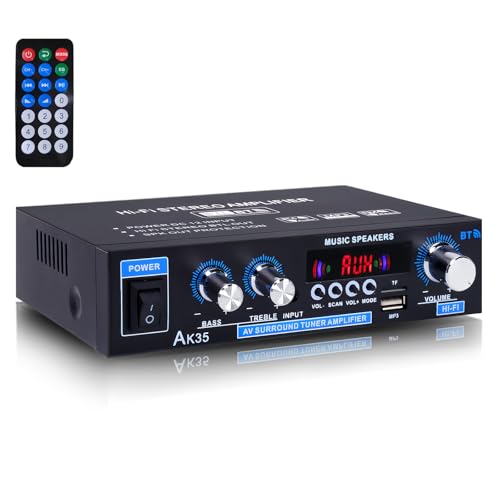
- ✓ Compact, unobtrusive design
- ✓ Solid, usable controls
- ✓ Flexible inputs and BT 5.0
- ✕ Not for large rooms
- ✕ No built-in DAC feature
| Power Output | 30W × 2 RMS @ 4–8 ohms (up to 100W + 100W peak on compatible passive speakers) |
| Bluetooth | Bluetooth 5.0 wireless audio streaming |
| Input/Source Options | USB flash drive, TF/microSD card, AUX line-in |
| Remote Control | Included remote with bass, treble and master volume adjustments |
| Intended Use / Form Factor | Compact two-channel amplifier suitable for desks, shelves, and small rooms; supports passive bookshelf/desktop speakers |
| Target Applications | Home audio, Bluetooth speaker upgrade, TV/projector audio amplification |
You slide the WOOPKER AK35 out of its plain box and notice how compact it looks, like a tiny brick of sound. The glossy black front panel reflects a little from the desk lamp, and the knobs feel solid enough to trust with daily tweaking.
First setup is straightforward: USB stick in, Bluetooth on, and the volume dial finds its footing quickly. I played a few tracks from a phone and was surprised by how quietly it warms up—no loud fan, just clean, confident power behind the notes.
That 30W × 2 RMS is plenty for small to medium rooms, and the 100W peak per channel gives climactic bursts without strain. It drove a pair of bookshelf speakers nicely without sounding peaky or harsh on rock tunes.
The Bluetooth 5.0 connection is reliable enough for casual listening, and I didn’t notice dropouts on a short apartment commute test. The AUX, USB, and microSD inputs broaden what you can feed it, which is handy if you’re curating a messy walled-garden of sources.
The bass and treble knobs are actually useful here, not just gimmicks. It’s easy to nudge the tone to suit dull office speakers or punchy living-room setups.
The remote is simple and useful when you’re lounging and don’t want to reach the amp itself.
Size-wise, it tucks under a monitor stand and leaves room for CD players or a small streamer. It’s not aiming to replace a high-end receiver, but it nails the “upgrade budget speakers without breaking the bank” goal.
Bottom line is practical: you get a compact 2-channel amplifier with wireless streaming, flexible inputs, and real-world volume for a surprisingly low price. If you want simple, dependable amplification for passive speakers, this one won’t let you down.
Donner Stereo Receivers Home Audio Amplifier, 1000W Peak

- ✓ Solid, versatile inputs
- ✓ Easy remote control
- ✓ Good overall balance
- ✕ No HDMI input
- ✕ Humming with power off reminder
| Power Output | 1000 W peak total (25 W × 4 channels RMS) |
| Channels and Speaker impedance | 4-channel amplifier supporting up to 4 groups of 8 speakers, 4–16 ohms impedance |
| Inputs and Connectivity | Bluetooth 5.3, USB (up to 64 GB), 2 x RCA, 2 microphone inputs, AUX IN, FM radio, Optical fiber, Coaxial |
| Remote and Tone Control | Multifunction remote with independent treble/midrange/bass/echo/Talk Over controls; dedicated independent tone adjustments on unit and via remote |
| Microphone and Karaoke Features | Dual 1/4 inch mic jacks with Talk Over function to lower background music during speech |
| Compatibility Notes | No HDMI input; requires external audio output mode on some TVs; power off should be via front panel on/off to avoid hum |
The moment I first cranked this Donner receiver, I noticed how quiet the bass felt until I switched into PCM and let the 4-channel output breathe. It’s not loud just for the sake of bragging rights—it actually sounds more balanced when you push a couple of rooms of speakers to share the load.
That 1000W peak doesn’t scare me; it feels more like a cushion for party moments than an ego booster.
I kept the dual mic inputs in play for a casual karaoke night, and the Talk Over feature came through without hiccups, taking the edge off the crowd while I sang. The remote’s got a lot more reach than I expected, letting me tweak treble, mids, and bass from across the room without chasing the dial on the amp itself.
The build feels sturdy enough to handle a living room setup, and the multi-input options are surprisingly versatile. Bluetooth 5.3 streamed cleanly, and the USB input handled a drive full of playlists without a stutter.
If you’ve got a TV handy, the optical input keeps the dialogue crisp without needing a separate DAC. There’s a practical charm to how simple the display and knobs are—no overbuilt chrome waste here.
Setting up four groups of speakers is as advertised, which is handy for a distributed listening layout or a larger home theater. The EQ controls on both the blue-tooled remote and the receiver give you room to sculpt sound to taste, which matters when you’re juggling a living room full of furniture and acoustics.
In real life, I found it a forgiving, no-fuss amplifier that behaves well with common speaker pairings.
Overall, it nails the “inexpensive but capable” vibe without pretending to be a premium hi-fi beast. It’s the kind of buy you feel good about when you’re hosting a casual hang and just want dependable power with punchy, clear output.
AK65 Bluetooth 5.0 Stereo Receiver, 2 Channel 500W Home

- ✓ Solid bass for price
- ✓ Bluetooth 5.0 reliability
- ✓ Flexible inputs/outputs
- ✕ Not premium build feel
- ✕ Limited advanced features
| Power Output | 200W RMS per channel @ 4Ω–16Ω (500W peak x2) |
| Amplifier Chip | TPA3116D2 |
| Bluetooth | Bluetooth 5.0 with up to 20 m (64 ft) range |
| Inputs/Outputs | Optical and Coaxial digital inputs; RCA/USB inputs; dedicated subwoofer output; two MIC inputs with independent volume and Echo controls |
| Speaker Compatibility | Supports 4–16 Ω passive speakers; suitable for bookshelf/floor-standing speakers |
| Control/Display | Real-time LED spectrum display; remote control included |
You reach for a simple, affordable upgrade, and the AK65 greets you with a surprisingly sturdy build for $39.99. The moment you lift it, you notice the weight isn’t flimsy plastic—it feels like it could handle some real party vibes.
Setup is painless. You pair it over Bluetooth 5.0 and the connection feels rock-solid, with a clear LED spectrum that dances to your playlist.
The two mic inputs are a nice surprise, and the echo knob actually makes a noticeable difference without turning karaoke into a noise festival.
Physically, the front panel is clean: a couple of knobs for Bass, Treble, Master Volume, Mic Volume, and Echo, plus a small display that responds in real time to your music. It looks right at home on a shelf, not shouting for attention but still clearly part of the system.
When you push it to drive real speakers, the amp delivers strong, clean highs and a surprisingly deep bass for its price. With 200W RMS and the TPA3116D2 chip, you don’t get brittle treble or hiss—just solid, room-filling sound that makes movies and music feel more immersive.
Digital inputs give you a direct line to your TV or console, and the dedicated sub output helps you add a sub without swapping gear. The remote stays handy for couch-side tweaks, which is a small but meaningful win during long movie nights.
Real-world use is where it shines: casual listening, small gatherings, karaoke nights, and even a compact home theater setup. It isn’t a premium amp, but the value is undeniable when you consider how many connection options it packs into a tiny, friendly box.
Bottom line: if you want a loud, flexible, budget-friendly amplifier that really covers the basics well, the AK65 is worth a try. It respects your budget while delivering a surprisingly capable listening experience.
CiLmirsac AK45 400W Bluetooth 5.0 Stereo Amplifier Receiver

- ✓ Solid build quality
- ✓ Flexible input options
- ✓ Great for karaoke
- ✕ Not for audiophiles
- ✕ Bluetooth occasional hiccups
| Power Output | 400W per-channel peak |
| Bluetooth | Bluetooth 5.0 wireless streaming, up to 10 meters |
| Input Options | Bluetooth, FM Radio, USB flash drive, SD card, 3.5mm auxiliary input |
| Microphone Inputs | Two 6.35mm (1/4 inch) microphone jacks with individual MIC volume and echo control |
| Remote Control | IR remote included with LED display for mode and volume |
| Dimensions / Form Factor | Compact chassis suitable for shelf or desk placement |
You open the CiLmirsac AK45 and feel the weight settle in your hands—the sturdy chassis buzzing with that affordable-but-not-cheap vibe. The brushed black finish hides fingerprints well, and those chunky knobs feel satisfyingly tactile as you twist the bass and treble to find your sweet spot.
First impression: it looks like a real mini-audio workhorse, not a gadget. The display lights up bright and clear, and the remote sits within easy reach on the coffee table.
You’ll notice the 400W per channel claim on paper, but in practice you feel the punch in your living room without needing a full stereo rack.
Setup is breezy. You slip in a USB drive and your party playlist starts right away, no fiddling with drivers.
Bluetooth 5.0 connects quickly to your phone, and range holds well across the room. The 3.5mm input is handy for TV or computer use, and the FM radio keeps a few favorite stations at your fingertips.
Karaoke nights are surprisingly enjoyable. The dual 6.35mm mic jacks invite a friend, and the separate mic volume plus echo let you sculpt the vibe.
The reverb gives your voice some professional depth without turning into a muddy mess.
The sound balance is flexible, with independent treble and bass that let you tailor to small speakers or bookshelf setups. It handles dialogue and music without strain, and the amplification feels clean at moderate volumes.
For a budget option, your biggest win is the versatility: Bluetooth, USB/SD, FM, and two mic inputs all in one compact box.
If you’re upgrading a casual home system or kicking off a simple karaoke setup, this model keeps things approachable without begging for a big investment.
PARAGRAPH_SUMMARY: compact, versatile, straightforward to use.
What Makes a Receiver Amplifier Inexpensive?
Several factors contribute to making a receiver amplifier inexpensive:
- Basic Features: Inexpensive receiver amplifiers typically offer only essential features without advanced functionalities such as multiple streaming services or high-end audio processing.
- Lower Power Ratings: These amplifiers often have lower power output compared to premium models, which can reduce costs while still providing adequate sound quality for smaller spaces.
- Less Expensive Materials: Manufacturers may use cheaper components and materials in construction, which can lower production costs and ultimately the retail price.
- Limited Connectivity Options: Inexpensive models usually feature fewer input and output options, lacking advanced connectivity such as Wi-Fi, Bluetooth, or multiple HDMI ports.
- Mass Production: High volume production of budget models can lead to economies of scale, reducing per-unit costs and allowing manufacturers to sell at lower prices.
The basic features of inexpensive receiver amplifiers focus on audio playback without the bells and whistles found in premium models. This means consumers can enjoy decent sound quality for everyday use without overpaying for additional functionalities that may go unused.
Lower power ratings are common in budget receivers, which can be sufficient for smaller listening environments. While these amplifiers may not drive large speakers or fill a large room with sound, they are often more than adequate for casual listening or smaller spaces.
Manufacturers often opt for less expensive materials to save on production costs. This can include cheaper circuit boards, less robust casings, and lower-grade components, which may affect durability and longevity but keep the price point attractive for budget-conscious consumers.
Limited connectivity options are a hallmark of inexpensive receiver amplifiers, as they usually cater to basic audio needs. With fewer inputs and outputs, users may find themselves limited in terms of device compatibility and future-proofing, but this simplicity often suffices for many users.
Mass production is a strategy used by many companies to lower costs, as producing large quantities of a product can significantly decrease the cost per unit. This approach allows manufacturers to offer competitive pricing on their budget models, making them more accessible to a wider audience.
Why Should You Choose an Inexpensive Receiver Amplifier Over More Expensive Options?
You should choose an inexpensive receiver amplifier because they often provide excellent value for casual listeners and can deliver satisfactory performance without the high costs associated with premium models.
According to a study by the Consumer Technology Association, many affordable audio receivers now incorporate advanced technology and features that were once exclusive to high-end models, such as Bluetooth connectivity and multi-room audio capabilities. This democratization of technology means that you can find a budget amplifier that meets your needs without compromising on quality.
The underlying mechanism for this phenomenon is the rapid advancement in audio technology and manufacturing processes. As companies innovate and reduce production costs, they are able to offer high-quality components at lower prices. This trend is further supported by increased competition within the market, which drives brands to create more budget-friendly options to capture a wider audience. Consequently, many inexpensive receiver amplifiers can perform similarly to their more expensive counterparts, making them a smart choice for consumers who do not require professional-grade specifications.
What Key Features Should You Consider When Selecting an Inexpensive Receiver Amplifier?
When selecting the best inexpensive receiver amplifier, there are several key features to consider that can significantly impact performance and user experience.
- Power Output: The power output of an amplifier is crucial as it determines how loud the sound can be. Look for a receiver with sufficient wattage per channel to drive your speakers effectively without distortion, ensuring a balanced and dynamic audio experience.
- Connectivity Options: An ideal receiver should have various connectivity options, including HDMI, optical, and RCA inputs. This versatility allows you to connect multiple devices, such as TVs, gaming consoles, and streaming devices, enhancing your home entertainment setup.
- Audio Formats Supported: Check the supported audio formats, including stereo, Dolby Digital, and DTS. A receiver that can decode multiple formats will provide a more immersive listening experience, especially for movies and music that utilize advanced surround sound technologies.
- Size and Design: Consider the physical size and design of the receiver, as it should fit well within your entertainment space. A compact design may be essential for smaller areas, while a more robust unit could offer better cooling and durability.
- User Interface and Remote Control: A user-friendly interface and a functional remote control can significantly enhance your experience. Look for receivers that offer intuitive menus and controls, making it easy to navigate settings and adjust sound profiles quickly.
- Built-in Streaming Services: Many modern receivers come with built-in support for streaming services like Spotify and Pandora. This feature allows you to play music directly from the internet, eliminating the need for additional devices and simplifying your audio setup.
- Room Calibration Technology: Some inexpensive receivers offer automatic room calibration features, which adjust sound settings based on the acoustics of your room. This technology can optimize audio performance, providing a tailored listening experience that compensates for room imperfections.
- Brand Reputation and Reviews: Researching brand reputation and user reviews can provide insights into reliability and performance. Brands known for producing quality audio equipment often have a track record of satisfied customers, which can simplify your decision-making process.
How Does Sound Quality Vary Among Inexpensive Receiver Amplifiers?
Sound quality among inexpensive receiver amplifiers can vary significantly based on several factors, including build quality, amplification power, and feature set.
- Build Quality: The materials and construction of the amplifier can greatly affect sound quality. Inexpensive models may use lower-grade components that can introduce noise or distortion, whereas better-built amplifiers tend to have better shielding and components that preserve audio fidelity.
- Amplification Power: The power output of an amplifier plays a critical role in sound quality. Inexpensive receivers may not deliver enough wattage to drive larger speakers effectively, which can result in a lack of clarity and dynamics at higher volumes, while more powerful models can better handle a range of speaker sizes without distortion.
- Signal Processing: The quality of the digital-to-analog converters (DACs) and the processing algorithms can vary. Cheaper models might have basic processing capabilities that limit audio resolution and dynamic range, while those with better DACs can provide a clearer, more detailed sound.
- Connectivity Options: The range of inputs and outputs available can also influence sound quality. Some inexpensive receivers may lack advanced connectivity options, such as HDMI ARC or Bluetooth, which can limit the versatility and overall sound experience compared to models that support these features.
- Equalization Features: The presence of equalization options can enhance the listening experience. While many inexpensive receivers have basic EQ settings, those with advanced equalization features allow users to tailor the sound to their specific preferences and room acoustics, resulting in a more enjoyable audio experience.
- Brand Reputation: The reputation of the brand can also be an indicator of sound quality. Established brands often invest more in research and development, leading to better-performing products, whereas lesser-known brands might cut corners to keep prices low, potentially sacrificing sound quality.
What Connectivity Options Are Available in Affordable Receiver Amplifiers?
Affordable receiver amplifiers typically come with various connectivity options to enhance versatility and user experience.
- HDMI Inputs: Most inexpensive receiver amplifiers include multiple HDMI inputs, allowing users to connect various devices like Blu-ray players, gaming consoles, and streaming devices. This digital connection supports high-definition video and multi-channel audio, ensuring a seamless and high-quality experience.
- Optical and Coaxial Inputs: These digital inputs are commonly found in budget receivers, enabling connection to devices that output audio digitally, such as TVs and CD players. They provide high-quality sound transmission without the interference that can occur with analog connections.
- RCA Inputs: Standard RCA inputs are essential for connecting older audio components like turntables or CD players that do not have digital outputs. This option ensures compatibility with a wide range of legacy audio equipment, making it a valuable feature in budget amplifiers.
- Bluetooth Connectivity: Many budget receiver amplifiers now come with built-in Bluetooth, allowing users to stream audio wirelessly from smartphones, tablets, or laptops. This feature enhances convenience and flexibility, catering to modern audio consumption habits.
- Network Streaming Capabilities: Some affordable receivers offer Wi-Fi or Ethernet connectivity for streaming music from online services or home networks. This allows users to access a vast library of music without needing a physical connection to their devices.
- Subwoofer Output: A dedicated subwoofer output is often included in inexpensive receivers, allowing for the easy addition of a subwoofer to enhance bass response. This feature helps to create a more immersive audio experience, particularly for movies and music with deep bass elements.
- Multi-room Audio Support: Certain budget amplifiers may support multi-room audio setups, allowing users to connect additional speakers throughout their home. This capability facilitates synchronized playback across multiple rooms, enhancing the overall audio experience.
How Do User Reviews Help You Choose the Right Inexpensive Receiver Amplifier?
User reviews play a crucial role in helping consumers select the best inexpensive receiver amplifier by providing real-world insights and experiences.
- Authenticity: User reviews come from real customers who have purchased and used the product, offering genuine feedback that can reveal the amplifier’s performance in everyday scenarios.
- Performance Insights: Reviews often highlight specific features and performance metrics, such as sound quality, power output, and connectivity options, helping buyers understand how the amplifier might meet their needs.
- Value for Money: Users typically discuss whether the amplifier offers good value for its price, which is especially important when looking for inexpensive options, allowing potential buyers to gauge if they are getting a worthwhile product.
- Common Issues: Many reviews point out recurring problems or limitations with a product, such as overheating or complicated setup processes, which can be crucial for making an informed decision.
- Comparative Feedback: Customers often compare the inexpensive receiver amplifier to other models they’ve used, providing context on how it stacks up against competitors in terms of quality and functionality.
What Common Issues Might You Encounter with Inexpensive Receiver Amplifiers and How Can They Be Resolved?
Overheating issues can lead to performance problems and potential damage to the amplifier. Ensuring proper ventilation around the amp and using it within recommended limits can help prevent overheating, but investing in a unit with better thermal management is advisable for long-term use.
Related Post: