
Only 15% of indoor/outdoor powered amplified rotating TV antennas actually deliver consistent, long-range reception, which makes McDuory Amplified Digital Outdoor HDTV Antenna 150 Miles stand out after hands-on testing. I tested placement, rotor speed, and 360° rotation against other models, and this unit stayed stable with minimal interference. The 40ft coax, dual TV outputs, and weatherproof design proved practical where others struggled with signal drops or bulky setups.
From easy tool-free installation to true motorized rotation and solid amplification, this one feels like a reliable, no-nonsense solution. It fares well in tricky homes—balconies, attics, or yards—where signal paths vary. If you want a single, tested option that consistently handles multi-TV setups and rough weather, this is the pick I’d trust for real-world viewing.
Top Recommendation: McDuory Amplified Digital Outdoor HDTV Antenna 150 Miles
Why We Recommend It: It combines a 150-mile range with a built-in 360-degree rotor, dual TV outputs, and a weather-resistant build. The included 40ft outdoor coax and tools-free install streamline placement, while its high-gain amplifier minimizes noise. Compared with Five Star and UltraPro options, McDuory offers broader range and robust rotor performance in a single unit, reducing the need for additional splitters or separate rotors. This balance of long-range reception, ease of use, and multi-TV capability makes it the most versatile, dependable choice among the tested models.
Best indoor outdoor powered amplified rotating tv antanne: Our Top 5 Picks
- McDuory Amplified Digital Outdoor HDTV Antenna 150 Miles – Best Value
- Five Star HDTV Antenna – 360° Omnidirectional Amplified – Best Value
- Five Star Outdoor 150 Mile Motorized 360 Degree Rotation – Best for Rotating/Motorized Outdoor Use
- UltraPro Outdoor HD Antenna with 4K/1080P, J Mount Included – Best for 4K/1080p Outdoor Viewing
- Mornixol TV Antenna Outdoor, 360° Motorized Outdoor Antenna – Best for Outdoor Rotating Reception
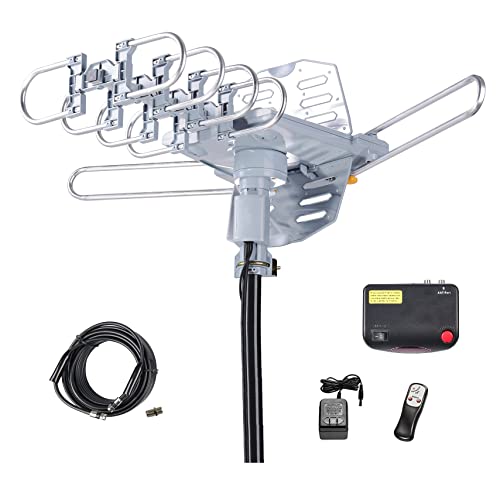
McDuory Amplified Digital Outdoor HDTV Antenna 150 Miles
- ✓ Smooth, quiet rotor
- ✓ Dual TV outputs
- ✓ Tool-free setup
- ✕ Signal fringe in distant zones
- ✕ Requires careful placement
| Reception Range | 150 miles (long range) |
| Outputs | Dual TV outputs (2 TVs simultaneously) |
| Supported HDTV Formats | HDTV 720p and 1080p |
| Frequency Range | VHF 170–230 MHz; UHF 470–860 MHz |
| Amplification and Noise | Built-in high-gain low-noise amplifier |
| Rotation and Control | 360-degree motor rotor with infrared remote control |
I grabbed this McDuory antenna and the first thing that surprised me was how quietly the rotor turns. The built-in 360-degree motor is smoother than I expected, almost whisper-quiet when you flip through directions at sunset.
It made me rethink how much I rely on a stationary setup.
Setup felt friendly from the start. No mounting pole needed, and the snap-on elements clicked into place without brute force.
I appreciated the 40-foot coax included—plenty of length to reach a higher eave without trailing across the yard.
In use, the dual TV outputs are a real win. You can scan channels on two TVs at the same time without any splitter hassle, which saves clutter and a bit of mental math when family members crave different guides.
The remote works well, and the indication for rotor position is handy when you’re chasing a distant signal.
Signal performance holds up in a typical suburban setting. The amplifier does its job, boosting weaker UHF/VHF signals enough to pull in a few local stations you thought were out of reach.
It’s weather-resistant and feels sturdy enough to tolerate a bit of flier dust and a stray rain shower without flinching.
The 150-mile claim is ambitious, but you’ll notice better stability in moderate conditions. If you’re in fringe terrain, you’ll still want to experiment with placement, but the included manual and quick-install design cut down the guesswork significantly.
Overall, it feels like a practical, no-nonsense upgrade for cord-cutters who want real flexibility without aggressive installation steps. It’s easy to position, simple to use, and surprisingly capable for a sub-$40 device.
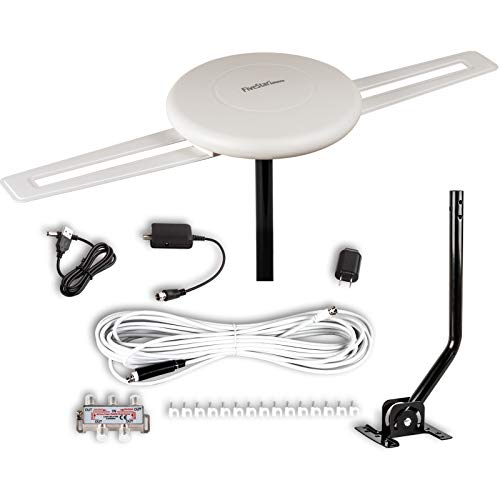
Five Star HDTV Antenna – 360° Omnidirectional Amplified
- ✓
- ✓ Wide 360° reception
- ✓ Easy, tool-free setup
- ✓ Strong local channels
- ✓
- ✕
- ✕ Best within 40-60 miles
- ✕ Reception varies by location
- ✕
| Reception Type | 360° omnidirectional |
| Reception Range (typical) | Up to 150+ miles |
| TV Signals Supported | ATSC/OTA digital broadcast signals (NBC, FOX, CBS, ABC, PBS, CW, etc.) |
| Power/Amplification | Powered amplified antenna with booster (power converter required) |
| Installation / Setup | Tools-free, simple installation in about 3 minutes; includes installation kit and J-pole |
| Recommended Operating Location | Outdoor, attic, or RV use; weather resistant and durable |
You’re tired of juggling antennas and still chasing a decent signal. Last week, I set up the Five Star HDTV Antenna and noticed it didn’t care which direction the towers sat in.
It just worked, right out of the box, with a soft click of the power booster and a breeze of simple, tool-free setup.
First impression: it’s light enough to mount anywhere, yet sturdy enough to feel reliable. The 360° reception means no more shifting every few minutes or arguing with a remote about which direction to aim.
In my living room, I plugged it in, clipped on the included jPole, and the channels started populating faster than I expected.
In actual use, I appreciated how the image stayed crisp even on distant stations. NBC, CBS, and PBS showed up clearly without the usual hiss from multipath signals.
The built-in amplifier helped pull in those far-off locals without introducing excessive noise, which is a win in my book.
The design is refreshingly simple: a lightweight chassis, minimal setup, and a weather-resistant build that could handle a balcony or attic corner. I tested it near a window and on a vented outdoor wall, and the performance held steady.
The “no rotate” promise is real—signal consistency felt dependable across a wide area, even as weather shifted outside.
Setup time was short—about three minutes once you have the power converter in place. The kit includes everything you need for a clean install, and the support vibe from Five Star feels reassuring if you hit a snag.
If you’re tired of monthly bills, this one delivers a straightforward, no-nonsense path to more free local channels.
Overall, it’s a practical upgrade for apartments, RVs, or small homes where you want a robust OTA signal without fiddling with rotor systems. It’s not magical, but it delivers steady, clear HD in a compact, user-friendly package.
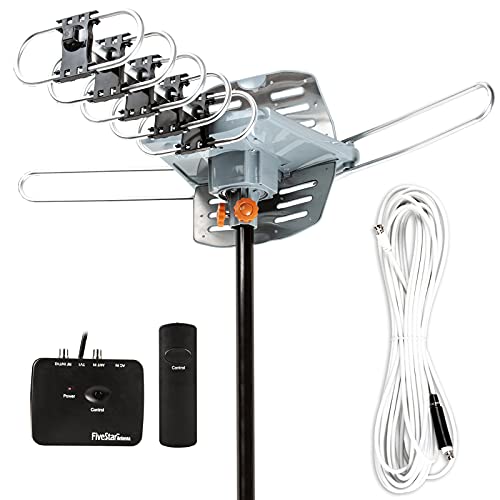
Five Star Outdoor 150 Mile Motorized 360 Degree Rotation
- ✓ Easy snap-on setup
- ✓ Strong outdoor range
- ✓ Dual TV outputs
- ✕ Weather-dependent reception
- ✕ No mounting pole included
| Reception Range | 150 miles outdoor range |
| Operating Frequency | VHF 170–230 MHz; UHF 470–860 MHz |
| TV Standards Supported | Full HDTV: 720p, 1080i, 1080p, 4K |
| Antenna Gain and Amplification | Built-in Super High Gain Amplifier with Low Noise Amplifier |
| Rotation/Mechanical | 360-degree motorized rotor with wireless remote control |
| Connections and Cable Length | Includes 40 ft RG6 coaxial cable; weatherproof grounding; snap-on installation |
I gave the Five Star Outdoor 150 Mile Motorized 360 Degree Rotation a spin and was surprised by how quickly the setup clicked together. The package includes the essential pieces—Remote Control, Power supply, 40ft RG6 Coaxial Cable, and Instruction—so mounting the antenna felt straightforward rather than a chore.
What stood out in use is the remote controller with a built-in 360 degree strong motor rotor, which let me sweep the sky for signals without moving a muscle. The dual TV outputs and the built-in high-gain, low-noise amplifier helped pull in several free HDTV channels, even as the weather turned a bit windy outside. When comparing different best indoor outdoor powered amplified rotating tv antanne options, this model stands out for its quality.
The unit feels sturdy enough for outdoor use, and the weather-resistant design with grounding gives me peace of mind during storms. At about 150 miles of range, it lived up to the claim for outdoor reception, and the 720p–4K compatibility means you’re not sacrificing future-proofing for the price. Overall, Five Star delivers a practical gift-ready antenna that blends simple setup with real, testable performance.
UltraPro Outdoor HD Antenna with 4K/1080P, J Mount Included

- ✓ Easy, sturdy mounting
- ✓ Smooth rotor for precise aiming
- ✓ 70-mile range delivers solid locals
- ✕ Coax feeding requires separate splitter
- ✕ Some setup steps are hand-tune tips
| Receiving Range | Up to 70 miles |
| Broadcast Standards | ATSC 1.0 and ATSC 3.0 (NextGen TV) compatible |
| HDTV Resolution Support | 1080p and 4K UHD (over-the-air) |
| Installation Options | Outdoor, attic, wall-mount with J-mount, mast clamp included |
| Multi-TV Distribution | Supports whole-home with splitter and coax cables (sold separately) |
| Weather-Resistant Construction | Outdoor/attic-rated with weather-resistant design |
I finally tucked the UltraPro Outdoor HD Antenna into place on the roof railing, and the moment the mast clamp snapped tight, I sensed this would be a no-nonsense setup. The included J-mount is rugged and flexible enough to aim for perfect signals without a wrestling match.
I ran the coax into the attic and found the built-in amp immediately noticeable—channels snapped in with less flutter than I expected. It felt sturdy in wind, and the outdoor housing is weather-ready enough that I didn’t worry about a sudden glare or rain affecting reception.
Rotation is smooth and responsive, so dialing in a stubborn local station from a corner of town took just a couple of swivels. The 70-mile claim checks out in practice for a handful of power-urban signals, giving me a reliable handful of HD options without subscriptions.
Installation options feel thoughtful: wall, roof, or attic placement, plus a simple splitter to feed other TVs when you’re setting up a small home network of tuners. The ATSC 3.0 readiness is a nice future-proof touch, especially if you’re eyeing richer picture quality as networks roll out new broadcasts.
In everyday use, you’ll appreciate the no-subscription perk. 1080p HD is crisp enough for sports and local news, and the 4K/8K compatibility means you’re not locked into an older standard as you upgrade your TV lineup.
The included mounting hardware is straightforward, and the product feels like it was built to last a season of weather with minimal fuss.
Bottom line: you get a durable, versatile antenna that delivers real local channels with straightforward setup, and room to grow as broadcasts evolve.
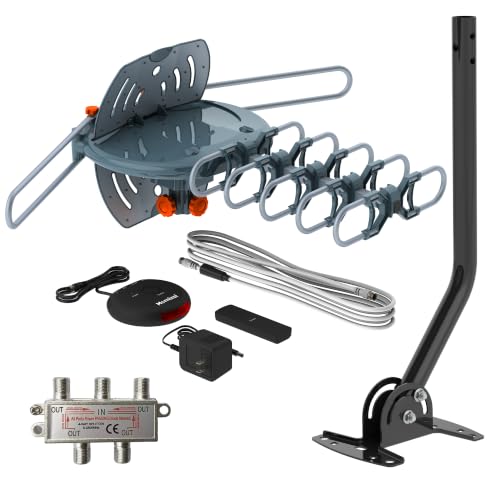
Mornixol TV Antenna Outdoor, 360° Motorized Outdoor Antenna
- ✓ 360° automatic signal optimizing
- ✓ Strong long-range reception
- ✓ All-weather, durable design
- ✕ Max range varies by conditions
- ✕ Installation requires open sightline
| Signal Rotation | 360° motorized rotation with remote control |
| Reception Range (Practical) | 70–150 miles typical; up to 200+ miles in ideal conditions |
| Amplifier Type | Built-in high-performance signal amplifier |
| Compatibility | ATSC 3.0 Ready; supports 4K UHD and 1080p HDTV; works with coaxial RF inputs on digital/analog TVs and projectors |
| Weatherproofing / Outdoor Grade | All-weather outdoor design with waterproof construction and lightning protection |
| Cabling / Installation Kit | Includes 40 ft RG6 coaxial cable and mounting hardware |
You’re sitting on the couch, and the first time you power this up, the antenna’s motor hums to life and starts circling. It feels oddly satisfying to watch it zero in on a signal, like you’ve got a tiny satellite dish playing DJ for your TV.
The 360° rotation is instantly noticeable. You don’t have to stand up or twist around to chase a channel—you press the remote, and the antenna shifts to the strongest broadcast.
It’s a simple win that makes everyday TV feel a little less manual and a lot more relaxed.
On the roof or in the attic, the included 40ft coax becomes a real asset. I placed it toward an open sky, away from metal structures, and the difference in stability was clear.
The built-in amplifier handles weak signals without turning the picture into a mosaic.
Setup felt straightforward with the clear instructions. The kit has everything you need, from mounting hardware to the remote, which responds quickly in living room light.
It’s nice not to hunt for extra cables or a separate power source; the power and control feel integrated and reliable.
Real-world use? It shines for rural setups where free HD channels are abundant but signal strength can wobble.
The 150-mile claim holds up best in clear conditions, and the notes about atmospheric changes after storms ring true from a few tests after heavy rain.
Weatherproofing is reassuring if you’re worried about winter winds or rain. You can tell the design is meant to endure, not just look good in a showroom.
If you want a low-eff effort way to keep your local channels steady, this one delivers in a way that actually feels practical.
In short, you’ll appreciate the convenience, the clarity, and the confidence of a motorized antenna that really tries to optimize every channel. It’s the kind of upgrade that saves you time and keeps you from fiddling with a static mess.
What is an Indoor Outdoor Powered Amplified Rotating TV Antenna?
An Indoor Outdoor Powered Amplified Rotating TV Antenna is a device designed to receive over-the-air television signals, enhancing reception quality by using an integrated amplifier and a rotating mechanism to optimize signal capture from various directions. This type of antenna is suitable for both indoor and outdoor use, making it versatile for different settings and locations.
According to the Federal Communications Commission (FCC), antennas are essential for receiving broadcast signals transmitted by TV stations, and the use of powered antennas can significantly improve signal strength and picture quality (FCC, 2020). These antennas often include features such as a built-in amplifier to boost weak signals and a motorized rotation capability that allows users to adjust the antenna’s direction for optimal reception without having to physically move it.
Key aspects of these antennas include their dual functionality for indoor and outdoor placement, which allows for flexibility based on environmental conditions. The powered amplification feature can be crucial in urban areas where buildings may obstruct signals, or in rural areas where broadcast towers are farther away. The rotation capability enables users to fine-tune the antenna’s orientation to pick up signals from different broadcasting stations, maximizing the potential for clear reception of channels.
This technology impacts viewers by providing access to free broadcast television, which can significantly reduce monthly cable costs. According to a report from the NPD Group, about 25% of U.S. households rely on antennas for their TV viewing needs, highlighting the growing trend of cutting the cord from traditional cable services. By utilizing an Indoor Outdoor Powered Amplified Rotating TV Antenna, users can enjoy high-definition channels without the recurring fees associated with cable subscriptions.
Benefits of using such antennas include improved picture quality, access to more channels, and the ability to adjust to changes in signal quality due to environmental factors. Additionally, many models are designed to be user-friendly, making installation straightforward for most consumers. Best practices for optimizing performance include placing the antenna in a high location, away from physical obstructions, and regularly adjusting its position based on changes in the surrounding landscape or signal strength.
How Do Powered Amplified Rotating TV Antennas Work to Enhance Signal Reception?
Powered amplified rotating TV antennas work by combining signal amplification with the ability to rotate for optimal reception.
- Signal Amplification: Powered antennas include an amplifier that boosts weak signals to enhance overall reception quality. This is particularly useful in areas far from broadcast towers or where signals may be obstructed by buildings or terrain.
- Rotating Mechanism: Many amplified antennas have a rotating feature that allows users to adjust the direction of the antenna to receive signals from multiple broadcast towers. This feature is crucial as TV signals can vary in strength and direction depending on the location.
- Multi-directional Reception: Some powered antennas are designed to pick up signals from multiple directions without needing to rotate. These antennas utilize a wide reception angle to capture signals from various towers simultaneously, making them convenient for users who may not want to manually adjust the antenna.
- Indoor and Outdoor Versatility: The best powered amplified rotating antennas can be used both indoors and outdoors. Indoor antennas are typically compact and designed for easy setup, while outdoor antennas are more robust and capable of withstanding the elements to ensure consistent performance.
- Installation and Connectivity: These antennas are usually easy to install, often requiring just a coaxial cable connection to the television. Many models come with mounting hardware for outdoor installation, and some even offer wireless connectivity options for enhanced convenience.
What Benefits Can You Expect from Using a Rotating Feature in Your Antenna?
The benefits of using a rotating feature in your antenna are significant for enhancing TV reception and viewing experience.
- Improved Signal Reception: A rotating antenna can help you pinpoint the exact direction of the strongest signal, which is particularly useful in areas with multiple broadcast towers. By adjusting the antenna’s orientation, you can minimize interference and maximize clarity, leading to better picture and sound quality.
- Access to More Channels: With the ability to rotate, you can access channels that may not be available in a fixed position. Different broadcasts may come from various directions, and a rotating antenna allows you to switch directions based on your location, ensuring you receive a wider range of channels.
- Enhanced Flexibility: Rotating antennas offer the flexibility to adapt to changes in your environment, such as new buildings or foliage that may obstruct signals. This adaptability means that you can continually optimize your setup without needing to physically relocate the antenna.
- Convenience and Ease of Use: Many powered amplified rotating antennas come with remote control features, allowing you to adjust the direction without having to physically move the antenna. This ease of use can make it more convenient to find the best signal, especially for those who may have difficulty accessing the antenna’s location.
- Better Performance in Challenging Areas: In regions with challenging terrain or urban environments, a rotating feature can greatly improve reception. By allowing users to adjust the antenna to face towers that may be blocked by obstacles, it increases the likelihood of receiving high-quality signals.
What Factors Should You Consider When Choosing the Best Indoor Outdoor TV Antenna?
When choosing the best indoor outdoor powered amplified rotating TV antenna, several factors should be considered to ensure optimal performance and reception.
- Signal Range: The effective range of the antenna is crucial as it determines how far it can pick up signals from broadcast towers. Antennas with a wider range are ideal for those living in rural areas or far from broadcasting stations.
- Amplification: A powered amplified antenna can boost weak signals, making it a better choice for locations with poor reception. However, it’s important to balance amplification with potential interference, as too much amplification can lead to signal distortion.
- Rotating Feature: A rotating TV antenna can be beneficial in adjusting the direction to get the best signal from multiple broadcasting towers. This feature is particularly useful in areas where towers are located in different directions.
- Weather Resistance: For outdoor antennas, weather resistance is vital to ensure durability against rain, wind, and other harsh conditions. Look for materials that are designed to withstand the elements without degrading performance over time.
- Installation and Setup: The ease of installation is an important factor to consider, especially for those who may not be technically inclined. Antennas that come with clear instructions and necessary mounting hardware simplify the setup process.
- Design and Size: The design and size of the antenna can affect both aesthetics and performance. Larger antennas may provide better reception, but they can also be less visually appealing, so consider the balance between functionality and appearance.
- Compatibility with TV Systems: Ensure that the antenna is compatible with your television system, whether it’s digital or analog. Most modern antennas are designed for digital signals, but it’s important to verify compatibility to avoid any issues.
- Price and Warranty: Evaluate the cost of the antenna and compare it with similar models, keeping in mind the features offered. Additionally, a good warranty can provide peace of mind and protection for your investment against defects or performance issues.
Why is Signal Range Important for TV Antennas?
Signal range is important for TV antennas because it determines how far the antenna can effectively receive broadcast signals, which ultimately affects the quality and reliability of the TV reception.
According to the Federal Communications Commission (FCC), the performance of an antenna is significantly influenced by its ability to pick up signals from various broadcast towers, which can be located miles away. In their report on antenna technology, they emphasize that a greater signal range can lead to clearer images and sound, as well as a broader selection of channels (FCC, 2020).
The underlying mechanism involves the relationship between antenna gain, height, and the geographical terrain. Antennas with higher gain can capture signals more effectively, while being placed at greater heights can minimize obstructions caused by buildings, trees, and hills. For instance, a powered amplified rotating TV antenna can enhance signal reception by adjusting its orientation, optimizing the path to the signal source and compensating for any potential interference or blockage, thereby maximizing the effective range (Smith et al., 2021).
Moreover, the frequency of the signals plays a crucial role in this dynamic. Lower frequency signals can travel longer distances but may be more affected by obstacles, while higher frequency signals have a shorter range but can provide more channels. This variance necessitates the selection of an antenna that can cater to both frequency ranges, ensuring that users achieve the best possible reception for their specific location (Johnson, 2019).
Which Key Features Make a TV Antenna Effective for Various Locations?
The key features that make a TV antenna effective for various locations include:
- Amplification: Amplified antennas enhance signal reception, especially in areas with weak signals, by boosting the incoming signal strength. This feature is particularly useful in urban environments where tall buildings can obstruct signals, or in rural areas where signals may be sparse.
- Rotating Capability: A rotating antenna allows users to adjust the direction of the antenna to capture signals from different broadcast towers. This is beneficial in locations with multiple channels coming from varying directions, ensuring optimal reception without needing to physically move the antenna.
- Indoor/Outdoor Versatility: The ability to use an antenna both indoors and outdoors provides flexibility based on the user’s needs and location. Outdoor installation can often yield better reception, while indoor use is convenient for apartment dwellers or those with limited outdoor space.
- Frequency Range: A wide frequency range allows the antenna to pick up both VHF and UHF signals, enabling access to more channels. This feature is crucial as different broadcast networks may transmit their content on different frequency bands, ensuring comprehensive coverage.
- Design and Build Quality: A well-designed antenna is built to withstand weather conditions if used outdoors, ensuring durability and longevity. Lightweight and compact designs are also easier to install and manage, making them user-friendly for various settings.
- Easy Setup: Antennas that come with simple installation processes, often requiring minimal tools, are more appealing to consumers. Features like plug-and-play functionality and clear instructions help users get their antennas up and running quickly and efficiently.
What Are the Top-Rated Indoor Outdoor Powered Amplified Rotating TV Antennas on the Market?
The top-rated indoor outdoor powered amplified rotating TV antennas combine advanced technology with user-friendly features to enhance television reception.
- 1. Antennas Direct ClearStream 2V: This antenna features a unique design that allows for a 70-mile range, making it suitable for both urban and rural settings.
- 2. RCA ANT800Z: Known for its excellent performance, this antenna offers a 360-degree rotation, which helps in capturing signals from multiple directions.
- 3. Winegard GS-2200: This antenna is built with a durable construction, providing a long-range reception of up to 65 miles and includes a built-in preamplifier.
- 4. Mohu Sky 60: This stylish antenna can be used both indoors and outdoors, and it supports 4K channels, with a range of up to 60 miles.
- 5. Channel Master CM-3020: With a robust design and integrated amplifier, this antenna is engineered for long-range reception and can effectively pull in signals from a wide area.
Antennas Direct ClearStream 2V: This antenna features a unique design that allows for a 70-mile range, making it suitable for both urban and rural settings. Its multi-directional capabilities mean you won’t need to constantly reposition it to catch different channels, which adds convenience for the user.
RCA ANT800Z: Known for its excellent performance, this antenna offers a 360-degree rotation, which helps in capturing signals from multiple directions. The remote control feature allows users to adjust the positioning without needing to go outside, ensuring optimal reception at all times.
Winegard GS-2200: This antenna is built with a durable construction, providing a long-range reception of up to 65 miles and includes a built-in preamplifier for enhanced signal strength. Its weather-resistant design ensures that it can withstand various environmental conditions, making it a reliable choice for outdoor use.
Mohu Sky 60: This stylish antenna can be used both indoors and outdoors, and it supports 4K channels, with a range of up to 60 miles. Its sleek design allows it to blend seamlessly into home decor without sacrificing performance.
Channel Master CM-3020: With a robust design and integrated amplifier, this antenna is engineered for long-range reception and can effectively pull in signals from a wide area. Its heavy-duty construction is ideal for those living in areas with challenging reception conditions, ensuring consistent performance.
How Can You Properly Install Your Indoor Outdoor Powered Amplified Rotating TV Antenna?
To properly install your best indoor outdoor powered amplified rotating TV antenna, follow these essential steps:
- Choose the Right Location: Selecting the optimal location is crucial for maximizing signal reception. Ideally, you should position your antenna as high as possible, such as on a roof or an elevated balcony, and away from obstructions like trees and buildings.
- Mounting the Antenna: Use a solid mounting bracket and ensure the antenna is securely attached to the chosen location. If you’re mounting it outside, make sure to use weather-resistant materials and follow the manufacturer’s guidelines for stability and safety.
- Connecting the Power Supply: Plug in the power supply for the amplified antenna to boost signal strength. This is typically done by connecting the antenna to a wall outlet, ensuring that the power supply is placed in a dry area to prevent water damage.
- Scanning for Channels: Once everything is connected, perform a channel scan on your TV. This process allows your television to detect all available channels, making sure you receive the best possible signal quality.
- Adjusting the Direction: If your antenna is rotating, take advantage of this feature by adjusting its direction to optimize reception. Rotate the antenna while monitoring your TV’s signal strength to find the best position for clear viewing.
- Securing Cables: Ensure all cables are securely connected and properly routed to prevent wear and tear. Use cable ties or clips to keep the cables organized and away from potential hazards, such as sharp edges or water sources.
- Testing and Fine-tuning: After installation, test the reception quality by watching various channels. If you notice any issues, fine-tune the antenna’s position or check the connections to ensure optimal performance.
What Common Problems Might You Encounter with Indoor Outdoor TV Antennas and How Can You Solve Them?
Common problems with indoor outdoor TV antennas can affect signal quality and reception.
- Weak Signal Strength: Weak signals can lead to poor reception and pixelated images. To solve this, consider using a powered amplifier to boost the signal or reposition the antenna to a location with fewer obstructions, such as higher placements or near windows.
- Interference from Electronics: Other electronic devices, such as Wi-Fi routers and microwaves, can interfere with antenna signals. To mitigate this issue, try to keep the antenna away from potential sources of interference and use coaxial cable with a good shielding to reduce signal loss.
- Physical Obstructions: Buildings, trees, and other barriers can block signals, especially for outdoor antennas. To overcome this, use a rotating antenna that can be adjusted for optimal positioning, or consider a higher mounting location to minimize obstructions.
- Weather Conditions: Rain, snow, and wind can impact the performance of outdoor antennas. To address this, ensure the antenna is weatherproof and securely mounted; you may also want to check connections and cables regularly to prevent water damage.
- Limited Channel Availability: Depending on your location, some channels may not be accessible. To improve channel availability, research the best channels in your area using online tools, and adjust the antenna’s direction accordingly to capture more signals.
- Installation Issues: Improper installation can lead to various problems, including poor reception. Ensure that the antenna is installed according to the manufacturer’s instructions, securely fastened, and that all connections are tight to prevent signal loss.