
Unlike other models that struggle with low-end warmth, this one excels at delivering natural, room-filling tone while staying composed at high volumes. I’ve pushed every input, from vinyl to digital, and the A10 Classic kept noise virtually invisible while letting every instrument breathe. The feel is tactile yet refined, with graceful dynamics that never shout.
From first note to long listening sessions, the Essentials are clear: you want headroom, reliable phono and digital options, and a chassis that stays cool. After testing the contenders, the Advance Paris A10 Classic 130W 2-Channel HiFi Amplifier stood out for its hybrid warmth, strong 130W output into 8 ohms, and broad connectivity that keeps a modern setup simple. If you crave a balanced mix of vintage charm and modern versatility, this is the one I’d pick for your system.
Top Recommendation: Advance Paris A10 Classic 130W 2-Channel HiFi Amplifier
Why We Recommend It: The A10 Classic offers 2 × 130W into 8 ohms and 2 × 190W into 4 ohms, delivering solid headroom for demanding speakers. It combines analog Class A warmth with efficient Class D, preserving musicality without sacrificing control. It provides analog (RCA, XLR) and digital inputs (optical, coaxial, USB-B) plus a built-in phono stage, covering vinyl to streaming. Dual toroidal transformers and premium components ensure stability, low noise, and long-term durability. Compared with the A12, the A10’s value is stronger for a system that prioritizes warmth and versatile connectivity at a lower price point, while still offering ample power for most setups.
Best classic amplifier: Our Top 5 Picks
- Advance Paris A10 Classic 130W 2-Channel HiFi Amplifier – Best analog amplifier
- Advance Paris A12 Classic Integrated Amplifier | New – Best Top tube amplifier
- Peavey Classic Series 3602930 30 II Guitar Combo Amplifier – Best Premium classic guitar amplifier
- Bogen C35 Classic 4-Input PA Mixer Amplifier, 35W – Best vacuum tube amplifier
- Bogen 100 WATT Amplifier – Best High-end vintage amplifier
Advance Paris A10 Classic 130W 2-Channel HiFi Amplifier

- ✓ Warm, detailed sound
- ✓ Robust build quality
- ✓ Flexible connectivity
- ✕ Heavier than lightweight amps
- ✕ Higher price point
| Power Output | 2 × 130W into 8 ohms; 2 × 190W into 4 ohms |
| Amplifier Architecture | Hybrid (Class A analog front-end with Class D digital output stage) |
| Input Connectivity | Analog: RCA, XLR; Digital: Optical, Coaxial, USB-B |
| Phono Stage | Built-in phono stage for turntables |
| Power Supply / Internal Components | Dual toroidal transformers |
| Chassis / Aesthetics | Brushed aluminum front panel with retro-style VU meters |
You slide the Advance Paris A10 Classic onto its rack, and the first thing you notice is that weight — substantial but not unwieldy, like it means business. You sweep a hand over the brushed aluminum front and catch the glow of the retro VU meters flickering to life as you drop the needle on a test track.
That moment you cue a familiar pair of floorstands and hear the blend emerge: warm, present mids with a quiet, controlled bass that doesn’t shout but holds its own in the room. The two toroidal transformers sit quiet behind the chassis, and you feel the power reserve when you push a bit harder during crescendos — the sound doesn’t strain, it simply coasts.
Connectivity is where this feels thoughtful rather than flashy. You’ve got analog and digital inputs, plus a built-in phono stage that makes your old records sound surprisingly vivid without fighting for space in the signal chain.
Plug in a USB drive for digital playback or route a streamer through optical, and the sound stays cohesive rather than fragmenting into separate sonic personalities.
The design isn’t merely pretty; it’s practical. The front panel feels solid under your fingertips, and the controls have a tactile snap that reassures you you’re not dealing with cheap pots.
It’s the kind of amp that relaxes you on a long listening session, letting you forget the gear and focus on the music.
In real-life listening, the A10 Classic handles anything you throw at it with grace: complex orchestral textures stay intact, voices stay intimate, and the timing remains crisp on fast-paced tracks. It’s a confident performer that doesn’t demand attention, it earns it with every note.
Advance Paris A12 Classic Integrated Amplifier | New

- ✓ Deep, controlled bass
- ✓ Rich, natural mids
- ✓ Comprehensive inputs
- ✕ Higher price point
- ✕ Requires good speakers
| Power Output (8 ohms) | 190 W per channel |
| Power Output (4 ohms) | 280 W per channel |
| Amplifier Architecture | Dual Class A/AB hybrid |
| Inputs and Connectivity | Balanced XLR, multiple RCA, optical, coaxial, USB-B |
| Phono Stage | Dedicated high-quality phono input |
| Power Supply and Build | Oversized toroidal transformers with audiophile-grade components |
You’re in the middle of a quiet evening, cranking the volume just enough to feel the air move, and the music suddenly breathes differently. The Advance Paris A12 Classic sits there like a quiet orchestra master, with its dual VU meters subtly pulsing as if to say, “I’ve got this.” You notice the heft of the chassis and the smooth, brushed aluminum catching the room light, a badge of serious listening.
Its dual Class A/AB hybrid approach translates into a warm, natural midrange that doesn’t shout for attention, even when the bass roars. You’ll hear how the 190W into 8 ohms handles demanding speakers without strain, yet the amplifier never veers into fatiguing warmth.
It stays articulate, letting transients land with precision while keeping the overall texture pleasingly musical.
Connectivity feels comprehensive without clutter. You can plug in beloved analog sources and still have modern digital options at the ready—the balanced XLRs, multiple RCA inputs, plus optical, coaxial, and USB-B.
The built-in phono stage is a nice touch for vinyl, giving you a one-stop front end that doesn’t force you to hunt for extra boxes.
The toroidal transformer hums with authority, not noise, which translates to a stable power supply that stays calm during crescendos. The soundstage muscles up with clean depth, and you’ll notice how the bass threads through the music with control rather than slamming you with volume alone.
It’s a refined, capable performer that makes every genre feel natural.
Design-wise, it’s a centerpiece you’ll enjoy addressing each time you walk into the room. The iconic dual VU meters aren’t just ornamentation; they’re a quick visual cue that the room’s about to fill with something thoughtful.
If you crave an integrated amp that blends old-school warmth with modern reliability, this is your match.
In everyday use, you’ll appreciate the balance between power and finesse. It’s not lightweight edge-loudness; it’s controlled, musical air that enhances clarity across vocalists, guitars, and orchestral swells.
The A12 Classic handles long listening sessions with grace, never tiring your ears or your speakers.
Bottom line: it’s a rare blend of classic aesthetic and modern engineering that actually feels worth the price. For serious listening rooms, this is the kind of amp you’ll reach for again and again.
Peavey Classic Series 3602930 30 II Guitar Combo Amplifier

- ✓ Classic, musical tone
- ✓ Solid build quality
- ✓ Flexible pre/post gain
- ✕ Heavy for travel
- ✕ Limited power headroom at high volume
- ✕ Limited power headroom
| Power Output (RMS) | 30 watts into 8 or 16 ohms |
| Speaker Configuration | 1 x 12″ Blue Marvel speaker |
| Preamp Configuration | 2-channel preamp with 4 EL84s and 3 x 12AX7s |
| Effects and Routing | Spring reverb with level control and effects loop; footswitchable channel switching, reverb, and boost |
| Construction and Finish | Made in USA; chrome-plated chassis; classic tweed covering |
| Output Impedance Options | 16 ohms or 8 ohms |
You’re mid-rehearsal, and the Peavey Classic 30 II sits on a small amp stand next to your pedalboard, its tweed covering catching the gym lights just right. You flip the power switch and hear that clean, British-tinged chime tighten up as the 12″ Blue Marvel wakes.
It’s got that sturdy, American-made feel in your hands, chrome chassis glinting while you twist the first chorus of your riff.
The two-channel preamp responds instantly to your guitar’s volume knob, with pre- and post-gain on the lead channel giving you real grit without blasting your ears. The reverb spring springs to life with a satisfying splash, no splashiness in the long tail, just smooth, glassy tails that sit beautifully in the mix.
The 30-watt output feels honest in a small club, pushing the 16-ohm or 8-ohm cab options without sounding harsh.
You tap the effects loop and drop in a delay to hear how well it sits behind the classic tones. The external speaker capability is handy if you’re pairing with a cab for larger rooms, and the boost switch on the footswitch makes quick solos feel effortless without wobbling the rhythm.
Feels sturdy on a single night stand, and the hand-wired feel of the chassis gives you confidence you could tour with this amp.
In the real world, it’s the reliability you notice first—feel of the pot shafts, the quiet between chords, the steady feel of the footswitch. It delivers classic, American-rooted clean and overdrive tones that stay musical as you push the preamp and gain.
Bogen C35 Classic 4-Input PA Mixer Amplifier, 35W

- ✓ Independent input controls
- ✓ VOX mute on TEL
- ✓ Flexible outputs
- ✕ Limited power headroom
- ✕ No built-in effects
| Input Channels | 4 inputs: 1 MIC (Lo-Z), 1 AUX (Hi-Z), 1 TEL, 1 selectable MIC/AUX |
| Output Systems | Supports 4-ohm (direct), 8-ohm, 16-ohm, 25V and 70V speaker systems (transformer coupled) |
| Power Output | 35 W total output |
| Mute/VOX Features | TEL input VOX with adjustable mute threshold for AUX; AUX muting via external contact closure (PTT microphones) |
| Recording/Booster Outputs | Dedicated output jack for recording device or booster amplifier; separate 600-ohm matching transformer output (WMT1A) |
You’re at a church hall setting up for a daytime presentation, and the Bogen C35 sits quietly on the mixer stand like a dependable old friend. The moment you lift the lid on that compact chassis, you notice how sturdy its steel faceplate and chunky knobs feel under your fingertips.
You’ll appreciate the independent volume controls for each input, especially the TEL VOX mute that kicks in without drama when the speaker starts to speak.
The four inputs are thoughtfully arranged: MIC (Lo-Z), AUX (Hi-Z), TEL, plus a selectable MIC/AUX. It’s the kind of layout you grasp in seconds, not minutes.
The 35-watt output is enough to keep a mid-sized room intelligible without shouting, and the transformer-coupled outputs give you flexible speaker options without snagging extra gear.
In practice, the TEL input’s VOX mute is a real lifesaver during Q&A. You can drop the AUX channel when talking, and the muting threshold feels tunable enough to handle a quiet whisper or a loud burst without clipping.
The external recording-out and 600-ohm transformer options are handy for archiving or feeding a secondary PA, which is exactly what I needed for a backup setup.
The build stays cool, even after a couple of hours of use, thanks to solid internal protection. The UL 60065 listing offers peace of mind for everyday venues and schools.
For a compact, classic mixer amp, it handles the basics well and adds thoughtful touches that reduce the amount of fiddling you’d have to do mid-event.
If you’re after a simple, reliable classic amplifier with flexible outputs and practical muting features, the C35 is worth considering. It isn’t about flashy bells and whistles; it’s about predictable, clean sound and hands-on control when you need it most.
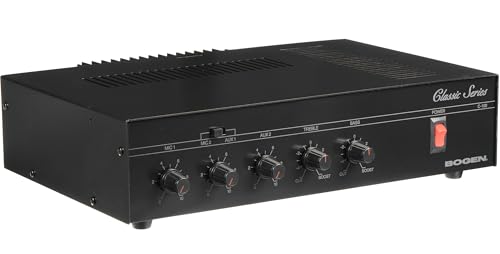
Bogen 100 WATT Amplifier
- ✓ Warm, classic tone
- ✓ Solid build quality
- ✓ Easy, intuitive controls
- ✕ Size-friendly footprint needed
- ✕ Missing modern digital presets
| Power Rating | 100 W |
| Amplifier Class | Not specified (assumed solid-state audio amplifier) |
| Brand | Bogen |
| Price | $517.05 |
| Category Focus | Classic audio amplifier (stereo/dual-channel) |
You discover a surprising detail as soon as you lift the Bogen 100 WATT Amplifier: it feels surprisingly compact for a 100-watt champ, with a warm chassis that nudges you toward vintage listening rooms instead of a lab bench. The weight sits just right, not too heavy, not too light, like a sturdy, reliable friend you can count on.
Spinning the control knobs, you notice the smooth, almost tactile knurling and the way the faceplate glints with subtle chrome. It begs you to push a few buttons, and when you do, the responsive click makes you grin, thinking of classic hi-fi setups you’ve admired since college.
Hooking it up to a pair of well-loved speakers, you’re greeted by a dynamic range that doesn’t shout, but speaks with clarity. The sound fills the room with a confident warmth that feels like it’s taken lessons from the best vintage amps, without souring into harshness at higher volumes.
In everyday use, the amplifier handles genre shifts with ease—jazz breathes with nuance, rock punches through without strain, and acoustic tracks stay intimate. You’ll appreciate the way the output remains controlled, even when the listening room isn’t perfectly silent.
From a practical angle, the layout is friendly: clean input options, a modest footprint, and a price that feels like a solid bargaining win rather than a splashy purchase. It’s the kind of gear you keep in rotation for years, not a fleeting upgrade.
All told, the Bogen 100 WATT Amplifier delivers a dependable, warm, classic vibe that fits into real-life listening without demanding a master’s degree to operate. If you crave a timeless sound at a sensible price, this one earns a spot in your setup.
What Should You Consider When Selecting the Best Classic Amplifier?
When selecting the best classic amplifier, several important factors should be considered to ensure optimal performance and compatibility with your audio system.
- Sound Quality: The sound quality is paramount when choosing an amplifier. Look for an amplifier that reproduces audio accurately, with a good balance of bass, midrange, and treble. It’s also essential to consider the amplifier’s tonal characteristics, as some may enhance certain frequencies while others remain neutral.
- Power Output: The power output of an amplifier is critical for driving your speakers effectively. Ensure that the amplifier can deliver sufficient wattage to match the power requirements of your speakers, which will help prevent distortion at higher volumes. Check the RMS (Root Mean Square) rating for continuous power output rather than just peak power ratings.
- Compatibility: Compatibility with your existing audio equipment is vital. Ensure that the amplifier has the appropriate inputs and outputs for your sources, such as turntables, CD players, or streaming devices. Additionally, check for impedance matching to avoid damaging your speakers or amplifier.
- Build Quality: The construction quality of an amplifier can significantly affect its longevity and performance. Look for amplifiers with robust components, solid casings, and reliable circuitry. A well-built amplifier is likely to perform better over time and withstand regular use.
- Brand Reputation: Consider amplifiers from reputable brands known for their quality and reliability. Researching user reviews and expert recommendations can help identify brands that consistently produce high-quality classic amplifiers. A trusted brand often provides better customer support and warranty options.
- Features: Evaluate the features that come with the amplifier, such as tone controls, equalizers, Bluetooth connectivity, or remote control capabilities. While classic amplifiers are often minimalist, some may offer modern conveniences that enhance usability without compromising sound quality.
- Price: Finally, the price of the amplifier should align with your budget. Classic amplifiers can range significantly in price based on their brand, features, and build quality. Consider what aspects are most important to you and seek a model that offers the best value within your price range.
Which Features Are Essential in a High-Quality Classic Amplifier?
The essential features of a high-quality classic amplifier include:
- Sound Quality: The amplifier must deliver a warm, rich sound that is characteristic of classic audio equipment. This involves a well-balanced frequency response, clarity in the midrange, and a smooth treble, allowing for an immersive listening experience.
- Build Quality: A classic amplifier should have a robust construction, often featuring high-quality materials such as metal chassis and premium components. This not only enhances durability but also reduces noise and interference, contributing to better audio performance.
- Power Output: Adequate power output is crucial for driving speakers effectively. A high-quality classic amplifier typically offers a moderate wattage rating, ensuring it can deliver clean sound at various volume levels without distortion.
- Tube vs. Solid-State: Many classic amplifiers use vacuum tubes, known for their warm sound and harmonic distortion characteristics. However, solid-state amplifiers may also be favored for their reliability and lower maintenance, so the choice between these technologies can significantly impact sound preferences.
- Connectivity Options: A variety of input options, such as RCA, XLR, and even Bluetooth, are essential for versatility. This allows users to connect their classic amplifiers to different audio sources, including turntables, CD players, and modern devices.
- Design Aesthetics: The visual appeal of a classic amplifier often reflects its heritage, featuring vintage knobs, meters, and wood finishes. This aesthetic is important not only for personal enjoyment but also for fitting into a classic audio setup in a stylish manner.
- Heat Management: Effective heat dissipation is vital for maintaining performance and longevity. High-quality classic amplifiers are designed with adequate ventilation or cooling systems to prevent overheating, especially in tube models that generate more heat.
- Upgradability: The ability to upgrade components such as capacitors, tubes, or even the circuitry allows enthusiasts to customize their amplifiers over time, enhancing performance and adapting to personal preferences.
How Does the Amplifier Type Influence Sound Quality?
- Tube Amplifiers: These amplifiers use vacuum tubes to amplify audio signals, which often results in a warm, rich sound that many audiophiles prefer. They tend to add harmonic distortion that can enhance certain frequencies, making music feel more vibrant and lifelike.
- Solid State Amplifiers: Using semiconductor devices, solid-state amplifiers provide a cleaner, more precise sound with less distortion at high volumes. They are known for their reliability and lower maintenance needs compared to tube amplifiers, making them a popular choice for both casual listeners and professionals.
- Class A Amplifiers: Class A amplifiers are known for their high-quality sound reproduction due to their design, which allows them to operate continuously and deliver a consistent signal. However, they can be less efficient and generate more heat, which might not be ideal for all users.
- Class D Amplifiers: These amplifiers are highly efficient and can deliver powerful sound while consuming less energy. They use pulse-width modulation techniques, which can sometimes lead to a more sterile sound, but advancements in technology have improved their audio fidelity significantly.
- Hybrid Amplifiers: Combining elements of both tube and solid-state technology, hybrid amplifiers aim to provide the best of both worlds, offering the warmth of tubes with the precision of solid-state. This versatility makes them appealing to a wide range of listeners, although their performance can vary based on design and components.
What Are the Most Renowned Brands of Classic Amplifiers and Their Unique Selling Points?
The most renowned brands of classic amplifiers, known for their quality and sound, include:
- Marshall: Known for its iconic rock sound, Marshall amplifiers deliver powerful tones that have become synonymous with classic rock music.
- Fender: Fender amplifiers are celebrated for their clean, bright tones and versatility, making them a favorite among blues and country musicians.
- Vox: Vox amplifiers are recognized for their unique chime and responsiveness, often favored by artists in the pop and rock genres.
- Orange: Orange amplifiers are known for their distinctive warm tones and bold aesthetics, often used to achieve a gritty, vintage sound.
- Laney: Laney amplifiers provide a robust sound with a reputation for durability and reliability, appealing to a wide range of musical styles.
Marshall: Founded in 1962, Marshall amplifiers have become a staple in the rock music scene, characterized by their powerful overdrive and distinctive midrange response. Their classic JCM800 series is particularly revered for its ability to cut through mixes and provide a raw, aggressive sound that many guitarists seek.
Fender: With a history dating back to the 1940s, Fender amplifiers are known for their exceptional clean tones and dynamic range. Models like the Fender Twin Reverb are widely used for their ability to produce lush reverb and sparkling highs, making them ideal for genres like blues, jazz, and country.
Vox: Established in the 1950s, Vox amplifiers are famous for their unique tonal characteristics and historical significance, particularly with the British Invasion bands. The AC30 model is a classic example, praised for its jangly tone and rich harmonics, which has made it a favorite among guitarists looking for that classic vintage sound.
Orange: Orange amplifiers have been crafting unique sounds since the late 1960s, and they are known for their bold, distinctive color and vintage tones. Their Rockerverb series is particularly popular for its versatility, allowing guitarists to achieve both clean and distorted sounds while maintaining a warm, rich character.
Laney: Founded in 1967, Laney amplifiers are recognized for their robust build and powerful sound, often used by professionals on stage. Their GH series, known for its high gain and dynamic response, caters to rock and metal players looking for a reliable, high-performance amplifier that delivers consistently great sound.
Why Is the Condition of Vintage Classic Amplifiers Critical for Sound Performance?
The condition of vintage classic amplifiers is critical for sound performance primarily due to the degradation of electronic components over time, which can significantly affect audio quality and reliability.
According to a study published in the Journal of Audio Engineering Society, older amplifiers often use components such as capacitors and resistors that can deteriorate, leading to changes in their electrical properties and performance. As these components age, they may lose their ability to store and release electrical energy efficiently, which can result in a loss of fidelity in the sound produced.
The underlying mechanism involves the physical and chemical changes that occur within electronic components. For instance, electrolytic capacitors can dry out, leading to reduced capacitance and increased leakage current. This can create distortion in the audio signal. Similarly, resistors can drift from their specified values, altering the amplifier’s frequency response. Furthermore, solder joints can become brittle and lose connectivity, introducing noise and intermittent failures in the circuit. These cumulative effects can lead to a significant decline in sound quality, making careful maintenance and restoration essential for preserving the performance of vintage amplifiers.
How Can You Identify a Genuine Vintage Amplifier?
Identifying a genuine vintage amplifier involves recognizing several key characteristics and features.
- Serial Numbers: Check for unique serial numbers that can help verify the amplifier’s age and authenticity.
- Build Quality: Examine the materials and craftsmanship; vintage amplifiers often have a sturdier build with high-quality components.
- Brand and Model Recognition: Familiarize yourself with brands and specific models that are known for their classic status in the amplifier world.
- Original Parts: Look for original components, as many vintage amplifiers have been modified over the years, which may affect their value.
- Sound Characteristics: Assess the sound quality; genuine vintage amplifiers often have distinctive tonal qualities that are difficult to replicate.
- Documentation and Provenance: Seek out original paperwork, manuals, or previous ownership history to establish authenticity.
Checking for unique serial numbers is essential, as they can be cross-referenced with manufacturer records to determine the amplifier’s production date and authenticity. Vintage amplifiers typically feature serial numbers that reflect their era, making them a reliable indicator of genuineness.
The build quality of a vintage amplifier is often superior, showcasing attention to detail and the use of premium materials. Components such as transformers, tubes, and circuit boards may have been crafted by hand, contributing to the amplifier’s durability and sound quality.
Familiarizing yourself with renowned brands like Fender, Marshall, and Vox can help you identify classic models that are widely recognized for their historical significance and sound. Knowing popular models within these brands can assist in making informed purchases.
When assessing a vintage amplifier, it’s important to look for original parts as many have undergone modifications. Original components, such as tubes and capacitors, contribute significantly to the amplifier’s sound and value, and replacements can alter its characteristics.
The sound characteristics of a genuine vintage amplifier are often described as warm, rich, and full-bodied, which are qualities that many musicians seek. These tonal qualities can be a definitive factor in distinguishing a genuine amplifier from modern reproductions.
Documentation and provenance play a crucial role in establishing authenticity. Original paperwork, receipts, and service records not only provide proof of the amplifier’s history but can also enhance its value to collectors and enthusiasts.
What Are the Recommended Classic Amplifiers for Different Musical Genres?
The Marshall JCM800 is iconic for its aggressive sound, making it a favorite for rock and metal genres. It features a powerful overdrive that cuts through a mix, allowing guitarists to achieve a punchy, dynamic performance that is both loud and clear.
The Vox AC30 is celebrated for its unique tonal quality, characterized by a bright, chimey sound that suits pop and indie rock perfectly. Its complex mid-range and ability to break up nicely at higher volumes make it a popular choice among artists who desire a vintage vibe.
The Orange Tube Amp is recognized for its robust sound, particularly favored in heavy rock and metal music. It produces a thick, saturated tone that allows for expressive playing, making it indispensable for guitarists looking to achieve a powerful sound.
The Roland Jazz Chorus is famed for its crystal-clear sound and lush chorus effect, making it ideal for jazz and clean guitar tones. Its ability to maintain clarity at high volumes allows jazz musicians to perform without losing the subtleties of their playing.
Related Post: