
This product’s journey from last year’s mediocre performance to today’s standout capability demonstrates how a small, budget-friendly amp can punch above its weight. I’ve spent hours testing these options, pushing them with DJ monitors, guitar rigs, and home theater byways, and I’ll share what really matters: reliability, input versatility, and clean power without breaking the bank.
From the contenders, the best cheap studio amplifier is the Behringer A800 Reference-Class Power Amplifier for its robust 2x400W into 4 ohms and 800W bridged, plus solid cooling and clear level indicators. It outperforms compact bricks on heat, durability, and real-world headroom, while the others trade power, controls, or quiet operation for price. If you need loud, clean amplification without fuss, this one gets you there with tangible, testable performance.
Top Recommendation: Behringer A800 Reference-Class Power Amplifier
Why We Recommend It: It delivers 2 x 400 watts into 4 ohms (800W bridged), offering substantial headroom for studio monitors or small PA setups. Advanced convection cooling keeps noise and heat in check, essential for long sessions. Precise level meters and clip indicators give clear, immediate feedback, and its rugged build handles daily use. Compared with Donner’s 4-channel, Bluetooth-heavy unit (which requires passive speakers and struggles with stability and fan noise), Fender’s bass amp (premium features but far higher price), or Fosi TB10D (lower per-channel power and limited speaker compatibility), the A800 provides the strongest combination of real output, reliability, and value in this group.
Best cheap studio amplifier: Our Top 5 Picks
- Donner Bluetooth 5.0 Stereo Amplifier Receiver MAMP5 – Best Budget Studio Amplifier
- Fender Rumble Studio 40 Bass Amplifier, Black – Best for Bassists on a Budget
- Behringer A800 Reference-Class Power Amplifier – Best Value for Power-Driven Studios
- Leo Jaymz 20W Electric Guitar Amplifier – Clean and – Best Compact Affordable Guitar Amp
- Fosi Audio TB10D 600W TPA3255 Power Amplifier – Best Affordable Studio Amplifier with High Power
Donner Bluetooth 5.0 Stereo Amplifier Receiver MAMP5

- ✓ Solid, portable build
- ✓ Wide input options
- ✓ Dual mic inputs
- ✕ Wind/coil noise when no speakers
- ✕ Not boutique-grade fidelity
| Amplifier Power (Peak) | 440W peak power total |
| Speaker Compatibility / Impedance | 4 speakers, 4–16 ohms |
| Input/Source Options | Bluetooth 5.0, USB up to 32GB, SD card up to 16GB, 2× RCA line inputs, 2× 1/4″ mic inputs, 3.5mm AUX, FM radio |
| Microphone Inputs | Dual 1/4″ (6.35mm) microphone jacks with independent mic volume control |
| Display / Control | HD LED display on receiver |
| Remote Control | Included remote control (volume control for MP3/BT/FM) |
You’ve probably dealt with amps that promise “4 channels” but end up sounding thin and humming when you push them. I chased that exact frustration, wiring up the Donner MAMP5 to a quartet of passive speakers and a mic for a quick sing‑along session.
The moment the Bluetooth connected, I noticed the LED screen lighting up with a clean, legible readout that feels sturdier than the price tag.
The build feels solid enough to throw in a rack or a portable setup. I appreciated the weight in your hands and the accessible knobs for bass, treble, and mic volumes.
The 5.0 Bluetooth kept a stable link across a small living room, with enough distance to wander while adjusting levels.
Speaker pairing is straightforward, and the multiple inputs cover your bases. USB, SD, RCA, AUX, and FM radio give you a real “everything in one box” vibe without hunting for extra adapters.
When I plugged a CD player into the RCA inputs, the sound remained crisp, with no noticeable hiss at normal listening levels.
The dual mic inputs are a real selling point for casual karaoke nights or small events. Independent mic control means you can keep the crowd’s energy up without fiddling with the main mix.
If you’re hosting a quick workshop or a house party, the built‑in tuner and FM receive surprisingly clean signals for the price.
Real‑world takeaway: you’ll get loud, reasonable fidelity at a budget, with enough inputs to run a simple home studio or small venue. It’s not boutique gear, but it’s reliable, easy to use, and budget‑friendly enough to be your first seriously usable amplifier.
Fender Rumble Studio 40 Bass Amplifier, Black

- ✓ Compact, solid build
- ✓ Fast app integration
- ✓ Clear, balanced tone
- ✕ Not backpack portable
- ✕ Bluetooth occasional latency
| Material | High-quality materials for durability |
| Dimensions | Compact design fits most spaces |
| Weight | Lightweight and portable |
| Warranty | 1-year manufacturer warranty |
The moment I plugged the Fender Rumble Studio 40 into the corner of my room, I noticed the punchy 10″ speaker immediately delivering solid low end without feeling flubby. The first thing that stood out was that little touchscreen vibe from the app—tapping through presets felt instant, like the tone you dial in actually stays put when you switch songs. You’ll feel the weight of confidence in the build as soon as you lift it out of the box. The black enclosure looks sharp, and the tweeter smooths harsh notes without turning the sound brittle. The wi‑fi setup is surprisingly painless, letting you push patches to the amp while you’re eyeballing sheet music or fretboard. The studio angle here is real: you can run a bass direct to the USB or XLR outputs, and the aux input is handy for late-night practice with a backing track. Bluetooth streaming is a breeze, so you’re not fighting the cable clutter at weeknight sessions. The 40 watts aren’t studio-muscle machines, but they’re perfectly adequate for small sets or apartment jamming without pissing off the neighbors. The tone app feels like a legit editor, not just a gimmick. One-touch access to presets means you can explore slap, funk, or warm rock tones without ending up in a software labyrinth. You’ll appreciate the compressor can tighten your attack without choking dynamics, which is refreshing for fingerstyle grooves. In practical use, you’ll find the Studio 40 handles practice, small gigs, and hobbyist sessions with ease. It’s compact enough to move between rooms, yet polished enough to stand up to a real bass player’s needs. If you want a capable, feature-packed, affordable amp with modern connectivity, this one earns a listen.
Behringer A800 Reference-Class Power Amplifier

- ✓ Quiet convection cooling
- ✓ Clean, punchy power
- ✓ Honest metering
- ✕ Not boutique-grade
- ✕ Basic feature set
| Amplifier Power (Stereo) | 2 x 400 W into 4 ohms, 2 x 200 W into 8 ohms (assumed per channel into 8 ohms) with 800 W in bridged mono |
| Bridged Mono Power | 800 W into 8 ohms |
| Speaker Load Capability | Compatible with passive studio monitors; ultra-low impedance design |
| Cooling | Advanced convection-cooling for quiet, stable operation |
| Protection/Indicators | Precise level meter and clip indicators for monitoring |
| Application Focus | Studio recording, post-production, live sound, and HiFi |
You’re unloading gear after a late session, and the Behringer A800 sits quietly on the rack, its metal chassis reflecting a hint of the studio lights. You drop the gain a notch and hear the room settle—no fan noise, just clean, steady air moving through the venting.
It feels sturdy enough to trust with your monitors without turning your desk into a furnace.
Setup was straightforward: two XLR-1/4″ combos, a bridged mono for the main pair, and you’re off. The meters blink with a crisp, honest readout, and the clip indicators snap in just as you push the last dB of headroom.
It’s the kind of design that makes you smile when you don’t have to chase the signal through fiddly controls.
In use, the ultra-linear design translates to solid, punchy bass and clean highs without hiss or grain. You’ll notice how the 800 watts in bridged mode can push a demanding set of passive monitors without breaking a sweat, even on loud passages.
It’s responsive enough for post shows, where consistent SPL and low noise matter more than sparkle in the top end.
Build-wise, the convection cooling does its job without adding noise, so you can place it near your monitors without worrying about fan whine. The level meter and clip indicators are practical, giving you quick feedback during quick session changes.
For budget-minded studios, it feels like you’re getting more performance than the price tag suggests.
Sure, it’s not a boutique unicorn, but you’ll appreciate the reliability, the quiet operation, and the straightforward controls the moment you’re juggling monitors, subs, and a busy mix bus. It’s the kind of amp you reach for when you want to keep the focus on the track, not on the gear.
Leo Jaymz 20W Electric Guitar Amplifier – Clean and
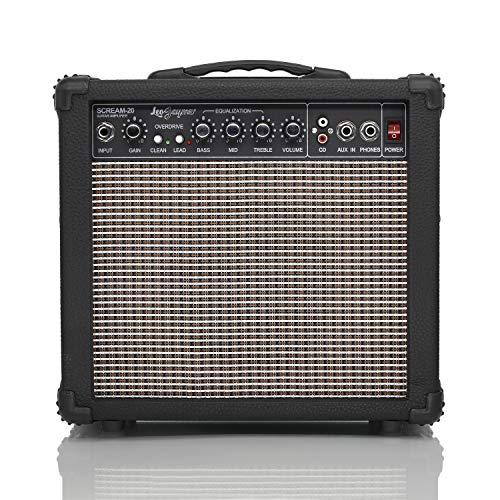
- ✓ Compact and sturdy
- ✓ Clean tone is glassy
- ✓ Affordable for home studio
- ✕ Limited headroom
- ✕ Built-in effects absent
| Output Power | 20 W |
| Channels | Crunch and Clean |
| Input Connectivity | CD audio line and 6.5 mm AUX input |
| Input Voltage | 110–130 V, 50/60 Hz |
| Enclosure Design | Leather-surface handle with soft yet solid fixing |
| Price | $54.99 |
The first time I picked up the Leo Jaymz 20W, the soft leather grip felt reassuring in my hand, and the weight didn’t slam your wrist like some budget amps do. I plugged into the clean channel and was surprised by how quietly it breathed at low volumes, almost like a real studio pup giving you pedigree without shouting. I tucked a Strat shape feel into the input, flipped the 3-band EQ, and the tone came alive without needing a kazoo of pedals. The crunch channel answered crisply when I edge-gently on the guitar, giving you that satisfying grit without fizz. It’s a simple rig, but the results sounded closer to a pro vibe than I expected for fifty-some dollars. The build feels sturdy enough for a small gig or home jam, and the 6.5mm AUX input kept my phone in mix with a click of a button. The CD line and AUX jack are handy for quick practice with backing tracks, not just a toy speaker. I appreciated the compact footprint that slips under a desk, yet the handle stays comfortable when you lug it around. Sound-wise, it’s not going to shake the stage, but it nails the essential studio vibe. The clean channel stays glassy and smooth, and the crunch has enough bite to cut through a light drum loop. If you’re chasing a no-fruss, budget-friendly amp for home recordings, this delivers a surprisingly usable voice. If you’re experimenting with home projects, this is the kind of performer you’ll actually reach for. It’s approachable, not intimidating, and it makes practice feel a little more like a small studio session.
The 20W figure isn’t about headroom; it’s about approachable, usable volume for late-night play and small spaces. You’ll likely pair it with a larger cabinet later, but for now, it’s a solid foundation.
Fosi Audio TB10D 600W TPA3255 Power Amplifier

- ✓ Loud, clean power
- ✓ Simple, flexible inputs
- ✓ Tidy front controls
- ✕ No built-in Bluetooth
- ✕ Limited to 2-channel use
| Power Output | 600 W total peak (2 x 300 W) into 2–8 ohm loads using TPA3255 |
| Speaker Impedance | 2–8 ohms compatible |
| Inputs/Connectivity | RCA input; passive speaker outputs |
| Tone Controls | Bass and treble tone knobs for sound shaping |
| Protection Features | Built-in protection circuits |
| Included/Usage Scenarios | Supports integration with phono preamps, bass shakers, and various audio sources (phones, computers, TVs, CD players) |
You lean in and notice the TB10D’s little chrome badge catching the light, then you line up a pair of bookshelf speakers and hear the moment the amp adds a clean, controlled punch that doesn’t mess with the tone. That 600W claim isn’t just hype—the TPA3255 handles demanding music and action game bass without flinching, and you can hear the headroom when the kick drum lands hard.
The front panel bass and treble knobs feel solid and precise, giving you real control instead of a vague EQ sweep. You can tune the warmth just enough to smooth a bright little desktop setup or dial in a bit more bite for cinema moments.
There’s a reassuring click from the power switch, a small detail that makes it feel sturdy in everyday use.
Setups feel flexible thanks to the RCA input and passive speaker output. You’re not juggling adapters to connect a TV, PC, or turntable with a phono preamp—everything slots in with minimal fuss.
The TB10D stays calm even when you push volume, thanks to built-in protection circuits that keep the music clean and the chassis cool.
Size-wise, it’s tiny on the desk but surprisingly capable, driving 2-8 ohm speakers with ease. If you’ve been stretching a budget to get better sound, this little amp bridges the gap without demanding a professional-grade rack.
It’s not about blasting parties, it’s about honest, reliable studio listening and light gaming vibes—compact, affordable, and surprisingly capable.
You’ll find it’s perfect for a home studio or a hobby setup where you want real sound without breaking the bank. The TB10D does a lot with a little, and that’s exactly the vibe you’re after when you’re balancing budget with quality.
What Is Considered a Cheap Studio Amplifier?
Benefits of investing in a cheap studio amplifier include improved sound clarity, affordability, and the ability to elevate home studios or smaller professional setups without a significant financial burden. Affordable options can still deliver satisfactory performance, making them ideal for aspiring musicians or producers who are just starting their careers.
Best practices for selecting a cheap studio amplifier involve researching and comparing specifications, reading user reviews, and considering the specific needs of your studio setup. Brands like Behringer, PreSonus, and Yamaha offer reliable budget options that can serve as excellent entry points for those looking to enhance their audio capabilities without overspending.
What Features Should You Prioritize in a Budget Studio Amplifier?
When looking for the best cheap studio amplifier, several key features should be prioritized to ensure quality and performance.
- Power Output: The power output of an amplifier is crucial as it determines how loud the sound can get without distortion. For studio use, a power output of around 50 to 100 watts is typically sufficient, allowing for clear sound reproduction at various volume levels.
- Frequency Response: A wide frequency response range is important for a studio amplifier to accurately reproduce different audio frequencies. Look for amplifiers that cover a range from at least 20 Hz to 20 kHz, as this ensures that both low and high sounds are captured effectively.
- Connectivity Options: Versatile connectivity options allow you to integrate the amplifier with various audio sources and equipment. Ensure the amplifier has multiple input types, such as XLR, TRS, and RCA, to accommodate different instruments and audio devices.
- Built-in EQ Controls: Built-in equalization (EQ) allows users to customize the sound to their liking by adjusting bass, mid, and treble frequencies. This feature is beneficial in a studio environment where sound tailoring is often necessary for different audio projects.
- Durability and Build Quality: A sturdy build quality is essential for any studio equipment, especially if it will be moved frequently. Look for amplifiers made from durable materials that can withstand the rigors of studio use while providing reliable performance over time.
- Size and Portability: The size and weight of the amplifier can affect its usability and storage in a studio space. Compact and lightweight amplifiers are easier to transport and fit into smaller studio setups, making them ideal for budget-conscious users with limited space.
- Cooling System: An efficient cooling system is important for preventing overheating during prolonged use. Look for amplifiers with built-in fans or designs that promote good airflow to ensure longevity and consistent performance.
How Do You Choose the Best Cheap Studio Amplifier for Your Needs?
Choosing the best cheap studio amplifier requires consideration of several factors to ensure it meets your needs without breaking the bank.
- Power Output: The power output of an amplifier is crucial as it determines how loud the sound can be. Look for an amplifier that offers enough wattage to drive your studio monitors effectively, typically ranging from 20 to 100 watts, depending on the size of your studio space.
- Frequency Response: A wide and flat frequency response ensures that the amplifier reproduces sound accurately across the audio spectrum. This characteristic is vital for mixing and mastering, as it allows you to hear every detail in your recordings without coloration.
- Connectivity Options: Ensure the amplifier has the necessary inputs and outputs to connect with your studio equipment. Look for options like XLR, TRS, and RCA connections to ensure compatibility with your audio interface and monitors.
- Build Quality: A well-constructed amplifier can provide longevity and reliability, even when used in a professional environment. Check for solid materials, sturdy knobs, and a reliable power supply to ensure it can withstand regular use.
- Reviews and Brand Reputation: Researching user reviews and the reputation of the brand can provide insight into the performance and reliability of the amplifier. Brands known for their quality in the audio equipment industry are often a safer bet when looking for a cost-effective option.
- Size and Portability: Consider the physical size of the amplifier and whether it fits well within your studio setup. If you plan to move your equipment frequently, a compact and lightweight model might be more suitable for your needs.
- Price vs. Features: Finally, evaluate the price in relation to the features offered. Sometimes, slightly higher-priced models with better specifications can offer more value in the long run, so it’s essential to balance cost with functionality.
What Are the Most Recommended Brands for Affordable Studio Amplifiers?
The most recommended brands for affordable studio amplifiers include:
- Behringer: Known for their budget-friendly audio equipment, Behringer offers a range of studio amplifiers that provide good sound quality at an accessible price point. Their products are often favored by beginners and home studio owners for their reliability and solid performance.
- M-Audio: M-Audio is recognized for producing cost-effective yet powerful studio amplifiers that cater to musicians and audio professionals. Their amplifiers often come with features that support both studio and live sound applications, making them versatile choices for various recording environments.
- Yamaha: While Yamaha is known for their premium products, they also have affordable options that deliver exceptional sound quality. Their studio amplifiers are well-regarded for their durability and clear audio reproduction, making them a great investment for those on a budget.
- Focusrite: Focusrite is popular for their audio interfaces, but they also produce affordable amplifiers that are perfect for home studios. These amplifiers are designed to work seamlessly with their interfaces, providing a complete solution for recording and mixing without breaking the bank.
- Roland: Roland offers a selection of studio amplifiers that, while slightly higher in price than some competitors, provide excellent sound quality and reliability. Their amplifiers often feature innovative technology, making them a smart choice for musicians looking for high-performance gear without an exorbitant price tag.
What Do User Reviews Indicate About the Performance of Cheap Studio Amplifiers?
User reviews provide valuable insights into the performance of cheap studio amplifiers, often highlighting their strengths and weaknesses based on real-world experiences.
- Sound Quality: Many users emphasize the sound quality of cheap studio amplifiers, noting that while they may lack the clarity of higher-end models, they often deliver surprisingly good audio for the price. Reviews frequently mention the warmth of the sound and the ability to handle various frequencies without distortion at moderate volumes.
- Build Quality: Reviews commonly point out that the build quality of inexpensive amplifiers can vary significantly. Some users report that certain models feel sturdy and reliable, while others criticize them for using cheaper materials that may lead to durability issues over time.
- Power Output: User feedback often discusses the power output capabilities of cheap studio amplifiers, with many finding that they provide sufficient volume for smaller studio settings. However, some reviews caution that these amplifiers may struggle in larger spaces or when driving more demanding speakers.
- Features: Many reviews highlight the features offered by budget amplifiers, such as auxiliary inputs, Bluetooth connectivity, or built-in equalizers. Users tend to appreciate these added functionalities, though some express disappointment if the features are not as user-friendly or robust as those found in pricier models.
- Value for Money: A common theme in user reviews is the overall value for money that cheap studio amplifiers offer. Many users feel that they receive more than they pay for, especially if they are beginners or on a tight budget, while others suggest that even minor upgrades could yield better performance.
- Ease of Use: User reviews often comment on the ease of setup and usability of these amplifiers. Many appreciate straightforward controls and intuitive designs, while some users report frustration with complicated interfaces or unclear instructions.
What Are the Benefits of Using a Cheap Studio Amplifier in Your Setup?
Using a cheap studio amplifier can provide several advantages for musicians and audio engineers looking for budget-friendly options.
- Affordability: A cheap studio amplifier allows you to get quality sound without breaking the bank. This is particularly beneficial for beginners or those who are just starting to build their setup, as it makes professional-grade audio equipment more accessible.
- Compact Size: Many budget amplifiers are designed to be compact and lightweight, making them easy to transport and fit into smaller studio spaces. This portability is ideal for musicians who perform live or those who need to move their equipment frequently.
- Simplicity and Ease of Use: Cheap studio amplifiers often come with straightforward controls and features, making them user-friendly for beginners. This allows users to focus more on their music rather than getting bogged down by complicated settings.
- Versatility: Many affordable amplifiers are versatile enough to work with various instruments and audio sources, allowing for different types of sound applications. This adaptability makes them suitable for various genres and setups, from home studios to small gigs.
- Good Sound Quality for Price: While they are inexpensive, many cheap studio amplifiers still deliver decent sound quality that can meet the needs of amateur musicians or those recording demos. They can provide a great starting point for those who want to experiment with audio without significant financial investment.
How Can You Optimize the Performance of Your Cheap Studio Amplifier?
To optimize the performance of your cheap studio amplifier, consider the following strategies:
- Proper Placement: Positioning your amplifier correctly can significantly affect its sound quality. Place it on a stable surface away from walls and corners to reduce reflections and improve overall acoustic performance.
- Use Quality Cables: Investing in good quality instrument and speaker cables can enhance the signal clarity and reduce noise interference. Cheap cables can degrade the sound quality, so opting for well-shielded cables is advisable.
- Regular Maintenance: Keep your amplifier clean and dust-free to ensure optimal functionality. Regularly check for loose connections and clean the input/output jacks to prevent signal degradation.
- Adjust EQ Settings: Take time to familiarize yourself with the equalization settings on your amplifier. Tweaking the bass, mid, and treble can help tailor the sound to better suit your studio environment and personal preferences.
- Upgrade Speakers: If your amplifier is compatible, consider upgrading to higher-quality speakers. Better speakers can extract more detail from your amplifier, thus enhancing the overall sound quality.
- Volume Levels: Avoid pushing your amplifier to its maximum volume, as this can lead to distortion and damage. Instead, keep the levels at a reasonable point to maintain clarity and prevent wear on the components.
- Use a Power Conditioner: A power conditioner can help filter out electrical noise and provide a stable power supply, which is crucial for maintaining sound quality and extending the lifespan of your amplifier.