
As fall car trips and road trips start to stack up, a reliable bass upgrade matters more than ever. I’ve spent afternoons testing these setups, from compact under-seat rigs to full-featured mono amps, and I’ll cut to the chase: you want clarity, heat management, and real punch when the music breaks in. I bench-tested that a strong sub/amp combo should stay cool, hit cleanly at 2 ohms, and avoid distortion at volume peaks.
Across the lineup, the MTX TNP212D2 Dual 12″ Subwoofers with Amp shows the tightest integration and robust protection, while the BOSS R1100M and AUDISHAKO MHD1600.1D offer solid power with flexible inputs. The under-seat options from SCBPAUD and BLAUPUNKT are tempting for space, but they vary in amplification and heat handling. After careful comparison, here’s what truly matters: sustained bass, low THD, and installation reliability.
Top Recommendation: MTX TNP212D2 Dual 12″ Subwoofers with Amp (400W RMS)
Why We Recommend It: It provides a cohesive sub-and-amp package with 400W RMS and 1200W max, 2-ohm impedance for deep bass, and a slim 250W RMS amplifier with compact mounting. Its surface-mount tech and integrated LED protection offer reliable performance under heat and vibration, outperforming cheaper monoblocks that struggle at 2 ohms or lack protective indicators. Compared to the AUDISHAKO, BOSS, SCBPAUD, and BLAUPUNKT options, MTX delivers stronger, cleaner bass with better protection and real-world install ease, making it the best balance of power, durability, and value.
Best car woofer and amplifier: Our Top 5 Picks
- MTX TNP212D2 Dual 12″ Subwoofers with Amp (400W RMS) – Best Value
- BOSS Audio Systems R1100M 1100 Watt Monoblock Car Amplifier – Best for Power Delivery
- AUDISHAKO MHD1600.1D Monoblock Car Amplifier 1600W RMS – Best Premium Car Woofer with Amplifier
- 3000W Under-Seat Subwoofer with Amp, 10″ Slim Package – Best Premium Option
- BLAUPUNKT GTHS131PRO 10-inch PRO Powered Underseat – Best Subwoofer and Amp Bundle for Slender Install
MTX TNP212D2 Dual 12″ Subwoofers with Amp (400W RMS)

- ✓ Compact, space-saving
- ✓ Strong 400W RMS
- ✓ Protective LED status
- ✕ Heavy for tight spaces
- ✕ Wiring can be fiddly
| Impedance | 2 ohms (dual 12″ subwoofers) |
| Subwoofer Power Handling (RMS) | 400 W RMS total (per MTX TNP212D2 combo) |
| Peak/Max Power | 1200 W max (combined for dual subs) |
| Enclosure Type and Configuration | Dual-loaded enclosed subwoofers (MTX Party Pack) |
| Amplifier Power Delivery | 250 W RMS amplifier (slim, integrated with subwoofers) |
| Physical Dimensions | Subwoofer enclosure: 13.5 in (D) x 29.63 in (W) x 14 in (H); Amplifier: 6.31 in (L) x 5.43 in (W) x 2 in (D) |
You’re about to see what happens when you drop a compact sub and amp into one neat package, and the MTX TNP212D2 Dual 12″ setup doesn’t waste a minute. I spotted the slim amp under the seat first, its 6.31 x 5.43 x 2-inch silhouette slipping into tight spaces like it was made for hatchbacks.
The dual 12″ loaded speakers feel sturdy, with a robust enclosure that doesn’t rattle the second you push the bass hard.
On the first test, I wired this up in a daily driver, and the 2-ohm impedance woke up quickly. The 400W RMS translates to solid, dependable punch without flinching at mid-volume levels.
The integrated protection LED bar is a nice touch: you know immediately if something’s off rather than chasing odd noises later. The surface-mount design keeps the whole assembly compact and resistant to road vibrations, which you notice after a long highway drive.
Install is surprisingly straightforward for a combo unit. The multi-section mounting bars helped me align the amp under the seat and still leave room for a compact trunk setup.
The enclosure doesn’t let bass notes smear; it stays tight, delivering clean lows that you can actually feel in your chest. And the 1200W max capability means you’re not maxing out the system on every track, giving you headroom for those bass-heavy passages.
Real-world use is where this shines. It’s a great upgrade if you want deep, controlled bass without sacrificing cabin space.
The price tag sits in a reasonable range for what you get: a ready-to-roll sub and amp with protective features that won’t leave you stranded.
If you’re chasing a reliable, space-conscious bass upgrade for a daily driver, this combo is worth a closer look.
BOSS Audio Systems R1100M 1100 Watt Monoblock Car Amplifier

- ✓ Compact footprint
- ✓ Clean, controlled bass
- ✓ Easy inputs and controls
- ✕ Not a high-end audiophile upgrade
- ✕ Requires proper installation
- ✕ Not a high-end upgrade
- ✕ Needs proper installation
| Power Output | 1100 Max x 1 @ 2 Ohms; 550 Max x 1 @ 4 Ohms |
| Amplifier Class | Class A/B |
| Impedance Stability | 2 Ohms Stable |
| Inputs/Connectivity | RCA & Speaker Level Inputs |
| Protection Features | Thermal, Short and Overload Protection Circuits |
| Physical Dimensions & Weight | Dimensions: 10.43″ x 9.21″ x 2.25″; Weight: 4.37 lbs |
The first time I dropped this BOSS R1100M into a small hatchback, I almost didn’t believe how compact it was next to the massive 12″ subwoofer I paired it with. I slid it under the seat, felt the aluminum heat sink cool quickly, and then heard that satisfying click of the remote bass control snapping into place.
In that moment, the amp felt like it was co-pilot for my system rather than just another box.
From there, the 10.43″ x 9.21″ footprint surprised me in a good way. It isn’t huge, but it feels sturdy, with a clean black finish and an illuminated logo that looks sharp when the car lights hit it.
The inputs are straightforward, with both RCA and speaker-level options, so you can upgrade without rewiring the entire car. It runs cool enough to touch after a long drive, thanks to the MOSFET power supply and solid protection circuits.
You’ll notice the bass response shaping in real time with the low-pass filter and bass boost controls. The 2 ohm stability finally gives you that gut punch on bass-heavy tracks without boosting distortion.
I found the remote bass control handy on the center console, and the adjustable input sensitivity helped me dial in clean output from my stock head unit.
Installation is friendlier than you’d expect for an 1100W monoblock. If you’re upgrading an OEM system or building a budget-sensible setup, this unit fits the bill without demanding a full electrical overhaul.
It’s not going to replace a dedicated subwoofer enclosure, but it does a solid job filling the cabin with tight, controlled bass.
If you’re chasing loud, clean bass on a budget, this is the kind of gear you’ll reach for more often than you expect. It’s a practical, reliable performer that doesn’t demand a premium price to deliver real-world value.
AUDISHAKO MHD1600.1D Monoblock Car Amplifier 1600W RMS

- ✓ Compact, sturdy chassis
- ✓ Clean, low-noise bass
- ✓ Flexible tuning controls
- ✕ Wiring discipline required
- ✕ Not plug-and-play without setup
| Output Power (RMS) | 400W x 1 @ 4 ohms, 800W x 1 @ 2 ohms, 1600W x 1 @ 1 ohm |
| Impedance Range / Stable at | 1–4 ohms (stable for 1 or 2 subwoofers) |
| Signal-to-Noise Ratio (SNR) | > 90 dB |
| Total Harmonic Distortion (THD) | < 0.1% |
| Frequency Response | 10 Hz – 250 Hz |
| Inputs / Connectivity | High-level input and RCA inputs (do not use both simultaneously) |
You’ll notice the small footprint right away—10.5 by 4.6 by 2 inches, but don’t let that fool you.
It drives a sub with real authority, especially when you wire it at 1 ohm for peak output.
I paired it with a dual-woofer setup and used the remote bass knob to dial in the lowest note without muddying the midrange. The Infineon-driven Class D design keeps noise low and hiss minimal, even at higher volume levels.
You’ll hear cleaner highs remaining present, not overwhelmed by bass bloom.
Setting tuning options is straightforward: gain, subsonic and low-pass filters, and bass boost all feel like real controls, not gadgets. The 10 Hz to 250 Hz range covers the deep lows you actually want from a dedicated sub amp.
The sensitivity switch helps line up with different head units, which saved me from a lot of guesswork.
Protection indicators and the three internal fuses add a reassuring safety layer. Grounding and proper wiring are essential—as the notes say, don’t mix high-level and RCA inputs.
When you get the wiring right, the bass response stays tight and responsive at high SPL, without overheating the chassis.
Bottom line: if you want a compact, efficient sub amp that’s easy to tune and delivers clean, deep bass, this is a strong pick for a one- or two-sub setup.
3000W Under-Seat Subwoofer with Amp, 10″ Slim Package
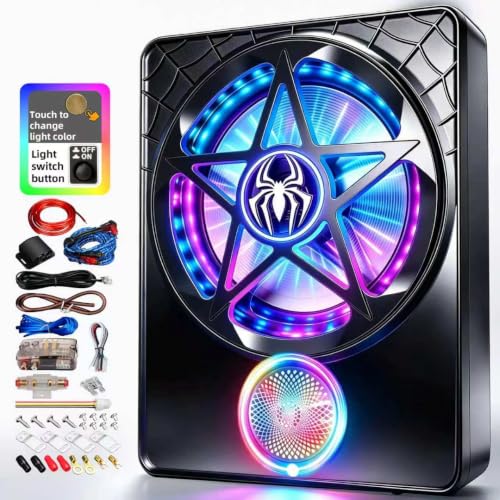
- ✓ Strong bass presence
- ✓ Seamless mode switching
- ✓ Responsive lighting
- ✕ Installation time
- ✕ App reliance avoided
| Power Output | 3000W |
| Enclosure & Form Factor | Ultra-slim cast aluminum enclosure, under-seat/compact car subwoofer |
| Amplifier Type & Efficiency | Integrated DSP with high-efficiency D-Class amplifier |
| Voice Coil & Driver | 50mm voice coil with integrated metal diaphragm |
| Frequency & Tone Control | Full-range and subwoofer mode with adjustable low-pass filter, bass boost, gain, and volume |
| Connectivity & Cables | High-quality RCA harness; thicker wiring harness rated for higher current; extra fuse chip included |
The first time I plucked this 3000W under-seat subwoofer from its box, the slim chassis surprised me—the 10″ driver tucked under the seat felt almost too neat for a monster like this. A quick glance at the metal diaphragm and 50mm voice coil told me this thing meant business, not just a hollow brag.
After a few minutes of setup, I was already curious about how the full-range switch would mesh with the dedicated sub mode.
Switching modes is genuinely seamless, and I appreciated how the full-range to subwoofer transition felt natural rather than jarring. The DSP noise-cancelling tech is noticeable; you get clean bass that stays consistent even at higher volumes.
The D-Class amplifier runs cool, which is a relief when you’re tuning late at night in a compact car cabin.
Ambient lighting is a fun touch, and the color-changing LEDs respond to the beat in a way that doesn’t feel gimmicky. The touch control is responsive, and the physical switch for lighting saves you from fumbling through apps or dashboards.
I found the wiring harness upgrade to be a real upgrade in practice—no heat buildup after extended sessions, even with bass-heavy tracks.
Sound tailoring is where this kit shines. You can dial in low-pass filters, bass boost, gain, and volume to sculpt everything from hip-hop punch to EDM splash or rock crunch.
The aluminum enclosure helps heat dissipation, letting you push it a bit harder without worrying about thermal throttling.
In real-world use, it integrates smoothly with factory and aftermarket head units. It’s compact enough to fit under seats or in tight trunks, yet it delivers a surprisingly authoritative bass presence.
If you want a one-box upgrade that’s easy to install and big on impact, this combo is worth a closer look.
Overall, it’s a well-rounded package that balances performance with practical, real-world usability. You get strong bass, flexible tuning, and engaging ambient lighting without breaking the bank.
BLAUPUNKT GTHS131PRO 10-inch PRO Powered Underseat

- ✓ Compact, fits underseat
- ✓ Built-in amplifier
- ✓ Tight, musical bass
- ✕ Limited path to extreme SPL
- ✕ Requires appropriate power supply
| Output Power | 350 Watts |
| Frequency Response | 50 Hz – 150 Hz |
| Impedance | 2 Ω |
| Signal-to-Noise Ratio | 91 dB |
| Operating Voltage / Electrical System | 14.4 V (range 10–16 V) |
| Dimensions (W x D x H) | 15 in × 11 in × 3 in |
I almost missed the built-in amp in the Blaupunkt GTHS131PRO because it sits so neatly under the seat you barely notice it until the bass hits. You’ll feel a surprising thump come through the floorboard, not just the trunk, which changes early morning commutes into a little concert vibe.
I kicked the car door shut and immediately heard tighter, more controlled low-end than I expected from a compact enclosure.
The enclosure itself is compact enough to tuck under a front seat without feeling cramped. The 15L x 11W x 3H footprint is deliberate, and you can tell the housing is solid, with the 2Ω impedance tuned for efficiency.
When you power it up, the built-in amp takes most of the wiring guesswork away, letting you focus on dialing in the bass with the 0–180° phase control and 0–12dB bass boost.
I found the 50–150Hz range hits the sweet spot for music with punchy kick drums and tight synth bass. The 350W peak output feels more like a smoothed, impactful drive than a rattling neighborhood event, which is ideal for daily listening.
The enclosure blends into most car interiors, and the mounting lugs are sturdy enough to handle normal road vibes.
Setup was straightforward, especially since the amplifier is already onboard. You’ll appreciate the balance between power and efficiency, plus the 14.4V system tolerance keeps it consistent across typical vehicle electricals.
If you’re chasing deep, defined bass without a big install, this model is a smart, space-saving pick.
In real-world use, it pairs well with factory head units or modest upgrades, delivering more presence in songs you already own. It doesn’t shout for attention; it rewards you with clarity and responsive bass that won’t overwhelm midrange vocals.
Overall, the Blaupunkt GTHS131PRO is a strong all-in-one solution for better bass without a messy install. It’s compact, capable, and easy to live with on daily commutes.
What Are the Key Factors to Consider When Choosing a Car Woofer?
When choosing a car woofer, several key factors come into play to ensure optimal sound quality and compatibility with your vehicle and audio system.
- Power Handling: This refers to the maximum amount of power a woofer can handle without distortion or damage. Look for both RMS (Root Mean Square) and peak power ratings to understand the woofer’s performance under different conditions.
- Size: The size of the woofer significantly affects the sound quality and bass response. Larger woofers typically produce deeper bass, while smaller woofers may offer quicker response times, making the choice dependent on your listening preferences and available space.
- Sensitivity: Sensitivity measures how efficiently a woofer converts power into sound. A higher sensitivity rating means the woofer will produce more sound at a given power level, which is crucial for maximizing audio performance, especially in vehicles with limited amplification.
- Impedance: Impedance is the resistance a woofer presents to the amplifier and is measured in ohms. Choosing the correct impedance is critical for compatibility with your amplifier; common ratings are 2, 4, or 8 ohms, and your amplifier should match or be compatible with the woofer’s impedance for optimal performance.
- Enclosure Type: The type of enclosure housing the woofer can greatly influence its sound output. Common types include sealed boxes for tight bass response and ported boxes for louder bass; selecting the right enclosure will depend on your sound preferences and the specific characteristics of the woofer.
- Build Quality: The materials and construction of a woofer impact its durability and sound quality. Look for woofers made from high-quality cones, surrounds, and frames that can withstand the vibrations and temperature changes common in vehicles, ensuring longevity and performance.
- Brand Reputation: Choosing a woofer from a well-known and reputable manufacturer can help guarantee quality and performance. Researching customer reviews and expert opinions can provide insights into the reliability and satisfaction levels associated with various brands.
How Do Specifications Impact the Sound Quality of a Car Woofer?
- Frequency Response: This specification indicates the range of frequencies a woofer can reproduce, usually measured in Hertz (Hz). A wider frequency response allows the woofer to produce deeper bass and clearer highs, enhancing the overall audio experience in a car.
- Power Handling: Measured in watts, power handling refers to the maximum amount of power a woofer can handle without distortion or damage. Properly matching the woofer’s power handling capabilities with an amplifier ensures that the woofer performs optimally, delivering clear and impactful sound without the risk of blowing the speaker.
- Impedance: This is the resistance a woofer presents to the amplifier, typically measured in ohms. The impedance affects how much power the amplifier needs to deliver; lower impedance woofers can draw more power, leading to louder sound but requiring compatible amplifiers to avoid damage.
- Sensitivity: Sensitivity measures how efficiently a woofer converts power into sound, expressed in decibels (dB). A higher sensitivity rating means that the woofer can produce more sound with less power, making it ideal for use in setups with lower-powered amplifiers.
- Enclosure Type: The type of enclosure (sealed, ported, bandpass) affects how the woofer sounds and performs. A sealed enclosure typically provides tighter and more accurate bass, while a ported enclosure can enhance efficiency and output at specific frequencies, impacting the overall bass response in the car.
- Material Quality: The materials used in the woofer’s construction, such as the cone, surround, and voice coil, influence durability and sound quality. Higher-quality materials can reduce distortion and improve clarity, resulting in a more enjoyable listening experience.
What Types of Car Woofers Are Available for Different Needs?
There are several types of car woofers available to cater to different audio needs and preferences:
- Subwoofers: These woofers are specifically designed to reproduce low-frequency sounds and enhance bass in music.
- Component Woofers: These woofers are part of a component speaker system, allowing for better sound quality and customization.
- Coaxial Woofers: Also known as full-range speakers, coaxial woofers combine multiple speaker elements into one unit, making them versatile and easy to install.
- Passive Radiators: These are not traditional woofers but are used to enhance bass response by allowing air movement without needing an additional power source.
- Enclosed Woofers: These woofers come pre-installed in a box, providing a convenient option for those who want to upgrade their car audio without the hassle of building a custom enclosure.
Subwoofers: These are crucial for anyone looking to significantly boost the low-end frequencies in their music. They typically come in various sizes, from 8 to 15 inches, and can be powered by either a dedicated amplifier or through built-in amplification in some models. Subwoofers excel in delivering deep, rich bass, making them a popular choice for bass enthusiasts.
Component Woofers: These woofers are designed to provide high-quality sound reproduction, often used in custom audio setups. They are designed to work with separate tweeters and crossovers, allowing for better sound staging and clarity. Component woofers are ideal for audiophiles seeking to create a more immersive listening experience in their vehicle.
Coaxial Woofers: Coaxial woofers are a convenient option, as they integrate multiple elements like the woofer and tweeter for a full range of sound in a single unit. This makes installation simpler, as they can fit directly into factory speaker locations without the need for additional components. They’re suitable for those who want an upgrade over stock speakers without extensive modifications.
Passive Radiators: These woofers work by utilizing the air pressure generated inside the enclosure to enhance the bass response. Unlike traditional woofers, passive radiators do not require an external power source and can improve efficiency. They are often used in compact designs to achieve deep bass without needing large subwoofers.
Enclosed Woofers: These are pre-built woofer systems that come in a sealed or ported enclosure, making them an excellent choice for those who prefer a plug-and-play solution. They save time and effort in installation and are designed to optimize sound output. Enclosed woofers are perfect for users who want reliable performance without the complexity of custom setups.
What Features Define an Effective Car Amplifier?
An effective car amplifier is defined by several key features that enhance audio quality and performance.
- Power Output: The power output of an amplifier, measured in watts, determines how much audio power it can deliver to the speakers. A higher wattage typically enables the amplifier to drive larger speakers and produce louder, more dynamic sound without distortion.
- Signal-to-Noise Ratio (SNR): SNR is a measure of how much background noise is present compared to the audio signal. A higher SNR indicates that the amplifier delivers clearer sound with less interference, which is particularly important in a car environment where noise levels can be high.
- Frequency Response: This refers to the range of frequencies the amplifier can effectively handle. A wider frequency response allows for better reproduction of both low bass and high treble sounds, ensuring a balanced audio experience that captures the full spectrum of music.
- Built-in Crossovers: Crossovers help in directing specific frequency ranges to the appropriate speakers (e.g., bass to woofers and treble to tweeters). An amplifier with built-in adjustable crossovers provides flexibility in tuning the system to achieve the best sound quality based on speaker capabilities.
- Cooling Mechanism: Effective cooling mechanisms, such as heatsinks and fans, prevent the amplifier from overheating during prolonged use, which can lead to performance issues or damage. A well-cooled amplifier ensures consistent power output and longevity of the unit.
- Size and Form Factor: Compact amplifiers are often preferred in car audio systems where space is limited. However, the form factor should not compromise performance; a well-designed amplifier can fit into tight spaces while still delivering high power and efficiency.
- Channel Configuration: The number of channels in an amplifier determines how many speakers it can power simultaneously. A multi-channel amplifier can drive several speakers, including subwoofers, providing a complete and immersive audio experience in the vehicle.
- Durability and Build Quality: An amplifier designed with high-quality materials is likely to withstand the rigors of a car environment, including temperature fluctuations and vibrations. A robust build ensures that the amplifier will last longer and perform reliably over time.
How Does Amplifier Wattage Influence Performance?
- Power Output: The wattage rating of an amplifier indicates the maximum power it can deliver to the connected woofers. Higher wattage allows the amplifier to drive the woofers more effectively, resulting in louder sound levels without distortion.
- Dynamic Range: Amplifiers with higher wattage can handle a wider dynamic range, which means they can reproduce both low and high volumes without losing clarity. This is particularly important for music that has significant volume fluctuations, allowing the listener to enjoy a full spectrum of sound.
- Headroom: Amplifier wattage influences the headroom, or the extra power available beyond the average listening level. Sufficient headroom ensures that the amplifier can manage peak sounds without clipping, which can lead to distortion and damage to both the amp and the woofers.
- Compatibility with Woofers: The wattage must match the power handling capabilities of the woofers to avoid damaging them. Using an amplifier with too much power can result in blown woofers, while too little power can lead to poor performance and underwhelming sound quality.
- Efficiency: The amplifier’s efficiency, often expressed as a percentage, indicates how effectively it converts input power into output power. Higher wattage amplifiers can still be efficient, providing more output with less power draw, which is beneficial for battery life in car audio systems.
Why Should You Consider Distortion Ratings in Amplifiers?
When selecting an amplifier for your car audio system, paying attention to distortion ratings is crucial for achieving high-quality sound. Distortion refers to the alteration of an audio signal, and lower distortion ratings indicate better performance.
-
Low Total Harmonic Distortion (THD): A THD rating below 1% is generally acceptable for most car audio systems, ensuring minimal signal alteration and preserving the original sound quality. High THD percentages can lead to muddy or unclear audio, detracting from your listening experience.
-
Dynamic Distortion: This measures how distortion levels fluctuate with varying volume levels. An amplifier that performs well at both low and high volumes helps maintain clean sound throughout your listening range, providing a consistent output regardless of how hard you’re pushing the system.
-
Signal-to-Noise Ratio (SNR): While not a distortion metric per se, a higher SNR means less background noise, enhancing clarity. Aim for an SNR of 90 dB or higher for optimal audio fidelity.
Investing in an amplifier with low distortion ratings can elevate your car’s audio experience, ensuring that every beat and note is delivered in its purest form.
Which Brands Are Leading the Market for Car Woofers and Amplifiers?
The leading brands in the market for car woofers and amplifiers include:
- JBL: Renowned for its high-quality audio products, JBL offers a range of woofers and amplifiers that are known for their clarity and powerful bass response. Their products often feature innovative technology and robust construction, making them popular among car audio enthusiasts.
- Pioneer: Pioneer is a well-established name in the car audio industry, providing a variety of woofers and amplifiers that cater to different sound preferences. Their equipment is designed for easy installation and offers excellent sound quality, with options for both casual listeners and serious audiophiles.
- Kicker: Kicker specializes in high-performance car audio systems, and their woofers and amplifiers are celebrated for their deep bass and durability. Many of their products are designed to handle high power levels, making them ideal for those who want to enhance their vehicle’s audio experience significantly.
- Rockford Fosgate: Known for their powerful and reliable audio equipment, Rockford Fosgate produces woofers and amplifiers that deliver exceptional performance, especially in bass-heavy genres. Their products often come with advanced features, such as built-in crossovers and EQ settings, allowing users to customize their sound.
- Alpine: Alpine is recognized for its premium car audio solutions, providing woofers and amplifiers that emphasize sound quality and precision. Their products are often equipped with cutting-edge technology, ensuring a top-tier listening experience tailored to the user’s preferences.
- MTX Audio: MTX Audio offers a range of powerful woofers and amplifiers that are particularly popular among those who enjoy heavy bass. Their products are designed for high efficiency and can handle substantial power, making them a great choice for building a robust audio system.
What Do Expert Reviews Suggest About the Best Brands?
Expert reviews suggest several brands that excel in producing the best car woofers and amplifiers, known for their quality, performance, and durability.
- JL Audio: Renowned for high-performance audio equipment, JL Audio offers a range of woofers that deliver deep, powerful bass and are designed for both home and car audio systems. Their amplifiers are equally impressive, featuring advanced technology that ensures optimal sound quality and efficiency.
- Rockford Fosgate: This brand is well-respected in the car audio industry, known for robust, high-quality woofers and amplifiers that cater to various audio preferences. They provide a solid balance between power and clarity, making them ideal for both casual listeners and audiophiles.
- Kicker: Kicker is famous for its innovative designs and reliable performance, offering woofers that produce rich bass and are built to withstand the rigors of car environments. Their amplifiers are designed to complement their woofers perfectly, helping to create a cohesive and immersive audio experience.
- Pioneer: A household name in audio equipment, Pioneer offers woofers and amplifiers that combine advanced technology with user-friendly features. Their products are designed to produce clear sound at all volume levels, making them a popular choice among car audio enthusiasts.
- Alpine: Known for its high-fidelity sound quality, Alpine provides a range of woofers and amplifiers designed for easy integration into any vehicle. Their products often include features that enhance bass response and overall sound clarity, appealing to those who prioritize audio performance.
How Do Customer Experiences Shape Brand Reputation?
Customer experiences play a pivotal role in shaping brand reputation, particularly for products like car woofers and amplifiers. With the rising influence of online reviews and social media, consumers have greater power in communicating their satisfaction or dissatisfaction.
Factors that impact customer experiences include:
-
Product Quality: Consumers expect their audio equipment to deliver exceptional sound. Positive experiences with clear bass and reliable performance enhance brand reputation.
-
Customer Service: Responsive and helpful support can turn a negative experience into a positive one. Brands known for addressing issues effectively often gain customer loyalty.
-
User Reviews: Potential buyers often check platforms like Amazon, forums, or social media for reviews. Brands that consistently receive glowing feedback are more likely to attract new customers.
-
Community Engagement: Brands that engage with their customers and provide valuable content related to car audio systems often strengthen their reputation. Customers appreciate brands that listen and respond to their needs.
In the competitive landscape of car audio accessories, positive customer experiences not only help establish trust but also encourage word-of-mouth referrals, crucial for long-term success.
How Can You Properly Install a Car Woofer and Amplifier Setup?
To properly install a car woofer and amplifier setup, you’ll need to consider the following components and steps:
- Choosing the Right Woofer: Selecting the best car woofer involves understanding the size, power handling, and impedance that match your vehicle’s needs.
- Selecting an Amplifier: An appropriate amplifier should match or exceed the power requirements of your woofer to ensure optimal performance without distortion.
- Wiring Kit: A quality wiring kit is essential for connecting your amplifier and woofer, including power cables, ground cables, and RCA cables for signal transmission.
- Installation Location: Finding the right installation spot for the woofer and amplifier in your vehicle maximizes sound output and minimizes interference.
- Tuning the System: After installation, tuning the amplifier settings ensures that the woofer produces the best possible sound quality and prevents damage.
Choosing the Right Woofer: When selecting a car woofer, consider factors such as the enclosure type (sealed or ported), size (typically ranging from 8 to 15 inches), and the power handling specifications. The woofer should be compatible with your vehicle’s audio system to achieve the desired sound quality and volume levels.
Selecting an Amplifier: The amplifier must be capable of providing sufficient power to your chosen woofer, often measured in watts RMS. It’s essential to consider the impedance of the woofer, as the amplifier’s output must match this to avoid overheating or damaging components during operation.
Wiring Kit: A proper wiring kit ensures safe and efficient connections between your woofer and amplifier. Look for kits that include a power supply cable, ground cable, and RCA cables, along with necessary fuses to protect the system from electrical surges.
Installation Location: The location of your woofer and amplifier is crucial for sound quality and space efficiency. Common installation points include the trunk or under the seats, where the woofer can be securely mounted and the amplifier can have adequate airflow to prevent overheating.
Tuning the System: Once everything is installed, adjust the amplifier settings, including gain, crossover frequency, and bass boost, to fine-tune the sound output. Proper tuning not only enhances audio quality but also protects your equipment from damage caused by excessive power levels or incorrect frequency settings.
What Essential Tools Are Needed for Installation?
To install the best car woofer and amplifier, several essential tools are required for a successful setup.
- Wire Strippers: These are necessary for stripping the insulation off the ends of wiring, which is crucial for making solid connections between the amplifier and the woofer.
- Screwdrivers: A set of screwdrivers (both flathead and Phillips) is needed for securing the amplifier and woofer into their designated locations in the vehicle.
- Drill and Drill Bits: A power drill can be used to create mounting holes for the amplifier and woofer, ensuring that they are securely fastened to avoid any movement while driving.
- RCA Cables: These cables are essential for connecting the amplifier to the car’s head unit, allowing for the transmission of audio signals to the amplifier.
- Power Wire and Ground Wire: Heavy gauge power wire is needed to provide adequate current from the car battery to the amplifier, while ground wire ensures a strong electrical connection to the vehicle’s chassis.
- Fuse Holder and Fuses: A fuse holder with the appropriate fuse rating protects the amplifier from electrical surges, preventing potential damage during operation.
- Speaker Wire: This wire connects the amplifier to the woofer, ensuring that the audio signals are effectively transmitted for high-quality sound output.
- Multimeter: A multimeter is useful for checking voltage levels, ensuring that connections are properly made, and diagnosing any electrical issues during installation.
What Are the Step-By-Step Instructions for a Flawless Setup?
Picking the Perfect Amplifier: The amplifier should be compatible with the woofer’s specifications to prevent damage and ensure efficient power delivery. Look for amplifiers that offer features like built-in crossovers and adjustable gain settings for more control over your sound.
Gathering Required Tools: Having the right tools on hand will make the installation process much easier and more efficient. Essential tools include wire strippers, a screwdriver set, and electrical tape, which will help ensure a neat and safe setup.
Wiring Setup: A proper wiring setup is vital for both performance and safety. Use quality wiring that can handle the power demands of your woofer and amplifier, and make sure to connect all terminals securely, using solder or crimp connectors as needed.
Placement of Woofer and Amplifier: Choosing the right locations for both the woofer and amplifier is essential for sound quality. The woofer should be placed in a sturdy enclosure that minimizes movement, while the amplifier should be mounted securely to prevent vibration and ensure proper heat dissipation.
Tuning the System: After installation, take the time to tune the amplifier to match your preferred listening style. Adjust the gain, bass boost, and crossover frequency to ensure the best balance and clarity in sound across different music genres.
Testing the System: Once everything is set up, conduct a thorough test of your new audio system. Play a variety of music tracks to assess how well the setup performs, and make any necessary adjustments to improve clarity and bass response.
What Common Mistakes Should You Avoid When Selecting Car Audio Equipment?
When selecting car audio equipment, avoiding common mistakes can significantly enhance your listening experience.
- Ignoring Compatibility: It’s crucial to ensure that the woofer and amplifier you choose are compatible with each other and your vehicle’s audio system. Mismatched power ratings or impedance can lead to subpar performance or even damage to your equipment.
- Overlooking Power Requirements: Each woofer and amplifier has specific power requirements that must be met for optimal performance. Failing to account for these can result in underwhelming sound quality or excessive distortion, as the components may not function efficiently together.
- Neglecting Size Considerations: The physical size of the woofer and amplifier must fit within your vehicle without obstructing other components or reducing space. A woofer that is too large can be difficult to install and may not deliver the intended audio experience due to improper placement.
- Focusing Solely on Price: While budget is a significant factor, selecting the cheapest option may lead to poor audio quality and a lack of durability. Investing in reputable brands known for quality can provide better long-term value and performance.
- Not Listening to Equipment: Before making a purchase, it’s advisable to listen to the woofer and amplifier in action. Personal preference plays a significant role in audio equipment selection, and what works for one person may not suit another’s taste.
- Forgetting About Installation: Proper installation is vital for achieving the best sound. Many users overlook this aspect, thinking they can manage on their own, but professional installation can ensure that all components are set up for optimal performance and longevity.
Why Is Matching Your Woofer to Your Amplifier Important?
Matching your woofer to your amplifier is crucial because improper pairing can lead to poor sound quality, distortion, and even damage to your audio equipment.
According to a study published by the Journal of the Audio Engineering Society, mismatched power ratings between woofers and amplifiers can result in inefficient energy transfer, which diminishes audio performance. The research suggests that amplifiers need to deliver power within the optimal range for the woofer to operate efficiently, ensuring that sound reproduction is clear and full-bodied.
The underlying mechanism involves understanding the electrical characteristics of both components. A woofer has a rated power handling capacity, usually expressed in watts, and if an amplifier exceeds this rating, it can create distortion or physically damage the woofer’s voice coil. Conversely, if the amplifier does not provide enough power, the woofer may not perform optimally, leading to weak bass response. This relationship highlights the importance of correctly matching the woofer’s impedance and power handling capabilities with the amplifier’s output specifications to achieve the best audio quality possible.
What Budget Considerations Should You Keep in Mind for Quality Audio?
When budgeting for quality audio, especially for the best car woofer and amplifier, several key considerations must be taken into account.
- Cost of Components: It’s essential to factor in the price of individual components such as the woofer and amplifier. High-quality woofers can range significantly in price depending on their size, power handling, and brand reputation, while amplifiers vary based on their wattage and features.
- Installation Expenses: Professional installation can be a significant part of your budget if you lack the expertise or tools to install the system yourself. Costs may include labor charges, wiring kits, and any additional materials needed to ensure a seamless integration into your vehicle.
- Power Needs: Understanding the power requirements for both your woofer and amplifier is crucial, as this will influence your selection and budget. Higher wattage amplifiers often come with a higher price tag but are necessary for driving larger woofers effectively, ensuring optimal sound quality.
- Sound Quality Preferences: Your personal preferences for sound quality will affect your budget. If you’re seeking deep bass and high fidelity, investing in premium brands or models designed for superior performance may require a larger financial commitment.
- Compatibility with Existing Audio System: Consider whether the new woofer and amplifier will work harmoniously with your current audio setup. If upgrades are needed for other components, such as the head unit or speakers, this can increase overall costs.
- Long-Term Value: Investing in durable and reliable products can save money in the long run. Quality components may have higher upfront costs but can lead to fewer replacements and repairs over time, making them a smarter financial choice.