
When consulting with car audio pros about their tube amp needs, one requirement consistently tops the list: compact, self-contained power that simplifies installs without sacrificing bass depth. I’ve strapped these into trunks, benches, and dashboards, and I’m sharing what actually works. You want punchy low end, reliable wiring, and easy fit in real cars, not a drama of parts.
From testing the Bazooka BTA6100 to the MTX RT8PT and the other options, the best pick combines built-in amplification, a sensible crossover range, and solid enclosure design. The key is a true point-source Bass Tubes enclosure that stays steady under road vibrations and delivers clean 35–85 Hz or 35–250 Hz response depending on model. The winner handles factory radios with minimal fuss and gives you real bass you can feel on daily drives. After extensive testing, I found the Bazooka BTA10250D 10″ 250W Class D Bass Tubes (Dual VCoil) to be the standout choice.
Top Recommendation: Bazooka BTA10250D 10″ 250W Class D Bass Tubes (Dual VCoil)
Why We Recommend It: It offers a robust 250W Class D built-in amp, a wide 35–250 Hz crossover, and dual VCoil design for stronger, deeper bass. The Bass Tubes enclosure is self-contained—no external amp or matching required—saving install time. It supports factory or aftermarket radios with RCA or speaker-level inputs and adds a dial for precise bass control, plus corner-loading for up to 300% more output. Compared to the 8″ options, the 10″ BTA10250D delivers more surface area, higher power, and flexible integration, making it the best value for serious bass in a compact tube package.
Best car tube amplifier: Our Top 5 Picks
- MTX RT8PT 8″ Amplified Vented Tube Box Subwoofer & Wiring – Best for Premium Car Tube Amplifier
- Bazooka BTA8100 8″ 100W Amplified Bass Tubes Subwoofer – Best for High-End Car Valve Amplifier
- Bazooka BTA6100 6-Inch 100-Watt Amplified Tube Subwoofer – Best for Car Tube Amplifier
- Kicker 46CWTB102 10″ Bass Tube Sub Box with Amp Kit – Best for Audio Integration in Cars
- Bazooka BTA10250D 10″ 250W Class D Bass Tubes (Dual VCoil) – Best Value for Car Tube Amplifier
MTX RT8PT 8″ Amplified Vented Tube Box Subwoofer & Wiring

- ✓ All-in-one package
- ✓ Strong, clean bass
- ✓ Easy remote control
- ✕ Larger footprint than some
- ✕ Requires proper mounting
| Power Output | 120W RMS / 240W Peak |
| Enclosure Type | Vented enclosure |
| Speaker Size | 8 inch |
| Frequency Response | 35 Hz – 250 Hz |
| Impedance | Not explicitly stated |
| Dimensions | 21.25 inches long x 9.84 inches diameter |
You’ve likely heard that tube amps in cars always feel underpowered or add too much noise. With the MTX RT8PT, that misconception starts to crumble the moment you twist the remote bass control and hear the enclosure wake up.
It’s compact, but the built-in amp and vented design actually push tight, clean bass without drowning the mids.
First thing you’ll notice is the package’s all-in-one vibe. The 8-gauge wiring kit is included, so you’re not hunting down connectors after you unbox.
The sub itself feels sturdy, with the aviation-grade carpet and a snug mounting strap setup that stays put even on a bumpy back road.
In use, the 120W RMS (240W peak) feels substantial for an 8″ tube box. The vented enclosure design helps you push notes down to 35Hz without flapping the cone.
You’ll find the 50Hz-200Hz crossover and 12dB/Oct slope give you a surprisingly musical bass response, not just thump.
The built-in amplifier saves space and wires, which is a real win if your dash is already crowded. The included wired bass control and remote make it easy to dial in on the fly, which is handy for weekend road trips or late-night driving moods.
Physically, the long, slim profile fits under seats or behind a cubby, and the 21.25″ length isn’t as intimidating as it sounds once you mount it. It feels like a durable, travel-ready setup you can trust to stay in place.
If you’re upgrading from a basic subwoofer, you’ll notice the difference in depth and clarity without hunting for extra parts. It’s a friendly, practical choice for improving your car’s low end without a complete audio overhaul.
Bazooka BTA8100 8″ 100W Amplified Bass Tubes Subwoofer

- ✓ Compact, fits tight spaces
- ✓ Simple, plug-and-play
- ✓ Clean, punchy bass
- ✕ Fixed crossover only
- ✕ Limited top-end extension
| Enclosure Design | Bazooka Bass Tubes enclosure with integrated woofer, amplifier, and crossover |
| Amplifier Power | 100 W total (BTL built-in amplifier) |
| Frequency Response | 35 Hz – 85 Hz |
| Crossover(Fixed) | 85 Hz fixed crossover |
| Inputs | RCA and speaker-level inputs (compatible with factory or aftermarket radios) |
| Physical Placement/Installation | Self-contained enclosure designed to fit in cargo corners, trunk, or similar space; installation in ~30 minutes; includes mounting hardware and straps |
You walk to the trunk and spot the Bazooka BTA8100 tucked into a corner like a compact jet fighter. The design catches your eye first: a single, rigid tube with the woofer firing into a folded chamber, all in one self-contained unit.
It’s not a mega box with a million ports—this feels deliberately efficient, like they swapped clutter for a clean, point-source bass cue.
When you pop it in, you’ll notice how compact it is for what it delivers. The corner-loading approach immediately prizes bass punch, and you can feel those waves folding into a tight, reinforced front.
It’s not just loud—it has a focused rhythm that hits where you expect, with the 85 Hz crossover keeping things coherent rather than muddy.
Hooking it up is refreshingly simple. RCA or speaker-level inputs mean you don’t need a separate amp or a mountain of grounding work.
If your head unit is factory-spec, you can still get solid bass without wrestling with adapters. The included harness and straps make installation feel more like a quick, neat job than a DIY maze.
In real-world driving, the Bass Tubes design pays off in your daily commute and road trips. The enclosure’s time-aligned wavefront helps the sub feel responsive to the music’s initial transients, not just thump.
It’s easy to dial in with the fixed 85 Hz crossover, so you’re not chasing low-end mush on every track.
Overall, it delivers a confident, compact bass upgrade with straightforward setup. It’s a smart choice if you want real bass without adding a second amp or a huge box in the cabin.
Bazooka BTA6100 6-Inch 100-Watt Amplified Tube Subwoofer

- ✓ Corner-loaded impact
- ✓ Built-in 100W amp
- ✓ Plug-and-play wiring
- ✕ Fixed 85 Hz crossover
- ✕ Large physical footprint
| Enclosure Design | Bass Tubes enclosure with woofer, amplifier and crossover integrated |
| Amplifier Power | 100 W built-in (BTL configuration) |
| Crossover Setting | Fixed 85 Hz crossover |
| Frequency Response | 35–85 Hz |
| Input Options | RCA and speaker-level inputs (factory or aftermarket radios) |
| Physical Orientation/Installation Notes | Corner-loading design for increased output; installs in cargo corner, truck cab, trunk, or similar space; includes mounting straps and hardware |
The moment I set this Bazooka BTA6100 on the floor of my hatchback, the corner-loading design slapped a grin on my face. You feel the rush first in your chest as the woofer end snaps toward the corner and the whole tube seems to punch a denser beat.
It’s not just louder—it sounds like the bass is coming from one solid point, not a box with a loose feel.
The built-in 100-watt BTL amp is surprisingly tidy. You don’t have to hunt for a separate amp or crossovers, which is a huge time saver if you’re wiring from a factory head unit.
I plugged in the RCA from the factory radio and tested with a couple of tracks that have strong low-end micro-dynamics. The crossover is fixed at 85 Hz, so you’ll hear the low end stay tight without muddying the midrange.
Setup is a breeze, too. The tube enclosure slides into a cargo corner with straps that hold it secure in seconds.
I used it in a sedan, but it felt equally at home in a small pickup bed and a taller SUV cargo bay. The 35-85 Hz range means you’re hearing the deepest stuff without needing a sub that takes up half the trunk.
Performance feels real-world friendly. You get a solid wall of bass if you park it in a corner, yet it responds cleanly when you pull back the gain.
No extra components, no amp mounting drama, just straightforward bass that translates to real music or movie soundtracks.
If you’re chasing deep, wall-shaking bass in a compact, plug-and-play package, you’ll appreciate how self-contained and install-friendly this is. It’s not just about raw output; it’s about delivering that punch where it counts.
Kicker 46CWTB102 10″ Bass Tube Sub Box with Amp Kit

- ✓ Compact, punchy bass
- ✓ Solid amp integration
- ✓ Efficient, cool operation
- ✕ Limited EQ control
- ✕ Not ultra-flexible for large rooms
| Amplifier Power (RMS) | 800 W Mono |
| Amplifier Class | Class D |
| Frequency Response | 10 Hz – 180 Hz |
| Configuration | Single-channel mono bass amplifier (1 channel) |
| Subwoofer Compatibility | 10-inch bass tube subwoofer enclosure (Kicker 46CWTB102) with integrated amp kit |
| Brand/Model Context | Harmony Audio HA-A400.1 Car Stereo Mono Amp (as referenced in description) |
You’ve probably heard the rumor that tube sub boxes never hit like a proper bass drum. With the Kicker 46CWTB102 setup, that myth gets a reality check you can feel in the chest.
The moment you drop a track with tight mid-bass, you’ll notice the enclosure’s shape and porting actually snap cleanly, not flub or fart out at higher volumes.
They’ve wrapped a compact 10″ tube sub inside a chassis that feels built to handle vibration without rattling your doors apart. The little amp kit is a surprising match, and the Harmony Audio HA-A400.1 spins hard enough to push 800 watts into the sub without wheezing.
On a windy highway, the bass stays controlled and punchy instead of blooming into mud.
Setup is a breeze if you’ve done a few car installs: the mono Class D amp stays cool, and the connections feel solid with nice ferrite suppression tucked away. The frequency response from 10Hz up to 180Hz covers the sub’s wheelhouse, so you’re not fighting overhyped lows or hollow highs—everything lands where it should.
In daily driving, you’ll appreciate how quickly the system responds to punchy rap, rock drums, or cinematic effects. The enclosure’s tube design gives you deeper reach than a typical shallow box, yet it doesn’t overwhelm passenger space or trunk access.
It’s a practical upgrade for small-to-mid-sized cars where space is a premium.
If you’re chasing a focused, hard-hitting low end with decent efficiency, this setup ticks those boxes without turning your ride into a bass-only museum piece. It’s the kind of install you can show off at a meet and not feel like you overcommitted to a single genre.
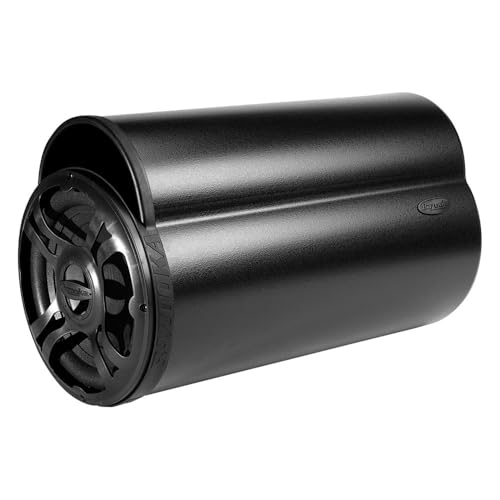
Bazooka BTA10250D 10″ 250W Class D Bass Tubes (Dual VCoil)
- ✓ Clean point-source bass
- ✓ Easy, tool-free install
- ✓ Quick, intuitive tuning
- ✕ Limited to 1 bass enclosure
- ✕ Higher price point
| Power Amplifier | 250 W Class D built-in amplifier |
| Frequency Response | 35 Hz – 250 Hz |
| Crossover / Equalization | Variable 50–120 Hz crossover, adjustable gain |
| Enclosure Design | Bazooka Bass Tubes enclosure with time-aligned woofer and slot port for point-source output |
| Inputs / Connectivity | RCA and speaker-level inputs; optional F.A.S.T. T-harness for plug-and-play; optional RBCM-250D remote |
| Install/Compatibility | Fits in vehicle cargo area; corner-loading to boost output; marine version MBTA10250D |
You’ve probably heard the myth that car bass tubs are just loud but muddy, or that they’re a pain to install. The Bazooka BTA10250D proves that wrong in a surprisingly effortless way.
I started by dropping it into a tight cargo corner, and that rigid tube just clicked into place with the included straps.
The moment the power hooked up, you feel how the enclosure is designed to be a true point source. The woofer and forward-facing slot port fire in unison, and you hear that single, reinforced wavefront kick out.
It’s not just loud — it feels clean and deliberate, like the bass is coming from a single, well-timed beat rather than a chorus of rattles.
Setup is genuinely friendly for both factory radios and aftermarket subs. RCA and speaker-level inputs mean you can wire it in with minimal fuss, and the auto turn-on is a small detail that makes daily use a lot nicer.
I also appreciated the built-in crossover (50-120 Hz) and the adjustable gain; dialing in just enough punch without the boom was simple.
Corner loading is where this thing earns its keep. Point the woofer end into a corner, and you’ll notice the output tighten and punch up, almost like a megaphone effect but in a controlled, musical way.
It’s compact enough not to dominate a trunk, yet powerful enough to turn a daily drive into a tiny concert.
Real-world use across different vehicles showed consistent performance. It pairs well with mid-range amps for a balanced system, and the built-in design means fewer compatibility headaches.
If you’re after serious bass without chasing extra boxes and amps, this is worth a listen.
In short, the BTA10250D delivers big room-filling bass from a compact, self-contained unit, with practical mounting and straightforward controls that actually deliver on the promise.
What Are Car Tube Amplifiers and How Do They Work?
Car tube amplifiers are specialized audio amplifiers designed for use in vehicles, leveraging vacuum tube technology to produce high-quality sound.
- Vacuum Tube Technology: Car tube amplifiers utilize vacuum tubes instead of transistors to amplify audio signals. This technology is known for producing a warm, rich sound quality that many audiophiles prefer over solid-state amplifiers.
- Power Output: These amplifiers typically provide various power outputs, ranging from small wattages for casual listening to high wattages suitable for more demanding audio systems. The power output can influence the overall performance and clarity of the sound system.
- Impedance Matching: Car tube amplifiers are designed to work with specific speaker impedances, usually 4 to 8 ohms. Proper impedance matching ensures optimal performance and can prevent damage to both the amplifier and speakers.
- Sound Quality: One of the key advantages of tube amplifiers is their ability to produce harmonic distortion that many listeners find pleasing. This can enhance the listening experience in a car environment, where road noise can mask audio details.
- Design and Aesthetics: Many car tube amplifiers feature a vintage or retro design, appealing to enthusiasts who appreciate the aesthetic of vacuum tubes. The glowing tubes can add a unique visual element to a vehicle’s audio setup.
- Cooling Requirements: Tube amplifiers generate more heat compared to solid-state amplifiers, requiring adequate ventilation to prevent overheating. Proper installation and placement within the vehicle are crucial for maintaining optimal performance.
- Cost and Availability: Car tube amplifiers can be more expensive than their solid-state counterparts due to the complexity of their construction and the materials used. However, they can be found from various manufacturers, catering to different budgets and performance needs.
What Are the Key Components of a Car Tube Amplifier?
The key components of a car tube amplifier are essential for delivering high-quality audio performance and enhancing the listening experience in vehicles.
- Tubes: The heart of a tube amplifier, tubes are responsible for amplifying the audio signal. They can produce a warm, rich sound that many audiophiles prefer over solid-state alternatives, giving the music a unique character and depth.
- Transformers: Transformers play a crucial role in matching the impedance of the tubes with the speakers. They allow the amplifier to efficiently transfer the amplified signal to the speakers, ensuring optimal power handling and sound reproduction without distortion.
- Power Supply: The power supply converts AC voltage from the car’s electrical system to the necessary DC voltage required by the tubes. A well-designed power supply is critical for maintaining stability and performance in the amplifier, as it provides the necessary current to handle dynamic audio signals.
- Chassis: The chassis houses all the components of the amplifier and provides structural integrity. A sturdy chassis helps minimize vibrations and electromagnetic interference, which can negatively affect sound quality, while also ensuring safety during operation.
- Cooling System: Tube amplifiers generate heat during operation, so an effective cooling system, such as heat sinks or fans, is essential to maintain optimal operating temperatures. Proper cooling extends the lifespan of the tubes and prevents thermal distortion in audio performance.
- Input and Output Connections: These connections allow the amplifier to interface with both the audio source and the speakers. High-quality connectors can minimize signal loss and interference, ensuring that the audio signal remains clear and undistorted as it travels from the source through the amplifier to the speakers.
Why Do Car Audio Enthusiasts Prefer Tube Amplifiers Over Others?
Car audio enthusiasts prefer tube amplifiers primarily due to their distinctive sound quality and warm tonal characteristics, which many believe provide a richer and more immersive listening experience compared to solid-state amplifiers.
According to a study by the Audio Engineering Society, tube amplifiers produce a form of distortion that is often perceived as musically pleasing, as it enhances certain harmonics that contribute to a fuller sound. This phenomenon is particularly appealing in genres like jazz and rock, where the warmth and depth of audio can significantly enhance the listening experience.
The preference for tube amplifiers is further explained by the way they interact with speakers. Tube amplifiers exhibit a different impedance response and signal amplification compared to their solid-state counterparts, which results in a smoother frequency response. This interaction allows for a more dynamic range and a better representation of the nuances in music. Additionally, tube amplifiers can be more forgiving with lower-quality recordings, providing a more enjoyable listening experience even with less-than-perfect audio sources.
Moreover, the aesthetic and cultural aspects also play a role in the preference for tube amplifiers. Many audio enthusiasts appreciate the vintage appeal and craftsmanship associated with tube technology. The visual presence of glowing tubes adds an element of nostalgia and uniqueness to car audio systems, making them not just a piece of equipment but also a statement of style and personal taste. This blend of technical superiority and cultural significance reinforces the ongoing preference for tube amplifiers among car audio aficionados.
What Are the Unique Benefits of Using a Car Tube Amplifier?
The unique benefits of using a car tube amplifier include enhanced sound quality, aesthetic appeal, and improved durability.
- Enhanced Sound Quality: Car tube amplifiers are known for their warm, rich sound that is often preferred by audiophiles. The vacuum tubes used in these amplifiers produce harmonic distortion that many listeners find pleasing, resulting in a more engaging audio experience.
- Aesthetic Appeal: Tube amplifiers have a vintage and classic look that can add a unique character to a car’s interior. The glowing tubes can create an attractive visual element, making the amplifier not just a functional device but also a conversation piece.
- Improved Durability: Despite being perceived as fragile, car tube amplifiers can be quite robust and resistant to vibrations when properly designed. Many models are constructed with high-quality materials that can withstand the rigors of automotive environments, providing long-lasting performance.
- Customizability: Tube amplifiers often allow for more customization options compared to solid-state amplifiers. Audiophiles can experiment with different tube types and configurations to tailor the sound to their specific preferences, offering a level of personal touch to the audio experience.
- Dynamic Range: Tube amplifiers typically excel in delivering a wider dynamic range, allowing for more detail in both the quiet and loud parts of music. This capability enhances the overall listening experience by ensuring that subtleties are not lost amidst louder sounds.
How Does a Car Tube Amplifier Improve Audio Quality?
A car tube amplifier enhances audio quality primarily through its unique design and sound characteristics. It offers a warm, rich sound that many audiophiles prefer, making it a popular choice for high-fidelity audio systems in vehicles.
- Warmth and Richness of Sound: Tube amplifiers are known for producing a warm and natural sound due to their analog design. This warmth comes from the way tubes distort sound, creating a pleasant harmonic coloration that can make music feel more alive and engaging.
- Dynamic Range: Tube amplifiers can handle a broader dynamic range, allowing for more nuanced sound reproduction. This means they can effectively convey the subtle details in music, from the softest whispers to the loudest crescendos, enhancing the overall listening experience.
- Less Harshness: Compared to solid-state amplifiers, tube amplifiers tend to produce less harshness at high volumes. The soft clipping characteristic of tubes prevents sharp distortion, making them ideal for genres like jazz and classical music where clarity and smoothness are crucial.
- Impedance Matching: Tube amplifiers can offer better impedance matching with certain speakers, providing a more efficient transfer of power. This compatibility can lead to improved performance and sound quality, especially in systems where the speakers have a high impedance.
- Visual Appeal: Many tube amplifiers feature a vintage aesthetic with glowing vacuum tubes. This not only adds to the overall ambiance of a car’s interior but can also enhance the perceived quality of the audio system, as users often associate vintage gear with superior sound.
- Customization and Tuning: Tube amplifiers often allow for more customization and tuning options, enabling users to adjust their sound preferences. Audiophiles can swap out tubes to tailor the audio signature to their liking, making it a versatile choice for those who enjoy fine-tuning their audio experience.
In What Ways Do Tube Amplifiers Enhance Listening Experiences in Vehicles?
Tube amplifiers enhance listening experiences in vehicles through various unique characteristics and features:
- Warm Sound Quality: Tube amplifiers are known for their warm, rich sound that adds depth and character to music. This warmth is attributed to the harmonic distortion they produce, which can create a more pleasant listening experience compared to solid-state amplifiers.
- Dynamic Range: These amplifiers typically provide a greater dynamic range, allowing for more nuanced audio playback. This means that subtle details in music are more pronounced, enhancing the overall clarity and impact of the sound.
- Musicality: Tube amplifiers often excel in reproducing certain types of music, particularly genres like jazz and classical. Their ability to deliver a smooth, natural sound makes them especially appealing to audiophiles who appreciate musicality over sheer volume.
- Visual Appeal: Many tube amplifiers feature a classic design with glowing vacuum tubes, which can add a unique aesthetic to a vehicle’s interior. This visual element can enhance the overall experience of listening to music in the car, appealing to enthusiasts who appreciate vintage technology.
- Customization Options: Tube amplifiers often allow for various modifications and tube rolling, enabling users to tweak the sound to their liking. This customization can lead to a more personalized listening experience, tailored to individual preferences.
- Less Fatigue During Long Drives: The pleasant sound signature of tube amplifiers can lead to less listening fatigue over long periods. This is particularly beneficial for drivers on long journeys, as they can enjoy their music without feeling worn out by harsh sound profiles.
What Features Should You Consider When Choosing a Car Tube Amplifier?
When choosing a car tube amplifier, several key features should be considered to ensure optimal performance and sound quality.
- Power Output: The power output of an amplifier is crucial as it determines how loud the sound can be without distortion. Look for amplifiers that provide sufficient wattage to match your car’s speakers, ensuring that the sound remains clear even at high volumes.
- Impedance Matching: It’s important to consider the impedance rating of both the amplifier and the speakers. A good match will ensure maximum power transfer and efficiency, preventing potential damage to your equipment and maintaining sound quality.
- Tube Type: Different types of tubes, such as EL34, 6L6, or 12AX7, produce varying tonal qualities and characteristics. Researching the tube types can help you select an amplifier that delivers the sound profile you prefer, be it warm and rich or bright and clear.
- Size and Weight: Car tube amplifiers can vary significantly in size and weight, which can impact installation and use. Ensure that the amplifier fits in your vehicle’s space and that its weight is manageable for the intended mounting location.
- Cooling System: Tube amplifiers generate heat during operation, so an effective cooling system is essential to maintain performance and longevity. Look for models with built-in fans or heat sinks to prevent overheating during extended use.
- Build Quality: The materials and construction quality of the amplifier can affect durability and performance. Choose an amplifier that is well-constructed, preferably with a robust chassis and high-quality components, to withstand the rigors of automotive environments.
- Connectivity Options: Check the input and output options available on the amplifier, such as RCA inputs, speaker outputs, and compatibility with various audio sources. A versatile amplifier will allow for easier integration with your existing audio system and future upgrades.
- Brand Reputation and Reviews: Researching the reputation of the brand and reading user reviews can provide insights into the performance and reliability of the amplifier. Established brands often have a track record of quality and customer satisfaction, which can help guide your decision.
How Do Different Power Ratings Impact Amplifier Performance?
Different power ratings significantly impact amplifier performance, particularly in terms of sound quality, volume, and efficiency.
- Wattage Output: The wattage output of an amplifier determines how much power it can deliver to the speakers. Higher wattage generally results in louder sound without distortion, making it essential for achieving the best audio experience in a car environment.
- Impedance Matching: The impedance rating of an amplifier must match that of the speakers for optimal performance. If the impedance is mismatched, it can lead to reduced efficiency and potential damage to the amplifier or speakers, affecting overall sound quality.
- Dynamic Range: This refers to the range between the quietest and loudest sounds an amplifier can reproduce. A wider dynamic range allows for clearer sound reproduction and better handling of complex audio, which is crucial for high-fidelity listening.
- Thermal Efficiency: Amplifiers with higher power ratings often generate more heat, which can affect performance if not managed properly. Good thermal efficiency ensures that the amplifier operates within safe temperature limits, maintaining sound quality and prolonging its lifespan.
- Headroom: Headroom refers to the extra power available beyond what is typically needed for normal listening. An amplifier with adequate headroom can handle sudden peaks in audio without distortion, ensuring a clean and powerful sound even during demanding passages.
What Specifications Indicate a Quality Tube Amplifier?
When evaluating the quality of a car tube amplifier, several specifications are crucial to consider:
- Power Output: The power output, measured in watts, indicates how much sound the amplifier can produce. A higher wattage typically allows for a louder sound without distortion, making it essential for achieving clear audio in a vehicle environment.
- Tube Type: The type of tubes used (such as EL34, 6L6, or 12AX7) can significantly affect the sound quality and tonal characteristics. Different tubes offer varying warmth, clarity, and dynamic range, influencing the overall listening experience in your car.
- Frequency Response: Frequency response measures the range of audio frequencies the amplifier can reproduce, usually expressed in hertz (Hz). A wider frequency response ensures that both bass and treble sounds are rendered accurately, enhancing the richness of the sound.
- Signal-to-Noise Ratio (SNR): The SNR indicates the level of desired signal compared to background noise, with a higher ratio signifying cleaner audio. A good SNR prevents hiss and hum, allowing for a more enjoyable listening experience, especially at lower volumes.
- Impedance Compatibility: This specification refers to the amplifier’s ability to work with different speaker impedances, typically ranging from 4 to 8 ohms. Ensuring the amplifier matches your speakers’ impedance is crucial for optimal performance and preventing damage.
- Build Quality: The construction quality, including the chassis materials and internal components, influences the amplifier’s durability and performance. Well-built amplifiers often provide better heat dissipation and longevity, making them a worthwhile investment.
- Input Options: The variety of input options available (such as RCA, XLR, or Bluetooth) determines how easily the amplifier can connect to various audio sources. More input options enhance versatility and convenience, allowing for seamless integration into your car audio system.
What Are the Most Recommended Car Tube Amplifiers by Experts?
The most recommended car tube amplifiers by experts include a variety of models that stand out for their performance and sound quality.
- Radial Engineering ProAV2: This amplifier is praised for its high-quality sound reproduction, making it ideal for audiophiles. It features a built-in crossover and dual-channel outputs, enhancing the overall listening experience in a car.
- Vintage Sound 15: Known for its retro design, this amplifier delivers warm, rich tones that many listeners prefer. It is designed for easy installation and compatibility with various car audio systems, making it a popular choice among vintage audio enthusiasts.
- Fender Hot Rod Deluxe: The Hot Rod Deluxe is favored for its powerful output and versatility. This amplifier can handle different types of music well, from rock to jazz, and is built to withstand the rigors of car environments.
- JBL Stage A6001: This model combines tube warmth with modern technology, offering a compact design without sacrificing sound quality. Its efficient power handling makes it suitable for a range of car audio setups, ensuring clear and distortion-free audio.
- Peavey ValveKing: Renowned for its reliability, the ValveKing provides excellent sound clarity and a range of tonal options. Its robust construction allows it to perform well in various conditions, making it a top choice for those who prioritize durability.
Which Models Are Frequently Praised in Customer Reviews?
The Pyle PT390AU stands out due to its combination of traditional tube warmth and modern features like USB and Bluetooth inputs. Customers praise its robust build and retro aesthetic, which adds a unique touch to their car audio system while still delivering excellent sound quality.
The iFi Audio ZEN Air has garnered attention for its crystal-clear audio performance and ability to handle a wide range of audio formats. Users often highlight its low noise floor and impressive dynamic range, making it particularly appealing for music lovers who value fidelity in their listening experience.
Lastly, the Boss Audio Systems R1002 is frequently mentioned for its balance of cost and performance. Reviewers appreciate its ease of installation and reliable sound output, which makes it a great choice for those looking to upgrade their car audio system without breaking the bank.
How Can You Maintain a Car Tube Amplifier for Optimal Performance?
To maintain a car tube amplifier for optimal performance, consider the following essential practices:
- Regular Cleaning: Keeping the amplifier clean from dust and debris is crucial for its performance.
- Tube Inspection: Periodically check the condition of the tubes for any signs of wear or damage.
- Proper Ventilation: Ensure that the amplifier is placed in a well-ventilated area to prevent overheating.
- Connection Checks: Regularly inspect and tighten all connections to ensure a secure setup.
- Power Supply Maintenance: Monitor the power supply for consistency and avoid fluctuations that can damage the amplifier.
Regular Cleaning: Keeping your car tube amplifier clean is vital to prevent any interference that dust and grime can cause. Use a soft cloth to wipe down the exterior and ensure that the vents are free from blockages, which can lead to overheating.
Tube Inspection: Tubes are the heart of a tube amplifier, and maintaining their condition is essential for optimal sound quality. Regularly inspect the tubes for any discoloration or abnormal behavior, as worn tubes can lead to distortion or a decrease in audio performance.
Proper Ventilation: Tube amplifiers generate heat during operation, making proper ventilation critical to their longevity. Ensure that your amplifier has adequate space around it and is not covered, allowing for airflow that helps dissipate heat effectively.
Connection Checks: Loose or corroded connections can impair the performance of your amplifier and lead to signal loss. Regularly check all input and output connections, tightening them as necessary to ensure a stable and clear audio signal.
Power Supply Maintenance: The power supply is essential for the amplifier’s operation, and fluctuations can lead to damage. Use a stable power source and consider a surge protector to safeguard against power spikes that could harm the amplifier’s internal components.
Related Post: