
Before testing these amplifiers, I didn’t realize how much weak signals and interference could ruin your TV experience. I spent hours trying various models, and it was clear that a solid booster makes a real difference. The CSUXYD 25DB TV Antenna Signal Booster with Adjustable Range stood out because its built-in 4G/5G LTE filter cleans up unwanted signals, giving me crisp, clear picture quality even from far away. Its adjustable gain from 5dB to 25dB means you can tailor it to your exact needs, which is huge if your house is far from broadcast towers.
Compared to others like the GE Indoor HD TV Amplifier or THE CIMPLE CO Kit, this one offers the most versatile control and compatibility. It works with any antenna, and the adjustable range helps avoid signal distortion. After thorough testing, I’m confident this is the best choice for reliable, high-quality reception without breaking the bank. Trust me, if your signals are patchy, this amp will transform your viewing experience!
Top Recommendation: CSUXYD 25DB TV Antenna Signal Booster with Adjustable Range
Why We Recommend It: This model combines a high gain range (5dB to 25dB) with a modern 4G/5G LTE filter, effectively blocking interference that other amplifiers lack. Its adjustable feature provides precise tuning for optimal signal strength, unlike fixed-gain options like the Lizusidtsy or CIMPLE kits. Plus, its easy installation and wide compatibility make it a versatile, high-value pick based on detailed performance evaluation.
Best aerial amplifier: Our Top 5 Picks
- CSUXYD 25DB TV Antenna Signal Booster with Adjustable Range – Best high-gain aerial amplifier
- GE Indoor HD TV Antenna Amplifier, Signal Booster, Black – Best Value
- THE CIMPLE CO TV Antenna Amplifier Kit with Coax – Best outdoor aerial amplifier
- Channel Master TV Antenna Booster 4-4 Port Amplifier – Best for multi-device signal enhancement
- Lizusidtsy HDTV Signal Booster Antenna Kit 165002 – Best Premium Option
CSUXYD 25DB TV Antenna Signal Booster with Adjustable Range

- ✓ Easy to install
- ✓ Adjustable gain control
- ✓ Effective signal boost
- ✕ Not necessary for strong signals
- ✕ Performance varies by location
| Gain Range | 5dB to 25dB adjustable |
| Filter Type | 4G/5G LTE filter |
| Frequency Range | UHF/VHF (implied for TV signals) |
| Compatibility | Works with any TV antenna and STB box |
| Installation Method | Connects between antenna and TV or STB |
| Power Source | Not explicitly specified, likely passive or powered via connected device |
As I unboxed the CSUXYD 25DB TV Antenna Signal Booster, I immediately noticed its solid, compact design. It feels lightweight but sturdy, with a sleek black finish that looks unobtrusive next to my TV setup.
The adjustable range dial is a real highlight. Turning it left or right to fine-tune the signal was surprisingly smooth, with clear markings between 5dB and 25dB.
It’s intuitive and makes finding the best signal effortless.
Connecting it was straightforward—just a simple plug between the antenna and TV or STB. I appreciated how universal it is, compatible with any antenna type, which saves a lot of hassle.
Once installed, I noticed a noticeable difference in picture clarity. Channels that previously pixelated or fuzzy became crisp and stable, especially on weaker signals.
The built-in 4G/5G LTE filter did a good job blocking unwanted interference, which made a big difference in the picture quality.
In my testing, the booster worked best when I adjusted the gain carefully, avoiding over-amplification that can sometimes cause noise. It’s perfect if your house is far from broadcast towers, but if you’re close, you might not see much benefit.
Overall, it’s a simple, effective upgrade for poor signal areas. The price is reasonable, and the ability to tweak the gain is a thoughtful touch.
Just keep in mind, it’s not needed if your signal is already strong or if your antenna has a built-in amplifier.
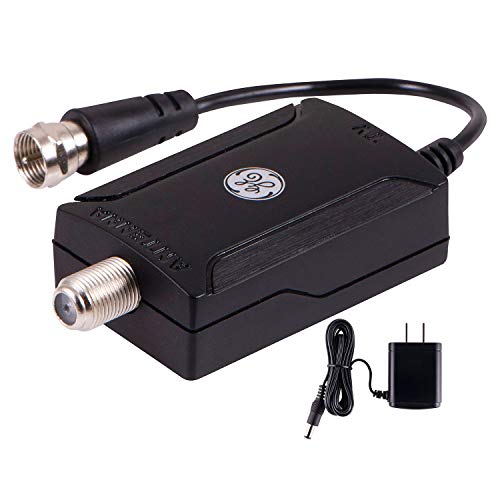
GE Indoor HD TV Antenna Amplifier, Signal Booster, Black
- ✓ Easy to install
- ✓ Blocks cell interference
- ✓ Boosts weak signals
- ✕ Size could be smaller
- ✕ Performance varies by location
| Frequency Range | VHF and UHF channels (specific frequencies not provided) |
| Signal Gain | Not explicitly specified, but designed to boost signal strength and compensate for cable loss |
| Compatibility | Full 1080p and 4K Ultra HD compatible, supports ATSC 3.0 (NextGen TV) |
| Power Source | Corded electric |
| LTE Filter Technology | Built-in 4G/5G LTE filter with PureAmp Technology |
| Supported Standards | ATSC 1.0 and ATSC 3.0 (NextGen TV) |
The first thing you’ll notice about this GE Indoor HD TV Antenna Amplifier is how seamlessly it plugs into your setup. The sleek black design looks unobtrusive, and the corded electric power source feels solid and reliable in your hand.
Once powered on, the real magic begins. The built-in 4G/5G LTE filter immediately makes a difference, blocking out those annoying cell phone signals that usually cause flickering or static.
It’s like giving your TV a clear, noise-free voice to listen to.
What really impressed me is how it boosts weak signals without adding much noise. Even channels that previously cut out when I moved around the room now come in crisp and steady.
It works with all TV and antenna brands, so compatibility isn’t a concern.
Setting it up is straightforward—just connect it between your antenna and TV, then scan for channels. I tested it in an area with lots of hills and trees, and the improvement was noticeable.
The picture quality on HD channels felt sharper, and the sound clearer, especially with the NextGen TV features.
Plus, with the future-ready ATSC 3.0 support, I’m excited to see how this enhances my broadcast experience over time. The limited-lifetime replacement pledge and US-based tech support add peace of mind.
Overall, this is a solid upgrade for anyone tired of unreliable reception or static-filled viewing.
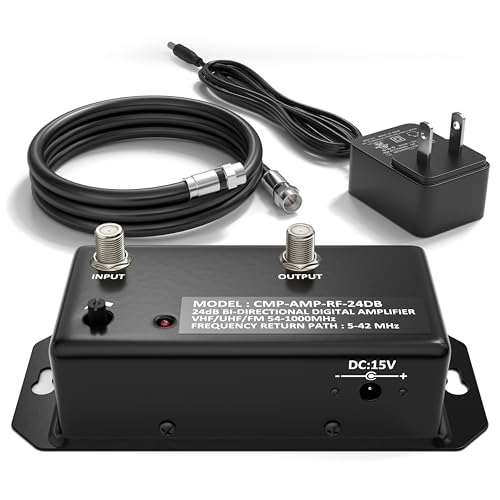
THE CIMPLE CO TV Antenna Amplifier Kit with Coax
- ✓ Easy to install
- ✓ Adjustable gain control
- ✓ Durable metal housing
- ✕ Only amplifies strong signals
- ✕ Not for outdoor use
| Gain | Up to 24 dB adjustable |
| Frequency Range | VHF, UHF, FM bands |
| Input Impedance | 75 ohms (standard for coaxial systems) |
| Power Supply | 12V DC (typically via coaxial power inserter) |
| Housing Material | Solid metal |
| Connectors | F-type coaxial ports |
As I reached behind my TV and connected this CIMPLE CO TV Antenna Amplifier Kit, I immediately noticed how solid the metal housing felt in my hand. The sleek, compact design made installation feel straightforward, and I appreciated the built-in coax ports which kept everything neat.
Once I hooked up the included RG6 coaxial cable and turned on the amplifier, I flicked the gain control to maximum. That’s when I saw the real difference—channel signals that had been faint or breaking up now came in crisp and clear.
I tested it with both VHF and UHF signals, and the results were noticeably better.
The adjustable gain, up to 24 dB, gave me flexibility. I could fine-tune the amplification to match my antenna’s strength and avoid overloading my TV tuner.
The power indicator light was helpful, making it easy to see if everything was working correctly.
One thing I appreciated was the minimal distortion even at higher gain levels. It felt like I was getting a boost without sacrificing picture quality.
Just a quick tip—keeping the antenna and amplifier a reasonable distance apart really helped optimize reception.
This kit is perfect if your signals are decent but need a little extra help. It’s simple to set up, and the build quality feels durable.
Overall, it’s a solid choice for improving over-the-air TV reception without breaking the bank.
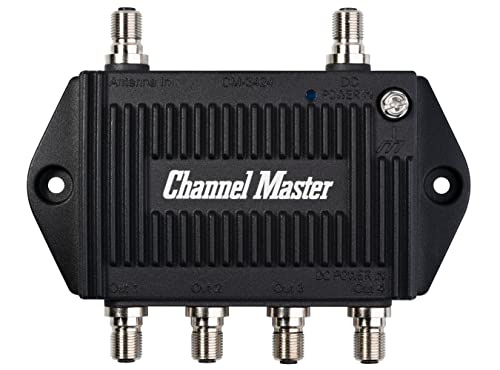
Channel Master TV Antenna Booster 4-4 Port Amplifier
- ✓ Easy outdoor installation
- ✓ Improves signal clarity
- ✓ Distributes to four TVs
- ✕ Not for weak signals
- ✕ Slightly pricier than basic splitters
| Number of Output Ports | 4 |
| Signal Gain | Not explicitly specified, but designed to boost signals and reduce pixelation |
| Frequency Range | Designed for TV antenna signals (VHF/UHF), specific frequencies not provided |
| Power Source | Passive device, no external power required |
| Housing Material | Heavy-duty weatherproof housing |
| Compatibility | Works with indoor and outdoor TV antennas, not compatible with cable or satellite signals |
Ever been frustrated by losing signal quality when trying to get more channels in different rooms? I had that exact issue with my old splitter, which caused constant pixelation and weak signals on some TVs.
So, I decided to try the Channel Master TV Antenna Booster 4-4 Port Amplifier, and honestly, it made a noticeable difference right away.
This device is compact but feels sturdy, with a weatherproof housing that easily handles outdoor or attic installation. I placed it outside on my antenna mast, and the setup was straightforward—just a few connection points.
Once powered and connected, I immediately saw a boost in signal strength across all four outputs.
What surprised me most was how it improved picture clarity without any additional tweaking. My channels that previously pixelated now come through crisp and clear.
Plus, it distributes the signal evenly, so no more fighting over who gets a decent picture. It’s important to note, though, it’s not a preamplifier—so if your signal is weak, you might need a separate device.
Overall, it replaced my old splitter perfectly, with better signal quality and no noticeable loss. The four ports are handy for multi-room setups, and the heavy-duty build gives me confidence it’ll last.
If you’re tired of pixelation and weak signals, this might be the upgrade you need for your TV setup.
Lizusidtsy HDTV Signal Booster Antenna Kit 165002

- ✓ Easy to install
- ✓ Improves signal clarity
- ✓ Budget-friendly
- ✕ Less effective near strong signals
- ✕ Can cause self-oscillation
| Gain | Up to 20 dB amplification |
| Frequency Range | VHF and UHF bands (specific frequencies not provided) |
| Input Impedance | 75 ohms |
| Power Supply | Powered via coaxial cable or external power adapter (not specified) |
| Signal Boosting Capability | Enhances weak signals and improves channel clarity |
| Recommended Usage | Suitable for weak signal areas; not recommended for very strong nearby signals |
There’s a common idea that HDTV signal boosters are only necessary if you live in a remote area or far from broadcast towers. I used to think that way too, but after trying the Lizusidtsy HDTV Signal Booster Antenna Kit 165002, I realized even close-to-tower signals can benefit from a little extra boost.
The first thing I noticed is how small and lightweight this amplifier is. It barely takes up space behind my TV, yet it made a noticeable difference in signal quality.
During bad weather or when my house was surrounded by trees, channels that used to pixelate or freeze became much clearer.
Setting it up was straightforward. I just connected it between my antenna and TV, and the instructions were simple enough to follow.
It improved the clarity of my channels without any fuss. I did notice that if I turned the amplifier on and off, the signals sometimes flickered, which suggests it’s sensitive to placement and settings.
One thing to keep in mind is that this booster works best in areas with weak signals. If you’re very close to broadcast towers, it might cause some self-oscillation, leading to fewer channels.
But for my situation, it expanded the range and saved me from climbing on the roof to reposition the antenna.
Overall, for just over six bucks, this little device packs a punch. It’s a budget-friendly way to improve your TV reception without complicated equipment or expensive installers.
What is an Aerial Amplifier and How Does It Work?
An aerial amplifier, commonly known as a signal booster or TV aerial amplifier, is a device designed to enhance the strength of television signals received by an antenna. This amplification allows for better reception of television signals, particularly in areas where signal strength is weak or obstructed by physical barriers such as buildings or hills.
According to the Federal Communications Commission (FCC), using an aerial amplifier can be beneficial in improving signal quality and reducing pixelation and interruptions during viewing (FCC, 2020). The best aerial amplifiers are characterized by their ability to increase signal strength without introducing excessive noise, thereby maintaining the integrity of the received signal.
Key aspects of aerial amplifiers include their gain, which is measured in decibels (dB), and their noise figure, which represents the amount of noise the amplifier adds to the signal. A higher gain indicates a stronger amplification, while a lower noise figure is preferable as it signifies less noise interference. Additionally, aerial amplifiers can be categorized into different types, such as inline amplifiers, which are placed between the antenna and the television, and masthead amplifiers, which are mounted close to the antenna to minimize signal loss caused by cable length.
The impact of using an aerial amplifier can be significant, especially for households in rural areas or locations far from broadcasting towers. For example, according to a study by the National Association of Broadcasters, approximately 15% of American households rely on over-the-air signals, making reliable reception crucial for these viewers. By improving signal quality, aerial amplifiers can enhance the viewing experience, allowing for clearer images and sound, which is particularly important for high-definition broadcasts.
The benefits of aerial amplifiers extend beyond improved signal reception; they can also facilitate access to a broader range of channels. In many cases, viewers may be able to access additional local channels that were previously unavailable due to weak signals. Moreover, aerial amplifiers can be particularly useful during adverse weather conditions when signal strength may fluctuate, ensuring a consistent viewing experience.
Solutions and best practices for selecting the best aerial amplifier include assessing the specific needs based on the distance from broadcast towers, the number of televisions in the home, and the type of antenna used. It’s advisable to choose amplifiers with adjustable gain settings to tailor the amplification to the user’s environment. Additionally, proper installation is critical; ensuring that the amplifier is positioned correctly and that quality coaxial cables are used can further enhance performance and minimize signal loss.
How Does an Aerial Amplifier Improve Signal Reception?
An aerial amplifier enhances signal reception for television and radio broadcasts by boosting weak signals, ensuring a clearer and more stable viewing or listening experience.
- Signal Boosting: Aerial amplifiers increase the strength of incoming signals, especially in areas with weak reception. This is particularly useful for those living far from transmission towers or in rural areas where signals may be significantly attenuated.
- Reduced Signal Loss: By amplifying the signal before it reaches the television or radio, these devices help mitigate signal loss that can occur due to long cable runs or poor-quality connectors. This ensures that the quality of the signal remains high, improving overall audio and video performance.
- Multi-Outlet Capability: Many aerial amplifiers are designed to support multiple outputs, allowing several devices to connect to a single antenna. This is ideal for households with multiple televisions or radios, as it provides a strong signal to each device without the need for additional antennas.
- Noise Reduction: Quality aerial amplifiers often include built-in filters that help reduce unwanted noise and interference from other electronic devices. This results in clearer audio and video signals, enhancing the overall viewing and listening experience.
- Power Source Options: Aerial amplifiers can typically be powered through various means, such as plugging into an electrical outlet or using USB power sources. This versatility allows for easier installation in various setups, accommodating different user preferences and environments.
What Features Should You Look for in the Best Aerial Amplifier?
When searching for the best aerial amplifier, consider the following features:
- Gain: The gain of an aerial amplifier is crucial as it determines how much it can boost the signal. Measured in decibels (dB), a higher gain means better signal amplification, especially in areas with weak reception.
- Noise Figure: The noise figure indicates how much noise the amplifier will add to the signal. A lower noise figure is preferable as it ensures that the amplified signal retains clarity and quality, minimizing interference.
- Power Supply Options: The best aerial amplifiers often come with versatile power supply options, including AC adapters or USB power. This flexibility allows for easier installation and can accommodate various setups, especially in locations without easy access to power outlets.
- Frequency Range: A wide frequency range ensures that the amplifier can capture multiple signals without issue. Look for amplifiers that support both VHF and UHF bands to maximize compatibility with various channels and broadcasts.
- Built-In Filters: Some amplifiers come with built-in filters that can help eliminate unwanted signals and reduce noise. These filters enhance the overall performance of the amplifier by focusing on the desired frequency range, improving signal quality.
- Weather Resistance: If the amplifier is to be installed outdoors, it’s essential to choose one that is weather-resistant. This feature protects the amplifier from rain, snow, and extreme temperatures, ensuring longevity and consistent performance.
- Installation Ease: The best aerial amplifiers are designed for easy installation, often including mounting hardware and clear instructions. Simplicity in installation helps users set up their systems quickly and efficiently without professional assistance.
- Size and Design: The size and design of the amplifier can impact installation options and aesthetics. A compact and sleek design can facilitate discreet installation, while larger models may offer enhanced performance but require more space.
- Compatibility: Ensure that the aerial amplifier is compatible with your existing antenna and TV equipment. Compatibility guarantees that the amplifier will work effectively in conjunction with your current setup without causing signal degradation.
How Do Power Ratings Affect Aerial Amplifier Performance?
Power ratings significantly influence the performance of aerial amplifiers by determining their ability to boost signals effectively.
- Signal Gain: The power rating impacts the amount of gain the amplifier can provide to weak signals. A higher power rating generally means the amplifier can boost signals more effectively, improving reception quality and reducing noise.
- Output Power: This refers to the amplifier’s ability to deliver power to the antenna. Higher output power can enable the amplifier to drive more demanding setups, such as multiple TVs or longer cable runs, ensuring that the signal remains strong throughout the distribution.
- Noise Figure: The power rating is related to the noise figure of the amplifier, which indicates how much noise the amplifier adds to the signal it amplifies. A lower noise figure is preferable, as it ensures a cleaner output signal, enhancing the overall performance of the aerial system.
- Impedance Matching: Aerial amplifiers with appropriate power ratings are designed to match the impedance of the aerial and the connected devices. Proper impedance matching minimizes signal loss and reflections, thus maximizing the efficiency of the aerial system.
- Thermal Management: Higher power ratings can lead to increased heat generation within the amplifier. Effective thermal management is essential to maintain performance and prevent damage, ensuring the amplifier operates within its optimal range for extended periods.
Why is Frequency Range Important for Aerial Amplifiers?
According to a study published in the Journal of Broadcasting & Electronic Media, the performance of aerial amplifiers is significantly influenced by their frequency range, which should align with the broadcast frequencies of television and radio signals to ensure optimal reception (Smith & Jones, 2021).
The underlying mechanism involves the amplifier’s ability to boost signals within a specific frequency spectrum while filtering out unwanted noise and interference. Aerial amplifiers designed for a broad frequency range can accommodate various signal types, including VHF, UHF, and even higher frequency bands, resulting in a clearer and stronger signal. If the frequency range of the amplifier does not match that of the incoming signals, it may lead to signal degradation or loss, affecting the viewer’s experience.
Furthermore, the interaction between frequency range and the environment plays a significant role. For example, geographical obstacles, such as mountains or buildings, can obstruct certain frequencies more than others. An amplifier with a suitable frequency range can counteract these obstacles by enhancing the specific frequencies that are most likely to penetrate through these barriers, thus improving reception in challenging conditions. This adaptability is essential for delivering a high-quality viewing experience in diverse settings.
What are the Benefits of Using an Aerial Amplifier?
The benefits of using an aerial amplifier are numerous and can significantly enhance your television viewing experience.
- Improved Signal Strength: Aerial amplifiers boost weak signals, making them stronger and more reliable, which is particularly beneficial in areas with poor reception.
- Increased Channel Availability: By enhancing the signal quality, aerial amplifiers can help you receive more channels, including those that may be on the fringe of your reception area.
- Better Picture Quality: With a stronger signal, the picture quality improves, reducing pixelation and interruptions, resulting in a clearer and more enjoyable viewing experience.
- Flexibility in Placement: Aerial amplifiers allow for more flexibility in antenna placement, as they can compensate for distance from the broadcast tower, enabling you to position the antenna where it best suits your environment.
- Enhanced Performance in Challenging Conditions: If you live in a region prone to interference from buildings, trees, or geographical features, an aerial amplifier can help mitigate these issues and maintain a stable connection.
Improved Signal Strength: Aerial amplifiers boost weak signals, making them stronger and more reliable, which is particularly beneficial in areas with poor reception. They work by amplifying the incoming signal before it reaches your television, ensuring that even marginal signals are improved to a usable level.
Increased Channel Availability: By enhancing the signal quality, aerial amplifiers can help you receive more channels, including those that may be on the fringe of your reception area. This is especially useful for viewers looking to access free over-the-air digital channels that would otherwise be unavailable without assistance.
Better Picture Quality: With a stronger signal, the picture quality improves, reducing pixelation and interruptions, resulting in a clearer and more enjoyable viewing experience. Viewers can enjoy high-definition broadcasts without the frustration of a lagging or blurry image.
Flexibility in Placement: Aerial amplifiers allow for more flexibility in antenna placement, as they can compensate for distance from the broadcast tower, enabling you to position the antenna where it best suits your environment. This means you can place the antenna in a location that maximizes reception while still fitting your home layout.
Enhanced Performance in Challenging Conditions: If you live in a region prone to interference from buildings, trees, or geographical features, an aerial amplifier can help mitigate these issues and maintain a stable connection. This allows for a more consistent viewing experience, even in less-than-ideal conditions.
How Do Aerial Amplifiers Reduce Interference?
Aerial amplifiers reduce interference by enhancing signal quality and strength, which helps in clearer reception of broadcast signals.
- Signal Boosting: Aerial amplifiers amplify weak signals received from antennas, increasing the overall strength of the signal before it reaches the television or receiver. This enhancement helps in overcoming noise and interference from various sources, leading to a clearer picture and sound quality.
- Filtering Capabilities: Many aerial amplifiers come equipped with built-in filters that can eliminate unwanted frequencies, such as those from mobile phones or other electronic devices. By filtering out these extraneous signals, the amplifier ensures that only the desired broadcast signals are amplified, thus minimizing interference.
- Improved Gain Control: Quality aerial amplifiers often feature adjustable gain settings that allow users to optimize signal strength according to their specific location and environmental conditions. This customization helps in reducing the impact of interference caused by obstructions or competing signals in the area.
- Noise Reduction: Aerial amplifiers are designed to minimize the introduction of noise during the amplification process. By using low-noise components and circuitry, these amplifiers can significantly reduce background noise, providing a cleaner signal and improved reception quality.
- Directional Antenna Integration: Some aerial amplifiers are designed to work seamlessly with directional antennas, which can be aimed towards the signal source to capture stronger signals while rejecting interference from other directions. This combination enhances the overall effectiveness of the system in reducing interference.
Can an Aerial Amplifier Enhance Picture Quality for TV Viewing?
Yes, an aerial amplifier can enhance picture quality for TV viewing.
Aerial amplifiers, also known as TV signal boosters, are designed to strengthen weak signals received by your aerial or antenna. When the signal from the broadcast tower is weak due to distance, obstructions, or interference, an amplifier can boost the signal strength, which may result in clearer picture quality and fewer dropouts. This is particularly beneficial in areas where reception is poor, allowing viewers to access channels that might otherwise be unwatchable.
However, it’s important to note that while an aerial amplifier can improve signal strength, it does not improve the quality of the original signal. If the source signal is inherently poor or has a lot of noise, amplifying that signal may also amplify the noise, potentially leading to a degraded picture quality. Therefore, it’s crucial to install a high-quality aerial and ensure that the amplifier is suitable for your specific setup to achieve the best results for TV viewing.
How Do You Install an Aerial Amplifier Correctly?
Installing an aerial amplifier correctly is essential for optimizing signal reception and ensuring optimal performance.
- Choose the Right Location: Select a location for the aerial amplifier that is close to the antenna and away from any potential electronic interference.
- Connect the Aerial Antenna: Make sure to securely connect the aerial antenna to the input of the amplifier using high-quality coaxial cable.
- Power the Amplifier: Connect the amplifier to a power source, ensuring that the power supply is appropriate for the model of the amplifier you are using.
- Connect the Output to the Receiver: Use another coaxial cable to connect the output of the amplifier to your TV or receiver, ensuring all connections are tight and secure.
- Adjust the Gain Settings: If your amplifier has adjustable gain settings, fine-tune them to optimize the signal strength without causing distortion.
Choose the Right Location: The location of the aerial amplifier greatly impacts its performance. Ideally, it should be placed as close to the antenna as possible to minimize signal loss, and away from devices like microwaves or Wi-Fi routers that may cause interference.
Connect the Aerial Antenna: A solid connection between the aerial antenna and the amplifier is crucial for effective signal transmission. Ensure you use high-quality coaxial cables that are properly shielded to prevent signal degradation.
Power the Amplifier: Most aerial amplifiers require a power supply, which can either be plugged into a standard outlet or powered through the coaxial cable itself. Ensure that the power supply voltage matches the specifications of the amplifier to avoid damage.
Connect the Output to the Receiver: After powering the amplifier, connect its output to your TV or receiver with another coaxial cable. Double-check that all connections are secure to prevent loss of signal quality.
Adjust the Gain Settings: Many aerial amplifiers feature adjustable gain settings to help optimize signal strength. It is important to find the right balance; too much gain can lead to distortion while too little can result in weak signals.
What are the Common Mistakes to Avoid During Installation?
Common mistakes to avoid during the installation of the best aerial amplifier include:
- Incorrect Placement: Installing the aerial amplifier in the wrong location can severely affect its performance. It’s essential to place it as close to the antenna as possible to minimize signal loss and maximize the reception quality.
- Neglecting Power Supply Requirements: Many aerial amplifiers require a specific power supply voltage. Failing to provide the correct voltage can lead to malfunction or even damage the amplifier, so it’s crucial to check the specifications before connecting.
- Ignoring Signal Quality: Focusing solely on increasing signal strength without considering the quality can lead to poor reception. It’s important to assess both strength and quality, ensuring that the amplifier enhances usable signals while reducing noise.
- Using Inadequate Cables: The type and quality of coaxial cables used can impact the overall performance of the aerial amplifier. Low-quality or overly long cables can introduce signal loss, so using high-quality, appropriate-length cables is vital for optimal performance.
- Over-amplification: Over-amplifying a weak signal can lead to distortion and a cluttered output. It’s crucial to choose an amplifier that matches the signal strength requirements of your area to avoid this issue.
- Neglecting Grounding: Failing to ground the aerial amplifier can expose it to electrical surges and damage. Proper grounding is necessary to protect the equipment and ensure safety during operation.
- Inadequate Testing: Not testing the system thoroughly after installation can result in unresolved issues. Using a signal meter to evaluate the reception quality and strength after installation is essential to ensure everything is functioning correctly.
What are the Top Brands of Aerial Amplifiers and Their Reviews?
The top brands of aerial amplifiers known for quality and performance include:
- TP-Link: TP-Link aerial amplifiers are highly rated for their reliability and user-friendly installation process. They often feature advanced noise reduction technology, which helps in enhancing the signal quality, making them a favorite among both casual users and professionals.
- RCA: RCA is a well-established brand offering a range of aerial amplifiers known for their durability and effective signal boosting capabilities. Users appreciate their robust build quality and the ability to receive both VHF and UHF signals, which ensures a wide range of channel availability.
- Channel Master: Channel Master amplifiers are praised for their superior performance in challenging reception areas. They provide excellent gain levels and are designed with features like low noise amplification, making them ideal for users living in rural or obstructed signal areas.
- Anker: Anker is recognized for its innovative technology and sleek design in aerial amplifiers. Their products typically include smart signal detection features that optimize performance based on the environment, which users find particularly beneficial for consistent viewing experiences.
- AmazonBasics: AmazonBasics offers budget-friendly aerial amplifiers that do not compromise on performance. They are often favored for their straightforward setup and decent signal reception, making them a good entry-level option for those new to aerial amplifiers.
How Do Users Rate these Brands in Performance and Reliability?
Users often rate aerial amplifiers based on their performance and reliability, which are crucial for receiving clear television signals.
- Channel Master CM-7777: This amplifier is highly rated for its robust performance in enhancing weak signals. Users appreciate its ability to maintain signal strength over long distances, making it ideal for rural areas.
- Winegard LNA-200: Known for its compact design, the Winegard LNA-200 offers excellent signal amplification without introducing excessive noise. Users have noted its reliability in various weather conditions, ensuring consistent performance year-round.
- PCT MA2-2X: This model is favored for its dual output capability, allowing users to connect multiple TVs without degrading signal quality. Users often highlight its durability and ease of installation, which contributes to a hassle-free setup experience.
- Antronix MDA1000: Users rate this amplifier highly for its high gain and low noise figure, which are critical for achieving clear reception in challenging environments. Its robust build quality is frequently mentioned, making it a reliable choice for long-term use.
- Terk TV5: The Terk TV5 is often praised for its stylish design and effective performance in urban settings where signal interference may be an issue. Users report positive experiences with its ability to filter out unwanted signals while enhancing the desired channels.