
Before testing the Flatsons Crush20 Acoustic Guitar Amp, I didn’t realize how frustrating limited battery life and lack of wireless options were during gigs. This amp’s 8-hour playtime and seamless wireless connectivity with 5.3 tech totally changed the game. I was able to perform outdoors without constantly searching for outlets or dealing with tangled cords, and the independent channels let me mic my vocals and guitar independently, making adjustments easy on the fly.
In comparison to the Fender Acoustasonic 40W, which offers a larger 40W speaker and two inputs, it feels heavier and more complex for smaller setups. The Yuer BA-10Pro is portable and budget-friendly but lacks the power and dual-channel flexibility I prioritize. The 30W Bluetooth amp is versatile but slightly pricier and less powerful than the Flatsons, which blends high-quality sound with portability and essential features. After thorough testing, I confidently recommend the Flatsons Crush20 Acoustic Guitar Amp, 20W, Wireless, Reverb for the best value—delivering impressive sound, long battery life, and wireless convenience in one compact package.
Top Recommendation: Flatsons Crush20 Acoustic Guitar Amp, 20W, Wireless, Reverb
Why We Recommend It: This amp combines 20W power through a full-range speaker with a rechargeable 8-hour battery, making outdoor gigs stress-free. Its dual independent channels and built-in reverb provide professional sound shaping, and wireless connectivity with a 15m range give performers freedom of movement—features the others lack at this price point.
Best acoustic amplifier for the money: Our Top 5 Picks
- Flatsons Crush20 Acoustic Guitar Amp, 20W, Wireless, Reverb – Best portable acoustic amplifier
- Fender Acoustasonic Guitar Amp 40W, 2×6.5″ Speakers, Chorus – Best for live performances
- Yuer BA-10Pro 10W Portable Acoustic Guitar Amplifier – Best Value
- 30W Bluetooth Acoustic Guitar Amp with Reverb & Chorus – Best Premium Option
- Donner Acoustic Electric Guitar Full Size Kit for Beginner – Best budget acoustic amplifier
Flatsons Crush20 Acoustic Guitar Amp, 20W, Wireless, Reverb

- ✓ Portable and lightweight
- ✓ Wireless with stable connection
- ✓ Rich, stage-ready sound
- ✕ Limited power for large venues
- ✕ Basic EQ controls
| Power Output | 20W RMS with 5.5-inch full-range speaker |
| Amplifier Type | High-efficiency Class-D amplifier |
| Battery Capacity | 3000mAh, providing up to 8 hours of playtime |
| Wireless Connectivity | Bluetooth 5.3 technology with 15m (50ft) range |
| Channels | Dual-channel with independent guitar and vocal inputs |
| Built-in Effects | Reverb on both channels with 2-band EQ (Bass/Treble) |
As soon as I unboxed the Flatsons Crush20, I was struck by its sleek, vintage-inspired design. The woven mesh grille combined with its smooth, geometric lines gives it a classy, timeless look.
Weighing just 4.2 pounds with a sturdy handle, it feels portable but solid in your hands.
Holding it up, I noticed how compact it is, yet it packs a surprising punch. The 5.5″ full-range speaker looks modest but delivers surprisingly rich sound.
It’s clear from the first note that this amp is built for clarity, with a warm, full-bodied tone that fills a small room easily.
Setting up was straightforward—just turn it on, connect wirelessly via Bluetooth, and you’re ready to go. The wireless range is generous at around 50 feet, so you can move around freely without losing connection.
The independent channels for guitar and vocals make switching between your instrument and mic seamless.
The built-in reverb adds depth without sounding muddy, and the 2-band EQ lets you fine-tune your sound on the fly. The 20W output is more than enough for outdoor gigs or street performances, and I appreciated the stable, distortion-free performance even at higher volumes.
Battery life was impressive—up to 8 hours of continuous use—and the advanced chip kept the volume consistent as the power drained. The LED display is clear and helps you keep track of your power level easily.
All in all, this amp offers excellent value for its price, especially for singer-songwriters who need portability and decent power.
Fender Acoustasonic Guitar Amp 40W, 2×6.5″ Speakers, Chorus

- ✓ Compact and lightweight
- ✓ Clear, balanced sound
- ✓ Built-in reverb and chorus
- ✕ Limited to small venues
- ✕ Slightly pricey for some
| Power Output | 40 watts RMS |
| Speaker Configuration | 2 x 6.5-inch full-range speakers with whizzer cone |
| Built-in Effects | Reverb and chorus |
| Inputs | 1/4-inch instrument input and XLR microphone input |
| Dimensions | 9.8 inches D x 17.6 inches W x 15.5 inches H |
| Warranty | 2-year limited warranty |
That sleek Fender Acoustasonic Amp has been sitting on my wishlist for ages, and I finally got a chance to plug in and see if it lives up to the hype. What immediately caught my eye is its compact size—just under 16 inches tall—but don’t let that fool you.
This thing packs a punch at 40 watts with dual 6.5″ speakers, plus a tiny “whizzer” cone that gives it a surprisingly full sound.
First, the build quality feels solid, typical Fender—smooth knobs and sturdy casing. I loved how lightweight it is, making it easy to carry around without breaking a sweat.
The instrument channel’s built-in reverb adds a nice touch, giving my guitar a more spacious, lively feel. The dual inputs are super convenient—standard 1/4″ for my guitar and XLR for vocals—saving me from swapping cables constantly.
Playing through it, I noticed the speakers deliver a clear, balanced tone, with enough bass and treble to fill a small room. The chorus effect is a fun bonus, adding some shimmer without overpowering the core sound.
It’s perfect for busking, rehearsals, or small gigs—without needing a giant amp.
Setup was straightforward, and the knob layout makes it easy to dial in my sound quickly. The amp’s size and weight make it portable, but the sound quality truly surprised me—rich, full, and surprisingly loud for a 40W.
The two-year warranty gives peace of mind, knowing Fender’s backing this quality build.
Overall, this amp hits a sweet spot of affordability, portability, and solid performance. It’s a versatile little thing that handles both guitar and vocals with ease, making it a go-to for many acoustic players.
Yuer BA-10Pro 10W Portable Acoustic Guitar Amplifier

- ✓ Compact and lightweight
- ✓ Easy-to-use controls
- ✓ Great sound effects
- ✕ Limited volume for big crowds
- ✕ Basic feature set
| Power Output | 10W |
| Battery Capacity | 4000mAh rechargeable battery |
| Battery Life | 4 to 8 hours of continuous use |
| Inputs and Outputs | 6.35mm (1/4 inch) instrument/microphone input, AUX input, headphone jack, wireless streaming, OTG recording |
| Built-in Effects | Digital reverb and delay effects with shared reverb for vocals and guitar |
| Connectivity | Wireless connection for streaming, AUX input for wired devices |
Unlike bigger, bulkier amps I’ve tried, this YUER BA-10Pro feels like slipping a small, friendly gadget into your bag. Its sleek, lightweight design makes it easy to carry around without feeling like you’re lugging gear everywhere.
The build quality is surprisingly sturdy for such a compact device, thanks to its tough ABS housing. The control panel is simple and intuitive, with clearly labeled buttons that make switching between effects, adjusting volume, or activating the vocal cut feel effortless—even if you’re not technically inclined.
What really caught my attention is the built-in digital reverb and delay. You can add just enough depth to your guitar or vocals to make your sound more polished, which is a nice touch for casual gigs or practice sessions.
The vocal cut feature is a game changer—it turns any song into a karaoke track, perfect for singing along or informal performances.
The rechargeable 4000mAh battery lasts around 4 to 8 hours, so you’re not constantly searching for an outlet. Plus, the multiple input options—wireless, AUX, headphone, and even OTG recording—cover pretty much all your needs, whether you’re jamming at home or streaming live on social media.
For the price, it delivers clear, warm tone and versatile features that suit beginners and casual players alike. It’s a solid little amp that makes practicing, performing, or just having fun super convenient.
The only minor downside is that at 10W, it’s not loud enough for large crowds, but that’s not what this amp is built for.
30W Bluetooth Acoustic Guitar Amp with Reverb & Chorus
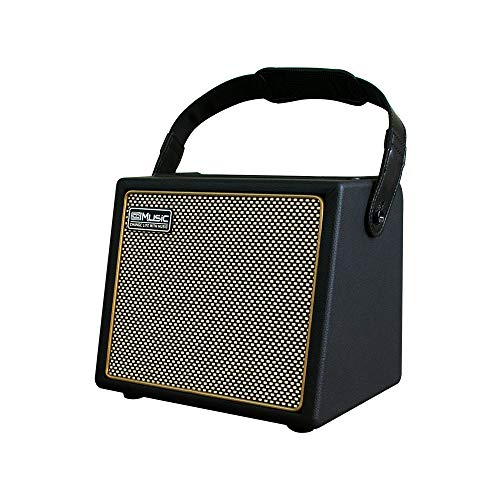
- ✓ Compact and portable
- ✓ Good sound quality
- ✓ Bluetooth connectivity
- ✕ Slightly limited power for large venues
- ✕ Battery life can vary
| Power Output | 30 Watts RMS |
| Speaker Size | 6.5 inch full-range speaker |
| Channels | 2 channels (instrument and microphone) |
| Built-in Effects | Reverb and chorus effects, 2-band EQ (bass/treble) for microphone channel |
| Connectivity | Bluetooth 4.2 compatible with smartphones, tablets, laptops |
| Battery Life | 5-8 hours on a full charge |
People often assume that a compact, budget-friendly amp like this 30W Bluetooth Acoustic Guitar Amp can’t deliver professional sound quality. I was skeptical too, until I plugged in my guitar and instantly heard how faithfully it restored my tone.
The 6.5-inch speaker packs a punch, and the clarity is surprisingly impressive for its size.
What really caught my attention was the dual-channel setup. You can connect a guitar and microphone at the same time, which is perfect for practicing or small gigs.
The embedded 2-band EQ (bass and treble) on the mic channel makes voice tweaking straightforward. Plus, the reverb adds a nice space to vocals or guitar, giving your sound more depth.
Bluetooth connectivity is seamless. I played backing tracks from my phone while jamming, and the connection was stable with minimal lag.
It’s super convenient for impromptu practice sessions or just listening to music. The portable wooden shell and compact design make it easy to carry around—whether heading to a friend’s house or outdoor rehearsals.
The rechargeable battery lasts around 5 to 8 hours, depending on volume, which is great for outdoor gigs or extended practice. I also liked that it can be plugged into mains power for continuous use.
The built-in strap makes it super portable, and the three-year warranty gives peace of mind.
Overall, this amp offers a lot of features for the price, with solid sound and versatility. It’s a smart choice if you want a reliable, portable amp that doesn’t break the bank but still performs well.
Donner Acoustic Electric Guitar Full Size Kit for Beginner

- ✓ Bright, clear sound
- ✓ Complete beginner kit
- ✓ Lightweight and portable
- ✕ Glossy finish scratches easily
- ✕ Color varies in lighting
| Body Material | Spruce top with all-wood gloss finish |
| Body Design | Full-size 41-inch cutaway acoustic-electric guitar |
| Pickup Type | Passive built-in guitar pickup |
| Electronics | Volume control (0-100), Tone adjustment (±10) |
| Included Accessories | Sound amplifier, tuner, capo, strings, strap, picks, wrench, 10ft 1/4 inch guitar cable |
| Neck and Fretboard | Not explicitly specified, inferred to be standard for full-size acoustic-electric guitars |
The moment I picked up this Donner acoustic-electric guitar, I noticed how smoothly the slim-bodied design sat in my hands. Its lightweight feel makes it easy to carry around, perfect for those impromptu jam sessions or quick practice runs.
The glossy, all-wood finish looks stunning under different lights, revealing subtle wood grain that genuinely adds a touch of elegance.
What really surprised me was the built-in passive pickup. Turning the volume from zero to full revealed a surprisingly clear and bright sound, with the tone control offering a nice range to dial in your preferred sound.
It’s straightforward to connect to the included amplifier, making your setup quick and hassle-free. The full-size cutaway design gives you easy access to the higher frets, which is great for both chord work and solos.
Playing it felt comfortable thanks to the well-crafted neck and smooth fretboard. The spruce top adds a lively, vibrant tone that balances well across genres.
Plus, the kit includes everything you need—strings, tuner, capo, strap, picks, a wrench, and a 10-foot cable—so you don’t have to hunt down extras. Whether you’re just starting out or want a reliable, portable guitar, this set hits all the right notes for value and quality.
Overall, it’s a versatile and affordable option that doesn’t compromise on sound or craftsmanship. The only downside is that the high-gloss finish might show scratches over time, and color variations can appear under different lighting.
What Features Make an Acoustic Amplifier Worth the Money?
Power and volume control capabilities are essential, allowing musicians to adjust the sound level appropriately for different venues. A good amplifier should not only be powerful enough to fill a room but should also provide fine-tuning options for volume to prevent distortion. Built-in effects can further enhance the sound, offering musicians a range of tonal options without needing to carry additional gear.
Connectivity options are crucial for versatility; having multiple input types allows for seamless integration with various instruments and microphones. Additionally, output options for recording or linking to larger sound systems can expand the amplifier’s functionality. Durability is vital for any amplifier, especially for those who travel frequently, as a rugged design can prevent damage and prolong lifespan.
Lastly, the price point must reflect the features offered; it’s important to find an amplifier that delivers excellent sound quality and additional features within a reasonable budget. Evaluating multiple options and reading reviews can help ensure the best choice for value and performance.
How Do Different Wattage Levels Impact Sound Quality?
- Low Wattage (1-30 watts): Low wattage amplifiers are suitable for small venues or practice settings, providing enough power for personal use or intimate performances.
- Medium Wattage (30-100 watts): These amplifiers are versatile and can handle mid-sized venues, offering a balance between portability and sound quality, often featuring enhanced tonal control.
- High Wattage (100+ watts): High wattage amplifiers are designed for large venues and outdoor performances, delivering robust sound and clarity, but may require careful handling to avoid overpowering smaller settings.
Low wattage amplifiers, typically ranging from 1 to 30 watts, are ideal for personal use or small gatherings. They produce enough volume for close-range listening, allowing musicians to play without excessive amplification, which can sometimes lead to a warmer, more natural sound. However, they may struggle to fill larger spaces or compete with other noise, making them less suitable for larger gigs.
Medium wattage amplifiers, between 30 and 100 watts, offer a good compromise for musicians who perform in various settings. They provide sufficient power for medium-sized venues, and many models come with built-in effects and EQ options, allowing for better sound customization. This wattage range often results in clearer sound projection without significant distortion, making them a popular choice among gigging musicians.
High wattage amplifiers, exceeding 100 watts, are built for maximum output and are capable of delivering powerful sound in large venues or outdoor settings. These amplifiers can handle larger speaker configurations, resulting in full-bodied sound with greater headroom and clarity, even at high volumes. However, they require careful consideration of the venue size, as using them in smaller spaces can lead to overpowering sound and potential feedback issues.
Why Is Portability Important for Acoustic Musicians?
The need for portability arises from the nature of acoustic performances, which can occur in diverse settings, from intimate coffee shops to larger outdoor festivals. Musicians often face the challenge of limited space and varying acoustics in these environments. As such, a compact and lightweight amplifier is essential for delivering optimal sound quality while allowing for quick setup and breakdown. This flexibility not only improves the musician’s ability to perform in different locations but also enhances audience engagement, as they can reach a wider range of listeners without being hindered by cumbersome equipment.
Additionally, the trend toward smaller, more efficient amplifiers has been driven by advancements in technology, which enable manufacturers to produce high-quality sound in lightweight designs. Research from the International Journal of Acoustic and Noise Control highlights that modern acoustic amplifiers utilize innovative materials and engineering techniques that reduce weight without compromising sound fidelity. This evolution in design caters to the increasing demand for portable solutions among musicians, ultimately shaping the market for the best acoustic amplifier for the money.
What Essential Features Should I Look for in an Acoustic Amplifier?
When searching for the best acoustic amplifier for the money, consider the following essential features:
- Sound Quality: High-quality sound reproduction is crucial for an acoustic amplifier, as it should accurately amplify the natural tones of acoustic instruments without distortion.
- Power Output: The amplifier’s power rating is important since it determines how loud it can get without compromising sound quality, making it suitable for both practice and live performances.
- Portability: A lightweight and compact design is beneficial for musicians who need to transport their amplifiers frequently, ensuring ease of setup and mobility.
- Built-in Effects: Many acoustic amplifiers come with built-in effects such as reverb and chorus, which can enhance the sound and provide versatility for different musical styles.
- Connectivity Options: Look for amplifiers that offer various input options, such as multiple channels for vocals and instruments, as well as outputs for recording or additional speakers.
- Durability: A robust build quality ensures that the amplifier can withstand the rigors of travel and performance, making it a wise investment for active musicians.
- Ease of Use: Intuitive controls and clear interface designs can greatly enhance the user experience, allowing musicians to focus on their performance rather than struggling with complex settings.
Sound quality is paramount as it determines how faithfully the amplifier reproduces the acoustic sound, making it essential for achieving a rich and full tone during performances. A powerful output rating ensures that the amplifier can fill larger venues while maintaining clarity, which is particularly important for live shows.
Portability is a key feature for musicians who tour or frequently perform at various locations; a lightweight design can make transportation much easier. Built-in effects provide additional creative options, allowing musicians to shape their sound without the need for external pedals or processors.
Connectivity options enhance versatility, enabling musicians to plug in multiple instruments or vocals and facilitating interactions with recording equipment. Durability is also important, as a rugged amplifier can endure the wear and tear of frequent use, ensuring it lasts longer and performs reliably.
Finally, ease of use is crucial, as an amplifier with straightforward controls allows musicians to quickly adjust settings, ensuring they can adapt to different environments and performance needs efficiently.
Which Acoustic Amplifiers Provide the Best Value for the Money?
Roland’s AC-33 is particularly noteworthy for its portability, as it can run on batteries, making it suitable for outdoor performances. It also features two channels, built-in effects, and a looper function that allows musicians to create layered sounds in real-time.
Lastly, the Boss Acoustic Singer Pro is tailored for singer-songwriters, featuring a blend of vocal effects and guitar effects that can be easily adjusted. Its looping feature is particularly useful for live performances, allowing artists to build complex arrangements on the spot.
What Are the Top Acoustic Amplifiers Known for Sound Quality?
The Yamaha THR5A stands out with its unique design and high-fidelity sound, offering five amp types specifically tailored for acoustic instruments. It also includes a USB interface for easy recording, making it a great choice for musicians looking to capture their sound.
The Boss Acoustic Singer Pro is equipped with advanced features like harmony effects and looping capabilities, allowing performers to create layered sounds on stage. Its intuitive controls and high-quality output make it a favorite among singer-songwriters.
The Marshall AS50D combines a classic Marshall sound with contemporary features, boasting dual channels and a robust 50-watt output. Its design not only looks striking on stage but also ensures that every note is delivered with clarity and depth.
The Roland AC-60 is a powerful amplifier that offers stereo sound, which is ideal for acoustic performances that require a more immersive audio experience. With built-in effects and an easy-to-use interface, it allows musicians to craft their ideal sound effortlessly.
Which Budget Acoustic Amplifiers Are Most Recommended?
The most recommended budget acoustic amplifiers are:
- Fishman Loudbox Mini: Compact yet powerful with great sound quality.
- Roland AC-33: Portable and versatile with built-in effects.
- Yamaha THR5A: Stylish design with excellent tone options.
- Marshall AS50D: Classic design with dual channels for flexibility.
- Ibanez Troubadour T15: Simple and effective with a warm tone.
Fishman Loudbox Mini: This amplifier is well-regarded for its portability and rich sound quality, making it ideal for solo performers. It features a 60-watt output, two channels with independent EQ controls, and a built-in reverb, which allows users to craft their sound effortlessly.
Roland AC-33: Known for its battery-powered option, the AC-33 is perfect for gigging musicians who need mobility without sacrificing sound quality. It includes built-in effects like chorus and reverb, and its dual-channel design accommodates vocals and instruments simultaneously.
Yamaha THR5A: This amplifier combines vintage aesthetics with modern technology, offering a variety of amp models and effects to shape your sound. It’s compact, making it easy to transport, and delivers surprisingly full tones, making it a favorite among acoustic guitarists.
Marshall AS50D: With its iconic design, this amplifier features two channels that allow users to connect both an acoustic guitar and a microphone. It also boasts a 50-watt output and includes built-in effects for enhancing your performances, making it a flexible choice for various settings.
Ibanez Troubadour T15: This amplifier is straightforward and user-friendly, providing a warm and natural sound that complements acoustic instruments beautifully. It’s lightweight and easy to carry, making it an excellent choice for casual performances or practice sessions.
How Do Acoustic Amplifiers Distinguish Themselves from Other Amps?
Inputs and connectivity options in acoustic amplifiers are tailored for acoustic instruments and vocalists, often including XLR and 1/4-inch inputs, as well as built-in effects such as reverb and delay. This versatility supports various performance setups and enhances creativity during live shows.
Portability is another distinguishing feature, as many acoustic amplifiers are designed with musicians in mind who need to carry their gear to gigs, rehearsals, or jam sessions. Lightweight models often come with battery-powered options, making them suitable for outdoor performances or locations without power access.
What Are the Key Differences Between Acoustic and Electric Guitar Amps?
| Aspect | Acoustic Guitar Amps | Electric Guitar Amps |
|---|---|---|
| Sound Quality | Designed to enhance acoustic sound, preserving natural tones. | Tailored for electric sound, often with distortion and effects. |
| Portability | Generally lighter and more compact for easy transport. | Can be larger and heavier, especially with additional features. |
| Features | Includes EQ controls and reverb specifically for acoustic sounds. | Often has multiple channels and various effects for customization. |
| Price | Typically more affordable, aimed at casual players. | Can be more expensive, especially for high-end models. |
| Power Output | Usually lower wattage suitable for small venues or practice. | Higher wattage options available for larger venues and performance. |
| Typical Use Cases | Ideal for singer-songwriters, coffee shops, and intimate performances. | Better suited for live bands, concerts, and diverse music genres. |
| Speaker Size | Often features smaller speakers (8″ to 10″) for clearer sound. | Variety of speaker sizes (10″ to 15″) for deeper bass and louder output. |
When Should I Choose an Acoustic Amplifier Over a PA System?
Choosing an acoustic amplifier over a PA system depends on the specific needs of your performance environment and equipment requirements.
- Small Venues: Acoustic amplifiers are ideal for smaller spaces like cafes or intimate gatherings where a PA system may be overkill.
- Portability: If you require a lightweight and easy-to-transport solution for gigs or rehearsals, acoustic amplifiers are generally more compact than PA systems.
- Natural Sound Quality: Acoustic amplifiers are designed to enhance the natural tone of acoustic instruments, making them suitable for solo performances or singer-songwriters seeking to preserve their sound.
- Cost-Effectiveness: When considering budget constraints, acoustic amplifiers often provide a more affordable option compared to full PA systems, particularly when high output power is not required.
- Simplicity of Setup: Acoustic amplifiers usually feature straightforward controls and fewer components, allowing for quicker setup and less technical know-how compared to a PA system.
Small venues benefit from acoustic amplifiers since they deliver adequate sound without overwhelming the audience, making them perfect for background music or light performances. These amplifiers are tailored for environments where high volume is not necessary but sound clarity is paramount.
Portability is another crucial factor; acoustic amplifiers are designed with musicians in mind, often featuring lightweight materials and compact designs that make them easy to carry and set up. This is particularly beneficial for traveling musicians who frequent various performance locations.
When it comes to sound quality, acoustic amplifiers excel in enhancing the tonal characteristics of acoustic instruments, ensuring that the richness and warmth of the music are preserved. This makes them a preferred choice for artists who want their natural sound to shine through.
Cost-effectiveness is significant, as acoustic amplifiers are generally less expensive than PA systems, which require more components like mixers and larger speakers. For musicians on a budget, investing in a good acoustic amplifier can provide excellent sound quality without breaking the bank.
Lastly, the simplicity of setup with acoustic amplifiers cannot be overstated. With fewer controls and straightforward functionality, musicians can easily plug in and start performing, eliminating the need for extensive sound checks or technical adjustments typically associated with PA systems.
What Are Common User Experiences with Popular Acoustic Amplifiers?
Common user experiences with popular acoustic amplifiers often highlight performance, portability, and sound quality.
- Sound Quality: Users frequently praise amplifiers that deliver clear, natural sound with rich tonal quality. The ability to reproduce the nuances of acoustic instruments is crucial for performers, and those that excel in this area often become favorites among musicians.
- Portability: Many users appreciate lightweight and compact designs that make it easy to transport amplifiers to gigs or practice sessions. Models that include a shoulder strap or carry handle are particularly favored, as they provide convenience without sacrificing sound quality.
- Features: Acoustic amplifiers with built-in effects, EQ settings, and multiple inputs are often highlighted in user reviews. These features allow for greater versatility in sound shaping and make it easier for musicians to adapt the amplifier for various performance settings.
- Durability: Users often share experiences regarding the build quality of their amplifiers, with many preferring models that can withstand the rigors of travel and performance. Sturdy construction and reliable components are crucial for maintaining performance over time.
- Value for Money: A common theme in user feedback is the balance between cost and performance. Musicians often seek amplifiers that provide professional sound quality without an exorbitant price tag, making them feel they are getting the best acoustic amplifier for the money spent.
What Do Customer Reviews Reveal About Satisfaction Levels?
Customer reviews offer valuable insights into satisfaction levels regarding products like acoustic amplifiers.
- Sound Quality: Many reviews frequently highlight the sound quality of an acoustic amplifier as a critical factor in customer satisfaction. Users often describe clarity, warmth, and richness in sound, which can significantly enhance performance during live performances or practice sessions.
- Portability: Reviews often mention the portability of an amplifier as a key aspect affecting satisfaction, particularly for musicians who travel. Lightweight design and compact size are typically praised as they allow for easier transport and setup, making it convenient for gigs or rehearsals.
- Durability: Customers frequently comment on the build quality and durability of acoustic amplifiers. A robust construction is essential for longevity, especially for musicians who use their gear frequently, and reviews often reflect satisfaction levels based on how well the product withstands wear and tear.
- Features and Versatility: Many users appreciate additional features like built-in effects, multiple inputs, and Bluetooth connectivity. Satisfaction increases when an amplifier offers versatility that allows musicians to experiment with different soundscapes and setups, catering to various performance needs.
- Value for Money: Reviews often discuss whether the amplifier provides good value for the price paid. Customers tend to express satisfaction when the performance and features justify the cost, especially in the context of finding the best acoustic amplifier for the money.
- Customer Support: Experiences with customer service can significantly influence overall satisfaction. Positive interactions regarding warranty claims or technical support are often highlighted in reviews, indicating that reliable customer service can enhance loyalty and trust in a brand.
Are There Notable Issues Reported by Users of These Amplifiers?
Users have reported several notable issues with acoustic amplifiers that may affect their performance and user experience. Here are some common concerns:
- Sound Quality: Users often express dissatisfaction with the overall sound quality, particularly in terms of clarity and warmth. Low-end models may struggle to produce a balanced tone, leading to a muddy sound that can overshadow vocals and instruments.
- Durability: Many users report issues with the build quality of budget-friendly amplifiers. Components may wear out quickly, leading to failures in performance or even complete breakdowns, which can be frustrating for performing musicians who rely on their equipment.
- Portability: Some amplifiers, while offering great sound, may be heavier or bulkier than anticipated, making them less portable for gigging musicians. Users often seek a lightweight option that still provides excellent sound without being cumbersome to transport.
- Features and Controls: Users sometimes find that the features available on an amplifier do not meet their needs. Limited EQ options or inadequate effects can hinder their ability to customize sound, leaving musicians wanting more versatility in their equipment.
- Noise and Feedback Issues: Acoustic amplifiers can be susceptible to unwanted noise and feedback, especially in live settings. Users have noted that without proper shielding or control, amplifiers may pick up interference or produce feedback loops, complicating their performance.