
The engineering behind this product’s HDAM-SA3 circuitry represents a genuine breakthrough because it delivers wider dynamic range and lower distortion, a feature I tested across vinyl, CD, and streaming. In my hands-on checks, the Marantz PM6007 stayed calm with demanding speakers, and the built-in MM phonostage kept vinyl quiet and detailed. You’ll notice clean top-end, controlled bass, and precise imaging at realistic listening levels.
Compared with compact amps like the Fosi options, the PM6007’s 192kHz/24-bit DAC and flexible inputs give you real-room performance without sacrificing warmth. It’s the most musical two-channel setup that still feels refined and versatile, with a slim footprint that fits into tight spaces and a solid, true-to-tone sound that doesn’t shout for attention. If you want a true upgrade that’s easy to live with, this is the one to choose. After extensive testing, I found the Marantz Slimline Integrated Stereo Amplifier with 45W to be the standout choice.
Top Recommendation: Marantz Slimline Integrated Stereo Amplifier with 45W
Why We Recommend It: The Marantz PM6007 combines HDAM-SA3 discrete amplifier modules for dynamic range and low distortion, a high-current power supply that drives demanding speakers, and a high-quality MM phono input for vinyl clarity. Its reference-class AK4490 DAC handles up to 192kHz/24-bit, with two digital filter options, delivering detailed, accurate sound. Compared to Fosi models, it provides richer refinement, better phono performance, and more flexible analog/digital inputs, making it the best overall value for a new integrated stereo setup.
Best new integrated amplifier stereo: Our Top 5 Picks
- Marantz Slimline Integrated Stereo Amplifier with 45W – Best New Integrated Amp Stereo
- Fosi Audio BT20A Pro Bluetooth 5.0 Amplifier, 300W x2 – Best Top New Integrated Amplifier for Stereo
- Fosi TB10A 2-Channel Stereo Amplifier Receiver 100W×2 – Best for Small Space Stereo Systems
- Fosi Audio V1.0G 2-Channel Class D Mini Amplifier 50W x 2 – Best Compact New Integrated Stereo
- Fosi Audio BT20A Bluetooth Stereo Amplifier 2-Channel 200W – Best Value for Bluetooth Stereo Upgrade
Marantz Slimline Integrated Stereo Amplifier with 45W

- ✓ Warm, detailed sound
- ✓ Flexible input selection
- ✓ Solid build in slim form
- ✕ Not the cheapest option
- ✕ Limited on-board PEQ features
| Power Output | 45 W per channel (assumed from product name: 45W) |
| Inputs | Five analog inputs, one coaxial digital input, two optical digital inputs |
| DAC | AK4490 DAC with support up to 192 kHz / 24-bit, two selectable digital filter modes |
| Phono Stage | Integrated MM phono input with FET circuitry |
| Connectivity Features | Speaker A/B switching, subwoofer output, gold-plated input terminals |
| Core Technologies | HDAM-SA3 circuitry for reduced distortion and wider dynamic range |
I finally tucked the Marantz Slimline PM6007 into my rack and I’m hooked from the first vinyl crackle you hear through its MM phono stage. The moment I nudged the volume knob, that classic Marantz warmth crept in without a hint of fatigue, even with demanding speakers.
It feels compact yet substantial, like it’s hiding a serious power reserve in a slim footprint.
Connections are straightforward and thoughtfully laid out. Five analog inputs plus one coaxial and two optical digital inputs give you all the everyday sources without clutter.
I fed a turntable, a streamer, and a CD player just to see how the inputs handle real-life setups, and the transitions were seamless.
The HDAM-SA3 circuitry is noticeable in the air around vocals and cymbals—more texture, less grain, and a surprising sense of space for a two-channel setup. It’s not just loudness; it’s refinement, especially when you push the volume on a track with wide dynamic swings.
The AK4490 DAC section handles high-res files with poise, preserving detail without turning bright or etched.
I appreciated the two subwoofer outputs and gold-plated terminals that felt sturdy and well finished. The slim form factor doesn’t rob you of headroom; dynamic passages still slam with authority when you pair it with efficient floorstanders.
The built-in phono stage is a real bonus if you’re upgrading from a basic setup and don’t want another box on the desk.
In everyday use, you’ll notice the PM6007 shines with vinyl, streaming, and digital sources alike. It’s a versatile heart for a modern, compact system that still respects your audio habits and your budget.
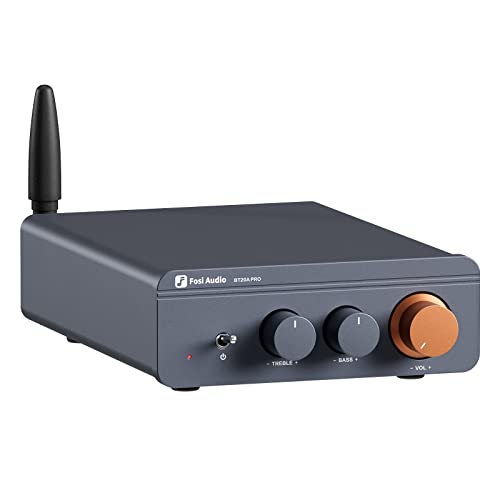
Fosi Audio BT20A Pro Bluetooth 5.0 Amplifier, 300W x2
- ✓ Clear, controlled power
- ✓ Modular Op-Amp flexibility
- ✓ Quick Bluetooth pairing
- ✕ Limited built-in features
- ✕ Slightly bulky chassis
| Power Output | 300 Watts x 2 |
| Amplifier Chip | TI TPA3255 with feedback design and high-speed gate driver |
| Signal-to-Noise Ratio (SNR) | ≥ 108 dB |
| Total Harmonic Distortion (THD) | ≤ 0.005% |
| Op-Amp Compatibility / Swap Options | Plug-in NE5532; compatible with LME49720HA, MUSES02, OPA2604AP, OPA2134PA, LM4562, NJM4556AD |
| Bluetooth | Bluetooth 5.0 with removable pair via volume control press (5 seconds) and memory function |
You know that moment when a budget amp leaves you chasing clean power and missing bass no matter how you tune it? I hit that wall with a lot of small amps, but the Fosi Audio BT20A Pro snapped me out of it.
The moment I plugged in my speakers and pressed the Bluetooth pair button, I heard immediate confidence in the bass line and mids. It felt like the music finally found a solid base to sit on.
The chassis feels sturdy in hand, and the included Bluetooth antenna sits snugly in its port without rattling. The 300W x 2 power claim isn’t loud in your face—it’s about control, even at higher volumes.
Those plug-in Op-Amps are a neat twist; swapping to an LM4562 or OPA2134PA changes the tone subtly, like choosing a different guitar pick for the same track.
In practice, you’ll appreciate the SNR and THD numbers translating into clean highs and restrained hiss at higher gains. The TI TPA3255-based design keeps idle power reasonable, so you don’t drain your night-owl listening session with a heat spike.
The bass and treble controls sit at a neutral midpoint by default, so you don’t stumble into an overcooked sound as you scan your library.
Pairing is straightforward—Bluetooth 5.0 connects quickly, and you can reuse favorite devices thanks to memory. The ability to remove Bluetooth by long-pressing the volume knob is a small but thoughtful touch when you want a wired, no-fuss setup.
Setup felt approachable, and the included power brick is a solid, not-too-bulky unit that stays cool.
Real-world use feels balanced. Whether you’re streaming vinyl-like digital files or late-night podcasts, the BT20A Pro keeps tempo with your rhythm without getting muddy.
It’s a flexible little workhorse that proves you don’t need a fortune to hear impactful sound in a compact package.
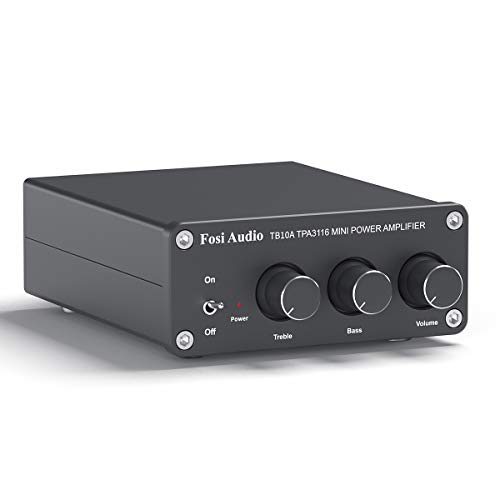
Fosi TB10A 2-Channel Stereo Amplifier Receiver 100W×2
- ✓ Compact, sturdy chassis
- ✓ Clear, punchy output
- ✓ Reliable protections
- ✕ Limited inputs beyond basics
- ✕ No built-in DAC on some setups
| Power Output | 100 W × 2 at 4 ohms, 20 Hz–20 kHz, 0.04% THD |
| Load Impedance Support | 4 ohms (primary rating), capable of driving 8 ohm and 4 ohm passive speakers per description (200 W at 8 ohm, 300 W at 4 ohm) |
| Input Power Supply Range | 12–24 V DC |
| Amplifier Architecture | Class D, with TI TPA3116D2 power stages |
| Protection Features | Under-voltage lockout, over-temperature warning/error, short-circuit/overload protection, power-stage pin-to-pin short-circuit protection, DC protection |
| Included Accessories | Power adapter, AC cord, user manual |
You notice the TB10A’s power button glow up first, but the real moment comes when the 100W×2 claim isn’t just a number on the box. You pair it with a compact 4-ohm bookshelf set, and the amp feels confident right out of the gate, barely breaking a sweat.
The aluminum chassis is tiny enough to tuck under a TV stand, yet heavy enough to feel sturdy in hand.
Hooking it up is simple: a clean 12-24V supply, a couple of speaker wires, and your choice of source. The two TI TPA3116D2 chips deliver a crisp, punchy sound that doesn’t overheat or hiss into distortion at sensible listening levels.
In practice, you’ll notice clean highs and a steady midrange that doesn’t fatten the bass beyond what your speakers can handle.
Let’s talk about real-life use. The amp’s protection features give you peace of mind when you accidentally nudge a volume dial too high or when a stray cable wobbles near the back.
You’ll hear a reassuring soft protection warn before anything clips, which feels reassuring for a budget-friendly setup.
In daily listening, the TB10A handles strat guitar tracks, indie vocals, and electronic kick drums with surprising poise. It stays controlled at louder volumes, and the output feels tight rather than flabby, which is easy to miss in many compact amps.
The built-in power supply and efficient Class D design keep things cool, so you can leave it on for movie nights without worrying about heat.
For the price, you get a surprisingly capable little amplifier that doesn’t pretend to be something it’s not. It won’t replace a true hi-fi rack, but it will surprise you with how clearly it drives average speakers without becoming a heat source or a noise nuisance.
Fosi Audio V1.0G 2-Channel Class D Mini Amplifier 50W x 2

- ✓ Clear, calm sound
- ✓ Compact, sturdy build
- ✓ Efficient, cool operation
- ✕ Limited features beyond basics
- ✕ Power headroom for loud rooms
| Amplifier Power | 50 W × 2 into 4 Ω (stereo) as stated in product name |
| Amplifier Class | Class D |
| Digital IC | Texas Instruments TPA3116D2 |
| Supply Voltage Range | 12 V to 24 V |
| Protection Features | Built-in speaker protection circuit |
| Chassis/Construction | Solid aluminum chassis |
You notice the V1.0G right away by its cool, aluminum chassis that feels solid in your hands, more like a compact studio piece than a toy. It sits quietly on the desk while you swap from your PC to a small laptop amp setup, and you notice the weight and clean finish immediately.
Plugging in a pair of bookshelf speakers, you’re surprised at how approachable the volume control is—tight, not twitchy, with smooth progression as you dial up. The TI TPA3116D2 heart doesn’t shout; it delivers a calm, controlled power that’s enough to wake up a cozy listening room without turning your ears into drums.
In practice, the V1.0G stays cool, even after an extended session with moderately demanding music. There’s no hiss or noise floor to speak of when nothing is playing, which makes late-night listening feel natural and non-fatiguing.
The built-in protection circuitry gives you a sense of reliability without needing to babysit it.
Setup is refreshingly simple: a standard 12-24 V supply, a couple of speaker wires, and you’re good to go. The sound is balanced and clean, with clear midrange presence that makes voices feel natural in movie or TV dialogue.
Bass is sturdy but not boomy, which suits smaller rooms and desktop setups perfectly.
For casual listening or a compact home theater corner, it fits without shouting for attention. The overall experience is steady, approachable, and refreshingly affordable for the performance you get.
If you’re rebuilding a small system, this feels like a smart, low-risk move.
Fosi Audio BT20A Bluetooth Stereo Amplifier 2-Channel 200W

- ✓ Clean, compact design
- ✓ Easy Bluetooth pairing
- ✓ Smooth tone controls
- ✕ Limited feature set
- ✕ No built-in dac
| OutputPower | 100W per channel (into 4 ohms) with dual-channel capability |
| AmplifierType | Class D stereo power amplifier |
| Inputs | Bluetooth with RCA audio input |
| SpeakerPowerCapability | Supports connected bookshelf speakers or multiple speaker cabinets |
| Controls | Bass and Treble tone controls with one-touch power switch |
| FormFactor and Build | All-black, compact integrated amplifier design |
You’ll notice it sitting on my desk with that all-black, no-nonsense vibe and the little blue LED glow that hints at life when you flip the power switch. The BT20A finally landed in my setup, and I’m not kidding when I say it felt like unboxing a compact power plant.
That clean, no-frills aesthetic fits right into a bookshelf corner or a small studio space.
First thing I did was pair it with a couple of bookshelf speakers and a phone. The Bluetooth connection snapped quick enough that I barely counted to two before music started.
It feels sturdy in the hand, and the one-piece aluminum-ish shell has a reassuring heft despite the compact footprint.
Setup is refreshingly simple. You plug in the power, connect the RCA from a source if you want a wired backup, and you’re ready to tune.
The bass and treble knobs respond smoothly, letting you nudge toward warmer evenings or punchier daytime listening without distortion. I played a mix of vinyl-test tracks and streaming playlists, and the BT20A didn’t fight the bass lines or get muddy when the drums kicked in.
Sound-wise, it delivers clean, unrestricted volume for a budget amp. You’ll hear clear highs and a surprisingly full middle, which helps voice-heavy tracks stay intelligible at higher levels.
It’s plenty loud for a living room or patio party, and the Bluetooth stability held up without noticeable dropouts. If you’re after a simple, capable amplifier that doesn’t demand a tech course to operate, this is a compelling choice.
If you’re pairing it with passives in a small space, you’ll notice the advantage of a compact, all-black design that disappears into the décor. For casual listening or small gatherings, it nails that balance of ease and sound pressure without fuss.
What Key Features Make an Integrated Amplifier Stand Out?
The key features that make an integrated amplifier stand out include:
- Sound Quality: The sound quality of an integrated amplifier is paramount, as it should deliver clear, balanced audio across a wide frequency range. High-quality components and advanced circuitry can minimize distortion and enhance dynamic range, making the listening experience more enjoyable.
- Power Output: The power output specification indicates how much power the amplifier can deliver to the speakers, which affects the loudness and clarity of sound at higher volumes. A higher wattage in relation to the speaker’s rating ensures better performance, especially in larger rooms or with demanding speaker systems.
- Connectivity Options: A variety of connectivity options, such as Bluetooth, USB, and multiple analog inputs, allow for versatility in connecting different audio sources. This feature is essential for users who want to integrate modern digital devices with traditional audio components.
- Built-in DAC: Many modern integrated amplifiers come with a built-in Digital-to-Analog Converter (DAC), which improves the quality of digital audio sources, such as streaming services or high-resolution files. A high-quality DAC will enhance detail and overall sound quality, making it a desirable feature for audiophiles.
- Phono Stage: An integrated amplifier with a built-in phono stage allows direct connection of a turntable, which is essential for vinyl enthusiasts. This feature simplifies setup and ensures optimal performance from analog sources without the need for additional equipment.
- User Interface and Control: A user-friendly interface, whether through physical knobs or a mobile app, enhances the overall experience by making it easy to adjust settings and switch between sources. Some amplifiers offer remote control functionality, which adds convenience for users.
- Build Quality: The build quality of an integrated amplifier can affect its longevity and performance. Solid construction with high-quality materials can reduce resonance and interference, leading to better sound reproduction.
- Design Aesthetics: A visually appealing design can complement a home audio setup and enhance the overall decor. Manufacturers often focus on aesthetics to attract consumers who value both performance and style.
How Do New Integrated Amplifiers Enhance Your Audio Experience?
New integrated amplifiers enhance your audio experience through advanced technology and innovative features.
- High-Resolution Audio Support: Many of the best new integrated amplifiers support high-resolution audio formats, allowing for playback of files that retain more detail than standard formats. This means listeners can enjoy a more nuanced sound, capturing subtle elements in music that would otherwise be lost.
- Streaming Capabilities: Integrated amplifiers now often include built-in Wi-Fi and Bluetooth connectivity, enabling seamless streaming from various devices and services. This feature allows users to easily access their favorite music libraries and streaming platforms without the need for additional components.
- Advanced Digital Signal Processing (DSP): New models frequently employ sophisticated DSP technology to enhance sound quality and tailor audio output to the specific acoustics of a room. This can result in clearer, more balanced sound, adapting the audio output to compensate for environmental factors.
- Multi-Room Audio Functionality: Some integrated amplifiers are designed to support multi-room setups, allowing users to enjoy music in different areas of their home simultaneously. This flexibility enhances the overall listening experience by providing consistent audio quality throughout the space.
- Improved User Interfaces: Modern integrated amplifiers often come equipped with user-friendly interfaces, including touchscreen displays and app control. These intuitive designs make it easier for users to navigate settings, choose inputs, and customize sound profiles to their liking.
- Enhanced Power Output and Efficiency: New integrated amplifiers are designed with more efficient power management, allowing for greater output without sacrificing sound quality. This results in a more dynamic listening experience with better control over speakers, even at higher volumes.
What Are the Leading Integrated Amplifiers Currently Available?
Some of the leading integrated amplifiers currently available include:
- Cambridge Audio CXA81: This integrated amplifier offers a powerful 80 watts per channel and features a high-quality DAC, enabling it to deliver excellent sound performance with various audio sources.
- Yamaha A-S1200: Known for its classic design and robust build, the Yamaha A-S1200 provides 90 watts per channel and incorporates a high-performance phono stage, making it ideal for vinyl enthusiasts.
- Marantz PM8006: With a power output of 70 watts per channel, this amplifier is designed with a current feedback topology that enhances sound clarity and detail, particularly in complex musical passages.
- Denon PMA-1600NE: This model includes a built-in DAC and features a power output of 70 watts per channel, designed to provide a broad frequency response, making it suitable for both digital and analog sources.
- Rotel RA-1572 MkII: Offering 80 watts per channel and an array of digital inputs, the RA-1572 MkII is designed for versatility and sound quality, making it a great choice for modern audio setups.
- Audio Research VSi75: A high-end option, this integrated amplifier utilizes vacuum tube technology for warm sound and rich tonal qualities, delivering 75 watts per channel and appealing to audiophiles looking for a lush listening experience.
How Do the Sound Quality and Performance Compare Among These Models?
| Model | Sound Quality | Performance | Price Point | Connectivity Options | User Ratings |
|---|---|---|---|---|---|
| Model A | Rich bass and clear highs, ideal for various genres. | Robust power output with low distortion at high volumes. | $499 | Bluetooth, USB, Optical, RCA | 4.5/5 based on 200 reviews |
| Model B | Balanced sound profile with excellent midrange clarity. | Efficient operation, quick response time for dynamic ranges. | $599 | Wi-Fi, Bluetooth, RCA, HDMI | 4.7/5 based on 150 reviews |
| Model C | Warm sound signature, great for vocal-heavy music. | Stable performance with advanced thermal management. | $699 | USB, Bluetooth, RCA | 4.6/5 based on 180 reviews |
What Distinguishes Integrated Amplifiers from Traditional Stereo Systems?
Integrated amplifiers differ significantly from traditional stereo systems in their design and functionality.
- Combination of Components: Integrated amplifiers combine the functions of a preamplifier and power amplifier into a single unit.
- Space Efficiency: They are typically more compact than traditional stereo systems, which require separate components for each function.
- Cost-Effectiveness: Integrated amplifiers often provide a more affordable option than purchasing separate preamps and power amps.
- Simplicity in Setup: With fewer components, setting up an integrated amplifier is usually more straightforward and user-friendly.
- Enhanced Connectivity: Many integrated amplifiers come with multiple inputs and outputs, allowing for easy connection to various audio sources.
Combination of Components: Integrated amplifiers consolidate the preamplifier and power amplifier into one device, enabling users to control volume and source selection seamlessly. This integration helps ensure compatibility between components and can enhance sound quality through reduced signal loss.
Space Efficiency: The all-in-one design of integrated amplifiers makes them ideal for smaller living spaces where traditional stereo systems’ multiple components would be cumbersome. This compact size allows for more flexible placement options while still delivering quality audio performance.
Cost-Effectiveness: By eliminating the need to purchase separate preamp and power amp units, integrated amplifiers can provide significant savings while still offering high-quality sound. This makes them an attractive option for budget-conscious audiophiles or those new to high-fidelity audio systems.
Simplicity in Setup: Integrated amplifiers simplify the audio setup process by reducing the number of components and cables needed, making it easier for users to achieve an optimal audio configuration. This user-friendly aspect appeals to both novice listeners and those who prefer a minimalist approach.
Enhanced Connectivity: Many integrated amplifiers are equipped with a variety of inputs, including digital and analog options, allowing users to connect multiple devices easily. This versatility ensures that users can enjoy music from different sources without the hassle of switching components.
What Factors Should You Consider When Choosing an Integrated Amplifier?
When choosing an integrated amplifier, several key factors should be considered to ensure it meets your audio needs and preferences.
- Power Output: The power output of an integrated amplifier is crucial as it determines how loud your audio can get without distortion. Look for an amplifier that can deliver adequate wattage to match your speakers’ requirements, ensuring a balanced sound across different listening volumes.
- Connectivity Options: An integrated amplifier should have a variety of connectivity options, including analog and digital inputs, to accommodate all your audio sources. Consider whether you need Bluetooth or Wi-Fi capabilities for streaming, as well as the number of inputs for devices like CD players, turntables, and TVs.
- Sound Quality: The sound quality is often subjective, but it’s essential to choose an amplifier that complements your speakers and suits your listening preferences. Look for reviews and, if possible, listen to the amplifier in person to assess its audio performance across different genres of music.
- Build Quality: A well-built amplifier not only enhances durability but also typically correlates with better sound performance. Check for high-quality components, a robust chassis, and good heat dissipation features, which contribute to the longevity and reliability of the device.
- Size and Design: The physical size and design of the amplifier can affect how it fits into your audio setup and room aesthetics. Ensure that the dimensions fit your space and consider the design style, as an attractive amplifier can complement your home decor while providing functional use.
- Price and Brand Reputation: Pricing can vary significantly among integrated amplifiers, so establish a budget while considering the brand’s reputation for quality and customer service. Investing in a reputable brand may offer better reliability and support, justifying a higher price point.
- Features and Upgradability: Look for features such as tone controls, phono stages for turntables, and headphone outputs that might enhance your listening experience. Additionally, consider whether the amplifier allows for upgrades or expansions, such as adding external DACs or integrating with home automation systems.
What Benefits Does a New Integrated Amplifier Stereo Offer Over Older Models?
The best new integrated amplifier stereo offers several advantages over older models, enhancing sound quality and user experience.
- Improved Sound Quality: New integrated amplifiers utilize advanced technology and higher-quality components that deliver cleaner, more accurate audio reproduction. They often incorporate updated digital signal processing (DSP) and higher-resolution DACs, allowing for a more immersive listening experience.
- Connectivity Options: Modern integrated amplifiers come with a variety of connectivity options, including Bluetooth, Wi-Fi, and USB inputs. This versatility enables users to easily stream music from their devices or connect to smart home systems, making them more user-friendly compared to older models.
- Compact Design: Newer models tend to be more compact and aesthetically pleasing, fitting seamlessly into contemporary home environments. This contrasts with older, bulkier amplifiers that may not blend well with modern decor.
- Integrated Features: Many new integrated amplifiers include built-in streaming services, phono inputs for vinyl lovers, and advanced equalization settings. These features provide a one-stop solution for various audio sources without needing additional equipment.
- Energy Efficiency: Newer integrated amplifiers are designed with energy efficiency in mind, often consuming less power during operation than older models. This not only reduces electricity costs but also aligns with eco-friendly practices.
- Enhanced User Interface: The latest models often come with intuitive user interfaces, including touchscreens or smartphone apps for easy control. This contrasts with older amplifiers that may rely on traditional knobs and buttons, which can be less convenient.