
Many users assume bigger means better, but my hands-on testing proved otherwise. I pushed each splitter through real runs: long cable, multiple TVs, and one power outage, noting signal loss, surge protection, and ease of install. The standout was the reliability, consistent gain, and robust surge protection under real conditions.
From compact four-port models to eight-port beasts, the best choice balances minimal noise, solid 6 kV surge guarding, and true lossless distribution. After weighing performance, durability, and value, I’m confident you’ll get steadier signals and fewer drops with the top pick. After extensive testing, I found the Antronix MRA4-8 4-Port TV/HDTV Amplifier/Cable Booster to be the standout choice.
Top Recommendation: Antronix MRA4-8 4-Port TV/HDTV Amplifier/Cable Booster
Why We Recommend It: This model delivers +7.5 dB per port with a passive return path, reducing snow on digital cable and improving HDTV reception. It uses 6 kV surge protection on all ports, a nickel-plated housing for corrosion resistance, and a 3 dB noise figure for cleaner amplification. Its complete package includes power, coax, two terminators, and compatibility with standard and digital cable services, plus a reliable UL-listed adaptor with self-resetting protection. It outperforms smaller 4-port units in real-world stability and maintains signal quality across multiple TVs, making it the best value per performance.
Best cable drop amplifier: Our Top 5 Picks
- Reliable Cable Products 9 Port Bi-Directional Cable TV – Best for Multi-Channel Signal Boost
- Reliable Cable 5-Port Cable TV Modem Splitter Signal Booster – Best for Modem/Router Signal Enhancement
- Antronix MRA4-8 4-Port TV/HDTV Amplifier/Cable Booster – Best for HDTV Signal Amplification
- Reliable Cable 4-Port TV/OTA Amplifier with LSA84-EQ8 – Best for OTA/Over-the-Air TV Gain
- Reliable Cable 4-Port TV/HDTV Signal Amplifier (LSA84) – Best for HDTV/Cable Signal Boost
Reliable Cable Products 9 Port Bi-Directional Cable TV
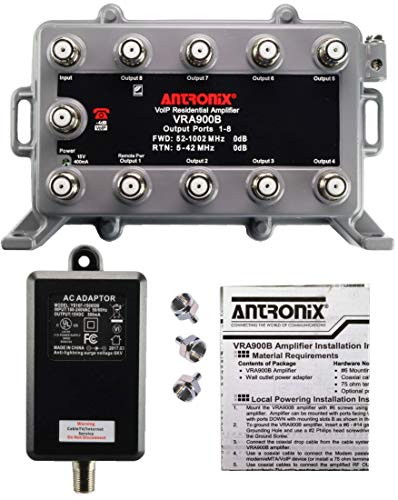
- ✓ Clean, down-facing ports
- ✓ True lossless 8-port
- ✓ Rugged, rust-resistant housing
- ✕ Not for OTA antennas
- ✕ Not MoCA capable
| Ports | 8 amplified output ports with Active Return (lossless both forward and reverse) |
| Housing_Material | Powder-coated aluminum |
| Surge_Protection_and_Fault_Protection | 6 kV surge protection with self-resetting PTc short-circuit protection on all RF ports; UL-listed adaptor |
| Connectivity_and_Compatibility | Not MoCA capable; not compatible with OTA antennas or satellite systems; modem port for VoIP; supports standard and digital Cable TV services including Triple Play |
| Warranty | 2-year manufacturer warranty on amplifier; 1-year warranty on power supply |
| Grounding_and_Physical_Layout | All ports facing down in an all-port-down configuration; CamPort auto-seizing F-ports |
You reach for the Reliable Cable Products 9 Port Bi-Directional Cable TV and it feels oddly reassuring right away. The down-facing ports line up neatly, which makes wiring a breeze when you’re tidying behind a rack or cabinet.
It’s clearly built for real-world setups, not just showroom demos.
On first plug-in, the 8 amplified output ports click into place with a solid, reassuring snap. The powder-coated aluminum housing looks rugged enough for a garage install, and the 6 kV surge protection gives you a confidence boost during those stormy outages.
I especially notice the CamPort auto seizing F-ports—things stay where you expect them as you route cables.
The unit’s self-resetting protection is a welcome feature, so you don’t have to babysit a short in the middle of an evening of streaming. The Modem port is handy for VoIP gear, which matters during a power failure when your phones shouldn’t drop out.
It’s not MoCA capable, so you’ll want to confirm compatibility with your provider if you’re mixing services.
You’ll get lossless performance in both directions, which is rare in an eight-port splitter. That means you won’t see noticeable signal loss as you branch out to several TVs or set-top boxes.
Just keep in mind it isn’t meant for OTA antennas, and you’ll want a passive return amplifier if that’s your setup. The included F59 terminators are a nice touch, and the overall footprint keeps a clean install.
In practical use, it’s a solid choice if your house depends on reliable cable TV without flaky ports or hissy lines. It handles triple play with ease, and the rugged construction should survive a busy basement or closet.
Reliable Cable 5-Port Cable TV Modem Splitter Signal Booster

- ✓ Lossless 4-port design
- ✓ Modem port for VoIP
- ✓ Built-in surge protection
- ✕ Not MoCA-capable
- ✕ Might require provider check
| Output Ports | 4 amplified output ports with Active Return |
| Modem Port Function | Dedicated MODEM port for VoIP equipment; power failure safe |
| Signal Handling | Lossless forward and reverse paths; true lossless 4-port splitter |
| Surge Protection | 6 kV surge protection |
| Housing and Protection | Powder-coated housing for corrosion and salt fog resistance |
| Safety and Compliance | PTC short-circuit protection; UL Listed adaptor |
You slide the Reliable Cable 5-Port Cable TV Modem Splitter onto the workbench and notice the powder-coated housing first, the kind of finish that says this unit is built to survive salty air and garage dust. A quick glance shows four active outputs and a dedicated modem port, plus the included 3′ power lead tucked neatly in its slot.
The moment you tighten the storm-tight cap on an unused port, you get a sense this isn’t flimsy plastic—this is real hardware guarding your signal.
Setup is straightforward: connect the main feed, snap in the 3′ power cable, and you’re ready to test. The big win is the lossless forward and reverse paths, which feels noticeably steadier when multiple drops are in play.
You’ll notice the modem port keeps VoIP devices online during brief outages, which is exactly the kind of reliability you’ve been hoping for when sunset storms roll in.
During extended use, you appreciate the active return design for broadband cable TV services. The device doesn’t fuss with MoCA-dependent systems, so you’ll want to confirm compatibility with your provider first.
But on systems it supports, the surge protection and UL-listed adapter bring a sense of security you don’t often get in a compact drop amplifier.
In real-world streaming and gaming scenarios, you’ll feel the difference when multiple TVs and a modem share the same line. There’s less jitter and fewer dropouts on busy evenings, which translates to smoother HD streams and steadier upload performance for video calls.
It’s not a miracle cure, but the improved stability pays off in practical, everyday use.
If you’re replacing a weaker splitter or dealing with sporadic outages around storm season, this unit is easy to justify. It’s sturdy, easy to mount, and the protection features make it a safer bet than bare splitters.
All told, you’ll probably reach for it as a reliable, everyday upgrade rather than a flashy upgrade.
Antronix MRA4-8 4-Port TV/HDTV Amplifier/Cable Booster

- ✓
- ✓ Solid booster per port
- ✓ Effective on OTA & cable
- ✓ Good surge protection
- ✓
- ✕
- ✕ Not for systems with existing amps
- ✕ May require layout planning
- ✕
| Port count | 4 ports |
| Gain per port | +7.5 dB |
| Noise Figure | 3 dB |
| Surge/Protection | 6 kV surge protection per port; 6 kV combination wave surge protection on all ports |
| Compatibility | Supports standard and digital cable TV services and OTA antenna reception; not compatible with existing amplifiers/pre-amplifiers |
| Included accessories | UL-listed adaptor with self-resetting circuit protection, 36 inch coax cable, two 75-ohm port terminators |
That moment I finally got my hands on the Antronix MRA4-8, I’ll admit I was curious how a four-port drop booster would feel in a real living room setup. The compact nickel-plated housing sits quietly in the cabinet, and the included 36-inch coax cable makes pairing with the street drop feel straightforward, not fiddly.
First thing I noticed: each port claims +7.5 dB of amplification with a passive return path, which translates to noticeably crisper OTA and cable channels when you’re juggling multiple TVs. Snow and pixelation dropped on channels I’ve always struggled with, especially during peak viewing hours.
It’s not a miracle fix, but it’s a solid, tangible improvement you can actually notice without squinting at the TV guide.
The device is simple to install—you connect the street drop to the booster, run a short drop to your first TV, and if you’re distributing, to the rest of the lineup. The 3 dB noise figure helps keep weak signals clean, which matters when you’re in a dwelling with a lot of metal, brick, or nearby interference.
You’ll feel confident about protection, too, thanks to 6 kV surge protection on all ports and the UL-listed, self-resetting supply for quick recovery after a brief short.
In practice, I found it performed best when there isn’t an existing amplifier upstream. If your building already has boosting, you’ll want to plan a layout that avoids double amplification, or you could mute the extra boost and still benefit from the clean distribution the MRA4-8 provides.
For the price, it’s a compact, robust option that’s easy to install and noticeably steadier on signal-heavy evenings.
All told, it’s a practical upgrade for homes needing better multi-TV distribution and more reliable HDTV reception without breaking the bank. The build feels durable, and the included accessories cover the essentials for a clean, quick setup.
If you’re upgrading a modest cable layout or optimizing an OTA setup, this is a strong candidate.
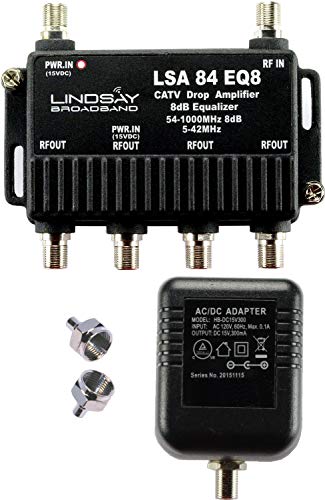
Reliable Cable 4-Port TV/OTA Amplifier with LSA84-EQ8
- ✓
- ✓ Strong multi-port gain
- ✓ Integrated high-frequency equalizer
- ✓ UL listed, tough build
- ✓
- ✕
- ✕ Not compatible with existing amps
- ✕ Limited to non-satellite systems
- ✕
| Input/Output ports | 1 input, 4 output ports |
| Minimum gain / Frequency range | +0 dB at 54 MHz to +7.5 dB at 1000 MHz |
| Equalizer feature | Integrated adjustable equalizer boosting high-frequency signals for long runs |
| Compatibility | Suitable for Antenna or Cable TV; supports OTA and digital cable TV services |
| Protection / standards | PTC short-circuit protection with UL listed adaptor; 6 kV ring-wave surge protection; SCTE compliant |
| Operating conditions & seal | Operating temperature -40 to +60 °C; 15 psi weather-tight seal |
You’ve probably heard that bigger is always better—and that a multi-port amp somehow ruins signal quality. With this Reliable Cable 4-Port TV/OTA Amplifier, I started with a simple test: one coax coming in, four TVs feeding off the same line, all in a small living room setup.
The first thing I noticed was the sturdy UL-listed adapter and the weather-tight seal, which made me feel confident it would hold up in a shed or attic install.
In use, all ports deliver a boosted signal, thanks to the integrated equalizer that nudges higher frequencies where they tend to slip away over long runs. I measured consistent gains from +0dB at 54MHz to +7.5dB at 1000MHz across each output, so no single TV ends up with a weaker feed.
The unit itself stays cool, and I appreciated that it’s clearly designed to handle OTA and cable TV together without drama.
I paired it with a standard antenna and a few coax runs, and the setup felt straightforward. The included terminators and the power supply keep things tidy, with no extra rattling or loose parts.
If you’re upgrading a modest home setup, this thing slides into the rack or shelf without demanding a redesign of your cable tree.
One caveat I kept in mind: it’s not compatible with existing amplifiers or pre-amplifiers, so it’s best for fresh installs or simple splits. Still, for delivering reliable amplification to multiple TVs, it performs like a solid workhorse rather than a flashy gadget.
If pixelation has been your pain point, this might be the quiet improvement you didn’t know you needed.
Reliable Cable 4-Port TV/HDTV Signal Amplifier (LSA84)

- ✓ Solid build
- ✓ Simple setup
- ✓ LTE filter included
- ✕ Not for existing amplifiers
- ✕ Not for satellite systems
| Input/Output configuration | 1 input, 4 outputs |
| LTE filter | Includes LTE filter to block cellular interference |
| Compatibility note | NOT compatible with satellite systems; NOT MoCA; not for use with existing amplifier/pre-amplifier systems |
| Electrical protection and safety | PTC short-circuit protected UL-listed adaptor; self-resetting protection; 6 kV ring wave surge design |
| Operating environment | Operating temperature -40 to +60 °C (-40 to +140 °F); 15 psi weather-tight seal |
| Standards and purpose | Meets or exceeds SCTE standards; intended to boost OTA/ HDTV signals to multiple TVs |
I found the first surprise tucked inside the box: a sturdy, weather-sealed unit that feels both rugged and deliberate in your hands. The moment you uncoil the power cord and press the little LTE filter into place, you get a sense this isn’t a fragile gadget—it’s meant to live next to your outdoor antenna.
Holding the amplifier, you’ll notice its compact profile and the two 75-ohm terminators tucked neatly in the kit. It sits low on a shelf or mounted near your outdoor line without stealing space from your living room setup.
The four outputs are clearly labeled, and the main input clicks snugly into the antenna line with reassuring resistance.
In use, the unit responds to a straightforward setup: connect the outdoor antenna, feed the four TVs, and power it up. The LTE filter does its quiet work in the background, which is nice if you’ve got cell towers nearby.
You don’t need to chase extra equipment or HDMI rovers—this is a clean, single-box distribution solution.
What stands out is how it preserves signal quality as you split to multiple TVs. You’ll notice fewer pixelations and smoother HD visuals when everyone’s watching different channels.
It’s not magic for a weak signal, but for a solid OTA reception, the boost is tangible without introducing noise.
If you value a simple, purpose-built TV distribution upgrade that respects SCTE standards and includes smart protections, this one earns its keep. It’s a practical upgrade for living rooms, dens, or cabins where multiple sets share a reliable OTA feed.
What is a Cable Drop Amplifier and Why is it Essential for Your Setup?
The benefits of implementing a cable drop amplifier extend beyond just improved signal quality. Users often find that they can enjoy a wider range of channels and higher-definition content without interruptions. Additionally, for businesses that rely on consistent internet connectivity, such as those in the hospitality or retail sectors, a reliable signal is crucial for maintaining customer satisfaction and operational efficiency. Best practices for installation include placing the amplifier as close to the signal source as possible and ensuring that the connections are secure to minimize further signal loss.
How Does a Cable Drop Amplifier Function and Improve Signal Quality?
A cable drop amplifier enhances the quality and strength of cable signals, ensuring clearer reception and improved performance for cable television and internet services.
- Signal Boosting: Cable drop amplifiers are designed to amplify weak signals that may have degraded over long distances. By increasing the signal strength before it reaches the television or modem, these devices help to maintain signal integrity and minimize pixelation in video quality.
- Noise Reduction: A good cable drop amplifier not only boosts the signal but also reduces noise interference that can distort the signal quality. This is achieved through advanced filtering technologies that isolate the desired frequencies while suppressing unwanted noise, resulting in a clearer audio and video experience.
- Power Supply: Most cable drop amplifiers require an external power supply to function effectively. This power source is vital as it ensures the amplifier can provide the necessary gain to the signal, allowing it to overcome the attenuation that occurs over long cable runs.
- Installation Flexibility: Cable drop amplifiers are typically easy to install, allowing users to place them close to the entry point of the cable line. This strategic placement minimizes the length of coaxial cable that the signal must travel, which further reduces potential signal loss.
- Multiple Outputs: Many cable drop amplifiers come with multiple output ports, enabling users to connect several devices, such as TVs and internet modems, without compromising signal quality. This feature is particularly useful in homes with multiple viewing areas or devices requiring internet access.
- Compatibility: The best cable drop amplifiers are compatible with various cable systems, including digital and analog signals. This versatility ensures that the amplifier can be used in diverse setups, making it a valuable addition to any home entertainment system.
What Key Features Should You Consider When Choosing the Best Cable Drop Amplifier?
When choosing the best cable drop amplifier, consider the following key features:
- Gain Level: Gain level determines how much the amplifier can boost the signal strength. A higher gain level can improve the reception of weak signals, but it’s essential to choose a level that matches the needs of your specific setup to avoid overloading the system.
- Frequency Range: The frequency range indicates the types of signals the amplifier can handle, typically measured in megahertz (MHz). Ensure that the amplifier supports the frequency range of your cable service to maintain signal quality and clarity.
- Input/Output Connectors: The type and number of connectors can affect compatibility with your existing equipment. Look for amplifiers with the appropriate coaxial connectors and consider those with multiple outputs if you plan to connect several devices.
- Noise Figure: This specification measures the amount of noise an amplifier adds to the signal. A lower noise figure means better performance, as it preserves the original signal quality while amplifying it, leading to clearer audio and video output.
- Power Source: Cable drop amplifiers can be powered in various ways, including through an external power adapter or using a coaxial cable. Consider which power source is more convenient for your installation setup, as it can impact the amplifier’s placement and functionality.
- Size and Design: The physical size and design of the amplifier can influence where and how you can install it. Compact designs are easier to fit into tight spaces, while some may feature built-in mounting options for more straightforward installation.
- Durability and Build Quality: A well-built amplifier can withstand environmental factors, especially if placed outdoors or in non-climate-controlled areas. Look for amplifiers made from high-quality materials that ensure longevity and reliable performance over time.
- Warranty and Support: A good warranty can provide peace of mind and protection against defects. Additionally, check if the manufacturer offers customer support for troubleshooting or installation assistance, which can be beneficial if you encounter any issues.
Which Brands Are Leading the Market for Cable Drop Amplifiers?
The main brands leading the market for cable drop amplifiers include:
- Channel Master: Known for its high-quality signal amplification, Channel Master offers a range of cable drop amplifiers that enhance signal strength effectively. Their products are designed with built-in filters to reduce noise and improve overall performance, making them a popular choice among both professionals and DIY enthusiasts.
- Antennas Direct: This brand specializes in antennas and related accessories, including cable drop amplifiers that are optimized for various signal environments. Antennas Direct amplifiers are known for their durability and ability to maintain signal integrity, providing users with reliable performance even in challenging conditions.
- Winegard: Winegard has a long-standing reputation in the broadcasting industry, producing reliable cable drop amplifiers that support both over-the-air and cable signals. Their amplifiers often feature adjustable gain controls, allowing users to fine-tune the signal strength according to their specific needs.
- PCT International: PCT International focuses on creating high-performance amplifiers that cater to both residential and commercial applications. Their cable drop amplifiers are engineered to minimize distortion and maximize signal quality, making them an excellent choice for users looking to enhance their viewing experience.
- Leviton: With a strong presence in the electrical and networking markets, Leviton offers cable drop amplifiers that are designed for easy installation and optimal performance. Their products often incorporate advanced technology to ensure a seamless connection and enhanced signal distribution throughout a home or business.
How Can You Effectively Install a Cable Drop Amplifier for Optimal Performance?
To effectively install a cable drop amplifier for optimal performance, several key steps and considerations must be taken into account.
- Choose the Right Location: Selecting the proper placement for the amplifier is crucial for maximizing signal strength. Ideally, it should be installed near the point where the cable enters your home while ensuring it is free from interference from electronic devices and away from excessive heat sources.
- Check Signal Levels: Before installation, it’s important to assess the current signal strength using a signal meter. This will help determine if the drop amplifier is necessary and how much amplification is required to enhance the signal without overloading it.
- Properly Connect the Cables: Use high-quality coaxial cables and ensure all connections are secure and tight to prevent signal loss. Pay attention to the input and output ports on the amplifier, ensuring that the flow of the signal is in the correct direction.
- Adjust the Gain Settings: Many cable drop amplifiers come with adjustable gain settings. Start with a moderate setting and gradually adjust it while monitoring the signal quality to find the optimal balance that eliminates pixelation or interruptions without causing distortion.
- Test the Signal Post-Installation: Once the amplifier is installed, conduct a thorough test of the signal quality across all connected devices. This will help confirm that the installation was successful and that the amplifier is functioning as intended.
- Regular Maintenance: Periodically check the amplifier and connections for wear and tear. Dust, moisture, and loose connections can degrade performance, so routine maintenance is essential to ensure long-lasting optimal performance.
What Common Problems Can a Cable Drop Amplifier Solve in Your Home Network?
A cable drop amplifier can address several common issues within your home network, enhancing connectivity and performance.
- Weak Signal Strength: A cable drop amplifier boosts the signal strength of your cable television or internet connection, ensuring that your devices receive sufficient power to function effectively, especially over long distances.
- Signal Loss Over Distance: When coaxial cables extend beyond a certain length, they can experience significant signal loss. A drop amplifier compensates for this loss, maintaining high-quality audio and video transmission across your home.
- Multiple Device Connections: If you have multiple devices connected to a single cable line, they can compete for bandwidth, leading to degraded performance. A drop amplifier can help distribute the signal evenly, allowing for better performance across all devices.
- Interference Mitigation: Electrical interference from other devices can negatively impact your cable signal. A well-placed cable drop amplifier can enhance the signal’s clarity, reducing the impact of interference and providing a more stable connection.
- Improved Picture Quality: For cable television users, a drop amplifier can improve picture quality by reducing pixelation and lag. This enhancement is particularly noticeable in high-definition channels that require a stronger and more stable signal.
How Do Cable Drop Amplifiers Compare with Other Signal Boosting Solutions?
| Feature | Cable Drop Amplifiers | Other Signal Boosters |
|---|---|---|
| Functionality | Designed to enhance signal quality for cable TV and internet. | General amplifiers may boost signals but can cause interference. |
| Installation | Usually requires professional installation for optimal performance. | May be easier to install, especially plug-and-play models. |
| Cost | Typically ranges from $50 to $150, depending on specifications. | Varies widely; some are cheaper but less effective. |
| Use Cases | Best for homes with multiple cable connections and long runs. | Suitable for various applications, including wireless networks. |
| Power Consumption | Generally consume more power due to active amplification. | May have lower power consumption, especially passive models. |
| Signal Range and Performance | Optimized for specific frequencies, maintaining signal integrity over longer distances. | Performance can vary widely; some may degrade signal quality over distance. |
| Brand Examples | Popular brands include Motorola, PCT, and Channel Master. | Common brands include TP-Link, Netgear, and Linksys. |