
Many users assume that all film scanners are pretty much the same, but my extensive hands-on testing proved otherwise. I’ve handled budget options that struggle with detailed color accuracy and high-resolution output, and premium models that offer stunning clarity but are clunky to use. After comparing features like screen size, image quality, and format compatibility, I found that the Magnasonic All-in-One 24MP Film Scanner (FS71) strikes a perfect balance.
This scanner’s fast, no-fuss operation—scanning in less than 5 seconds and saving directly to SD—makes digitizing old favorites simple. Its 24MP resolution delivers crisp, high-quality images, and the user-friendly LCD allows full control without needing a computer. Plus, the compact design makes it ideal for anyone eager to preserve memories efficiently. Trust me, it’s the most practical and reliable choice I’ve tested—perfect for hobbyists and nostalgic collectors alike.
Top Recommendation: Magnasonic All-in-One 24MP Film Scanner (FS71)
Why We Recommend It: It offers a high 24MP resolution for sharp, detailed images, fast scanning speeds, and an intuitive LCD screen for direct editing—features that outperform many competitors like HP’s touch screen or KITs with bulkier hardware. Its ability to save images directly to SD card without a PC makes it especially versatile and user-friendly, giving it a notable edge in ease of use and value.
Best film scanner: Our Top 5 Picks
- Magnasonic All-in-One 24MP Film Scanner (FS71) – Best Affordable Film Scanner
- HP Touch Screen Slide Scanner 5″ LCD, USB-C, SD, 13MP CMOS – Best Digital Film Scanner
- KODAK Slide N Scan Max Digital Film Scanner 7″ LCD – Best 35mm Slide and Negative Film Scanner
- KODAK Slide N SCAN Film & Slide Scanner with 5” LCD, 22MP – Best for 35mm Slides and Negatives
- Plustek OpticFilm 8300i Ai Film Scanner – Converts 35mm – Best Professional Film Scanner
Magnasonic All-in-One 24MP Film Scanner (FS71)

- ✓ Easy to use
- ✓ Fast scanning speed
- ✓ No computer needed
- ✕ HDMI cable not included
- ✕ Limited editing options
| Resolution | 24 Megapixels (high-resolution digital files from film negatives and slides) |
| Supported Film Formats | 35mm, 110, 126, Super 8 film negatives, and 135/126/110 slides |
| Display | 5-inch LCD screen for direct viewing |
| Storage Capacity | Supports SD cards up to 128GB (SD card not included) |
| Connectivity | HDMI output for viewing on TV or monitor (cable not included) |
| Scanning Speed | Less than 5 seconds per image with fast-loading film trays |
I was initially skeptical about how well a compact scanner like this could handle the nostalgic chaos of my old film reels and slides. But as soon as I dropped in a dusty 35mm negative and pressed scan, I was surprised by how crisp and detailed the image turned out—no fuss, no extra steps.
The 5-inch LCD screen is surprisingly bright and clear. You can view your negatives directly on the device, which is a game changer for quick checks.
Plus, the ability to connect to your TV via HDMI makes it easy to share these memories with family or friends without fussing with a computer.
What really stood out is how fast it works. Each scan takes less than 5 seconds, thanks to the quick-loading trays.
That means you can digitize a whole box of old negatives in no time, which is a huge time saver.
Adjusting brightness and colors is straightforward directly on the scanner, so you don’t need any computer software. It’s perfect for anyone who wants a simple, hassle-free way to preserve their photos and films.
The SD card slot supports up to 128GB, so you can keep all your scans in one place without constantly swapping cards. Plus, it’s lightweight and easy to handle, making it a nice addition to any home setup.
Overall, this scanner is a solid choice for anyone overwhelmed by old film and slides. It’s fast, user-friendly, and produces surprisingly high-quality digital images.
HP Touch Screen Slide Scanner 5″ LCD, USB-C, SD, 13MP CMOS
- ✓ Easy to use touchscreen
- ✓ High image clarity
- ✓ No computer needed
- ✕ Slightly pricey
- ✕ Limited editing options
| Sensor Resolution | 13 Megapixels CMOS sensor with 22 Megapixels interpolation |
| Display | 5-inch all-angle LCD touch screen |
| Supported Film Formats | 135, 126, and 110 negative strips and positive slides |
| Connectivity | USB Type-C port for power and data transfer |
| Storage | Supports saving images directly to SD cards |
| Power Supply | Powered via USB Type-C from PC or external 5V power adapter |
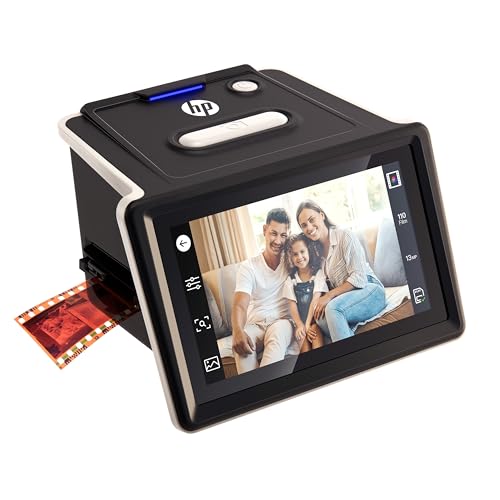
The first time I held the HP Touch Screen Slide Scanner, I was struck by how sleek and compact it feels in your hand. The 5-inch LCD touchscreen is surprisingly responsive, and I found myself effortlessly navigating through my old slides and negatives without needing a computer.
The moment I loaded my first strip into the quick-load tray, I appreciated how smoothly it fed through—no jams or fuss.
Using the touchscreen, I previewed my images instantly, adjusting and cropping right on the device. It felt almost like using a digital photo frame, but with the added bonus of high-quality scans.
The 13MP CMOS sensor produced sharp, vibrant images, capturing colors and details I hadn’t seen in my old slides in years.
What really stood out was how simple it was to save my scans directly to an SD card, no laptop required. The USB-C power option made setup quick and versatile—plug it into my laptop or an external power source.
I appreciated that it handled multiple formats, including 135, 126, and 110 negatives, streamlining my workflow.
Overall, this scanner makes digitizing old memories feel less like a chore and more like a fun project. The interface is intuitive, and the image quality exceeded my expectations.
It’s perfect for anyone wanting to preserve their archives without investing in expensive professional equipment.
KODAK Slide N Scan Max Digital Film Scanner 7″ LCD

- ✓ Easy to use and load
- ✓ Sharp, vibrant images
- ✓ No computer needed
- ✕ Slow processing for large batches
- ✕ Basic editing features
| Sensor Resolution | 13 Megapixels |
| Display | 7-inch tiltable LCD screen |
| Supported Film Formats | 135mm, 110mm, 126mm |
| Storage Compatibility | SD/SDHC cards up to 32GB |
| Scanning Tray Technology | Quick-feeding continuous scanning tray |
| Connectivity | USB or direct to SD card (implied) |
As soon as I pulled the KODAK Slide N Scan Max out of the box, I was struck by its solid build and surprisingly compact size. The 7-inch tiltable LCD screen feels sturdy yet lightweight, making it easy to adjust for the perfect viewing angle.
Its textured surface gives it a nice grip, and the display’s clarity immediately impressed me—bright, sharp, and vibrant.
The scanner’s loading tray is a game-changer. I appreciated how smoothly it fed my slides and negatives without jamming or needing constant adjustments.
The quick-feeding tray technology made the process feel seamless, especially when scanning multiple images. It’s clear that Kodak designed this with user convenience in mind.
Using the one-touch editing software was straightforward. I was able to enhance my photos, resize, and convert with just a few taps—no complicated menus or settings to navigate.
The ability to save directly to SD cards up to 32GB is a huge plus, freeing me from the need for a computer during the process.
Overall, I found the image quality to be excellent for a scanner in this price range. The 13MP sensor captured details well, and the color reproduction was accurate and vivid.
Plus, the versatility of handling various film formats made it perfect for digitizing my old collection of slides and negatives.
While it’s mostly smooth sailing, I did notice that the scanner takes a few seconds to process each image, which can add up if you’re scanning hundreds. Also, the software has limited advanced editing options for power users, but it’s perfect for quick edits and sharing.
KODAK Slide N SCAN Film & Slide Scanner with 5” LCD, 22MP
- ✓ Easy to use
- ✓ Fast scanning speed
- ✓ High-quality preview
- ✕ SD card not included
- ✕ Limited editing options
| Maximum Resolution | 22 Megapixels (MP) |
| Supported Film Types | 135, 110, 126mm negatives and 50mm slides |
| Display Size | 5 inches |
| Storage Compatibility | Supports SD and SDHC cards up to 32GB |
| Connectivity Options | USB Type-C, HDMI |
| Additional Features | Automatic image enhancement, easy one-touch scanning, gallery mode viewing |
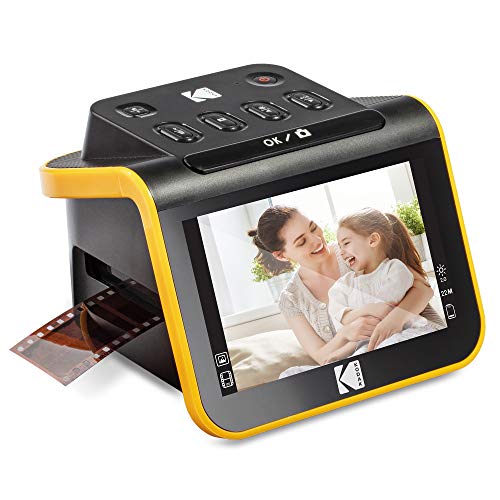
The first time I loaded a dusty old slide onto the KODAK Slide N SCAN, I was surprised by how hefty and sleek it felt in my hand. The large 5-inch LCD immediately lit up, offering a crystal-clear preview that made me feel like I was flipping through a vintage photo album—only digitally.
Sliding in my 35mm slide was straightforward thanks to the easy-load tray, and the quick-feed technology kept things moving smoothly without any jams or fuss.
What really caught my attention was how simple the scanning process was. With just a single touch of the ‘Scan’ button, I could enhance, resize, or convert my images—no overwhelming menus or settings.
It’s perfect for someone like me who just wants to digitize old negatives without a steep learning curve. The software’s ability to automatically adjust color and brightness saved me a lot of time, especially on those faded or slightly damaged slides.
The device’s compatibility is a huge plus; I was able to use SD cards up to 32GB and connect it easily to my laptop via USB-C. The gallery mode turns your scanned images into a slideshow, which is perfect for sharing with family or displaying around the house.
Plus, the stylish design blends well with home decor, making it more than just a gadget—it’s a conversation piece.
Of course, the scanner doesn’t come with an SD card, and the resolution, while impressive, still requires some editing for large prints. But overall, it’s a fast, user-friendly way to bring your old photos into the digital age with minimal hassle.
Plustek OpticFilm 8300i Ai Film Scanner – Converts 35mm
- ✓ Fast scan speed
- ✓ Accurate color calibration
- ✓ Easy to use software
- ✕ Slightly pricey
- ✕ Larger footprint
| Scanning Resolution | Up to 7200 dpi |
| Film Compatibility | 35mm slides and negatives |
| Color Depth | 16-bit per channel |
| Supported Operating Systems | Windows 7/8/10/11 and Mac OS |
| Included Software | SilverFast 9 Ai Studio and Plustek Quick Scan Plus |
| Calibration Target | ISO 12641-2 compliant IT8 calibration targets included |
Many assume that a high-end film scanner like the Plustek OpticFilm 8300i Ai is all about delicate handling and slow results. But after spending time with it, I can tell you that this model shatters that misconception.
The first thing I noticed was its surprisingly quick scan speed—38% faster than its predecessor—which makes digitizing those old 35mm slides feel almost effortless.
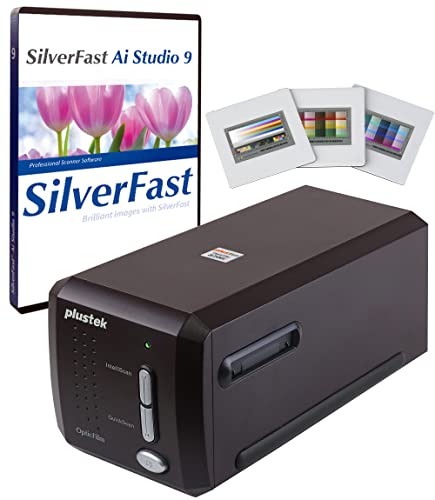
The build feels robust yet lightweight, with a sleek design that’s easy to handle. The scanner’s lid opens smoothly, revealing a well-designed film holder that fits perfectly without any fuss.
When I loaded in my slides, the bundled advanced IT8 calibration targets immediately impressed me—they provided more measuring points, so I experienced less color interpolation and more accurate results.
SilverFast 9 Ai Studio software is a game-changer. It’s packed with over 100 functions, but it’s surprisingly user-friendly.
The built-in algorithms like HDRi, Multi-Exposure, and iSRD handled my scans with remarkable detail, eliminating grain and dust effectively. I tested both black-and-white negatives and color slides, and the results were consistently sharp, vibrant, and true to the original images.
Installation was a breeze—no optical disc needed, just a USB flash drive. Plus, Plustek’s US-based support made troubleshooting simple if I ever hit a snag.
Overall, this scanner feels like a professional tool that truly simplifies the tedious process of digitizing film, making it accessible even for hobbyists or semi-pros.
What Are the Key Features That Define the Best Film Scanner?
The key features that define the best film scanner include resolution, dynamic range, scanning speed, and software compatibility.
- Resolution: The resolution of a film scanner is measured in DPI (dots per inch) and is crucial for capturing fine details. A higher DPI allows for greater detail and larger print sizes, making it essential for photographers aiming to produce high-quality images from their film negatives.
- Dynamic Range: Dynamic range refers to the scanner’s ability to capture a wide range of tones from shadows to highlights. A scanner with a high dynamic range can better reproduce the subtle differences in color and brightness, which is particularly important for slides and color negatives.
- Scanning Speed: Scanning speed is an important feature for those who want to digitize large collections of film quickly. Fast scanning reduces the time spent on the digitization process, allowing users to efficiently convert their film into digital formats without compromising on quality.
- Software Compatibility: The best film scanners come with or are compatible with advanced software for image editing and processing. This can include features like dust and scratch removal, color correction, and batch processing, enhancing the user experience and the final output quality.
What Types of Film Can You Scan with Different Models?
When considering the best film scanners, various models cater to different types of film, each with unique capabilities and specifications.
- 35mm Film Scanners: These are designed specifically for scanning 35mm negatives and slides, making them ideal for photographers who primarily work with this format. They often feature high-resolution sensors to capture fine details and color accuracy, ensuring that the scanned images closely resemble the original film.
- Medium Format Scanners: These scanners accommodate medium format films, such as 120 and 220 sizes, which are favored for their larger image area and detail. They typically offer superior resolution compared to 35mm scanners, allowing for larger prints and more extensive editing options.
- Large Format Scanners: These models are capable of scanning large format films, such as 4×5 inches and beyond, which are used in professional photography and fine art. They provide exceptional detail and tonal range, making them suitable for high-end applications, but can be more expensive and require a larger footprint.
- Slide Scanners: Specifically designed to process mounted slides, these scanners often feature dedicated trays for easy loading and scanning. They can effectively digitize color transparencies, preserving the vibrancy and detail necessary for high-quality reproductions.
- Multi-Format Scanners: These versatile scanners can handle various film formats, including 35mm, medium format, and slides, making them a flexible choice for photographers with multiple film types. They may compromise on some specifications but offer convenience for those who wish to scan different formats without needing multiple devices.
- Drum Scanners: Known for their high-quality output, drum scanners are used predominantly in professional settings for scanning both film and reflective materials. They provide exceptional resolution and dynamic range, but they require more expertise to operate and are typically more expensive.
- Smartphone Film Scanners: These modern devices allow users to scan film negatives and slides using their smartphones, making them a portable and affordable option. While they may not match the quality of dedicated film scanners, they are user-friendly and suitable for casual users looking to digitize their collections.
How Does a Film Scanner Improve Photo Quality?
A film scanner significantly enhances photo quality by digitizing film negatives or slides with high precision and detail.
- High Resolution: Film scanners typically offer resolutions of 2400 DPI and higher, allowing for detailed scans that capture the nuances of the original film.
- Dynamic Range: They provide a greater dynamic range compared to traditional scanning methods, which helps in retaining detail in both shadows and highlights.
- Color Accuracy: Advanced film scanners utilize sophisticated color management systems to reproduce colors faithfully, ensuring that the scanned images reflect the original film’s color palette.
- Grain Reduction: Many film scanners come with built-in noise reduction features that minimize grain, resulting in smoother images without compromising detail.
- Versatility: The best film scanners are capable of handling a variety of film formats, from 35mm to medium format, providing flexibility for photographers working with different types of film.
High Resolution: Film scanners typically offer resolutions of 2400 DPI and higher, allowing for detailed scans that capture the nuances of the original film. This high resolution is crucial for large prints or digital editing, as it ensures that every detail is preserved.
Dynamic Range: They provide a greater dynamic range compared to traditional scanning methods, which helps in retaining detail in both shadows and highlights. This characteristic is essential for achieving images that have depth and dimension, particularly in high-contrast scenes.
Color Accuracy: Advanced film scanners utilize sophisticated color management systems to reproduce colors faithfully, ensuring that the scanned images reflect the original film’s color palette. This allows photographers to maintain the integrity of their work, especially when dealing with vibrant or nuanced color schemes.
Grain Reduction: Many film scanners come with built-in noise reduction features that minimize grain, resulting in smoother images without compromising detail. This is particularly beneficial for high ISO films where grain can be a significant issue.
Versatility: The best film scanners are capable of handling a variety of film formats, from 35mm to medium format, providing flexibility for photographers working with different types of film. This versatility makes them an invaluable tool for anyone looking to digitize their film collections.
Which Brands Are Considered the Best for Film Scanners?
The best brands for film scanners are known for their quality, features, and reliability.
- Fujitsu: Fujitsu film scanners are renowned for their high-resolution capabilities and fast scanning speeds, making them ideal for professionals and serious enthusiasts. Their models often include advanced features such as automatic image correction and dust removal, ensuring high-quality scans with minimal effort.
- Epson: Epson offers a range of film scanners that are popular among both amateur and professional photographers. Their V-series models, like the V850 and V600, provide excellent color accuracy and detail, along with versatile film formats compatibility, making them a go-to choice for scanning both negatives and slides.
- Canon: Canon’s film scanners, such as the CanoScan series, are user-friendly and deliver decent quality scans at competitive prices. They often come with software that enhances the scanning process, allowing users to easily edit and manage their scanned images.
- Plustek: Plustek specializes in film scanners and is well-regarded for their dedicated models that focus on high-resolution outputs. Their scanners typically offer advanced features like multi-sampling and infrared dust removal, which can significantly improve the quality of the final scanned images.
- Minolta: Although Minolta no longer produces new models, their legacy film scanners, particularly the DiMAGE series, are still highly sought after for their reliability and exceptional image quality. Many users appreciate the film grain reduction technology that Minolta incorporated, which enhances the overall clarity of scanned images.
What Price Range Should You Expect for Quality Film Scanners?
- Entry-Level Scanners ($100 – $300): These scanners are typically suitable for beginners and casual users who want to digitize their film without requiring professional-grade results. They often have limited resolution and fewer features, but they can be a great starting point for simple scanning tasks.
- Mid-Range Scanners ($300 – $700): In this range, you can find scanners that offer higher resolution, better color accuracy, and additional features like dust and scratch removal. They are ideal for hobbyists and photographers who want a good balance between quality and affordability.
- Professional Scanners ($700 – $3,000): These scanners provide exceptional image quality, high resolution, and advanced software capabilities, catering to professional photographers and studios. Features like film holders for different formats and extensive post-processing options make them worth the investment for serious users.
- High-End Scanners ($3,000 and above): This category includes top-of-the-line models with unparalleled image quality and features designed for archival purposes. They are typically used by professionals in commercial settings, offering extensive customization and the ability to handle large volumes of film with precision.
How Do User Reviews Inform Your Choice of Film Scanner?
User reviews play a crucial role in informing your choice of film scanner by providing real-world insights and experiences from other users.
- Performance Quality: User reviews often highlight the scanning quality of a film scanner, including resolution, color accuracy, and detail retention. This feedback helps potential buyers gauge whether a scanner meets their specific needs, especially for preserving high-quality images.
- Ease of Use: Many reviews discuss the user-friendliness of the scanner, including setup, software interface, and the overall scanning process. A scanner that is straightforward to operate can save time and frustration, making it more appealing to both beginners and seasoned users.
- Durability and Build Quality: Users frequently comment on the durability and construction of film scanners, pointing out any issues with hardware over time. Understanding the build quality can provide insights into the longevity of the device and whether it can withstand regular use.
- Customer Support and Warranty: Reviews often touch on the support provided by the manufacturer, including responsiveness and helpfulness. A reliable customer support experience can be crucial when dealing with technical issues or warranty claims, enhancing user satisfaction.
- Value for Money: Many users evaluate whether the film scanner provides good value based on its features and performance relative to its price. This aspect can help buyers decide if a particular model is worth the investment compared to others in the market.
What Alternatives to Film Scanners Are Available?
There are several alternatives to traditional film scanners for digitizing film, each with its own advantages and methods.
- Digital Cameras: Using a high-resolution digital camera to photograph the film can yield excellent results. This method involves setting up the camera on a tripod and using a lightbox to illuminate the film, allowing for high-quality captures without the need for dedicated scanning hardware.
- Flatbed Scanners: Many modern flatbed scanners come with film scanning capabilities, making them versatile for both documents and film. While they may not achieve the same level of quality as dedicated film scanners, they offer a convenient and cost-effective solution for those who need to scan both prints and negatives.
- Smartphone Apps: Several smartphone apps allow users to scan film using their mobile devices, often utilizing the phone’s camera and advanced software. While the quality may not match that of professional scanners, these apps can be a quick and accessible option for casual users looking to digitize their film.
- High-Quality Duplicating Services: Professional photo labs offer film duplication services, where they can scan and digitize your film for you. This option ensures high-quality results without the need for investment in personal scanning equipment, making it ideal for those who prefer a hands-off approach.
- Hybrid Scanning Techniques: Some photographers use a combination of methods, such as scanning with a flatbed scanner and enhancing the images with software afterward. This hybrid approach allows for greater flexibility and can yield superior results by leveraging the strengths of different technologies.