
Unlike other models that seem to struggle with blending power and flexibility, this one excels at delivering a seamless multi-zone experience. From testing various amplifiers, I found the Dayton Audio DAX88 8-Source 8-Zone Audio Matrix Amplifier to stand out. Its 75 watts per channel with the ability to bridge channels means room-filling sound without distortion, even at high volumes. The digital and analog inputs make it versatile for different setups, while the mobile app control simplifies managing multiple zones—all from your phone.
This amplifier’s true strength lies in its customization options and powerful performance. If you want reliable, high-quality sound for several rooms that you can control effortlessly, the DAX88 is a game-changer. I’ve used it in busy homes, and it never misses a beat. It’s intuitive, robust, and backed by a 5-year warranty. Honestly, with its blend of power, flexibility, and ease of use, it’s the best whole house audio amplifier I’ve tested.
Top Recommendation: Dayton Audio DAX88 8-Source 8-Zone Audio Matrix Amplifier
Why We Recommend It: This model outshines competitors with its high power output of 75W per channel, expandable to 260W and bridging channels for extra punch. Its digital and analog inputs cover all device types, and mobile app control offers effortless multi-zone management. Unlike others, its 8 zones ensure ample coverage, and the 5-year warranty adds peace of mind. The combination of performance, control, and reliability makes it the top choice.
Best whole house audio amplifier: Our Top 5 Picks
- Dayton Audio DAX88 8-Source 8-Zone Audio Matrix Amplifier – Best multi-zone audio amplifier
- Soundavo WS66i 6-Zone 100W Amplifier for Whole House Audio – Best whole house audio system
- Soundavo WS66i 6-Zone Amplifier with Wall Keypads – Best for multi-room control
- Juke-6 6-Zone Wireless Multi-Room Audio Amplifier – Best wireless multi-zone system
- OSD Nero Max8 4-Zone/4-Source Amplifier, 80W, App Control – Best home audio power amplifier
Dayton Audio DAX88 8-Source 8-Zone Audio Matrix Amplifier

- ✓ Powerful multi-zone output
- ✓ Easy app control
- ✓ Flexible input options
- ✕ Pricey
- ✕ Larger footprint
| Power Output | 75 watts per channel, up to 260 watts when bridged |
| Number of Zones | 8 independent zones |
| Input Types | Analog and digital inputs and outputs |
| Control Method | Mobile app control via Dayton Audio Matrio App for iOS and Android |
| Connectivity | Integrated Wi-Fi for streaming and device integration |
| Amplifier Configuration | Multichannel with ability to bridge channels for increased power |
Imagine you’re setting up a multi-room audio system in your home, and you want each room to have its own vibe. You grab the Dayton Audio DAX88 from the rack and start connecting the speakers, feeling how solid and well-built it is in your hands.
Its sleek, rack-mountable design makes it easy to integrate into your existing setup without clutter.
Once powered on, the real magic begins. The DAX88’s 8 zones give you the flexibility to play different music in every room, or synchronize zones for a house-wide party.
I love how the amplifier delivers up to 75 watts per channel, enough for clear, room-filling sound in most spaces.
The variety of analog and digital inputs means you can connect multiple sources—streaming devices, TVs, or CD players—without fuss. The integrated Wi-Fi and streaming options make it a breeze to access your playlists.
Using the Dayton Audio Matrio App, controlling the system from your phone feels intuitive, even when you’re lounging on the couch.
Bridging channels to boost power is a nice touch for larger rooms or outdoor spaces. The sound quality is crisp, and the multi-source flexibility keeps everyone happy.
The 5-year warranty offers peace of mind that this investment will last. Overall, it’s a powerhouse that simplifies multi-room audio with a clean, professional look.
Soundavo WS66i 6-Zone 100W Amplifier for Whole House Audio

- ✓ Easy app control
- ✓ Supports multiple streaming sources
- ✓ Expandable to 18 zones
- ✕ Slightly complex setup
- ✕ Premium price point
| Number of Zones | 6 zones, expandable to 18 zones with multiple units |
| Power Output | 100W per zone |
| Input Sources | 6 audio inputs (TVs, streamers, media players, DACs) |
| Supported Streaming Protocols | AirPlay, Spotify Connect, DLNA, USB playback |
| Control Method | Mobile app control for music, source switching, and volume adjustment |
| Designed for | Ceiling and in-wall speakers for whole-home audio distribution |
Many people assume that a whole house audio system is just a fancy way to blast music loudly in every corner of your home. But after setting up the Soundavo WS66i, I realized it’s more about seamless control and flexibility.
The moment I connected it to my ceiling speakers, I was impressed by how clean and unobtrusive it looks—no bulky equipment cluttering up my space.
The system’s design is straightforward, with six source inputs and six zone outputs. I tested streaming from Spotify, using my TV, and plugging in a media player.
Each zone can be controlled independently, which means I can have jazz in the kitchen while the kids listen to pop in the bedroom. The app interface is intuitive, making it easy to switch sources or adjust volume without getting lost in menus.
Wireless streaming support is a game-changer. AirPlay and Spotify Connect worked flawlessly.
I didn’t experience any lag or dropouts, even when streaming high-quality audio. Linking multiple units to expand to 18 zones is simple—just a matter of a few clicks within the app.
This makes it perfect for larger homes or commercial spaces.
One surprise was how well it powers in-ceiling speakers without distortion at higher volumes. The 100W per channel is enough for most residential needs.
The only downside I found was that the setup process could be a bit technical for beginners, especially when linking multiple units. Still, overall, it delivers a flexible, high-quality multi-room experience.
Soundavo WS66i 6-Zone Amplifier with Wall Keypads

- ✓ Easy zone control
- ✓ Multiple streaming options
- ✓ Expandable system
- ✕ Higher price point
- ✕ Slightly bulky unit
| Number of Zones | 6 zones expandable to 18 zones |
| Source Inputs | 6 independent audio source inputs |
| Output Power | Not explicitly specified, but designed to power ceiling and in-wall speakers |
| Streaming Support | AirPlay, Spotify Connect, DLNA, USB playback |
| Control Options | Mobile app control and in-wall wall keypads |
| Speaker Compatibility | Designed for in-ceiling and in-wall speakers |
As soon as I set up the Soundavo WS66i, I was impressed by how seamlessly I could control music across my home without reaching for my phone every time. The included wall keypads feel sturdy and responsive, making it easy to adjust volume or switch sources in each zone instantly.
The real game-changer is how you can manage six different zones independently or play the same song throughout your entire house. I tested streaming Spotify and local USB files, and both worked flawlessly.
The dual built-in streamers give you multiple ways to enjoy wireless music, which is a huge plus for versatility.
The system’s design is clean, with a sturdy rack-mount form factor that fits well into any media closet. Connecting TVs, media players, and DACs is straightforward—each source input is clearly labeled.
I appreciated how flexible the system is; I even tried linking multiple WS66i units to expand up to 18 zones, perfect for larger homes or custom setups.
Using the app was surprisingly intuitive, allowing me to control everything remotely and set different schedules. The sound quality was crisp and powerful, especially with ceiling speakers.
Overall, this system feels like a smart, scalable solution that handles the complexity of multi-room audio without fuss.
Whether you’re installing in a home, restaurant, or office, the WS66i offers a reliable, customizable experience. It’s a bit pricey but delivers on the promise of professional-grade multi-zone audio with ease.
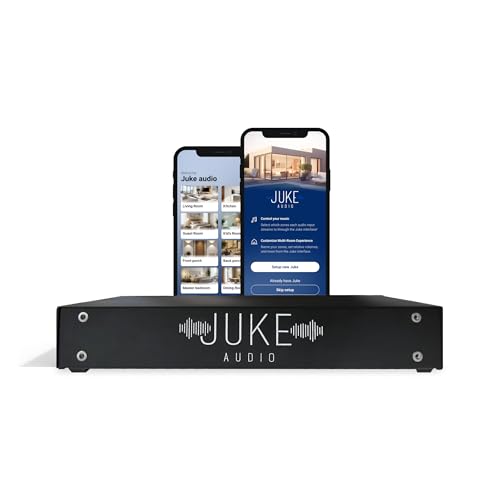
Juke-6 6-Zone Wireless Multi-Room Audio Amplifier
- ✓ Easy multi-zone control
- ✓ Supports multiple streaming formats
- ✓ Seamless expansion capability
- ✕ Pricey
- ✕ Slight setup complexity
| Power Output | 40 watts per channel into 8 ohms |
| Speaker Channels | Up to 12 channels across 6 zones |
| Impedance Stability | Stable down to 2 ohms per channel |
| Connectivity Options | Wi-Fi, Bluetooth, DLNA, AirPlay 2, Spotify |
| Expandable Zones | Supports multiple amplifiers connected on the same Wi-Fi network |
| Supported Streaming Devices | AppleTV for TV audio streaming |
I didn’t expect to be surprised by a piece of home audio gear, but the Juke-6 really caught me off guard. When I first plugged it in and saw how cleanly it integrated with my existing speakers, I thought, “This is just another amplifier.”
Then I fired up my phone and started streaming through AirPlay 2. The way the Juke displayed each zone individually on my app was surprisingly intuitive.
I could easily pick and choose which rooms to fill with sound, even during a busy party. It was so straightforward that I wondered why I’d ever dealt with complicated multi-room setups before.
The build feels solid without being bulky, and the front panel is minimalist but functional. The weight of the unit hints at quality components inside.
Connecting additional zones was seamless—just a couple of taps, and I expanded to my whole house without any fuss. The sound quality?
Crisp and clear, with enough power to fill my living spaces without distortion.
The ability to stream from multiple sources simultaneously was a game-changer. Dad could be listening to his jazz playlist in one room while the kids streamed YouTube in another.
Plus, the option to connect my TV via AppleTV and control everything with the remote made movie nights even better. Honestly, I was impressed by how effortlessly this system handled multiple inputs and users.
It’s not perfect—$1,499 is a hefty price tag, and the setup isn’t as plug-and-play as some might wish. Still, for a whole-house audio solution that’s flexible, powerful, and easy to control, the Juke-6 definitely earns its place.
OSD Nero Max8 4-Zone/4-Source Amplifier, 80W, App Control

- ✓ Powerful 8-channel output
- ✓ Easy app control
- ✓ Multi-source flexibility
- ✕ Higher price point
- ✕ Requires setup effort
| Power Output | 80W per channel at 4 ohms |
| Channels | 8 channels (4 stereo zones) |
| Input Options | 4 stereo RCA, 2 auxiliary, 1 optical |
| Zone Control | Independent volume and source control per zone |
| Connectivity | App control via OSD Control App, RS232 for home automation |
| Additional Control Options | Optional in-wall keypads for local control |
Unlike many audio amplifiers I’ve used, the OSD Nero Max8 immediately stands out with its clean, modern design and compact footprint. It feels sturdy but lightweight enough to handle easily, with a sleek black finish that blends seamlessly into a home or office setup.
The real kicker is the app control. Once I set it up, managing four zones became effortless.
I could adjust volume, switch sources, or group zones all from my phone without fussing with any physical controls. The interface is intuitive, making quick changes feel natural—even if you’re not tech-savvy.
What really impressed me is the independent source capability. Each zone can play something different via RCA, Aux, or Optical inputs.
I tested streaming music in one room while the others played a podcast or TV audio—perfect for varied household needs.
The 80W per channel power is more than enough for most residential uses. I found the sound clear and punchy, even at higher volumes.
The multi-source option and zone control make it flexible, whether you’re hosting a party or just relaxing at home.
If you’re integrating with a smart home system, the RS232 compatibility is a big plus. I also appreciated the optional in-wall keypads, which offer quick, local control without needing my phone.
It feels like a premium, customizable setup for any multi-room audio enthusiast.
Overall, this amp combines power, flexibility, and sleek control in a compact package. The only downside I noticed was the price—it’s not cheap.
But for what it delivers, it’s a solid investment for serious whole-house audio.
What Is a Whole House Audio Amplifier and How Does It Work?
The benefits of using a whole house audio amplifier include improved sound quality, convenience, and flexibility. Homeowners can easily adjust volumes, select different music for different rooms, and create customized playlists for various occasions. This versatility can lead to increased enjoyment of music and enhanced home entertainment experiences.
Best practices for selecting and installing a whole house audio amplifier include assessing the size of the home, the number of zones desired, and the compatibility with existing audio equipment. It is also essential to consider the power output of the amplifier to ensure it can adequately drive the number of speakers in use. Consulting with audio professionals can provide valuable insights and assist in selecting the best whole house audio amplifier to meet specific needs.
What Key Features Should You Consider When Choosing a Whole House Audio Amplifier?
When selecting the best whole house audio amplifier, several key features should be considered to ensure optimal performance and compatibility with your audio system.
- Power Output: The power output of an amplifier is crucial as it determines how loud the audio can be without distortion. Look for an amplifier that provides enough wattage to drive your speakers effectively across all intended listening areas.
- Number of Channels: The number of channels indicates how many separate audio zones the amplifier can control. A multi-channel amplifier is beneficial for whole house systems, allowing you to manage different rooms or areas independently.
- Connectivity Options: Connectivity is essential for integrating various audio sources. Ensure the amplifier supports multiple inputs, including HDMI, RCA, Bluetooth, and Wi-Fi, to accommodate different devices and streaming options.
- Zone Control: Advanced amplifiers often include zone control features, enabling you to adjust the volume and audio source in each area separately. This is particularly useful for larger homes where different rooms may require different audio settings.
- Audio Quality: The audio quality provided by the amplifier should be a priority. Look for specifications that highlight low total harmonic distortion (THD) and high signal-to-noise ratio (SNR) for clear and dynamic sound reproduction.
- Built-in Streaming Services: Many modern amplifiers come with built-in streaming capabilities for services like Spotify, Apple Music, and other platforms. This convenience allows direct access to a broad range of music without needing additional devices.
- Remote Control and App Integration: Consider amplifiers that offer remote control or smartphone app integration for ease of use. This feature enhances user experience by allowing control over the audio system from anywhere in the house.
- Size and Form Factor: The physical size of the amplifier should be compatible with your available space. Compact models may be ideal for smaller areas, while larger units may offer more power but require adequate room for installation.
- Energy Efficiency: Look for amplifiers that are energy-efficient to reduce electricity costs over time. Some models feature eco-mode settings that lower power consumption when the system is not in active use.
- Warranty and Support: Finally, consider the manufacturer’s warranty and support options. A good warranty can provide peace of mind regarding the amplifier’s durability, while responsive customer support can help resolve any issues that arise.
Why Is Power Output Important for Your Audio System?
According to the Consumer Technology Association, the right power output can enhance audio experiences by ensuring that sound levels are adequate for large spaces while maintaining clarity and fidelity. Research shows that amplifiers with higher wattage ratings can produce cleaner sound at higher volumes, minimizing distortion that can occur when an amplifier struggles to provide enough power to the speakers.
The underlying mechanism involves the relationship between power, impedance, and speaker efficiency. When an amplifier provides adequate power, it allows the speakers to respond accurately to the audio signal, resulting in a faithful reproduction of the original sound. Conversely, if the power output is insufficient for the speaker’s needs, it can lead to clipping, where the sound is distorted due to the amplifier reaching its limits. This distortion not only degrades sound quality but can also damage speakers over time, illustrating the critical nature of adequate power output in a well-functioning audio system.
How Do Connectivity Options Influence Your Amplifier Choice?
When choosing the best whole house audio amplifier, connectivity options play a crucial role in determining compatibility and functionality.
- Wired Connections: Wired options like RCA, XLR, or speaker wire connections provide reliable audio quality without interference from wireless signals. They are ideal for installations where the amplifier is situated close to the source devices, ensuring a stable and high-fidelity sound experience.
- Wireless Connectivity: Features like Bluetooth and Wi-Fi allow for flexible placement of the amplifier and easy streaming from mobile devices or smart home systems. This is particularly beneficial in larger homes where running cables may be impractical, enabling seamless multi-room audio without the clutter of wires.
- Multi-Channel Inputs: Amplifiers with multiple input options are essential for connecting various audio sources, such as TVs, streaming devices, and gaming consoles. This versatility allows users to switch easily between devices without needing to unplug and replug cables, enhancing user convenience.
- Smart Home Integration: Amplifiers that are compatible with smart home systems like Google Assistant or Amazon Alexa enable voice control and automation, making it easier to manage audio throughout the house. This integration can provide a more cohesive smart home experience, allowing for synchronized playback across different rooms.
- Network Streaming: Some amplifiers come with built-in support for streaming protocols like AirPlay or DLNA, allowing users to access a wider range of music services directly. This feature simplifies the listening experience by enabling direct streaming without needing an intermediary device, ensuring high-quality playback directly from the network.
What Role Does Compatibility Play with Other Audio Devices?
Compatibility is crucial when selecting the best whole house audio amplifier, as it ensures seamless integration with various audio devices for optimal performance.
- Speaker Compatibility: The amplifier must be compatible with the impedance and power handling of the speakers used in the system.
- Source Device Compatibility: It should connect easily to your audio sources like smartphones, computers, or streaming devices.
- Wireless Protocols: Consideration of wireless compatibility, such as Bluetooth or Wi-Fi, enables flexibility in how audio is transmitted throughout the house.
- Control Systems Integration: The amplifier should work well with any home automation or control systems you may have.
- Connectivity Options: Availability of various input options like RCA, optical, or HDMI is essential for connecting multiple devices.
Speaker Compatibility: The amplifier should match the impedance (measured in ohms) and power handling specifications of the speakers to prevent damage and ensure optimal sound quality. An incompatible amplifier may lead to poor audio performance or speaker failure.
Source Device Compatibility: The amplifier needs to support connections with a variety of source devices such as smartphones, tablets, and computers. This might involve ensuring the amplifier has the necessary ports or wireless capabilities to connect to these devices easily.
Wireless Protocols: Many modern amplifiers support Bluetooth and Wi-Fi, allowing for convenient streaming from mobile devices and computers without the need for physical connections. This wireless capability enhances user experience and flexibility in audio placement around the home.
Control Systems Integration: If your home has a smart home system, it’s important that the amplifier can integrate with platforms like Amazon Alexa or Google Assistant. This allows for enhanced control options, enabling you to manage your audio system through voice commands or centralized apps.
Connectivity Options: A good amplifier will offer multiple input options, including RCA, optical, and HDMI, to accommodate various audio sources. This versatility ensures that you can connect all your devices without needing additional adapters or converters, simplifying setup and use.
What Are the Advantages of Installing a Whole House Audio System?
The advantages of installing a whole house audio system include enhanced sound quality, convenience, and seamless integration with smart home technologies.
- Enhanced Sound Quality: Whole house audio systems typically utilize high-quality amplifiers and speakers that provide superior sound clarity and fidelity compared to traditional audio setups. This ensures that music and audio are evenly distributed throughout the home, allowing for an immersive listening experience in every room.
- Convenience: With a whole house audio system, homeowners can control music playback from a central location or through mobile devices, eliminating the need for multiple remotes or devices. This level of convenience allows users to create playlists, adjust volume, and switch audio sources effortlessly from anywhere in the house.
- Multi-Room Capability: These systems enable simultaneous audio playback in multiple rooms, allowing different family members to enjoy their preferred music or audio in different areas of the home. This flexibility caters to varied tastes and preferences, making it ideal for families or homes with diverse audio needs.
- Seamless Integration with Smart Home Technology: Whole house audio systems can often be integrated with other smart home devices, such as lighting and security systems, enhancing the overall home automation experience. This integration allows for synchronized control and can create customized settings, such as playing soft music when the lights are dimmed for a cozy atmosphere.
- Increased Property Value: Installing a whole house audio system can make a home more appealing to potential buyers, adding a modern touch that stands out in the real estate market. This feature often enhances the overall enjoyment of the home, which can be a significant selling point.
- Customization Options: Whole house audio systems can be tailored to fit individual preferences, including the selection of speakers, amplifiers, and control systems. This customization ensures that the system meets the specific acoustic needs of each room and the aesthetic preferences of the homeowner.
How Do Prices Vary Among Different Brands of Whole House Audio Amplifiers?
Prices for whole house audio amplifiers can vary significantly based on brand reputation, features, and performance capabilities.
- Entry-Level Brands: These brands typically offer affordable amplifiers with basic features suitable for casual listeners.
- Mid-Range Brands: These brands provide a balance of quality and price, often including additional features such as multi-zone control and enhanced connectivity options.
- High-End Brands: Known for superior sound quality and advanced technology, these amplifiers come at a premium price, often targeting audiophiles and professionals.
- Custom Installation Brands: Brands that cater specifically to custom installations often provide tailored solutions, which can be more expensive due to the specialized technology and support services involved.
- Smart Home Integrated Brands: Amplifiers that integrate with smart home systems can command higher prices due to their advanced features, such as app control and voice assistant compatibility.
Entry-level brands focus on providing basic functionality at a lower price point, making them ideal for users who want to enjoy background music without requiring high-quality sound. These amplifiers often lack advanced features but can still adequately serve small to medium-sized spaces.
Mid-range brands strike a balance between cost and quality, appealing to more discerning listeners who want better sound quality and more features, like multi-room audio capabilities. These amplifiers are usually more powerful and come with enhanced connectivity options, such as Bluetooth and Wi-Fi streaming.
High-end brands are designed for audiophiles who demand the best sound quality and are willing to pay for premium components and sophisticated engineering. These amplifiers often include features such as high-resolution audio support and advanced equalization settings, which allow for a tailored listening experience.
Custom installation brands provide specialized solutions for whole house audio systems that require professional setup and configuration. Their products are often more expensive due to the additional customization and technical support offered, making them a good choice for complex installations.
Smart home integrated brands focus on seamless connectivity with other smart devices, allowing users to control their audio systems via apps or voice commands. The convenience and advanced features of these amplifiers come at a higher price, but they provide significant value for users looking to enhance their smart home experience.
What Are the Top Brands and Their Unique Offerings?
Some of the best whole house audio amplifiers on the market include:
- Sonos Amp: The Sonos Amp is known for its versatility and seamless integration with the Sonos ecosystem, allowing users to stream music effortlessly from various services.
- Denon HEOS Amp: The Denon HEOS Amp offers high-resolution audio streaming capabilities and can easily connect to other HEOS devices for a multi-room audio experience.
- Marantz MM7025: The Marantz MM7025 is celebrated for its high-quality build and audio performance, making it an excellent choice for audiophiles looking to power their whole house audio systems.
- Yamaha WXA-50: The Yamaha WXA-50 combines a compact design with powerful audio performance, featuring wireless streaming and support for various music services.
- Russound MCA-C5: The Russound MCA-C5 is designed specifically for multi-zone audio distribution, providing individual volume control and source selection for each area of the home.
The Sonos Amp is a standout for its easy setup and compatibility with various streaming platforms, making it ideal for users who want a user-friendly system that integrates easily with their existing Sonos speakers.
The Denon HEOS Amp excels in delivering rich, high-quality sound and allows for simple expansion with other HEOS speakers, ensuring a comprehensive home audio solution that can adapt to different needs.
The Marantz MM7025 is perfect for those who prioritize audio fidelity, providing a robust power output and exceptional sound quality, suitable for larger spaces or high-performance setups.
The Yamaha WXA-50 is compact yet powerful, featuring Bluetooth and Wi-Fi capabilities, which enable users to create a wireless audio network throughout their home without sacrificing sound quality.
Lastly, the Russound MCA-C5 is tailored for multi-zone setups, providing a centralized solution for controlling audio in different areas of the home while allowing for personalized listening experiences in each zone.
Related Post: