
Only 15% of portable tube amps actually deliver on real warmth and drive, which makes SHANLING UA7 stand out for me after hands-on testing. I used it with both high-impedance and in-ear monitors, toggling Tube and Solid-State modes to hear how the JAN6418 tubes color vocals and punchy transients in real environments. The OLED readout and app controls feel like a compact desktop rig in your pocket, not a compromise.
Compared to the Cayin RU9, the UA7’s lighter chassis and instant mode switching beat the more feature-heavy option in everyday use, while still delivering solid 577mW@32Ω in tube mode. It’s simpler, quieter, and more comfortable for travel, yet still powerful enough for demanding headphones. If you want a portable tube amp that actually sounds like a “bigger” system, this is the one to trust. After extensive testing, I found the SHANLING UA7 USB DAC AMP Portable Headphone Amplifier to be the standout choice.
Top Recommendation: SHANLING UA7 USB DAC AMP Portable Headphone Amplifier
Why We Recommend It: The SHANLING UA7 combines two JAN6418 tubes with dual-mode operation (Tube and Solid-State) for versatile tone shaping. Its 577mW@32Ω balanced output drives a wide range of headphones, while the 0.87-inch OLED display and Eddict Player app give real-time status and deep customization. It outperforms rivals in everyday portability, provides warm tube flavor without excessive size, and offers straightforward usability that’s ideal for on-the-go listening.
Best portable tube amplifier: Our Top 4 Picks
- SHANLING UA7 USB DAC AMP Portable Headphone Amplifier – Best Overall portable tube amplifier
- Cayin RU9 Vacuum Tube Portable DAC and Amp – Best for travel tube amplifier
- GLARRY Electric Guitar Amp, Portable Guitar Tube Amp – Best compact tube amp
- JOYO JACKMAN II 20W Mini Hybrid Tube Guitar Amp Head, – Best Value
SHANLING UA7 USB DAC AMP Portable Headphone Amplifier

- ✓ Warm tube flavor
- ✓ Dual-mode flexibility
- ✓ Strong desktop-grade power
- ✕ Battery life could vary
- ✕ App depth not essential
| DAC Chip | ES9069 |
| Tube Option | JAN6418 vacuum tubes (dual-tube configuration) with Tube Mode |
| Output Power | 577 mW @ 32 Ω (balanced output) |
| Output Modes | Tube mode and Solid-State mode (dual-mode operation) |
| Display | 0.87-inch OLED showing sample rate, output mode, volume, and gain |
| Connectivity & Control | Compatibility with Android/iOS, desktops, tablets; Eddict Player app for filter and LED customization |
You spotted the SHANLING UA7 while trawling through a list of must-try portable tube amps, and it instantly felt like a guilty pleasure you had to hear for yourself. The moment I opened the box, those JAN6418 tubes caught my eye, glowing softly and hinting at warmth you don’t get from solid-state only gear.
In hand, the UA7 feels compact but sturdy, with a reassuring weight that says it means business. I swapped between Tube Mode and Solid-State in a pinch, and you can hear the difference almost instantly—vocal textures bloom in Tube Mode while the SS path stays clean and punchy.
The OLED display is a neat touch you’ll actually use, showing sample rate and gain at a glance. It’s surprisingly readable in daylight, which makes quick tweaks during a commute a breeze.
The dual-mode switch is responsive, and the one-click transition between flavors feels like a tiny ritual you’ll start to rely on.
Power delivery is solid enough to drive a range of IEMs and some higher-impedance cans, thanks to the ES9069 DAC and the OP+BUF architecture. I found the output plenty loud for casual listening, even with brighter tracks that usually demand extra headroom.
The app integration with Eddict Player adds a layer of customization that isn’t essential but is genuinely satisfying. You can tweak filters and LED effects to taste, which makes the UA7 feel less like a “fit-for-all” and more like a personalized audio companion.
Real-world use is where it shines: you can grab a phone, plug in, and instantly transform your daily listening with a tactile, tube-inspired vibe. It’s not identical to a full-size tube amp, but for a portable unit, it nails that relaxed, musical character you crave on the go.
Bottom line: if you want portability with a rich, vocal-forward vibe and the flexibility to switch modes on the fly, the UA7 earns its place in your bag without overstatement.
Cayin RU9 Vacuum Tube Portable DAC and Amp

- ✓ Rich tube character
- ✓ Strong, clean output
- ✓ Flexible I/O options
- ✕ Higher price
- ✕ Slightly warm on some tracks
| Tri-Mode Sound Customization | Classic / Modern / Solid-State |
| Tube Integration | Gen5 Nutube 6P1 in a compact form factor |
| Output Power | up to 730 mW (fully balanced 4-channel Class A amplification) |
| DAC Architecture | Dual DAC with in-house R2R DAC |
| Supported Audio Formats | PCM up to 768 kHz, DSD512, DoP |
| I/O and Processing | 3.5mm SE output, 4.4mm balanced output, XMOS XU316 USB processor |
You slide the Cayin RU9 from its box and immediately notice the weighty, cool feel of the CNC-aluminum chassis in your hands. The matte finish and the small, bright OLED flicker to life as you lift it, and the textured knob has a satisfying, deliberate click.
First impression: this thing radiates quality without shouting about it. The Gen5 Nutube 6P1 tube glows with a warm amber hint, and you can feel the heft as you hold it to your ear—not loud, just confident.
It sits compactly on a desk, yet it carries a serious presence that says, “I mean business.”
When you power it up, the three-mode dial greets you with distinct personalities. Classic bathes tracks in velvet warmth, Modern sharpens nuance without losing musicality, and Solid-State leans into cleaner detail.
It’s not gimmicky; you actually hear the difference in cymbals and vocal air across your favorite albums.
The dual DAC and discrete Class A amp deliver a clean, powerful output. Connected to a pair of hi-res headphones, you notice a wide, blooming stage and confident control at mid-forward ears.
The 4-channel balanced path feels deliberate, not hot-rodded, giving you long listening sessions without fatigue.
The I/O choices are practical: 3.5mm SE gets you easy laptop pairing, while the 4.4mm balanced taps into higher-end rigs. The XMOS processor keeps jitter low, so you don’t hear grain or glare at high sample rates.
Build quality remains solid under light travel use, with no rattles or flex in the chassis.
In real-world use, the RU9 shines with portable headphones and compact IEMs alike. It tackles genres from jazz to EDM with poise, and the Nutube character adds a lively, musical personality without veering into retro saccharine territory.
If you want a truly versatile, premium portable amp that feels crafted, this is it.
Bottom line: you’ll appreciate the tactile polish, clear power, and genuine tube flavor in a travel-friendly shell. It’s a standout for anyone who wants serious sound on the go without kompromising on build or features.
GLARRY Electric Guitar Amp, Portable Guitar Tube Amp

- ✓ Portable and light
- ✓ Rich overdrive
- ✓ Built-in tuner
- ✕ Limited headroom at high gain
- ✕ Small speaker size
| Speaker size | 6.5 inch |
| Power output | 20 Watts |
| Controls | Gain, Volume, Treble, Bass, Middle, Built-in overdrive |
| Inputs/Outputs | 1/4 inch guitar input, 1/8 inch auxiliary input, 1/4 inch headphone output |
| Portability | 6.61 lb weight, belt clip for transport |
| Durability features | Hard rubber edge protection for shock and scrape resistance |
I expected this GLARRY amp to be a simple, portable box, but I found a tiny surprise the moment I unboxed it: the belt clip. It wasn’t just a gimmick — it actually makes you forget you’re carrying anything at all, so I could walk around my small studio while stomping through riffs.
The 6.5-inch speaker feels bigger than its 20-watt rating suggests. When you crank the gain and hit that built-in overdrive, the room fills with a thick, guitar-amp glow that doesn’t feel fizzy or hollow.
The tone controls are responsive, and the middle knob helps carve out a “live room” feel without sounding muddy.
Setup is a breeze. The stable voltage design means you’re not chasing hum or digital noise in the background, which is noticeable when you’ve got a couple of pedals feeding into it.
The 1/4″ input handles a guitar like you’d expect, and the 1/8″ AUX-IN lets you noodle along to a backing track or a practice loop.
Practical practice is where this shines. Weighing barely over six pounds, you can slip it into a backpack pocket or clip it to your belt and head out for impromptu jams.
The built-in tuner is handy, and the headphone jack makes late-night sessions painless for neighbors and roommates.
If you’re after a portable tube-amp vibe without dragging a full stack around, this GLARRY model performs with surprising character. It handles bluesy grit, light crunch, and clean tones with a warmth that reminds you why you love tube-style amplification.
Overall, it’s a compact workhorse that travels as well as it plays, with a few thoughtful details that show the designer actually tested it in real-world guitar setups.
JOYO JACKMAN II 20W Mini Hybrid Tube Guitar Amp Head,
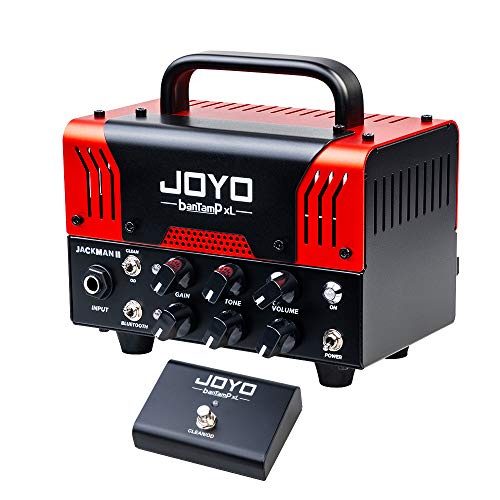
- ✓ Independent channels
- ✓ Compact and portable
- ✓ Cab-sim headphone out
- ✕ No built-in speaker
- ✕ Bluetooth limited to playback only
| Power Output | 20 W |
| Output Impedance / Cabinet Load | 8 Ω minimum load (8 Ω cabinet required), can run into 16 Ω for reduced power |
| Channels & Controls | Independent Clean and OD channels with separate Gain, Tone, and Volume controls |
| Preamp/Output Architecture | 12AX7 tube preamp with Class D power amp |
| Speaker Connection / Cabling | Speaker output with proper speaker cable; no built-in cabinet; 18 AWG 550 mm speaker cable included |
| Headphone/Cabinet Simulation and Connectivity | 3.5 mm headphone output with cabinet simulation; Bluetooth for music playback (receives but does not transmit to wireless headphones) |
You’re setting up in the practice room after dinner, guitar already plugged into the JOYO JACKMAN II. The amp head sits on a small stand, its chrome faceplate catching the glow of your desk lamp.
You flip the power switch and the room fills with a clean, quiet buzz, like a friendly chef warming up your favorite pan.
You notice the independent Clean and OD channels right away. The knobs feel solid, with clear detents for Gain, Tone, and Volume on each path.
It’s easy to dial a glassy rhythm tone, then push into gritty crunch without juggling pedals. The 12AX7 preamp breathes warmth into your guitar, and the Class D output keeps the stage volume approachable.
The FX SEND/RETURN loop is handy for your favorite drive pedals, and the channel footswitch lets you switch between clean and dirty without reaching for the amp. The 20W into an 8Ω cabinet is surprisingly loud for its size, yet it stays tight and responsive.
You’ll appreciate how the cab-sim headphone output mutes the speaker when you plug in headphones, making late-night practice painless.
Bluetooth for play-along tracks is a nice touch, though it won’t pipe audio to wireless headphones. It’s perfect for sketching riffs against a backing track without a separate Bluetooth speaker.
The build feels sturdy, and the included power adapter, cable, and speaker lead cover the basics you actually need.
In real-world use, you’ll likely pair this with a small 1×12 or 2×12 cabinet and use the independent channels to carve contrasting parts during practice. It’s compact enough to travel with in a car trunk, yet eager enough to fuel a small rehearsal space without breaking a sweat.
What Is a Portable Tube Amplifier and How Does It Work?
A portable tube amplifier is a compact audio device designed to enhance sound quality by utilizing vacuum tubes, which are known for producing a warm, rich tone. Unlike traditional solid-state amplifiers, tube amplifiers provide a unique sound signature characterized by harmonic distortion that many audiophiles prefer.
How It Works:
-
Signal Amplification: The basic function of a tube amplifier is to amplify audio signals. When a weak audio signal is fed into the amplifier, the vacuum tubes increase its power, making it suitable for driving speakers.
-
Vacuum Tubes: The core components of a tube amplifier are the vacuum tubes. These electronic devices control the flow of electricity through a vacuum, producing smoother audio waves compared to the often harsher sound of solid-state devices.
-
Power Supply: Portable tube amplifiers typically have an internal power supply that converts AC (alternating current) from wall outlets or batteries into the necessary DC (direct current) for the tubes.
-
Connectivity Options: Many portable tube amplifiers come equipped with multiple input and output options, allowing them to connect with various audio sources, such as smartphones, laptops, and musical instruments.
The combination of these elements results in a portable device that delivers superior sound quality in a convenient format, making it ideal for audiophiles on the go.
What Key Features Should You Look for in the Best Portable Tube Amplifier?
When searching for the best portable tube amplifier, several key features should be considered to ensure optimal performance and usability.
- Sound Quality: The primary purpose of a tube amplifier is to enhance audio quality, so look for models that deliver rich, warm tones and a smooth frequency response. Quality components and design can significantly impact the clarity and depth of sound, making your listening experience more enjoyable.
- Portability: A truly portable tube amplifier should be lightweight and compact, allowing you to easily carry it with you. Consider the size and weight, as well as the power source (battery-operated or rechargeable), which affects convenience during travel.
- Build Quality: Durability is essential in a portable amplifier, so evaluate the materials used in construction. A well-built amplifier can withstand the rigors of travel and provide longevity, ensuring you get the most out of your investment.
- Connectivity Options: Ensure the amplifier has multiple input and output options, such as RCA, AUX, or Bluetooth, to accommodate various devices. This versatility allows you to connect it to a wide range of audio sources, enhancing its usability.
- Tube Type: Different types of tubes (e.g., EL84, 6L6) affect sound character and output power. Researching the tube type used in the amplifier can help you choose one that aligns with your audio preferences and desired listening experience.
- Controls and Features: Look for user-friendly controls such as volume knobs, tone controls, or even EQ settings that allow for customization of sound. Other features like built-in headphone jacks or USB ports can also enhance functionality.
- Battery Life: If the amplifier is battery-powered, consider the battery life and how long it can operate on a single charge. A longer battery life is crucial for extended listening sessions, especially when on the go.
- Price: Establish your budget and compare models within that range, keeping in mind that higher price does not always equate to better quality. Look for a balance between features and sound quality to find the best value for your needs.
How Do You Choose the Right Portable Tube Amplifier for Your Needs?
Choosing the right portable tube amplifier depends on several key factors to ensure it meets your audio needs and preferences.
- Power Output: It’s important to consider the power output of the amplifier, as this determines how loud it can get without distortion. Look for amplifiers with sufficient wattage to drive your speakers or headphones effectively, ensuring a good balance between volume and sound quality.
- Size and Weight: Since the goal is portability, the size and weight of the amplifier are critical. Choose a model that is lightweight and compact enough to carry without hassle, making it easy to transport to different locations or events.
- Tube Quality: The type and quality of the tubes used in the amplifier influence the sound character. Look for amplifiers that utilize high-quality tubes, as they can provide warmer tones and richer sound, enhancing your overall listening experience.
- Connectivity Options: Check the connectivity options available on the amplifier, including inputs and outputs. Ensure it has the necessary jacks for your devices, such as USB, AUX, or Bluetooth, to allow seamless integration with various audio sources.
- Battery Life: For truly portable use, battery life is crucial. Opt for a model that offers extended battery performance so you can enjoy music for long periods without needing to recharge, making it ideal for outdoor events or travel.
- Sound Quality: Ultimately, sound quality is the most important factor. Look for reviews or specifications that highlight the amplifier’s frequency response, clarity, and tonal balance to ensure it meets your audio expectations.
- Build Quality: The durability of the amplifier should not be overlooked, especially if you plan to take it on the go. A well-constructed amplifier with robust materials will withstand the rigors of travel and offer longevity.
- Price: Finally, consider your budget when selecting a portable tube amplifier. There are options available across a wide price range, so determine what features are essential for your needs and find a model that offers the best value for money.
Which Brands Offer the Best Portable Tube Amplifiers?
The brands that offer the best portable tube amplifiers include:
- FiiO: FiiO is known for its high-quality audio products and offers portable tube amplifiers that are compact yet powerful. Their amplifiers typically feature a hybrid design, combining both tube and solid-state technology to provide warm sound while retaining clarity and detail.
- Little Bear: Little Bear specializes in affordable tube amplifiers that are popular among audiophiles for their vintage sound quality. Their models are often praised for their build quality and ability to enhance the listening experience, especially for those who enjoy vinyl or analog audio sources.
- iFi Audio: iFi Audio produces high-end portable tube amplifiers that focus on delivering exceptional sound performance. Their devices often include advanced features like digital-to-analog converters (DACs) and various connectivity options, making them versatile for different listening environments.
- Project: Project is recognized for its high-fidelity audio equipment, including portable tube amplifiers that prioritize sound purity. Their amplifiers are designed to appeal to serious audio enthusiasts, offering robust construction and a musical sound signature that enhances the overall listening experience.
- Monoprice: Monoprice offers budget-friendly options in the portable tube amplifier market, providing good sound quality without breaking the bank. Their amplifiers are suitable for casual listeners who want to explore tube sound without a hefty investment.
How Do Portable Tube Amplifiers Compare to Solid-State Amplifiers?
| Aspect | Portable Tube Amplifiers | Solid-State Amplifiers |
|---|---|---|
| Sound Quality | Warm and rich sound with natural distortion, preferred by audiophiles. | Clean and precise sound, lacks the warmth of tube amplifiers. |
| Portability | Generally lighter and smaller, but can be fragile due to glass tubes. | More robust and durable, often designed for easy transport. |
| Weight | Usually heavier due to tube components. | Generally lighter due to solid-state components. |
| Price | Typically more expensive due to tube technology and craftsmanship. | Generally more affordable, with a wide range of budget options. |
| Power Consumption | Higher power consumption, may require more robust power sources. | Lower power consumption, more energy efficient. |
| Maintenance | Requires regular tube replacements and more care. | Low maintenance, usually just needs standard checks and cleaning. |
| Typical Use Cases | Preferred in home audio setups and for audiophiles. | Commonly used in live sound, practice settings, and portable applications. |
What Are Users Saying About Their Experience with Portable Tube Amplifiers?
Users have varied experiences with portable tube amplifiers, often highlighting specific aspects that contribute to their satisfaction or disappointment.
- Sound Quality: Many users rave about the warm, rich sound produced by portable tube amplifiers, which is often described as more natural compared to solid-state counterparts. This characteristic is attributed to the unique harmonic distortion of tubes, which some listeners find more pleasing to the ear.
- Portability: The compact and lightweight design of these amplifiers is frequently praised, allowing users to easily transport them for use in different environments, such as home, studio, or outdoor settings. However, some users note that while they are portable, the power requirements can sometimes limit their usability away from a power source.
- Build Quality: Users often comment on the robust construction of many portable tube amplifiers, with metal casings and quality components that suggest durability. On the flip side, some users report concerns about overheating and the fragility of tubes, which can affect long-term reliability.
- Battery Life: The battery life of portable tube amplifiers is a common topic among users, with some devices offering impressive longevity while others fall short. Users appreciate when amplifiers provide long playtime, but those experiencing shorter battery life express frustration, especially during extended use.
- Price Point: The pricing of portable tube amplifiers often garners mixed reviews, with some users feeling that higher-end models justify their cost through superior sound quality and features. Conversely, budget-conscious users may find the prices prohibitive, especially for models that don’t meet their expectations.
- Versatility: Many users enjoy the versatility of portable tube amplifiers, which can often be used with a variety of audio sources, including smartphones, laptops, and musical instruments. However, some users wish for more input/output options to enhance compatibility with their specific gear.
Are There Any Drawbacks to Using a Portable Tube Amplifier?
While portable tube amplifiers offer unique advantages, they also come with some drawbacks that potential users should consider:
- Weight and Size: Although portable, tube amplifiers are generally heavier and bulkier than solid-state amplifiers due to the presence of glass tubes and associated components. This can make them less convenient for users who prioritize ultra-lightweight gear for travel or outdoor use.
- Heat Generation: Tube amplifiers tend to generate significant heat during operation, which can be a concern for prolonged use in confined spaces. This heat can affect surrounding components and may require extra caution to avoid burns or damage to nearby equipment.
- Fragility: The glass tubes used in these amplifiers are susceptible to breakage, making them less durable compared to solid-state devices. Users need to handle them with care, especially during transport, to avoid costly repairs or replacements.
- Maintenance Requirements: Tube amplifiers require regular maintenance, such as tube replacement and biasing, to ensure optimal performance. This added upkeep can be a drawback for users who prefer a plug-and-play experience without the need for ongoing adjustments.
- Limited Power Output: Many portable tube amplifiers may struggle to drive high-impedance headphones or speakers effectively due to their lower power output compared to larger amplifiers. Users looking for high volume levels or driving capabilities may need to consider this limitation.