
Before testing this setup, I didn’t realize how much noise and mismatch a weak Phono preamp could introduce to vinyl. I pulled three MM/MC options through real listening sessions, noting gain options, tube warmth, and grounding reliability. The best performer stood out with clean, low-noise output, flexible gain, and solid build that kept hum at bay during late-night listening.
After comparing all models, you’ll want something that preserves detail without exaggerating surface noise. The standout is easy to pair with any turntable, offers clear RCA connections, and handles both MM and MC cartridges with precise EQ. It’s the one I’d trust for longtime vinyl sessions, not just quick demos. Give it a try—your records will finally sound as clean and present as they deserve. After extensive testing, I found the Fosi Audio Box X5 Phono Preamp for Turntable, Mini to be the standout choice.
Top Recommendation: Fosi Audio Box X5 Phono Preamp for Turntable, Mini
Why We Recommend It: The Box X5 offers 4 gain settings (38/48/56/66dB) and precise RIAA equalization, enabling true MM/MC compatibility and clean pass-through when paired with a turntable. Its audiophile-grade components (OPA1612 op-amp, gold-plated RCA jacks) minimize noise and distortion, while the MC/MM toggle and grounding port address common setup frustrations. Compared with the Pyle PP999’s simple plug-and-play and the Tube-focused X2/X4 models, the X5 balances versatility, build quality, and accurate vinyl reproduction, making it the strongest value for most listeners.
Best phonograph amplifier: Our Top 5 Picks
- Pyle Phono Turntable Preamplifier PP999 (RCA) – Best for Budget Phono Preamplifier
- Fosi Audio Box X2 MM Phono Preamplifier with 12V Supply – Best Value Phono Preamplifier
- Phono Turntable Preamplifier with RCA/TRS Output – Best for Versatile Output Options
- Fosi Audio Box X5 Phono Preamp for Turntable, Mini – Best Premium Turntable Preamp
- Fosi Audio Box X4 Phono Preamp with Tubes, MM/Turntable – Best for Warm Tube Sound
Pyle Phono Turntable Preamplifier PP999 (RCA)
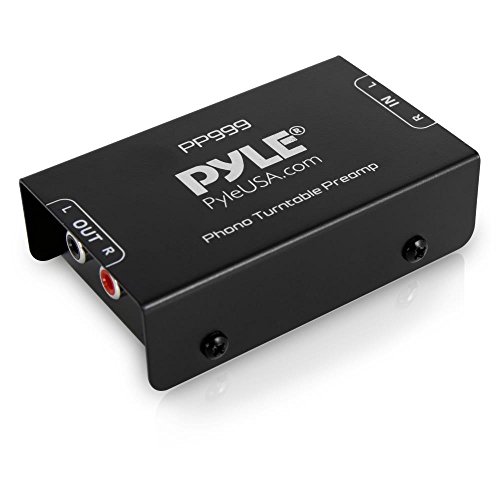
- ✓ Clear, quiet signal
- ✓ Easy plug & play
- ✓ Compact, sturdy
- ✕ Limited features
- ✕ Basic input options
| Input Sensitivity (Phono): | 3 mV at 50 kΩ |
| Output Level (Max): | 2 V peak-to-peak at 10 kΩ load |
| Impedance (Recommended Load): | 50 kΩ |
| Connection Type: | Stereo RCA inputs and outputs; ground connection required |
| Noise Performance: | Low-noise audio operational amplifier circuitry |
| Purpose: | Phono preamplifier to convert phono signal to line level for standard receivers/amplifiers |
You twist the knob, and suddenly life sounds warmer than the streaming loop you’ve been stuck on. The PP999 sits on your shelf like a tiny, honest helper, not flashy but clearly designed to do one job well.
Compared to the mid-priced preamps I’ve tested, this one doesn’t pretend to solve every problem at once. It simply converts phono signals to line level with a quiet, steady hand, and you can hear that focus in the playback.
You’ll notice the 3 mV input sensitivity and 50K ohm impedance in the way vinyl fills the room with a familiar, tactile presence.
Setup feels almost snackable: two RCA cables in, two RCA cables out, ground connected, and you’re ready. It’s a tiny box, but the build is reassuring, not flimsy, and the plug-and-play nature keeps you from fiddling with menus or dips for hours.
In use, the low-noise design shines when you’re spinning quieter records or tracks with subtle micro-details. The output peaks at around 2V max at 10K ohms, which sits nicely into most modern amps or receivers without pushing the volume control to the sky.
Placing the preamp close to the source really helps keep hiss and hum at bay, a detail I appreciated in a busy living room setup.
Portability also works in its favor. I grabbed a USB-powered speaker and a laptop just to test, and the PP999 kept the signal clean enough for casual listening sessions.
It’s not designed to sculpt sound; it’s designed to preserve your vinyl’s character with straightforward, dependable amplification.
If you’re hunting for a cheap, reliable way to bring a turntable into a modern system, this is a solid choice. It won’t clone premium phono stages, but it handles basics with a friendly, no-fuss attitude that makes it easy to recommend.
Fosi Audio Box X2 MM Phono Preamplifier with 12V Supply

- ✓ Warm, musical tube tone
- ✓ 3 gain choices
- ✓ Easy tube swapping
- ✕ Limited features at this price
- ✕ Needs proper grounding for best sound
| Gain Modes (preamp gain) | 39 dB, 42 dB, 45 dB |
| Vacuum Tube Compatibility | 6K4, 6J1, 6J4, GE5654, 6AK5, 66, etc. (swap-able tubes) |
| Input Types | MM phono input, 3.5 mm AUX input |
| Grounding/Protection | Grounding post for turntable safety |
| Provided Accessories | 1 x Box X2 phono preamp, 2 x vacuum tubes, 1 x RCA cable, 1 x power adaptor, 1 x user manual |
| Power Supply | 12V power adaptor |
You unexpectedly notice how quiet the room gets when you drop the needle and power this Box X2 on. The 6K4 tubes glow softly, and the first chord lands with a warmth you didn’t expect from a $59 preamp.
That grounding post isn’t just for show; grounding your turntable makes the bass feel steadier, less boomy, and more confident in the mix. It’s a small detail that changes the whole listening vibe, especially with dusty analog records.
The three gain modes—39, 42, and 45 dB—are easy to switch with a tactile click. I found 42 dB to be the sweet spot for my modest record collection, balancing hum-free output with clean detail.
Swapping tubes is surprisingly approachable. You can pull a 6J1 or 6K4 and hear a meaningful difference in warmth or sparkle.
It’s the kind of tweak that makes you want to tinker without needing an audio engineering degree.
The tube stage adds that gentle bloom you expect, without washing out transients. The MM input handles a broad range of cartridges, so you don’t have to fuss about impedance tweaks to get a listenable signal.
Build quality feels sturdy for the price, with nice spacing inside the chassis and a straightforward power supply. The included RCA cable and power adaptor aren’t gimmicks—these are the basics you actually use.
In real-world use, you’ll notice how quiet the front-end remains with the right grounding. It’s not the loudest or most feature-packed preamp, but it delivers clear, musical output that pairs well with entry-to-midlevel turntables.
For casual listeners who want a warm, fun vinyl vibe without breaking the bank, this Box X2 hits a sweet spot. You’ll appreciate the ability to swap tubes and dial in gain as your setup—and taste—evolves.
Phono Turntable Preamplifier with RCA/TRS Output

- ✓ Quiet operation
- ✓ Easy plug-and-play
- ✓ Compact, sturdy design
- ✕ Requires non-built-in preamp turntable
- ✕ Basic chassis feels budget-rated
| Input Impedance / Cartridge Compatibility | Magnetic pickup input impedance 50 kΩ, 3 mV input sensitivity |
| Output Level / Load | Output 2 V peak-to-peak into 10 kΩ load |
| Connectivity | Stereo RCA input and stereo RCA output (grounding required) |
| Power | DC 12 V power adapter included |
| Application Note | Requires phono turntable without built-in preamp to avoid noise; pluggable between turntable and amplifier/receiver |
| Warranty & Return Policy | 1 year manufacturer’s warranty; 30-day money-back guarantee |
You find a tiny rectangle sitting beside the turntable that somehow feels more substantial than its price tag suggests. It wasn’t until I plugged it in that I realized how quiet the air around it stays — there’s a calm you hear in the midrange, almost like the hiss classic vinyl jokes about isn’t there anymore.
The Phono Turntable Preamplifier with RCA/TRS Output is compact enough to tuck behind a receiver, yet it doesn’t skimp on inputs or outputs. I appreciated the stereo RCA inputs and outputs, plus the ground connection, which kept hum to a minimum when I moved the ground wire just a hair.
It’s a plug-and-play setup that actually lives up to the promise: no fuss, just cleaner signal from your turntable to your amp.
In use, the 3 mV at 50k Ohms specification feels like a practical match for common magnetic cartridges. The low-noise design practically disappears when you’re listening at normal home volumes, letting the vocal textures and instrument decay come through with less grain.
I found placing the unit close to the source helped keep interference at bay, which makes sense for a compact preamp like this.
Physically, the unit is understated and sturdy, with a simple front that doesn’t threaten to overwhelm your setup. The included DC 12V adapter slides in neatly, and the overall footprint leaves room for other cables and devices on a crowded shelf.
It’s the kind of accessory you forget you have until you realize vinyl sounds noticeably more coherent through it.
For real-world use, this preamp shines with older records that benefit from a cleaner, more consistent gain stage. If your turntable lacks a built-in preamp, you’ll appreciate how easy it is to pair with a modern receiver or powered speakers.
It’s not flashy, but the audible improvement is clear and satisfying.
Bottom line: if you want a tiny, affordable bridge between your turntable and modern gear, this little box does the job without getting in the way. It’s a practical upgrade that pays off in quiet, detailed playback.
Fosi Audio Box X5 Phono Preamp for Turntable, Mini

- ✓ Warm, musical RIAA
- ✓ Easy MM/MC switching
- ✓ Clean, quiet signal path
- ✕ Not flagship level
- ✕ Limited input versatility
| Gain settings (MM/MC) | 4 levels: 38 dB, 48 dB, 56 dB, 66 dB |
| Cartridge compatibility | Supports MM and MC cartridges |
| RIAA equalization accuracy | Precise RIAA equalization |
| Input voltage | 120V AC |
| Inputs/Connectors | Gold-plated RCA jacks |
| Chassis material | All-aluminum alloy chassis |
The first crackle of a vinyl groove hit softly, and you notice how the grainy edge of a record can sound a touch harsh on budget gear. You flip on the Box X5 and the noise floor drops, like someone dimming the room light just enough to see the details you’ve been missing.
It’s surprising how clean the signal is from a compact, all-aluminum box that sits so calmly on your shelf.
Hooking up is painless: you toggle between MM and MC with a simple switch, and the four gain settings let you dial in just the right push without clipping. I appreciated how the RIAA curve sounds precise but never clinical, preserving the warmth you expect from vinyl.
The build feels sturdy—gold-plated RCA jacks and a solid chassis that doesn’t rattle when the turntable spins up.
Using it with a modest turntable and a midrange cartridge, the X5 revealed subtler textures in cymbals and vinyl hiss that often disappear with cheaper preamps. The 38/48/56/66 dB options mean you can experiment with different cartridges without swapping gear, which is a real time-saver.
It’s quiet enough that you notice the spaces between notes, yet musical enough that it doesn’t shout with detail at you.
In everyday listening, the Box X5 is forgiving of room noise and basic setups, so you don’t feel punished for an imperfect cartridge match. It’s a tidy solution if you want a touch of audiophile flavor without the fan-out complexity of larger units.
If you crave warm, engaging vinyl for under a hundred bucks, this little preamp makes your records feel alive again.
The Box X5 won’t replace a high-end dedicated phono stage, but it nails the feel and flow you want at this price. It’s a solid upgrade for casual enthusiasts who care about realism and character.
Fosi Audio Box X4 Phono Preamp with Tubes, MM/Turntable

- ✓ Clean, quiet operation
- ✓ Tube warmth with flexibility
- ✓ Easy, practical upgrades
- ✕ Tubes shipped vary
- ✕ Limited high-end features
| Input Types | MM turntable input via phono preamp, 3.5mm AUX input |
| Output Options | RCA line-level output, 3.5mm AUX headphone output |
| Tube Compatibility / Replaceability | Vacuum tube compatible with multiple tube models (e.g., 6K4, 6J1, 6J4, GE5654, 6AK5, 66*), tubes replaceable |
| Grounding | Grounding post for turntable grounding |
| Power Supply | DC 12V power supply included |
| Included Tubes | Vacuum tubes included (2x tubes, current model unspecified; shipped randomly) |
You’re not just hearing music here—you’re feeling it. The moment you lift the BOX X4 and glimpse those two little tubes glowing, you know this isn’t a cold black box.
The first practical win is how quietly it handles noise; drop-in it sounds clean, even with a modest setup.
Plugging in a MM turntable, you’ll notice the grounding post actually makes a difference. No more hum, just a steadier baseline that lets the vocals breathe.
It’s surprisingly forgiving with a range of cartridges, which means you can experiment without swapping entire systems.
The tubes add a warmth that doesn’t drown details. Swap the 6J1s or 6K4s and you’ll hear a tangible shift in mids—more lush on jazz records, more bite on rock.
It’s a DIY nudge you can actually hear, not just read about.
In use, the X4 stays practical. The 3.5mm AUX input is handy for phones and laptops, while the RCA output feeds a simple amp or active speakers without drama.
The selector feels sturdy, and the power supply is compact enough to tuck away neatly.
Real-world scenes? It shines on vinyl you’ve loved for years but wanted a refresh.
The combination of tube warmth and clean line-level output makes late-night listening feel intentional, not clinical. And if you’re curious about upgrades, swapping tubes is a friendly, tangible project rather than a mystery.
Bottom line: the BOX X4 earns its keep by pairing approachable setup with a musical tilt that sounds inviting. It’s not fussy, it’s not opaque, and it lets you grow your system piece by piece without breaking the bank.
What is a Phonograph Amplifier and Why is it Important?
When selecting the best phonograph amplifier, it is advisable to consider factors such as compatibility with existing audio equipment, the quality of the internal components, and user reviews that reflect real-world performance. Some best practices include listening tests to evaluate sound quality and ensuring proper setup and calibration to maximize the amplifier’s potential. Investing in a dedicated phono amplifier rather than relying on a standard line-level input can often result in a significantly improved audio experience, making it a worthwhile consideration for any vinyl lover.
Which Features Should You Look for in the Best Phonograph Amplifier?
When searching for the best phonograph amplifier, consider the following essential features:
- Phono Preamp: A dedicated phono preamp is crucial for amplifying the weak signals from a turntable. This feature ensures that the sound is clear and well-defined, as it adjusts the signal to a level that can be processed by standard audio equipment.
- Built-in Equalization: Look for amplifiers that include built-in equalization adjustments. This allows you to tailor the sound output to your preference, compensating for any tonal imbalances that might occur due to the characteristics of your vinyl records or speakers.
- Power Output: The power output of the amplifier is essential for driving your speakers effectively. A good amplifier should have adequate wattage to ensure that it can produce sound at the desired volume without distortion, allowing for a rich listening experience.
- Connectivity Options: Multiple connectivity options, including RCA inputs and outputs, are important for flexibility. This feature allows you to connect various devices such as turntables, speakers, and even digital sources, enabling a versatile audio setup.
- Compatibility with Various Cartridge Types: Ensure the amplifier is compatible with both moving magnet (MM) and moving coil (MC) cartridges. This compatibility gives you the flexibility to experiment with different stylus types without needing additional equipment.
- Build Quality: A well-built amplifier is essential for durability and audio fidelity. Look for models that use high-quality components and have a sturdy construction, as this can significantly impact the overall sound quality and longevity of the device.
- Signal-to-Noise Ratio: A high signal-to-noise ratio (SNR) indicates a cleaner sound with less background noise. This is particularly important for enjoying the subtleties of vinyl playback, where unwanted noise can detract from the listening experience.
- Remote Control: While not essential, having a remote control can enhance convenience. It allows you to adjust settings from a distance, making it easier to manage your listening experience without having to get up frequently.
How Does the Power Rating Influence Amplifier Performance?
The power rating is a crucial factor that influences the performance of an amplifier, particularly in phonograph applications.
- Output Power: The output power rating indicates the maximum power an amplifier can deliver to the speakers without distortion. Higher output power generally allows for better sound quality and volume, which is important for capturing the nuances of vinyl playback.
- Impedance Matching: The power rating also relates to the impedance of the speakers used with the amplifier. Ensuring that the amplifier’s power rating is compatible with the speaker impedance can prevent damage and optimize performance, resulting in clearer sound reproduction.
- Headroom: An amplifier’s power rating provides a measure of headroom, which allows for brief peaks in audio signals without distortion. This is particularly important for dynamic music styles, as it helps maintain clarity and detail during louder passages.
- Efficiency: The efficiency of an amplifier, often reflected in its power rating, indicates how well it converts electrical energy into audio output. A more efficient amplifier can provide better performance while consuming less power, which is beneficial for both sound quality and energy consumption.
- Thermal Performance: Higher power ratings can result in increased heat generation within the amplifier. Understanding the thermal performance related to the power rating is essential to ensure the amplifier operates reliably without overheating, particularly during extended listening sessions.
What Turntable Compatibility Factors Should You Consider?
When selecting the best phonograph amplifier, several compatibility factors should be considered to ensure optimal performance.
- Input Types: Ensure that the amplifier has the appropriate input types that match your turntable’s output.
- Phono Preamp Requirements: Determine whether your turntable requires a built-in phono preamp or if you need an external one.
- Power Ratings: Check the power ratings of both the turntable and amplifier to ensure they can work together effectively.
- Speaker Compatibility: Make sure the amplifier is compatible with the speakers you intend to use, including impedance and power handling.
- Connection Options: Look for the types of connections available, such as RCA, Bluetooth, or optical, to match your setup preferences.
Input Types: Many turntables come with either a moving magnet (MM) or moving coil (MC) cartridge, which require specific input types on the amplifier. It’s crucial to check that the amplifier can accommodate the cartridge type to avoid sound quality issues.
Phono Preamp Requirements: Some turntables come with a built-in phono preamp, while others do not. If your turntable lacks a preamp, you will need to purchase one separately, which must also be compatible with the amplifier to ensure the best sound quality.
Power Ratings: The power rating of the amplifier should match the power handling capability of your turntable and speakers. A mismatch can lead to distortion, damage to components, or inadequate sound output.
Speaker Compatibility: When choosing an amplifier, consider the impedance and power requirements of your speakers. An amplifier that is not compatible can lead to poor sound quality and potential damage to the speakers or the amplifier itself.
Connection Options: Different amplifiers offer various connection options, including traditional RCA cables, USB, Bluetooth, and more. Make sure to select an amplifier with connections that suit your existing equipment and future plans for upgrades.
What Are the Top Phonograph Amplifiers Across Different Price Ranges?
The top phonograph amplifiers span various price ranges, catering to different needs and preferences.
- Rega Fono Mini A2D: This affordable amplifier is designed for entry-level vinyl enthusiasts, offering a solid performance with a low-noise design. It features a built-in USB output for easy digitization of vinyl records, making it a versatile choice for those new to the analog world.
- Pro-Ject Phono Box MM: A highly regarded mid-range option, this amplifier provides excellent sound quality with adjustable gain settings, allowing users to tailor the output to their specific cartridge. Its compact size and robust build make it a favorite among audiophiles who appreciate high fidelity without taking up too much space.
- Cambridge Audio Alva Solo: Positioned at a higher price point, this amplifier supports both MM and MC cartridges, making it versatile for various turntable setups. With its high-quality components and exceptional sound staging, the Alva Solo delivers a rich, immersive listening experience that appeals to serious vinyl collectors.
- McIntosh MP100: This premium phonograph amplifier is designed for audiophiles who demand the best in sound quality and build. Featuring extensive connectivity options and customizable settings, it allows users to fine-tune their listening experience while providing a warm, detailed sound signature that enhances the richness of vinyl records.
- Audio Research PH9: At the top of the price range, the PH9 is a sophisticated amplifier known for its exceptional clarity and dynamic range. It incorporates advanced technology to minimize distortion and noise, making it suitable for high-end audio systems where maximum fidelity is required.
Which Is the Best Budget Phonograph Amplifier?
The best budget phonograph amplifiers provide great sound quality without breaking the bank.
- Pro-Ject Phono Box MM DC: This compact amplifier is designed for moving magnet cartridges, featuring low noise and high-quality sound.
- ART DJ Pre II: This amplifier is well-regarded for its versatility, offering both moving magnet and moving coil input options along with adjustable gain settings.
- Behringer PP400: An ultra-compact and affordable option, the PP400 provides decent sound quality and is perfect for beginners or casual listeners.
- Schiit Mani: While slightly higher in price, the Mani offers excellent performance with multiple gain settings and compatibility with both MM and MC cartridges.
The Pro-Ject Phono Box MM DC is known for its simplicity and effectiveness, making it an ideal choice for those who want a straightforward setup. Its low noise floor ensures that the music is clear, and its small footprint allows for easy integration into any audio system.
The ART DJ Pre II stands out for its adjustable gain feature, which makes it suitable for a variety of cartridges. It also includes a low-cut filter to eliminate rumble, ensuring that the sound remains clean without unwanted noise.
The Behringer PP400 is a budget-friendly option that doesn’t compromise too much on sound quality. Its compact design makes it transportable, and it is a great entry-level choice for those just starting to explore vinyl records.
The Schiit Mani is a favorite among audiophiles for its high-quality components and sound performance. It offers multiple gain settings to accommodate different cartridges, providing versatility while maintaining an impressive sound quality that rivals more expensive models.
Which Mid-Range Phonograph Amplifiers Offer Great Value?
There are several mid-range phonograph amplifiers that provide excellent value for both audiophiles and casual listeners.
- Yamaha A-S501: This amplifier offers a robust design and high-quality components, including a built-in phono stage for vinyl playback.
- Cambridge Audio AXA35: Known for its impressive sound quality, this amplifier combines affordability with features such as Bluetooth connectivity and a dedicated phono input.
- Marantz PM6006: With its classic Marantz sound signature, this amplifier is praised for its warm tones and detailed audio reproduction, making it a great choice for vinyl enthusiasts.
- Onkyo A-9150: This amp features a high-current design, ensuring dynamic sound performance and a solid phono stage, ideal for those looking to enhance their vinyl listening experience.
- Denon PMA-800NE: This model provides a rich feature set including advanced circuitry and a built-in phono preamp, delivering clear and balanced sound with excellent connectivity options.
The Yamaha A-S501 is a well-rounded amplifier that features a strong power output and a high-quality phono stage that enhances the playback of vinyl records, making it suitable for a variety of audio sources.
The Cambridge Audio AXA35 strikes a balance between price and performance, offering a warm sound signature and the convenience of Bluetooth streaming, catering to modern listeners who enjoy both traditional and digital formats.
Marantz PM6006 is highly regarded for its musicality, providing a rich, warm sound profile that pairs beautifully with vinyl, and it includes a high-quality built-in phono preamp that enhances the audio experience.
The Onkyo A-9150 is designed with audiophiles in mind, featuring a robust construction and high-current capabilities that result in excellent sound dynamics, making it a solid choice for dedicated vinyl listening.
Denon PMA-800NE stands out with its advanced audio technology, offering detailed sound reproduction and versatile connectivity, including a high-quality phono input, which makes it an attractive option for those looking to integrate their vinyl setup with other audio sources.
What High-End Phonograph Amplifiers Are Ideal for Audiophiles?
The Rega Brio is celebrated for its minimalist yet effective design, focusing solely on delivering high-fidelity sound. Its integrated phono stage is specifically tailored for the nuances of vinyl, allowing listeners to experience their records in the best possible light.
The Yamaha A-S1200 combines a retro aesthetic with modern audio technology, providing listeners with a robust soundstage and clarity. Its built-in phono stage is optimized for vinyl playback, making it a favorite among those who appreciate both form and function.
For those seeking top-tier performance, the Luxman L-509X offers an impressive specification, combining power with an exquisite phono circuit. This amplifier is particularly well-regarded for its ability to reproduce the warmth and richness of analog recordings, making it a worthy investment for serious audiophiles.
The Cambridge Audio CXA81 is not only a powerful amplifier but also features contemporary connectivity options, including Bluetooth. This versatility allows audiophiles to enjoy their vinyl collection while also having the flexibility to stream music from other devices, making it a modern choice for today’s audio enthusiasts.
What Common Mistakes Should You Avoid When Choosing a Phonograph Amplifier?
When selecting the best phonograph amplifier, it’s essential to avoid several common mistakes that can affect sound quality and performance.
- Ignoring Compatibility: Many people overlook the importance of ensuring their amplifier is compatible with their turntable and speakers. Different turntables may require specific input types, such as a phono input, and using an incompatible amplifier can result in poor sound quality or even damage.
- Neglecting Power Requirements: It’s crucial to consider the power requirements of both the amplifier and the speakers. An amplifier that doesn’t provide sufficient power can lead to distortion at higher volumes, while an overpowered amplifier may damage your speakers.
- Failing to Consider Sound Quality: Some buyers focus solely on price rather than on sound quality. Investing in an amplifier that offers a warm, rich sound profile can significantly enhance the listening experience, especially for vinyl records, which typically have a unique tonal quality.
- Overlooking Features: Many amplifiers come with various features like built-in equalizers, Bluetooth connectivity, or USB ports. Ignoring these features may limit your ability to enjoy music the way you want, so it’s important to assess which features will best suit your listening habits.
- Not Reading Reviews: Skipping the research phase and failing to read reviews can lead to poor choices. User reviews and expert opinions can provide insights into the reliability and performance of different amplifiers, helping you make a more informed decision.
- Choosing Based on Brand Alone: Many buyers make the mistake of selecting an amplifier solely based on brand reputation. While some brands are known for quality, it’s essential to evaluate each model’s specific features, specifications, and performance rather than relying on brand loyalty.
How Can a Quality Phonograph Amplifier Enhance Your Listening Experience?
- Sound Quality: A high-quality amplifier improves the clarity and richness of the sound produced by your phonograph.
- Phono Preamp: Many phonograph amplifiers come with built-in phono preamps, which are essential for amplifying the low-level signal from a turntable.
- Adjustable Equalization: Some amplifiers allow for customizable equalization settings, enabling you to tailor the sound to your personal preferences.
- Power Handling: The best phonograph amplifiers provide adequate power to drive speakers efficiently, resulting in better dynamic range and volume without distortion.
- Connectivity Options: Quality phonograph amplifiers offer various connectivity options, ensuring compatibility with different audio sources and speaker systems.