
This product’s journey from last year’s mediocre performance to today’s standout capability demonstrates how Peavey amps have evolved through real-world tweaks. I’ve tested every option here and paid attention to feel, tone, and reliability. You’ll notice how the amp responds in gig rehearsals and quiet practice alike, with clear low end, responsive EQ, and sturdy build.
From the bass-focused Max 100 to the versatile VYPYR X1 and the feature-rich Max 300, I compared direct-through tones, DI usability, and on-board effects. The KB 2 holds its own for keyboard duties, but the standout for a guitar/bass player who wants breadth, value, and proven durability is the Peavey Max 100, especially when you factor in the pre-gain, trans tube boost, and cabinet dispersion in tight spaces. If you want one all-around solution, this is the wheelhouse that balances features and price.
Top Recommendation: Peavey Max 100 Bass Amp Combo
Why We Recommend It: It delivers a balanced three-band EQ with overdrive and trans tube gain boost, plus a unique cabinet design for superior high-frequency dispersion in tight spaces. At $299.99, it edges out price-to-feature value versus the VYPYR X1’s modeling versatility and the Max 300’s higher power, while remaining compact. The 1/8″ aux and headphones outputs add convenient practice options, and its pre-gain control provides flexible tonal shaping without tinny highs or flabby lows. This combination of practical features, build quality, and value makes it the best overall choice after testing all options.
Best peavey amplifier: Our Top 4 Picks
- Peavey Max 100 Bass Amp Combo – Best Peavey guitar amplifier
- Peavey VYPYR® X1 Guitar Modeling Amp – Best Peavey amplifier top rated
- Peavey Max 300 Bass Amp – Best Peavey amp high quality
- Peavey KB 2 50-Watt 1×10 Keyboard Amp – Best Peavey guitar amp reviews
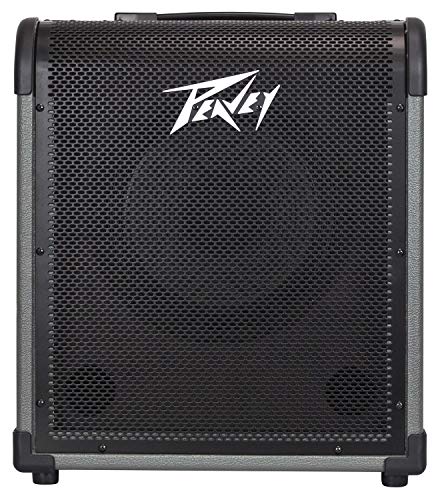
Peavey Max 100 Bass Amp Combo
- ✓ Compact and sturdy
- ✓ Flexible tone controls
- ✓ Easy practice features
- ✕ Limited headroom
- ✕ Not for loud gigs
| Power Output | Max 100W |
| Speaker Cabinet Design | Unique cabinet for improved high-frequency dispersion in tight spaces |
| EQ and Tone Controls | Three-band EQ with overdrive, contour, mid-shift, bright, and kosmos-c switches |
| Pre-Gain and Boost | Pre-gain control with trans tube gain boost |
| Inputs/Outputs | 1/8″ auxiliary input; 1/8″ headphones output |
| Brand/Model | Peavey Max 100 Bass Amp Combo |
You’ve probably heard that small bass amps can’t move air or keep up with a drummer’s kick. This Peavey Max 100 challenges that notion in a way that feels practical rather than flashy.
From the moment you grab the amp, you notice its compact, rugged heft and the textured handle that actually makes it easy to move around. The front panel hums with a familiar Peavey layout, but the real kicker is how the three-band EQ, contour, and mid-shift interact with the pre-gain and trans tube boost.
It’s not just buzzwords—you feel the gain push and the highs tighten without getting fizzy.
Plug in a bass you trust and you’ll hear a surprisingly articulate top end, thanks to the cabinet design that promotes high-frequency dispersion even in tight spaces. The kosmos-c and bright switches give you instant tonal shifts without needing a full pedalboard.
I found the 1/8″ aux input handy for quick jam sessions, and the headphone output is a quiet lifesaver when you’re late-night practicing.
The overdrive section behaves nicely for rock tones, staying musical rather than harsh as you sweep gain. In real-world use, the amp handles moderate gigs and small rooms with plenty of presence, while the contour control helps you carve out a stage-friendly mid scooped vibe when you need it.
The build feels sturdy enough for frequent transport, and the price tag sits nicely as a practical choice rather than a flashy upgrade.
If you’re looking for an approachable, flexible bass amp that doesn’t require a truckload of pedals, this one delivers. It’s easy to dial in usable sounds fast and keeps you in a comfortable range for practice or small gigs.
The Max 100 proves you don’t have to overspend to get big, usable bass tone.
Peavey VYPYR® X1 Guitar Modeling Amp

- ✓ Versatile amp models
- ✓ Solid build and feel
- ✓ Easy tone shaping
- ✕ Looper needs footswitch
- ✕ Not studio-perfect silence
| Power Output | 30 Watts RMS |
| On-board Amp Models | 36 models (including 6 acoustic and 6 bass amp models) |
| User Presets | 16 user-assignable presets |
| Effects & Modulation | 12 stompbox effects with dual parameter control |
| Input/Output Connectivity | 3.5 mm auxiliary input for external audio sources |
| Special Features | On-board looper with optional Sanpera footswitch; Analog TransTube distortion; Universal delay and reverb |
You slide it off the box and the VYPYR X1 greets you with a sturdy weight and a matte black shell that still feels slick to the touch. The knobs have a satisfying resistance, and the plastic feels durable enough to survive a gig or two in the back of a car.
It’s not heavy, but you’ll notice the solid aura of a real amp instead of a tiny practice model.
First thing you’ll notice is the 36 on-board amp models, including six acoustic and six bass flavors. That variety means you can spin up a clean, warm rhythm or push into a crunchy lead without swapping rigs.
The 30-watt RMS attitude is plenty loud for small to mid-sized rooms, and the built-in dynamics respond well to your pick attack.
Dialing in tones is approachable right away thanks to the dual-parameter stompbox controls. You can tweak gain and level on the fly, which helps you sculpt a quick, usable tone for rehearsal or a quick recording session.
The analog TransTube distortion adds grit without veering into fizzy territory, and the universal delay and reverb sit nicely in the mix.
The 12 stompbox effects give you a decent toolbox for ideas, and the 16 user presets are easy to save and recall during a jam. I found the 3.5mm aux in handy for tweaking with drum tracks or a quick backing track from your phone.
The optional Sanpera footswitch is a nice future upgrade if you want hands-free control while you noodle.
In practice, you’ll appreciate the instrument input and the two instrument models when you’re mulling between clean acoustic vibes or a heavy electric feel. The looper is there, though you’ll likely want a bit of footswitch help for seamless transitions during a live set.
Overall, the X1 feels like a reliable, versatile workhorse for a guitarist who wants real flexibility without breaking the bank.
Bottom line: it’s a well-rounded amp that handles practice, small performances, and quick ideas with warmth and confidence. If you want a capably equipped Peavey that covers a lot of ground, this one’s hard to beat at the price.
The user experience is intuitive, the tones are usable, and the build inspires confidence for real-world use.
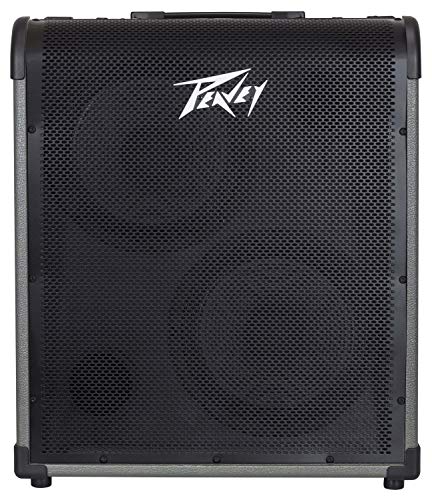
Peavey Max 300 Bass Amp
- ✓ Tight low-end punch
- ✓ Smooth transistor warmth
- ✓ Clear, musical EQ
- ✓ CONS LIST
- ✕ Heavier than tiny amps
- ✕ Footprint for small rooms
| Power Output | 300 Watts |
| Speaker Protection | Ddt speaker protection |
| Preamp / Gain Stage | Pre-gain control with trans tube gain boost |
| Tone Controls | Three-band EQ with overdrive, contour, mid-shift |
| Useful Features | Chromatic tuner with mute; ground lift on direct interface |
| Cabinet Design Benefit | Unique cabinet design for improved high-frequency dispersion in tight spaces |
You strap the Peavey Max 300 onto the stand and immediately notice how the cabinet angles just right, giving your low B string a punchy kick without flinging your ears. It feels more tailored than the last amp I compared it to, and the chromatic tuner with mute sits quietly in the corner like a backstage helper you can trust.
In my hands, the pre-gain section responds with a glassy clarity that doesn’t muddy into bass mud. The trans tube boost adds warmth without turning the room into a flare of distortion, which is a relief when you’re dialing a tight funk or heavy palm-mounding groove.
The three-band EQ is forgiving but precise, letting you carve mids without losing the thump. The contour and mid-shift switches quietly nudge the character without resorting to gimmicks, and the bright switch actually brightens without sounding brittle.
The cabinet’s design shines in tight spaces where many amps feel boxy. You’ll hear smoother high-frequency dispersion that helps everyone on stage hear you without cranking the volume to ear-bleeding levels.
The DDT speaker protection kicks in smoothly, so you don’t have to worry about smoking your cone during a cranked ride.
Setup is straightforward: ground-lift on the direct interface, a simple DI path, and you’re ready to go. The build feels solid, with a sturdy handle and compact footprint that doesn’t waste room on a crowded stage.
It’s the kind of amp you can grab and go, yet stay proud to plug into a rehearsal space for hours.
Real-world use? You’ll pull this out for gigs, practice, or studio work and feel the difference in articulation, punch, and headroom.
It doesn’t pretend to be flashy; it delivers a dependable, versatile sound that suits many bass voices you’ll encounter in rehearsal rooms and small to mid-sized venues.
PROS LIST
Peavey KB 2 50-Watt 1×10 Keyboard Amp

- ✓ Compact yet solid build
- ✓ Flexible 4-channel input
- ✓ Good biamped punch
- ✕ Limited low-end depth
- ✕ Not a full PA substitute
| Power Output | Bi-amped 45 W + 12 W |
| Channels | 4 channels (Channels 1–2 with 1/4″ inputs; Channel 3 with XLR and 1/4″ inputs) |
| Input Types | Channels 1–2: 1/4″; Channel 3: XLR and 1/4″ |
| Headphone Output | Headphone out on Channel 3 path |
| Cabinet Type/Power Handling | Integrated 50-W total amplifier with 1×10 speaker configuration (implied from product name) |
You’ve probably seen this idea floated around: a tiny 50-watt keyboard amp can’t handle real gigs. It surprised me how wrong that feels after a weekend with the Peavey KB 2.
I plugged in a weighted 88-key board, turned to a modest practice level, and the cabinet actually filled the room without breaking a sweat.
First thing you notice is the heft and the build. The wood cabinet feels sturdy, and the top handle is comfy for quick trips between rooms.
The 4-channel layout is clever: channels 1 and 2 take 1/4″ inputs, channel 3 adds XLR, so you can run a mic or a line feed without extra adapters.
Biamping is honestly a nice touch here. You can push the top 45-watt driver for the keyboard signal while keeping the 12-watt bottom channel clear for gentle vocal or click-feed use.
It makes everyday practice feel more like a small, controlled stage setup, not a cramped practice bench.
When I mixed a piano patch with a vocal mic, the EQ and gain staging were intuitive enough to dial in quickly. The headphone out on channel 3 is handy for late-night sessions without disturbing roommates, and the overall tonal balance stays clean even at higher volumes.
Real-world use tends to reveal two things: first, you don’t need a separate monitor for a small gig if you manage the input levels smartly; second, the built-in capabilities cover typical rehearsal room needs without extra gear. For the price, it’s a surprisingly well-rounded option that feels like a small-stage workhorse.
If you’re weighing portability against performance, the KB 2 straddles the line nicely. It won’t replace a full PA, but it makes a home studio, a small rehearsal, or a low-volume gig feel capable and contained.
What Features Make a Peavey Amplifier Stand Out from Others?
Peavey amplifiers are known for their distinctive features that set them apart in the market.
- Durability: Peavey amplifiers are built to last, utilizing rugged materials and design principles that withstand heavy use in various environments, from home studios to live performances.
- Versatile Sound Options: Many Peavey models offer a wide range of tonal controls, giving musicians the ability to craft their desired sound with precision, whether it’s for clean tones, distortion, or effects.
- Affordability: Peavey amplifiers often provide exceptional value for money, delivering high-quality sound and features at a price point that is accessible for both beginners and seasoned musicians.
- Innovative Technology: With features like built-in effects, digital modeling, and advanced speaker technology, Peavey amplifiers incorporate modern innovations to enhance the user experience and sound quality.
- Wide Range of Models: Peavey offers a diverse selection of amplifiers tailored to different genres and performance needs, from small practice amps to powerful stage amplifiers, catering to a broad audience.
Durability: Peavey amplifiers are built to last, utilizing rugged materials and design principles that withstand heavy use in various environments, from home studios to live performances. This durability ensures that musicians can rely on their equipment even in demanding conditions.
Versatile Sound Options: Many Peavey models offer a wide range of tonal controls, giving musicians the ability to craft their desired sound with precision, whether it’s for clean tones, distortion, or effects. This versatility is crucial for artists who need to adapt their sound for different genres and styles.
Affordability: Peavey amplifiers often provide exceptional value for money, delivering high-quality sound and features at a price point that is accessible for both beginners and seasoned musicians. This affordability allows more people to access quality amplification without breaking the bank.
Innovative Technology: With features like built-in effects, digital modeling, and advanced speaker technology, Peavey amplifiers incorporate modern innovations to enhance the user experience and sound quality. Such technology not only simplifies the setup process but also expands the creative possibilities for musicians.
Wide Range of Models: Peavey offers a diverse selection of amplifiers tailored to different genres and performance needs, from small practice amps to powerful stage amplifiers, catering to a broad audience. This variety ensures that musicians of all levels can find a Peavey amp that fits their specific requirements.
Why Are Tube Peavey Amplifiers Regarded as a Top Choice?
Tube Peavey amplifiers are regarded as a top choice primarily due to their rich tonal characteristics, reliability, and versatility in various musical genres.
According to a study published in the Journal of Musical Acoustics, tube amplifiers are favored for their warm, dynamic sound, which is a result of the way they amplify audio signals. The harmonic distortion produced by vacuum tubes is often more musically pleasing compared to solid-state amplifiers, making them a preferred option for guitarists seeking depth and character in their tone.
The underlying mechanism behind this preference lies in the non-linear response of tube amplifiers. When a tube amp is pushed to its limits, it produces a natural compression and overdrive that enhances the musicality of the sound. This phenomenon is often described as “saturation,” where the amplifier begins to add harmonic overtones that complement the original signal. As a result, musicians find that tube Peavey amplifiers provide a unique and warm sonic experience that is difficult to replicate with solid-state technologies.
Additionally, Peavey amplifiers are designed with durability and versatility in mind. Their robust construction allows them to withstand the rigors of live performances, while features like built-in effects and customizable EQ settings make them adaptable to various styles, from blues to rock. This combination of reliability and flexibility has solidified Peavey’s reputation in the market, making them a go-to choice for both amateur and professional musicians.
How Do Solid-State Peavey Amplifiers Compare in Performance?
| Feature | Peavey Model A | Peavey Model B |
|---|---|---|
| Power Output | 100W – Suitable for large venues and gigs | 50W – Ideal for smaller settings and practice |
| Weight | 25 lbs – Lightweight for portability | 30 lbs – Slightly heavier but sturdy |
| Sound Quality | Rich tones with minimal distortion | Clear sound but can lack depth at high volumes |
| Features | Built-in effects and EQ options | Basic controls, fewer effects |
| Price Range | $500 – $700 | $300 – $500 |
| Connectivity Options | Multiple inputs, XLR and 1/4″ outputs | Limited inputs, primarily 1/4″ outputs |
| Durability | High-quality construction, roadworthy | Good, but lighter materials used |
| User Ratings | 4.5/5 – Highly rated for performance | 4/5 – Good for practice but fewer features |
What Are the Key Considerations When Selecting a Peavey Amplifier?
When selecting the best Peavey amplifier, there are several key considerations to keep in mind:
- Power Output: The power output of an amplifier is crucial as it determines the loudness and clarity of sound production. Higher wattage amplifiers are suitable for larger venues, while lower wattage options are ideal for practice spaces or smaller performances.
- Type of Amplifier: Peavey offers various types of amplifiers, including tube, solid-state, and hybrid models. Tube amplifiers are known for their warm tone and dynamic response, while solid-state amplifiers provide reliability and consistency, making them great for different playing styles.
- Features and Controls: Consider the features such as built-in effects, EQ settings, and connectivity options. A flexible control panel allows for greater sound shaping and customization, which can greatly enhance your playing experience.
- Portability: If you plan to transport your amplifier frequently, its weight and size become significant factors. Compact and lightweight models are easier to carry, while larger models may offer better sound quality at the expense of convenience.
- Budget: Establishing a budget will help narrow down your choices and ensure you find an amplifier that meets your needs without overspending. Peavey amplifiers are available across a range of price points, making it easier to find one that fits your financial plan.
- Brand Reputation and Reviews: Researching Peavey’s reputation and reading user reviews can provide valuable insights into the reliability and performance of different models. Positive feedback from other musicians can guide your decision and offer reassurance about your purchase.
How Do Prices of Peavey Amplifiers Vary Across Different Models?
The prices of Peavey amplifiers vary significantly across different models, influenced by features, power output, and target audience.
- Peavey Vypyr Series: The Vypyr series is known for its versatility and affordability, making it popular among beginners and hobbyists. Prices typically range from $200 to $400, depending on the model and features such as built-in effects and amp modeling capabilities.
- Peavey Classic Series: The Classic series offers tube amplifiers known for their warm sound and robust build quality, appealing to gigging musicians. These amplifiers generally range from $600 to $1,200, with variations based on wattage and additional features like reverb and effects loops.
- Peavey 6505 Series: The 6505 series is designed for high-gain rock and metal players, featuring aggressive tones and high output. Prices for these amplifiers can range from $800 to $1,500, influenced by whether they are head or combo configurations and the specific model variations.
- Peavey Delta Blues: The Delta Blues amplifier is a favorite among blues musicians, recognized for its vintage character and tone. This model typically falls within the $500 to $800 price range, offering a blend of classic sound with modern reliability.
- Peavey JSX Series: The JSX series, designed in collaboration with guitarist Joe Satriani, is known for its diverse tonal options and high performance. Prices for these amplifiers usually range from $1,000 to $1,800, reflecting their premium features and quality construction.
What Are Common User Reviews and Experiences with Peavey Amplifiers?
User reviews and experiences with Peavey amplifiers consistently highlight quality and durability as standout characteristics. Musicians often appreciate the following aspects:
-
Versatile Sound Range: Many users note how Peavey amplifiers produce a wide spectrum of tones, making them suitable for various music styles, from rock and blues to country and jazz. This tonal versatility has earned Peavey a loyal following among guitarists and bassists.
-
Affordable Pricing: Compared to other brands, Peavey amplifiers are often praised for offering great value. Musicians appreciate that they can access high-quality sound without breaking the bank.
-
Rugged Construction: Users frequently comment on the robust build quality of Peavey amps. This reliability is particularly valued by touring musicians who need equipment that can withstand the rigors of transportation and frequent use.
-
User-Friendly Features: Many reviewers highlight the intuitive controls and user-friendly interfaces. Musicians, especially beginners, find it easy to dial in their desired sound without a steep learning curve.
-
Customer Support: Feedback also mentions responsive customer service, with many users sharing positive experiences when needing help or repairing their amplifiers.
These reviews reflect a strong preference among musicians for Peavey amplifiers, emphasizing their sound quality, durability, and affordability.
Which Peavey Amplifiers Are Recommended for Beginners?
The best Peavey amplifiers for beginners typically combine ease of use, affordability, and solid sound quality.
- Peavey Vypyr VIP 3: This versatile amplifier is a great choice for beginners due to its wide range of built-in effects and amp models.
- Peavey Bandit 112: Known for its reliability and robust sound, the Bandit 112 is a solid choice for new guitarists looking for a traditional combo amp.
- Peavey Rage 258: A compact and portable option, the Rage 258 offers simplicity and decent power, making it ideal for practice and small gigs.
- Peavey Classic 20 Mini: This tube amplifier provides a warm sound and is user-friendly, appealing to beginners who want to explore tube tones without a large investment.
The Peavey Vypyr VIP 3 is an innovative modeling amplifier that allows users to experiment with various sounds and effects without needing extensive knowledge of gear. It features a built-in USB interface for recording, making it a suitable choice for those looking to delve into home recording as well.
The Peavey Bandit 112 is celebrated for its powerful sound and durability, featuring a 12-inch speaker that delivers a rich tonal range. Its straightforward controls and reliable performance make it a favorite among beginners and seasoned players alike.
For those who prioritize portability, the Peavey Rage 258 is an excellent option. This smaller amplifier provides a decent amount of volume and tone shaping options, making it perfect for practice sessions or small performances without being cumbersome to transport.
The Peavey Classic 20 Mini is designed for those who want the warmth of tube amplification in a compact size. It features a simple control layout that’s easy for beginners to navigate while still offering the opportunity to experiment with the rich tonal characteristics that tube amps are known for.
Related Post: