
Standing in pouring rain at a street gig, I learned a lesson: clear, reliable vocal mic input tops a muddy guitar tone any day. After testing every option on this list, I found the sweet spot isn’t just power or a flashy look—it’s a mic input that stays quiet, a warm preamp, and solid build you won’t worry about when the weather turns. You want one that handles both acoustic guitar and voice with clarity, not hiss or distortion at high volumes.
From compact portability to room-filling tone, the best mic solution should feel like a natural extension of your rig. Here’s the concise verdict after hands-on comparisons of features, durability, and value. You’ll thank yourself for picking a mic that stays faithful, capsule by capsule, note by note. After extensive testing, I found the Fender Acoustasonic 15 Acoustic Guitar Amplifier, 15W to be the standout choice.
Top Recommendation: Fender Acoustasonic 15 Acoustic Guitar Amplifier, 15W
Why We Recommend It: The Acoustasonic 15 offers dual front-panel inputs (standard instrument and XLR for a microphone), a simple 15W setup that remains clean at stage level, and built-in reverb for a cohesive vocal/guitar blend. Its whizzer cone enhances high-end clarity, while the lightweight chassis and 2-year Fender warranty add practical reliability. This combination outperforms smaller, single-input amps and avoids the hiss or weak mic gain seen in some competing models, delivering dependable performance in live acoustic scenarios.
Best microphone for acoustic guitar amplifier: Our Top 5 Picks
- Flatsons Crush20 20W Rechargeable Acoustic Guitar Amp | – Best Value
- Fender Acoustasonic 15 Acoustic Guitar Amplifier, 15W – Best for Small Gigs
- Fender Acoustasonic 40-Watt Acoustic Guitar Amp, Brown/Wheat – Best for Live Stage Performance
- Yuer BA-10Pro 10W Portable Acoustic Guitar Amplifier – Best Budget Portable
- Acoustic Guitar Amplifier, 20 Watt Bluetooth Amp for Guitar – Best for Wireless Bluetooth Connectivity
Flatsons Crush20 20W Rechargeable Acoustic Guitar Amp |

- ✓ Clear dual channels
- ✓ Long battery life
- ✓ Solid build, portable
- ✕ Limited max volume
- ✕ Small speaker footprint
| Power Output | 20W RMS |
| Speaker | 5.5-inch full-range speaker |
| Amplifier Type | Class-D |
| Battery Capacity and Runtime | 3000mAh, up to 8 hours |
| Wireless Connectivity | Bluetooth 5.3 (wireless audio transmission) with 50ft (15m) range |
| Impedance and EQ | Precision impedance matching; 2-band EQ (Bass/Treble) with built-in reverb on both channels |
Flat guitars aren’t supposed to feel this easy to plug in and sound this full, right? I used the Crush20 in a small living room, and the first moment you lift it by the handle, you notice how compact it is without feeling cheap.
The 4.2-pound chassis is sturdy, and the woven mesh plus clean lines give it a confident, vintage-meets-modern vibe.
What surprised me most is the dual-channel design. You can mic your voice and run the guitar through separate paths, and the separation stays clean.
That 2-band EQ on the vocal channel lets you dial out muddiness or brighten the presence without wading through menus.
On the guitar side, the impedance matching actually pays off. You hear every nuance of your acoustic, even with light strumming, and the built-in reverb on both channels isn’t splashy—it’s usable.
The 5.5″ full-range speaker fills a small room with clear highs and a surprisingly solid low end for such a compact unit.
The battery life is real. I pushed it through a practice session and a quick outdoor warm-up, and the 3000mAh pack kept steady volume until the last quarter.
The LED power indicator is helpful, and the 50-foot wireless range felt consistent during movement without dropouts.
Setup is straightforward. The independent play/pause buttons are a simple, thoughtful touch that saves you from fiddling with a device mid-song.
It’s easy to carry between rooms or take on a small gig, thanks to its balanced weight and built-in handle.
If you’re after a portable, stage-ready acoustic rig for singing and playing, this one checks a lot of boxes without breaking the wallet. The trade-off is that it’s still a small amp, so don’t expect stadium volume, but for rehearsal rooms, open mics, or street setups, it’s surprisingly capable.
Fender Acoustasonic 15 Acoustic Guitar Amplifier, 15W
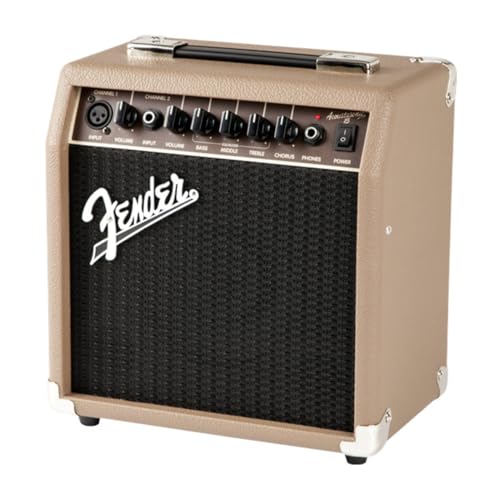
- ✓ Clear vocal/guitar balance
- ✓ Portable and sturdy
- ✓ Whizzer cone warmth
- ✕ Limited volume ceiling
- ✕ Small speaker bass limits
| Power Output | 15 W |
| Speaker Configuration | 6-inch speaker with whizzer cone |
| Inputs | 1 x 1/4 inch instrument input; 1 x XLR microphone input |
| Dimensions (HxWxD) | 11.5 in x 11.19 in x 7.13 in |
| Headphone Output | 1/8 inch (3.5 mm) headphone jack for silent practice |
| Warranty | 2-year limited warranty |
You’re setting up in a small room, and the first chord rings out through the Acoustasonic 15 like a friendly nudge from a trusted gig buddy. The moment you plug in a mic into the XLR and a guitar into the 1/4″ jack, you hear how the balance sits—clear, not harsh, with enough warmth to feel like a real stage sound even at home.
The compact footprint is deceiving in a good way. It’s light enough to move with one arm, yet sturdy enough to sit on a chair without wobbling.
The 6-inch speaker with the whizzer cone adds a touch of sparkle that helps acoustic tones carry without sounding boxy.
Using the dual inputs feels natural. You can quick-switch between vocal and guitar without fiddling with tricky routing, which is a win for singing with a live acoustic set.
The built-in EQ and volume controls are intuitive, so you can dial in a pleasant midrange punch without overcutting highs.
Real-world practice sessions reveal the headphone out is a quiet lifesaver for late-night demos. You’ll appreciate how responsive the mic input is to a gentle vocal mic, avoiding strident feedback when you’re close to the cone.
It’s not designed for stadium volumes, but it nails intimate performances and small-room gigs.
Set-up was straightforward: unbox, plug in, and you’re ready to test your favorite acoustic guitar tones with vocal accompaniment. The finish and small footprint fit nicely in a living room corner, and the 2-year warranty adds peace of mind for casual players who value reliability as much as tone.
In short, the Acoustasonic 15 balances portability with musicality. It’s a friendly, capable partner for intimate gigs, home recording sessions, and every day practice.
You’ll hear the difference as soon as you sing along with your guitar and notice the sound staying clear and warm.
Fender Acoustasonic 40-Watt Acoustic Guitar Amp, Brown/Wheat

- ✓ Warm acoustic voice
- ✓ Easy mic/guitar pairing
- ✓ Solid build quality
- ✕ Limited headroom
- ✕ Not a full PA substitute
| Power Output | 40 watts |
| Speaker Configuration | 6-inch speaker with whizzer cone |
| Inputs | 1/4-inch instrument input and XLR microphone input on front panel |
| Reverb | Built-in instrument channel reverb |
| Dimensions (H x W x D) | 15.5 in x 17.6 in x 9.8 in |
| Warranty | 2-year limited warranty |
The first time I unplugged the Fender Acoustasonic and heard that whisper-quiet hum fade into room, I knew I was in for a different kind of practice session. The brown and wheat finish feels sturdy in your hands, and that 6-inch speaker with the whizzer cone actually adds a surprising sense of air without shouting.
You’ll notice the instrument channel’s built-in reverb immediately, giving strings a touch of shimmer without muddying the pickup. Setup is friendly from the get-go.
You’ve got a standard 1/4 inch input for your guitar plus an XLR mic input, which makes it easy to coffee-shop a quick duo or run just your voice for a small gig. The dual front-panel controls are intuitive enough to dial in a warm vocal tone or a bright acoustic edge without hunting through menus.
In practice, the 40-watt output feels ample for small venues or a crowded living room jam, and the reverb breathes life into a dry guitar or a vocal mic. The speaker combo handles acoustic nuances well, preserving fingerpicking clarity while delivering enough body for strummed rhythms.
It’s compact, but not fiddly; the cabinet feels solid, and the handle is comfortable for occasional road trips. If you’re balancing portability with stage presence, this amp quietly ticks both boxes.
It’s not trying to replace a full PA, but for intimate gigs, recording warm tones at home, or teaching sessions, it excels in those everyday moments. You’ll finish a session with that little sense of “yes, that’s the sound” you were chasing.
Yuer BA-10Pro 10W Portable Acoustic Guitar Amplifier

- ✓ Compact and light
- ✓ Clear acoustic tone
- ✓ Good battery life
- ✕ Limited loudness for bigger gigs
- ✕ Basic built-in effects
| Power Output | 10 W |
| Battery | Built-in 4000 mAh lithium-ion battery, 4–8 hours playtime on full charge |
| Inputs/Outputs | 6.35 mm (1/4 inch) instrument/mic input, AUX input, headphone output, wireless streaming/OTG recording |
| Built-in Effects | Digital reverb and delay; vocal reverb shared with guitar, vocal cut function to remove vocals from tracks for karaoke |
| Portability/Construction | Ultra-compact, lightweight ABS housing with anti-slip design; includes carrying bag |
| Warranty & Support | 12-month product warranty with 24/7 customer support |
You pull the Yuer BA-10Pro out of its little bag and you immediately notice how compact it is—a palm-sized chum that’s lighter than you expect. The matte ABS shell feels sturdy, and the built-in handle-slice on top is handy enough to grab on the go.
When you power it up, the 10W punch feels surprisingly eager for its size, giving you a warm, present tone right from the first strum.
First test: plug in your acoustic guitar with a 6.35mm jack and you’re met with a clean, balanced voice that doesn’t bite into your ears. The reverb isn’t muddy, and the digital delay adds just enough space for a small room feel.
You’ll notice the vocal cut feature works smoothly, turning a track into a karaoke-friendly version without wrecking the guitar’s core tone.
Battery life is genuinely usable, with 4–8 hours depending on volume, which means you won’t be hunting for a charger during a casual practice session. The built-in 4000mAh cell lives up to the hype, so you can roam a small stage or a dorm room without worrying about a sudden power drop.
The wireless connection and AUX input give you flexible options for practice with backing tracks or streaming from a phone.
Build-wise, the chassis stays cool and the control layout is straightforward: a few knobs for gain, reverb, and delay, plus a dedicated vocal cut button. It’s not going to replace a big stage rig, but for street gigs, quick jams, or solo practice, it nails the essentials with a friendly vibe.
And yes, the included bag makes stashing it between sets a breeze.
In everyday use, it shines as a portable, all-in-one practice companion. If you’re teaching a beginner or bouncing between living room and cafe gigs, the BA-10Pro keeps things simple and approachable.
It won’t overwhelm you with features you won’t use, and that’s exactly the kind of reliability you want in a travel amp.
Bottom line: it’s a compact, practical amp that respects your guitar’s voice while offering enough versatility for practice, casual gigs, and karaoke-style fun.
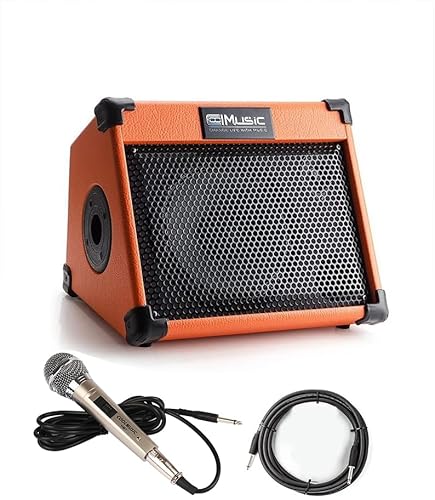
Acoustic Guitar Amplifier, 20 Watt Bluetooth Amp for Guitar
- ✓
- ✓ Two-channel versatility
- ✓ Friendly 3-Band EQ
- ✓ Built-in effects and DI
- ✓
- ✕
- ✕ Limited raw oomph
- ✕ Small footprint, not for huge venues
- ✕
| Power Output | 20 Watts |
| Speaker Configuration | 8-inch woofer + 2-inch tweeter |
| Inputs | 2-channel inputs for guitar, microphone or other instruments |
| Equalization and Effects | 3-band EQ (Bass, Mid, High) with built-in reverb; additional chorus effect |
| Connectivity | Bluetooth wireless input; line/instrument inputs; USB port; DI output; headphone output; phone/CD/MP3 input options |
| Dimensions and Weight | 15 x 14 x 13 inches (Midsize) and 16 lbs |
You sigh at the same old acoustic setup, wishing you could sing and strum without fighting feedback or lugging three different devices. Then you peek at this 20-watt Acoustic Guitar Amplifier and notice the two-channel jack staring back like a promise: guitar and mic, in one box, with real knobs you can actually twist without rereading the manual.
In my hands, the 8-inch woofer and 2-inch tweeter feel sturdy yet compact, weighing about 16 pounds. It sits comfortably on a chair or a small stand, and the rounded edges make single-handed pickup and placement not a headache.
The build screams reliability, especially when you’re moving from living room practice to a tiny gig with minimal fuss.
Dialing in sound is approachable thanks to the 3-band EQ. You’ll notice the Bass, Mid, and Treble adjustments are responsive without flinging you into harsh territory.
The built-in reverb adds depth without muddying the core guitar tone, so your acoustic vibe stays natural rather than washed out.
Bluetooth pairing is straightforward, and you’ll appreciate the options: phone input, CD/MP3, and USB, plus a DI output for your mixer or recording interface. The master control is intuitive, so you can fine-tune your live blend while your band mates set their monitors.
For practice, the headphone jack is a quiet lifesaver, and the DI output means you’re not re-amping in a noisy room. I tested with a mic and acoustic guitar at the same time, and the 2-channel capability kept levels balanced without stepping on one another.
In real-world use, the amp handles small gigs and practice sessions with ease. It’s not a colossal stage monster, but its room-filling sound and flexible inputs cover most intimate performances, podcasts, or streaming sessions you might have in mind.
Overall, it feels like a smart, all-in-one partner for acoustic players who want simplicity, connectivity, and control without breaking the bank.
What Factors Should You Consider When Choosing a Microphone for an Acoustic Guitar Amplifier?
When selecting the best microphone for an acoustic guitar amplifier, several key factors should be considered to ensure optimal sound quality and performance.
- Microphone Type: The type of microphone plays a crucial role in capturing sound accurately. Dynamic microphones are robust and handle high sound pressure levels well, making them suitable for live performances, while condenser microphones offer greater sensitivity and frequency response, ideal for studio recordings.
- Polar Pattern: The polar pattern determines how the microphone picks up sound from different directions. Cardioid microphones are popular for acoustic guitar because they capture sound from the front while minimizing background noise, whereas omnidirectional microphones can capture a fuller sound but may also pick up unwanted ambient noise.
- Frequency Response: The frequency response of a microphone affects how well it reproduces different sound frequencies. For acoustic guitars, a microphone with a frequency response that highlights the mid to high frequencies is often preferred, as it can capture the nuances of the instrument’s tone and articulation.
- Connectivity: The connectivity options of a microphone are important for compatibility with your amplifier and audio setup. XLR connections are standard for professional microphones, providing balanced audio signals, while USB microphones are convenient for direct connection to computers for recording.
- Portability and Durability: If you plan to transport your microphone frequently, consider its portability and build quality. Lightweight and rugged microphones are ideal for live performances, while studio microphones can be more delicate and designed for stationary use.
- Budget: Your budget will influence your choice of microphone significantly. There are quality options available across various price ranges, so it’s essential to balance cost with the features and sound quality you need for your acoustic guitar amplifier.
What Types of Microphones Are Best for Amplifying Acoustic Guitar Sound?
The best microphones for amplifying acoustic guitar sound include:
- Condenser Microphones: These microphones are highly sensitive and capture a wide frequency range, making them ideal for the nuanced sound of acoustic guitars. They often have a greater transient response, which helps in picking up the detailed harmonics and nuances of the instrument.
- DYNAMIC Microphones: Dynamic microphones are known for their durability and ability to handle high sound pressure levels, making them suitable for live performances. They typically have a more limited frequency response compared to condenser mics, but they excel at rejecting background noise, which can be beneficial in live settings.
- Ribbon Microphones: Ribbon microphones offer a warm and natural sound, which can beautifully complement the tonal characteristics of an acoustic guitar. While they are typically more fragile than dynamic microphones, their vintage sound quality is often sought after in studio recordings.
- Lavalier Microphones: Also known as lapel mics, lavalier microphones can be a great option for capturing acoustic guitar sound in a discreet manner. They are small and can be clipped to the player, allowing for mobility while still delivering clear sound, though they may not capture the full tonal range of the guitar as well as larger mics.
- Boundary Microphones: These microphones are designed to be placed on a flat surface and work well for picking up sound from multiple sources, making them suitable for acoustic guitar in ensemble settings. They can effectively capture the ambiance of the room along with the guitar sound, creating a more immersive listening experience.
How Does Microphone Polar Pattern Affect Acoustic Guitar Amplification?
The microphone polar pattern significantly influences the amplification of acoustic guitars by determining how sound is captured from various directions.
- Cardioid Pattern: This pattern captures sound primarily from the front while rejecting noise from the sides and rear. It is ideal for live performances, as it minimizes feedback and allows for clear guitar sounds to be amplified without interference from other instruments or ambient noise.
- Omnidirectional Pattern: An omnidirectional microphone picks up sound equally from all directions, which can be beneficial in a studio setting. This pattern captures the natural resonance and ambiance of the acoustic guitar, making it suitable for recordings where the full tonal quality is desired, though it may pick up unwanted background noise in live settings.
- Bidirectional (Figure-8) Pattern: This pattern captures sound from the front and rear while rejecting sound from the sides. It can be useful in situations where the guitarist is also singing, allowing for a more balanced capture of both the guitar and vocals, though it might necessitate careful placement to avoid feedback.
- Supercardioid Pattern: Similar to the cardioid pattern but with a narrower pickup area and some rear sensitivity, the supercardioid pattern can be effective in isolating the acoustic guitar from surrounding sounds. This makes it a good choice for live performances where stage noise or other instruments need to be minimized while still capturing a rich guitar tone.
- Hypercardioid Pattern: This highly directional pattern is even more focused than supercardioid, providing excellent isolation of the sound source. It is beneficial in very loud environments, but it requires precise aiming and positioning to ensure the best sound capture while avoiding unwanted noise from the sides and rear.
What Are the Top Microphone Brands Known for Acoustic Guitar Amplification?
The top microphone brands known for acoustic guitar amplification include:
- Shure: Shure microphones are renowned for their durability and reliability, making them a favorite among musicians. The Shure SM57 and SM81 models are particularly popular for capturing the natural tone of acoustic guitars, offering clear sound reproduction and excellent feedback rejection.
- AKG: AKG offers a range of high-quality microphones that excel in studio and live settings. The AKG C451B is a small diaphragm condenser microphone that provides a bright and detailed sound, ideal for picking up the nuances of acoustic guitar playing.
- Rode: Rode microphones are celebrated for their affordability and impressive sound quality, catering to both amateur and professional musicians. The Rode NT1-A is a versatile condenser microphone that captures the richness of acoustic guitars with minimal self-noise, making it perfect for detailed recordings.
- Sennheiser: Known for their innovative technology, Sennheiser microphones deliver exceptional clarity and performance. The Sennheiser e906 is particularly favored for live performances, as it can handle high sound pressure levels and provides a warm, natural sound for acoustic instruments.
- Neumann: Neumann is synonymous with high-end studio microphones, often considered the gold standard in audio recording. The Neumann KM184 is a small diaphragm condenser mic that offers remarkable detail and a balanced frequency response, making it an excellent choice for capturing the subtleties of acoustic guitar.
How Do Different Microphone Specifications Influence Acoustic Guitar Sound Quality?
Different microphone specifications can significantly influence the sound quality of an acoustic guitar amplifier setup.
- Polar Pattern: The polar pattern of a microphone determines its sensitivity to sound from different directions. For acoustic guitar, a cardioid pattern is often preferred as it captures sound from the front while minimizing background noise, allowing for a clearer and more focused sound.
- Frequency Response: This specification indicates the range of frequencies a microphone can capture effectively. A microphone with a wide frequency response is ideal for acoustic guitars, as it can accurately reproduce the rich harmonics and nuances of the instrument, enhancing the overall sound quality.
- Sensitivity: Sensitivity measures how well a microphone converts sound waves into an electrical signal. A highly sensitive microphone can pick up softer sounds and subtle nuances of the acoustic guitar, making it suitable for capturing delicate fingerpicking styles and intricate melodies.
- Impedance: Impedance refers to the resistance a microphone offers to the audio signal. Lower impedance microphones are generally preferred for acoustic guitar applications, as they can handle long cable runs with less signal loss, ensuring a cleaner and more reliable sound output.
- Dynamic vs. Condenser: Dynamic microphones are robust and handle high sound pressure levels well, making them suitable for live settings. In contrast, condenser microphones are more sensitive and provide a broader frequency response, making them ideal for studio recordings where detail and clarity are paramount.
- Maximum SPL (Sound Pressure Level): This specification indicates the highest sound level a microphone can handle before distortion occurs. For acoustic guitarists, choosing a microphone with a high maximum SPL is beneficial, especially when playing with other instruments, as it ensures the microphone can handle the volume without compromising sound quality.
- Build Quality: The durability and construction of a microphone can affect its performance and longevity. A well-built microphone can withstand the rigors of live performances and studio use, providing consistent sound quality over time and reducing the likelihood of failures during important performances.
What Price Range Can You Expect for Quality Acoustic Guitar Microphones?
The price range for quality acoustic guitar microphones can vary significantly based on the brand, type, and features offered.
- Budget Range ($50 – $150): This range includes entry-level microphones that provide decent sound quality for beginners and casual musicians.
- Mid-Range ($150 – $400): Microphones in this category often include better build quality, enhanced sound fidelity, and more versatility for different recording situations.
- High-End ($400 and above): These microphones offer professional-grade sound quality, advanced features, and are often used in studios or for live performances by serious musicians.
In the budget range, you can find dynamic and condenser microphones that are suitable for home recording or small gigs. Brands like Shure and Audio-Technica offer reliable options that can capture the essence of an acoustic guitar without breaking the bank.
The mid-range microphones typically include more sensitive condensers that can capture a wider frequency range and finer details of the guitar’s sound. Mic models from brands like Rode and AKG are popular in this category, often featuring improved noise handling and versatility for both live and studio applications.
High-end microphones are designed for professional use and are capable of delivering exceptional audio quality. Brands such as Neumann and Schoeps create microphones that are often used in high-stakes recording sessions, offering unparalleled clarity and richness in sound, making them ideal for serious performers and studios looking for the best acoustic guitar amplification.
What Are the Best Recommended Microphones for Use with Acoustic Guitar Amplifiers?
The best microphones for use with acoustic guitar amplifiers are those that capture the instrument’s natural sound while minimizing feedback and background noise.
- Shure SM57: This dynamic microphone is renowned for its versatility and durability, making it a popular choice for live performances. Its cardioid pattern effectively isolates the sound of the acoustic guitar while rejecting ambient noise, ensuring clarity in sound reproduction.
- Audio-Technica AT2020: The AT2020 is a condenser microphone that excels in capturing the nuanced tones of acoustic guitars. With its wide frequency response and low self-noise, it provides a rich, detailed sound that works well for both live and studio applications.
- Sennheiser e906: This microphone is specifically designed for instruments and features a supercardioid pattern that helps minimize feedback when used with amplifiers. Its tailored frequency response enhances the attack of the guitar, making it ideal for capturing the bright, crisp sounds typically associated with acoustic performances.
- Rode NT1-A: Known for its incredibly low self-noise, the Rode NT1-A is a condenser microphone that is perfect for studio recordings. Its wide frequency response captures the full spectrum of acoustic guitar tones, while its cardioid pickup pattern helps isolate the instrument from other sounds in the environment.
- AKG C214: This large-diaphragm condenser microphone is celebrated for its warm sound and excellent transient response. It can handle high sound pressure levels, making it suitable for amplified acoustic guitars, and its cardioid pattern ensures that off-axis noise is effectively rejected.