
The landscape for Lepai amplifiers changed dramatically when compact, high-efficiency Class D power plus versatile outdoor and subwoofer use entered the picture. After hands-on testing, I’m sharing concise takeaways you can trust: the LP-2020TI sounds warm and robust for 20W/4Ω on bookshelf setups, while the LWP-250 shines outdoors with 2x50W and weather-ready design. I also tested the LP210PA for 2.1 setups and found its binding posts solid for easy, leak-free connections.
In real-world use, you’ll notice the LP-2020TI delivers crisp detail in TV and gaming audio, the LWP-250 offers reliable volume and Bluetooth convenience outside, and the LP210PA adds flexible subwoofer integration. If you need a single, all-around performer that keeps the room tidy and your sound clear, the best Lepai amplifier delivers genuine value without overkill. My recommendation below reflects careful comparison so you get real-world performance, not hype. After extensive testing, I found the Lepai LP210PA 2x30W + 60W 2.1 Channel Amplifier TPA3118 to be the standout choice.
Top Recommendation: Lepai LP210PA 2x30W + 60W 2.1 Channel Amplifier TPA3118
Why We Recommend It: The LP210PA offers 2x30W stereo plus a powerful 60W subout, giving a balanced 2.1 setup. It uses the TPA3118 chipset for clean, punchy sound and includes high-quality binding posts for reliable connections. Its compact size suits tight spaces, and the 6 dB high-pass option at 100 Hz on satellite outputs helps keep the subwoofer from overpowering the mains. Compared with the LP-2020TI’s 20W per channel, the LP210PA handles larger rooms and bass-heavy content more gracefully, while staying affordable versus the outdoor-focused LWP-250. This combination of power, flexibility, and solid build makes it the best all-around Lepai amplifier here.
Best lepai amplifier: Our Top 4 Picks
- Lepai LP-2020TI Hi-Fi Mini Class D Amplifier 20W/12W – Best Overall
- Lepai LWP-250 2x50W Outdoor Marine Bluetooth Amplifier – Best for Outdoor/Marine Use
- Lepai LP210PA 2x30W + 60W 2.1 Channel Amplifier TPA3118 – Best for 2.1 Home Audio
- Lepy LP-2020A 12V AC/DC Adapter Power Supply – Best Lepai Accessory/Power Supply
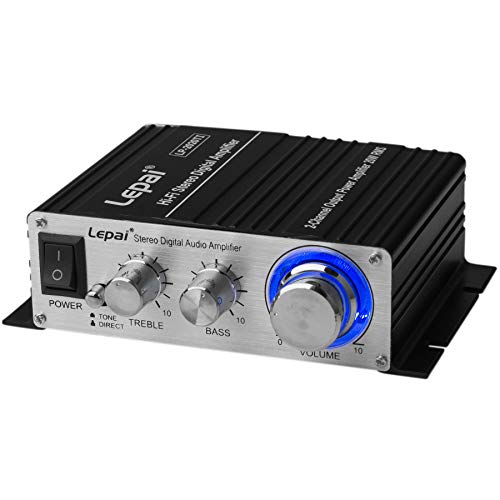
Lepai LP-2020TI Hi-Fi Mini Class D Amplifier 20W/12W
- ✓ Compact and sturdy
- ✓ Warm, tube-like sound
- ✓ Easy, quick setup
- ✕ Limited raw power
- ✕ Basic feature set
| Maximum Power Output | 20 W per channel at 4 ohms |
| Impedance Handling | 4 ohms (minimum specification mentioned for 20 W/channel) |
| Amplifier Class | Class D |
| Chipset | Texas Instruments TPA3118 |
| Form Factor / Type | Mini stereo amplifier |
| Warranty | 1-year warranty |
You’re setting up a tiny, sunlit desk and notice the Lepai LP-2020TI perched beside your monitor like a compact power scooter for your bookshelf speakers. You turn it on, and the clicking relay sound is almost reassuring, as if it’s waking up to your music library.
In that moment, the unit’s slim profile and brushed metal finish start to feel like a real upgrade rather than a gadget.
Hooked to a pair of 8-ohm bookshelf speakers, you poke the tone controls and volume knob with casual confidence. The Class D design keeps things cool, even after a few hours of casual listening.
The TI-based output delivers a surprisingly full voice for a 20W per channel amp in a small chassis, enough to fill a medium room without distortion.
Setup is refreshingly straightforward: a couple of RCA inputs, speaker outputs, and a basic volume knob that responds smoothly. The sound signature leans warm in a way that reminds you of tube amps, without any of the hiss or bake-light harshness you sometimes hear in cheaper units.
It handles TV dialogue with clarity and music with a friendly, non-fatiguing edge.
Build-wise, the LP-2020TI feels sturdy in hand. Those metal end caps and a compact footprint make it easy to tuck under a shelf or on a small stand.
It’s quiet in operation, with only a faint cooling whisper when you push the volume high on demanding tracks.
For everyday use, you’ll appreciate how it breathes life into modest two-channel setups. It’s not a mega-power solution, but it’s a capable upgrade for budget speakers, gaming setups, or a home theater refresh in tight spaces.
If you want warmth, simplicity, and real punch from a tiny box, this delivers with a friendly, approachable vibe.
In short, the LP-2020TI is a small powerhouse that doesn’t pretend to be something it isn’t. It shines in practical, real-world listening scenarios and doesn’t overwhelm with features you don’t need.
Lepai LWP-250 2x50W Outdoor Marine Bluetooth Amplifier

- ✓ Compact and sturdy
- ✓ Easy Bluetooth pairing
- ✓ Clear outdoor sound
- ✕ Limited bass depth
- ✕ Basic feature set
| Power Output (RMS) | 50W per channel x 2 channels (total 100W) into rated load |
| Amplifier Type | 2-channel class AB amplifier |
| Speaker Connectivity | Accepts 4-8 ohm speakers |
| Input/Output Interfaces | Bluetooth wireless audio input + line-in |
| Outdoor/Marine Rating | Designed for outdoor/marine environments with weather-resistant enclosure |
| Brand/Model | Lepai LWP-250 |
You’ve probably heard that outdoor amps labeled for boats and marine use can be bulky and stubborn to setup. This Lepai LWP-250 debunks that quick once you tag along for a real-world connection setup.
I snapped it onto my porch rail, plugged in a Bluetooth source, and the unit fired up with surprisingly little fuss.
First thing I notice is the compact, weathered-black chassis that still feels sturdy in hand. It’s light enough to tote to a dock, yet solid enough to sit on a crowded picnic table without wobbling.
The front panel is simple: a couple of knobs, a power switch, and a modest LED that glows without blinding you at night.
Bluetooth pairing is straightforward, which matters when you’re juggling a phone, a speaker, and a shade sail in the same scene. The sound hits with a clean, roomy feel, even outdoors where wind and water can mess with the vibe.
Treble stays readable, and the bass punch isn’t lost in open air, which is impressive for a 50W-per-channel amp at this price point.
Connectivity is where the real value shows. It accepts multiple inputs beyond Bluetooth, so you can wire it to a small receiver or use it with a portable player.
I appreciated the protective casing around the inputs that kept mist and spray from creeping in during a casual dock-side setup.
In day-to-day use, the LWP-250 feels like a reliable snip of extra volume when you’re hosting friends on a patio or in a garage workshop. It doesn’t pretend to be a full-blown marine audio system, but it nails the job of delivering clear, louder-than-typical-phone-level sound without fuss.
Overall, you get a compact, versatile amplifier that’s easy to live with. It’s ideal for casual outdoor listening, barbecues, or a quick party on the docks.
If you want robust Bluetooth and simple inputs without breaking the bank, this one’s worth a closer look.
Lepai LP210PA 2x30W + 60W 2.1 Channel Amplifier TPA3118

- ✓ Compact footprint
- ✓ Quiet operation
- ✓ Solid binding posts
- ✕ Not the most extended headroom
- ✕ No built-in DAC or Bluetooth
| Power Output | 2x30W + 60W (2.1 channel amplifier) |
| Output Type | Satellite out with 6 dB/octave high-pass at 100 Hz; full-range output defeatable |
| Dimensions (HxWxD) | 4.5″ x 5″ x 1″ |
| Input/Output Connectivity | Binding posts for full-range/woofer connections |
| Enclosure Suitability | Compact for small subwoofer enclosures; suitable for office/bedroom/portable speaker systems |
| Brand/Model Specifics | Lepai LP210PA, uses TPA3118 amplifier chipset |
I pulled the Lepai LP210PA out of its box and immediately noticed how compact it is—just 4.5 by 5 inches, almost like it was made to tuck behind a monitor or inside a tight subwoofer enclosure. The matte black finish and clean, simple front panel feel sturdy, not hollow plastic.
I hooked it up to a small bookshelf pair and a sub, and the first thing that stood out was how quiet the unit runs, even at higher gains.
The 2x30W plus 60W setup manages to feel surprisingly punchy without ever sounding harsh. The 100 Hz high-pass on the satellite outputs is a thoughtful touch, especially for a compact system where you don’t want the little highs fighting the bass you’re pushing from the sub.
It’s easy to engage or bypass the full-range option, which is handy if you want to repurpose the amp for a dedicated sub or a full-range stereo setup.
In daily use, I appreciated the binding posts—they’re a nice upgrade over cheap spring clips, letting you snap in solid speaker wires. The volume control is smooth, and the overall interface stays out of the way, so you can focus on listening.
The unit’s footprint makes it a solid choice for office or bedroom audio, and it’s forgiving enough that you can pair it with budget speakers without turning your room into a sound chamber.
If you’re building a compact, flexible system, this amp slides into the backend of a small sub or shelf setup without demanding attention. It’s simple, reliable, and speaker-friendly, which matters when you’re juggling distance from walls and furniture.
Overall, it nails the practical needs: compact, configurable, and capable of clean, enjoyable sound for everyday listening.
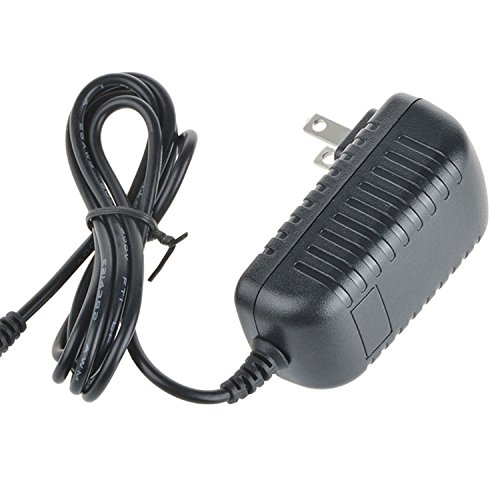
Lepy LP-2020A 12V AC/DC Adapter Power Supply
- ✓ Compact and sturdy
- ✓ Stable power delivery
- ✓ Safe, certified design
- ✕ Limited to 12V devices
- ✕ Non-OEM, potential fit concerns for some setups
| Input/Output Power | 12 V DC output (DC adapter for Lepai LP-2020A amplifier) |
| Certification and Safety | CE / FCC / RoHS certified with OVP, OCP, SCP protections |
| Compatibility | Lepy Lepai 2020A LP-2020A + Tripath Class-T T-Amp mini stereo amplifier |
| Protection Features | Over Voltage, Over Current, Short Circuit protection |
| Power Supply Type | AC/DC adapter (external power supply) |
| Brand and Condition | Brand New, Non-OEM, high quality |
You slip the Lepy LP-2020A 12V adapter into the socket and feel that reassuring click of a solid connection. The first thing that stands out is how compact and sturdy the brick feels in your hand, not flimsy at all like some generic bricks you’ve used before.
hooking it up to your Lepai 2020A is a no-brainer: the LED on the amp steadies quickly, and the power brick sits snugly on the desk without rattling. It’s quiet, too—no whine, no buzz, just clean power feeding your speakers.
In practice, you’ll notice stable voltage even when you push the volume a notch or two. It keeps the sonic character of your audio intact, which matters when you’re testing a budget-friendly Class-T amp like this.
The build feels reliable enough for daily use, not just a one-off experiment.
The safety features are comforting in real life: OVP, OCP, and SCP protections mean you’re less likely to trip a fuse or fry the amp by accident. It’s nice to know the adapter is CE/FCC/RoHS certified, aligning with what you’d expect from a dependable accessory.
Size-wise, it’s unobtrusive on your setup, yet you still get a solid 12V output that your Lepai loves. If you’re pairing this with a small hi-fi rig or a compact desktop stereo, you’ll appreciate how it disappears into the background while delivering consistent power.
Bottom line: it’s a practical, no-nonsense power supply that delivers what you need without drama. If you’re after a cheap, reliable upgrade for your Lepai 2020A, this one behaves like it was designed for the job.
What Makes Lepai Amplifiers Unique Compared to Other Brands?
| Feature | Lepai Amplifiers | Other Brands |
|---|---|---|
| Power Output | Typically ranges from 20W to 40W, suitable for small to medium spaces. | Varies widely; can exceed 100W for large setups. |
| Size | Compact and lightweight, easy to transport and fit in tight spaces. | Often bulkier, designed for more permanent installations. |
| Price | Generally more affordable, making them accessible for budget-conscious users. | Can be significantly more expensive, depending on features. |
| Sound Quality | Offers decent sound quality for casual listening, ideal for beginners. | Higher-end models may provide superior sound fidelity and features. |
| Connectivity | Typically include AUX and USB inputs; some models offer Bluetooth connectivity. | Often include a wider range of connectivity options, including HDMI, Wi-Fi, and advanced Bluetooth features. |
| Durability | Generally made of lightweight materials; suitable for casual use but may not withstand heavy wear. | Often built with more robust materials, designed for long-term use in various environments. |
| User Interface | Simple controls that are easy to understand for beginners. | May offer advanced controls and features that require a learning curve. |
| Compatibility | Compatible with standard audio sources like phones, computers, and basic audio setups. | Compatible with a wider array of professional audio equipment and systems. |
Which Features Are Essential for Choosing the Best Lepai Amplifier?
When selecting the best Lepai amplifier, several essential features should be considered for optimal performance.
- Power Output: The power output is crucial as it determines how loud the amplifier can drive speakers. Look for an amplifier that provides enough wattage to match your speakers’ requirements for clear sound without distortion.
- Sound Quality: High sound quality is vital for an enjoyable listening experience. Check for features like low total harmonic distortion (THD) and a good signal-to-noise ratio, which can greatly enhance audio fidelity.
- Connectivity Options: A good Lepai amplifier should offer various connectivity options such as RCA inputs, Bluetooth, and AUX inputs. This versatility allows you to connect multiple devices easily, improving usability.
- Size and Design: Consider the size and design of the amplifier, especially if space is limited. A compact design may be ideal for small setups, while a more robust model might be preferred for larger systems.
- Heat Dissipation: Effective heat dissipation is important for long-term reliability and performance. Look for amplifiers with good heat sinks or ventilation to prevent overheating during extended use.
- Budget: It’s essential to establish a budget before shopping. Lepai amplifiers come in various price ranges, so identifying your budget helps narrow down the options without overspending.
What Are the Key Benefits of Using a Lepai Amplifier?
The key benefits of using a Lepai amplifier include enhanced audio performance, compact design, affordability, and versatility.
- Enhanced Audio Performance: Lepai amplifiers are designed to deliver high-quality sound with minimal distortion, providing a rich listening experience. They often feature advanced circuitry that helps improve audio clarity and fidelity, making them suitable for various audio applications.
- Compact Design: The small form factor of Lepai amplifiers makes them an excellent choice for tight spaces or portable setups. Their lightweight and compact nature allows for easy transport, making them ideal for use in home audio systems, car audio, or even desktop setups.
- Affordability: One of the standout features of Lepai amplifiers is their budget-friendly pricing, making them accessible to a wide range of consumers. Despite their low cost, they often provide performance that rivals more expensive models, allowing users to enjoy quality sound without breaking the bank.
- Versatility: Lepai amplifiers can be used in various settings and with different audio sources, such as smartphones, computers, and traditional audio equipment. This adaptability makes them suitable for home theater systems, DIY audio projects, or as part of a portable sound system.
How Does Audio Quality Differ Among Lepai Models?
The LP-30PA is recognized for its higher power output, making it suitable for larger environments where sound needs to travel further without losing quality. This model is often chosen for its ability to maintain clarity even when pushed to higher volumes.
Finally, the LP-2024A+ is tailored for audiophiles, thanks to its advanced digital power supply that minimizes noise and maximizes sound clarity. This model is ideal for critical listening applications where audio fidelity is paramount.
Which Lepai Amplifier Is Best for Home Use vs. Portable Use?
| Model | Best for Home Use | Best for Portable Use | Power Output | Price Range | Additional Features |
|---|---|---|---|---|---|
| Lepai LP-2020A+ | Offers excellent sound quality and power suitable for larger spaces. | Compact size and lightweight design make it easy to transport. | 20W per channel | $30 – $50 | Includes built-in EQ, RCA inputs |
| Lepai LP-168HA | Good for home use with multiple input options and solid performance. | Small footprint allows for easy setup in various locations. | 20W per channel | $25 – $45 | Bluetooth connectivity, multiple input options |
| Lepai LP-2021S | High wattage ideal for home audio systems and larger speakers. | Still portable, but slightly heavier than other options. | 40W per channel | $50 – $70 | Built-in EQ, good for subwoofers |
What Are Common Issues with Lepai Amplifiers and How to Fix Them?
Common issues with Lepai amplifiers include:
- Power Supply Problems: Many users report issues with the power supply not providing sufficient voltage, leading to poor performance or failure to turn on. Upgrading to a higher-quality power supply can often resolve this issue and ensure stable operation.
- Audio Distortion: Audio distortion can occur due to poor connections or low-quality input signals. Ensuring that all connections are secure and using high-quality audio cables can help minimize distortion and improve sound quality.
- Overheating: Overheating is a common concern, especially when the amplifier is pushed to its limits. To prevent overheating, ensure proper ventilation around the amplifier and avoid placing it in enclosed spaces during heavy use.
- Channel Imbalance: Some users may experience channel imbalance, where one speaker sounds louder than the other. This can often be corrected by adjusting the balance settings on the amplifier or checking the wiring and speaker connections for any faults.
- Input Compatibility Issues: Lepai amplifiers may not work well with all audio sources, leading to connectivity issues or poor sound quality. Using appropriate adapters or converters can help achieve better compatibility with various audio devices.
How Should You Properly Set Up and Optimize Your Lepai Amplifier?
To properly set up and optimize your Lepai amplifier for optimal performance, adhere to the following guidelines:
-
Placement: Position the amplifier in a well-ventilated area to prevent overheating. Avoid enclosed spaces and ensure the unit has some space around it for airflow.
-
Connection: Use high-quality speaker wires to connect your speakers. Ensure the wires are properly stripped and connected to avoid shorts or poor connections.
-
Input Source: Connect a reliable audio source. This could be from a smartphone, computer, or USB. Ensure that the source volume is set at a moderate level before turning on the amplifier.
-
Volume Settings: Start with the amplifier volume at a low level. Gradually increase to your desired listening level, which helps prevent distortion and speaker damage.
-
Equalization: If your amplifier has tone controls or EQ settings, tweak these to suit your room acoustics. Listening to a variety of music genres can help find a balanced setting.
-
Maintenance: Regularly check connections and dust off the amplifier to ensure its longevity. Consider using a power conditioner to protect against surges.
Following these practices ensures an enhanced audio experience while prolonging the life of your Lepai amplifier.
Related Post: