
Before testing these amps, I didn’t realize how much a stray buzz or tiny routing quirk could derail practice. I pulled them through quiet nights and loud sessions, swapped cables, and compared tone, noise, and reliability side by side. The goal: clean, punchy lead tones that stay tight at gain and stay portable enough for practice, gig-ready when needed.
From bone-dry noise-free output to built-in looper and reliable power, I weighed every essential feature: headroom, tone shaping, headphone/line outputs, and durability. Among the contenders, one model stood out for balancing sound quality, versatility, and value without gimmicks. It’s the pick you’ll actually use on stage or in the bedroom, without compromise. After extensive testing, I found the Fender Mustang LT25 25-Watt Guitar Amplifier, 8″ Speaker to be the standout choice.
Top Recommendation: Fender Mustang LT25 25-Watt Guitar Amplifier, 8″ Speaker
Why We Recommend It: It offers robust 25-watt output with Fender’s trusted 8″ speaker, 30 preloaded presets for quick tone sculpting, and a user-friendly 1.8″ color display. Unlike smaller practice amps, it handles lead tones with clear headroom, while the preset library and build quality provide reliable, gig-ready performance. Compared to budget mini amps, LT25 delivers more expressive lead tones, durable construction, and flexible use for practice and small to mid gigs.
Best lead guitar amplifier: Our Top 5 Picks
- CXLWZ Electric Guitar Amp 20 Watt Amplifier Portable Amp – Best Budget Lead Guitar Amp
- JOYO JAM BUDDY II 10W Practice Amp with 30s Looper (Orange) – Best for Practice and Jamming
- LEKATO Mini Electric Guitar Amp 5W Bluetooth JA-05G – Best Compact Lead Guitar Amp
- Flatsons F1R Mini Guitar Headphone Amp Distortion | Classic – Best Lead Guitar Amp Head
- Fender Mustang LT25 25-Watt Guitar Amplifier, 8″ Speaker – Best Boutique Lead Guitar Amplifier
CXLWZ Electric Guitar Amp 20 Watt Amplifier Portable Amp

- ✓
- ✓ Noise-free operation
- ✓ Lightweight and portable
- ✓ Simple, versatile controls
- ✓
- ✕
- ✕ Not for large gigs
- ✕ Basic built-in effects absent
- ✕
| Power Output | 20 Watts |
| Connectivity | AUX input for external audio and 3.5mm headphone jack for silent practice |
| Inputs/Controls | Gain, Bass, Treble, Volume knobs |
| Sound Quality/Noise Management | Noise-shielded circuitry and shielding design for reduced background noise |
| Portability/Weight | 6.2 pounds (approx. 2.82 kg); with handle for easy transport |
| Durability/Construction | Reinforced structure with thickened edges, rigid edge-binding, rubber base pads |
You notice it right away in the shop: this little 20-watt amp looks tougher than it has any right to be. Compared to the other compact amps I’ve tried, the CXLWZ feels sturdier in the hand and lighter on the shoulder—perfect for grabbing after a quick idea and running to the next room.
First thing you’ll hear is the quiet. I plugged in with the included noise-shielded 6.35mm cable and cranked the gain just a notch.
The hiss stayed away, and the tone stayed clean enough that you can actually hear your pick attack and string buzz without it getting smothered.
The control layout is refreshingly simple. Gain, bass, treble, and volume sit in familiar places, and dialing in a bitey edge or glassy sparkle isn’t a chore.
The AUX input is handy for jamming along to a track, and the headphone jack means late-night practicing without waking the neighbors is totally feasible.
Portability is real here. At about 6.2 pounds, you can carry it with one hand and slide it into a small gig bag or backpack pocket.
The reinforced edges and rubber feet survive a few tumbles on stage risers or a garage floor without feeling rattly or flimsy.
For practice and small gigs, it delivers. The 20 watts aren’t arena-sized, but they’re plenty for home rooms, coffeehouse stages, and dabbling with a band.
It’s honest about what it is: a reliable, affordable practice/workhorse that travels well and sounds clean when you want it to.
Bottom line: if you’re hunting a budget-friendly lead amp that doesn’t hiss back at you, this one earns a spot in the rotation. It won’t replace a large guitar rig, but it does exactly what you need for daily play and quick sessions on the go.
JOYO JAM BUDDY II 10W Practice Amp with 30s Looper (Orange)

- ✓ Compact and light
- ✓ Built-in tuner and looper
- ✓ Rich onboard effects
- ✕ Slow charging
- ✕ No wall charger included
| Output Power | 10 W (5 W x 2 stereo) |
| Speaker System | Dual full-range speakers |
| Looper & Drum Tracks | 30-second looper with 36 drum beats |
| Effects & Amp Models | 14 amp models; 9 effects (5 Mod: Flanger, Phaser, Tremolo, Chorus, Vibrato; Analog/Digital Delay; Hall/Church Reverb); 3 saved tones (Clean, Rhythm, Lead) |
| Connectivity | Bluetooth (backing tracks), USB-OTG for recording to phone/PC, LINE OUT, GUITAR OUT (balanced), wired headphones |
| Power & Charging | Rechargeable battery; up to 5 hours runtime; USB-C charger rated 10 W or more (e.g., 5V/2A); fast charging not supported |
You pick up the JOYO JAM BUDDY II and the orange shell feels cheekily sturdy in your hands, lighter than you’d guess for a pedalboard foothold. The 940-gram chassis sits comfortably on a desk or a small amp stand, and that glossy orange finish catches the light like a hot chili pepper on stage.
Power is ready the moment you turn it on, with a clean little hum and a surprisingly punchy 10W output. The dual 5W drivers fill a quiet room without you leaning on the volume knob too hard, and the built-in tuner glides onto the screen with a satisfying click.
Settle into the 14 amp models and 9 effects, and you’ll notice the Gain and 3-band EQ giving you a real bite without sounding brittle. Mod effects like Flanger and Tremolo feel musical, not gimmicky, and the analog/digital Delay blends nicely with the Hall reverb for spacey leads or tight rhythm tones.
The 30-second looper is a real timesaver when you’re jamming alone or warming up before a lesson. Two-foot-switch control keeps you hands-free for recording, overdubs, and tempo tweaks, and you can lock the tempo once you’ve laid down a groove.
Bluetooth is handy for backing tracks, though you’ll want to keep the guitar volume in check to avoid clashes. USB-OTG recording is straightforward, no app fuss, and the LINE OUT/GUITAR OUT options cover most practice-room setups.
Charging is decent but not blazing; plan a full session after a solid practice. Overall, the JAM BUDDY II is a compact, versatile practice buddy that travels well and doesn’t demand a second mortgage to power up.
LEKATO Mini Electric Guitar Amp 5W Bluetooth JA-05G

- ✓ Compact and portable
- ✓ Four usable effects
- ✓ Long battery life
- ✕ Bluetooth not for headphones
- ✕ No separate AUX input
| Power Output | 5 W |
| Speaker type/size | 6.35 mm input jack; built-in speaker (implied small amp) ~5 W target for practice |
| Effects | Built-in 4 effects: clean, distortion, overdrive, reverb |
| Battery/Power | Rechargeable; approximately 6 hours of use per full charge |
| Charging/Power Supply | Recommended 5 V, 2 A charger; do not use chargers >5 V |
| Connectivity | Bluetooth audio functionality for playback from mobile devices |
You’re packing for a weekend cabin trip, and the LEKATO JA-05G slips into your backpack like a stealthy sidekick. You slam the car door, reel in the bass-heavy wind, and you’re instantly ready to shred a quick riff with your phone playlist in the Bluetooth loop.
The moment you click the 6.35mm plug into your guitar, the tiny amp sits snug on the desk, already feeling like an extension of your axe.
Its 5W speaker punches enough for a living room warm-up, and the built-in effects—clean, distortion, overdrive, and reverb—give you enough flavor to test a few ideas without dragging out pedals. The switch between effects is satisfyingly tactile, not flimsy, so you can quickly dial in a lead tone between songs.
The compact form factor is real; it’s small enough to tuck behind your guitar case or clip on a bag strap for casual practice on a park bench.
Bluetooth mode is a surprisingly welcome feature. You can mate it with your phone to jam along to a track without setting up a separate speaker system.
Just keep in mind this isn’t for headphones or Bluetooth speakers—it’s for playing along with the music, not silent practice. A full charge lasts around six hours, which is more than enough for long practice sessions or a casual busking session.
In real-world use, it’s a solid companion for travelers, dorms, or late-night practice where space is precious. The 5V 2A charger requirement is easy to satisfy, and the lightweight build makes setup almost instant.
If you want a tiny, budget-friendly amp with four usable effects and Bluetooth jamming, this is a smart, no-fuss choice.
Flatsons F1R Mini Guitar Headphone Amp Distortion | Classic
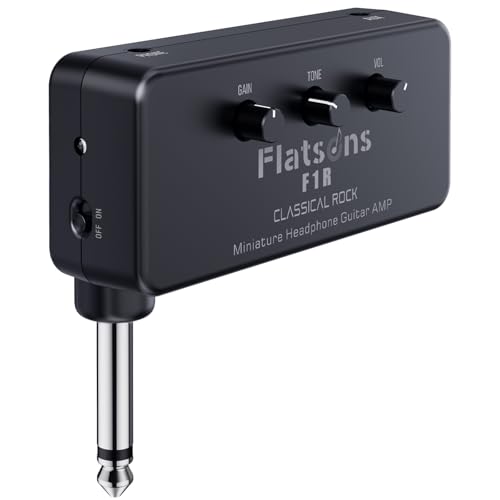
- ✓
- ✓ Compact, portable design
- ✓ Warm, true analog distortion
- ✓ Easy, responsive controls
- ✓
- ✕
- ✕ Requires wired headphones
- ✕ No built-in speaker
- ✕
| Input Impedance | 1 MΩ high-impedance input |
| Signal Path | True analog tone with 16-bit high-precision sampling and analog amplification |
| Controls | GAIN, TONE, and VOLUME knobs for distortion and output control |
| Connectivity | 3.5 mm headphone output and 3.5 mm AUX input for backing tracks |
| Dimensions | 88 x 73 x 28 mm |
| Weight | 50 g |
You slide the Flatsons F1R into your backpack, and the first thing that hits you is how compact it feels in your hand. The 88 by 73 by 28 millimeter footprint is tiny, but the real surprise is how much attitude it still pumps through your headphones.
That 1MΩ input makes your guitar signal feel clean and front-and-center, like you’re hearing every detail of your picker hand.
When you plug in, the true analog feel becomes obvious. You get a warm, classic rock distortion that doesn’t thin out at high gain.
The 16-bit sampling catches those subtle palm-mutes and pinch harmonics without turning harsh or fizzy.
Dialing in tone is a breeze with the GAIN, TONE, and VOL knobs. You’ll find a sweet spot for crunchy blues licks or roaring lead lines, and the output stays stable enough to jam for longer sessions.
It isn’t about modern, ultra-tight metal tones—this is that vintage, loud-but-fattest rock voice.
Practicing with headphones is where this thing shines. The 3.5mm headphone output stays comfortable for long sessions, and the AUX input lets you drop in backing tracks from your phone or laptop.
It’s almost like having a tiny, dedicated practice rig without the bulk.
Build-wise, the unit feels sturdy for its size, and the plastic case doesn’t creak when you tweak knobs mid-riff. It weighs next to nothing, so you won’t notice it in a backpack after a sweaty practice.
And at this price, it’s hard to beat the value for students and casual players who want real tone on the cheap.
One quick reminder: wired headphones only, please. There’s no built-in speaker, and wireless gear won’t play nice.
Still, you’re getting that classic rock vibe on a budget, and that’s pretty hard to pass up.
Fender Mustang LT25 25-Watt Guitar Amplifier, 8″ Speaker

- ✓ Compact, sturdy build
- ✓ Usable presets
- ✓ Fender character
- ✕ Limited raw power
- ✕ Basic user interface
| Power rating | 25 watts |
| Speaker size and type | 8-inch Fender special design guitar speaker |
| Dimensions (HxWxD) | 12.75 x 14.5 x 8.25 inches |
| Presets | 30 preloaded presets |
| Display | 1.8-inch color display |
| Warranty | 2-year limited warranty |
You crack open the Fender Mustang LT25 and you instantly notice that familiar Fender vibe—the matte black chassis, a tidy 8″ speaker grill, and that reassuring weight in your hands. The feel is sturdy without being hulking, and the 12.75″ height slips into a small corner of your desk or practice space without shouting for attention.
The 1.8″ color display glows in the dim room, begging you to poke around the presets you’ll actually use rather than scroll endlessly.
First press, the instant you hear a clean chime from the 8″ speaker, you get a sense of that classic Fender snap—bright, not fizzy, with enough warmth to keep chords from sounding harsh. The front panel is friendly enough to navigate, and the presets are a surprisingly usable mix for a beginner-friendly amp.
You’ll notice the direct feel when you switch voices; it’s not just cosmetic change, it shifts the EQ and attack in a way that makes practicing feel purposeful rather than gimmicky.
In real-world practice, the Mustang LT25 shines in low-volume rooms. You can hear bite in the lead tones without cranking the volume, which is ideal for late-night sessions or apartment living.
The build feels reliable when you grab the handle and move it between rooms, and the power jack is solid without any wiggling. If you want a simple, approachable way to explore tones, this amp delivers with a genuine sense of Fender character.
Where it shines most is the everyday usability—the presets cover a wide range, and you’ll find at least a couple you actually reach for during a session. The 25-watt output gives you enough headroom for jam nights with friends without sounding military-grade loud.
If you’re chasing a spark of creativity without complexity, this amp nudges you there with ease.
Bottom line: it’s a beginner-friendly, compact practice amp that still feels like a real Fender. The Mustang LT25 respects your time and your ears with sound that’s approachable yet satisfying when you push for more than clean tones.
What Are the Key Features to Look for in the Best Lead Guitar Amplifier?
When searching for the best lead guitar amplifier, there are several key features to consider that significantly impact sound quality and performance.
- Wattage: The wattage of an amplifier determines its power and volume level. Higher wattage amplifiers can produce louder sounds without distortion, making them suitable for larger venues, while lower wattage models are often ideal for home practice and small gigs.
- Tube vs. Solid State: Tube amplifiers are known for their warm, rich tones and dynamic response, making them a favorite among lead guitarists. In contrast, solid-state amplifiers are generally more reliable, lightweight, and often come with a wider range of built-in effects, catering to different playing styles.
- Speaker Size: The size of the speaker influences the tonal characteristics of the amplifier. Larger speakers typically provide deeper bass and a fuller sound, while smaller speakers can produce sharper highs, which can be beneficial for lead guitar solos.
- Effects and Features: Many modern amplifiers come equipped with built-in effects such as reverb, delay, and overdrive. These features can enhance the versatility of the amplifier, allowing guitarists to experiment with different sounds without the need for additional pedals.
- EQ Controls: Equalization controls allow players to adjust the tonal balance of the amplifier. A good lead guitar amplifier should have a range of EQ settings to tailor the sound to individual preferences, enabling greater customization for different playing styles and genres.
- Portability: For gigging musicians, the weight and size of the amplifier can be crucial. Lightweight and compact amplifiers are easier to transport, while still providing excellent sound quality and performance for lead guitar playing.
- Durability: A reliable amplifier should be built to withstand the rigors of travel and performance. Look for amplifiers with robust construction and high-quality components to ensure longevity and consistent performance in various environments.
Which Are the Top Recommended Lead Guitar Amplifiers for Different Budgets?
The top recommended lead guitar amplifiers cater to various budgets and preferences among guitarists.
- Fender Blues Junior IV: A versatile and compact tube amp ideal for blues and rock players.
- Marshall DSL40CR: A powerful amp providing classic Marshall tones, suitable for high-gain styles.
- Boss Katana-100 MkII: An affordable solid-state amp with multiple tonal options and effects built-in.
- Vox AC30C2: A legendary amp known for its chimey tones, perfect for a wide range of musical genres.
- Orange Rockerverb 50 MKIII: A high-end amp offering rich tonal versatility and dynamic response for professional use.
Fender Blues Junior IV: This 15-watt tube amplifier features a 12-inch speaker and is known for its warm, natural tube sound. It’s lightweight and portable, making it perfect for gigging musicians who want classic Fender tones in a small package, with a simple control layout for easy adjustments.
Marshall DSL40CR: With its 40 watts of power and two channels, this amp delivers classic Marshall crunch and high-gain sounds. It includes a reverb effect and an effects loop, making it great for players who want to push their tone further while maintaining the iconic Marshall character.
Boss Katana-100 MkII: This solid-state amplifier is known for its affordability and versatility, offering five different amp voicings and built-in effects. It also features a power control knob that allows you to achieve great tone at lower volumes, making it a fantastic option for practice and small gigs.
Vox AC30C2: Renowned for its jangly tones, this 30-watt tube amp is perfect for everything from rock to pop to indie music. Its unique Top Boost circuit adds brightness and clarity, while the two 12-inch speakers provide a rich, full sound that has been a favorite among guitarists for decades.
Orange Rockerverb 50 MKIII: This high-end amplifier combines versatility with a powerful 50-watt output, offering an array of tonal options from clean to heavy distortion. It features a built-in reverb and an effects loop, making it ideal for professional guitarists seeking a robust amp that can handle both studio recordings and live performances.
What Makes the Boss Katana 50 Gen 3 a Leading Choice?
The Boss Katana 50 Gen 3 is a highly regarded choice for lead guitarists due to its versatile features and exceptional sound quality.
- Powerful Amplification: The Katana 50 Gen 3 delivers 50 watts of robust power, making it suitable for both practice and performance settings. Its ability to produce a loud and clean sound without distortion ensures that lead guitarists can be heard clearly in various environments.
- Variety of Sounds: This amplifier offers five different amp characters that cater to a wide range of musical styles, from classic rock to metal. Each setting allows for unique tonal shaping, making it easy for guitarists to find the perfect sound for their lead parts.
- Built-in Effects: The Katana 50 Gen 3 comes with a selection of built-in effects, including reverb, delay, and modulation. These effects can enhance the lead guitar sound without the need for additional pedals, simplifying setup and performance.
- Power Control Feature: It includes a power control feature that allows players to reduce output power to 0.5 watts for quieter practice sessions. This ensures that the amplifier can be used in a variety of settings without sacrificing tone quality.
- USB Connectivity: The amplifier features USB connectivity, enabling direct recording to a computer and integrating seamlessly with recording software. This is particularly beneficial for lead guitarists looking to capture their sound in a studio environment.
- Durable Construction: With a sturdy design and high-quality materials, the Katana 50 Gen 3 is built to withstand the rigors of live performances and frequent use. Its reliability makes it a favorite among touring musicians.
- User-Friendly Interface: The intuitive controls and layout make it easy for guitarists to dial in their desired tone quickly. This user-friendly design is especially advantageous for lead guitarists who need to make adjustments on the fly during performances.
Why is the Fender Tone Master Twin Reverb Popular Among Guitarists?
The Fender Tone Master Twin Reverb is popular among guitarists primarily due to its authentic tube-like sound, lightweight design, and versatile features that cater to both studio and live performance needs.
According to a review by Guitar Player Magazine, the Tone Master series has been lauded for its digital modeling technology that emulates the classic tone and response of traditional tube amplifiers, making it a go-to choice for many musicians seeking high-quality sound without the weight of vintage models.
The underlying mechanism of its popularity can be attributed to its ability to replicate the warmth and dynamic range of tube amps while incorporating modern conveniences like built-in digital effects and an attenuator. This allows guitarists to achieve rich, saturated tones at lower volumes, making it ideal for home practice and smaller venues. Furthermore, the amp’s lightweight construction addresses a common concern among gigging musicians—portability—allowing for easier transport without sacrificing sound quality.
Additionally, the Tone Master Twin Reverb has a reputation for durability and reliability, which is crucial for performers who rely on their gear in various settings. The combination of these features makes it an attractive option for lead guitarists looking for the best lead guitar amplifier that offers both performance and practicality, as highlighted in user testimonials on forums and reviews.
How Do Different Amplifier Types (Tube, Solid-State, Digital) Compare for Lead Guitar Play?
| Amplifier Type | Sound Quality | Portability | Price | Popular Models | Use Cases | Durability |
|---|---|---|---|---|---|---|
| Tube | Warm, rich tone; preferred for its dynamic response. | Heavy and bulky; less portable than others. | Higher price range; requires maintenance. | Fender Blues Junior, Marshall JCM800 | Classic rock, blues, jazz, and high-gain solos. | Can be fragile; tubes may require replacement. |
| Solid-State | Clean and reliable sound; less warmth than tube amps. | Lightweight and compact; easy to transport. | More affordable; lower maintenance costs. | Roland JC-120, Fender Frontman | Pop, rock, and practice settings. | Very reliable; less prone to damage. |
| Digital | Versatile tones; can emulate various sounds effectively. | Very portable; often comes in smaller formats. | Varies widely; can be budget-friendly or expensive depending on features. | Line 6 Helix, Boss Katana | Versatile for all genres, especially modern rock and metal. | Generally robust; depends on build quality. |
What Are Expert Recommendations for the Best Lead Guitar Amplifiers for Beginners?
Several expert recommendations highlight great lead guitar amplifiers suitable for beginners:
- Fender Champion 20: This versatile amp is perfect for beginners, offering a range of tones from clean to distorted.
- Vox AC10C1: Known for its classic British tone, this amp delivers rich overdrive and is compact enough for home use.
- Boss Katana-50 MkII: A powerful model with multiple amp voicings and effects, making it ideal for experimenting with different sounds.
- Orange Crush 20: This amp combines simplicity with quality sound, providing an easy-to-use interface and a classic rock tone.
- Marshall MG30GFX: With built-in effects and a solid reputation, this amp is great for those looking to explore various styles.
The Fender Champion 20 is a compact amplifier that features various built-in effects and a simple control layout, making it an excellent choice for beginners who want to experiment with different sounds. Its 20 watts of power provide enough output for practice sessions and small gigs, while its lightweight design allows for easy transport.
The Vox AC10C1 is a classic tube amp that captures the essence of British rock tones. It features a 10-watt output and a single 10-inch speaker, providing warm overdrive and a rich sound that appeals to guitarists looking for that vintage vibe.
The Boss Katana-50 MkII offers extensive versatility with its range of amp voicings and built-in effects, including reverb and delay. This amp is particularly user-friendly, thanks to its intuitive interface, making it perfect for beginners who want to explore different genres without feeling overwhelmed.
Orange Crush 20 is noted for its straightforward design and exceptional sound quality. With a powerful 20-watt output and a three-band EQ, it allows beginners to shape their tone easily, while its sturdy construction makes it suitable for practice and small performances.
The Marshall MG30GFX is a solid choice for beginners aiming to explore various musical styles, featuring multiple channels and built-in effects like delay and chorus. Its 30-watt output ensures that it’s loud enough for practice and small gigs, embodying the iconic Marshall sound that many guitarists admire.
How Does Wattage Impact the Performance of a Lead Guitar Amplifier?
Wattage is a crucial factor that significantly impacts the performance of a lead guitar amplifier, influencing both volume levels and tonal characteristics.
- Power Output: The wattage of an amplifier directly relates to its power output, which determines how loud the amplifier can get. Higher wattage amplifiers can produce more volume without distortion, making them suitable for larger venues and performances.
- Headroom: Amplifiers with higher wattage typically offer more headroom, meaning they can handle peaks in sound without clipping. This is particularly important for lead guitarists who often use effects and dynamic playing styles that require clear, undistorted tones even at high volumes.
- Tonal Quality: Different wattage levels can affect the tonal quality of the sound produced. Lower wattage amplifiers might provide a warmer, more saturated tone when pushed to their limits, while higher wattage models can maintain clarity and definition across a broader range of frequencies.
- Portability: Higher wattage amplifiers tend to be heavier and less portable, which can influence a guitarist’s choice based on their performance needs. In contrast, lower wattage models are often lighter and easier to transport, making them ideal for smaller gigs or practice sessions.
- Versatility: The wattage of an amplifier can dictate its versatility in various musical settings. Lower wattage amplifiers are great for home practice and small venues, while higher wattage models are better suited for larger stages and band settings, allowing for more flexibility in performance scenarios.
What Do Users Say About Their Experiences with Popular Lead Guitar Amplifiers?
Users generally highlight several key aspects of their experiences with popular lead guitar amplifiers:
- Fender Hot Rod Deluxe: Many users praise this amp for its versatility and rich tone, making it suitable for various genres. Guitarists appreciate the clean channel’s dynamic range and the ability to add effects without losing clarity.
- Marshall DSL40CR: Users often commend the Marshall DSL40CR for its iconic overdrive sound, which is perfect for rock and metal. The built-in effects loop and reverb are also well-received, allowing for more customized sound settings.
- Vox AC30: Guitarists frequently mention the Vox AC30’s signature chime and warmth, which is ideal for blues and classic rock. The amp’s responsiveness to picking dynamics makes it a favorite among lead guitarists looking for expressive tone.
- Orange Rockerverb 100: The Orange Rockerverb 100 is lauded for its powerful output and rich harmonic content, making it suitable for live performances. Users report that its dual-channel design allows for seamless transitions between clean and distorted sounds.
- Boss Katana 100: Users appreciate the Boss Katana 100 for its affordability and range of built-in digital effects, making it great for beginners and professionals alike. Many find it particularly useful for practice and recording, thanks to its various power settings and speaker-emulated output.
How Can You Choose the Right Lead Guitar Amplifier for Your Playing Style?
Choosing the right lead guitar amplifier involves considering several important factors that align with your playing style and preferences.
- Power Rating: The power rating of an amplifier affects its volume and tonal characteristics. Higher wattage amplifiers can produce more headroom, which is beneficial for achieving clean tones at higher volumes, while lower wattage options may offer a more saturated sound at manageable volumes for home use.
- Tube vs. Solid State: Tube amplifiers are known for their warm, rich tones and dynamic responsiveness, making them a favorite among lead guitarists. Solid-state amplifiers are more reliable and often lighter, providing a cleaner sound with less maintenance, which might suit players who prefer a consistent tone.
- Speaker Configuration: The type and number of speakers in an amplifier can greatly influence its sound. Single-speaker setups often deliver focused tones, while multi-speaker configurations can create a fuller sound with more depth, ideal for complex lead work.
- EQ Controls: An amplifier with comprehensive EQ controls allows players to shape their tone more effectively. Features like treble, mid, and bass controls help in achieving the desired sound for lead guitar, enabling adjustments to suit different musical styles.
- Effects Loop: An effects loop allows you to place effects pedals between the preamp and power amp stages, which can enhance sound quality and maintain clarity when using time-based effects like delays and reverbs. This is particularly useful for lead guitarists who rely on these effects for their solos.
- Portability: If you plan to gig frequently, consider the weight and size of the amplifier. Portable amplifiers are easier to transport, while larger, heavier models may provide superior sound quality but can be cumbersome to move.
- Price Range: Establishing a budget is crucial as amplifiers can vary widely in price. Higher-end models often offer better build quality and sound, but there are many affordable options that provide excellent performance for lead guitarists just starting out.
- Brand Reputation: Researching brands known for producing quality lead guitar amplifiers can help ensure you make a wise investment. Brands with a solid reputation often have a loyal following due to their consistent quality and innovative features designed for lead guitarists.