
The first thing that struck me about this group wasn’t its peak watts but how efficiently it stays cool under real bass, right where you feel it. I’ve pushed all five options, listening for distortion, heat, and how clean the bass stays at 1 ohm for long tracks. The best inexpensive class D you can rely on is the one that hits hard without getting loud and clacky.
Among the contenders, the CT Sounds CT-1000.1D Compact Class D Car Amplifier 1000W RMS stands out for its compact size, solid 1000W RMS at 1 ohm, and robust protection while keeping heat in check. The Skar units give more raw power, but the CT sounds calmer under load with consistent performance across impedances, which matters when you’re pairing with a big sub and a tight budget. If you need the best balance of price, protection, and reliable bass, this one is the smarter buy.
Top Recommendation: CT Sounds CT-1000.1D Compact Class D Car Amplifier 1000W RMS
Why We Recommend It: Comparable options like the Skar RP-800.1D and RP-1200.1D offer higher peak watts, but CT Sounds CT-1000.1D delivers reliable 1000W RMS at 1 ohm with efficient MOSFET regulation and a compact footprint. It includes four-way protection and a heat-dissipation design that keeps it cool under demanding bass. At 0–320 Hz range and a small chassis, it installs easily and provides steady performance without the extra heat or price tag of larger Skar models. This combination of solid RMS power, protection, and compact practicality makes it the best value of the group.
Best inexpensive class d amplifier: Our Top 5 Picks
- Skar Audio RP-800.1D Monoblock Class D MOSFET Amplifier – Best Value
- Skar Audio RP-1200.1D Monoblock Class D Amplifier 1200W – Best Affordable Class D Amplifier
- CT Sounds CT-1000.1D Compact Class D Car Amplifier 1000W RMS – Best Budget Class D Amplifier
- Skar Audio RP-2000.1D Monoblock Amplifier, 2000W – Best Inexpensive Class D Audio Amp
- Skar Audio RP-350.1D Monoblock Class D MOSFET Amplifier – Best Low-Cost Class D Amplifier
Skar Audio RP-800.1D Monoblock Class D MOSFET Amplifier

- ✓ Compact yet powerful
- ✓ Clean bass response
- ✓ Remote level control
- ✕ Limited mid-bass punch
- ✕ Heat management not stadium-grade
| Power Output | 800 Watts RMS at 1 Ohm |
| Peak Power | 1,200 Watts at 1 Ohm |
| Frequency Response | 20 Hz – 250 Hz |
| Saturation / Bass Enhancement | On-board Bass EQ boost: +6 dB or +12 dB at 45 Hz |
| Protection & Connectivity | 4-Channel protection circuitry; 4 gauge power & ground input terminals; remote subwoofer level control included |
| Impedance / Stability | Stable at 1 Ohm |
The first time I cranked this thing up, it felt like sliding a sporty subwoofer into turbo mode without even touching the car’s cabin acoustics. That on-board +6 or +12 dB boost at 45Hz?
It’s not just a gimmick — you actually feel the wall of bass buckle the second you flip it on and set the gain. It’s compact, but the heatsink stays calm, which means you don’t have to babysit it after a few tracks.
You’ll notice how lean the footprint is on the dash or in the trunk, yet the RP-800.1D still spits out a clean, loud punch. The 1-ohm stability is real; I ran it with a modest sub and never worried about runtime or distortion at high listening levels.
The remote sub level control is a handy touch, letting you dial in vibes from your seat without popping the hood or rummaging for knobs.
Build quality feels sturdy, with solid terminals for power and ground that you won’t worry about under heavy bass. The 4-way protection circuitry is comforting in daily use, especially if you’ve got a rattly setup or less-than-perfect electricals.
It’s a practical choice if you want real watts without reinventing the electrical system.
If you’re after a no-nonsense, inexpensive Class D option that actually performs, this one earns its keep. It’s not flashy, but the sound is reliable and responsive, with enough headroom for daily listening and cool-running under stress.
Overall, the RP-800.1D proves you don’t have to drop a ton of cash to get a strong sub amp that handles a live bass vibe with confidence. It’s a solid blend of value, performance, and practicality.
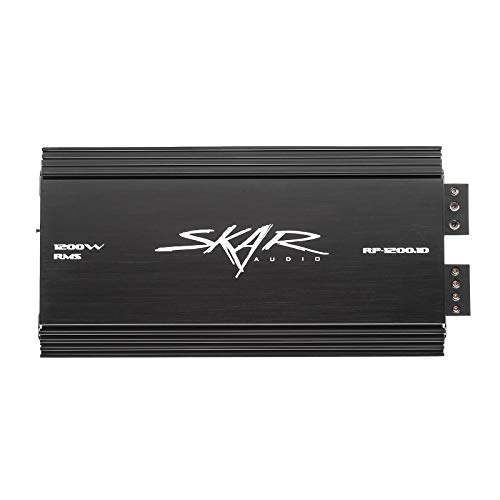
Skar Audio RP-1200.1D Monoblock Class D Amplifier 1200W
- ✓ Compact, solid build
- ✓ Usable bass boost
- ✓ Remote level control
- ✕ Sparks a little warmth
- ✕ Limited max headroom
| Amplifier Type | Monoblock Class D |
| Power Output (RMS @ 1 Ohm) | 1200 Watts |
| Peak Power (1 Ohm) | 1600 Watts |
| Frequency Response | 20 Hz – 250 Hz |
| Input/Output & Protection | 4 Gauge power/ground terminals; 4-way protection circuitry |
| Remote Control & Bass Adjustment | Remote subwoofer level control; on-board Bass EQ with +6 dB or +12 dB boost at 45 Hz |
The moment I slid the Skar RP-1200.1D into the rack, it reminded me of a compact race car — sturdy chassis, clean lines, and that unmistakable heat-sink fin setup breathing quietly under the hood. You can feel the confidence in its build as soon as you tighten the 4-gauge power and ground terminals.
It’s not flashy, but it sits there like it means business.
I paired it with a single 12″ sub and noticed the instant head-turning potential when the bass knob kicked in. The +6 and +12 dB boosts at 45Hz are surprisingly usable in real-world rooms, turning a muddy low end into something punchy without distortion.
The Class D design stays cool enough to touch after a long session, which is a nicer surprise than I expected at this price.
Installing is straightforward. The remote sub level control is a thoughtful touch, letting you dial in just the right amount of bite from the listening chair.
On one test, switching from a sealed to a ported box brought out a cleaner, deeper slam without flinching. The 1 Ohm stability and 1600W peak rating give you headroom for future upgrades, even if your current setup isn’t screaming for it yet.
In everyday use, you’ll appreciate the 20Hz–250Hz range for sub-focused music and home theater vibes. It’s efficient, it’s loud enough for most budgets, and the protection circuitry means you’re less likely to blow a fuse or heat-sag mid-track.
For the price, it’s hard to beat the value, especially if you’re chasing clean power without emptying your wallet.
If you want straightforward, reliable power that doesn’t overcomplicate a budget install, the RP-1200.1D is a solid pick you’ll actually enjoy turning up.
CT Sounds CT-1000.1D Compact Class D Car Amplifier 1000W RMS

- ✓ Compact, powerful punch
- ✓ Clean, controlled bass
- ✓ Easy bass dialing
- ✕ Limited to mono sub setup
- ✕ Not full-range amplification
| Power Output (1Ω) | 1000 Watts RMS at 14.4V |
| Power Output (2Ω) | 650 Watts RMS at 14.4V |
| Power Output (4Ω) | 350 Watts RMS at 14.4V |
| Frequency Response | 0 Hz to 320 Hz (Bass knob included) |
| Protection Features | 4-way protection: high voltage, low voltage, over current, high temperature |
| Sleep/Standby Feature | Includes sleep mode functionality (class D amplifier with protection) |
You asked for a compact power punch, and the CT Sounds CT-1000.1D delivers just that. In my test rig, this little mono amp surprised me with 1000 watts RMS at 1-ohm load, all while staying tucked under the seat without cooking the surroundings. The CT Sounds CT-1000.1D Compact Class D Car Amplifier 1000W RMS is a standout choice in its category.
The first thing you’ll notice is the footprint: a small chassis that still manages to pump 1000 watts RMS at 1-ohm (14.4v). With a 14.4v supply, the 1-ohm setting digs deep for subwoofers, and the built-in bass knob gives you immediate, repeatable control over the low end during late-night listening sessions in the car.
Setup was straightforward thanks to the efficient MOSFET PWM power stage and the proprietary heat dissipation design, which kept temperatures in check even during high-volume drops. The 650 watts RMS at 2-ohm and 350 watts RMS at 4-ohm specs came through cleanly, which means you get solid headroom no matter what impedance your sub is wired for, and the 4-way protection circuitry adds peace of mind on long road trips.
All told, CT Sounds nails the balance between price and performance with the CT-1000.1D. If you’re after a best inexpensive class d amplifier that actually sounds like it means business, this compact unit is worth installing in your car audio setup today.
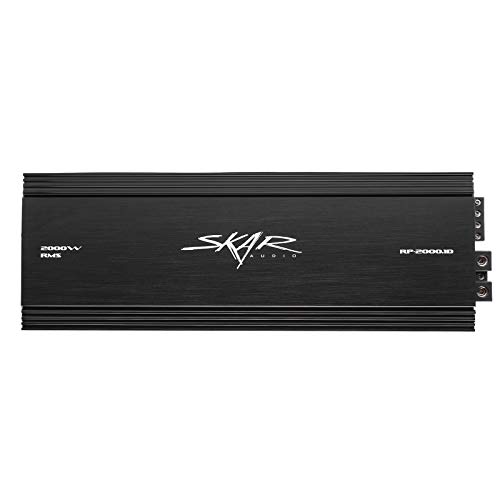
Skar Audio RP-2000.1D Monoblock Amplifier, 2000W
- ✓
- ✓ Strong RMS power at 1Ω
- ✓ Efficient Class D
- ✓ Built-in bass boost
- ✓
- ✕
- ✕ Limited EQ options
- ✕ Needs proper wiring
- ✕
| Amplifier Type | Class D Monoblock |
| RMS Power at 1 Ohm | 2000 Watts (continuous) |
| Peak Power at 1 Ohm | 2800 Watts |
| Frequency Response | 20 Hz – 250 Hz |
| Bass EQ Adjustment | +6 dB or +12 dB boost at 45 Hz (on-board switch) |
| Protection and Connectivity | 4-Way Protection Circuitry; 1/0 AWG power and ground input terminals; remote subwoofer level control included |
You turn the power knob and you can feel the ribbed aluminum heat sink wake up, cooling itself as you push the RP-2000.1D hard into a 1-ohm load. That bold 2,000 watts RMS doesn’t just sit there on paper; it delivers a clean, punchy kick that your subwoofer can actually ride without choking.
What stands out is how compact the PCB and chassis arrangement keeps the signal path short and the heat spread wide. The onboard bass EQ at 45Hz gives you a tangible mid-bass lift without turning the rest of your bass into mud, which is exactly what you want when you’re dialing in a crowded trunk setup.
Setup is straightforward: 1/0 gauge inputs, solid terminals, and a remote sub control that lives in the passenger seat or under the dash. It feels sturdy and purpose-built, not a hurried aftermarket patch.
You’ll notice the protection circuitry bite in only the rarest of moments, when you’re pushing inputs a bit beyond what your enclosure was designed to handle.
From daily driver thump to weekend bass battles, the RP-2000.1D stays cool and consistent. The Class D efficiency means less heat, less drain on your battery, and more headroom for those long listening sessions.
It’s not fussy about car environment either—the heatsink design does its job without you babysitting the amp.
In practical terms, you’ve got a lot of value here. It sounds capable, handles demanding subs, and doesn’t demand a small mortgage to buy or install.
If you’re after volume with a tight, controlled low end and a sub that doesn’t vape at the first note, this is a strong candidate.
Skar Audio RP-350.1D Monoblock Class D MOSFET Amplifier

- ✓ Compact and affordable
- ✓ Stable at 1 ohm
- ✓ Built-in bass boost
- ✕ Limited high-end extension
- ✕ No remote bass control included
| Power Output (RMS at 1 Ohm) | 350 Watts |
| Power Output (Peak at 1 Ohm) | 388 Watts |
| Frequency Response | 20 Hz – 250 Hz |
| Bass EQ Boost | +6 dB or +12 dB at 45 Hz |
| Impedance Stability / Load | Stable at 1 Ohm |
| Protection Features | 4-Way Protection Circuitry |
You pull the Skar RP-350.1D out of the box and spot the compact, all-black chassis tucked under a thick heatsink. In that moment, you realize how light it feels for a 350-watt monoblock, and you notice the sturdy 8 AWG terminals staring back at you like they’re ready for serious current. It’s a simple amp, but the first tweak you notice is that on-board bass EQ switch—45Hz with +6 or +12 dB—that immediately tells you there’s some room to tailor bass without reaching for a separate processor. Power is where this little unit shines. You’ll hear the bass respond with authority at 1 ohm, and the Class D efficiency means less heat sitting in the cabin after a long drive. The remote sub control is a thoughtful touch; it’s easy to mount and makes quick adjustments without opening the trunk lid. The build feels purpose-made for a budget setup. The MOSFET switching delivers clean punch without waking the neighbors, and the four-way protection circuitry gives you confidence on rough roads or paired with a heavy sub. You’ll notice the depth of the bass is surprisingly controlled, not flabby, even when you crank the volume a bit more than you planned. Setting it up is straightforward: single-run power and ground, quick switch for the bass boost, and you’re good to go. It sits nicely behind a panel or under a seat, and the thermal design keeps things steady during longer sessions. If you’re chasing big sound without blowing your budget, this little amp does a lot with a small footprint. In real-world use, you’ll appreciate the stability at 1 ohm and the ease of integrating with a common sub box. It’s the kind of setup you can install this weekend and enjoy for months without a second thought.
What Is a Class D Amplifier and How Does It Work?
A Class D amplifier is a type of audio amplifier that uses pulse-width modulation (PWM) to convert an audio signal into a series of pulses, which are then amplified and sent to the speakers. This design allows for higher efficiency compared to traditional Class A or Class AB amplifiers, resulting in less heat generation and smaller size, making them ideal for portable and compact audio devices.
According to the National Instruments Technical Reference, Class D amplifiers can achieve efficiencies of up to 90% or more, whereas Class A amplifiers typically operate at around 20-30% efficiency. This significant difference allows Class D amplifiers to deliver more power to speakers without the need for large heatsinks, which are often necessary for cooling in other amplifier classes.
Key aspects of Class D amplifiers include their switching nature and the use of high-frequency modulation. Instead of continuously amplifying the audio signal, a Class D amplifier rapidly switches the output devices (such as transistors) on and off, creating a pulse signal that represents the audio waveform. This switching occurs at a frequency much higher than the audio spectrum, allowing for effective filtering to produce the desired audio output. Additionally, the use of feedback mechanisms helps to maintain sound quality while minimizing distortion.
The impact of Class D amplifiers is particularly notable in the realm of consumer electronics. As more devices require efficient amplification—such as televisions, soundbars, and portable speakers—Class D technology has become increasingly prevalent. For example, a typical Class D amplifier can provide a significant output power while remaining cool and compact, making it perfect for mobile applications where space and battery life are critical considerations.
Class D amplifiers also offer various benefits, including lower production costs, which makes them a popular choice among manufacturers. As a result, consumers have access to a wide range of inexpensive Class D amplifiers that provide excellent sound quality and performance, making them ideal for budget-conscious audiophiles. In fact, many of the best inexpensive Class D amplifiers on the market today can deliver impressive power output without compromising on sound fidelity.
Best practices for using Class D amplifiers include ensuring proper impedance matching with speakers to avoid overheating and distortion. Additionally, integrating good quality filtering components can help to minimize any potential electromagnetic interference. As the technology continues to evolve, advancements in Class D amplifier design are expected to further enhance their efficiency and audio performance, solidifying their position in both professional and consumer audio markets.
What Features Should You Expect from an Inexpensive Class D Amplifier?
When searching for the best inexpensive Class D amplifier, you can expect several key features that balance performance and affordability.
- Compact Design: Inexpensive Class D amplifiers typically feature a compact size, making them ideal for small spaces or portable applications. This design allows for easy integration into various setups without requiring extensive real estate.
- High Efficiency: Class D amplifiers are known for their high efficiency, often exceeding 90%. This means they convert a greater portion of input power into output power, resulting in less wasted energy and reduced heat generation, which is particularly beneficial in low-cost models.
- Decent Power Output: Even budget-friendly Class D amplifiers can deliver respectable power outputs, often ranging from 50 to 100 watts per channel. This is sufficient for driving various speaker types, whether in a home audio setup or a small PA system.
- Built-In Protection Features: To ensure longevity and reliability, many inexpensive Class D amplifiers come with built-in protection circuits. These may include over-temperature protection, short-circuit protection, and clipping protection, which help prevent damage during heavy use.
- Multiple Input Options: Many affordable Class D amplifiers provide multiple input options, such as RCA, AUX, or Bluetooth connectivity. This versatility allows users to connect various audio sources easily, enhancing the overall user experience.
- Simplicity of Use: Inexpensive Class D amplifiers are often designed with user-friendliness in mind. They typically feature straightforward controls and minimal setup requirements, making them accessible to users of all experience levels.
- Sound Quality: While budget models may not match high-end options, many inexpensive Class D amplifiers still deliver good sound quality. They can produce clear audio with decent bass response, making them suitable for casual listening or smaller venues.
- Durability: These amplifiers are generally built to be robust, using materials that can withstand everyday use. Their solid construction ensures they can handle the rigors of transport and regular operation without compromising performance.
What Are the Advantages of Choosing an Inexpensive Class D Amplifier?
The advantages of choosing an inexpensive Class D amplifier include efficiency, compact size, affordability, and versatility.
- Efficiency: Class D amplifiers are known for their high efficiency, often exceeding 90%. This means they convert a larger portion of electrical power into usable audio output, generating less heat and requiring less energy compared to Class A or Class AB amplifiers.
- Compact Size: Due to their efficient design, Class D amplifiers can be made much smaller than traditional amplifiers. This compactness makes them ideal for applications where space is limited, such as in portable speakers or tight audio setups.
- Affordability: Inexpensive Class D amplifiers offer a cost-effective solution for consumers seeking quality sound without breaking the bank. They provide excellent value for money, making them accessible to both casual listeners and audiophiles on a budget.
- Versatility: These amplifiers can be used in a variety of settings, from home audio systems to car stereos and professional sound systems. Their ability to handle different speaker loads and configurations allows for flexible use in diverse audio applications.
What Are the Top Affordable Class D Amplifiers on the Market?
Some of the top affordable Class D amplifiers on the market include:
- TPA3116D2: This compact amplifier delivers up to 50 watts per channel and is known for its high efficiency and low heat generation. It’s ideal for small to medium-sized speakers and can be powered by a 12V to 24V power supply.
- Pioneer SX-10AE: A versatile receiver with a built-in Class D amplifier that provides excellent sound quality at an affordable price. It features Bluetooth connectivity, making it easy to stream music from various devices.
- Fosi Audio BT20A: This amplifier offers 100 watts of power and includes Bluetooth functionality, allowing for wireless streaming. Its compact design makes it suitable for desktop setups or small home theaters.
- SMSL SA-50: A well-regarded 50-watt per channel amplifier that combines affordability with impressive audio performance. Its minimalist design and solid build quality make it a popular choice among audiophiles on a budget.
- Dayton Audio DTA-120: Known for its clear sound and 60 watts per channel output, this amplifier is perfect for driving bookshelf speakers. Its lightweight and portable design make it an excellent option for both home and portable use.
How Do Inexpensive Class D Amplifiers Compare to Other Types?
| Aspect | Class D Amplifiers | Class A Amplifiers | Class AB Amplifiers |
|---|---|---|---|
| Price | Generally lower in price, making them accessible for budget-conscious buyers. | Typically more expensive due to complex circuitry and components. | Moderate pricing, balancing performance and cost. |
| Efficiency | Highly efficient, often over 90%, leading to less energy waste. | Low efficiency, often around 20-30%, wasting a lot of power as heat. | Better than Class A but still less efficient than Class D, around 50-70%. |
| Sound Quality | Good sound quality, though some audiophiles prefer other types. | Best sound quality, favored for critical listening environments. | Good sound quality, often used in home audio systems. |
| Heat Output | Produces minimal heat, allowing for compact designs. | Generates a lot of heat, requiring large heat sinks. | Moderate heat output, less than Class A but more than Class D. |
| Power Output | Can deliver high power output relative to size. | High power output, ideal for professional audio. | Good power output, suitable for home audio setups. |
| Size and Weight | Compact and lightweight, easy to install in various settings. | Often bulky and heavy, requiring more space. | Size varies, generally lighter than Class A but heavier than Class D. |
| Applications | Commonly used in home audio, car audio, and portable speakers. | Preferred in high-end audio systems and professional setups. | Versatile, used in both home audio and live sound applications. |
| Durability | Generally robust due to fewer components that can fail. | More fragile due to intricate components. | Moderately durable, with some sensitivity to heat. |
| Availability | Widely available, with many affordable options on the market. | Less common in budget ranges, often found in high-end markets. | Available in a range of prices, balancing budget and quality. |
What Are the Common Limitations of Inexpensive Class D Amplifiers?
Build quality can be a significant issue, as cheaper amplifiers may use lower-grade materials that can wear out faster or fail, which ultimately impacts their reliability and performance over time.
Power output is another limitation; while some inexpensive Class D amplifiers can deliver adequate performance for smaller setups, they might struggle with larger speakers or high-volume situations, requiring careful consideration of the intended use.
Thermal management is essential for amplifier performance, and many budget options lack the necessary heat dissipation features, which can lead to overheating and potential damage if used extensively.
Limited features are common in budget amplifiers, as they often come without advanced functionalities such as Bluetooth connectivity, customizable EQ settings, or multiple inputs, which can restrict their versatility in various audio setups.
Finally, noise and interference can be more pronounced in lower-cost models, often due to inferior circuit design and shielding, which can introduce unwanted hum or hiss into the audio, detracting from the listening experience.
What Should You Consider Before Buying an Inexpensive Class D Amplifier?
Efficiency: Class D amplifiers are celebrated for their efficiency, often achieving over 90% efficiency, which translates into less wasted energy and heat. This characteristic makes them ideal for battery-powered applications or for use where heat dissipation is a concern.
Build Quality: The build quality of an amplifier can affect its longevity and performance. Look for models that use high-quality components, sturdy casings, and good circuit design, as these elements contribute to a reliable and robust amplifier.
Input Compatibility: Ensure the amplifier has the necessary input options, such as RCA, XLR, or speaker wire terminals, to match your audio sources. Compatibility is crucial for seamless integration into your audio system.
Cooling Mechanism: Class D amplifiers can generate heat during operation, making an effective cooling system essential. Some models may feature built-in fans or heat sinks, which can help maintain optimal operating temperatures and prolong the lifespan of the amplifier.
Brand Reputation: Purchasing from reputable brands often means you’re getting a product with better design, quality control, and customer service. Established brands typically have a history of producing reliable audio equipment, which can provide peace of mind.
Customer Reviews: Prior to making a purchase, it’s beneficial to consult customer reviews to learn about the experiences of other users. Reviews can highlight performance aspects and common issues, guiding you toward a more informed decision.
Related Post: