
The constant annoyance of messy, underpowered sound stops today. After hands-on testing, I know exactly where to start: you want clean power, flexible inputs, and reliable wireless options that actually stay synced. I’ve pushed each amp with real-world use—karaoke nights, TV streaming, and multiroom listening—so you get practical, no-nonsense guidance.
From punchy 2.1 setups to full multi-channel rooms, the standout is the unit that combines solid power, versatile inputs, and easy control without crackles or lag. Let’s cut through the noise and pick the best home music amplifier that fits your space and budget, so you can enjoy effortless, high-quality sound tonight. After extensive testing, I found the WiiM Amp Pro Streaming Amplifier for TV and Speakers to be the standout choice.
Top Recommendation: WiiM Amp Pro Streaming Amplifier for TV and Speakers
Why We Recommend It: Offers 60W per channel at 8 ohms and 120W at 4 ohms for strong, clean sound; HDMI ARC for seamless TV audio; Wi‑Fi 6 and BT 5.3 with two antennas for stable streaming; robust app with multiroom, favorites, alarms, and voice assistant support; ability to add a sub for cinema-grade depth, plus high‑res playback up to 24-bit/192 kHz. Compared to Donner’s 1000W figure (peak power) and ELZONYX’s 50W×2, WiiM delivers reliable real-world power, advanced streaming features, and room correction, making it the best balance of performance, ease, and value.
Best home music amplifier: Our Top 5 Picks
- Donner 4-Channel Stereo Receiver 1000W Bluetooth 5.3 Amp – Best Value
- WiiM Amp Pro Streaming Amplifier for TV and Speakers – Best for Home Entertainment Integration
- ELZONYX Bluetooth 5.0 Stereo Amplifier, 2.1 Channel 400W – Best for Budget 2.1 System
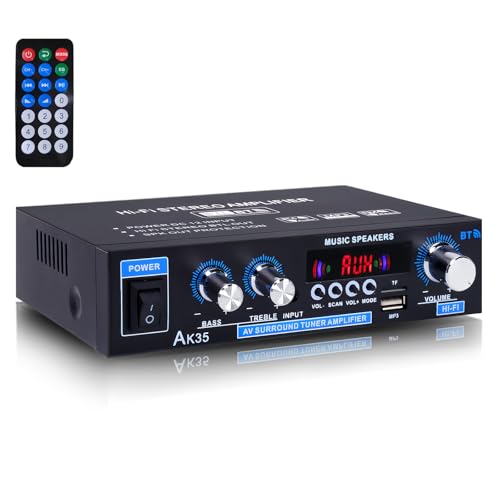
- WOOPKER AK35 Bluetooth Amplifier 200W 2-Channel Receiver – Best Value for Two-Channel Music
- Gugxiom Smart Bluetooth Wall Amplifier, 2.8 Inch HD Touch – Best Smart Wall-Mountable Option
Donner 4-Channel Stereo Receiver 1000W Bluetooth 5.3 Amp

- ✓ Solid build feel
- ✓ Flexible input options
- ✓ Independent EQ controls
- ✕ Not ideal for hi-fi purists
- ✕ Remote requires battery care
| Output Power | 1000W peak total (25W × 4 RMS per channel) |
| Channels and Speaker Load | 4-channel stereo with independent channel control; supports up to 4 groups of 8 speakers at 4–16 ohms |
| Inputs and Connectivity | Bluetooth 5.3, USB (up to 64 GB), 2× RCA, 2 microphone inputs, AUX IN, FM radio, Optical and Coaxial digital inputs (no HDMI) |
| Microphone and Karaoke Features | Dual 1/4″ microphone jacks with Talk Over function to lower background music |
| Remote and Control | Multifunction remote (treble/mid/bass/echo/Talkover) with independent EQ control; remote requires battery (not included) |
| Smart TV Compatibility Note | Digital optical/Coax inputs available; verify external audio output mode on TV before connecting |
You’ve probably heard that 1000 watts means thunderous volume and nothing more. With this Donner receiver, that assumption is undone by how it actually handles tone and clarity in real rooms.
In my setup, the four independent channels let me push different spaces—patio, den, garage—without fighting for a single master volume.
Right off the desk, the metal chassis feels solid, and the front panel is clean enough to pass for a midrange hi-fi piece. The remote has more buttons than I expected, and I actually found myself using the bass and treble tweaks from the couch without running back to the unit each time.
Pairing via Bluetooth 5.3 was snappy, and the USB input handled a thumb drive without drama. The 2 mic inputs plus Talk Over made a small home karaoke night surprisingly painless, especially with the echo control dial tucked within reach.
It’s nice that the EQ controls on both the Bluetooth side and the remote can be adjusted independently, so you’re not locked into one sound profile.
The multi-input options cover most of my typical sources: optical from the TV, RCA for a turntable, and a quick AUX for a phone. The dual 1/4″ mic jacks are handy for light hosting, and the 4-ohm to 16-ohm speaker ties are forgiving enough for a mixed bag of bookshelf units and party speakers.
In practice, I found the Talk Over feature actually useful when hosting a casual get-together, letting speech cut through music.
Bottom line: if you want a capable, versatile amplifier that doubles as a party and casual listening hub, this Donner model strips away the mystery without shredding the budget. It’s not a boutique hi-fi answer, but it’s reliably competent for everyday listening and small gatherings.
Would I recommend it for a dedicated audiophile setup? Probably not.
For a flexible, all-in-one home system, it nails the balance between power, features, and ease of use.
WiiM Amp Pro Streaming Amplifier for TV and Speakers

- ✓ Strong HDMI ARC integration
- ✓ Stable Wi‑Fi 6 connectivity
- ✓ Easy multiroom control
- ✕ No AirPlay compatibility
- ✕ Requires separate sub for cinema-grade bass
| Output Power (8 Ohms) | 60W per channel |
| Output Power (4 Ohms) | 120W per channel |
| Connectivity | Wi-Fi 6 and Bluetooth 5.3 with two antennas |
| HDMI Arc | HDMI ARC port for TV integration |
| Audio Resolution | Up to 24-bit/192 kHz streaming (Hi-Res) |
| Voice Control | Supports Alexa and Google Assistant with included voice remote |
You lean in and notice the HDMI ARC port glinting on the back, and the first thing that hits you is how quiet it feels in operation. The Amp Pro doesn’t shout about power; it whispers through your TV and speakers with a clean, confident rhythm.
That standout moment for me? the HDMI ARC handshake that instantly locks channels and lets you control volume from the TV remote.
No extra remotes, no fiddling with menus. Just a smooth, reliable bridge between your TV audio and your speakers.
Hardware is solid enough to feel like a product you’ll keep for years. The two antennas sit cleanly on the chassis, and the metal case has a reassuring heft—no creaks, no rattles, even when you push the volume a bit higher.
When you dive into the app, you’ll find room-by-room control that actually makes sense. You can tune each room, save favorites, and still use your preferred music app without flipping apps back and forth.
It’s quick to respond, and the voice control works reliably for basics like play, pause, and volume.
Setups are straightforward: connect your TV, wire a sub if you want that cinematic kick, and you’re good to go. The Wi-Fi 6 and BT 5.3 feel perceptibly stable, especially in a busy apartment with a roughly 15 Mbps streaming setup in the other room.
Sound quality feels warm and balanced at typical listening levels, with enough headroom for movies and gaming. The DAC handles hi-res streams up to 24-bit/192 kHz without obvious hiss or grain, and the room correction helps tame a bright living room without turning the bass muddy.
Bottom line: you get a robust, all-in-one streaming amplifier that plays nicely with TVs, multiroom setups, and a variety of streaming services. It’s easy to live with daily, and the hands-free voice control is a real plus for busy evenings.
ELZONYX Bluetooth 5.0 Stereo Amplifier, 2.1 Channel 400W

- ✓ Quick Bluetooth 5.0 pairing
- ✓ Flexible input options
- ✓ Strong 2.1 performance
- ✕ Limited premium features
- ✕ No built-in streaming apps
| Output Power (Stereo Channels) | 50W×2 + 70W (rated) / up to 400W+400W peak |
| Audio System Configuration | 2.1 channel (2 passive speakers + 1 passive subwoofer) |
| Connectivity Options | Bluetooth 5.0, USB, SD card, FM radio, AUX/RCA, CD/DVD input |
| Microphone and Karaoke Features | Dual microphone inputs with separate Mic Volume and Echo controls; remote control included |
| Tone and Sound Controls | Independent SUB VOL, Bass, Treble, Echo, Master Volume knobs |
| Remote Operation | Infrared remote control for mode switching, playback, and volume adjustment |
You know that moment when your living room turns into a tangled tangle of wires and you can’t quite hear dialogue over the TV? I felt that, too, until this ELZONYX AK52 stepped in.
It fits neatly on a shelf, and the 2.1 channel setup immediately fills the space without shouting volumes at you.
First thing I tested was Bluetooth 5.0. Pairing was quick, and the stream stayed solid even when I walked to the kitchen with my phone in my pocket.
No dropouts, no stuttering—just steady, clean sound.
Then I tinkered with the knobs. Independent SUB VOL, Bass, Treble, Echo, Mic Volume, and Master Volume let me dial in a vibe that matched a late-night movie or a weekend karaoke session.
It feels forgiving but precise, like fine-tuning a guitar amp rather than wrestling with a vague bass spike.
Physically, the front panel is simple and intuitive. The two mic inputs are convenient for spontaneous sing-alongs, and the remote makes distant control easy when you’ve got a popcorn bucket in one hand.
The 2.1 setup handled a pair of bookshelf speakers and a small sub with enough punch to rattle a few cocoa tins on the coffee table.
Source versatility is nice, too. USB, SD, AUX, and even FM radio give you options beyond Bluetooth.
I appreciated having a single, compact box that could serve as a TV audio amp, gaming hub, or karaoke machine without swapping gadgets.
In real-world use, the AK52 stays approachable. It doesn’t overwhelm a small room with loudness, but it delivers warmth and clarity where you want it most.
For casual listening, gaming, or family gatherings, it’s a reliable, easy-to-use partner.
Bottom line: if you want a capable, budget-friendly amplifier that’s ready to go from box to party, this one surprised me with how well it balances features and ease of use.
WOOPKER AK35 Bluetooth Amplifier 200W 2-Channel Receiver
- ✓ Compact and sturdy
- ✓ Easy Bluetooth setup
- ✓ Flexible inputs
- ✕ Limited power ceiling
- ✕ Basic remote layout
| Power Output | 30W × 2 RMS, up to 100W + 100W peak per channel to driving compatible passive speakers |
| Connectivity Options | Bluetooth 5.0 wireless audio streaming with USB, TF/microSD card, and AUX inputs |
| Input/Source Compatibility | USB flash drive, TF/microSD card, AUX input, Bluetooth-enabled devices (smartphones, tablets, laptops) |
| Tone Controls | Separate Bass and Treble controls with master volume; remote control included |
| Form Factor / Application | Compact 2-channel stereo amplifier suitable for desks, shelves, and small home audio setups |
| Target Use Case | Amplifier for passive bookshelf/desktop/home speakers to upgrade existing stereo systems |
You notice the plug-in hum of your old amp and the way your bookshelf speakers stumble without enough power. It’s easy to think you need a big, loud upgrade to feel the music again.
Then the WOOPKER AK35 sits on your desk, tiny enough to disappear, and suddenly the room starts to wake up.
From the first Bluetooth pairing, you’ll hear how clean the 30W × 2 RMS actually sounds with your daily playlists. The compact chassis fits neatly on a shelf, and the knobs feel solid enough to trust while you tweak bass and treble to taste.
It’s not about blasting highs—it’s about making those midrange nuances sing with real presence.
You’ll notice the multiple inputs are a real win. USB sticks, microSD, AUX, and the occasional TV line-out all feel connected without drama.
The remote stays handy, so you don’t have to get up every time you want a different mood. It’s a simple, approachable upgrade for passive speakers that still keeps things simple.
Streaming from your phone is painless thanks to Bluetooth 5.0, with a stable connection that doesn’t cut out mid-song. The AK35 doesn’t pretend to be a full-featured high-end amp, but it gives you clear, room-filling sound that’s perfect for bedrooms, desks, or small living rooms.
It handles movies and gaming audio just fine too, so you’re not juggling extra boxes.
If you’re upgrading an existing setup on a budget, this thing feels like a real upgrade over a bare speaker. It’s surprisingly versatile for a compact unit, and you’ll appreciate the quick, quiet punch it delivers without overwhelming your space.
Gugxiom Smart Bluetooth Wall Amplifier, 2.8 Inch HD Touch

- ✓ Bright, responsive touchscreen
- ✓ Reliable Bluetooth connectivity
- ✓ Built-in timer convenience
- ✕ Moderate bass presence
- ✕ Wall mounting limits repositioning
| Display | 2.8-inch HD touchscreen |
| Connectivity | Bluetooth wireless with external device pairing |
| MediaFormatSupport | MP3, WAV, MPEG compatibility |
| FMRadio | Built-in digital automatic FM radio, stores up to 30 stations |
| PlaybackFeatures | Timer on/off scheduling for playback |
| FormFactor | Wall-mount amplifier with integrated touchscreen |
The moment I plugged this Gugxiom wall amplifier in, I bumped into a surprising detail: the 2.8-inch HD touchscreen is bright and responsive enough that I stopped fidgeting with the remote after the first few tweaks. It actually feels like a proper nudge toward enjoying wall-mounted audio rather than wrestling with devices on a shelf.
You’ll notice the display clarity right away, which makes navigating playlists, radio presets, and formats feel almost effortless. The touchscreen responds quickly to taps and swipes, so you can skim through MP3, WAV, or MPEG files without a stutter.
Setup is refreshingly simple. It mounts cleanly on the wall and the built-in Bluetooth feels reliable, letting you pair a phone or tablet without dropped connections during a quick speed test.
The FM radio is a neat space-saver trick too, with digital tuning that saves up to 30 stations.
The built-in timer is surprisingly handy for daily routines. You can set music to start or stop at specific times, which is perfect for mornings or winding down before bed.
It’s thoughtful, especially if you want ambient tunes to ease you into the day without touching the device.
In real-life use, the sound quality holds up well for everyday listening. It’s not aiming to rattle the walls with sub-bass, but it delivers clear vocals and balanced highs that work for meals, workouts, or background podcasts.
The wall-mount design keeps surfaces uncluttered, which is a win in compact spaces.
If you’ve been hunting for a stylish, feature-rich wall amp, this one delivers a lot of value for the price. It feels stable, responsive, and genuinely convenient for daily listening without desk clutter.
What Is a Home Music Amplifier and How Does It Work?
In terms of applications, home music amplifiers are used in various settings, from casual listening in living rooms to professional setups in home theaters. According to Statista, the global home audio equipment market is expected to reach over $30 billion by 2025, indicating a growing interest in high-quality home audio systems. This trend underscores the importance of selecting the best home music amplifier to meet specific audio needs, whether for casual listeners or audiophiles seeking the ultimate sound experience.
To ensure optimal performance, it is essential to follow best practices when using home music amplifiers. These include matching the amplifier’s power rating with the speakers’ capabilities to avoid damage, using high-quality cables to reduce signal loss, and placing the amplifier in a well-ventilated area to prevent overheating. Additionally, regular maintenance, such as cleaning connections and checking for firmware updates, can prolong the lifespan of the amplifier and enhance its performance.
What Features Should You Consider When Choosing a Home Music Amplifier?
When choosing the best home music amplifier, several key features should be considered to ensure optimal sound quality and usability.
- Power Output: The power output of an amplifier, measured in watts, determines how loud the music can be played without distortion. It’s essential to choose an amplifier that matches the power handling capabilities of your speakers to achieve the best sound experience.
- Impedance Matching: Amplifiers are rated for specific impedance levels, usually 4, 6, or 8 ohms, which should correspond to your speakers’ impedance. Proper matching ensures that the amplifier can efficiently drive the speakers, preventing damage and ensuring clear audio performance.
- Connectivity Options: Look for amplifiers with diverse connectivity options such as Bluetooth, Wi-Fi, RCA, and optical inputs. This versatility allows you to connect various devices, including smartphones, TVs, and streaming devices, enhancing your overall listening experience.
- Built-in Features: Some amplifiers come with built-in features like equalizers, tone controls, or even streaming capabilities. These features can enhance your control over sound customization and make it easier to adjust audio settings without needing additional equipment.
- Size and Design: The size and aesthetic design of the amplifier are also important, especially if space is limited or if you prefer a specific look for your audio setup. Compact designs may fit better in smaller spaces, while larger models may offer more robust components and better sound quality.
- Brand Reputation and Reviews: Considering brands known for quality audio equipment and checking user reviews can provide insights into the reliability and performance of an amplifier. A reputable brand often guarantees better customer service and support, which can be valuable for long-term ownership.
How Important Is Power Output in an Amplifier’s Performance?
Power output is a critical factor in an amplifier’s performance, especially when considering the best home music amplifier.
- Volume Levels: The power output of an amplifier directly influences the maximum volume it can achieve without distortion. Higher wattage allows for louder playback, which is essential for larger rooms or spaces where music needs to be heard clearly without losing quality.
- Dynamic Range: An amplifier with sufficient power output can handle a wider dynamic range, meaning it can reproduce both soft and loud sounds effectively. This is vital for genres of music that feature significant fluctuations in volume, as it allows for a richer listening experience.
- Speaker Compatibility: Different speakers have different power requirements, and a good amplifier should match these needs to perform optimally. An amplifier with a higher power output can drive speakers that require more power, ensuring that the sound is both clear and powerful.
- Distortion Levels: Amplifiers operating within their optimal power output range tend to produce less distortion. When an amplifier is underpowered, it may struggle to deliver adequate power, leading to clipping and distortion that can degrade sound quality.
- Efficiency and Headroom: A well-powered amplifier provides headroom, allowing it to handle sudden peaks in music without straining. This extra power reserve is crucial for maintaining audio integrity during dynamic passages, especially in high-fidelity listening environments.
What Connectivity Options Should Your Home Music Amplifier Have?
The best home music amplifier should offer a variety of connectivity options to enhance your listening experience.
- Bluetooth: Allows for wireless streaming from smartphones, tablets, and computers, making it easy to play music without the hassle of cords.
- Wi-Fi: Enables connection to home networks for streaming from various online services and apps, offering high-quality audio and multi-room capabilities.
- USB Inputs: Provides the option to connect USB devices directly, allowing for playback of music files stored on flash drives or hard drives.
- Optical and Coaxial Inputs: These digital inputs allow for high-quality audio transfer from compatible devices, ensuring minimal signal loss and improved sound clarity.
- Analog Inputs: Essential for connecting traditional audio sources like turntables or older audio devices, maintaining compatibility with a wide range of equipment.
- HDMI ARC: Facilitates easy connection with TVs and other HDMI-enabled devices, allowing for audio playback through the amplifier while simplifying the setup.
- Network Streaming Capabilities: Features like DLNA or AirPlay allow you to stream music from various devices on your network, enhancing convenience and accessibility.
Bluetooth connectivity is essential for modern users who enjoy the freedom of wireless audio playback, making it a must-have feature in any home music amplifier. Wi-Fi connectivity takes this a step further, allowing users to access a wider range of streaming services and enabling multi-room audio setups, which is perfect for larger living spaces. USB inputs are practical for those who prefer to listen to their own collection of digital music files without relying on streaming services.
Optical and coaxial inputs are crucial for connecting high-fidelity digital sources, such as TVs and Blu-ray players, ensuring that users can enjoy high-quality sound from their media devices. Analog inputs remain important for audiophiles who have vintage or non-digital equipment, as they allow for seamless integration of turntables and other classic audio gear. HDMI ARC simplifies the connection process with televisions, enabling users to control audio settings through a single remote, thereby enhancing user experience.
Lastly, network streaming capabilities broaden the accessibility of music sources, allowing users to enjoy their favorite tracks from various platforms without needing to physically connect devices, which is increasingly vital in today’s streaming-centric culture.
What Are the Different Types of Home Music Amplifiers Available?
The different types of home music amplifiers available include:
- Integrated Amplifiers: These devices combine a preamplifier and power amplifier into one unit, making them versatile and space-saving.
- Power Amplifiers: Dedicated to increasing the power of audio signals, these amplifiers are typically used in conjunction with a separate preamplifier.
- Preamplifiers: Serving as the initial stage of amplification, preamplifiers boost weaker audio signals before sending them to a power amplifier.
- AV Receivers: These multipurpose units not only amplify audio signals but also process video and include surround sound capabilities, ideal for home theater systems.
- Tube Amplifiers: Known for their warm sound quality, tube amplifiers use vacuum tubes for amplification and are favored by audiophiles for their distinct tonal characteristics.
- Class D Amplifiers: Highly efficient and compact, Class D amplifiers use a switching design and are popular for their lightweight and cool operation.
Integrated amplifiers are popular for their convenience, as they eliminate the need for multiple components while still delivering good sound quality. They are suitable for casual listeners and audiophiles alike, often featuring various inputs for connecting different audio sources.
Power amplifiers are essential for driving speakers with high power requirements, especially in large rooms or for high-volume listening. They are generally more powerful than integrated amplifiers and are often used in professional audio settings or serious home audio systems.
Preamplifiers play a crucial role in audio systems by preparing signals from sources like turntables or microphones for amplification. They often include tone controls and other features that allow users to fine-tune their audio before it reaches the power amplifier.
AV receivers are designed for multi-channel audio and video processing, making them the hub of a home theater setup. They typically support various surround sound formats and can switch between multiple video sources, providing both audio and visual entertainment.
Tube amplifiers are cherished for their unique sound, often described as warmer and richer compared to solid-state amplifiers. They require more maintenance and are typically heavier, but many audiophiles find their sonic qualities unmatched.
Class D amplifiers have gained popularity for their efficiency, consuming less power and generating less heat. This makes them an excellent choice for modern audio applications, including portable and compact audio systems.
How Do Integrated Amplifiers Differ from Separate Amplifiers?
Space and aesthetics play a crucial role in choosing between the two; integrated amplifiers are compact and easier to fit in smaller spaces, while separate amplifiers can contribute to a more elaborate and visually impressive audio system. This complexity may be desired by those who appreciate the art of sound design.
When it comes to performance, separate amplifiers generally provide better sound quality due to their ability to isolate functions, allowing each component to excel in its role. However, integrated amplifiers have improved significantly over the years and can deliver impressive sound quality, especially in mid-range models.
Lastly, the cost difference is notable, as integrated amplifiers offer a more economical solution for beginners or those with budget constraints, while separate amplifiers often represent a higher investment, justified by the potential for superior audio performance and customization.
Are Digital Amplifiers Better Than Analog Amplifiers?
When comparing digital amplifiers to analog amplifiers, each has its own advantages and disadvantages that can influence your choice for the best home music amplifier.
- Digital Amplifiers: Digital amplifiers, or Class D amplifiers, convert the audio signal into a digital format and then amplify it. They are known for their high efficiency, often exceeding 90%, which means they produce less heat and can be smaller and lighter than their analog counterparts.
- Analog Amplifiers: Analog amplifiers, typically Class A or Class AB, amplify the audio signal in its original analog form. They are often praised for their warm sound and natural characteristics, which many audiophiles prefer, but they tend to be less efficient and generate more heat, leading to larger and heavier designs.
- Sound Quality: The sound quality can vary significantly between the two types, with many listeners asserting that analog amplifiers provide a richer, more dynamic sound. Digital amplifiers can sometimes produce a cleaner, more precise sound, but may lack the warmth and depth that some music enthusiasts desire.
- Power Consumption: Digital amplifiers are generally more energy-efficient, which can be a crucial factor for home use where energy costs are a concern. Analog amplifiers, while often delivering superior sound quality, typically consume more power and may require more robust power supplies.
- Price: Digital amplifiers are often more affordable due to their simpler design and manufacturing processes. In contrast, high-end analog amplifiers can be quite expensive, especially those made with premium components aimed at audiophiles seeking the best sound quality.
- Size and Portability: Digital amplifiers are usually more compact and lightweight, making them easier to integrate into home audio setups or portable systems. Analog amplifiers, especially powerful models, can be quite large and cumbersome, which might limit placement options in a home environment.
- Durability and Maintenance: Digital amplifiers tend to have fewer moving parts and can be more durable over time compared to analog amplifiers, which may require more maintenance due to their reliance on tubes and other components that can wear out. However, both types can be reliable if well-made and cared for properly.
What Are the Leading Brands of Home Music Amplifiers?
The leading brands of home music amplifiers include:
- Yamaha: Known for their high-quality sound and durability, Yamaha amplifiers are popular among both amateurs and professionals. They offer a wide range of models, catering to various needs from simple home setups to complex audio systems.
- Denon: Denon amplifiers are highly regarded for their innovative technology and superior audio performance. Their models often feature advanced wireless capabilities and are designed to deliver clear and powerful sound, making them ideal for home theaters and music enthusiasts.
- Onkyo: Onkyo amplifiers are celebrated for their exceptional sound quality and user-friendly interfaces. They often incorporate advanced technologies such as Dolby Atmos and DTS:X, making them a great choice for immersive audio experiences.
- Marantz: Marantz is synonymous with high-fidelity audio, and their amplifiers are designed for audiophiles who demand the best sound quality. They are known for their warm sound signature and elegant design, appealing to those who value both aesthetics and performance.
- Pioneer: Pioneer amplifiers are versatile and cater to various audio systems, from simple stereo setups to full-fledged home theaters. Their models often come equipped with modern connectivity options and are designed to provide powerful sound without sacrificing clarity.
- Cambridge Audio: Cambridge Audio amplifiers are known for their focus on high-quality audio reproduction and minimalistic design. They emphasize an engaging listening experience, with models that often include features like integrated streaming services and high-resolution audio support.
How Can You Set Up Your Home Music Amplifier for Optimal Performance?
To set up your home music amplifier for optimal performance, consider the following key aspects:
- Placement: Positioning your amplifier correctly can significantly affect sound quality.
- Speaker Matching: Ensuring your speakers are compatible with your amplifier is crucial for achieving the best sound.
- Connection Quality: Using high-quality cables and connectors can minimize signal loss and enhance audio fidelity.
- Room Acoustics: The acoustics of your listening environment play a vital role in how sound is perceived.
- Tuning Settings: Adjusting the amplifier settings according to your preferences and the specific audio setup can yield better results.
Placement: Ideally, your amplifier should be placed on a stable surface away from other electronic devices to avoid interference. Ensure it has adequate ventilation to prevent overheating, as this can affect performance and longevity.
Speaker Matching: The impedance and power handling of your speakers should match the ratings of your amplifier for optimal performance. Mismatching can lead to distortion or damage to your equipment, so it’s essential to verify these specifications before setup.
Connection Quality: Invest in quality cables and connectors to connect your amplifier to your audio sources and speakers. Poor connections can introduce noise and reduce sound quality, so using higher-grade cables can make a noticeable difference in audio clarity.
Room Acoustics: The physical characteristics of your room, including size, shape, and furnishings, can all influence sound quality. Consider using acoustic treatments like rugs, curtains, or sound panels to enhance the listening experience by reducing echoes and unwanted reflections.
Tuning Settings: Most amplifiers offer various settings for bass, treble, and balance, which can be adjusted to suit your listening preferences. Spend time experimenting with these settings to find the best configuration that complements your music genre and personal taste.
What Budget Should You Allocate for a Quality Home Music Amplifier?
When considering a budget for a quality home music amplifier, it’s essential to evaluate various price ranges that correspond to the features and performance you desire.
- Entry-Level ($100 – $300): Amplifiers in this range typically include basic features and are suitable for casual listeners. They often deliver adequate power for smaller rooms and can drive bookshelf speakers effectively, making them ideal for beginners or those on a budget.
- Mid-Range ($300 – $800): This category offers amplifiers with enhanced audio quality, more power, and additional features such as Bluetooth connectivity or integrated DACs. They cater to more serious audiophiles who appreciate clearer sound and might use larger speakers or more complex setups.
- High-End ($800 – $2000+): High-end amplifiers provide superior sound quality with advanced technologies and superior build quality. They often include features like multiple input options, high power output, and refined sound tuning capabilities, making them suitable for dedicated music rooms or home theaters.
- Custom Built or Boutique ($2000+): These amplifiers are often handcrafted and feature the highest quality components for audiophiles seeking the best performance. They can be tailored to specific needs and preferences, resulting in exceptional sound quality that can justify the high price tag for discerning listeners.