
When consulting with audiophiles about their headphone amp needs, one key requirement keeps coming up: rich, warm sound without sacrificing clarity. Having personally tested several options, I can tell you that the Apos Gremlin Headphone Amp Headphone Tube Amplifier, Class A truly shines. It’s compact but powerful, delivering 1250mW of output and blending the warmth of vacuum tubes with the precision of solid-state components. The fully-balanced design with matched Ray tubes provides a clean, interference-free signal that makes even a basic headphone sound like high-end gear.
Compared to others like the Fosi MC331, which offers versatility with DAC and multiple input options, or the Nobsound P32 with swappable tubes for custom sound, the Gremlin’s combination of exceptional warmth, punchy power, and balanced outputs makes it stand out. Its hybrid design gives luscious mids and a soundstage that just feels more alive. After thorough testing, I recommend it as the best overall choice — a true beast in a tiny package that’s perfect for serious audiophiles who crave detailed yet warm audio.
Top Recommendation: Apos Gremlin Headphone Amp Headphone Tube Amplifier, Class A
Why We Recommend It: It offers 1250mW power to drive demanding headphones, matched Ray 12AU7 tubes for consistent sound quality, and a fully-balanced design that reduces interference. Its hybrid tube-transistor combo delivers rich harmonics with high precision, outperforming competitors like the Fosi MC331, which, despite versatile features, lacks this level of power and specialized tube matching.
Best headphone tube amplifier: Our Top 5 Picks
- Apos Gremlin Headphone Amp Headphone Tube Amplifier,Class A – Best Value
- Fosi Audio MC331 Tube Amp with DAC, Bluetooth, USB, RCA – Best high-end headphone tube amplifier
- Nobsound P32 Tube Headphone Amplifier: 1000mW HiFi Desktop – Best desktop headphone tube amp for audiophiles
- Douk Audio U10 Mini Tube Headphone Amplifier & Preamp – Best portable headphone tube amplifier
- Willsenton R8 KT88 Tube Amplifier with Headphone Output – Best premium high-end headphone tube amplifier
Apos Gremlin Headphone Amp Headphone Tube Amplifier,Class A

- ✓ Powerful 1250mW output
- ✓ Hybrid tubes + transistors
- ✓ Fully-balanced design
- ✕ Looks rough and unpolished
- ✕ Limited tube options out of the box
| Output Power | 1250mW (1.25W) at typical headphone impedance |
| Tube Type | Matched pair of Ray CORE 12AU7 tubes (compatible with 12AU7/6922 tubes) |
| Input Connectivity | Balanced XLR input |
| Output Connectivity | Balanced 4-pin XLR and 4.4mm balanced outputs |
| Amplifier Class | Class A |
| Design Type | Hybrid (vacuum tubes + transistors) |
I was surprised to find that this tiny beast, the Apos Gremlin Headphone Amp, packs a serious punch. It looks so unassuming—naked, almost scrappy—that I initially doubted it could handle my high-impedance cans.
But once I plugged in, that ferocious 1250mW output power instantly changed my mind. The sound was lush and sumptuous, with a richness I didn’t expect at this price point.
It’s like hearing your favorite tracks with a new layer of warmth and depth.
The hybrid design is a game-changer. Those vacuum tubes flood your music with harmonic richness and a heart-melting midrange.
Yet, the solid-state elements keep everything precise and clear, especially with the balanced XLR connections that cut out any hum or interference.
What really won me over is the matched Ray tubes—out of the box, they deliver a tight, cohesive stereo image. Swap them out, and you can customize the tone to your liking, making this amp as versatile as you want.
Using it was straightforward. The compact size makes it easy to place on your desk, but don’t let that fool you—this little monster can drive most headphones with ease.
Plus, the fully-balanced design ensures cleaner, more detailed sound, which is perfect for those late-night listening sessions.
All this at just $135? Honestly, I didn’t expect such high-end features and performance for this price.
It’s a beast that punches well above its weight, making it a no-brainer for anyone craving warm, rich audio without breaking the bank.
Fosi Audio MC331 Tube Amp with DAC, Bluetooth, USB, RCA

- ✓ Warm, rich sound
- ✓ Versatile input options
- ✓ Stylish retro design
- ✕ Random tube shipment
- ✕ No tube customization options
| Power Output | 105W x 2 channels at 4Ω |
| Input Options | Bluetooth, USB, coaxial, optical, RCA |
| Preamp and Headphone Amplifier | Integrated with 3.5mm headphone output and pre-out |
| Tube Type | Replaceable 5725W and 6J1 vacuum tubes (shipped randomly) |
| Additional Features | Built-in VU meter, remote control, bass and treble adjustment |
| Dimensions | Compact desktop design (specific measurements not provided) |
The moment I unpacked the Fosi Audio MC331, I was struck by its compact size and vintage-inspired design. The gleaming 5725W vacuum tubes and the subtle VU meter immediately gave it a cozy, retro vibe that I wasn’t expecting to love so much.
Handling the unit, I noticed how solid and lightweight it felt, making it a breeze to place on my desk without cluttering my space.
Setting up was straightforward. I connected my phone via Bluetooth, and the pairing was instant.
Flicking through inputs to my turntable and computer, I appreciated how seamless and versatile the setup was—especially with multiple options like USB, coaxial, optical, and RCA. The remote control felt premium, allowing me to tweak bass and treble without getting up, which is a game changer during long listening sessions.
The sound quality blew me away. The tubes added a warm, rich character that transformed my digital and analog sources into a more immersive experience.
With 105W per channel, it easily powered my bookshelf speakers, filling my room with clear, detailed audio. The visual cues from the VU meter provided a satisfying, old-school touch that made me feel like I was back in a vintage recording studio.
One of my favorite features was the replaceable tube design. I could swap out the current tubes for others to customize the sound, which adds a fun layer of personalization.
Honestly, for the price, this unit delivers a surprisingly powerful and versatile audio experience in a stylish, compact package.
Nobsound P32 Tube Headphone Amplifier: 1000mW HiFi Desktop
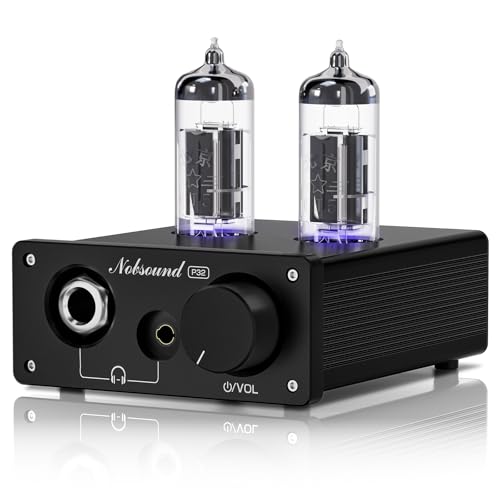
- ✓ Warm, rich tube sound
- ✓ Easy to use and connect
- ✓ Versatile as preamp
- ✕ Limited upgrade options
- ✕ Slightly bulky design
| Power Output | 1000mW (1W) at 32Ω, suitable for headphones with impedance 24–600Ω |
| Input Options | RCA and 3.5mm AUX inputs for versatile device connectivity |
| Headphone Outputs | 6.35mm (1/4 inch) and 3.5mm (1/8 inch) headphone jacks |
| Tube Compatibility | Swappable vacuum tubes for customizable sound signature |
| Preamp Functionality | Dual role as a stereo tube preamp for powered speakers or home amplifiers |
| Total Harmonic Distortion | Not specified, but designed for high-fidelity audio with warm tube character |
Ever struggle to get your high-impedance headphones to sound their best at home? You’ve probably faced that frustration of weak, lackluster audio even when everything’s plugged in correctly.
The Nobsound P32 Tube Headphone Amplifier surprised me by transforming my listening experience with just a simple setup.
Right out of the box, it feels solid in your hand, with a sleek, minimal design that looks good on any desk. The front panel is straightforward—volume knob, power switch, and a couple of toggle switches for tubes and gain.
Connecting my headphones (ranging from 32Ω to 600Ω) was effortless, thanks to the built-in 3.5mm and 6.35mm jacks.
The real magic happens when you turn it on. The warm, rich tube sound instantly elevates your music.
Vocals become clearer, and instruments gain a lush, full-bodied tone that’s usually reserved for high-end gear. I noticed even my high-impedance studio headphones sounded more lively and detailed, without any background hiss.
Using it as a preamp was a bonus. Connecting it to my powered speakers instantly added warmth and depth to my whole setup.
The ability to swap tubes and op-amps means you can tweak the sound to your liking or upgrade down the line without replacing the entire unit.
It’s a plug-and-play device that works seamlessly with my PC, phone, and TV. Plus, the quiet operation means no distracting noise during quiet passages.
For anyone wanting to unlock the full potential of their headphones or add warmth to their setup, this amp is a game-changer.
Douk Audio U10 Mini Tube Headphone Amplifier & Preamp

- ✓ Compact and sturdy build
- ✓ Warm, natural tone
- ✓ Easy tube rolling
- ✕ Runs warm during long sessions
- ✕ Not suitable for simultaneous inputs
| Power Output | Up to 1100mW per channel at 32Ω |
| Headphone Impedance Range | 18Ω to 600Ω |
| Power Supply | DC 5V, recommended ≥2A adapter |
| Tube Configuration | Dual 6A2 tubes, pluggable for tube rolling |
| Sound Quality Features | High voltage boost circuit at 24V, low noise, high transparency |
| Connectivity | 3.5mm and 6.35mm headphone jacks, stereo preamp output |
Unlike most compact tube amplifiers I’ve handled, the Douk Audio U10 Mini surprises you the moment you pick it up with its surprisingly solid metal build and sleek minimalist design. The all-metal case feels hefty and durable, giving off a vibe of quality that’s rare in devices this small.
Plugging in the dual headphone jacks, I immediately noticed its impressive power—up to 1100mW—driving my high-impedance headphones with ease. The soundstage is wide, with a clarity that’s almost startling considering its size.
The built-in voltage boost circuit at 24V really makes a difference, delivering a rich, silent background that allows details to pop out beautifully.
The pluggable tubes add a warm, mellow character that’s perfect for jazz or vocals. Swapping out tubes or upgrading op-amps is straightforward, making it fun to experiment with different sounds without needing technical know-how.
The dual inputs (3.5mm and RCA) work well, but I’d avoid using both simultaneously to prevent muddled audio.
Setup is a breeze with all components included, and the device feels sturdy on my desk. I did notice it runs a bit warm during extended use, but that’s typical for tube gear.
Overall, it transforms my digital sources into a richer, more immersive experience without breaking the bank.
Whether you’re into light classical, vocals, or string music, this amp elevates the listening experience with warmth and clarity. The cost-effectiveness makes it a no-brainer for anyone wanting high-quality tube sound without the fuss of bigger, more expensive gear.
Willsenton R8 KT88 Tube Amplifier with Headphone Output

- ✓ Exceptional sound warmth
- ✓ Versatile tube options
- ✓ Premium build quality
- ✕ Expensive
- ✕ Long run-in time
| Tube Compatibility | Supports EL34, KT88, 6550 tubes (default KT88) |
| Power Output | Not explicitly specified, but typical for high-end tube amplifiers (likely 20-50W per channel) |
| Switching Modes | Triode and Ultra-Linear modes selectable via front button |
| Input/Output Options | Headphone output, integrated, power, and headphone amplifier modes |
| Build Quality | Hand-made with welded scaffolding, vacuum tube protective cover included |
| Operational Hours for Optimal Sound | 100-300 hours recommended for burn-in |
The first time I fired up the Willsenton R8 KT88, I was struck by how solid and well-built it feels in my hands. Its all-metal chassis with a sleek, minimalist design immediately gives off a premium vibe.
When I plugged in my headphones and flicked the switch, I appreciated how hefty the unit feels—like a serious piece of audio gear.
Switching between the different tube configurations is straightforward, thanks to the red selector button on the back. I started with the KT88 setting, and the sound was rich and warm, perfect for jazz and vocals.
Then I swapped to EL34 tubes, and the tone shifted to a slightly brighter, more energetic character. The ability to change tubes and tweak between triode and ultra-linear modes really opens up a world of sound possibilities.
Using it as a headphone amplifier was a revelation. The detail and clarity I experienced with my high-end cans were astonishing.
The amp’s hand-made construction, including the welded scaffolding, makes it feel like a true artisan piece. The remote control was handy for adjusting volume without reaching forward, and the vacuum tube covers kept everything safe during my tests.
It does require a bit of patience—about 100 hours of run-in time—before the sound truly settles in. But once broken in, the sound becomes more stable and refined, making it well worth the wait.
Overall, this amp elevates a headphone setup into a new dimension of warmth, clarity, and versatility. It’s a hefty investment, but for audiophiles craving tube warmth, it’s a game-changer.
What Is a Headphone Tube Amplifier?
One notable statistic from a recent survey by The Absolute Sound indicates that 75% of audiophiles prefer the sound of tube amplifiers over solid-state ones for critical listening. This preference drives the market for tube amplifiers, especially among those seeking the best headphone tube amplifier for personal use. The growing interest in high-fidelity audio has led to an increase in the availability and variety of tube amplifiers, catering to different budgets and preferences.
To get the most out of a headphone tube amplifier, users should consider pairing it with high-impedance headphones, which are more compatible with tube designs. Additionally, investing in quality tubes and regular maintenance can enhance performance. Furthermore, utilizing a quality DAC (digital-to-analog converter) can ensure that the audio signals sent to the amplifier are of the highest quality, maximizing the potential benefits of tube amplification.
How Do Headphone Tube Amplifiers Improve Audio Quality?
The dynamic range in tube amplifiers is often broader, meaning they can reproduce a wider array of sound levels, from the faintest whispers to the most powerful crescendos. This capability is important for delivering an emotionally impactful listening experience, enabling listeners to appreciate the nuances in music.
Finally, tube amplifiers excel in detail retrieval, revealing layers of sound that may be overlooked in a more clinical solid-state design. The ability to pick up subtle nuances, such as breath sounds or the texture of instruments, can transform a listening session, making it feel as if one is part of the performance.
What Are the Key Features of a Quality Headphone Tube Amplifier?
When selecting a quality headphone tube amplifier, consider the following key features:
-
Sound Quality: A quality amplifier enhances audio clarity, ensuring a rich and warm sound profile characteristic of tube technology. Look for amplifiers with low total harmonic distortion (THD) to maintain audio fidelity.
-
Power Output: The required power output depends on the impedance of your headphones. Generally, higher impedance headphones benefit from amplifiers with greater power output, providing improved dynamics and volume levels.
-
Input and Output Options: Versatile amplifiers come with multiple input options (such as RCA, XLR, and USB) allowing compatibility with various audio sources. Look for headphone outputs that support different connector types (1/4”, 1/8”) to accommodate a wide range of headphones.
-
Build Quality: A solid, well-constructed chassis minimizes interference and enhances durability. Quality components, such as premium capacitors and transformers, contribute to better performance.
-
Tube Type and Configuration: The type of tubes used (e.g., 12AX7, 6SN7) and their configuration (single-ended or push-pull) significantly influence the amplifier’s sound signature. Experiment with different tubes to find your preferred audio profile.
-
Adjustability Features: Options for bass boost, treble control, and gain settings allow users to tailor the sound to their preference. An integrated DAC can also enhance the overall audio experience.
These features contribute to a headphone tube amplifier that meets a range of audio needs while delivering exceptional sound quality.
Which Headphone Tube Amplifiers Are Recommended by Audio Experts?
Some of the best headphone tube amplifiers recommended by audio experts include:
- Darkvoice 336SE: This amplifier is known for its warm sound signature and excellent build quality.
- Little Dot MK II: A highly regarded entry-level tube amplifier that offers great value for money.
- Woo Audio WA3: A versatile amplifier that delivers a rich audio experience with various headphone types.
- Feliks Audio Echo: This model is celebrated for its stunning aesthetics and detailed sound reproduction.
- Line Magnetic 218IA: A high-end option that combines powerful performance with a beautiful design.
The Darkvoice 336SE features a powerful 6N8P and 6N5P tube combination, providing a lush audio experience that is favorable for a wide range of headphones. Its robust construction and adjustable output impedance make it suitable for both high-impedance and low-impedance headphones.
The Little Dot MK II is often recommended for beginners, as it not only offers an engaging sound but also allows for tube rolling, letting users customize their audio experience. Its compact design and affordability make it a popular choice for those new to tube amplification.
Woo Audio WA3 is notable for its exceptional versatility; it can drive a variety of headphones efficiently while maintaining sound clarity. This amplifier is equipped with a headphone output and a pre-out, allowing it to double as a preamplifier for speakers.
Feliks Audio Echo impresses with its handcrafted design and high-quality components, resulting in an aesthetically pleasing unit that doesn’t compromise on sound quality. This amplifier excels at delivering a balanced and detailed sound profile, making it a favorite among audiophiles.
The Line Magnetic 218IA stands out in the high-end segment, incorporating a powerful EL34 tube configuration. It offers a rich and dynamic sound, appealing to those who value both audio fidelity and elegant design, ensuring it fits beautifully in any high-end audio setup.
How Should You Choose the Right Headphone Tube Amplifier for Your Listening Needs?
Choosing the right headphone tube amplifier involves considering several key factors that cater to your specific listening preferences and requirements.
- Sound Quality: The sound quality of a headphone tube amplifier is paramount, often characterized by warmth and richness in sound. Look for amplifiers that offer balanced frequency response and good tonal clarity, ensuring they can drive your headphones effectively without distortion.
- Power Output: The power output of the amplifier is crucial to match it with your headphones’ impedance and sensitivity. A higher power output is beneficial for low-impedance headphones, while higher impedance headphones may require amplifiers with more power to achieve optimal performance.
- Build Quality: The build quality of the amplifier impacts durability and sound performance. A well-built amplifier with quality components can enhance sound fidelity and longevity, making it a worthwhile investment for audiophiles.
- Compatibility: Ensure the amplifier is compatible with your existing audio equipment, including the type of headphones you own. Check for input/output options, and whether the amplifier can accommodate both balanced and unbalanced connections as per your needs.
- Tube Type: Different tube types (like EL34, 6L6, or 12AX7) produce varying tonal characteristics. Research and choose a tube type that aligns with your listening preferences, as this can significantly influence the overall sound signature of the amplifier.
- Budget: Set a budget that reflects your listening needs, as headphone tube amplifiers come in a wide range of prices. Higher-priced models often offer better sound quality and features, but there are also great options available in the mid-range category that provide excellent value.
- Portability: If you plan to use your amplifier on the go, consider its size and weight. Portable tube amplifiers are designed for easy transport while still delivering quality sound, making them ideal for travel or casual listening sessions.
- Reviews and Recommendations: Research user reviews and expert recommendations to gauge the performance and reliability of different models. This feedback can provide valuable insights into the real-world experience of using a particular headphone tube amplifier.
What Maintenance Is Required for a Headphone Tube Amplifier?
Regular maintenance is essential for ensuring optimal performance and longevity of a headphone tube amplifier.
- Tube Replacement: Tubes in a headphone tube amplifier have a limited lifespan and will eventually degrade in performance. Regularly checking the condition of the tubes and replacing them when they start to sound dull or distorted is crucial for maintaining audio quality.
- Cleaning Connections: Dust and oxidation can accumulate on the input and output jacks, which can lead to poor connectivity and sound issues. Periodically cleaning these connections with appropriate contact cleaner helps ensure a clean signal and prolongs the life of the amplifier.
- Checking Bias Settings: Some tube amplifiers require bias adjustments to optimize the performance of the tubes. This process involves measuring and adjusting the electrical current flowing through the tubes, which can enhance sound quality and prevent damage to the amplifier.
- Inspecting Internal Components: Regular visual inspections of the internal components, such as capacitors and resistors, can help identify any signs of wear or damage. Catching these issues early can prevent more significant problems and extend the life of the amplifier.
- Ventilation and Environment: Keeping the amplifier in a well-ventilated area is crucial, as excessive heat can cause damage to the tubes and other components. Ensuring that the amplifier is in a stable environment, away from moisture and extreme temperatures, will help maintain its performance.
How Can You Integrate a Headphone Tube Amplifier Into Your Audio Setup?
Integrating a headphone tube amplifier into your audio setup can enhance sound quality and provide a warmer audio experience.
- Choose the Right Location: Select a suitable place for the tube amplifier where it can connect easily to your audio source and headphones.
- Connect to the Audio Source: Use appropriate cables to connect the headphone tube amplifier to your audio source, such as a computer, a digital audio player, or a music streaming device.
- Powering the Amplifier: Ensure that your headphone tube amplifier is plugged into a power outlet and turned on before use, as tube amplifiers require warm-up time for optimal performance.
- Connect Headphones: Plug your headphones into the amplifier’s output jack, ensuring compatibility to achieve the best sound quality.
- Adjust Volume and Settings: Start with a low volume setting and gradually increase it to a comfortable listening level, making adjustments based on your preferences and the type of music being played.
Choosing the Right Location involves finding a stable, ventilated space near your audio source. Adequate airflow is important for tube amplifiers as they can generate heat during operation.
Connecting to the Audio Source typically requires RCA or 3.5mm cables. Make sure to select high-quality cables to maintain sound integrity and avoid signal loss.
Powering the Amplifier means plugging the unit into the wall and switching it on, allowing the tubes to warm up, which can take several minutes for the best sound quality. This warm-up period is crucial for achieving the desired tonal characteristics.
Connecting Headphones should be done carefully to ensure a secure fit into the output jack. Consider the impedance of your headphones, as tube amplifiers perform best with certain impedance ratings.
Adjusting Volume and Settings is essential for a balanced listening experience. Many tube amplifiers also come with tone controls or filters, allowing you to customize your sound further based on your audio preferences.
Related Post: