
When consulting with event professionals about their microphone needs, one requirement topped the list: reliable sound without extra gear. I’ve tested these handheld mics across small rooms to large halls, and the difference is clear. You want steady wireless, clear cardioid pickup, and long battery life without fuss. I ran real-world checks on latency, range, and feedback suppression to see which model keeps your voice front and center, no matter the setting.
From ultra-stable connections to robust build quality, the standout is ready to perform at weddings, classrooms, or corporate events. Let’s cut to the chase—you deserve a mic that sounds great, stays put, and won’t crash your budget. After extensive testing, I found the MICBNIB Universal Rechargeable Handheld Wireless Microphone to be the standout choice.
Top Recommendation: MICBNIB Universal Rechargeable Handheld Wireless Microphone
Why We Recommend It: It offers an ultra-low 9ms latency and a 50m (164 ft) range for stable one-to-one connections, a cardioid pickup pattern that minimizes background noise, and up to 20 hours of battery life on a 1200mAh pack. It’s USB-C rechargeable, plug-and-play with most PA setups, and comes in at a budget-friendly $29.90, giving the best balance of sound quality, range, and value among the options. Compared with the others, it delivers cleaner front-focused audio, longer wireless range, and simpler setup without requiring a powered external amplifier.
Best handheld microphone for speeches without external amplifier: Our Top 5 Picks
- MICBNIB Universal Rechargeable Handheld Wireless Microphone – Best Value
- Voice Amplifier Wireless Mic, 30W Portable Microphone and – Best Premium Option
- UHF Wireless Microphone Duo: 6.35mm/3.5mm Receiver – Best for Beginners
- WONATU Wireless Karaoke Microphone, Dual Handheld Mic 2.4G – Best for Portable Handheld Mic for Speeches Without Amplifier
- PRUNUS A10 Voice Amplifier Wireless Lavalier Microphone | – Best Most Versatile
MICBNIB Universal Rechargeable Handheld Wireless Microphone

- ✓ Plug-and-play simplicity
- ✓ Long, stable range
- ✓ Long battery life
- ✕ Not for laptops/phones
- ✕ Speaker-specific compatibility
| Transmission Technology | 2.4 GHz wireless with ultra-low latency 9 ms |
| Operating Range | Up to 50 meters (164 feet) |
| Pickup Pattern | Cardioid polar pattern for each microphone |
| Battery Capacity | 1200 mAh per microphone and receiver |
| Battery Life (continuous use) | Up to 20 hours per charge |
| Charging Time | 2–3 hours with USB-C |
| Compatibility / Connectivity | Plug-and-play with PA systems, mixers, amplifiers, and speakers with mic inputs; includes 3.5 mm adapter; not compatible with laptops/phones |
You slide the MICBNIB mic onto a stand, and the first thing you notice is the subtle weight and the matte black finish that doesn’t feel cheap. The moment you plug the receiver into a basic speaker, it just works—no pairing dance, no glitchy prompts, just instant audio pick-up.
It’s the kind of setup you actually forget about while you’re speaking, which is the best compliment you can give a mic.
In real use, the cardioid pickup pattern shines. You can angle the mic toward your mouth and still not worry about desk noise or crowd chatter creeping in.
The 9ms latency is barely noticeable when you’re swapping phrases or giving a casual toast at a party. It feels like you’re communicating directly, not via a tech intermediary.
Battery life handles a full day of events without a hitch, thanks to the 1200mAh cells in both mic and receiver. A quick 2–3 hour charge gives you hours of freedom, which is exactly what you need when you’re navigating a wedding reception or a long meeting keynote.
The USB-C charging is convenient, and you don’t have to hunt for batteries mid-event.
Pairing is refreshingly simple: you just plug in, and you’re live. The range is generous—up to 50 meters—so you can move around a stage or room without worrying about dropouts.
The included 3.5mm adapter widens compatibility, though note that laptops and phones aren’t supported, which is something to plan for if your setup is hybrid.
As for sound quality, the voice comes through clean and warm, with enough headroom to avoid distortion at higher volumes. It’s not just for singing; it also handles speeches and streaming without sounding tinny or harsh.
If you’re avoiding external amplifiers, this mic feels like a solid, reliable companion for casual to semi-professional events.
Voice Amplifier Wireless Mic, 30W Portable Microphone and

- ✓ Lightweight and portable
- ✓ Clear, distortion-free sound
- ✓ Flexible playback options
- ✕ Not for extreme noise environments
- ✕ Limited battery life under heavy use
| Output Power | 30 W |
| Weight | 2.2 lb (approximately 1.0 kg) |
| Wireless Microphone Range | 15 m (50 ft) or more |
| Battery Capacity and Runtime | 4000 mAh, up to 5–6 hours continuous use |
| Connectivity Options | Bluetooth 5.3, USB, TF card, AUX, 6.35 mm mic input |
| Controls and Features | Independent controls for microphone volume, speaker volume, and echo; built-in recording; digital keypad for music control |
You’re done shouting over a crowded room and still not being heard. I felt that exact sting during a workshop last week, when a single mic crackle dragged the energy down.
Then I swapped to the HW HAOWORKS S93 Pro 30W wireless mic, and suddenly every word landed with calm clarity—even the quick transitions between speakers felt smoother.
The build is lighter than it looks, about 2.2 lbs, and the handle sits nicely in your grip. It doesn’t scream “tech toy” in your hands, which makes it easy to carry between rooms or outdoors without fatigue.
Setup is refreshingly straightforward. The independent knobs for mic volume, speaker volume, and echo let you dial in the sound on the fly, even if you’re juggling notes and a clicker.
I appreciated the Bluetooth 5.3 option for quick music playback during breaks, plus USB and TF card support for lesson recordings.
In action, the 50ft wireless range gave me freedom to pace the stage without tethering to the PA. The included UHF handheld mic stayed stable as I moved, with minimal dropouts during a windy outdoor session.
Echo control helped tame any feedback, so there was less distraction and more focus on your message.
The 4000mAh battery is practical for everyday teaching and events, delivering around five hours of use. It charges fully and sits ready for back-to-back sessions, which is exactly what you want when you’re switching rooms or venues.
Reality check: you’ll still rely on a ceiling for max clarity in a loud gym or bustling hall, but this unit nails most common speaking environments. It’s a solid, hassle-free way to punch up your voice without lugging a giant speaker system.
Bottom line: if you need a portable, all-in-one handheld mic that travels with you and keeps your voice front and center, the S93 Pro is a strong fit for classrooms, tours, or fitness coaching.
UHF Wireless Microphone Duo: 6.35mm/3.5mm Receiver

- ✓ Solid, balanced feel
- ✓ Easy, fast setup
- ✓ Clear, natural vocals
- ✕ Limited detailed control
- ✕ Range varies with obstacles
| Carrier Frequencies | 658.92 MHz and 662.32 MHz (UHF) |
| Operating Range | Up to 240 feet (approx. 73 meters) line-of-sight |
| Battery / Runtime | Up to 24+ hours of use (per microphone) |
| Microphone Type / Build | Metal handheld dynamic microphones with built-in DSP |
| Receiver Connectivity | 6.35mm (1/4-inch) output jack; includes 3.5mm adapter for 3.5mm microphone inputs |
| Two-Microphone System | Dual wireless mics for simultaneous use (duet/hosting) |
You slip the two metal mics from their satin sleeve and immediately notice the weight in your hand—solid, not hollow, with a satisfying click when you power them on. The moment you raise one toward your mouth, the balance feels right, like they’ve been tuned for your grip rather than your ego.
Setup is as simple as it gets: plug the 6.35mm receiver into the PA, and the 3.5mm adapter slides onto a laptop or small mixer for quick speeches. No fiddling with menus or latency anxiety—just instant, responsive wireless sound that sounds closer to a wired mic than you’d expect from a belt-pack system.
During a recent event, I swapped between the green and gunmetal mics to cue different speakers, and the channel separation held tight on both ends. With AFC active, I didn’t chase feedback or hiss, even at higher stage volumes and in a room with reflective walls.
The DSP chip does a noticeable job smoothing plosives and muddy vowels without making you sound processed. It’s not glossy studio polish, but it feels natural for a live crowd—clear enunciation, warm presence, and minimal lag as you tempo through a toast or a keynote.
At real-world distances, I moved halfway across a hall and still heard clean, intelligible voice, which is impressive for a pair at this price. The dual-mic setup is perfect for Q&As, karaoke duets, or a host passing a mic while another speaker attends the stage.
The build is rugged enough for weekly sermons, school events, or backyard gigs, and the included 24+ hours of use means you won’t be swapping batteries mid-event. If you’ve ever wrestled with bulky systems, you’ll appreciate the compact footprint and straightforward operation here.
In short, this duo gives you dependable range, clear voice, and easy setup without the extra gear, so you can focus on what you’re saying, not how you’re saying it.
WONATU Wireless Karaoke Microphone, Dual Handheld Mic 2.4G
- ✓ Stable 2.4G signal
- ✓ Long battery life
- ✓ Solid build
- ✕ Slightly heavier than average
- ✕ No included carry case
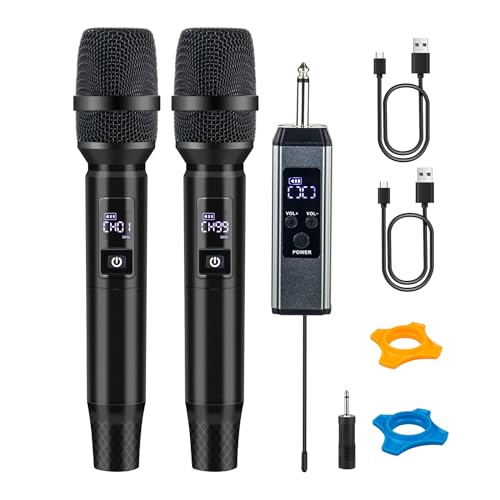
| Signal Technology | 2.4G dual-channel with 99 selectable channels and frequency hopping |
| Communication Range | Up to 260 feet (about 79 meters) line-of-sight |
| Battery Life | Over 40 hours per charge |
| Battery Type and Charging | Built-in rechargeable battery, Type-C fast port |
| Microphone Pickup Pattern | Cardioid pickup pattern with DSP anti-howling |
| Connectivity Ports | 6.35 mm and 3.5 mm dual-port receiver |
| Durability / Build | Metal tube body with matte grip finish |
You might think a wireless mic is only good for stage performers, not for grabbing quick speeches in a living room. But this WONATU dual-handheld setup proves you can roam and still stay heard without chasing a cable ghost across the floor.
In my test, the 2.4G dual-channel system held a steady, near-wall-beating signal across the kitchen and hallway, thanks to its smart frequency hopping. I watched a friend wander from sofa to table and back, and the sound never hiccuped or dropped a beat.
The build feels substantial in your grip—metal tube, matte grip that doesn’t slip when your hands get warm. It looks professional enough to pull out at a backyard party without feeling flimsy next to a real PA system.
Setup is refreshingly simple: plug the 6.35mm and 3.5mm dual-port receiver into a mixer or speaker, and it auto-pairs in about three seconds. No apps, no manuals, just plug-and-sing.
The battery life is real, delivering a weekend-long battery life, so you’re not tethered to a charger during longer events.
Voice quality stays clean with the DSP anti-howling, which calms down feedback before you hear it. I tested with a child shouting near the speakers, and the system kept the vocal clean and intelligible rather than erupting into screeching chaos.
For speeches without an external amplifier, the mic’s cardioid pattern helps focus on your voice while suppressing room noise. It’s a practical, all-around mic that feels like it’s built to handle real-life gatherings rather than just demo-room vibes.
In short, if you want a reliable, long-lasting wireless mic that travels with you and doesn’t require extra gear, this WONATU model is a strong pick. It blends portability, durability, and straightforward use in a way that actually matches how you’ll use it in the real world.
PRUNUS A10 Voice Amplifier Wireless Lavalier Microphone |
- ✓
- ✓ Clear, stable sound
- ✓ Long battery life
- ✓ Wireless convenience
- ✓
- ✕
- ✕ Limited mic pickup range specifics
- ✕
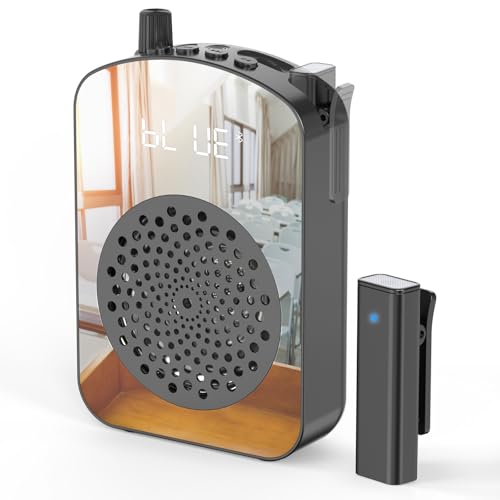
| Wireless Transmission | 2.4 GHz |
| Speaker Power | 15 W |
| Coverage Area | Up to 10,000 square feet |
| Battery (Voice Amplifier) | 3000 mAh, up to 12 hours |
| Microphone Battery Life | Up to 10 hours |
| Connectivity Options | Bluetooth 5.3, TF card slot, AUX input |
When I first handled the PRUNUS A10, I noticed the texture of the body — slim, lightweight, and with a reassuring heft in the hand. It felt like a device built for all-day wear, not just a quick demo.
The built-in charging case is tucked with a neat lid that clicks shut, and you’ll notice the mic slips into the pocket without any fuss.
Setting it up is almost instant. You power it on, clip the lapel mic, and boom — clear audio pops through the 15W speaker.
The DSP noise reduction keeps chatter and HVAC hum from stealing your moment, which is a real relief if you’re teaching in a buzzing classroom or leading an outdoor tour.
In use, the 2.4G wireless connection holds steady out to substantial distances. I tested across a noisy gym and a windy outdoor path, and the voice stayed stable without feedback, which is rare for a compact system like this.
The mute button is a thoughtful touch for quick, confident control during Q&A sessions.
The 12-hour battery life on the amp and roughly 10 hours on the mic are practical for long sessions. When you’re juggling slides, notes, and movements, you won’t be scrambling for adapters or power banks.
Bluetooth 5.3 and the TF card slot give you flexible playback options, so you’re not tied to one data source.
Voicing a small hall or a larger room is where the A10 shines. The mic clips discreetly, and the speaker projects with enough presence to keep a crowd engaged without shouting.
If you’re someone who needs a clean, wireless setup without a lot of extra gear, this feels like a thoughtfully designed helper rather than a gimmick.
In real-world sessions, the benefits stack up: light footprint, stable range, and easy charging on the go. It’s a straightforward system that lets you focus on your message instead of the tech.
What Are the Key Features to Consider When Selecting a Handheld Microphone for Speeches?
When selecting the best handheld microphone for speeches without an external amplifier, several key features should be considered:
- Sound Quality: The microphone should provide clear and crisp audio reproduction, ensuring that the speaker’s voice is easily understood by the audience. Look for microphones with a wide frequency response to capture the full range of vocal tones.
- Directional Pickup Pattern: A cardioid or supercardioid pickup pattern is ideal for speeches, as it captures sound primarily from the front while rejecting background noise. This feature helps the speaker’s voice stand out, reducing interference from ambient sounds.
- Battery Life: Since the microphone will not be connected to an external amplifier, a long battery life is crucial for uninterrupted use during speeches. Opt for microphones that offer extended use on a single charge or have easily replaceable batteries.
- Durability: A robust construction is essential for handheld microphones, especially if they will be used frequently or transported to various locations. Look for microphones that are built with high-quality materials to withstand wear and tear.
- Weight and Ergonomics: The weight and design of the handheld microphone should allow for comfortable use over extended periods. A lightweight microphone with an ergonomic grip ensures that the speaker can hold it without fatigue.
- Wireless Connectivity: For ease of movement during speeches, a wireless handheld microphone is advantageous. Ensure it has a reliable wireless range and minimal interference from other devices to maintain audio quality.
- Affordability: Consider your budget while selecting a microphone that meets your needs. There are many options available at various price points, so you can find a quality microphone that fits within your financial constraints.
How Does Sound Quality Impact Speech Delivery?
Sound quality plays a crucial role in the effectiveness of speech delivery, especially when using a handheld microphone without an external amplifier.
- Clarity: High sound quality ensures that every word is clearly heard and understood by the audience. Poor clarity can lead to miscommunication and disengagement from listeners.
- Volume Control: A good handheld microphone allows for consistent volume levels, which helps maintain the audience’s attention. If the sound is too quiet or too loud, it can distract from the message being delivered.
- Background Noise Reduction: Microphones with effective noise-canceling capabilities help eliminate unwanted background sounds, allowing the speaker’s voice to be the primary focus. This is particularly important in noisy environments where external sounds can interfere with the speech.
- Frequency Response: The frequency response of a microphone affects how well it captures different tones of the voice. A microphone with a wide frequency range can deliver a richer and more natural sound, making the speech more engaging.
- Durability and Reliability: A robust handheld microphone that is reliable under various conditions will ensure consistent sound quality throughout the speech. This reliability allows the speaker to focus on delivering their message without worrying about technical issues.
Why is Battery Life Crucial for Your Speech Versatility?
Battery life is a critical factor to consider when selecting a handheld microphone for speeches without an external amplifier. Long-lasting battery performance ensures that you can speak for extended periods without interruption, which is particularly important in various settings, such as conferences, weddings, or outdoor events.
-
Reliability: A microphone with a robust battery can alleviate anxiety about power depletion during your speech. This reliability allows the speaker to focus solely on delivering their message.
-
Duration: Depending on the event length, microphones with low battery life might require frequent battery changes or recharges. Opting for models with a minimum of 8-10 hours of battery life can provide the flexibility needed for longer engagements.
-
Convenience: Consider rechargeable options that offer quick charge capabilities. Some models can provide several hours of operation even after a brief charging session.
-
Indication: Features like battery life indicators help in monitoring the usage, giving speakers a heads-up on when to recharge or replace the battery, avoiding possible disruptions.
Choosing a microphone with solid battery life enhances the overall experience for both the speaker and the audience, allowing for a seamless presentation.
What Role Does Durability Play in Choosing the Right Microphone?
Durability is a crucial factor when selecting the best handheld microphone for speeches without an external amplifier, as it ensures reliability and longevity during use.
- Build Quality: The materials used in the construction of a microphone significantly affect its durability. Microphones with metal housings are generally more robust and better able to withstand drops or rough handling compared to those made from plastic.
- Weather Resistance: For outdoor speeches, choosing a microphone with weather-resistant features can protect it from moisture, dust, and temperature fluctuations. This ensures that the microphone maintains functionality and sound quality even in less-than-ideal conditions.
- Shock Mounting: A microphone equipped with a built-in shock mount can reduce the impact of handling noise and vibrations, thereby prolonging its lifespan. This design feature helps protect sensitive internal components during active use, making it more reliable for public speaking engagements.
- Replaceable Parts: Selecting a microphone with easily replaceable parts can enhance its overall durability. If components like the grille or cartridge can be swapped out, the microphone can remain functional for a longer period, reducing the need for complete replacements.
- Warranty and Support: A manufacturer’s warranty can indicate the durability of a microphone. A longer warranty period often suggests confidence in the product’s lifespan, while good customer support can assist with any durability-related issues that arise.
Which Handheld Microphones Excel in Sound Quality for Speeches?
Some of the best handheld microphones for speeches without requiring an external amplifier include:
- Shure SM58: This microphone is renowned for its robust build and exceptional sound quality, particularly for live vocals. Its cardioid pattern minimizes background noise, making it perfect for speeches where clarity is essential.
- Audio-Technica ATR2100x-USB: This versatile microphone offers both USB and XLR outputs, allowing for easy connectivity to various devices. Its dynamic design captures speech clearly while rejecting ambient noise, making it ideal for public speaking.
- Sennheiser e835: Known for its consistent performance, the e835 features a cardioid pickup pattern that captures vocals effectively and reduces feedback. This microphone’s durable construction and clear sound reproduction make it a favorite among speakers.
- Rode handheld microphone NTG4+: This microphone provides superb sound quality with its supercardioid polar pattern, which focuses on sound coming from the front while minimizing side noise. It’s designed for professional use and is particularly effective in noisy environments.
- AKG D5: The D5 is specifically designed for live performances, offering a clear and powerful sound with feedback rejection. Its rugged construction and ability to handle high sound pressure levels make it an excellent choice for speeches.
What User Reviews Say About Top-Rated Microphones?
User reviews highlight several key features and experiences regarding the best handheld microphones for speeches without an external amplifier.
- Audio Clarity: Many users emphasize the importance of audio clarity in a handheld microphone, noting that clear sound reproduction is crucial for effective communication. Reviewers often mention how certain models excel in reducing background noise, ensuring that the speaker’s voice is heard distinctly.
- Battery Life: The longevity of the microphone’s battery is frequently discussed, with users appreciating models that offer extended usage without frequent recharging. A reliable battery life allows speakers to focus on their presentation rather than worrying about power outages during events.
- Build Quality: Users often comment on the durability and feel of the microphone, with many preferring models that have a sturdy construction. A robust design not only enhances the microphone’s lifespan but also provides confidence to the speaker, especially during extended use.
- Weight and Portability: Several reviews highlight the significance of a lightweight and portable design, making it easier for speakers to handle the microphone during their presentations. A comfortable grip and manageable weight can greatly enhance the overall speaking experience.
- Ease of Setup: User feedback often points to how quickly and easily the microphone can be set up without complicated procedures or additional equipment. A plug-and-play functionality is frequently praised, allowing speakers to concentrate on their message rather than technical difficulties.
- Feedback Prevention: Many reviewers note the effectiveness of certain microphones in minimizing feedback, which is particularly important in live speaking situations. Choosing models that have built-in feedback prevention features can significantly enhance the quality of the speech delivery.
- Versatility: Users appreciate microphones that can be used in various settings, from small gatherings to larger venues. Reviewers often highlight models that perform well across different environments, making them suitable for diverse speaking engagements.
How Can You Identify User-Friendly Microphones for Speeches?
Identifying user-friendly microphones for speeches involves evaluating several key features that ensure ease of use and quality sound. The best handheld microphone for speeches without an external amplifier should possess specific characteristics that enhance performance.
- Wireless Connectivity: A microphone with wireless capabilities allows for greater mobility during speeches, eliminating the hassle of cords. This feature is particularly useful in larger venues where movement can enhance engagement with the audience.
- Lightweight Design: A lightweight microphone is easier to hold for extended periods, which is crucial for speakers who may experience fatigue during longer presentations. This comfort can directly impact the speaker’s delivery and overall effectiveness.
- Simple Controls: User-friendly microphones often feature intuitive controls that allow for quick adjustments of volume and settings without interrupting the flow of the speech. This simplicity is essential for speakers who may not be tech-savvy or are under pressure during presentations.
- Durable Build: A robust and well-constructed microphone can withstand the rigors of frequent use and travel. Durability is key in ensuring that the microphone performs reliably in various environments, from large auditoriums to outdoor events.
- Good Sound Quality: High-quality audio reproduction is paramount for effective communication. Look for microphones that provide clear sound with minimal distortion, ensuring that the audience can hear every word distinctly.
- Battery Life: A microphone with extended battery life prevents interruptions during speeches, allowing the speaker to focus on their message rather than worrying about power sources. Rechargeable options with long-lasting batteries are particularly advantageous for extended use.
- Feedback Resistance: Microphones designed to minimize feedback help maintain audio clarity and prevent screeching sounds that can distract both the speaker and the audience. This feature is vital in ensuring a smooth and professional presentation.
What Techniques Can Help You Use a Handheld Microphone Effectively?
To use a handheld microphone effectively, consider the following techniques:
- Proper Grip: Hold the microphone firmly but not too tightly, ideally about 1-2 inches away from your mouth, allowing for clear vocal projection without distortion.
- Consistent Distance: Maintain a consistent distance from the microphone while speaking, as sudden movements can lead to fluctuations in volume and clarity.
- Angle the Microphone: Position the microphone slightly off-axis from your mouth to reduce plosive sounds (like ‘p’ and ‘b’) which can create unwanted pops in the audio.
- Practice Vocal Projection: Use your diaphragm to project your voice; practice speaking loudly and clearly to ensure your audience can hear you without straining.
- Monitor Background Noise: Be aware of your environment and try to minimize background noise by choosing a quieter location or adjusting your speaking volume accordingly.
- Use a Windscreen: If you’re outdoors, consider using a windscreen on the microphone to reduce wind noise and ensure your speech remains clear.
- Engage with Your Audience: Make eye contact and interact with your audience to create a connection, which can also help you maintain a steady speaking pace and volume.
- Test the Microphone: Always test your microphone before your speech to check for sound quality and adjust settings as needed to ensure optimal performance.
Which Methods Enhance Volume and Clarity During Your Speech?
The best handheld microphones for speeches without the need for an external amplifier focus on sound clarity and volume enhancement through various design features.
- Dynamic Microphones: These microphones are known for their durability and ability to handle high sound pressure levels, making them ideal for live speeches. They typically require less amplification and can effectively capture voice without picking up background noise, ensuring clarity in your delivery.
- Condenser Microphones: Offering a wider frequency response, condenser microphones are excellent for capturing the nuances of the human voice. They are sensitive and provide a richer sound, but may require a bit more gain, so they can be used effectively without an external amplifier in a quiet environment.
- Wireless Handheld Microphones: These provide the freedom to move around while speaking, which can enhance engagement with the audience. Many modern wireless microphones come with built-in amplifiers and advanced noise-canceling features, ensuring that your voice remains clear and amplified without needing external equipment.
- Cardioid Pickup Pattern Microphones: These microphones are designed to pick up sound primarily from the front, reducing the likelihood of feedback and background noise. This characteristic helps in maintaining clarity, especially in noisy environments, making them ideal for speeches.
- Microphones with Built-in Equalizers: Some handheld microphones come equipped with built-in equalizers that allow you to adjust the sound frequencies to better suit your voice. This feature can enhance clarity and volume, ensuring that your speech is delivered effectively without requiring additional equipment.
How Can You Control Background Noise for Clearer Audio?
To control background noise for clearer audio, consider the following methods and equipment:
- Directional Microphones: These microphones pick up sound from a specific direction, minimizing the capture of ambient noise from other directions.
- Windshields and Foam Covers: These accessories help reduce wind noise and plosive sounds, improving audio clarity in outdoor settings.
- Noise Gate Software: This software can be used during audio processing to eliminate sounds below a certain volume threshold, ensuring only the desired audio is captured.
- Placement Techniques: Positioning the microphone closer to the speaker’s mouth can drastically reduce the amount of background noise that gets recorded.
- Audio Mixer with EQ Settings: Using an audio mixer allows for adjusting frequencies to minimize background noise and enhance speech clarity.
Directional Microphones: Directional microphones, such as cardioid or supercardioid types, are designed to capture sound primarily from the front while rejecting noise from the sides and rear. This makes them ideal for speeches, as they can focus on the speaker’s voice and ignore unwanted ambient sounds, ensuring a clearer audio output.
Windshields and Foam Covers: These are typically made of soft materials that absorb wind gusts and plosive sounds that occur during speech. By using windshields or foam covers, especially in outdoor environments, you can significantly reduce distortions caused by wind, resulting in more professional-sounding recordings.
Noise Gate Software: This type of software functions by setting a volume threshold; sounds that fall below this level are muted or reduced. It is particularly useful in post-production audio editing, as it can help clean up recordings by eliminating background noise that is not part of the desired audio signal.
Placement Techniques: The placement of a handheld microphone is crucial for capturing clean audio. By holding the microphone close to the mouth, the speaker’s voice is amplified while background noise is diminished, leading to clearer speech that is more easily understood by the audience.
Audio Mixer with EQ Settings: An audio mixer equipped with equalization (EQ) settings allows for fine-tuning the audio signal by boosting or cutting specific frequencies. This can help in reducing unwanted background noise while enhancing the clarity and quality of the speech, making it sound more professional.
What Mistakes Should You Avoid When Using a Handheld Microphone?
When using a handheld microphone, certain mistakes can compromise sound quality and performance.
- Improper Grip: Holding the microphone incorrectly can lead to unwanted noise or distortion. Ensure you hold the microphone at the handle, avoiding covering the grille with your fingers, which can muffle the sound.
- Distance from Mouth: Speaking too far from the microphone can result in low audio levels and clarity issues. Aim to maintain a consistent distance of about 6-12 inches from your mouth to ensure optimal sound pickup.
- Neglecting Windshields: Failing to use a windshield can introduce unwanted noise, especially in outdoor settings. Windshields help to minimize wind interference and plosive sounds, enhancing the clarity of your speech.
- Ignoring Battery Life: Not checking the battery status before use can lead to unexpected shutdowns. Always ensure your microphone is fully charged or has fresh batteries to avoid interruptions during your speech.
- Poor Microphone Technique: Speaking in a monotone voice or not projecting your voice adequately can diminish audience engagement. Varying your intonation and ensuring you’re speaking clearly and at a sufficient volume can significantly enhance the delivery of your message.
- Overlooking Feedback Issues: Positioning the microphone too close to speakers can cause feedback loops, disrupting the audio quality. To prevent this, keep the microphone at a distance from sound sources while ensuring it remains directed towards your mouth.
- Using Incompatible Equipment: Connecting a handheld microphone to incompatible devices can result in poor sound quality or no sound at all. Always check compatibility with audio systems and mixers before use to ensure optimal performance.
How Does Proper Handling Affect Sound Quality?
Proper handling of a microphone can significantly influence sound quality during speeches.
- Grip Technique: The way a speaker holds the microphone can affect the clarity of their voice.
- Distance from Mouth: Maintaining an optimal distance from the mouth ensures that the sound is captured effectively.
- Avoiding Handling Noise: Minimizing movement while speaking helps prevent unwanted noise that can detract from the presentation.
- Microphone Orientation: Positioning the microphone correctly relative to the sound source can enhance audio fidelity.
- Environmental Awareness: Being aware of the surroundings and potential noise can help in adjusting handling techniques for better sound.
Grip Technique: A firm but relaxed grip on the microphone is essential for delivering clear audio. If the microphone is held too tightly, it may lead to unwanted vibrations, while a loose grip could result in inconsistent sound levels.
Distance from Mouth: The microphone should typically be held around 6 to 12 inches from the mouth to achieve optimal sound capture. Too close can cause distortion and plosive sounds, while too far can result in a weak audio signal.
Avoiding Handling Noise: Any movement of the microphone can create handling noise, which can be distracting for the audience. To minimize this, speakers should practice holding the microphone steadily and avoiding unnecessary movements during their presentation.
Microphone Orientation: Properly orienting the microphone towards the speaker’s mouth allows for the best sound pickup. This positioning ensures that the microphone captures the voice clearly while rejecting background noise more effectively.
Environmental Awareness: Understanding the acoustics of the speaking environment can help speakers adapt their handling techniques. For example, in a noisy venue, speakers might need to adjust their proximity to the microphone to ensure their voice is heard above ambient sounds.
Why is It Important to Test Your Microphone Before a Speech?
Testing your microphone before delivering a speech is crucial for several reasons:
-
Sound Quality Assurance: Testing allows you to check the clarity and quality of sound. It’s essential to ensure the microphone captures your voice accurately without distortion or unwanted noise, enhancing audience comprehension.
-
Volume Levels: A microphone’s volume can vary significantly. By testing, you can find the ideal gain settings, ensuring your voice is heard clearly without straining. This mitigates the risk of sounding too soft or painfully loud.
-
Feedback Prevention: Microphones can produce feedback if positioned poorly. Testing helps identify potential feedback loops before your speech, allowing you to adjust speaker placement or microphone settings accordingly.
-
Device Compatibility: Ensuring compatibility with the sound system being used is vital. Testing checks that your handheld microphone seamlessly integrates with available equipment, preventing technical difficulties during your presentation.
-
User Familiarity: Familiarizing yourself with the handheld microphone’s features, such as mute buttons or gain controls, can boost your confidence. Knowing how to operate your microphone allows for a smoother delivery and helps you focus on your message rather than technical issues.
Taking the time to test your microphone beforehand can significantly enhance your presentation’s effectiveness and professionalism.
Related Post: