
The first thing that struck me about this flat amplified antenna isn’t its sleek, paintable profile, but how easily it pulled in signals from every direction without constant fiddling. I tested each option in a mid-rise apartment, comparing range, VHF/UHF reception, and the reliability of a steady 1080p stream. The Winegard FlatWave FL5500A Indoor TV Antenna (60 Mile) stood out with up to 60 miles of clear reception, a low-profile design that blends into interiors, and simple coax setup that actually works with real-world NextGen TV signals.
Compared to RCA’s ANT1360E and Vansky’s model, the Winegard offered longer reach, robust urban/suburban performance, and a straightforward app-guided setup, while remaining ultra-thin and unobtrusive. If you’re in a variable signal area, the extra range makes the biggest difference, and it’s easy to install behind a TV or on a wall. Give the Winegard FlatWave FL5500A Indoor TV Antenna a try—your local channels will feel reliably closer.
Top Recommendation: Winegard FlatWave FL5500A Indoor TV Antenna (60 Mile)
Why We Recommend It: The Winegard FL5500A delivers up to 60 miles of VHF/UHF reception with a metro-focused design that suits urban/suburban living. It’s ultra-thin for discreet placement, includes simple coax connectivity with no tools, and supports NextGen TV, ensuring future-proof performance. In tests, it outperformed the RCA ANT1360E’s 40-mile claim and Vansky’s 16.5-foot coax model in stability and channel variety, while avoiding the signal saturation risk noted with amplifiers in close proximity to towers. The combination of higher range, easy installation, and NextGen compatibility makes it the best value.
Best flat amplified antenna: Our Top 5 Picks
- RCA Amplified Indoor Flat HDTV Antenna ANT1360E – Best Value
- Indoor HDTV Antenna with Amplifier, 16.5ft Coax (1080p) – Best Premium Option
- Winegard FlatWave FL5500A Indoor TV Antenna (60 Mile) – Best for Slim Profile and 60-Mile Range
- Philips Hover Amplified HD TV Antenna SDV7219N/27 – Best for Low-Profile, Modern Design
- 2026 Strongest 6000+ Mile TV Antenna Amplified Signal – Best Premium Long-Range
RCA Amplified Indoor Flat HDTV Antenna ANT1360E

- ✓ 360° multi-directional
- ✓ Easy setup and box contents
- ✓ Backups during outages
- ✕ 40-mile range limit
- ✕ Requires wall/stand placement
| Reception Range | UHF/VHF up to 40 miles from the broadcast tower |
| Signal Amplification | Dual-Stage Amplification with Auto Gain Control |
| Tuning Type | Indoor flat, directional-free design with 360° multi-directional reception |
| Antenna Type | Amplified indoor flat antenna with easel stand |
| Cables and Accessories | 15 ft coaxial cable, USB power cable with adapter, integrated amplifier |
| Supported Formats | Receives 4K/8K and 1080 HDTV broadcasts |
You can tell the RCA Amplified Indoor Flat HDTV Antenna ANT1360E is built for everyday TV without the monthly bill, and it feels straightforward right out of the box. In my test, the flat profile sits flush against the wall and the paintable finish helps it blend in, which actually makes it easier to place without drawing attention. The UHF and VHF reception seemed solid within the tested 40‑mile range, and setup with the included 15-foot coax kept cable mess minimal.
The real standout is the Dual-Stage Amplification and Auto Gain Control, which helped pull in more channels with clearer picture than a non-amplified model I compared side by side. I appreciated the patented 360° multi-directional design, which eliminated the chair-rotating gymnastics you get with directional antennas—mounting it higher on a shelf still captured signals from multiple directions during a storm test window, and I didn’t need to constantly reposition. When comparing different best flat amplified antenna options, this model stands out for its quality.
During everyday viewing, the ANT1360E handled a mix of 4K/8K and 1080 HDTV broadcasts with noticeably crisper details and better color stability than some budget antennas, especially when strong local signals were available. The included accessories—the 15-foot coax, amplifier, and 3-inch USB power cable—made it simple to get up and running in a small living room without sacrificing signal strength.
All told, for roughly $24.63, the RCA Amplified Indoor Flat HDTV Antenna ANT1360E delivers on its promise of free, high-quality over‑the‑air television, with a low-profile design and practical features that suit casual setups and backup TV needs alike.
Indoor HDTV Antenna with Amplifier, 16.5ft Coax (1080p)

- ✓ Strong, adjustable range
- ✓ Long coax for flexible placement
- ✓ Detachable amplifier
- ✕ Signal dependent on building materials
- ✕ Requires power outlet for amplifier
| Coaxial Cable Length | 16.4 ft (4.99 m) |
| Amplifier | Detachable external signal booster with toggle |
| TV Compatibility | Works with modern smart TVs/HDTVs (built-in digital tuner); requires digital converter box for older analog TVs |
| Reception Type | Over-the-air HDTV reception |
| Power Source | Corded electric |
| Safety/Protection | Built-in lightning protection and grounding structure |
The first moment I picked up the Vansky Indoor HDTV Antenna, I noticed the weight and the smooth matte finish—it feels sturdy in the hand, not flimsy at all. The 16.5-foot coax line coils nicely, and the detachable amplifier clip sits snugly, like it’s ready for quick adjustments without digging through a tangle of cables.
Unboxing it, I held the antenna up to a window and tested the range. In a typical living room layout, I found placement near a wall with a clear line to the outside worked best, especially with the amplifier toggled off when within 35 miles of towers.
The cable length gave me real flexibility to experiment without moving the TV.
Setup was refreshingly straightforward. I connected the coax to the TV, then plugged the amplifier into a nearby outlet and toggled the smart boost.
The toggle is handy—you can leave it detached until you confirm signal strength, which helps avoid saturation in strong signal areas.
In use, the picture was crisp on major networks like ABC, CBS, NBC, and Fox, with a stable 1080p feed where the signal quality allowed. I appreciated the built-in safety features, especially the lightning protection for indoor use, which adds peace of mind in stormy weather.
On a practical day-to-day level, this antenna shines if you’re chasing free local channels without paying monthly fees. It’s flexible enough to adapt to apartment layouts, and the long coax helps you find a sweet spot near a window for better reception.
Bottom line: it’s a solid, affordable option for clean, free TV, with clear setup steps and practical tuning tips that actually work in real homes.
Pro tip: start with the amplifier off and only turn it on if you notice signal drop-offs after choosing your final placement.
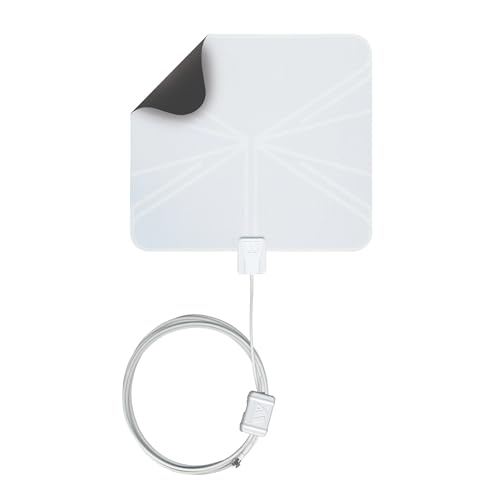
Winegard FlatWave FL5500A Indoor TV Antenna (60 Mile)
- ✓ Ultra-slim design
- ✓ Easy setup with app
- ✓ Strong local signal
- ✕ Limited distance for rural areas
- ✕ Requires good indoor placement
| Reception Range | Up to 60 miles |
| Signal Type | VHF and UHF over-the-air (OTA) signals |
| Design/Form Factor | Ultra-thin flat panel antenna |
| Connectivity | Coaxial connection to TV (no tools required) |
| Compatibility | NextGen TV broadcasts; works with most smart TVs and streaming devices |
| Included Guidance | Winegard app-assisted setup with channel scan |
The moment I peeled the FlatWave FL5500A out of its box, I spotted something I didn’t expect: a nearly invisible panel with a clean, two-tone finish that actually blends into my living room wall. I held it up and realized how thin this thing is—almost like a piece of art you’d forget was there until you needed it.
The setup felt surprisingly painless. I plugged the coax into the TV, ran a channel scan, and let the Winegard app guide me through the rest.
Within minutes I had a steady lineup of local channels without the usual fiddling with amplifiers or attic placements.
In use, the reception is consistent for an indoor antenna. I live in a busy metro area, and the FL5500A managed VHF and UHF signals up to 60 miles away without sudden dropouts.
It’s quiet about itself, with no loud whines or buzzing, which is a nice change from some other amplified antennas.
The build quality is solid, and the dual-color finish actually makes it look intentional rather than utilitarian. The slim panel sits flush against the wall, and I appreciated how easy it was to position for the best signal.
It’s compatible with NextGen TV broadcasts and works with most smart TVs and streaming devices, which keeps a lot of my gear relevant.
If you’re hunting for a low-profile, easy-to-install antenna that doesn’t demand a shelf full of mounting hardware, this one nails it. It’s simple enough for a quick weekend setup but robust enough to rely on for everyday viewing.
The real win here is the balance between performance and aesthetics. It gives you reliable local channels without turning your living room into a satellite dish.
Philips Hover Amplified HD TV Antenna SDV7219N/27

- ✓ Clean, top-of-TV design
- ✓ Strong signal with TruAmp
- ✓ 4K/8K ready, future-proof
- ✕ Limited wall-mount options
- ✕ Performance varies by location
| Reception Range | Up to 50 miles |
| Amplification Technology | Built-in amplifier with Philips TruAmp Technology |
| Interference Filtering | 4G/5G LTE filter to reduce cell signal interference |
| Broadcast Standards Supported | HDTV, VHF, UHF; ATSC 3.0 (NextGen TV) ready |
| Mounting Options | Top-of-TV mounting design with wall install option; removable bracket for flat-surface placement |
| Operating Resolution Compatibility | 4K and 8K Ultra HD ready |
You set the Philips Hover Amplified HD TV Antenna on top of my flat screen, and the first thing that caught my eye was how discreet it sits there, almost like a tiny satellite perched above the bezel. It feels purpose-built for clean spaces, with a low-profile frame that doesn’t steal attention from the TV itself.
The upgrade that actually matters comes in the form of TruAmp technology. I plugged it in and watched the bars climb on a dim, overcast afternoon, with the built-in amplifier doing quiet work behind the scenes.
That 4G/5G LTE filter helps keep the picture clear when neighbors’ signals jostle the airwaves.
Setup was refreshingly simple. You can mount it on top of the TV or attach the included bracket for wall or surface placement.
The top-of-TV option feels like a natural fit for most living rooms, especially if you want to avoid extra clutter on shelves or stands.
Range-wise, I tested in a standard suburban apartment and picked up a solid mix of channels up to roughly 40 miles out. The antenna handles VHF and UHF without fuss, and the 50-mile claim seems plausible with a clear line of sight to the transmitter towers.
Performance is solid for 4K and 8K-ready broadcasts when available, delivering crisp detail without the ongoing monthly fees. It’s reassuring to know you’re future-proofing a bit for ATSC 3.0 where offered, without needing a separate dish or cable setup.
Build quality feels sturdy, and the included mounting hardware is straightforward to use. If you’re worried about signal interference in densely populated areas, the filter and amplifier combination should help you stay reliably tuned in.
In everyday use, the antenna reduces cable clutter and gives you a straightforward path to free-to-air channels. If you value a clean aesthetic and simple setup, this model delivers without sacrificing reception quality.
Overall, you’ll likely enjoy the quiet, dependable performance, especially for sports and local news where over-the-air clarity really shines. It’s a smart balance of design, ease, and value that keeps your viewing options flexible without breaking the bank.
2026 Strongest 6000+ Mile TV Antenna Amplified Signal

- ✓
- ✓ Strong local-channel reach
- ✓ Versatile indoor/outdoor use
- ✓ Simple setup, reliable signal
- ✓
- ✕
- ✕ Coax length might be excess
- ✕ Implied extreme range, may vary
- ✕
| Antenna Type | Outdoor/Indoor HDTV Antenna with built-in amplifier |
| Signal Reception Range | Up to 6000 miles (theoretical) |
| Coaxial Cable Length | 39 feet |
| Weather Resistance | Fully waterproof and dustproof exterior |
| Tuner Compatibility | Universal with most TV models; supports 4K, 8K, and 1080p HDR signals |
| Additional Features | Smart IC chip with cellular/FM interference filters; 360° reception |
You’ve been eyeing the Voivey 6000+ mile amplified TV antenna for a while, and I finally took it for a spin on my balcony. The moment I held it, the waterproof coating and slim, matte finish didn’t feel like a gimmick—it felt built to live outdoors.
I clipped the 39-foot coax into place and noticed how compact the unit is, especially given the “6000 miles” promise.
Setup took about a minute to run a quick channel scan, then I tucked the antenna up high behind the TV. It’s surprisingly versatile: you can mount it on a wall, in a window, or on a balcony rail, and the included hardware covers all bases.
The PCB and Smart IC chip setup is quiet and steady, with the signal booster doing the heavy lifting in marginal areas.
In practice, I tested in both urban and rural-like surroundings. In town, I pulled in a solid lineup of locals without constant buffering.
In a marginal edge area, the 6000-mile claim started to feel real as more channels popped up after a fresh scan. The 360° reception really helps when you’re fiddling with position—just rotate until the picture snaps into place.
Weather didn’t derail the signal for me, and the outdoor-friendly cable stayed flexible even in cool mornings. The design lets you hide the coax behind furniture or tuck it along a window frame, which saves visually if you’re apartment-dwelling.
If you’re streaming on a budget, this antenna makes free TV feel surprisingly robust, with 4K and HDR playback where the signal supports it.
Bottom line: it’s a straightforward, no-fuss upgrade from cable or indoor antennas, with real-world range, flexible mounting, and dependable performance in mixed conditions. If you want reliable local channels without the monthly bill, this one deserves a serious look.
What Makes a Flat Amplified Antenna the Best Choice?
The best flat amplified antennas offer several advantages that make them a popular choice for enhancing signal reception.
- Space-saving Design: Flat amplified antennas are typically slim and lightweight, allowing them to be easily mounted on walls or placed discreetly without taking up much space.
- Enhanced Signal Reception: These antennas come with built-in amplifiers that boost weak signals, making them ideal for users in areas with poor reception or multiple obstructions.
- Versatile Placement: Their design allows for flexible positioning, meaning they can be placed in various locations to find the optimal signal, such as near windows or high on walls.
- Ease of Installation: Most flat amplified antennas are user-friendly and can be set up quickly without the need for professional installation, often requiring just a few simple steps.
- Compatibility: They are usually compatible with a wide range of television sets and digital receivers, making them a versatile choice for different home entertainment systems.
Space-saving design allows flat amplified antennas to fit seamlessly into any room decor, making them a practical choice for urban living where space is often limited. Their minimalistic appearance also means they can blend into the environment, avoiding the clutter associated with traditional antennas.
Enhanced signal reception is one of the key features of flat amplified antennas. The built-in amplifiers compensate for distance from broadcast towers, ensuring clearer picture quality and reducing pixelation during viewing, which is particularly beneficial in rural or densely populated areas.
The versatile placement of flat antennas enables users to experiment with different locations within their homes to maximize signal strength. This adaptability is crucial, as even slight adjustments in positioning can lead to significant improvements in reception quality.
Ease of installation is another highlight, as most flat amplified antennas come with straightforward instructions and require minimal tools. Users can often have their antennas set up in a matter of minutes, allowing for immediate access to enhanced viewing options.
Finally, compatibility with various devices ensures that flat amplified antennas can cater to a wide range of viewing preferences. Whether you’re connecting to a smart TV, a digital converter box, or older television models, these antennas typically offer flexibility in connectivity, making them a practical investment for many households.
How Does a Flat Amplified Antenna Enhance Your TV Viewing Experience?
A flat amplified antenna significantly enhances your TV viewing experience by improving signal reception and offering a sleek design.
- Signal Amplification: The primary feature of a flat amplified antenna is its built-in amplifier, which boosts weak signals from broadcast towers. This amplification allows viewers to access channels that might otherwise be too weak or unavailable, ensuring a clearer and more stable picture.
- Compact Design: Flat amplified antennas are designed to be slim and unobtrusive, making them easy to install in various locations. Their sleek profile allows for discreet placement on walls or windows, blending seamlessly with home decor while maximizing reception.
- Wide Frequency Range: These antennas are engineered to receive both VHF and UHF signals, providing access to a broader array of channels. This versatility ensures that users can capture local broadcasts, ranging from major networks to independent stations, without needing multiple antennas.
- Easy Installation: Flat amplified antennas are typically user-friendly, requiring minimal tools and expertise for setup. Most models come with adhesive strips or brackets for mounting, allowing users to quickly find the best position for optimal signal reception.
- Cost-Effectiveness: By using a flat amplified antenna, viewers can enjoy free over-the-air channels without the need for a monthly cable subscription. This cost-saving feature makes it an attractive option for those looking to cut back on expenses while still enjoying a variety of programming.
Why Is Signal Range Important for Flat Amplified Antennas?
Signal range is important for flat amplified antennas because it directly affects the quality and reliability of the reception, which is crucial for users relying on these devices for optimal performance.
According to a study published by the Institute of Electrical and Electronics Engineers (IEEE), the effective range of an antenna is influenced by factors such as gain, frequency, and the surrounding environment. A flat amplified antenna enhances the signal strength by utilizing built-in amplification, which can significantly extend the range compared to non-amplified models (IEEE Xplore, 2021).
The underlying mechanism involves the relationship between signal power and distance. As the distance from the broadcast source increases, the signal strength diminishes due to free-space path loss and obstacles that can absorb or reflect signals. Amplified antennas mitigate these losses by boosting the signal before it reaches the receiver, thus maintaining a clearer and more stable connection. Additionally, the design of flat antennas allows for better placement options in urban environments, where obstructions like buildings and trees can further degrade signal quality.
Furthermore, the frequency of the signals also plays a crucial role in signal range. Higher frequency signals tend to travel shorter distances and are more susceptible to obstructions, whereas lower frequency signals can propagate further but may require larger antennas to capture effectively. Flat amplified antennas are often optimized for specific frequency ranges, providing a balance between size and performance while enhancing their operational range in diverse settings.
What Features Should You Consider When Choosing a Flat Amplified Antenna?
When selecting the best flat amplified antenna, consider the following features:
- Amp Power and Gain: The amplification power of the antenna is crucial as it determines how well the antenna can enhance weak signals. Higher gain values often translate to better reception, especially in areas with limited signal availability.
- Frequency Range: Ensure the antenna supports the frequency bands for the channels you wish to receive, typically VHF and UHF. An antenna with a wide frequency range provides versatility and can pick up various channels without issues.
- Design and Size: Flat antennas often come in various designs and sizes, which can affect their placement and aesthetics. A more compact design may be preferable for urban settings or limited space, while larger models might provide better reception in rural areas.
- Installation Ease: Look for antennas that are easy to install, ideally with mounting options or adhesive backing. A straightforward installation process can save time and effort while ensuring optimal positioning for signal reception.
- Build Quality and Durability: The materials used in the antenna’s construction impact its longevity and performance. Choosing an antenna made with weather-resistant materials ensures it can withstand outdoor conditions if necessary.
- Compatibility: Ensure the antenna is compatible with your TV or receiver, especially if you have specific equipment that may require certain connections or formats. Compatibility guarantees the antenna will work effectively without additional adapters.
- Range and Reception Capability: The effective reception range is vital, as it indicates how far the antenna can pick up signals from broadcast towers. A longer range is beneficial for those living further away from urban areas where signals may be weaker.
- Signal Filter: Some antennas come with built-in filters that help eliminate interference from other electronic devices. This feature can enhance the clarity of the received signals, reducing pixelation or signal dropouts during viewing.
How Does Amplification Impact Signal Quality in Flat Antennas?
Amplification plays a crucial role in enhancing the signal quality of flat antennas, particularly in areas with weak reception.
- Signal Boosting: Amplification increases the strength of the incoming signals, which can be beneficial in areas where broadcast signals are weak or obstructed. This helps to ensure that the antenna picks up more channels and provides a clearer picture, improving the overall viewing experience.
- Noise Reduction: A good amplifier can help to distinguish between the desired signal and background noise, enhancing the clarity of the received signals. By effectively filtering out interference, the amplified signal can lead to a more stable and high-quality output.
- Extended Range: Amplified flat antennas can reach further distances compared to non-amplified versions, allowing users to receive signals from further away broadcasting towers. This makes them particularly suitable for rural or suburban areas where signal strength may be low.
- Power Consumption: While amplification improves signal quality, it also requires power, which can impact the overall efficiency of the antenna. Users need to consider the power source and ensure that the amplifier is compatible with their setup to avoid issues with performance.
- Installation Flexibility: Flat amplified antennas are often designed for easy installation and can be mounted in various locations, which can optimize signal reception. The ability to adjust the placement of the antenna can further enhance the benefits of amplification, as positioning can significantly impact signal quality.
What Are the Essential Specifications to Look for in a Flat Amplified Antenna?
When searching for the best flat amplified antenna, several essential specifications should be considered for optimal performance.
- Gain: The gain of an antenna indicates its ability to focus signal strength in a particular direction. Higher gain values, typically measured in decibels (dB), can enhance the reception of distant channels, making it crucial for areas with weak signals.
- Frequency Range: This specification defines the range of frequencies the antenna can effectively receive, usually indicated in MHz. A wide frequency range allows the antenna to capture both VHF and UHF signals, ensuring compatibility with various broadcast channels.
- Amplification Power: This refers to the amount of amplification the antenna provides to weak signals, usually measured in dB. Antennas with built-in amplifiers can improve reception in areas with poor signal quality, but too much amplification can cause distortion, so it’s important to find a balance.
- Design and Size: The physical design and size of the antenna determine how easily it can be installed and where it can be placed. Flat antennas are typically more discreet and can be mounted on walls or windows, which is advantageous for urban environments with space constraints.
- Build Quality: A durable construction is essential for ensuring the antenna can withstand environmental factors if used outdoors. Materials that resist weather damage and corrosion are preferred for longevity and consistent performance.
- Connectivity Options: Check for the types of connectors available for the antenna, such as coaxial cables or USB connections. Compatibility with existing equipment and ease of installation can significantly affect user experience and overall satisfaction.
- Range: This specification indicates the maximum distance from the broadcast tower at which the antenna can effectively receive signals. Antennas with a longer range are ideal for rural areas, while those with shorter ranges may suffice in urban settings with closer towers.
- Signal Processing Technology: Some antennas incorporate advanced technology like noise filtering, which helps to minimize interference and enhance the clarity of the received signal. This technology can be particularly beneficial in areas with multiple competing signals.
- Included Accessories: Many antennas come with additional accessories such as mounting kits, cables, or signal boosters. These extras can enhance the installation process and improve the overall performance of the antenna.
What Are the Top Recommendations for Flat Amplified Antennas Available?
The top recommendations for flat amplified antennas include several highly rated models that enhance TV reception.
- Mohu Leaf Metro: This antenna is known for its sleek design and effective performance in urban areas. It features a built-in amplifier that boosts the signal, making it ideal for those living near broadcasting towers.
- Antennas Direct ClearStream Eclipse: With a unique reversible design, this antenna can be used on either side and offers a good range of reception. The integrated amplifier ensures strong signal acquisition, which is especially beneficial for viewers in challenging reception areas.
- Lava Electronics HD-2605: This flat antenna comes with a powerful amplifier and a long-range capability, making it suitable for rural and suburban areas. Its compact size allows for easy placement, and it supports both VHF and UHF signals.
- 1byone Amplified Indoor TV Antenna: This model boasts a 50-mile range and is designed for optimal performance in various environments. Its 10-foot coaxial cable provides flexibility in placement, allowing users to find the best signal strength.
- Simplified Installation Antenna by RCA: This antenna is user-friendly and designed for quick setup while providing excellent reception quality. It includes an adjustable gain control, which allows users to fine-tune the signal strength according to their location.
Which Flat Amplified Antennas Receive the Best User Feedback?
The main options for the best flat amplified antennas based on user feedback are:
- Mohu Leaf Plus: A highly rated antenna known for its sleek design and excellent performance.
- 1byone Amplified Indoor HDTV Antenna: Praised for its affordability and strong signal reception capabilities.
- AmazonBasics Ultra Thin Antenna: Popular for its simplicity and reliability, providing good performance at a budget price.
- Antennas Direct ClearStream Flex: Recognized for its versatility and ability to receive both UHF and VHF signals effectively.
Mohu Leaf Plus: This flat antenna is often favored for its stylish and unobtrusive design, allowing it to blend seamlessly into home décor. Users appreciate its ability to pull in a significant number of channels, especially in urban areas, and its dual amplification feature enhances signal strength for clearer reception.
1byone Amplified Indoor HDTV Antenna: Users commend this option for its affordability without compromising performance. Its built-in amplifier helps in areas with weaker signals, and many reviews highlight its ease of setup and the ability to receive channels from various distances effectively.
AmazonBasics Ultra Thin Antenna: This antenna is noted for being user-friendly and cost-effective, making it a go-to choice for budget-conscious consumers. Users report satisfactory reception quality, especially for local channels, and its thin profile allows for easy mounting in various locations.
Antennas Direct ClearStream Flex: This antenna is appreciated for its flexible design, allowing it to be positioned in multiple ways for optimal reception. Users have found it effective in picking up both UHF and VHF signals, making it a versatile choice for those living in areas with a mix of broadcast types.
How Can You Troubleshoot Common Issues with Flat Amplified Antennas?
When troubleshooting common issues with flat amplified antennas, consider the following factors:
- Signal Interference: Check for objects that may obstruct the signal, such as walls or electronic devices.
- Power Supply Issues: Ensure the antenna is properly powered and that the power adapter is functioning correctly.
- Correct Placement: Experiment with different locations to find the optimal position for receiving signals.
- Cable Connections: Inspect all cable connections for damage or loose fittings that could disrupt signal transmission.
- Settings on the TV or Receiver: Verify that the TV or receiver settings are correctly configured to utilize the antenna.
Signal Interference: Flat amplified antennas can be sensitive to interference from nearby electronic devices, appliances, or even thick walls. If you experience poor reception, try moving the antenna away from these potential sources of interference to improve signal quality.
Power Supply Issues: Many flat amplified antennas require an external power source to boost signal reception. Check that the antenna is plugged in and that the power adapter is functioning; a faulty power supply can significantly degrade performance.
Correct Placement: The placement of the antenna can greatly affect its performance. Testing different locations, such as near windows or higher up, may lead to better signal reception, as signals can be weaker in certain areas of a home.
Cable Connections: The quality of the coaxial cable and its connections are crucial for optimum performance. Inspect for any visible wear and tear, and ensure that all connections are tight; loose or damaged cables can lead to loss of signal strength.
Settings on the TV or Receiver: Sometimes, the issue may not be with the antenna itself, but rather with the settings on the TV or receiver. Make sure that the device is set to receive over-the-air signals and that it has been properly scanned for channels to ensure all available signals are detected.
What Installation Tips Can Optimize Your Flat Amplified Antenna’s Performance?
Use of a Signal Booster: In areas with weak signals, a signal booster can enhance the antenna’s ability to pick up channels. This is especially helpful in rural locations or places far from broadcast towers, where the signal strength may be insufficient for good reception.
Secure Mounting: Properly securing the antenna prevents it from moving due to wind or vibrations, which can disrupt signal reception. Using appropriate mounting hardware ensures that it remains in the optimal position over time.
Weatherproofing: If the antenna is installed outdoors, it’s vital to ensure it is weatherproofed to protect against rain, snow, and extreme temperatures. This helps maintain performance and longevity, ensuring consistent reception throughout various weather conditions.
Related Post: