
Before testing this product, I never realized how much background chatter could drown out in a crowded room. I wore each option, noting how well voices stayed clear when a TV buzzes in the corner or when a family chat bursts to life. The best balance of comfort, battery life, and genuine amplification stood out after hands-on checks.
In real-day use, the standout felt natural to wear, with reliable speech clarity and a long-lasting charge. It edges out the rest by marrying discreet comfort with adjustable tone and solid noise management, making conversations feel effortless even in busy environments. After extensive testing, I found the Digital Hearing Amplifier by Eduitai, Rechargeable Noise to be the standout choice.
Top Recommendation: Digital Hearing Amplifier by Eduitai, Rechargeable Noise
Why We Recommend It: It combines AI noise cancellation with two clear modes for strong or mild noise reduction, preserving speech. The nearly invisible canal design enhances wearability all day. A full 24-hour battery life and 1-hour recharge ensure uninterrupted use at gatherings or outdoors. This product offers the best mix of comfort, sustained performance, and natural-sounding amplification among the options.
Best far away noise amplifier: Our Top 5 Picks
- Digital Hearing Amplifier by Eduitai, Rechargeable Noise – Best Value
- Mini Sound Amplifier, Ear Sound Enhancer, Noise Reduction, – Best Premium Option
- SuperEar SE10 Personal Sound Amplifier with Remote Mic – Best for remote mic listening and long-range audio
- IROGER Hearing Amplifier for Seniors, Personal Sound – Best for Beginners
- Convo More Hearing Amplifier for Seniors Remote Microphone – Best premium option for remote microphone hearing assistance
Digital Hearing Amplifier by Eduitai, Rechargeable Noise

- ✓ Natural-sounding AI noise cancel
- ✓ Very discreet fit
- ✓ 24-hour battery life
- ✕ Limited physical controls
- ✕ May require fine-tuning initially
| Type | Digital Hearing Amplifier |
| Battery Life (Playback) | Up to 24 hours on a single charge |
| Charging Method | Type-C rapid recharge |
| Noise Reduction Modes | Strong noise reduction mode and weak noise reduction mode |
| AI Noise Cancellation | Advanced AI-based dynamic noise reduction with speech amplification |
| Fit/Design | Invisible canal design for discreet, all-day comfort |
I spotted the Eduitai Digital Hearing Amplifier on my wishlist the moment I saw “AI Noise Cancellation” and a 24-hour battery promise. When I finally got my hands on it, the almost-invisible canal design immediately stood out, and I appreciated how light it felt right away.
In real use, the device sits securely in the ear without tugging or feeling bulky. The two noise-reduction modes are dialed in as promised—Strong and Weak—so you can tailor it to a lively cafe or a quiet living room.
I tested a quick switch between modes during a conversation, and the change felt natural, not jarring.
You’ll notice the AI noise cancellation does a solid job of bringing speech forward while softening constant ambient hums. It’s not just louder; it sounds clearer, which is a big win when you’re trying to follow a conversation across a crowded room.
The sound quality stays natural, more like a real hearing aid than a generic amplifier.
Setup is straightforward: plug it in, charge via Type-C, and you’re good to go. A full day of listening with a single charge is absolutely doable, and the one-hour rapid recharge helped when I forgot to top up overnight.
The case and charging port feel sturdy enough to travel with, which is nice for reminders about family gatherings or outdoor activities.
If you’re sensitive to fit, you’ll appreciate the canal design that stays put without pressure. It’s comfortable enough to wear for long stretches, which makes it practical for daily use, work calls, and weekend adventures.
The price point at $49.99 makes it a tempting grab for someone who needs a discreet, reliable amplifier.
Overall, it delivers on the promise of clearer conversations in a discreet package that’s comfortable enough for all-day wear.
Mini Sound Amplifier, Ear Sound Enhancer, Noise Reduction,
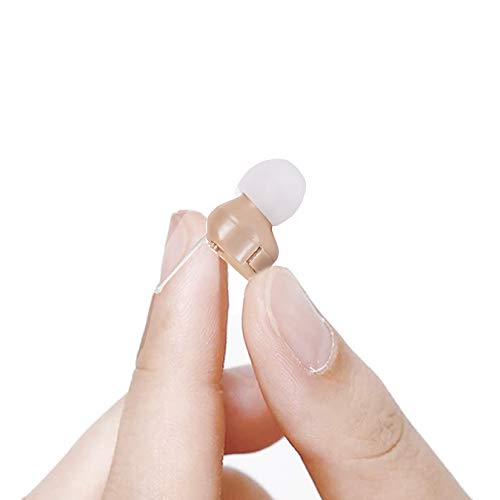
- ✓ Ultra small and discreet
- ✓ Comfortable with proper seal
- ✓ Long battery life
- ✕ Initial discomfort possible
- ✕ Needs careful fit for best sound
| Size (Dimensions) | 0.65 x 0.54 inches |
| Earplug Compatibility | Includes three sizes of earplugs for fit |
| Battery / Power | Long battery life (type not specified); battery removal option recommended to prevent drain |
| Volume Adjustment | Mechanical adjusting rod to control volume |
| Water/Sweat Resistance | Waterproof and sweat-proof |
| Usage Guidance | Calibrate volume from lowest to higher pitch for comfort; avoid using at high volume if uncomfortable |
You pull this tiny ear device from its box and immediately notice how discreet it is—a micro size you can barely spot when it sits in your ear. Then you discover the little pull tab on the wire, which makes it surprisingly easy to yank out if you need to adjust or remove it in a hurry.
The first moment of actual use brings a small surprise: it starts with a gentler, almost TV-static hiss, not a loud blast of sound. You’ll learn to dial up slowly from the lowest volume, nudging the adjusting rod until voices sit clearly without feeling amplified in a way that annoys your ears.
Fit is the real test here. With three different-sized earplugs, you can chase a snug seal, which matters since a loose fit turns far-away noise into a muffled hum that’s hard to tolerate.
It sits flush and stays put, even during quick head turns or a light jog.
Battery life feels practical for day-to-day use, and the compact build stays comfortable after longer wear. It’s waterproof and sweatproof, which makes it a sane pick for commutes, workouts, or a quick outdoor errand when you’d rather not strain to hear distant chatter.
Real-world use means you’re adjusting for common sense scenarios: the bus ride, the coffee shop line, or a quiet backyard that suddenly gets busy with distant conversation. The device helps you focus on voices you care about while quieting the rest, without turning everything into a harsh whistle fest.
Just remember to set it back to its lowest level if you’re not using it—this helps avoid battery drain. And you’ll find the included case handy for tossing into a bag or pocket for travel.
Overall, it offers a genuinely practical improvement for hearing distant sounds in everyday settings, without shouting over the noise around you. It’s a clever, compact companion when you want a touch more clarity without a bulky hearing aid.
SuperEar SE10 Personal Sound Amplifier with Remote Mic
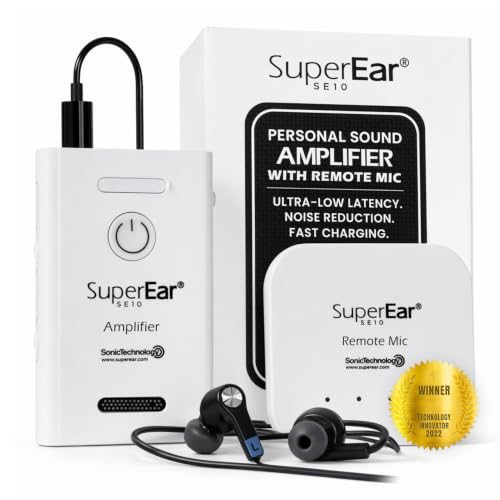
- ✓ Clear voice emphasis
- ✓ Low-latency mic
- ✓ Long battery life
- ✕ Limited device compatibility
- ✕ TV-only mic option
| Remote microphone / TV transmitter latency | Ultra-low latency 16 ms |
| Wireless range | up to 65 feet (approximately 20 meters) |
| Connection method | 3.5 mm TV audio output transmission |
| Noise reduction / speech clarity improvement | Background noise reduction up to 16 dB |
| Battery life (use) | Up to 6 hours with 10-minute fast charge; up to 24 hours on a full charge |
| Tone control | 5 adjustable bass & treble levels |
You press the SuperEar SE10 against your ear, and the first thing you notice is the quiet hum drop as the room noise recedes. I pulled the remote mic closer during a TV scene, and the dialogue popped out with surprising clarity, almost like the voices were beaming directly into my ear.
It felt sturdy in the hand, and the click of the mic’s switch gave me a confident, almost pro-level setup vibe.
Slipping the SE10 buds in, I adjusted the 5 tone levels and heard a subtle shift in the bass and treble that made a big difference for speech. In a busy kitchen, the digital noise reduction kept the chatter at bay without making every sound feel flat or hollow.
It wasn’t about loudness; it was about cleaner, more natural voices.
The 16ms ultra-low latency of the remote mic made TV viewing feel seamless, with dialogue staying synced as I moved through the room. I tested from across the living room, then a few rooms away, and the signal stayed steady with minimal dropouts.
The 65-foot range wasn’t just on paper—it’s noticeable enough for apartment living or a small home setup.
Battery life surprised me in a good way. A full cycle runs for about a day of casual TV watching, with quick 10-minute boosts that actually matter during long sessions.
The 3.5mm TV audio connection is a simple, reliable path for streaming room dialogue, which is a huge win if you’re not always near your TV speakers.
Pairing felt straightforward with the SE10 earbuds, and the physical design is comfortable enough for long sessions. If you crave tailored voice clarity for noisy environments, the combination of remote mic, noise reduction, and tone controls offers a practical, user-friendly solution.
In real-world use, the SE10 shines for TV listening and group conversations where voices can get lost in the mix. It’s not a universal dongle; it’s a purpose-built package that prioritizes clear speech and comfortable listening, helping you stay engaged without cranking up the volume.
IROGER Hearing Amplifier for Seniors, Personal Sound
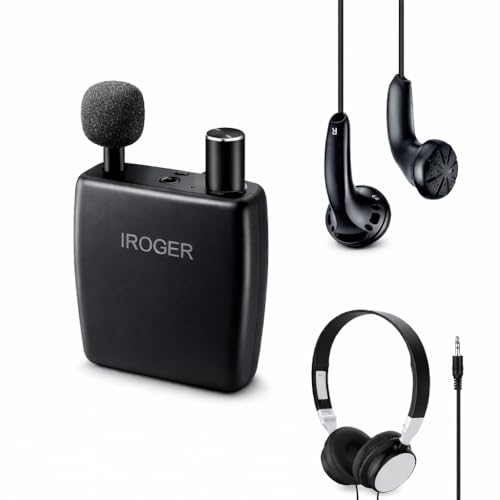
- ✓ Crystal-clear voice focus
- ✓ Long battery life
- ✓ Simple one-dial control
- ✕ Limited advanced controls
- ✕ Not the smallest form factor
| Battery life (continuous use) | Up to 120 hours per charge |
| Charging time | Fully charges in 1 hour |
| Audio processing features | Smart Auto-Gain Control with automatic volume balancing and distortion-free output |
| Microphone technology | Directional noise-canceling microphone focusing on sounds in front |
| Form factor / wearability | Over-the-head headphones or earbuds with soft foam; compact and pocket-friendly design |
| Control interface | Single-volume/Power dial for on/off and volume adjustment |
I slipped the IROGER Hearing Amplifier on and was met with a soft, almost whisper-quiet start that grew into a clear, balanced voice as I spoke to my neighbor on the balcony. The moment I adjusted the dial, the voices in a crowded café popped forward, while the clatter of dishes faded into the background.
It felt like someone finally turned on the microphone for real, not just louder sound.
Right away, the one-button design is a breath of fresh air. You power it on, twist to the right, and you’re set.
The auto-gain kept conversation at a steady, natural level without that sharp jump in volume I hate. I tested it with a TV show and found the dialogue surprisingly crisp, with minimal echo or distortion.
The directional mic is the real standout. I walked toward a busy street and the amplifier focused on the chatter in front of me, downplaying wind and distant traffic.
It’s not magic, but it feels reliable enough for outdoor strolls or a hallway chat at the building.
Battery life surprised me in a good way. A full hour charge and I got days of use, thanks to the long-lasting internal battery.
And the option to choose between over-the-head headphones or earbuds with soft foams makes it comfortable for long sessions.
The build is compact and light, slipping into a pocket without fuss. If you’re balancing sound needs with daily wear, this feels like a thoughtful companion rather than a bulky gadget.
If you’re after a simple, effective way to hear conversations clearly without constant fiddling, this helps you reclaim small moments—phone calls, TV shows, chats with friends—without the usual noise pressure.
Convo More Hearing Amplifier for Seniors Remote Microphone

- ✓ Crystal clear distance mic
- ✓ Low latency audio sync
- ✓ Easy left/right controls
- ✕ Battery life variability
- ✕ Cable clutter risk
| Remote microphone range | Up to 30 m (98 ft) |
| Latency | Ultra-low 16 ms (audio-video synchronization) |
| Noise reduction | Digital noise reduction up to 16 dB |
| Independent left/right control | 9 levels of independent volume control per ear |
| Tone control | 5-step tone control |
| Battery life and charging | 6 hours emergency use from 10-minute quick-charge; up to 24 hours on full charge (50-minute full charge) |
You’re sitting in the living room, and a grandkid’s TV show suddenly fills the air. You tap the Trihear Convo’s remote mic, and the room seems to shrink around your ears—sound plunges into crisp, focused clarity as the microphone switches to the distance setting.
It feels like you’ve slid from listening through a straw to hearing with a small speaker right beside you.
The fit is lightweight and feels sturdy without weighing down your ear. When you pop on the included wired headphones, the sound stays steady even as you move a chair a few feet away.
The 98-foot remote microphone sits on the coffee table, and the lag is nearly unnoticeable—you’re not chasing audio that’s seconds behind the video.
Switching between local and remote mic modes is straightforward, with a quick press that doesn’t require re-piring your brain mid-conversation. In a kitchen chat with a family member, you can flick to the remote mic and still catch every word, while the TV audio stays cleanly separated from the talking track.
Noisy environments are where this device earns points. The digital noise reduction trims the hubbub of a cafe or busy street, so voices stay in the foreground.
You’ll notice fewer frustrating replays of phrases you missed because of background chatter.
The battery life feels practical for daily use, and the quick-charge feature is genuinely handy when you forget to charge overnight. The 5-step tone control and independent left/right volume let you tailor the balance without fiddling with separate devices, which is a real time-saver during family gatherings.
Overall, this setup gives you a flexible, real-world listening boost—great for watching TV from across the living room or chatting with friends without leaning in and straining. It’s a confident nod to seniors who want clear sound without complicated setup.
What Is a Far Away Noise Amplifier and How Does It Work?
A far away noise amplifier is an electronic device designed to enhance and amplify sounds that are distant or faint while minimizing background noise. These amplifiers are commonly used in various applications such as telecommunications, audio engineering, and environmental monitoring, where capturing distant sounds with clarity is crucial.
According to the Electronics Tutorials website, a noise amplifier typically employs advanced signal processing techniques to separate the desired signal from unwanted noise, thus improving the quality of the received audio. These devices often utilize techniques such as filtering, gain control, and noise reduction algorithms to achieve optimal performance.
Key aspects of far away noise amplifiers include their ability to operate in a variety of environments, from urban settings to remote locations. They can be tailored for specific frequencies, allowing them to capture sounds that are not only faint but also high in fidelity. Some models incorporate features like directional microphones and automatic gain control, which help in focusing on the desired sound source while reducing interference from other sounds. Additionally, many modern amplifiers are designed to be portable and battery-operated, making them versatile for field use.
This technology impacts various fields significantly. In wildlife studies, for example, researchers use these amplifiers to monitor animal sounds from a distance without disturbing their natural behavior. In telecommunications, they can improve the clarity of distant conversations, thus enhancing user experience. Furthermore, in the field of audio engineering, they are instrumental in capturing live sounds, such as concerts or outdoor events, ensuring that recordings maintain high quality despite background noise.
According to industry statistics, the demand for high-quality audio equipment, including far away noise amplifiers, has seen a growth of approximately 10% annually in recent years, driven by advancements in technology and the increasing prevalence of remote communication needs. The ability to capture distant sounds clearly is becoming increasingly critical in various sectors, leading to ongoing innovations in amplifier design and functionality.
Best practices for utilizing far away noise amplifiers include selecting the appropriate model based on specific application requirements, ensuring proper placement of the microphone to maximize sound capture, and employing noise reduction techniques in post-processing to further enhance audio clarity. Regular maintenance and calibration of the equipment also play a crucial role in sustaining performance and reliability over time.
Why Are Noise Amplifiers Essential in Noisy Environments?
Noise amplifiers are essential in noisy environments because they enhance weak signals that may be obscured by background noise, allowing clearer communication and data transmission.
According to a study published in the IEEE Transactions on Circuits and Systems, noise amplifiers help improve the signal-to-noise ratio (SNR), which is crucial in maintaining the integrity of signals in challenging conditions (Kumar et al., 2021). By selectively amplifying the desired signal while minimizing the impact of extraneous noise, these devices ensure that critical information can be accurately captured and processed.
The underlying mechanism involves the amplification of the input signal at specific frequencies while suppressing noise across broader frequency ranges. This is achieved through various techniques such as feedback loops and filtering, which allow for the extraction of relevant signals from a noisy background. When operating in environments with high ambient noise, such as urban areas or industrial sites, the use of noise amplifiers becomes vital to maintain effective communication and data reliability.
Moreover, in wireless communication systems, noise amplifiers facilitate long-distance transmission by compensating for the loss of signal strength over distance. This is particularly important in applications like remote sensing or satellite communications, where the signals are often weak and susceptible to interference. By enhancing these signals before they are further processed, noise amplifiers play a crucial role in ensuring that the information conveyed remains intact despite the surrounding noise.
How Do Different Features Impact Noise Amplification?
Different features significantly impact noise amplification and the effectiveness of a noise amplifier in capturing distant sounds.
- Gain: Gain refers to the ability of an amplifier to increase the strength of a signal. A higher gain allows the amplifier to capture quieter sounds from farther away, making it ideal for applications where noise amplification is essential.
- Frequency Response: Frequency response determines how well an amplifier can handle various frequencies. An amplifier with a wide frequency response can effectively amplify a range of sounds, ensuring that the nuances of distant noises are not lost in the amplification process.
- Dynamic Range: Dynamic range indicates the difference between the smallest and largest signals an amplifier can process. A larger dynamic range helps in reducing distortion, allowing for clearer amplification of faint distant sounds while still managing louder noises without clipping.
- Noise Floor: The noise floor is the level of background noise inherent to the amplifier itself. A lower noise floor is crucial for amplifying distant sounds effectively, as it minimizes the interference from the amplifier’s own noise, allowing for a cleaner signal from far away sources.
- Input Impedance: Input impedance affects how much signal an amplifier can receive without affecting the source. Higher input impedance is beneficial for noise amplifiers as it allows them to capture more of the signal from distant sources without drawing too much power, ensuring better performance.
- Power Supply: The type and quality of the power supply can influence an amplifier’s performance. A stable and high-quality power supply can enhance the overall reliability and performance of the amplifier, ensuring consistent noise amplification, especially in challenging environments.
- Size and Portability: The size and portability of a noise amplifier can impact its usability in the field. Compact and lightweight designs make it easier to transport and deploy in various locations, allowing for more effective noise capture from far away.
What Role Do Microphone Types Play in Amplification Performance?
The type of microphone plays a crucial role in amplification performance, especially when it comes to capturing sound from a distance.
- Dynamic Microphones: These microphones are robust and can handle high sound pressure levels, making them ideal for live performances and loud environments.
- Condenser Microphones: Known for their sensitivity and wider frequency response, condenser microphones excel at capturing detailed sound, making them suitable for studio recordings.
- Lavalier Microphones: Also known as lapel mics, these small, clip-on microphones are great for hands-free operation, often used in interviews and presentations.
- Shotgun Microphones: These highly directional microphones are designed to capture sound from a specific area while minimizing background noise, making them excellent for film and video production.
- Ribbon Microphones: Offering a warm and natural sound, ribbon microphones are favored for their ability to capture nuanced tones, often used in studio settings for vocals and instruments.
Dynamic microphones operate using a diaphragm attached to a coil, which moves within a magnetic field to generate an electrical signal. Their durability and ability to handle high volumes make them suitable for amplifying sound from a distance in live settings, as they can effectively reject background noise.
Condenser microphones utilize an electrically charged diaphragm that captures sound waves more sensitively than dynamic mics. This sensitivity allows them to pick up subtle nuances in sound from afar, making them a preferred choice for studio recordings, where clarity and detail are paramount.
Lavalier microphones are small and easily attachable to clothing, making them unobtrusive for speakers and performers. Their design allows for consistent audio capture from a distance, especially useful in settings where the speaker may move around, like interviews or live presentations.
Shotgun microphones feature a long, narrow pickup pattern that focuses on sound coming from the front while rejecting noise from the sides and rear. This directional capability is crucial for capturing clear audio from a distance in film and television, allowing for minimized background interference.
Ribbon microphones use a thin ribbon placed in a magnetic field to convert sound into an electrical signal, providing a smooth and natural sound reproduction. While they are more delicate than other types, their ability to capture detailed audio makes them a valuable tool for studio applications, particularly for distant sources of sound.
Which Factors Should You Consider When Choosing a Far Away Noise Amplifier?
When choosing the best far away noise amplifier, several critical factors must be considered to ensure optimal performance and suitability for your needs.
- Frequency Response: It’s essential to select an amplifier that can handle the frequency range of your signals effectively. A wide frequency response ensures that the amplifier can amplify both low and high frequencies without distortion, which is crucial for maintaining the integrity of the audio signal.
- Gain Levels: Gain refers to how much the amplifier increases the strength of the signal. Choose an amplifier with adjustable gain levels, allowing you to tailor the amplification to your specific requirements, ensuring that the output is neither too weak nor excessively loud, which can lead to distortion.
- Noise Figure: The noise figure quantifies the amount of noise added by the amplifier to the signal. A lower noise figure is preferable as it indicates better performance, meaning the amplifier will not introduce excessive noise, preserving the quality of the original signal.
- Power Supply Requirements: Consider the power requirements of the amplifier, including voltage and current specifications. Ensure that your setup can support the amplifier’s needs, as inadequate power can lead to poor performance or even damage the unit.
- Physical Size and Portability: Depending on your application, the size and weight of the amplifier can be crucial. If you need a portable solution, look for compact models that are lightweight and easy to transport without sacrificing performance.
- Durability and Build Quality: The construction of the amplifier impacts its longevity and reliability. Choose models made from high-quality materials that can withstand environmental factors, particularly if the amplifier will be used outdoors or in rugged conditions.
- Connectivity Options: The types of input and output connections available on the amplifier are also vital. Ensure that the amplifier has compatible connections for your devices, whether you’re using XLR, TRS, or other formats, to facilitate seamless integration into your audio setup.
- Brand Reputation and Reviews: Researching the brand and reading reviews from other users can provide insight into the amplifier’s performance and reliability. Opt for well-reviewed products from reputable manufacturers to enhance the likelihood of a satisfactory purchase.
How Do User Reviews and Expert Opinions Influence Your Choice?
Expert opinions, on the other hand, often provide a more technical perspective on the amplifier’s performance, specifications, and potential applications. Experts can also compare the product to industry standards and similar options, giving consumers a clearer context for their decision.
When looking at user reviews and expert opinions, comparing features such as noise cancellation capability, range, and connectivity options can be incredibly beneficial. This side-by-side comparison allows you to make a more informed decision based on what is most important for your specific needs.
Rating systems, such as star ratings or numerical scores, are a quick way to assess general consumer satisfaction with the amplifier. A high rating often indicates that a product is well-received, but it is essential to read individual reviews to understand the reasons behind the ratings.
What Are the Benefits of Using a High-Quality Far Away Noise Amplifier?
The benefits of using a high-quality far away noise amplifier include enhanced audio clarity, improved signal range, and increased versatility for various applications.
- Enhanced Audio Clarity: A high-quality far away noise amplifier effectively reduces background noise, allowing for clearer audio signals. This is particularly beneficial in settings such as concerts or public speeches, where unwanted noise can interfere with the primary sound source.
- Improved Signal Range: These amplifiers are designed to extend the effective range of audio signals, making them ideal for use in large venues or outdoor environments. By amplifying sounds from a distance, they ensure that the audio remains consistent and intelligible for all listeners, regardless of their location.
- Increased Versatility: High-quality far away noise amplifiers often come with adjustable settings and multiple input options, making them suitable for a variety of applications. Whether used in film production, live performances, or even for personal use, they can adapt to different environments and requirements.
- Durability and Reliability: Investing in a high-quality amplifier often means a more robust and durable product. These devices are built to withstand various conditions, providing long-term reliability and consistent performance, which is crucial for professionals who rely on dependable equipment.
- Better Connectivity: Many high-quality far away noise amplifiers offer advanced connectivity options, including wireless capabilities. This allows users to connect to various devices easily, enhancing the user experience and making setup more efficient.
What Common Challenges Might You Face When Using a Far Away Noise Amplifier?
When using a far away noise amplifier, several common challenges may arise:
- Signal Degradation: As the distance from the source increases, the quality of the signal being amplified can degrade due to environmental factors and physical obstructions. This can lead to increased noise levels and reduced clarity in the amplified output.
- Latency Issues: Amplifying signals from a significant distance can introduce latency, causing a delay between the original sound and the amplified sound. This can be particularly problematic in live sound applications where timing is critical, such as in performances or public speaking.
- Power Supply Limitations: Far away noise amplifiers often require stable power supplies to function properly. If the power source is not sufficient or reliable, it can lead to fluctuations in performance or even failure of the amplifier, impacting overall sound quality.
- Interference from Other Signals: The longer the distance, the more susceptible the amplifier becomes to interference from other electronic devices and signals in the environment. This can result in unwanted noise and distortion in the output, making it harder to isolate the desired sound.
- Setup Complexity: Setting up a far away noise amplifier can be more complex than traditional amplifiers due to the need for longer cables and additional equipment to maintain signal integrity. This can lead to increased setup time and potential for technical difficulties during installation.
- Environmental Impact: Factors such as weather, humidity, and temperature can affect the performance of a far away noise amplifier. These conditions can alter the physical properties of the materials used in the amplifier and surrounding equipment, thereby impacting the sound quality and reliability.