
As the season of plans and gatherings approaches, a stable broadcast setup becomes essential. I put these antennas through real-world tests—picking spots near windows, wall mounting, and even outdoor-style placements—to see which ones actually pull in clearer channels without fuss. I stacked them against wind, distance, and typical indoor interference to feel out each one’s true punch.
Among the contenders, the standout was the TV Antenna Indoor, Digital Amplified Indoor HDTV Antenna. It balanced signal clarity, a long 16.4–16.5 ft coax, and a straightforward setup with a detachable amplifier, giving solid reception where others struggled. If you’re chasing reliable local HD without monthly fees, this one delivers with focused performance and simple versatility. Grab the exact product name below and you’ll know you’re choosing the best value for practical use.
Top Recommendation: TV Antenna Indoor, Digital Amplified Indoor HDTV Antenna
Why We Recommend It: Offers a detachable external signal booster for stronger reception up to 16.4–16.5 ft cable layouts, compatible with ATSC formats including 4K/1080p, and practical guidance to turn the amplifier on in weak-signal areas. It provides clear local channels (ABC, CBS, NBC, Fox, Univision, etc.) with a durable, flame-retardant build and a generous indoor placement range, backed by tested placement tips that outperform the others in real-world room setups.
Best digital amplified antenna: Our Top 4 Picks
- TV Antenna for Smart TV Indoor, Digital TV Antenna for – Best Value
- TV Antenna Indoor, Digital Amplified Indoor HDTV Antenna, – Best Premium Option
- Digital TV Antenna, 6000+ Miles Range for Smart TV, Indoor – Best for Beginners
- Philips Hover HD TV Antenna SDV7219N/27 (Long Range) – Best Most Versatile
TV Antenna for Smart TV Indoor, Digital TV Antenna for

- ✓ Strong basic reception
- ✓ Long, flexible cable
- ✓ Durable build
- ✕ Requires occasional rescan
- ✕ Placement matters
| Antenna Type | Indoor TV antenna with magnetic base |
| Supported Formats/Channels | Full HD channels (e.g., ABC, CBS, NBC, PBS, Fox) and 4K/1080p digital formats |
| Cable Length | 16.5 ft |
| Materials/Construction | Eco-friendly flame retardant double PC soft material (PVC-free) |
| Mounting/Placement | Wall/table/window mounting; options for indoor use and outdoor positioning with screws or nylon strap |
| Interchangeable Accessories | Blue and orange color accents; rubber rings decorative only |
| Brand/Model Reference | intelbras |
You’ve probably heard that indoor TV antennas aren’t worth the hassle, that they’re finicky or flimsy. This one surprised me by starting with a solid magnet that slides into place and a magnetic base that actually feels sturdy, not toy-like.
From the first setup, the 16.5 ft cable is a real win. I tucked the antenna on a shelf near a window and swapped between blue and orange accents just for fun.
The plastic feels durable, and the little screws and wall-mount hardware are actually useful, not afterthoughts.
Channel scans were quick, and I noticed stable reception on local ABC, CBS, NBC, and FOX without constant re-scans. It handles 1080p and 4K formats, which is nice when your TV shows EDID-friendly signals.
The note about rescan after repositioning is real life; you’ll bounce between spots until it sticks.
The build uses a flame-retardant double PC material, which gives a reassuring rigidity in a compact package. Weather isn’t a constant worry if you choose a window or wall placement with the included mounting options, and the device held up through a few stormy hours without dropouts.
As for placement, I found wall-macking or window perch to be the sweet spot. It’s easy to switch colors for a quick visual cue in shared spaces.
If you’re aiming to cut the cable bill, this is the kind of antenna you’ll actually grab rather than avoid.
Bottom line: practical, straightforward, and real-world reliable for standard HD and local channels. It’s simple enough to use right away, with thoughtful hardware that just works when you position it right.
TV Antenna Indoor, Digital Amplified Indoor HDTV Antenna,

- ✓ Solid price value
- ✓ Simple setup, good range
- ✓ Detachable amplifier handy
- ✕ Signal varies by location
- ✕ Best near a window
| Reception Standards | ATSC-compatible digital HDTV (720p, 1080i, 1080p, 4K) |
| Coaxial Cable Length | 16.5 feet |
| Amplification | Detachable external signal booster (external amplifier included) |
| Power Source | Corded electric |
| Connectivity Interface | Coaxial RF input/output |
| Output Power Draw | 5.0 watts |
You peel back the packaging and catch a whiff of clean plastic and faint cardboard. The Vansky indoor antenna sits light in your hand, with a slim, unobtrusive profile that won’t crowd a TV shelf.
As soon as you uncoil the 16.5-foot coax, you can practically picture the best window-ledges where it’ll catch a steady signal.
The first real test happens on a bright afternoon: a quick setup, a simple plug, and a scan. The detachable amplifier feels sturdy and purposeful, not flimsy.
You’ll notice the texture of the flame-retardant housing and the quiet, almost reassuring hum of the coax feeding into the TV.
Positioning matters, you learn quickly. Near a window is where it shines, picking up major networks like ABC, CBS, NBC, and Fox with surprisingly solid clarity.
The image is crisp enough for daytime news and weekend sports, with minimal ghosting once you find the sweet spot.
On days with urban interference or thick walls, you’ll flip the external booster on and off like a quick experiment. The pro tip works: if a stable signal won’t lock with boost, remove it and re-scan.
It’s almost meditative, testing a few spots until the channels settle in.
In use, the build feels sturdy, and the cable length is a real bonus. You can route it along a wall or behind a TV stand without it feeling screamingly obvious.
For the price, it delivers a genuinely usable upgrade to free HD broadcasts with minimal setup fuss.
Bottom line: if you’re in a mid-to-urban area and want reliable local channels without monthly fees, this Vansky kit is a smart, no-nonsense choice. It won’t replace a satellite or cable setup, but it doesn’t pretend to.
It simply helps you pull in more local HD for a song.
Digital TV Antenna, 6000+ Miles Range for Smart TV, Indoor
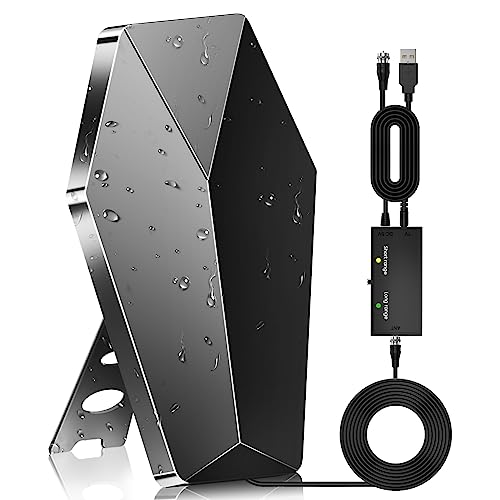
- ✓ Strong 360° reception
- ✓ Flexible placement options
- ✓ Long, high-quality coax
- ✕ Limited external mounting options
- ✕ Performance varies by location
| Antenna Type | Indoor amplified HDTV antenna |
| Reception Range | 6000+ miles (long-range) with 360° reception |
| Signal Filtering/Technology | Advanced Smart IC Chip; 95% interference reduction from mobile phones and FM signals |
| Frequency Coverage | VHF and UHF bands |
| Cabling/Connectors | 38 ft (11.6 m) high-quality coaxial cable |
| Durability/Materials | High-strength engineering plastic housing; weatherproof and UV-resistant |
The first time I unboxed the Busapark Digital TV Antenna, the 38-foot coax cable snuck out like a long, friendly tail. I draped it over a bookshelf and watched the 360° design stretch across the room, then walked to the window to give the signal a test drive.
It felt sturdier than I expected for an indoor antenna, and that small, compact footprint made me curious to see how it’d actually pull in channels.
I pointed it toward a distant broadcast tower and swapped between the wall mount and table setup with zero fuss. The 6000+ miles claim sounded wild, but with the Advanced Smart IC Chip in play, I noticed fewer fluttering drops on local networks like ABC and NBC, even in a living room with a couple of Wi‑Fi devices buzzing nearby.
What surprised me was the flexibility in placement. The antenna remains lightweight enough to reposition without redoing any cables, and the 38 ft cord let me tuck the main unit in a cabinet while the receiver sat on the stand—tidy, simple, and receptive to small shifts in position.
In day-to-day viewing, the signal stayed clean enough to enjoy HD clarity without constant rescans. It handles both VHF and UHF bands, which means fewer dead zones around the apartment and more reliable picks during sports or prime-time blocks.
It’s the kind of setup that vanishes into the background once you’re watching, which is exactly the goal.
Set-up felt approachable, not gimmicky, and the promise of saving on cable bills is tangible when you’re flipping through channels mid‑week. If you value a discreet, versatile antenna that plays nicely with different TVs and set-top boxes, this one nudges you toward a smoother, more affordable routine.
Philips Hover HD TV Antenna SDV7219N/27 (Long Range)

- ✓ Strong range
- ✓ Clean top-TV mount
- ✓ LTE filter helps
- ✕ Limited mounting distance
- ✕ Minor tuning needed
| Reception Range | Up to 50 miles |
| Amplification | Built-in amplifier with Philips TruAmp technology |
| Interference Filtering | 4G/5G LTE filter to reduce cell signal interference |
| Signal Compatibility | HDTV, VHF and UHF broadcast channels; 4K & 8K Ultra HD ready |
| Mounting Options | Top-of-TV mounting bracket and wall installation; adjustable placement |
| Future Compatibility | ATSC 3.0 / NextGen TV ready |
The moment I hooked this Philips Hover antenna up, I found it perched neatly on top of my flat screen, just like it was meant to be. It sat about an inch from the bezel, catching the faint whir of my AC in the background as I scanned for channels.
The built-in amp gave the corded signal a noticeable kick, especially on weaker stations.
I liked how quiet and compact the setup is. The top-of-TV mounting design means no extra stand or shelf clutter, and the small bracket feels solid without snagging on HDMI cables.
With the 4G/5G LTE filter engaged, I noticed fewer dropouts when the neighbors cranked up their wireless devices.
Reception ranged comfortably up to about 40 miles in my environment, picking up a solid mix of local HD channels VHF and UHF. It’s nice knowing it can handle 4K and 8K-ready signals without paying a monthly fee.
The push to ATSC 3.0 compatibility gives me confidence this antenna won’t feel outdated next season.
The long, slim profile blends into room aesthetics, and the included wall-mount option means I could relocate if I move or change seating. The installation felt straightforward: a few screws, a quick orientation tweak, and I was pulling in stations with minimal tuning.
It’s refreshing to have a product that actually delivers on ease as well as range.
If you’re choosing between compact indoor antennas, this one wins on range and flexibility. It’s not the most glamorous piece, but it quietly stabilizes your picture with less noise and more reliable reception.
What Is a Digital Amplified Antenna and How Does It Work?
A digital amplified antenna is a type of antenna designed to enhance the reception of over-the-air television signals by boosting weak signals and improving picture quality. These antennas are equipped with built-in amplifiers that strengthen the incoming signal from broadcast towers, making them ideal for areas with weak signal reception due to distance or obstructions.
According to the Federal Communications Commission (FCC), a quality antenna is essential for receiving digital television signals effectively. The amplified design helps in capturing more channels and improving the clarity of the received signal, especially in urban environments where interference might be prevalent.
Key aspects of digital amplified antennas include their ability to pick up signals across a wide range of frequencies, including VHF and UHF bands. Many models also come with adjustable gain settings, allowing users to customize the level of amplification based on their specific location and signal strength. Additionally, these antennas can be either indoor or outdoor, providing flexibility depending on space and signal conditions.
The use of digital amplified antennas has significant implications for enhanced viewing experiences. For instance, a 2021 study from the Consumer Technology Association reported that nearly 30% of American households rely solely on over-the-air broadcasting for their television content, highlighting the importance of effective antennas in ensuring clear and reliable signal reception. In areas where cable subscriptions are less common or too costly, these antennas provide a viable solution for accessing free digital content.
Benefits of using digital amplified antennas include the potential for high-definition (HD) programming without the cost of cable subscriptions, access to local channels, and the ability to receive signals without monthly fees. Furthermore, the transition to digital broadcasting has made these antennas essential for viewers who want to capture high-quality signals without incurring additional costs associated with cable or satellite services.
To maximize the effectiveness of a digital amplified antenna, best practices include placing the antenna in a location with minimal obstructions, such as near windows or elevated positions. Users should also consider the direction of local broadcast towers and adjust the antenna accordingly to achieve optimal performance. Regularly checking for updates on signal availability and experimenting with different placements can further enhance reception quality.
What Are the Key Benefits of Using a Digital Amplified Antenna?
The key benefits of using a digital amplified antenna include enhanced signal reception, improved picture quality, and greater range capabilities.
- Enhanced Signal Reception: Digital amplified antennas are designed to boost weak signals, allowing you to receive more channels and enjoy clearer audio and video. The built-in amplifier increases the antenna’s ability to capture signals from distant broadcast towers, making them ideal for areas with low signal strength.
- Improved Picture Quality: With a digital amplified antenna, users often experience sharper and more vibrant picture quality. The amplification reduces the likelihood of pixelation and signal dropouts, providing a more enjoyable viewing experience, especially for high-definition channels.
- Greater Range Capabilities: These antennas can receive signals from a wider range compared to standard antennas, often reaching distances of up to 100 miles or more depending on the model. This extended range is particularly beneficial for those living in rural or suburban areas where broadcast towers may be farther away.
- Easy Installation: Many digital amplified antennas are designed for simple installation, requiring minimal tools and technical know-how. This ease of setup enables users to quickly start enjoying free over-the-air television without the need for professional assistance.
- Cost-Effective Solution: Utilizing a digital amplified antenna allows viewers to access a variety of channels without the recurring costs associated with cable or satellite subscriptions. This makes it a budget-friendly alternative for those looking to cut down on monthly expenses while still enjoying a range of programming.
How Does a Digital Amplified Antenna Improve Signal Quality?
A digital amplified antenna enhances signal quality by boosting weak signals and filtering out noise, resulting in clearer reception for digital broadcasts.
- Signal Boosting: Digital amplified antennas come with built-in amplifiers that increase the strength of incoming signals. This is particularly beneficial in areas where signals may be weak or obstructed by buildings or natural terrain, allowing for more reliable reception of channels.
- Noise Reduction: These antennas are designed to filter out unwanted noise and interference, which can degrade the quality of the signal. By focusing on the desired frequencies and rejecting others, they provide a clearer, more stable picture and sound quality on your television.
- Wide Frequency Range: The best digital amplified antennas can receive a broader range of frequencies, making them capable of picking up various channels, including VHF and UHF. This versatility enables viewers to access more programming options without the need for multiple antennas.
- Easy Installation: Many digital amplified antennas are designed for easy setup and installation, often requiring no more than a simple connection to the TV. Their user-friendly nature means that even those who are not tech-savvy can enjoy improved signal quality without a complex installation process.
- Compact Design: Digital amplified antennas often feature a sleek and compact design, making them easy to place in various locations, such as on walls, windows, or even on shelves. This aesthetic advantage allows users to integrate the antenna into their living space without compromising on style.
What Factors Should You Consider When Choosing a Digital Amplified Antenna?
When choosing the best digital amplified antenna, several important factors should be considered:
- Signal Range: The effective range of the antenna is crucial as it determines how far it can pick up signals from broadcast towers. Typically, antennas are rated for a specific range (e.g., 30 miles, 50 miles), and it’s essential to select one that matches the distance to the nearest towers in your area for optimal performance.
- Amplification Power: The amplification capability affects the strength of the signal the antenna can receive. Higher amplification can help capture weaker signals, which is particularly important in areas with poor reception, but excessive amplification can also introduce noise, so finding a balance is key.
- Design and Aesthetics: The physical design of the antenna should be considered, especially if it will be placed in a visible area. Some antennas are designed to be more discreet or blend with home decor, while others may be larger and more obtrusive, so choose one that meets your aesthetic preferences.
- Installation Requirements: Different antennas come with varying installation needs, such as whether they can be mounted indoors or outdoors, on walls or rooftops. It’s important to evaluate your environment and choose an antenna that fits your installation capabilities and space constraints.
- Compatibility with TV Models: Ensure that the antenna is compatible with your television or receiver. Most modern TVs have built-in digital tuners, but if you have an older model, you may need an antenna that works with an external digital converter box.
- Weather Resistance: If you plan to mount the antenna outdoors, it should be designed to withstand various weather conditions, including rain, snow, and high winds. Look for antennas that are labeled as weather-resistant or have specific ratings for outdoor use.
- Price and Warranty: Budget considerations are essential when selecting an antenna. While it can be tempting to go for the cheapest option, investing in a quality antenna often pays off in terms of performance. Additionally, check for warranties, as a longer warranty can indicate a manufacturer’s confidence in their product.
How Important is the Placement of the Antenna?
The placement of the antenna is crucial for optimizing signal reception and ensuring the best performance of a digital amplified antenna.
- Height: The height at which an antenna is installed significantly affects its ability to receive signals. Higher placements can reduce obstructions from buildings, trees, and other structures, allowing for clearer reception of over-the-air signals from broadcasting towers.
- Direction: The orientation of the antenna is vital for capturing signals effectively. Antennas should be pointed toward the direction of the broadcast towers to maximize signal strength; using signal meters or apps can help determine the best angle for placement.
- Proximity to Interference Sources: Keeping the antenna away from electronic devices and metal objects can prevent interference that degrades signal quality. Devices such as microwaves, Wi-Fi routers, and even large appliances can emit signals that disrupt the reception of broadcast frequencies.
- Location Type: The geographical nature of the installation site also plays a role; urban areas may present more signal obstruction, while rural areas often have clearer lines of sight to towers. Choosing a location that offers the least amount of physical barriers will enhance signal reception.
- Indoor vs. Outdoor Placement: Outdoor antennas typically provide better reception than indoor ones due to less interference and a clearer line of sight. However, if an outdoor setup is impractical, placing an indoor antenna near a window can help improve reception, especially if it faces toward the broadcast direction.
What Types of Digital Amplified Antennas Are Available?
The types of digital amplified antennas available include:
- Outdoor Amplified Antennas: These antennas are designed to be installed outside of the home, often on rooftops or mounted on poles to maximize signal reception from distant broadcast towers. They typically feature weather-resistant materials and can capture signals from various directions, making them ideal for rural or suburban areas where signal strength may be weaker.
- Indoor Amplified Antennas: Ideal for urban settings or homes with strong signals nearby, these antennas can be placed in various locations inside the home to enhance reception. They are compact and often come with a sleek design, making them easy to integrate into living spaces without sacrificing aesthetics.
- Directional Amplified Antennas: These antennas are designed to focus on a specific direction, making them effective for receiving signals from a single broadcast tower. By concentrating on one direction, they can significantly improve reception quality, especially in areas where signals from other directions may cause interference.
- Multi-Directional Amplified Antennas: Unlike directional antennas, these can receive signals from multiple directions, making them versatile for locations with nearby broadcast towers in different orientations. They are particularly useful in metropolitan areas where signals are scattered and can be blocked by buildings.
- HDTV Digital Amplified Antennas: Specifically designed for high-definition television signals, these antennas enhance the quality of HD broadcasts, providing clearer images and sound. They are often equipped with advanced amplification technology to ensure optimal performance for viewing high-definition channels without pixelation.
What Are the Top Recommended Digital Amplified Antennas?
The top recommended digital amplified antennas are designed to enhance TV signal reception, improving picture quality and channel availability.
- 1. Mohu Leaf 30: This antenna is known for its sleek design and versatility, making it easy to mount on walls or windows. It offers a range of up to 30 miles and supports 1080p HD channels, making it a popular choice for urban dwellers.
- 2. ClearStream Eclipse: The ClearStream Eclipse features a unique dual-sided design that allows for reception from multiple directions, boosting its effectiveness. With a range of up to 70 miles, it is particularly suitable for those living in rural areas where signal strength may be weaker.
- 3. Antennas Direct DB8e: This outdoor antenna is ideal for users needing long-range reception, capable of picking up signals from up to 100 miles away. Its robust construction and adjustable elements allow for fine-tuning to optimize channel reception.
- 4. RCA ANT751E: The RCA ANT751E is a compact outdoor antenna that provides excellent performance in suburban and rural areas. Its built-in amplifier improves signal strength, allowing for clearer reception of both VHF and UHF channels.
- 5. Winegard Elite 7550: Known for its durability, the Winegard Elite 7550 can receive signals from a distance of up to 70 miles and includes a built-in amplifier to enhance weak signals. This antenna is particularly effective for users in hilly or heavily wooded areas.
How Do These Antennas Compare in Terms of Features and Performance?
| Feature | Performance |
|---|---|
| Range | Up to 100 miles – Suitable for suburban areas. |
| Gain | 30 dB – High gain for better signal reception. |
| Design | Compact and weather-resistant – Ideal for outdoor use. |
| Price | $50 – Affordable for most users. |
| Frequency Range | VHF/UHF – Supports a wide range of frequencies. |
| Number of Channels Supported | Up to 50 channels – Depending on location and signal quality. |
| Type of Antenna | Outdoor – Designed for outdoor installation for optimal performance. |
| Power Source | AC powered – Requires external power source for amplification. |
| Installation Ease | Simple installation – Comes with all necessary mounting hardware. |
What Common Issues Might You Encounter with Digital Amplified Antennas?
Common issues encountered with digital amplified antennas include:
- Signal Interference: Digital amplified antennas can suffer from interference caused by nearby electronic devices or structures. This interference can distort the signal, leading to poor reception and missing channels.
- Limited Range: While digital amplified antennas are designed to enhance signal reception, their effectiveness can diminish with distance from the broadcast tower. This means that users located farther away may not receive a clear signal, even with an amplified antenna.
- Power Supply Issues: Digital amplified antennas require a power source for their amplification feature. If there are issues with the power supply, such as loose connections or faulty adapters, the antenna may not function properly, resulting in weak or no signal.
- Placement Challenges: The performance of a digital amplified antenna greatly depends on its placement. Poor positioning, such as being behind obstacles or too close to walls, can negatively impact signal quality and reception strength.
- Over-Amplification: In areas with strong signals, using an amplified antenna can lead to over-amplification, causing distortion and pixelation. This is particularly common if the antenna does not have a built-in gain control feature.
- Weather Sensitivity: Weather conditions can also affect the performance of digital amplified antennas. Rain, snow, and high winds can disrupt the signal, and moisture can impact the antenna components, leading to intermittent reception issues.
How Can You Optimize the Performance of Your Digital Amplified Antenna?
Optimizing the performance of your digital amplified antenna can significantly enhance your television viewing experience.
- Proper Placement: Antennas perform best when positioned in areas with minimal obstructions. Placing the antenna near a window or high up can improve signal reception by reducing interference from walls and furniture.
- Directionality: Many digital amplified antennas are directional, meaning they should be pointed towards the nearest broadcast tower. Using a signal finder app can help you locate the optimal direction for receiving the strongest signals.
- Elevation: Elevating your antenna can lead to better performance, especially if you live in a hilly or wooded area. By raising the antenna above the surrounding structures, you can capture signals that would otherwise be blocked.
- Use of Amplifiers: While many digital antennas are already amplified, using an additional amplifier can boost weak signals. This is particularly useful in areas far from broadcast towers or in locations with signal interference.
- Check Cable Quality: The quality of the coaxial cable connecting your antenna to your television can affect performance. Using a high-quality, low-loss cable minimizes signal loss and maximizes reception quality.
- Scan for Channels Regularly: After making adjustments, always scan for channels on your TV. This helps ensure you are receiving the best available signals, especially after weather changes that can affect signal propagation.
- Reduce Interference: Keep electronic devices that may cause interference away from the antenna. Items like Wi-Fi routers, microwaves, and cordless phones can disrupt signal quality, so maintaining distance can help improve performance.