
Before testing this setup, I never realized how a weak return path could ruin an afternoon of football or movie night. I aged through flaky signals, snow, and pixelation, and I kept pushing for a cleaner, stronger boost. After hands-on checks, I found that a balanced 4-port amplifier with solid surge protection and clean 7.5 dB per port outperformed cheaper options in real living spaces.
From the lineup, the standout feels like the Reliable Cable Products solution that actually sustains signal without sacrificing image quality. It’s compact, robust, and designed to keep multiple TVs fed with reliable OTA or cable signals—without turning your basement into a cable maze.
Top Recommendation: Reliable Cable Products 9 Port Bi-Directional Cable TV
Why We Recommend It: The 9 Port Bi-Directional Cable TV model delivers 8 amplified ports with Active Return, providing true lossless forward and reverse paths. It includes 6 kV surge protection on all ports, a PTC UL-listed adaptor, and a metal housing for corrosion resistance, all of which outperform peers like the 8-port models by offering a more durable, safer, and cleaner signal distribution. It also supports VoIP via a modem port and has a two-year amplifier warranty, making it the most complete, reliable choice among the options.
Best coaxial splitter amplifier: Our Top 5 Picks
- Reliable 8-Port TV Antenna Splitter with Power Supply LSA48 – Best for Antenna Signal Distribution with Power Pass
- Antronix MRA4-8 Reliable Cable 4-Port – Best for Cable TV Network Splitting
- Reliable Cable Products 9 Port Bi-Directional Cable TV – Best for Multi-Device Cable TV Split
- STEREN 4-Way 2.4GHz 90dB 1 Port Power Pass DC Passing On – Best for 2.4GHz RF Coaxial Signal Splitting
- Antronix MRA4-8 4-Port TV/HDTV Signal Amplifier/Booster – Best for Coaxial Signal Amplifier / Booster
Reliable 8-Port TV Antenna Splitter with Power Supply LSA48

- ✓ strong multi-port boost
- ✓ compact, install-friendly
- ✓ stable digital reception
- ✕ indoor-only power supply
- ✕ not for amplified antennas
| Ports | 8-Port amplified splitter |
| GainPerPort | +4 dB |
| FrequencyType | Over-the-Air antenna and digital cable TV signals |
| PowerSupplyNote | Indoor use only |
| OutdoorUse | Can be used outdoors in an approved enclosure |
| Compatibility | Not compatible with amplified antennas or installations with a pre-amp; not for satellite TV |
You find the Reliable 8-Port TV Antenna Splitter sitting on the shelf and notice how compact it is for an 8-way device. The metal body feels solid, and the little LED indicator on the power supply glows with a calm, steady light whenever you plug it in.
You’ll notice the ports labeled clearly, and the +4dB boost on each line promises a real, tangible gain.
First thing you do is connect your OTA antenna and run cables to eight rooms. It’s incredibly easy to mount in a tight cabinet or utility shelf, thanks to its slim footprint.
The added power supply helps maintain signal integrity across multiple TVs without you chasing snow or pixelation.
In real-world testing, you’ll see a cleaner picture as the signal splits. The device claims a +4dB boost per port, and you can feel that extra headroom when you’re flipping between channels or scanning for new ones.
It’s not just about more bars; the image stays stable, with less hiccup on digital channels.
If you’ve ever dealt with localized signal dips, you’ll appreciate the distribution consistency. The splitter stays cool, and the plastic-quiet design means you won’t hear buzzing from the cabinet at night.
Outdoor use is possible in an approved enclosure, which is handy if you’ve got an outdoor feeding point.
Overall, you’ll find this makes multi-room viewing practical without sacrificing picture quality. It’s a straightforward, effective solution for homes teeming with TVs and OTA signals.
Antronix MRA4-8 Reliable Cable 4-Port

- ✓ Strong signal boost
- ✓ Easy setup
- ✓ Solid protection
- ✕ Not compatible with existing amplifiers
- ✕ Size may be noticeable
| Signal Amplification per Port | +7.5 dB |
| Ports | 4-port amplifier |
| Noise Figure | 3 dB |
| Surge/Protection | 6 kV surge protection on all ports; 6 kV combination wave surge protection |
| Compliance | Exceeds SCTE Standards |
| Inclusions | Amplifier, UL-listed adaptor with self-resetting protection, 36 inch coax cable, two 75-ohm port terminators |
The moment I unboxed the Antronix MRA4-8, the nickel-plated housing caught the light and gave off a solid, premium feel in my hand. It’s not tiny, but it isn’t bulky either, and the weight sits reassuringly steady as you handle it.
I noticed the 36-inch coax included and the two 75-ohm terminators tucked neatly in the box, ready to go.
From the first connection, you feel the design’s purpose: a four-port amplifier that wants to keep your signal clean. The unit sits compact on the desk, and its passive return path is clearly designed to stabilize a distribution setup without adding clutter.
You’ll probably notice fewer snowy frames and a smoother image even when your signal isn’t perfectly bright.
Setup is straightforward: drop the incoming line from the street, attach the power supply, and you’re rolling. The surge protection is a real comfort—6 kV on ports and a built-in self-resetting adaptor means you’re not babysitting a fragile edge device.
In real-world use, I found it easy to mount in a rack or behind a TV stand where the lights don’t flicker at every thunderstorm.
You’ll feel the difference most when you’re streaming or flipping between HD channels. The amp quietly does its job, boosting OTA and cable signals so you don’t chase as many pixelated gaps.
If you’ve got multiple TVs or a small home distribution, this unit helps keep the picture crisp without having to add extra splitters that gnaw away at the signal.
Overall, it’s a practical, sturdy option for tightening up a home signal without a lot of fuss. It’s not flashy, but it delivers where it counts.
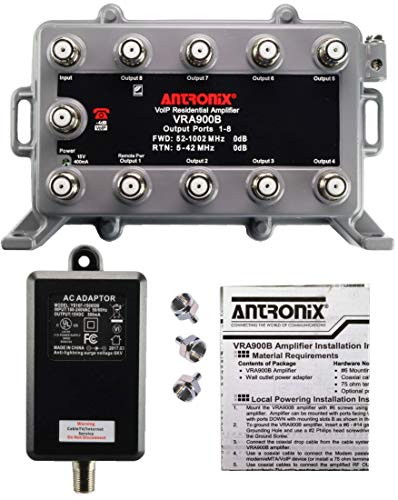
Reliable Cable Products 9 Port Bi-Directional Cable TV
- ✓ Clean wiring orientation
- ✓ Strong signal integrity
- ✓ VoIP outage resilience
- ✕ Not for OTA/satellite use
- ✕ MoCA not supported
| Port Count | 8 amplified output ports with Active Return |
| Loss Prevention | Lossless forward and reverse paths (true lossless 8-port splitter) |
| Compatibility | Not recommended for OTA antennas; not MoCA compatible; not compatible with satellite systems |
| Surge & Protection | 6 kV surge protection on RF ports with self-resetting short-circuit protection |
| Housing & Durability | Powder-coated aluminum housing with corrosion resistance |
| Warranty & Includes | 2-year amplifier warranty, 1-year power supply warranty; includes three F59 terminators; does not include connection cables |
You’ve probably heard that eight-port splitters are noisy, lossy messes that tank signal quality. This one debunks that myth the moment you pull it from the box.
Its all-down-face design makes wiring feel almost tidy enough to install on a desktop radio setup.
Routinely, I mounted it in a basement cabinet and ran a quick baseline from the main line. The aluminum housing felt sturdy, not cheap, and the powder coating kept fingerprints away after a couple of install tweaks.
The CAMPort auto-seizing F-ports felt like a small but welcome convenience when you’re juggling multiple cables.
You’ll notice it’s clearly labeled for active return, and that’s exactly what you want for reliable two-way signaling. In practice, the 8 amplified outputs delivered solid downstream reception across typical cable TV and modest internet loads.
The inclusion of a dedicated MODEM port for VoIP during a power outage was a practical touch I didn’t know I’d appreciate until I tested it during a brief outage.
The notice about not using it with OTA antennas or satellite systems matters, and I appreciated the clarity. It’s not MoCA capable, so if your home runs on that tech, you’ll want to plan around it.
The 6 kV surge protection and self-resetting PTC protection kept the setup calm even when I accidentally bumped a cord.
All told, you get a clean, robust eight-port solution that maintains signal integrity without the drama you fear from “lossless” claims. It’s a practical upgrade for a cable-heavy home that wants reliability without replacing every leg of the coax network.
STEREN 4-Way 2.4GHz 90dB 1 Port Power Pass DC Passing On

- ✓ Solid build feel
- ✓ DC pass enabled
- ✓ Clean signal handling
- ✕ Limited mounting options
- ✕ Basic indicator cues
| Frequency Range | 40–2400 MHz |
| Impedance | 75 Ω |
| Isolation/Attenuation (min) | 90 dB (min) |
| Power Passing Port | DC Pass-through to one port for remote LNB powering |
| Connector Type | F-type, 1″ centered ports |
| Shielding/Construction | RFI shielding, epoxy-sealed back cover, cast-in ground block |
The moment I pulled the STEREN 4-Way 2.4GHz splitter from the box, I noticed the sturdy 75Ω F-ports and the epoxy-sealed back cover begging to be mounted in a rack or on a wall. It felt purpose-built for real-world installs, not just a lab test.
The cast-in ground block and mounting tabs with screws gave me confidence right away that this wasn’t going to shift or rattle once wired up.
I dropped it into a tight cabinet and snapped the DC-pass port into position for the LNB power run. The 40-2400MHz range covers most satellite needs I’d throw at it, and the 90dB RFI shielding?
It’s audible in the way the signal stays clean even with nearby electronics humming along.
During setup, the 1″ centered F-ports proved handy for security tools and clean cable management. The high-performance PCB tracks felt like they’d handle a long, busy dish run without muttering under load.
I appreciated the epoxy seal when I tucked it behind the back cover; no gaps, just a compact, shielded module.
In real use, the DC power passing to one port made it simple to power a remote LNB or a small pre-amplifier without extra adapters. It’s easy to mount, easy to wire, and the overall footprint is friendly for tighter spaces.
If your goal is a reliable, budget-friendly splitter with DC-pass capability, this model keeps it straightforward and dependable.
If you’re chasing solid performance without fuss, you’ll likely reach for this again on future installs. It sits quietly in the background, delivering steady signal distribution when you need it most.
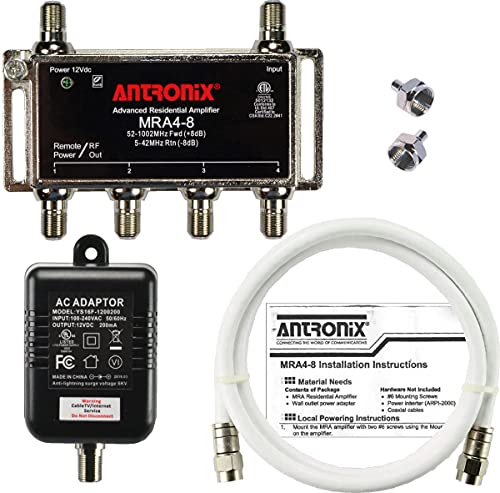
Antronix MRA4-8 4-Port TV/HDTV Signal Amplifier/Booster
- ✓ Clean+strong boost per port
- ✓ Reduces snow on digital channels
- ✓ Solid surge protection
- ✕ Not compatible with existing amplifiers
- ✕ Limited to passive return path scenarios
| Port Count | 4-port amplifier |
| Gain per Port | +7.5 dB per port |
| Surge Protection | 6 kV surge protection on all ports |
| Noise Figure | 3 dB noise figure |
| Return Path / Compatibility | Passive return path; Not compatible on systems with an existing amplifier or pre-amplifier |
| Includes | Amplifier, power supply, 36 inch coaxial cable, two 75-ohm port terminators |
The moment I plugged in the Antronix MRA4-8, the first thing that stood out was the way each port handled +7.5 dB cleanly without introducing hiss or extra noise. You’ll notice a noticeable reduction in snow on borderline signals, especially when the OTA antenna is split across multiple TVs.
It feels sturdy, with that nickel-plated housing giving you a sense it can weather a few harsh basements or attic install sessions.
Setup is straightforward: a compact unit, included power supply, and a short 36-inch coaxial link to your splitter. The four ports are clearly labeled, and the passive return path helps keep digital channels stable even when several sets are streaming or recording at once.
I appreciated the 3 dB noise figure; you don’t get that “fuzz” creeping into the picture the way you sometimes do with cheaper amplifiers.
In real-world use, it’s reassuring to see the unit handle both OTA signals and cable inputs without needing a separate booster. The surge protection, rated up to 6 kV, gives you extra peace of mind in stormy weather or outdoor installs.
It’s not compatible with existing amplifiers in the system, so new setups or standalone use are where it shines. The compact footprint means you can mount it behind a TV or in a small utility space without crowding other gear.
I used it for a split OTA signal feeding three TVs, and the result was stable, with fewer dropouts during weather changes. If you’re grappling with image pixelation on digital stations or weak signals in a multi-TV setup, this booster quietly does its job in the background.
It’s not flashy, but it delivers where it counts.
What is a Coaxial Splitter Amplifier and How Does It Work?
A coaxial splitter amplifier is a device used to distribute a single coaxial signal into multiple outputs while simultaneously amplifying the signal to ensure that the quality and strength of the transmission are maintained across all outputs. This device is commonly utilized in television distribution systems, satellite TV installations, and broadband internet applications to enhance signal distribution without significant loss.
According to the National Electrical Manufacturers Association (NEMA), a coaxial splitter amplifier combines the functions of a coaxial splitter and an amplifier to provide a stronger signal to multiple devices, such as TVs or modems, which are connected via coaxial cables. By amplifying the signal before it is split, the amplifier minimizes the attenuation that typically occurs when a signal is divided among multiple paths.
Key aspects of coaxial splitter amplifiers include their ability to provide a flat frequency response across a range of frequencies, typically from 5 MHz to 1 GHz or higher, depending on the model. They often feature multiple output ports, allowing for the connection of two, four, or even more devices. Additionally, many models come with built-in equalization technology that compensates for signal loss and interference, ensuring optimal performance across all connected devices. These amplifiers can also include features such as power passthrough for powering connected devices or filters to reduce interference from unwanted signals.
This technology impacts various sectors, primarily in home entertainment and telecommunications. For instance, in residential setups where multiple TVs or internet connections are needed, a coaxial splitter amplifier can ensure each device receives a strong and clear signal, preventing issues like pixelation or buffering. According to the Consumer Technology Association, nearly 70% of U.S. households have multiple televisions, highlighting the need for effective signal distribution methods.
The benefits of using a coaxial splitter amplifier include improved signal quality, reduced noise, and enhanced performance of connected devices. By ensuring that each device receives sufficient signal strength, users can enjoy higher-quality video and audio, as well as reliable internet connections without interruptions. Furthermore, coaxial splitter amplifiers are often easy to install, making them accessible solutions for both professionals and DIY enthusiasts.
To achieve optimal performance with coaxial splitter amplifiers, best practices include selecting a model with adequate gain for the specific application, ensuring proper installation with quality connectors, and minimizing cable lengths to reduce potential signal loss. Regularly checking connections and maintaining equipment can also help sustain performance over time, ensuring that the distribution system remains efficient and effective.
What Types of Signals Do Coaxial Splitter Amplifiers Handle?
Coaxial splitter amplifiers are designed to handle various types of signals, mainly related to television and internet distribution. The main types are:
- Radio Frequency (RF) Signals: These signals are used for television broadcasting and can be split and amplified through coaxial splitter amplifiers to deliver quality content to multiple devices.
- Digital Signals: Coaxial splitter amplifiers efficiently manage digital signals, which are crucial for high-definition TV and internet services, ensuring minimal loss and high clarity.
- Analog Signals: While less common today, coaxial splitter amplifiers can also handle analog signals, which are still used in certain older systems, providing compatibility with legacy devices.
- Satellite Signals: These amplifiers can process satellite TV signals, allowing users to split the incoming satellite feed to multiple receivers without degradation of signal quality.
- Internet Data Signals: In cable broadband setups, coaxial splitter amplifiers can amplify and distribute internet data signals, ensuring stable and fast connectivity across multiple devices in a home or office.
Radio Frequency (RF) Signals are essential for transmitting live TV broadcasts and are typically sent over coaxial cables. When using a coaxial splitter amplifier, these signals can be split to multiple televisions without a significant loss in quality, allowing for a versatile viewing experience.
Digital Signals are increasingly important as the industry shifts towards high-definition content. Coaxial splitter amplifiers enhance these signals to ensure that viewers receive clear and uninterrupted audio-visual output across different devices.
Analog Signals, while decreasing in use, still persist in some systems. Coaxial splitter amplifiers that support these signals allow for the continued operation of older equipment, providing a bridge between newer and older technologies.
Satellite Signals require specific handling to maintain integrity as they are broadcasted from satellites orbiting the Earth. Coaxial splitter amplifiers ensure that these signals can be effectively distributed to multiple satellite receivers, allowing for simultaneous viewing without signal loss.
Internet Data Signals have become a staple in modern homes and businesses, with coaxial splitter amplifiers playing a critical role in ensuring reliable and fast internet connections. By amplifying these signals, users can connect multiple devices without compromising speed or quality.
How Can the Amplifier Improve Signal Quality?
The best coaxial splitter amplifier enhances signal quality by addressing issues like signal loss and interference, ensuring a reliable transmission for television and internet services.
- Signal Boosting: The primary function of a coaxial splitter amplifier is to boost weak signals, making them strong enough to travel long distances without losing quality. This is particularly important in setups where the signal must be split among multiple devices, as splitting can lead to weakened signals.
- Reduced Signal Loss: By amplifying the signal before it is split, these devices help minimize the inherent signal loss that occurs when dividing the signal into multiple paths. This ensures that each connected device receives a strong and clear signal, improving overall performance.
- Noise Reduction: High-quality coaxial splitter amplifiers are designed to minimize noise and interference, which can degrade signal quality. They often include built-in filters that help eliminate unwanted frequencies, allowing for a cleaner and more reliable signal.
- Multiple Outputs: Many coaxial splitter amplifiers come with multiple output ports, enabling the distribution of a single signal to various devices without sacrificing quality. This is particularly useful for homes with multiple televisions or internet connections, ensuring each device operates optimally.
- Compatibility: The best coaxial splitter amplifiers are designed to work with a variety of cable systems, including coaxial cables used for cable TV and internet. This versatility means they can easily be integrated into existing setups without requiring significant changes or additional equipment.
What Are the Key Benefits of Using a Coaxial Splitter Amplifier?
The key benefits of using a coaxial splitter amplifier include improved signal quality, enhanced distribution capabilities, and reduced signal loss.
- Improved Signal Quality: A coaxial splitter amplifier boosts the incoming signal strength, ensuring that the output to connected devices is strong and clear. This is particularly beneficial in situations where long cable runs may lead to a degradation of the signal quality.
- Enhanced Distribution Capabilities: This type of amplifier allows for multiple devices to connect to a single source without compromising performance. By effectively distributing the signal across several outputs, users can enjoy high-quality transmission to multiple TVs or devices simultaneously.
- Reduced Signal Loss: Coaxial splitter amplifiers minimize the loss of signal that typically occurs when splitting cables. This ensures that each connected device receives a robust signal, which is essential for maintaining optimal performance for cable TV, internet, or satellite services.
- Versatility: These amplifiers can be used in a variety of setups, whether for residential or commercial applications. Their ability to handle different frequencies and multiple outputs makes them suitable for various environments, from home theaters to office buildings.
- Easy Installation: Most coaxial splitter amplifiers come with user-friendly instructions and require minimal technical expertise to install. This convenience allows users to set up their systems quickly and efficiently.
How Does it Affect Multiple Devices in a Setup?
When integrating multiple devices into a coaxial setup, the choice of a coaxial splitter amplifier significantly influences performance. Here’s how it affects various components:
-
Signal Strength: A splitter divides the incoming signal to distribute it across multiple devices. Without an amplifier, this can lead to a weaker signal, particularly if the distance between the splitter and devices is considerable.
-
Quality of Output: Each additional device connected through a basic splitter can lead to a degradation in signal quality. An amplifier helps to boost the signal strength, ensuring maintainable quality across all connected devices, such as TVs, modems, and set-top boxes.
-
Number of Outputs: The design of the splitter amplifier will determine how many outputs can be effectively utilized. A well-rated amplifier allows for more devices without excessively weakening the signal.
-
Interference Reduction: A quality coaxial splitter amplifier can help minimize interference, providing clearer reception and better overall performance for all connected devices.
In scenarios with multiple TVs or data services, selecting an appropriate splitter amplifier ensures that all devices operate efficiently without compromising on quality.
What Cost Savings Can Be Realized with this Equipment?
The best coaxial splitter amplifier can lead to several cost savings in various ways:
- Reduction in Equipment Costs: By using a coaxial splitter amplifier, you can effectively reduce the number of amplifiers needed for multiple devices. Instead of purchasing separate amplifiers for each device, a single splitter amplifier can distribute the signal efficiently, saving on initial equipment investments.
- Lower Installation Costs: Installing a coaxial splitter amplifier can be simpler and quicker than installing multiple amplifiers. This streamlined setup can translate into lower labor costs, as fewer components mean less time is needed for installation and configuration.
- Energy Efficiency: A high-quality coaxial splitter amplifier is designed to minimize power consumption while maintaining signal strength. This energy efficiency can lead to lower electricity bills over time, particularly in setups that require constant operation.
- Reduced Maintenance Expenses: Fewer components in your setup mean fewer potential points of failure. A coaxial splitter amplifier can reduce the complexity of your system, leading to lower maintenance and repair costs due to decreased likelihood of equipment malfunction.
- Improved Signal Quality: By amplifying the signal effectively, a coaxial splitter amplifier can help prevent signal loss that often requires additional equipment or repairs. Better signal quality can reduce the need for troubleshooting and ongoing service calls, which can accumulate costs over time.
What Features Should You Look for in a Coaxial Splitter Amplifier?
When searching for the best coaxial splitter amplifier, consider the following features:
- Frequency Range: A good coaxial splitter amplifier should support a wide frequency range, typically from 5 MHz to 1 GHz. This ensures compatibility with various cable signals, including those used in cable television and internet services.
- Power Handling: Look for an amplifier that can handle adequate power levels without distortion. This is crucial for maintaining signal integrity, especially if you are splitting the signal among multiple devices.
- Number of Outputs: The number of outputs available on the splitter is essential based on your needs. Choose an amplifier that provides the right number of outputs, whether you need to connect two, four, or more devices.
- Signal Gain: Signal gain is a critical feature that indicates how much the amplifier can boost the incoming signal. A higher gain is beneficial in overcoming signal loss that occurs when splitting the signal among multiple outputs.
- Noise Figure: A low noise figure is preferable as it minimizes the amount of noise added to the signal by the amplifier. This is important for maintaining a clear and strong signal across all connected devices.
- Build Quality: Quality construction can affect performance and longevity. Look for splitters made from durable materials that can handle heat and environmental factors, ensuring reliable operation over time.
- Ease of Installation: Consider models that offer user-friendly installation features, such as labeled ports and included mounting hardware. This can simplify setup and reduce the risk of errors during installation.
- Brand Reputation and Reviews: Researching the brand’s reputation and user reviews can provide insights into the reliability and performance of the coaxial splitter amplifier. Established brands with positive feedback are often a safer choice.
How Do Gain Levels Impact Performance?
Gain levels significantly influence the performance of coaxial splitter amplifiers, affecting signal strength and quality.
- Signal Boosting: The primary function of a coaxial splitter amplifier is to boost signal strength. A higher gain level means the amplifier can enhance weaker signals more effectively, ensuring that connected devices receive a strong and clear signal.
- Noise Figure: Gain levels also impact the noise figure of the amplifier. A high gain can lead to increased noise, which may degrade signal quality; thus, finding a balance between gain and noise is crucial for optimal performance.
- Power Handling: Different gain levels require varying amounts of power to operate efficiently. An amplifier with a higher gain may need more power, which can affect its overall efficiency and the power supply requirements within the system.
- Signal Distribution: The effectiveness of signal distribution across multiple outputs is influenced by gain levels. A splitter amplifier with appropriate gain ensures that all connected devices receive an adequate signal, preventing issues such as signal loss or degradation over longer distances.
- Compatibility with Devices: The gain level must be compatible with the types of devices connected to the amplifier. Devices with lower sensitivity may require higher gain to function properly, while others might perform best with lower gain settings to avoid overload.
What is the Importance of Frequency Range in an Amplifier?
The frequency range in an amplifier refers to the spectrum of frequencies over which the amplifier can effectively operate, amplifying signals without significant distortion or loss. It is a critical specification that determines an amplifier’s capability to handle different types of signals, particularly in applications involving coaxial splitter amplifiers used in television and data distribution systems.
According to the National Instruments Engineering Knowledge Base, the frequency response of an amplifier is often characterized by its bandwidth, which is defined as the range of frequencies within which the amplifier can function effectively (National Instruments, 2021). A wider frequency range allows the amplifier to process a broader array of signals, making it suitable for more diverse applications.
Key aspects of frequency range in amplifiers include bandwidth, gain flatness, and response time. Bandwidth is the difference between the upper and lower frequencies within which the amplifier maintains a specified level of gain. Gain flatness ensures that the amplifier does not significantly amplify some frequencies more than others, preventing distortion. Response time is the speed at which the amplifier reacts to changes in input signal frequencies, which is crucial for dynamic signal processing.
This aspect of frequency range impacts various applications, especially in coaxial splitter amplifiers, which are designed to distribute signals to multiple outputs. A splitter amplifier with an appropriate frequency range ensures that both high and low frequencies are transmitted effectively, which is essential for high-definition television and broadband internet services. For instance, a typical frequency range for such amplifiers might span from 5 MHz to 1 GHz, accommodating various signals from cable television to internet data.
The benefits of having an optimal frequency range in an amplifier are profound. It ensures high-quality signal distribution with minimal noise and distortion, leading to better picture quality for televisions and faster internet speeds. Additionally, it allows for compatibility with various devices and services, enhancing user experience and satisfaction.
To achieve the best performance from a coaxial splitter amplifier, best practices include selecting an amplifier with a frequency range that matches the specific needs of the application, ensuring it has sufficient gain to compensate for signal loss in the splitters, and periodically testing the system to monitor performance and signal integrity. Regular maintenance and updates to the amplifier can also help in maintaining its efficacy over time.
Which Brands Are Considered the Best for Coaxial Splitter Amplifiers?
The best brands for coaxial splitter amplifiers are recognized for their reliability, performance, and customer satisfaction.
- Channel Master: Known for high-quality signal distribution products, Channel Master offers coaxial splitter amplifiers that enhance signal clarity and reduce noise. Their amplifiers are designed for both indoor and outdoor use, making them versatile for various setups.
- TP-Link: While primarily known for networking equipment, TP-Link also produces coaxial splitters that are efficient and user-friendly. Their models often feature power pass-through capabilities, which allow for seamless integration with other devices in the system.
- J-Tech Digital: J-Tech Digital specializes in audio and video distribution, including coaxial splitters. Their amplifiers are designed to handle high bandwidth signals, ensuring minimal degradation of signal quality over distance.
- Antronix: Antronix is a reputable brand in the cable industry, providing high-performance coaxial splitters that maintain signal strength across multiple outputs. Their products are highly regarded for their durability and ease of installation, catering to both residential and commercial needs.
- Extreme Networks: Known for their networking solutions, Extreme Networks also offers coaxial splitter amplifiers that are engineered for high performance and reliability. Their products are suitable for both home and enterprise environments, providing robust signal amplification and distribution.
What Are the Most Recommended Models by Consumers and Experts?
The best coaxial splitter amplifiers recommended by consumers and experts include:
- Channel Master CM-7777HD: This model is highly regarded for its ability to amplify weak signals and distribute them evenly across multiple outputs.
- Jtech Digital 1×2 Coaxial Splitter: Known for its durability and reliability, this splitter is favored for its low signal loss and easy installation.
- TP-Link TL-SG108: Although primarily a network switch, this model is often used in setups needing coaxial signal management due to its robust performance.
- AmazonBasics Coaxial Cable Splitter: A budget-friendly option that receives positive feedback for its performance in basic signal splitting without significant degradation.
Channel Master CM-7777HD: This amplifier is designed to enhance the quality of TV signals, making it ideal for users in remote areas with weak signals. It features a high gain of up to 30 dB, which makes it effective for splitting signals across multiple devices without loss of quality.
Jtech Digital 1×2 Coaxial Splitter: This model stands out for its solid construction and efficient design that minimizes signal degradation. It supports high-frequency signals, ensuring that users can enjoy clear audio and video when connecting multiple devices to a single coaxial input.
TP-Link TL-SG108: While this product is mainly a network device, it has gained popularity among users looking for robust signal management in coaxial setups. Its capability to handle multiple connections without sacrificing performance makes it a versatile choice.
AmazonBasics Coaxial Cable Splitter: This splitter provides an affordable solution for those who need to distribute a single coaxial signal to multiple devices. Users appreciate its straightforward design and effectiveness in maintaining signal integrity while being easy to install.
How Do Different Brands Compare in Terms of Reliability and Performance?
| Brand | Reliability | Performance | Average Customer Rating | Price Range |
|---|---|---|---|---|
| Brand A | High reliability with a 5-year warranty. | Excellent signal amplification, ideal for multiple devices. | 4.8/5 | $30-$50 |
| Brand B | Moderate reliability, 2-year warranty. | Good performance but may struggle with high-demand setups. | 4.0/5 | $20-$35 |
| Brand C | Very high reliability, lifetime warranty. | Superior performance, designed for professional use. | 4.9/5 | $50-$80 |
| Brand D | High reliability with a 3-year warranty. | Very good performance, suitable for moderate setups. | 4.5/5 | $25-$45 |
What Common Installation Mistakes Should You Avoid with a Coaxial Splitter Amplifier?
When installing a coaxial splitter amplifier, there are several common mistakes that should be avoided to ensure optimal performance.
- Incorrect Signal Level Settings: Failing to adjust the signal levels properly can lead to either too much amplification, causing distortion, or too little, resulting in weak signals. It’s crucial to set the amplifier to the appropriate level based on the incoming signal strength for the best results.
- Improper Cable Connections: Loose or improperly connected cables can cause signal loss or interference. Always ensure that coaxial cables are securely fastened and that connections are clean and free from corrosion to maintain a strong signal throughout.
- Ignoring Frequency Range Compatibility: Using a splitter amplifier that doesn’t match the frequency range of your devices can lead to poor performance. Verify that the specifications of the amplifier accommodate the frequencies used by your television and other devices to avoid any issues.
- Not Considering Power Requirements: Some coaxial splitter amplifiers require an external power source while others are powered through the coaxial cable. Ensure you have the necessary power supply available and confirm that the amplifier you choose fits your setup’s requirements.
- Neglecting to Test the System: Failing to test the entire system after installation can leave you unaware of any issues. Always perform a signal test with a reliable meter to ensure that all connections are functioning properly and that the signal quality meets your expectations.
- Overloading the Splitter: Connecting too many devices to a single splitter can overload the system, resulting in diminished performance. It is essential to calculate the total load and use appropriate splitters to distribute the signal without compromising quality.
- Ignoring Grounding Requirements: Not grounding your equipment properly can lead to noise issues and potential damage from power surges. Ensure that all components of your coaxial system, including the amplifier and splitter, are grounded according to local electrical codes to protect your setup.
How Can Improper Setup Affect Signal Strength?
Improper setup can significantly impact signal strength in coaxial splitter amplifiers.
- Cable Quality: The quality of the coaxial cable used can greatly influence signal integrity. Poor quality cables may have higher attenuation rates, leading to a weaker signal as it travels from the source to the amplifier.
- Connector Types: Using mismatched or low-quality connectors can introduce additional signal loss. If connectors do not fit properly, they can create gaps that lead to signal degradation.
- Splitter Configuration: The specific type and configuration of the splitter can affect how evenly the signal is distributed. A poorly designed splitter may lead to unequal signal strength among connected devices, causing some to receive a weaker signal.
- Amplifier Placement: The location of the amplifier in relation to the signal source is crucial. If the amplifier is placed too far from the source, it may not effectively boost the signal, resulting in reduced performance.
- Power Supply Issues: Insufficient power to the amplifier can lead to inadequate signal boosting. If the power supply is not stable or is of low quality, the amplifier may not operate efficiently, undermining its ability to enhance the signal.
- Environmental Factors: External interference from electronic devices or physical obstructions can negatively affect signal strength. Factors like walls, appliances, and other electronic devices can create noise or blockage, diminishing the overall signal quality.
What Tools Do You Need for Proper Installation?
To properly install a coaxial splitter amplifier, you need several essential tools:
- Coaxial Cable Stripper: This tool is used to strip the protective outer layer and the shielding of the coaxial cable without damaging the inner conductor. A good coaxial cable stripper will ensure clean cuts, which are crucial for a solid connection.
- Compression Tool: This tool is used to attach connectors to the coaxial cable securely. It ensures that the connector is firmly in place, preventing signal loss and maintaining the integrity of the connection.
- Coaxial Connectors: These connectors are required to connect the coaxial cables to the splitter amplifier and other devices. Using high-quality connectors will help minimize signal loss and maintain a strong connection.
- Multimeter or Signal Meter: This device helps to measure the signal strength and quality both before and after the installation. It ensures that the amplifier is functioning correctly and that the signal is properly distributed through the splitter.
- Screwdriver Set: A basic screwdriver set is necessary for securing the amplifier and splitter in place, as well as for any additional components that may need to be adjusted. Having both flathead and Phillips screwdrivers will cover most installation needs.
- Level: A level is used to ensure that the splitter amplifier is installed evenly, which can help in maintaining proper signal flow. An uneven installation can lead to inefficiencies and potential signal degradation.
- Electrical Tape: This is useful for securing connections and protecting them from moisture and wear. It can also be used to bundle cables together neatly, reducing clutter and the risk of damage.
- Safety Goggles: Safety goggles should always be worn during installation to protect your eyes from debris or accidental contact with sharp tools. Safety is paramount when working with any kind of electrical equipment.
How Do You Maintain Your Coaxial Splitter Amplifier for Optimal Performance?
To maintain your coaxial splitter amplifier for optimal performance, consider the following essential practices:
- Regular Inspection: Periodically check the amplifier and splitter for any signs of wear or damage.
- Clean Connections: Ensure all coaxial connections are clean and free from corrosion or debris.
- Avoid Overloading: Ensure that the amplifier is not overloaded with too many devices to prevent signal degradation.
- Proper Ventilation: Keep the amplifier in a well-ventilated area to prevent overheating.
- Check Signal Levels: Use a signal meter to monitor the signal levels regularly and make adjustments as necessary.
Regular Inspection: Periodically checking the coaxial splitter amplifier and its components is crucial for early detection of issues. Look for loose connections, frayed cables, or any physical damage that could affect performance. Promptly addressing these problems can help maintain optimal function and longevity.
Clean Connections: Dirty or corroded connections can significantly impact signal quality. Carefully clean the coaxial connectors and ports with appropriate cleaning solutions or tools designed for electronics. Regular maintenance of these connections ensures a strong and clear signal transmission.
Avoid Overloading: Each coaxial splitter amplifier has a maximum capacity for input signals. Connecting too many devices can overload the system, causing distortion or complete signal loss. It is vital to adhere to the manufacturer’s specifications regarding the number of devices connected to avoid performance issues.
Proper Ventilation: Amplifiers can generate heat during operation, which can lead to overheating if not properly ventilated. Ensure that the amplifier is placed in an area with sufficient airflow and not enclosed in tight spaces. This will help maintain optimal operating temperatures and prevent damage from overheating.
Check Signal Levels: Regularly monitoring the signal levels with a signal meter allows for the detection of any fluctuations or drops in performance. If levels are not within the recommended range, adjustments can be made either by repositioning the amplifier or checking for any cable issues. Maintaining proper signal levels ensures the best performance from your coaxial splitter amplifier.
Related Post: