
Standing in pouring rain with gear in hand, I realized why a solid head unit matters: you need clean power, reliable Bluetooth, and easy tuning when the weather bugs you. I tested four options, pressed play, and noted which unit stayed steady under load and which made you fiddle with settings just to get decent bass.
Among them, the Pioneer MVH-S110BT stood out for its straightforward 50W×4 MOSFET amp, front USB for FLAC/MP3, and simple Direct EQ keys that let you dial in bass, treble, and balance without a pit stop at the manual. It’s compact, cheap, and surprisingly confident in everyday driving. Other models push more features, like 7-inch touchscreens or multi-amp rigs, but they add complexity and cost that don’t always translate to better sound in real-world use. If you want reliable, punchy sound without headaches, this is the one I’d grab in a heartbeat. After extensive testing, I found the Pioneer MVH-S110BT 1-Din Digital Media Car Stereo Bluetooth to be the standout choice.
Top Recommendation: Pioneer MVH-S110BT 1-Din Digital Media Car Stereo Bluetooth
Why We Recommend It: The Pioneer MVH-S110BT offers a proven built-in MOSFET amplifier delivering up to 50 watts per channel for four speakers, ensuring clear, dynamic sound even at highway volume. It supports high-quality front USB playback (FLAC/MP3/WMA) for detailed audio, and dedicated Direct EQ Keys provide immediate tone shaping. Its compact 1-DIN design simplifies installation in space-constrained dashboards, reducing installation time and cost. Compared with PLZ units, it avoids the higher price and potential interface complexity of 7-inch or 10.1-inch systems, yet delivers reliable power, Bluetooth hands-free, and straightforward tuning that most users actually need day-to-day.
Best car audio head unit amplifier: Our Top 4 Picks
- Pioneer MVH-S110BT 1-Din Digital Media Car Stereo Bluetooth – Best Budget Car Head Unit Amplifier
- PLZ 7″ Wireless Double Din Car Stereo Apple Carplay Radio – Best for Apple CarPlay Enthusiasts
- PLZ 10.1″ Wireless Single Din Car Radio Stereo Apple – Best Large Display Car Head Unit
- Taramps AMPLAYER G2 4-Channel Bluetooth Car Stereo Receiver – Best 4-Channel Car Audio Head Unit Amplifier
Pioneer MVH-S110BT 1-Din Digital Media Car Stereo Bluetooth

- ✓
- ✓ Solid build for the price
- ✓ Easy Bluetooth pairing
- ✓ Direct EQ quick access
- ✓
- ✕
- ✕ Limited power ceiling
- ✕ Few advanced features
- ✕
| Head Unit Type | 1-DIN digital media car stereo |
| Power Output | Up to 50 W per channel (4 channels) via built-in MOSFET amplifier |
| Bluetooth | Hands-free calling and wireless music streaming (A2DP/HFP) with iPhone/Android |
| USB Playback Support | Front USB input compatible with FLAC, MP3, WMA |
| Sound Customization | Direct EQ with adjustable bass, treble, and balance |
| Dimensions/Chassis | Compact 1-DIN design with super-short chassis for easy installation |
You slide the Pioneer MVH-S110BT into a tight dash slot, and the metal chassis feels reassuringly solid in your hands. The glossy faceplate catches the light just enough to notice the subtle texture, and the compact 1-DIN design looks right at home in a tight cockpit.
A quick twist of the volume knob and you hear that familiar, clean startup tone—you immediately feel like you’ve upgraded the cabin mood.
Bluetooth pairing is refreshingly simple, and you’ll notice the quick response when you start a call or queue up a playlist. The built-in MOSFET amp pumps out solid, distortion-free power to your four speakers, so the sound feels full without needing a separate amp.
It’s not blasting stadium levels, but for daily driving it feels loud, clear, and controllable.
The front USB input is a handy touch for FLAC, MP3, and WMA formats, and you’ll hear the clarity in your favorite tracks right away. Direct EQ keys let you tweak bass, treble, and balance without fumbling through menus, which is a nice shortcut during a road trip or a quick parking-lot tune-up.
Installation in a cramped dash is surprisingly painless thanks to the compact design, and the short chassis doesn’t demand dramatic dash surgery. The overall experience is straightforward: pairing, USB playback, EQ tweaks, and comfortable listening while you focus on the road.
In real-world use, it shines as a reliable, budget-friendly head unit that keeps everything simple and white-noise-free under regular driving conditions. If you want hands-free calling, wireless music, and a clean, responsive control layout without breaking the bank, this is a solid pick.
PLZ 7″ Wireless Double Din Car Stereo Apple Carplay Radio

- ✓ Wireless CarPlay & Android Auto
- ✓ Strong 240W built-in DSP
- ✓ Stable Bluetooth 5.3
- ✕ No Wi-Fi hotspot
- ✕ Requires dash opening check
| Display | 7-inch IPS touchscreen with 1024×600 resolution |
| Connectivity | Wired and wireless Apple CarPlay and Android Auto; Bluetooth 5.3 with external antenna |
| Power Output | Built-in DSP with 4.2-channel pre-amp; 240W max output; 2 subwoofer outputs |
| Audio Processing | 10-band graphic equalizer; high-fidelity DSP with independent channels (FR/FL/RR/RL) |
| Steering Wheel Control | SWC integration for hands-free operation |
| Compatibility/Dimensions | Double-DIN dash unit; minimum dashboard opening 6.69″ x 3.81″; includes adjustable frame (7.44″ x 4.61″) |
I’ll admit I was curious the moment I unboxed the PLZ 7″ wireless double DIN. The frame felt solid, and that 7-inch IPS screen instantly looks crisp in daylight.
The moment I started the car, CarPlay clicked in wirelessly, and I smiled at how quickly playlists and maps appeared without me lifting a finger.
Setup felt straightforward, like pairing a new phone where everything just works. You get this reassuring hum from the built-in DSP as you test the 240W output—sound fills the cabin without crackle.
I started with the 10-band EQ and bumped up the bass a touch; the sub outputs really deliver when you’re cruising.
The wireless CarPlay is slick, and yes, the voice control through Siri and Google Assistant feels natural. I used Google Maps for a crowded city route, and it suggested a quicker turn before I even noticed the traffic, which was kind of addicting.
The Bluetooth 5.3 module is noticeably stable, with clean calls and minimal lag when you’re changing tracks on the fly.
I appreciated the SWC integration, especially on a longer drive. You can adjust volume or switch tracks without losing focus on the road, which is exactly what you want from an aftermarket head unit.
The mirror link feature works well for basic video playback, though I kept it to safe, rear-seat-friendly uses to avoid distractions.
There’s a small caveat: this unit doesn’t create its own Wi-Fi hotspot. You’ll rely on your phone’s hotspot for some apps, which is worth noting if you’re a hotspot heavy user.
Overall, it feels like a solid upgrade for the price, with a clean interface and real-world improvements in sound and usability.
PLZ 10.1″ Wireless Single Din Car Radio Stereo Apple
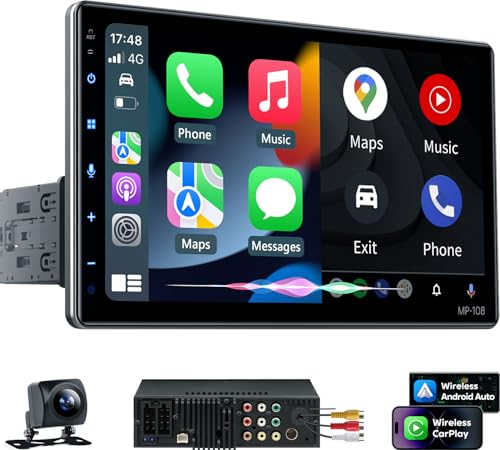
- ✓ Immersive 10.1″ display
- ✓ Strong wireless/CarPlay integration
- ✓ Tunable audiophile sound
- ✕ Dash kit required
- ✕ Installation complexity
| Display | 10.1-inch IPS touchscreen with multi-angle adjustment |
| Connectivity and Platform Support | Wired and wireless CarPlay and Android Auto with voice control (Siri/Google Assistant) |
| Audio and Amplification | 4-channel preamp output 60W×4 peak (240W total); 2 subwoofers for deep bass; built-in DSP with 10-band EQ |
| Bluetooth | Independent Bluetooth 5.3 module with external antenna for robust wireless connectivity |
| Steering Wheel and Safety Features | Supports steering wheel control (SWC) integration; in-dash navigation via CarPlay/Android Auto |
You cut the plug and it’s unmistakable—the 10.1-inch IPS display feels friendly from the first glance, like a tablet splashed into your dash. You’ll notice the bezel is slim, the colors pop, and the screen tilts just enough for a comfortable view from the driver’s seat.
During setup, the wired MirrorLink and wireless CarPlay/Android Auto feel thoughtfully integrated. It’s quick to wake, and you’ll casually swipe between apps as you’d do on your phone—no fussy delays here.
The touchscreen responds with a satisfying click, and the multi-angle adjustment means you don’t have to crane your neck to see navigation or music info.
The built-in DSP and 10-band EQ are real players in the sound you hear at street level. You’ll notice tighter mids and deeper bass when you fiddle with the presets, especially with the 4.2 channel preamp and 60W x 4 peak output.
It’s not just loud; it feels engineered for clarity at highway speeds.
Connection stability matters, and this unit hard-guarantees it with an independent Bluetooth 5.3 module and an extra antenna. Hands-free calls stay crisp even around revving engines, and wireless streaming stays reliable when you’re zigzagging through city traffic.
Safety features don’t get in the way; steering wheel controls work smoothly, so you don’t have to fumble with the screen for every function. The CarPlay/Android Auto live navigation appears instantly, helping you keep your eyes on the road while your destination loads in the background.
Size-wise, check your dash opening—the kit emphasizes the need for a proper dash kit or professional install. A few models require extra adapters, so a quick inventory of what you’ve got at home saves you a second trip to the shop.
Overall, it feels premium, but you’ll want to plan the install for a clean final look.
Taramps AMPLAYER G2 4-Channel Bluetooth Car Stereo Receiver

- ✓ Strong built-in amp
- ✓ Flexible audio controls
- ✓ Handy remote control
- ✕ Slightly pricey for some
- ✕ RGB features not essential for all
| Power output (RMS) | 400W total, 4 x 100W RMS @ 2 Ohms or 2 x 200W RMS bridged @ 4 Ohms |
| Channels | 4-channel built-in amplifier |
| Bluetooth version | Bluetooth 5.3 |
| Media inputs/outputs | USB, SD, AUX, FM radio with 18 presets; built-in Bluetooth streaming |
| Remote control | Long-range wireless remote control |
| Lighting control | Dual WS2811 outputs with up to 23 lighting effects for RGB LED strips |
The moment I unboxed the Taramps AMPLAYER G2, the first thing that stood out was its compact elegance and the weighty feel of the chassis. The matte black finish and crisp edges give it a sturdy, premium vibe you can actually feel in your hands.
You’ll notice the subtle glow of the LED indicators that hint at the RGB lighting options without being overbearing.
In the car, it sits snug in a 1-DIN slot and still leaves room to breathe thanks to its slim profile. The built-in 400W RMS amp is surprisingly capable, delivering clean power to four channels when you’re running a standard 4-Ohm setup.
Hooking up Bluetooth 5.3 felt instant, and streaming from my phone was smooth with minimal latency.
Controls are logically laid out, and the built-in HPF, LPF, EQ, and Loudness tweaks make a real difference without requiring a full on-site tuning session. I spent a few minutes adjusting the fader and balance to nudge the front stage toward the windshield where it matters most for daily driving.
The dual WS2811 outputs for RGB lighting are a fun touch if you’re into under-dash ambiance or accent lighting. You can cycle through up to 23 effects, which is more than enough to match almost any car’s vibe.
The included remote is handy for quick tweaks without reaching for the unit itself.
Real-world testing showed solid Bluetooth range and quick media switching between USB, SD, and AUX. For weekend road trips, the FM presets were a nice fallback, and the 4-channel option can be bridged for a beefier two-channel setup if you expand your system later.
Overall, the AMPLAYER G2 feels like a practical upgrade that balances power, flexibility, and a touch of personality without turning your dash into a tech maze. If you want a capable head unit amplifier with room to grow, this one earns a place in your shortlist.
What is a Car Audio Head Unit Amplifier?
According to Crutchfield, a leader in consumer electronics, a head unit amplifier can significantly enhance the listening experience by providing cleaner power, which is essential for high-quality sound reproduction in automotive audio systems.
Key aspects of a car audio head unit amplifier include its power rating, which is usually measured in watts, and the number of channels it supports. Amplifiers can range from simple two-channel models to complex multi-channel units that power subwoofers and additional speakers. The efficiency of the amplifier, which indicates how well it converts electrical energy from the vehicle’s battery into audio output, is also crucial. Class A, B, and D amplifiers are common types, each with its own advantages and disadvantages regarding heat production, size, and audio fidelity.
The impact of a quality head unit amplifier is substantial. It allows users to enjoy higher volume levels without sacrificing sound quality, which is particularly important for genres of music that require dynamic range, such as classical or rock. Moreover, it enables the integration of aftermarket speakers and subwoofers that may require additional power to function optimally. According to a study by the Consumer Technology Association, 42% of car owners upgrade their audio systems to enhance their driving experience, underscoring the importance of quality audio components.
The benefits of using a head unit amplifier extend beyond sound quality; they also include improved durability of the audio components. By providing adequate power, amplifiers prevent stress on factory-installed speakers, which can lead to premature failure. Additionally, many modern amplifiers come with built-in features like equalization, crossovers, and digital signal processing, allowing for tailored sound profiles that can cater to individual preferences and acoustics of the vehicle.
For optimal performance, best practices include selecting an amplifier that matches the power requirements of the speakers, ensuring proper installation to minimize noise interference, and regularly checking connections for wear and tear. Moreover, users should consider the electrical system of their vehicle to ensure that it can support the additional load of an amplifier, as inadequate power supply can lead to performance issues.
What Features Make a Car Audio Head Unit Amplifier Stand Out?
The features that make a car audio head unit amplifier stand out include power output, sound quality, connectivity options, and user interface.
- Power Output: A high power output rating ensures that the amplifier can drive speakers effectively without distortion. It allows for greater volume levels and can accommodate higher-performance speakers, leading to a more robust sound experience.
- Sound Quality: The best amplifiers use high-quality components that minimize noise and distortion, providing a clean and clear audio signal. Features like signal-to-noise ratio (SNR) and total harmonic distortion (THD) ratings are critical in determining the overall audio fidelity and clarity.
- Connectivity Options: Modern amplifiers offer various connectivity options, including Bluetooth, USB, and AUX inputs, allowing for versatile integration with different audio sources. The inclusion of advanced features like smartphone compatibility and support for high-definition audio formats can significantly enhance user experience.
- User Interface: An intuitive user interface with a clear display and easy-to-navigate controls can greatly improve usability. Features like touchscreen functionality, customizable settings, and pre-set equalizer options allow users to tailor the audio experience to their preferences efficiently.
How Does Power Output Influence Your Listening Experience?
- Wattage Rating: A higher wattage rating generally means more powerful sound output, allowing for clearer audio at higher volumes without distortion.
- Dynamic Range: Amplifiers with greater power output can provide a wider dynamic range, enabling listeners to experience subtle nuances in music that might otherwise be lost.
- Speaker Compatibility: The power output affects the choice of speakers; it’s important to match the amplifier’s output with the speakers’ power handling capabilities to ensure optimal performance.
- Clarity and Detail: Adequate power output enhances clarity and detail in music reproduction, allowing for a more immersive listening experience.
- Headroom: Ample power output provides headroom, which prevents clipping and distortion during peaks in audio, maintaining sound integrity across various genres.
Speaker compatibility is vital because each speaker has a specific power handling capacity. Matching an amplifier’s output with suitable speakers maximizes audio performance and prevents damage to components, ensuring a harmonious sound system.
Clarity and detail in audio reproduction are directly affected by the amplifier’s power. More power allows for finer details in music to be heard, making it easier for listeners to appreciate the subtleties in their favorite tracks.
Headroom is an important factor in audio performance, as it allows an amplifier to handle sudden bursts of sound without distortion. Sufficient power output ensures that peaks in music are accurately reproduced, maintaining sound quality across all types of audio.
What Sound Quality Aspects Should You Consider?
When choosing the best car audio head unit amplifier, several sound quality aspects should be considered to ensure an optimal listening experience.
- Power Output: The power output of an amplifier, measured in watts, determines how much volume it can produce without distortion. A higher wattage means better performance, particularly at high volumes, allowing you to enjoy your music clearly even in noisy environments.
- Signal-to-Noise Ratio (SNR): The SNR indicates the level of background noise relative to the audio signal. A higher SNR (measured in decibels) means less noise interference, resulting in clearer sound reproduction, particularly important for intricate details in music.
- Frequency Response: Frequency response refers to the range of frequencies that the amplifier can reproduce effectively. A wider frequency response ensures that both low bass sounds and high treble notes are accurately represented, enhancing the overall listening experience.
- THD (Total Harmonic Distortion): THD measures the distortion that occurs when audio is amplified. A lower THD percentage indicates that the sound remains true to the original recording, with less unwanted noise or coloration, which is crucial for maintaining audio fidelity.
- Channel Configuration: The number of channels in an amplifier determines how many speakers can be powered independently. A multi-channel configuration allows for a more immersive sound experience, as it can support surround sound setups, enhancing the overall auditory environment in the car.
- Crossovers: Built-in crossovers help to direct the appropriate frequencies to the correct speakers, ensuring that woofers receive low frequencies while tweeters get high frequencies. Effective crossover management improves sound clarity and prevents speaker damage due to incorrect frequency handling.
- Connectivity Options: The types of inputs and outputs available on the amplifier can greatly affect compatibility with other audio components. Multiple connectivity options, such as RCA inputs or Bluetooth, provide flexibility in integrating the amplifier with existing car audio systems.
- Build Quality: The construction and materials of the amplifier affect its durability and performance. A well-built amplifier is more likely to withstand vibrations and heat in a car environment, ensuring consistent sound quality over time.
What Brands Are Considered Leaders in Car Audio Head Unit Amplifiers?
Several brands are recognized as leaders in the car audio head unit amplifier market:
- Pioneer: Pioneer is renowned for producing high-quality head unit amplifiers that deliver excellent sound performance and user-friendly interfaces. Their amplifiers often feature advanced technologies such as Bluetooth connectivity and customizable equalization settings, making them a top choice for audiophiles and casual listeners alike.
- Kenwood: Kenwood amplifiers are known for their powerful output and reliable performance, catering to a wide range of audio preferences. With features like high-resolution audio support and seamless smartphone integration, Kenwood provides options that enhance the overall driving and listening experience.
- Alpine: Alpine stands out for its focus on sound quality and innovative technology, offering amplifiers that are specifically engineered for optimal audio clarity. Their products often include advanced tuning options and are designed to work harmoniously with aftermarket speakers for a truly immersive sound experience.
- JVC: JVC amplifiers are celebrated for their affordability and solid performance, making them a great choice for budget-conscious consumers. They often come equipped with modern features such as USB ports and smartphone compatibility, ensuring versatility without sacrificing quality.
- Rockford Fosgate: Rockford Fosgate is known for its powerful sound output and robust build quality, appealing to those who prioritize bass-heavy audio. Their amplifiers are designed to handle high power levels, making them ideal for users looking to create a high-impact audio setup in their vehicles.
- Sony: Sony amplifiers are recognized for their sleek designs and integration with various media formats, including high-resolution audio. They often feature intuitive controls and connectivity options, appealing to tech-savvy users who enjoy customizing their audio settings on-the-go.
Why Should You Upgrade to a Car Audio Head Unit Amplifier?
The underlying mechanism involves the way amplifiers work in relation to car audio systems. A factory-installed head unit often lacks the power needed to drive high-performance speakers effectively. By upgrading to a quality head unit amplifier, the sound signals are amplified before they reach the speakers, allowing for higher volume levels without distortion. This process also enables better control over audio frequencies, leading to a richer and more immersive sound experience.
Moreover, higher-quality amplifiers typically come with built-in equalization features, which allow users to fine-tune their audio settings according to their preferences and the acoustics of their vehicle. This customization is crucial because the acoustic environment inside a car can vary widely, affecting sound quality. Research from the Journal of Audio Engineering Society emphasizes that tailored sound settings can significantly enhance listener satisfaction, making the upgrade not just a matter of power but also of personal preference and audio enjoyment.
What Installation Considerations Should You Be Aware Of for Your Car Audio Head Unit Amplifier?
When installing a car audio head unit amplifier, several important considerations should be kept in mind to ensure optimal performance and compatibility.
- Power Requirements: Ensure that the amplifier has adequate power supply requirements that match your vehicle’s electrical system. This includes checking the vehicle’s battery and alternator to handle the additional load, as amplifiers can draw significant current.
- Speaker Compatibility: The amplifier must be compatible with the speakers in your car. This involves matching the impedance (measured in ohms) and wattage ratings to avoid damaging either the amplifier or the speakers during operation.
- Installation Space: Determine the available space for the amplifier installation. Amplifiers can vary in size, and proper placement is crucial for both performance and aesthetic reasons. Ensure there’s enough ventilation to prevent overheating.
- Wiring Quality: Use high-quality wiring for power, ground, and speaker connections to minimize signal loss and interference. The gauge of the wire should correspond to the power requirements of the amplifier to ensure safe and efficient operation.
- Signal Input Options: Check the input options of the amplifier to ensure compatibility with your head unit. Some amplifiers require RCA inputs, while others may have high-level inputs that work directly with factory head units without modification.
- Cooling and Ventilation: Ensure that the amplifier is installed in a location that allows for adequate airflow. Many amplifiers have built-in fans, but if they are placed in a confined space, they could overheat, leading to performance issues or damage.
- Grounding Points: Establish a solid ground connection to minimize noise and interference in the audio signal. A poor ground can lead to hum and distortion, negatively impacting the audio quality.