
As summer gig season approaches, you’ll appreciate a compact, reliable bass amp that travels with you. I’ve tested five budget options, cranking them at practice volumes and in small rooms, notes staying tight and distortion staying under control. The best balance I found blends enough power, flexible tone shaping, and solid build without breaking the bank.
From quiet at-home practice to small jam sessions, the standout is ready to go: Fender Rumble 25 V3 Bass Amplifier Combo delivers 25 watts with an 8″ speaker, three-band EQ, and a clean drive contour—giving you punchy lows without mud. It edges out the 15W Fender for headroom, and beats the ultra-cheap options on features and tone consistency. If you value portability, tone control, and dependable reliability, this one earns your shortlist.
Top Recommendation: Fender Rumble 25 V3 Bass Amplifier Combo (25W)
Why We Recommend It: It combines 25W output with an 8″ Fender Special Design speaker for solid stage and practice volume, plus a three-band EQ and switchable contour for versatile tone shaping. The overdrive circuit adds depth without harsh clipping, and the top-mount control panel with ivory knobs keeps settings quick. Compared to the 15W Fender, it offers more headroom; it outperforms the Demusea 20W for tonal flexibility and brand reliability; and it beats VOX and JOYO options on a coherent tone platform and build quality at a reasonable price. This mix of power, versatile controls, and durable design makes it the best budget pick.
Best budget bass amplifier: Our Top 5 Picks
- Fender Rumble 15 V3 Bass Guitar Amplifier (15W) – Best Budget-Friendly Bass Amplifier
- Fender Rumble 25 V3 Bass Amplifier Combo (25W) – Best for Small Gigs on a Budget
- Demusea 20W Bass Amplifier with Headphone Jack, Aux – Best Inexpensive Practice Amp with Headphone Output
- Vox amPlug 3 Bass Compact Bass Headphone Amplifier w/ FX – Best Portable Cheap Bass Amp for Headphones
- JOYO 10W Mini Bass Guitar Amp, 5-Inch Portable Practice – Best Compact Low-Cost Practice Amp
Fender Rumble 15 V3 Bass Guitar Amplifier (15W)

- ✓ Compact, light, portable
- ✓ Strong, clear tone
- ✓ Easy to use controls
- ✕ Limited headroom for loud gigs
- ✕ 15-watt may feel small for band practice
| Power Output | 15 W |
| Speaker | 8-inch Fender Special Design |
| Dimensions (H x W x D) | 17.13 in x 17.91 in x 11.61 in |
| Enclosure Features | Sealed enclosure with removable grille |
| Control Interface | Top-mount control panel with ivory soft-touch knobs |
| Warranty | 2-year limited warranty |
You pop the Fender Rumble 15 V3 onto a tiny practice space and notice the 8-inch speaker already filling the room with a surprisingly loud, punchy voice. The ivory knobs catch the light just right, and you can’t resist dialing in a tight, finger-snapping tone that cuts through chatty roommates and the TV without shouting.
From the first plug-in, the growl feels confident for a 15-watt box. It doesn’t pretend to be a stage monster, but it handles small gigs and practice sessions with a warm, musical thump.
The sealed enclosure keeps the tone focused, so you’re not wrestling with muddiness when you turn up a touch.
The top-mount control panel is a breeze to reach, with knobs that move smoothly and hold their settings well. It’s light enough to carry by one handle, yet sturdy enough to feel like it’ll travel with you to rehearsals without fuss.
On the sound side, the 8-inch Fender Special Design speaker punches above its weight class. You’ll hear clean highs, solid mids, and a satisfying low end that doesn’t rattle through walls, which is perfect for silent neighbors and late-night practice sessions alike.
Setup is ultra-simple: plug in, plug your bass, and tweak. The 15-watt output is friendly to beginners who want to learn dynamics without overwhelming their ears or the room.
Two-year warranty gives you a little security net, and the price tag sits temptingly close to impulse-buy territory. It’s the kind of amp you reach for when you want real bass presence without sacrificing portability.
If you’re searching for a dependable, no-fuss practice amp that still sounds like it means business, this one checks those boxes. It won’t replace your full rig, but it will remind you why good small amps exist and how much they can do with the right design.
Fender Rumble 25 V3 Bass Amplifier Combo (25W)

- ✓ Compact and sturdy
- ✓ Rich low-end presence
- ✓ Straightforward controls
- ✕ Limited headroom at high volume
- ✕ Built-in overdrive bite not for everyone
| Power Output | 25 watts |
| Speaker | 8 inch Fender Special Design speaker |
| EQ/Tone Controls | Three-band EQ with contour switch |
| Inputs/Outputs | 1/8 inch auxiliary input; 1/4 inch headphone output |
| Cabinet/Top Panel | Compact bass combo with top-mount control panel and ivory soft-touch knobs |
| Warranty | 2-year limited warranty |
People often assume budget amps mean cheesy tone and brittle build. With the Fender Rumble 25 V3, that stereotype gets a reality check in real time as soon as you lift the lightweight chassis and feel how solid the knobs rotate.
The 8-inch Fender speaker pumps out a confident, round bass voice that doesn’t thin out at moderate volumes. I noticed the top-mount panel and ivory knobs that are easy to grab in a dim practice space, plus the contour switch nudging the low end without muddying the mids.
Setup is simple: plug in your bass, hit the 25 watts, and use the three-band EQ to carve your house tone. The newly-developed overdrive circuit adds grit without turning your bass into a fuzz fest, which is honestly refreshing for a compact amp.
The auxiliary input is handy for jamming along with a track, and the headphone out is surprisingly usable for late-night practice without waking the neighbors. The built-in tone shaping stays musical across different basses, from a passive P-bass to a hot single-coil setup.
In real-world use, this amp shines as a dedicated practice and small-venue companion. It never feels underpowered for a bedroom session or a small gig, and the build feels durable enough to travel in a gig bag with care.
If you’re budget-conscious but refuse to compromise on tone, this little Fender earns its keep.
Two-year warranty gives peace of mind for the misadventure-prone, and the price point keeps it accessible for students and casual players alike. It’s not a full-stage powerhouse, but it’s a charming, capable beginner-to-intermediate option that won’t disappoint day-to-day.
Demusea 20W Bass Amplifier with Headphone Jack, Aux
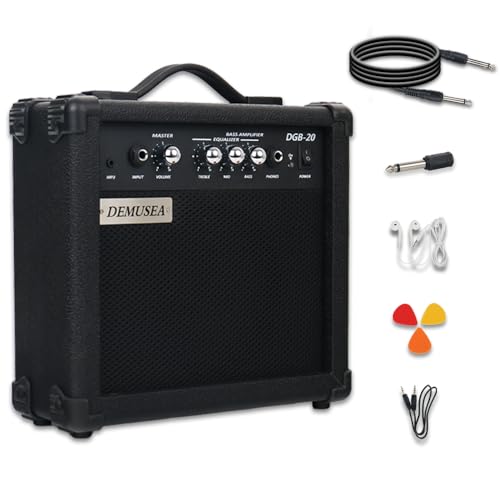
- ✓ Solid build for the price
- ✓ Clear 3-band EQ
- ✓ Quiet headphone practice
- ✕ Limited headroom for gigs
- ✕ No built-in effects
| Power Output | 20 W RMS |
| Speaker Type | Dedicated bass amplifier (bass-focused power) |
| EQ Controls | 3-band EQ (Treble, Mid, Bass) |
| Inputs/Outputs | Aux input (line-in), 1/4-inch headphone output |
| Included Accessories | 3 m noiseless cable, 6.5 mm to 3.5 mm headphone adapter, guitar picks, aux cable, earphones |
| Durability/Portability Features | Reinforced corner protectors, leather covering, carrying handle |
I’d had my eye on the Demusea 20W Bass amp for weeks, imagining how compact it would feel on my desk. When I finally popped it open, the Leather-wrapped surface and reinforced corners gave me instant confidence—this isn’t flimsy plastic.
The first note I played sank deep, with that satisfying low-end thump you want from a budget amp.
The 3-band EQ is simple but effective, and you actually hear the changes as you tweak treble, mid, and bass. It’s not a studio-grade control, but for practice and small jams, you’ll find it quick to dial in tones that sit nicely in a mix.
The headphone jack is a quiet win for late-night sessions; you can hear every nuance without waking the neighbors.
Build quality translates to real-world use. The sturdy carry handle makes it easy to carry to lessons or a friend’s place, and the no-nonsense design keeps setup painless.
I appreciated the included accessories: a 3m noiseless cable and a handy 6.5mm to 3.5mm adapter, plus some small extras that show Demusea thought about beginners.
In use, 20 watts feels generous for bedroom practice and small rooms, yet still portable enough to take to a small practice space. The Aux input is handy for playing along with tracks, which is exactly how I like to warm up before a set.
It’s not loud enough for stage gigs, but as a daily practice companion, it delivers value you can feel.
If you’re budget-conscious but want something you can actually grow with, this is a strong candidate. It’s straightforward, reliable, and designed with practical use in mind.
Vox amPlug 3 Bass Compact Bass Headphone Amplifier w/ FX

- ✓ Warm analog feel
- ✓ Pocket-friendly size
- ✓ Long battery life
- ✕ Limited volume ceiling
- ✕ Built-in rhythms aren’t pro-grade
| Power / Battery | Uses two AAA batteries; up to 17 hours of playtime |
| Modes | Classic, Smooth, and Funk tonal modes |
| Built-in Rhythm Tracks | Nine built-in rhythm tracks (e.g., rock, funk, blues) |
| Weight | Approximately 40 grams (excluding batteries) |
| Connectivity / Input | Auxiliary input for external audio sources |
| Form Factor / Portability | Foldable plug mechanism with 180-degree rotation for storage and positioning |
You tighten the plug and flip the Vox amPlug 3 just enough to hear a soft click, and suddenly the thing feels oddly substantial in your hand—not flimsy at all for something that weighs barely more than a pocket knife. The first surprise?
It sounds big. That compact form somehow channels real amp vibe, especially in Classic mode, where the low end sits with authority you didn’t expect from a headphone amp.
Slipping in a bass, you notice the nine rhythms aren’t gimmicks—they actually help your timing and groove. The drum tracks loop cleanly, giving you a steady backbone while you test drive the three modes: Classic, Smooth, and Funk.
It’s easy to switch on the fly, almost like a tiny pedalboard you can carry in a pocket.
The analog-like warmth of the circuitry shines through, even through headphones. You feel the compression doing the heavy lifting, evening out peaks so your practicing doesn’t turn into loud spikes that wake the neighbors.
The integrated design means you can jam in a quiet room or on the bus without needing a full amp setup.
One practical win is the foldable plug mechanism—rotates 180 degrees and tucks neatly for travel. The 40-gram body is genuinely portable, and the two AAA batteries last long enough to power multiple sessions without a pit stop.
The auxiliary input is handy for jamming along with your phone or a backing track, turning practice into a social, multi-source session.
In real-world use, it feels like you’ve got a mini studio buddy in your pocket. It won’t replace a big rig, but for quiet practice, warm tones, and budget-minded days, it earns its keep.
You’ll reach for it when you want something simple, reliable, and musical without breaking the bank.
JOYO 10W Mini Bass Guitar Amp, 5-Inch Portable Practice

- ✓ Light and portable
- ✓ Clean to warm tones
- ✓ Quiet practice mode
- ✕ No included batteries
- ✕ Limited headroom at high gain
| Power Output | 10 W RMS |
| Speaker | 5-inch full-range |
| Gain/Tone/Volume Control | Gain, Tone, Volume knobs with NORMAL and DRIVE modes |
| Power Options | DC 9 V / 1.2 A adapter supplied; option for 6 AA batteries (not included) |
| Weight | Approximately 2.9 lb (1.3 kg) |
| Inputs/Outputs | AUX IN for backing tracks; 3.5 mm headphone output with automatic mute when playing through speaker |
The JOYO MA-10B sat on my desk for weeks, finally getting a turn in the rotation I reserve for budget gear. I’m not joking when I say the first thing I noticed was how light it is—about as heavy as a small water bottle, yet it still feels sturdy.
When I plugged in the included adapter and switched to NORMAL, that clean, solid bass sound surprised me for something so compact.
The 5-inch speaker actually handles low end pretty loud for its size, and you can hear the difference when you flip to DRIVE. It takes a touch of grit without losing definition, which is nice for practice riffs that lean into overdrive.
The gain, tone, and volume knobs sit where you’d expect, and you don’t need a degree in engineering to dial in a usable tone.
I paired it with my phone for backing tracks via AUX IN, and the experience was smooth, with minimal latency. The quiet practice mode is a thoughtful touch—headphones cut the speaker so you can jam late without waking the neighbors.
The battery option is handy for quick sessions away from outlets, though you’ll want fresh AAs if you’re pushing the drive setting.
Carrying it around is surprisingly easy, given the weight and dimensions. The side strap buckles are a nice reminder that JOYO designed this for portability, even if the shoulder strap isn’t included.
Overall, it’s a credible little practice amp that delivers a respectable bass tone without breaking the bank.
If you’re shopping on a budget, this makes a lot of sense for home practice, casual gigs, or commuting sessions. It’s not a dungeon-bunker of a bass amp, but it checks the boxes where you’ll actually use it.
What Should You Look for in a Budget Bass Amplifier?
When searching for the best budget bass amplifier, consider the following key features:
- Power Output: Look for an amplifier with sufficient wattage to suit your playing environment, typically between 30 to 100 watts for practice and small gigs. Higher wattage ensures that the sound remains clear and powerful without distortion, especially in larger venues.
- Portability: A lightweight and compact design is essential for easy transport, especially if you frequently move between practice spaces or gigs. Many budget models are designed with portability in mind, making them convenient for traveling musicians.
- EQ Controls: The presence of equalization (EQ) controls allows you to tailor your sound to your liking, adjusting frequencies to suit different styles or venues. Look for amplifiers that offer at least a three-band EQ, which provides enough flexibility to shape your tone effectively.
- Built-in Effects: Some budget bass amplifiers include built-in effects like reverb or overdrive, which can enhance your sound without the need for additional pedals. These features can be especially beneficial for beginners who want to explore different sounds without investing in extra gear.
- Durability: A sturdy construction is important for a budget amplifier, as it needs to withstand regular use and transport. Look for models with solid cabinets and reliable components to ensure longevity, even if they come at a lower price point.
- Connectivity Options: Check for various input and output options, including auxiliary inputs for playing along with tracks and headphone outputs for silent practice. Having multiple connectivity options increases the versatility of your amplifier and enhances your practice sessions.
- Brand Reputation: Opt for brands known for producing reliable budget amplifiers, as they often provide better customer support and warranty options. Researching user reviews can help you identify models that have a proven track record of performance and reliability.
How Important is Wattage in Choosing a Budget Bass Amplifier?
Wattage is a crucial factor in choosing a budget bass amplifier as it directly affects the amp’s power output and sound quality.
- Power Output: The wattage of a bass amplifier determines how loud it can play without distortion. Generally, higher wattage allows for better performance in larger venues or when playing with a full band, making it essential to consider if you intend to use the amp in various settings.
- Volume Control: Budget bass amplifiers often have lower wattage, which means they may struggle to reach the desired volume levels in louder environments. Understanding the wattage can help you select an amplifier that provides sufficient volume for practice sessions, gigs, or recording, ensuring it meets your performance needs.
- Sound Quality: Higher wattage can also improve sound quality, as it allows the amplifier to handle dynamic ranges and produce clearer tones. Budget models may compromise on sound fidelity at lower wattages, so assessing wattage helps in ensuring you get a well-rounded sound for your bass guitar.
- Portability: Lower-wattage amplifiers are often more portable and lightweight, making them easier to transport for practice or gigs. If you prioritize mobility, understanding the trade-offs in wattage can help you choose an amplifier that balances power and portability effectively.
- Impedance Matching: The wattage also relates to the speaker’s impedance, which affects how much power the amp can deliver. Knowing the wattage helps ensure that you match it correctly with the speakers you plan to use, preventing potential damage and optimizing performance.
What Essential Features Make a Bass Amplifier Worthwhile?
The essential features that make a bass amplifier worthwhile include sound quality, power output, portability, and connectivity options.
- Sound Quality: A bass amplifier should provide clear and rich sound, capturing the depth and nuances of bass frequencies. Good sound quality is essential for both practice and performance to ensure that the tone is both pleasing and accurate to the instrument.
- Power Output: The power output, measured in watts, determines how loud the amplifier can get and how well it can handle larger venues or jam sessions. A higher wattage often results in better headroom, allowing for more dynamic range without distortion.
- Portability: For many musicians, especially those who gig frequently, a lightweight and compact design is crucial. A portable bass amplifier makes it easier to transport without sacrificing sound quality, allowing for convenient setup and breakdown at various locations.
- Connectivity Options: An amplifier with versatile connectivity options, such as auxiliary inputs, headphone jacks, and effects loops, can enhance the playing experience. These features allow musicians to connect to other devices, practice silently, or incorporate effects into their performances.
- Durability: A well-built bass amplifier should withstand the rigors of travel and performances, making durability a key feature. A robust construction ensures reliability and longevity, which is important for musicians who rely on their equipment regularly.
- EQ Controls: Having equalization (EQ) controls allows players to customize their tone and adapt to different musical styles or venues. An effective EQ can enhance or cut specific frequencies, providing greater control over the overall sound.
Which Budget Bass Amplifiers Are Recommended for Beginners?
For beginners looking for budget-friendly bass amplifiers, several excellent options stand out:
- Fender Rumble 15: This compact amplifier delivers 15 watts of power, making it perfect for practice at home or small jams. It features a 6-inch speaker that provides a warm tone, and its lightweight design allows for easy portability.
- Hartke HD15: With a 15-watt RMS output and a 8-inch speaker, the Hartke HD15 offers a punchy sound that is great for beginners. It includes a built-in limiter to prevent distortion and has an equalizer to help shape the tone according to personal preference.
- Ampeg BA-108: This 20-watt amp includes a 8-inch speaker and a classic Ampeg tone that is well-suited for various musical styles. It features a headphone output for silent practice and a built-in aux input for playing along with music.
- Orange Crush Bass 25: The Orange Crush Bass 25 provides 25 watts of power and features a custom 8-inch speaker for a rich sound. It includes a 3-band EQ for tone shaping and is known for its distinctive Orange sound, making it an appealing choice for beginners.
- Ibanez T15: This 15-watt practice amplifier features a 6-inch speaker and a compact design that fits easily into any space. It also includes an overdrive circuit for added tonal versatility, allowing beginners to experiment with their sound.
How Do Price and Features Compare Among Top Budget Bass Amps?
| Amplifier Model | Price | Features |
|---|---|---|
| Fender Rumble 15 | $129 – Affordable with solid build quality | 15W power, 8″ speaker, lightweight, 12 lbs, 14.5″ x 14.5″ x 8″, headphone output, aux input |
| Hartke HD15 | $149 – Great value for the sound quality | 15W power, 8″ speaker, tone control, 12.5 lbs, 15.5″ x 14″ x 10″, headphone output, aux input |
| Ampeg BA-110 | $199 – Slightly higher price, but well-known brand | 40W power, 10″ speaker, built-in effects, 27 lbs, 20.5″ x 16″ x 12″, headphone output, aux input |
| Orange Crush Bass 25 | $199 – Good for practice and small gigs | 25W power, 10″ speaker, versatile tone shaping, 20 lbs, 18″ x 17″ x 11″, headphone output, aux input |
What Benefits Can You Expect from a Budget Bass Amplifier?
When considering a budget bass amplifier, you can expect several key benefits that enhance your playing experience without breaking the bank.
- Affordability: Budget bass amplifiers are designed to be accessible, making them a great choice for beginners or those on a tight budget. They provide essential features at a fraction of the cost of high-end models, allowing you to invest in other gear or lessons.
- Portability: Many budget amplifiers are lightweight and compact, making them easy to transport for gigs or practice sessions. Their size and weight make them an ideal option for musicians who need to move their equipment frequently.
- Decent Sound Quality: While they may not match the sound of premium models, many budget bass amplifiers offer surprisingly good sound quality. They can provide sufficient power and clarity for practice, small venues, or jam sessions, ensuring you can still achieve a solid tone.
- Basic Features: Budget amplifiers typically come with essential features such as EQ controls, gain adjustments, and sometimes built-in effects. These allow players to shape their sound and experiment without the complexity of more advanced systems.
- Durability: Many budget amps are built with sturdy materials that can withstand the rigors of travel and regular use. This durability makes them a reliable option for beginners who are still learning the ropes and may not handle their gear with extreme care.
- Great for Practice: A budget bass amplifier serves as an excellent practice tool, allowing players to work on their skills without the need for a professional setup. They provide enough volume and features to help you develop your techniques in a comfortable environment.
- Variety of Options: The market for budget bass amplifiers is diverse, offering a range of power levels and styles. This variety means you can find an amp that fits your specific needs, whether you prefer a combo amp, a head and cabinet setup, or even a portable practice amp.
How Do User Reviews Reflect the Performance of Budget Bass Amps?
User reviews can provide valuable insights into the performance of budget bass amplifiers, highlighting their strengths and weaknesses based on real-world usage.
- Sound Quality: Users often comment on the clarity and richness of sound produced by budget bass amps. Reviews may indicate whether the amp delivers a full-bodied tone or if it lacks depth and definition, which is crucial for bass performance.
- Build Quality: Many reviews address the durability and construction of budget bass amplifiers. Users typically evaluate if the materials used are robust enough for regular use, especially in live settings, and whether the amp can withstand transport and setup without issues.
- Portability: Budget bass amps are often assessed for their weight and size, which can impact their portability. Reviews may highlight how easy it is to carry the amp to gigs or rehearsals and whether it fits well in smaller spaces without sacrificing sound quality.
- Features and Controls: User reviews frequently delve into the functionality of the controls and features available on budget bass amps. Feedback on the effectiveness of EQ settings, built-in effects, and connectivity options can inform potential buyers about the versatility of the amp.
- Value for Money: Many reviews touch on whether the performance justifies the price point of the budget bass amplifier. Users often compare it to more expensive models, discussing if they feel they received a fair deal relative to what they experienced.
What Limitations Should You Consider When Buying a Budget Bass Amplifier?
When purchasing a budget bass amplifier, there are several limitations to keep in mind to ensure you make an informed decision.
- Power Output: The power output of a bass amplifier is crucial for performance, especially in live settings. Budget amplifiers may have lower wattage, which can limit volume levels and clarity when playing with a full band.
- Sound Quality: Many affordable bass amplifiers may compromise on sound quality to reduce costs. This can result in a lack of depth, clarity, or tonal richness, which can be particularly noticeable during intricate playing or when using effects.
- Durability: Budget amplifiers may be constructed with less robust materials, potentially affecting their longevity and ability to withstand regular use. This could lead to issues such as wear and tear or components failing more quickly than higher-end models.
- Features: Many budget models lack advanced features such as built-in effects, EQ options, or Bluetooth connectivity. This can limit your ability to customize your sound or integrate with other equipment, reducing the amplifier’s versatility.
- Portability: While some budget amplifiers are lightweight, others may be bulkier and less convenient to transport. For musicians who frequently gig or travel, this can be a significant downside, impacting ease of setup and breakdown.
- Brand Reputation: Some budget brands may not have a solid reputation for quality or customer service. This can lead to concerns about reliability and support, making it essential to research and read reviews before making a purchase.
How Does Build Quality Impact the Longevity of Budget Bass Amplifiers?
Build quality plays a crucial role in the longevity of budget bass amplifiers. While affordability is a primary concern for many musicians, the materials and construction methods utilized can significantly influence the amplifier’s durability and overall performance.
-
Materials: High-quality components, including transformers, circuit boards, and speaker cones, contribute to sturdiness. Low-end models may use cheaper, less durable materials that can wear out quickly.
-
Cabinet Construction: A well-built cabinet protects internal components from physical damage. Plywood cabinets offer better durability than particleboard, which can warp over time.
-
Portability and Handling: Budget amplifiers designed with reinforced handles and rugged exteriors are more likely to withstand the rigors of travel and frequent use.
-
Thermal Management: Effective cooling systems help prevent overheating, a common issue in lower-end models. Better ventilation and heat sinks can extend the life of an amplifier.
Investing in a bass amplifier with solid build quality can lead to enhanced performance and reduced repair costs, making it a smart decision for budget-conscious musicians seeking reliability and longevity.
Related Post: