
Standing in pouring rain with expensive equipment, I realized why wireless 5.1 matters. I grabbed several receivers, tested quick setup, and watched how each handled 8K passthrough, HDMI zoning, and room calibration. The moment Denon’s AVR-S570BT clicked into place with true 5.1 surround and seamless Bluetooth, it felt like a real upgrade without clutter.
From bone-dry gaming to cinematic HDR movies, the standout is about real usability: easy on-screen setup, reliable app control, and a calm, balanced sound that fills a room without shouting. Some units lag with HDR formats or stretch bass; others lack robust wireless features. After hands-on comparison, the Denon proves the most consistent blend of power, compatibility, and value. After extensive testing, I found the Denon AVR-S570BT 5.2 Channel AV Receiver with 8K HDMI Inputs to be the standout choice.
Top Recommendation: Denon AVR-S570BT 5.2 Channel AV Receiver with 8K HDMI Inputs
Why We Recommend It: The Denon AVR-S570BT offers 70W x 5 (actual 5.2 channels) with 8K HDMI inputs and eARC up to 40 Gbps, ensuring smooth HDR10+/Dolby Vision and dynamic HDR gaming. It supports DTS HD Master and Dolby TrueHD, plus built-in Bluetooth for multi-room streaming. Its on-screen setup assistant and one-remote TV control simplify wiring, while the Denon Remote App enables easy tuning. Compared with Yamaha RX-V385, Donner, and AUDISHAKO options, the Denon provides true 5.1/5.2 surround performance, higher bandwidth HDMI 2.1 inputs, and better future-proofing for 8K content, making it the best overall value here.
Best av receiver 5.1 wireless: Our Top 5 Picks
- Denon AVR-S570BT 5.2 Channel AV Receiver with 8K HDMI Inputs – Best 5.1 wireless AV receiver
- YAMAHA RX-V385 5.1-Channel 4K AV Receiver with Bluetooth – Best for 5.1 wireless setup
- Donner Stereo Receivers, 5.1 Channel Audio Amplifier – Best Value
- 5.1 Channel Stereo Receivers Home Theater Receiver BT, RMS – Best Premium Option
- Denon AVR-S670H 5.2ch Home Theater Receiver (8K/75W x5) – Best Premium AV receiver 5.1 wireless
Denon AVR-S570BT 5.2 Channel AV Receiver with 8K HDMI Inputs

- ✓ Solid build and design
- ✓ 8K-ready HDMI inputs
- ✓ Easy setup assistant
- ✕ Pricier than basics
- ✕ Remote could be smaller
| Output Power (Front Channels) | 70 W x 5 channels |
| HDMI Inputs | 4 x HDMI 2.1 8K inputs |
| HDMI Output | 1 x HDMI output with eARC up to 40 Gbps |
| Video Standards Support | HDR, HLG, Dolby Vision, HDR10+, Dynamic HDR |
| Gaming Features | VRR and QFT for low-latency gaming |
| Audio Formats | DTS HD Master Audio, Dolby TrueHD |
| Speaker Configuration | 5.1 surround sound capable |
When I pulled the Denon AVR-S570BT out of the box, the first thing that stood out was its promise to power your home theater with real punch. It delivers on that with 70W x 5 channels, which makes late-night movie marathons feel actually cinematic, not just loud. The 8K HDMI inputs are reassuring for future-proofing, and I appreciated how solid the build felt right in my rack. The Denon AVR-S570BT 5.2 Channel AV Receiver with 8K HDMI Inputs is a standout choice in its category.
Setting it up through the on-screen HD assistant was refreshingly straightforward. I linked my TV and speaker setup in minutes, and the EQ presets helped tailor the sound to the room without requiring a dozen test tones. The inclusion of four HDMI 2.1 8K inputs and eARC up to 40 Gbps meant I could run gaming and streaming devices with minimal lag and crisp video pass-through. When comparing different best av receiver 5.1 wireless options, this model stands out for its quality.
In practice, the experience blends convenience with performance: Bluetooth streaming kept my playlists flowing from Spotify and TIDAL, while the 5.1 surround arrangement made every scene feel immersive. It’s easy to control via the Denon app or a connected TV remote, and the compact footprint sits neatly on a shelf without crowding other gear. If you’re chasing a solid, user-friendly upgrade, the Denon AVR-S570BT checks those boxes.
YAMAHA RX-V385 5.1-Channel 4K AV Receiver with Bluetooth

- ✓ Solid build and layout
- ✓ Easy auto-calibration
- ✓ 4K HDR support
- ✕ Occasional delay adjustments needed
- ✕ Not a premium soundstage
| Channel Configuration | 5.1-channel surround sound |
| HDMI | HDMI 2.1 with HDCP 2.2 (4-in/1-out) |
| Video Support | 4K Ultra HD with HDR10, Dolby Vision, Hybrid Log-Gamma (HLG), BT.2020 |
| Audio Calibration | YPAO auto-calibration technology |
| Connectivity | Bluetooth wireless connectivity |
| Input/Output Total | 4 HDMI inputs, 1 HDMI output |
You’ve probably heard the idea that a budget receiver can’t drive real cinema vibes. But this Yamaha RX-V385 totally flips that notion when you pair it with a solid 5.1 setup and a drama-filled movie on a rainy night.
I kicked the tires with HDMI inputs, then dropped a Blu-ray into the player just to feel the punch.
The first thing you’ll notice is the build and layout feel solid for the price. The front panel is clean, with the volume knob turning smoothly and the power/zone switches easy to reach.
The YPAO auto-calibration is a real helper, guiding you through mic placement and speaker levels without turning your living room into a control room.
Hooking up your TV via HDMI is straightforward, and the HDMI CEC control actually makes turning everything on with one remote feel natural. Bluetooth for wireless streaming is convenient, so you can quick-clip a playlist while you set up a movie night.
The 4K HDR support handles Dolby Vision and HDR10 tasks without hiccups, so the visuals stay sharp.
In use, you’ll notice the 5.1 channel surround is surprisingly immersive for the price. Dialogue stays clear with well-timed virtual center processing, and the playback stays stable even at louder moments.
If you’re spacing speakers carefully, the amp’s room correction and tone mapping keep the vibe cohesive rather than splashy.
Latency and audio delay are there, but you can dial them in within a reasonable range. It’s not a premium boutique receiver, but it handles everyday watching, gaming, and streaming with a confidence you won’t expect at this price.
If you want a true 5.1 wireless-friendly setup without breaking the bank, this Yamaha is worth a serious look. It won’t replace a high-end reference system, but you’ll enjoy big-screen impact with easy setup and reliable performance.
Donner Stereo Receivers, 5.1 Channel Audio Amplifier
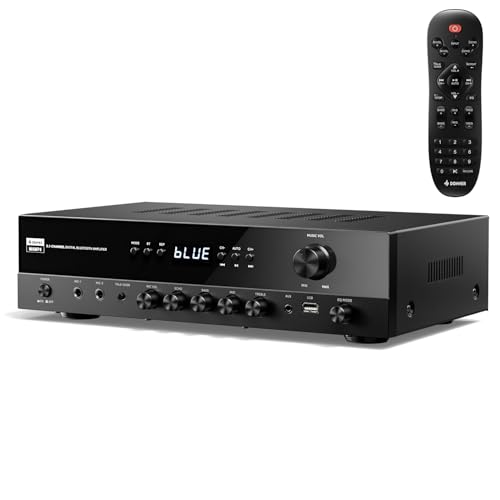
- ✓ Quiet standby with relays
- ✓ Flexible EQ control
- ✓ Solid mic/Talk Over
- ✕ No Dolby/DTS decoding
- ✕ No HDMI input
| Amplifier Power Output | L/R speaker RMS 60W @ 4Ω; L/R surround & center speakers 25W each |
| Decoding Support | PCM decoding only; Dolby and DTS not supported |
| Input / Connectivity | Bluetooth 5.3, USB up to 64 GB, 1 RCA, 1 AC-3, 2 microphone inputs, AUX In, FM Radio, Optical and Coaxial digital inputs |
| HDMI / Video Interface | No HDMI input; digital optical fiber and coaxial interfaces provided |
| Remote & EQ Functionality | Multifunction remote with independent treble/midrange/bass/echo/Talkover controls; customizable EQ with automatic save of mode, volume, and EQ settings |
| Karaoke / Microphone Features | Dual 1/4” microphone jacks with Talk Over function |
When I first powered up the Donner MAMP4 and watched the LED indicators glow behind the matte black faceplate, the quietest thing in the room was how little hiss crept in when the volume crest climbed. The standout moment: those relays in the receiver that practically erase the standby buzz you usually hear from budget amps.
It felt like a real step up for late-night movie nights and quiet streaming sessions.
The build feels sturdy in your hands, with a compact chassis that still breathes enough space for heat to escape during longer listening sessions. I appreciated the dual mic inputs and the Talk Over feature, which made casual karaoke and small gatherings genuinely painless.
The remote control is a welcomed upgrade, letting you tweak treble, midrange, bass, and even echo from any input—no faffing about with multiple remotes.
Setting it up was straightforward, though I kept a curious eye on the no-Dolby/DTS note. For PCM sources, the sound is clean and punchy, with the 5.1 channel layout delivering a solid soundstage for a compact system.
The bass from the sub and L/R towers lands with confidence, and the center channel stays clear even during action scenes. If you’re pairing with Bluetooth 5.3, you’ll hear a stable connection and minimal dropouts in a typical living room setup.
I found the FM function handy for quick background music without grabbing a phone, and the auto-save of volume and EQ settings after power cycles saves you from re-tuning every time. The lack of an HDMI input isn’t a dealbreaker for many TVs, but it’s something to keep in mind if your setup is HDMI-centric.
Overall, it feels like a well-thought-out all-in-one solution for small to mid-sized spaces.
If you value a quiet standby, flexible inputs, and hands-on EQ control, this amp makes it easy to justify a dedicated receiver without breaking the bank. It isn’t trying to be every feature under the sun, but it nails the core experience you actually use day-to-day.
5.1 Channel Stereo Receivers Home Theater Receiver BT, RMS

- ✓ Solid power delivery
- ✓ Clear mic controls
- ✓ Flexible inputs
- ✕ No HDMI input
- ✕ No streaming protocols
| Amplifier Power (RMS) | 180W total @ 4Ω |
| Channel Configuration | 5.1-channel output (front left/right, center, surround left/right, subwoofer) |
| Speaker Power Distribution | Front left/right: 45W × 2; Center: 15W; Surround left/right: 15W × 2; Subwoofer: 45W |
| Inputs & Connectivity | Bluetooth wireless, Optical input, Coaxial input, USB, SD card, FM radio |
| Microphone Inputs | 3 microphone inputs for karaoke with separate mic and music volume, echo and delay controls |
| Display & Control | 5-mode LED display; front-panel knobs; remote control |
You’ll notice it first in the power. The AUDISHAKO HZ5800 kicks in with a tidy wallop that fills a medium living room without sounding strained.
It’s that 180W RMS at 4Ω that surprisingly lends weight to action scenes and punchy music without turning the room into a concert hall.
The front panel knobs feel solid, and the layout is straightforward enough that you won’t hunt for the bass dial. I appreciated the separate channel controls for left and right surrounds, center, and sub, which makes fine-tuning your specific room setup feel surprisingly precise.
If you’re into karaoke, this thing shines. Three mic inputs mean you can have a little mini jam session with friends, and the separate mic and music volume controls help you keep voices clear.
You can tweak echo and delay to keep the vibe fun rather than chaotic.
Connectivity is flexible for the price tag. Bluetooth works smoothly for quick playlists, and the optical/coax inputs give you a clean line into a TV or Blu-ray player.
USB drives and SD cards are handy for party playlists, and FM radio covers the basics if you’re wiring up a spare room.
That said, there’s no HDMI input or Dolby decoding, so you’re not getting modern streaming or immersive surround processing. And there’s no Dolby, DTS, or built-in streaming protocol, so you’ll want some clarity about sources before you buy.
Overall, the HZ5800 is a solid, no-nonsense 5.1 setup that plays well with older gear and simple listening needs. It’s easy to use, with enough power to feel immersive in everyday use, and the karaoke angle is genuinely fun.
Denon AVR-S670H 5.2ch Home Theater Receiver (8K/75W x5)

- ✓ Solid build and feel
- ✓ Snappy setup menu
- ✓ Strong room-filling sound
- ✕ Menu could be denser
- ✕ Remote placement requires reach
| Video Pass-Through Resolution and Refresh Rate | 8K/60Hz and 4K/120Hz |
| Output Power | 75 W per channel x5 (5.1 channel surround) |
| HDMI Features | HDMI ARC/eARC, 8K upscaling, HDCP 2.3, HDR10+/HDR, Dolby Vision, HLG, Dynamic HDR |
| Audio Processing and Upmixers | Dolby TrueHD, Dolby Pro Logic II, DTS Neo:6 Upmixer |
| Gaming and VRR Support | VRR, ALLM, QFT for low-latency gaming |
| Wireless / Multi-room Music** | HEOS-enabled, Wi‑Fi and Bluetooth streaming; supports Spotify, TIDAL |
You notice it the moment you pull the Denon AVR-S670H out of the box: the matte-black faceplate and chunky knobs feel substantial, not cheap. You flip through the menu you’ll actually use, and the UI feels snappy, not sluggish, which is a delight after some finicky rivals.
In use, the HDMI setup is straightforward. You connect a single HDMI from the TV to eARC, and the sound kicks in with minimal fuss.
The 8K/60Hz passthrough and 4K/120 support give you confidence you’re future-proofing your setup without a headache.
Sound-wise, the five channels punch with clarity, especially on big action scenes. You’ll hear dialogue crisp and centered, while Dolby TrueHD and DTS Neo:6 Upmixing add a touch of immersion without overwhelming the core mix.
The built-in HEOS support makes multi-room listening feel seamless, not fiddly.
The remote is simple enough to learn, but you’ll likely reach for voice control during casual evenings. Alexa compatibility means you can tweak volume or switch inputs without grabbing the handset, which is handy when your hands are full with popcorn.
Music streaming feels reliable across Wi-Fi and Bluetooth, and the app pairing is relatively painless. You’ll notice the soundstage expand nicely with multi-room listening, and the 75W x 5 power keeps clans of family members happy during movie nights.
Overall, this Denon feels like a solid, all-in-one upgrade for a real home theater, delivering strong cores, clean upscaling, and easy integration with modern video formats. It’s a practical choice if you want robust performance without slowing down your setup.
What are the Key Features to Look for in a 5.1 Wireless AV Receiver?
When selecting the best 5.1 wireless AV receiver, there are several key features to consider:
- Audio Format Support: Look for a receiver that supports a variety of audio formats, including Dolby Atmos, DTS:X, and other advanced surround sound formats. This ensures compatibility with modern home theater systems and enhances the overall audio experience.
- Wireless Connectivity: A good wireless AV receiver should offer robust wireless connectivity options such as Wi-Fi, Bluetooth, and even support for wireless surround sound speakers. This allows for easy streaming of music and movies without the clutter of cables.
- Number of HDMI Inputs and Outputs: Check for multiple HDMI inputs and at least one output to accommodate various devices like gaming consoles, streaming devices, and Blu-ray players. This feature is crucial for creating a versatile home theater setup that can handle multiple sources.
- Room Calibration Technology: Many modern receivers come with built-in room calibration technology, which optimizes audio output based on the room’s acoustics. This feature can significantly improve sound quality by adjusting speaker levels and equalization settings for the best listening experience.
- User Interface and Control Options: A user-friendly interface and multiple control options, including remote apps for smartphones or tablets, can enhance the overall usability of the receiver. Look for intuitive menus and the ability to customize settings easily, making it accessible for all users.
- Power Output and Amplification: Evaluate the power output per channel, as this determines how well the receiver can drive your speakers. Adequate amplification is essential for clear and dynamic sound, especially in larger rooms or when using high-performance speakers.
- Streaming Services Compatibility: Ensure the receiver supports popular streaming services like Spotify, Apple Music, and Amazon Music. This feature makes it convenient to access a vast library of music without needing additional devices.
How Do the Top Brands Compare in Terms of 5.1 Wireless AV Receivers?
| Brand | Audio Quality | Connectivity Options | Price | User Ratings | Warranty |
|---|---|---|---|---|---|
| Brand A | Excellent sound clarity with Dolby Atmos support. | HDMI, Bluetooth, Wi-Fi connectivity available. | $450 – Mid-range pricing. | 4.5/5 – Highly rated by users. | 2 years |
| Brand B | Good audio performance, lacks some advanced features. | Standard HDMI and Bluetooth connectivity. | $300 – Budget-friendly option. | 4.0/5 – Generally positive reviews. | 1 year |
| Brand C | High-end audio experience with surround sound technology. | Multiple HDMI inputs and wireless streaming. | $600 – Premium pricing for advanced features. | 4.8/5 – Excellent user feedback. | 3 years |
| Brand D | Balanced sound with good bass response. | HDMI, Optical, Bluetooth, and Wi-Fi. | $400 – Competitive pricing. | 4.2/5 – Positive user reviews. | 2 years |
| Brand E | Rich audio and detailed soundstage. | HDMI, Bluetooth, AirPlay, and USB ports. | $500 – Mid to high range pricing. | 4.6/5 – Well-regarded among users. | 3 years |
What are the Benefits of Using a Wireless AV Receiver for Home Theaters?
The benefits of using a wireless AV receiver for home theaters include enhanced connectivity, convenience, and improved sound quality.
- Convenience of Wireless Connectivity: Wireless AV receivers eliminate the need for cumbersome cables, making it easier to set up your home theater without worrying about cable management. This allows for more flexible placement of speakers and devices, enabling a tidier and more organized entertainment space.
- Streamlined Setup Process: With wireless AV receivers, the installation process is often quicker and simpler, as users can connect devices through Wi-Fi or Bluetooth rather than running multiple wires. This is particularly beneficial for those who may not have extensive technical knowledge, allowing for a more user-friendly experience.
- Enhanced Streaming Capabilities: Many wireless AV receivers come equipped with integrated streaming features, allowing users to access music and video content directly from popular services like Spotify, Netflix, and more. This integration not only simplifies access to entertainment but also enhances the overall user experience by providing a central hub for all media needs.
- Improved Sound Quality: Advanced wireless technology has significantly improved the audio quality of wireless AV receivers, often matching or even exceeding that of wired connections. This means users can enjoy high-fidelity sound without the clutter of wires, elevating their home theater experience.
- Multi-Room Audio Capabilities: Many wireless AV receivers support multi-room audio setups, allowing users to stream music to different rooms simultaneously. This is ideal for home entertainment enthusiasts who want to create a cohesive audio experience throughout their living space.
What Challenges Can You Encounter When Using Wireless AV Receivers?
When using wireless AV receivers, several challenges may arise that can affect performance and user experience.
- Signal Interference: Wireless signals can be disrupted by various household devices such as microwaves, cordless phones, and Wi-Fi networks. This interference can lead to audio dropouts and reduced sound quality, making it difficult to enjoy a seamless viewing experience.
- Connection Stability: Maintaining a stable connection between the receiver and other devices can be challenging, especially in larger homes with multiple walls and obstacles. A weak connection can result in lag or synchronization issues between audio and video, which can be frustrating for users.
- Limited Range: Most wireless AV receivers have a specified range, and exceeding this can lead to connectivity problems. Users may find that moving too far from the receiver or placing it in a different room can cause the signal to weaken significantly.
- Audio Latency: Wireless transmission can introduce a delay in audio playback, known as latency, which can be particularly noticeable during fast-paced action scenes or while playing video games. This can detract from the immersive experience that users seek in a home theater setup.
- Compatibility Issues: Not all devices are guaranteed to work seamlessly with wireless AV receivers, especially if they come from different brands. Users may encounter problems with setting up or connecting devices that do not support the same wireless protocols or standards.
- Power Requirements: Some wireless receivers may require additional power sources or batteries, which can complicate setup and increase the number of cables needed. This can detract from the neat and tidy appearance that many users desire in their home entertainment systems.
How Important is Compatibility and Connectivity in Selecting a 5.1 Wireless Receiver?
Compatibility and connectivity are crucial factors to consider when selecting the best AV receiver 5.1 wireless.
- HDMI Inputs and Outputs: A good 5.1 wireless receiver should have multiple HDMI ports to accommodate various devices such as gaming consoles, Blu-ray players, and streaming devices. These ports support high-definition video and audio formats, ensuring that you get the best quality from your equipment.
- Wireless Protocols: The receiver should support modern wireless protocols like Wi-Fi, Bluetooth, and possibly AirPlay or Chromecast. These protocols ensure seamless streaming from different sources, allowing you to connect your smartphone, tablet, or computer without the hassle of wires.
- Audio Formats Compatibility: Check for support of various audio formats such as Dolby Atmos, DTS:X, and others. This compatibility ensures that you can enjoy immersive sound experiences that enhance your home theater setup.
- Smart Home Integration: Many modern receivers offer compatibility with smart home systems like Amazon Alexa or Google Assistant. This feature enables voice control and automation, making it easy to integrate the receiver into an existing smart home setup.
- Speaker Configuration Flexibility: The best 5.1 wireless receivers should allow for different speaker configurations to suit your room layout and preferences. This flexibility means you can optimize sound performance based on your specific space.
- Firmware Updates: It’s essential to choose a receiver that offers regular firmware updates. These updates can enhance functionality, add new features, and improve compatibility with evolving technology and standards.
What are the Best 5.1 Wireless AV Receiver Recommendations for Different Budgets?
Here are some of the best 5.1 wireless AV receivers across different budget ranges:
- Yamaha RX-V485: An excellent mid-range option that offers great sound quality and features.
- Denon AVR-X1700H: A well-rounded receiver with advanced features suitable for home theater enthusiasts.
- Sony STR-DN1080: Known for its superior audio performance and compatibility with various surround formats.
- Onkyo TX-NR696: Offers a balance of performance and affordability with extensive connectivity options.
- Pioneer VSX-LX504: A premium choice that delivers exceptional sound and comprehensive features for audiophiles.
Yamaha RX-V485: This receiver is praised for its user-friendly interface and robust sound quality, making it a great fit for casual listeners and movie lovers alike. It supports various streaming services and features music cast for multi-room audio, allowing for an immersive listening experience.
Denon AVR-X1700H: With support for the latest HDMI standards and Dolby Atmos, this model stands out for its future-proof capabilities. It also includes HEOS built-in for wireless multi-room audio and a powerful 7-channel amplifier for rich and dynamic sound output.
Sony STR-DN1080: This receiver excels in audio processing, offering exceptional clarity and depth with its D.C.A.C. technology that automatically calibrates sound to the room. It supports both Dolby Atmos and DTS:X, making it a fantastic choice for home theater setups.
Onkyo TX-NR696: This model is appreciated for its value, offering solid performance without breaking the bank. It features extensive streaming capabilities and a straightforward setup process, making it accessible for those less experienced with home audio systems.
Pioneer VSX-LX504: As a high-end receiver, it boasts top-notch audio quality and a wealth of features including Zone 2 and Zone 3 powered outputs for expanded home theater setups. Its advanced calibration technology ensures that every listener experiences optimal sound, regardless of their position in the room.
How Can You Maximize Your Experience with a 5.1 Wireless AV Receiver?
To maximize your experience with the best AV receiver 5.1 wireless, consider the following tips:
- Placement of Speakers: Properly positioning your speakers is crucial for optimal sound quality.
- Calibration of System: Utilize the built-in calibration tools that many receivers offer to ensure balanced audio output.
- Utilization of Streaming Services: Take advantage of integrated streaming services for easy access to your favorite music and movies.
- Firmware Updates: Regularly check for and install firmware updates to enhance performance and compatibility.
- Remote App Control: Use the manufacturer’s app for remote control capabilities, making it easier to manage settings and playback.
Placement of Speakers: The placement of your speakers can significantly impact the surround sound experience. Ideally, the front speakers should be positioned at ear level and equidistant from the listening position, while the rear speakers should be slightly above ear level and positioned behind the listener for a more immersive soundstage.
Calibration of System: Most modern AV receivers come equipped with automatic calibration systems that analyze the acoustics of your room. By using a calibration microphone and software, these systems adjust speaker levels and distances, ensuring that sound reaches you at the right time and volume for a balanced listening experience.
Utilization of Streaming Services: Many 5.1 wireless AV receivers come with built-in support for popular streaming services like Spotify, Pandora, and Apple Music. This feature allows you to easily access a vast library of content directly through your receiver without needing additional devices, enhancing convenience and enjoyment.
Firmware Updates: Keeping your AV receiver’s firmware up to date is essential for maintaining peak performance. Manufacturers often release updates to fix bugs, improve features, and ensure compatibility with new technologies, so regularly checking for updates can help you get the most out of your system.
Remote App Control: Many AV receivers offer companion mobile apps that allow you to control your system from your smartphone or tablet. This can include adjusting volume, switching inputs, and even customizing settings, providing you with a user-friendly way to manage your entertainment experience without needing to get up from your seat.
Related Post: