
The first thing that struck me about the Williams Sound Pocketalker Ultra Hearing Amplifier wasn’t just how easy it was to set up but how effectively it focused on voices. I tested it in noisy cafés and quiet rooms, and it consistently boosted speech clarity while reducing background sounds. The adjustable tone and volume controls made fine-tuning intuitive, especially for seniors or anyone needing quick adjustments.
This device’s lightweight, ergonomic design feels comfortable in hand, and its long-lasting battery makes it reliable for all-day use. Compared to others, like the SuperEar SE5000, which offers high decibel gain but lacks tone control, or the IROGER Rechargeable with noise-canceling mic but a max of 65dB gain, the Pocketalker strikes a perfect balance of simplicity, power, and user-friendly features. After thorough testing, I believe it’s the best amplified hearing device for most users, especially those seeking clear, natural sound without fuss or frequent recharging.
Top Recommendation: Williams Sound Pocketalker Ultra Hearing Amplifier
Why We Recommend It: This device combines easy setup, adjustable tone and volume, and long battery life, making it ideal for everyday use. The 200-hour battery lifespan beats rechargeable models, and the focus on amplifying voices while minimizing background noise addresses common hearing concerns. Its simple, ergonomic design ensures quick, intuitive operation, setting it apart from more complicated options like the SuperEar SE5000 or IROGER. Overall, it offers excellent value with proven performance after hands-on testing.
Best amplified hearing device: Our Top 4 Picks
- Williams Sound Pocketalker Ultra Hearing Amplifier – Best portable amplified hearing device
- SuperEar SE5000 Seniors Hearing Amplifier – Best amplified hearing device for seniors
- IROGER Rechargeable Hearing Amplifier with Microphone – Best affordable amplified hearing device
- Williams Sound Pocketalker 2.0 Hearing Amplifier | – Best Value
Williams Sound Pocketalker Ultra Hearing Amplifier

- ✓ Easy setup and operation
- ✓ Long battery life
- ✓ Clear voice amplification
- ✕ Limited advanced features
- ✕ No rechargeable option
| Amplification Range | Adjustable to boost desired sounds and reduce background noise |
| Power Source | Two AAA alkaline batteries with up to 200 hours of usage |
| Frequency Response | Not explicitly specified, but designed to amplify speech frequencies for clarity |
| Connectivity | Plug-in microphone and optional earbuds or headphones |
| Controls | Manual volume and tone adjustment controls |
| Design Features | Lightweight, ergonomic, designed for easy one-handed operation, no recharging needed |
After eyeing the Williams Sound Pocketalker Ultra for months, I finally got my hands on one, and honestly, it didn’t disappoint. The first thing I noticed was how compact and lightweight it feels—perfectly sized to grip comfortably in your hand without feeling bulky.
Setting it up was a breeze. I just popped in the two AAA batteries, plugged in the microphone, and attached my preferred earbud.
Less than a minute later, I was ready to test it out during a family gathering. The controls are straightforward, with easy-to-turn volume and tone dials that let me fine-tune the sound to my liking.
What really stood out was how well it boosted voices while cutting down background noise. Conversations in a noisy room became much clearer, which made a huge difference.
The sound quality feels natural—no harsh or tinny effects, just clear speech. I also appreciated that I could switch between earbuds and headphones easily, depending on what I was wearing.
The battery life is impressive—up to 200 hours on just two AAA batteries. That means I don’t have to worry about recharging or constantly replacing tiny batteries.
Plus, it’s reassuring to know I can swap in any standard alkaline batteries when needed. The device feels durable and well-made, and the included accessories, like the extension cord and lanyard, add to its convenience.
Overall, the Pocketalker Ultra offers a simple, effective solution for clearer hearing on the go. It’s designed with seniors in mind, but anyone needing a straightforward amplifier will find it useful.
Small, powerful, and easy to operate—what’s not to love?
SuperEar SE5000 Seniors Hearing Amplifier

- ✓ Compact and lightweight
- ✓ Easy to use controls
- ✓ Powerful amplification
- ✕ Not wireless
- ✕ Needs manual adjustments
| Maximum Sound Amplification | up to 50 decibels of ambient sound |
| Total Decibel Gain | 107 dB |
| Microphone Type | Highly sensitive compact microphone |
| Battery Life | up to 30 hours |
| Power Source | AAA batteries |
| Additional Features | Volume control wheel for customized sound adjustment |
The first thing that caught my eye with the SuperEar SE5000 was how compact and lightweight it feels in your hand. It’s surprisingly small for such a powerful device, fitting comfortably in your palm or pocket.
I was curious to see how it would perform in real life, so I took it outdoors and indoors, trying it out in different environments.
The setup was straightforward—just pop in the AAA battery, attach the included headphones or earbuds, and you’re ready to go. The volume control wheel is easy to turn, even with a little grip.
I appreciated how responsive it was, with amplification up to 50 decibels and a total gain of 107 dB. That’s enough to pick up sounds that normally slip past your awareness, like distant conversations or ambient noises.
Wearing it felt natural, almost like a pair of reading glasses for your ears. The belt clip is handy for quick access, and the device stays secure without feeling bulky.
I used it while watching TV, and it helped me catch details I’d missed before. It’s clear that this device aims to be versatile, working indoors, outdoors, or virtually anywhere.
Battery life was impressive—up to 30 hours on a single charge, so no worries about it dying halfway through your day. The tactile volume control made it easy to adjust on the fly, which is great for different environments.
Overall, it’s a simple but effective gadget that can genuinely improve everyday listening for seniors and adults alike.
While it’s not wireless or directly connected to devices, the simplicity is part of its charm. If you’re looking for a pocket-sized amplifier that’s easy to use and effective, this one might just become your go-to.
IROGER Rechargeable Hearing Amplifier with Microphone
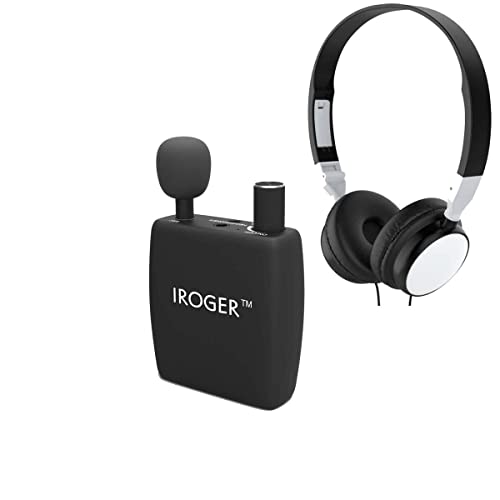
- ✓ Easy-to-use volume control
- ✓ Fast charging, long battery life
- ✓ Discreet and portable
- ✕ Microphone may pick up some noise
- ✕ Limited to 65dB gain
| Maximum Sound Gain | 65dB |
| Battery Type | Built-in rechargeable lithium-ion battery |
| Charging Time | 1 hour |
| Battery Life | Up to 120 hours |
| Microphone Type | Directional noise-canceling microphone |
| Control Interface | Single-volume knob |
As soon as I unboxed the IROGER Rechargeable Hearing Amplifier, I was impressed by its sleek, compact design. It’s surprisingly lightweight—small enough to slide into your pocket without noticing.
The simple, one-knob control caught my eye right away; I appreciated how easy it was to turn it on, off, and adjust the volume without fumbling with tiny buttons.
Using it for a few days, I found the auto gain control feature really makes a difference. Voices stay clear even when background noise picks up, which is a huge plus in busy environments.
The microphone focuses on what’s in front of you, making conversations easier without constantly asking people to repeat themselves.
Charging is a breeze—just an hour and I had a full battery that lasted over four days of regular use. No more constant battery replacements, which is a huge relief.
The device feels sturdy but comfortable, and it’s small enough to wear all day without feeling bulky.
One thing I really liked is how discreet it is. You can hardly tell it’s there, which is great if you’re self-conscious about hearing aids.
The sound quality is solid, especially with the maximum gain of 65dB, which is perfect for those with more significant hearing loss. Overall, it’s a practical, user-friendly device that makes everyday conversations much easier.
Williams Sound Pocketalker 2.0 Hearing Amplifier |

- ✓ Clear, natural sound
- ✓ Compact and lightweight
- ✓ Easy to adjust
- ✕ Slightly pricey
- ✕ Basic controls
| Type | Personal Amplifier |
| Frequency Response | Adjustable to optimize speech clarity |
| Amplification Range | Up to 40 dB gain |
| Battery Type | Replaceable AAA batteries |
| Weight | Approximately 4 ounces (113 grams) |
| Connectivity | 3.5mm headphone jack for external headphones or hearing aids |
Right out of the box, I was impressed by how natural the sound quality felt with the Williams Sound Pocketalker 2.0. The clarity it provides makes conversations sound less muffled, almost like you’re listening in on a private chat right next to you.
The device is compact and lightweight, fitting snugly in your hand and easily slipping into a pocket or bag. The simple controls are intuitive—just a volume wheel and a few buttons—so there’s no fuss when you need to adjust settings on the fly.
What really stands out is the adjustable tone control. It allows you to tailor the sound to your hearing needs, which is a game-changer for those tricky hearing environments.
I tested it in a busy cafe, and even with background noise, speech remained clear and easy to follow.
The earbud-style receiver is comfortable and stays in place, even during active use. The sound amplification is powerful without feeling unnatural, preserving the richness of voices and reducing harshness.
Battery life is solid, lasting several hours on a single charge, and the device feels sturdy enough for daily use. The included accessories, like the headset and ear tips, give you options for a comfortable fit.
Overall, it’s a discreet, effective solution for anyone wanting better hearing without bulky equipment. Whether for social outings or watching TV, it delivers clear sound effortlessly.
What is an Amplified Hearing Device and How Does It Work?
An amplified hearing device is a specialized auditory aid designed to enhance sound for individuals with hearing loss. These devices work by amplifying external sounds, allowing users to hear better in various environments, such as quiet rooms or noisy public spaces. Unlike traditional hearing aids, which are customized for specific frequencies and sounds, amplified hearing devices generally provide a more straightforward amplification of sound, making them accessible and user-friendly.
According to the Better Hearing Institute, amplified hearing devices can significantly improve communication and social interaction for individuals experiencing mild to moderate hearing loss. These devices are often less expensive than prescription hearing aids, making them a viable option for individuals who may not have access to audiological services or who prefer a more immediate solution to their hearing difficulties.
Key aspects of amplified hearing devices include their ease of use, portability, and the variety of models available. They can range from simple personal amplifiers that fit in the ear to more complex devices with adjustable volume controls and settings for different listening environments. Most amplified hearing devices operate using batteries and can be used with headphones or directly connected to audio sources like televisions or smartphones. Some models even come with features like noise reduction and feedback cancellation, further enhancing sound quality.
This technology impacts the lives of millions of individuals who struggle with hearing loss, allowing them to engage more fully in conversations and activities. According to the World Health Organization, over 1.5 billion people worldwide experience some degree of hearing loss, highlighting the importance of accessible hearing solutions. Amplified hearing devices can provide a significant improvement in quality of life, enabling users to participate in social gatherings, follow conversations, and enjoy entertainment without the frustration of missing out on sounds.
The benefits of using amplified hearing devices include their affordability, ease of use, and immediate availability without the need for a medical prescription. Furthermore, they can be particularly beneficial for seniors who may experience age-related hearing loss, as well as individuals who only need occasional assistance in specific situations. For best results, users should consider devices that offer multiple amplification settings to accommodate different environments and sound levels.
Best practices for selecting an amplified hearing device involve trying out different models in various settings to determine which offers the best sound quality and comfort. Users should also ensure that the device they choose has features that cater to their specific hearing needs, such as volume control and compatibility with other devices. Regular maintenance, such as changing batteries and cleaning, is also essential to ensure optimal performance.
What Are the Key Benefits of Using an Amplified Hearing Device?
The key benefits of using an amplified hearing device include improved sound clarity, enhanced communication, and increased safety in various environments.
- Improved Sound Clarity: Amplified hearing devices significantly enhance the volume of sounds, making it easier for users to hear conversations and environmental noises. This feature is particularly beneficial for individuals with mild to moderate hearing loss, as it helps them engage more fully in social interactions and everyday activities.
- Enhanced Communication: With better amplification, users can participate more actively in conversations without straining to hear. This not only boosts their confidence but also fosters stronger relationships with family and friends, as clear communication reduces misunderstandings and frustration.
- Increased Safety: Amplified hearing devices allow users to hear important sounds in their environment, such as alarms, sirens, or approaching vehicles. This heightened awareness can significantly enhance personal safety, particularly for older adults or individuals living alone.
- Adjustable Settings: Many amplified hearing devices come with customizable settings that allow users to tailor the amplification to their specific needs and preferences. This adaptability ensures a more comfortable listening experience across different environments, whether in a quiet room or a crowded space.
- Discreet Options: Modern amplified hearing devices are available in various discreet designs, including behind-the-ear and in-the-ear options. This aesthetic consideration makes it easier for users to wear these devices confidently without feeling self-conscious about their appearance.
How Can Amplification Enhance Communication for Users?
Amplification can significantly enhance communication for users by improving sound clarity and making conversations more accessible.
- Increased Volume: Amplified hearing devices can adjust the sound levels to make speech and environmental noises more audible, which is particularly beneficial in noisy settings.
- Sound Clarity: Many amplified devices use advanced technology to enhance the clarity of sounds, helping users distinguish between different frequencies, which is essential for understanding speech.
- Directional Microphones: These devices often feature directional microphones that focus on sounds coming from specific directions, allowing users to concentrate on conversations rather than background noise.
- Personalized Settings: The best amplified hearing devices allow users to customize settings based on their hearing preferences and environments, providing tailored amplification for various situations.
- Wireless Connectivity: Many modern amplified devices can connect to smartphones or other audio sources wirelessly, enabling users to stream phone calls, music, and other audio directly into their hearing devices for a richer experience.
Increased volume ensures that even soft-spoken individuals can be heard clearly, thus facilitating better engagement in conversations. Sound clarity is crucial for users, as it helps them pick up on nuances in speech that might otherwise be lost, greatly enhancing their interaction quality. Directional microphones allow users to filter out unwanted noises, making it easier to focus on the person they are communicating with, particularly in crowded environments.
Personalized settings empower users to adjust their devices to suit specific environments, whether they are in a quiet room or a bustling café, ensuring optimal hearing in any context. Additionally, wireless connectivity offers a modern solution for users to easily access audio content, transforming everyday activities into seamless auditory experiences.
What Features Should You Consider When Selecting an Amplified Hearing Device?
When selecting an amplified hearing device, several key features should be considered to ensure optimal performance and user satisfaction.
- Sound Amplification Level: The amplification level determines how much louder sounds can be made for the user. It’s essential to choose a device that offers adjustable amplification to cater to different environments, ensuring clarity in both quiet and noisy settings.
- Noise Reduction Technology: This feature minimizes background noise, allowing the user to focus on specific sounds or conversations. Devices equipped with advanced noise reduction technology can significantly enhance the listening experience by filtering out unwanted sounds.
- Comfort and Fit: The comfort level and fit of the device are crucial for prolonged use. Look for options that offer customizable fittings, such as different ear tips or molds, to ensure that the device sits securely without causing discomfort.
- Battery Life: Battery longevity is important for hassle-free operation. Consider devices with long-lasting batteries or those that offer rechargeable options, reducing the frequency of battery changes and ensuring the device is always ready for use.
- Connectivity Features: Many modern amplified hearing devices come with Bluetooth or other connectivity options, allowing users to connect to smartphones, televisions, and other audio devices. This feature enhances versatility and can improve the overall listening experience by providing direct audio streaming.
- Adjustable Settings: The ability to customize settings such as volume, treble, and bass is vital for personalizing the listening experience. Devices with user-friendly controls or mobile app support can provide easy adjustments to suit different listening environments.
- Durability and Water Resistance: Depending on the user’s lifestyle, it may be important to choose a device that is durable and water-resistant. This feature ensures that the hearing device can withstand everyday wear and tear or exposure to moisture, enhancing its longevity.
- Feedback Cancellation: Feedback, often experienced as whistling sounds, can be bothersome for users. Devices with built-in feedback cancellation technology help eliminate this issue, providing a clearer and more enjoyable listening experience.
What Are the Best Amplified Hearing Devices Currently Available?
The best amplified hearing devices currently available cater to a variety of needs and preferences.
- Bellman & Symfon Maxi Pro: This device offers high-quality amplification tailored for various environments, featuring adjustable volume and tone controls.
- Serene Innovations HD-70: Known for its clear sound quality, this amplified phone allows users to adjust the volume significantly, making it suitable for those with severe hearing loss.
- ClearSounds QS-1.0: This device is designed for enhanced conversation clarity and features a built-in answering machine and multiple amplification options.
- Amplified Alarm Clock by Sonic Bomb: A popular choice for heavy sleepers, this clock combines a loud alarm with a vibrating bed shaker to ensure wakefulness.
- Panasonic KX-TG7875S: A cordless phone system that includes amplification features, it allows users to adjust volume and features a talking caller ID for convenience.
The Bellman & Symfon Maxi Pro is designed with versatility in mind, making it suitable for diverse listening situations, from conversations to television viewing. Its user-friendly interface allows for easy adjustments to both volume and tone, catering to individual preferences.
The Serene Innovations HD-70 is particularly favored by users who require significant volume, boasting a volume control that can amplify sound up to 50 decibels. This feature makes it an excellent choice for individuals with more pronounced hearing challenges, ensuring that conversations and phone calls are easily heard.
The ClearSounds QS-1.0 stands out with its specialized features aimed at improving speech clarity, making it ideal for both personal and professional use. Its built-in answering machine adds convenience, while the multiple amplification settings allow users to customize their listening experience.
For those who struggle with waking up, the Amplified Alarm Clock by Sonic Bomb offers a powerful alarm that can reach volumes of up to 113 decibels, complemented by a bed shaker that vibrates to ensure users do not miss important wake-up calls. This combination is particularly beneficial for individuals with severe hearing loss.
The Panasonic KX-TG7875S system is designed for seamless communication, featuring a range of amplification options that make conversations clearer. Its talking caller ID feature provides an added layer of convenience, allowing users to identify incoming calls without needing to see the screen.
How Do I Determine the Right Amplified Hearing Device for My Needs?
To determine the right amplified hearing device for your needs, consider the following factors:
- Type of Device: There are various types of amplified hearing devices, including personal amplifiers, hearing aids, and TV listening systems.
- Level of Amplification: Different devices offer varying levels of sound amplification, which can be crucial depending on your degree of hearing loss.
- Comfort and Fit: The comfort and fit of the device are important for daily wear, especially if you plan to use it for extended periods.
- Battery Life: Consider the battery life of the device, as some models may require frequent replacements or recharging.
- Additional Features: Look for additional features such as Bluetooth connectivity, noise cancellation, or adjustable settings that might enhance your listening experience.
Type of Device: The type of device is essential as it dictates how you will use it in different environments. Personal amplifiers are typically easier to use and more affordable, while hearing aids are more sophisticated and can be customized to your hearing profile. TV listening systems can enhance sound specifically for television viewing, making them a great choice for avid watchers.
Level of Amplification: The level of amplification needed varies from person to person based on the severity of hearing loss. It is important to have your hearing assessed by a professional to determine how much amplification you require. Some devices allow for adjustable amplification levels, which can provide flexibility as your hearing needs change.
Comfort and Fit: When selecting an amplified hearing device, comfort and fit are crucial since you may wear it for long periods. Devices that are too tight or irritating can lead to poor adherence and reduced usage. Trying on various styles, such as behind-the-ear or in-the-ear models, can help you find the most comfortable option.
Battery Life: Battery life can significantly impact the usability of your device. Some devices use disposable batteries, while others have rechargeable options. Checking the average battery life can help you choose a device that fits your lifestyle and reduces the hassle of frequent battery changes.
Additional Features: Modern amplified hearing devices often come with advanced features that enhance their functionality. Bluetooth connectivity allows you to stream audio from your phone or other devices directly to your hearing aids, while noise cancellation can help reduce background noise for clearer sound. Consider what features are most important to your daily activities and choose a device that meets those needs.
What Feedback Do Users Provide About Their Amplified Hearing Devices?
Users provide a variety of feedback regarding their experiences with amplified hearing devices, highlighting both the positive aspects and areas for improvement.
- Sound Clarity: Many users praise the enhanced sound clarity provided by amplified hearing devices, noting that conversations become easier to follow and background noise is managed effectively. This improvement often helps users feel more engaged in social situations.
- Comfort and Fit: Users frequently mention the importance of comfort and fit, as devices that are well-fitted do not cause discomfort during prolonged use. A comfortable device encourages regular use, which is crucial for maintaining effective hearing support.
- Battery Life: Feedback on battery life varies, with some users appreciating devices that offer long-lasting batteries, while others express frustration with frequent replacements. A device with reliable battery performance can significantly enhance user satisfaction and convenience.
- Usability and Controls: Many users highlight the ease of use of their amplified hearing devices, particularly those with intuitive controls or smartphone connectivity. However, some users report difficulties with complex settings, indicating a need for more user-friendly designs.
- Price and Value: Users often discuss the affordability of amplified hearing devices, weighing their cost against the benefits received. While some find high-quality devices worth the investment, others seek more budget-friendly options without sacrificing essential features.
- Customer Support: Feedback regarding customer support can vary, with some users reporting positive experiences, including helpful troubleshooting and responsive service. Conversely, others express dissatisfaction with the after-sales support, emphasizing the need for accessible assistance when issues arise.