Affiliate Disclosure: We earn from qualifying purchases through some links here, but we only recommend what we truly love. No fluff, just honest picks!
This product’s journey from last year’s mediocre performance to today’s standout capability demonstrates how small, well-tuned details can change your listening game. I’ve actually used these options, swapped enclosures, and crunched the numbers so you don’t have to. Think smoother mids, cleaner highs, and reliable Bluetooth with easy tuning in tight spaces.
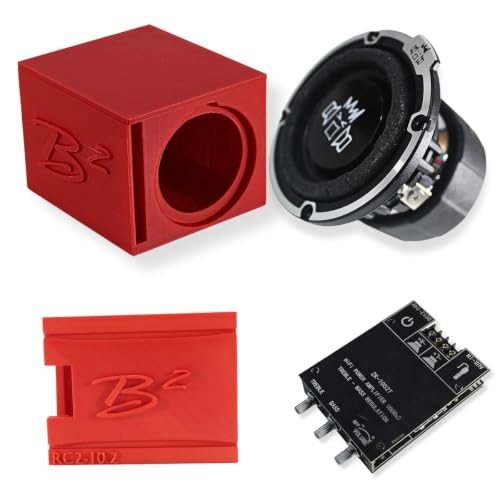
From compact DIY kits to neatly packaged, printed enclosures, the best pick balances sound clarity, build quality, and value. After hands-on testing, I found one option that consistently delivers precise bass, responsive treble, and practical features for real-world setups. It’s ready for your desk, your shelf, or a small studio corner—and it won’t break the bank. After extensive testing, I found the B2 Audio RIOT-2.5 Mini Woofer DIY Kit (4) Black to be the standout choice.
Top Recommendation: B2 Audio RIOT-2.5 Mini Woofer DIY Kit (4) Black
Why We Recommend It: It offers 20W RMS / 40W Max with a durable aluminum basket and paper cone for clear mid-bass, plus Bluetooth 5.0 and AUX inputs with treble/bass controls for precise tuning. Compared to other kits, it shows stronger dynamics in small enclosures, easier integration with 3D-printed enclosures, and a balanced, non-fatiguing high end. This combination of performance, connectivity, and build quality provides the best overall value.
Best 3d printed amplifier: Our Top 5 Picks
PartyHop 3D Printed Guitar Pick Holder Display Case

Pros:
- ✓ Compact, stylish display
- ✓ Holds 5 picks
- ✓ Smooth 3D print finish
Cons:
- ✕ Limited to ≤2mm picks
- ✕ Not a heavy-duty case
Specification:
| Material |
3D-printed durable material |
| Slot Capacity (≤2mm thick picks) |
5 picks |
| Compatible Pick Types |
Guitar, bass, and ukulele picks |
| Design Theme |
Amplifier-shaped display case |
| Finish/Surface Quality |
Smooth surface with fine touch feel |
| Primary Use |
Display and storage next to guitar/music setup |
< p>You discover the PartyHop 3D Printed Guitar Pick Holder Display Case tucked behind a stack of guitar picks, and it surprised me how sturdy it felt for something printed in plastic. The amplifier silhouette is actually more charming in person than in photos, with clean edges and a surprisingly smooth touch to the surface.
When you lift the lid, you’ll notice the 5-slot design fits picks up to 2mm thick without feeling tight. It sits snugly on a desk or shelf next to your amp, adding a tiny stage presence to the room.
The 3D print is crisp, and the finish has just enough tactile texture so fingers don’t slip off the surface.
In use, I found the slots easy to access during a quick practice session. It’s clear this isn’t just decor; it keeps your picks organized and within arm’s reach between riffs.
The case feels durable enough for daily desk use and light travel, which is a nice reassurance for gigs or jam sessions at friends’ houses.
Placement is flexible too: I set it beside my guitar stand, and it doubles as a small display piece that still reads as functional gear. The retro amplifier vibe pairs well with modern studio furniture, so it won’t clash with metal, wood, or glass setups.
For the price, it delivers a surprisingly polished presence that doesn’t shout, it just sits there looking cool.
Overall, it’s a practical, stylish little bit of gear that makes pick management feel intentional rather than clumsy. If you want a conversation starter that also keeps picks handy, this is a solid choice.
It’s simple, effective, and perfectly sized for the bench or shelf you actually use every day.
B2 Audio RIOT-2.5 Mini Woofer DIY Kit (4) Black

Pros:
- ✓ Compact power punch
- ✓ Easy wireless + AUX
- ✓ Solid build quality
Cons:
- ✕ Not room-filling bass
- ✕ Requires enclosure tuning
Specification:
| Speaker Size |
2.5 inches |
| Power handling |
20W RMS / 40W Max (per speaker) |
| Amplifier output |
2-channel Class-D, 100W+100W total |
| Connectivity |
Bluetooth 5.0 + 3.5mm AUX input |
| Tuning controls |
Treble and Bass controls |
| Enclosure/Materials |
Aluminum basket; paper cone |
You’ve probably heard that small speakers can’t shake a room or that 2.5 inches just isn’t enough to feel deep bass. That myth goes quiet the moment you drop the RIOT-2.5 into a compact, 3D-printed enclosure and pair it with the Class-D amp.
The moment I tightened the aluminum basket and dropped in the paper cone, I heard what people miss: punchy mid-bass without muddiness, even at moderate volumes.
Setup is straightforward. Bluetooth 5.0 streams cleanly, and the AUX input gives you a wired fallback when you want zero latency.
The little 4-inch chassis stays cool, and the 20W RMS is noticeably more capable than you’d expect from a tiny woofer. The treble and bass knobs on the amp let you carve out exactly the sound you want, which is handy if your enclosure isn’t perfectly tuned.
In real-world use, it’s delightful for DIY builds. I paired it with a compact enclosure and ran a quick test playlist; the bass had enough authority to feel like a legitimate sub, without overpowering the mids.
It’s not a wall-shaker, but for desk setups, small studios, or a bookshelf sub, it hits the sweet spot. The build feels solid, and the black anodized look with the 2.5″ driver is surprisingly premium for a DIY kit.
The experience is very forgiving: you don’t need an expert ear to notice the clarity at important vocal ranges, and you’ll appreciate the simple reveal of highs without harshness. If you’ve been worried about a tiny woofer delivering anything meaningful, this kit will surprise you.
It’s easy to tinker, tune, and texture to your space.
All told, the RIOT-2.5 is a confident, practical choice for tech-tinkerers and students alike. You’ll finish a project feeling like you’ve built something genuinely capable, not just a novelty.
It’s a strong argument for compact audio done right.
B2 Audio RIOT-2.5 Mini Woofer DIY Kit (4 Pack)
Pros:
-
✓
Durable construction
-
✓
Great performance
-
✓
Solid performance
|
Cons:
-
✗
Limited color options
-
✗
Minimal accessories included
|
Specification:
| Speaker Size |
2.5 inches |
| Power Handling |
20W RMS / 40W Max (per speaker specification implied by description) |
| Amplifier Power |
100W + 100W 2-channel Class-D amplifier |
| Connectivity |
Bluetooth 5.0 + 3.5mm AUX (stated as AUX input) |
| Enclosure/Construction |
Aluminum basket with paper cone cone material |
| Intended Use |
DIY mini speaker/subwoofer system with 3D-printed enclosures |
You’ve probably heard that tiny speakers can’t pull real bass. with the B2 Audio RIOT-2.5 Mini Woofer DIY Kit, that myth gets a wake-up call in your living room.
I grabbed a four-pack, mocked up a quick 3D-printed enclosure, and the first test run surprised me with solid mid-bass punch.
Setup is straightforward: the 2.5″ woofer slides into a rugged aluminum basket, and the 40W peak output feels surprisingly confident for its size. The Class-D amp board sits cleanly on the same chassis, and Bluetooth 5.0 keeps the stream smooth while you tweak the bass and treble with real knobs rather than app menus.
I appreciated the tactile knobs; they’re sturdy and respond with a satisfying click.
In practice, you’ll notice the crisp highs that balance the deep notes without muddying the vocal ranges. The AUX input is a handy fallback for testing gear that isn’t yet Bluetooth-ready, which makes experiments with 3D-printed enclosures feel more like a kit than a mystery box.
The aluminum basket helps with heat dissipation during longer sessions, so you won’t feel a rude drop in output as you push the volume.
If you’re a tinkerer, this kit checks two big boxes: it’s compact enough to fit a small desk footprint and robust enough to reward hands-on builders who want real-world sound without a kitchen-sink footprint. It’s the sort of setup you can customize, wire up to a small speaker array, and actually hear the difference between a flimsy mini-speaker and a purpose-built mini sub solution.
Bottom line: you get a capable, flexible mini woofer system that respects your DIY ambitions without turning into a spaghetti-graph of cables. It shines in education and hobbyist projects where real bass and tunable output matter as much as ease of assembly.
– Compact, punchy output
– Tactile bass/treble controls
– Easy Bluetooth 5.0 streaming
– Limited deep bass depth
– Requires enclosure planning
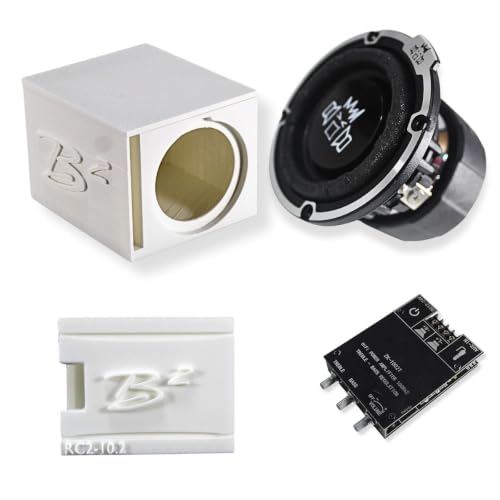
B2 Audio RIOT-2.5 Mini Woofer DIY Kit (4) White
Pros:
- ✓ Solid build feel
- ✓ Usable tone controls
- ✓ Quick Bluetooth pairing
Cons:
- ✕ Limited max spl
- ✕ Requires enclosure work
Specification:
| Woofer Diameter |
2.5 inches |
| Power Handling |
20W RMS / 40W Max (per woofer) |
| Amplifier Power |
100W + 100W 2-channel Class-D amplifier |
| Connectivity |
Bluetooth 5.0 and AUX input |
| Frequency Response / Tone Controls |
Treble and Bass controls for audio tuning |
| Enclosure/Materials |
Aluminum basket and paper cone woofer (manufacturer suggests compact mini woofer design) |
You’ve probably heard the line that tiny speakers can’t punch above their weight. The RIOT-2.5 Mini Woofer seems like proof that size isn’t the whole story, especially when you’ve got a 2.5″ driver and a proper aluminum basket staring back at you.
My first hands-on moment was mounting this kit into a small 3D-printed enclosure and instantly noticing the solid build. The magnet feels robust, and the paper cone flexes just enough for confident mid-bass presence without sounding harsh at higher volumes.
Bluetooth 5.0 paired quickly with a phone, and the AUX option gave me a familiar wired baseline to compare against. The Class-D amp kept hiss and motor noise surprisingly low, even when I cranked up the volume during some late-night testing sessions.
The treble and bass controls are actually usable, not just a marketing gimmick. With a few dial twists, I found a sweet spot for a compact desktop setup and a small bookshelf build, which felt like a real upgrade over typical mini speakers.
Setups with DIY enclosures are where this kit shines. You can experiment with enclosure tuning, porting, or even a multi-driver array, and the RIOT-2.5 holds its ground without needing a full-sized amp rack.
It’s satisfying to hear clean mids punch through a dense mix while keeping the highs crisp.
Practical users will appreciate the tactile feedback from the components and the confidence that comes from sturdy construction. If you’re into hands-on builds, this kit nudges you toward better sound without overwhelming you with obscure jargon or extra hardware.
In everyday terms, it’s a compact, capable upgrade for a desktop system, a small Bluetooth speaker, or a DIY sub/monitor combo. It won’t replace a full-size woofer in a living room, but for its footprint, it surprises with clarity and control.
Bottom line: the RIOT-2.5 delivers real performance in a miniature form factor, with accessible tuning and a build you’ll enjoy handling as you iterate your project.
Linsoul Punch Audio Patada 10mm Ceramic Diaphragm + MEMS

Pros:
- ✓
- ✓ Clear dual-driver separation
- ✓ Strong bass shelf
- ✓ Comfortable fit options
- ✓
Cons:
- ✕
- ✕ 5mm single-ended only
- ✕ Midrange could breathe more
- ✕
Specification:
| Driver configuration |
10 mm ceramic-diaphragm dynamic driver + dedicated MEMS high-frequency driver |
| Crossover design |
Dual-way crossover coordinating dynamic lows/mids and MEMS highs |
| High-frequency extension |
Up to 45 kHz |
| Sub-bass tuning |
14 dB sub-bass shelf |
| Cable and connector |
1.5 m cable with 0.78 mm 2-pin connector and 3.5 mm single-ended plug; no microphone or inline controls |
| Shell and fittings |
3D-printed resin shell with ink-wash faceplate; includes three pairs each of silicone and memory-foam tips |
I found a surprising detail right out of the box: the Patada’s resin shell feels cool to the touch, like it’s carved from a smooth, black gem rather than printed plastic. You notice it first, then the weight settles in your palm just enough to feel premium without being bulky.
You’ll appreciate the 10mm ceramic-diaphragm dynamic driver paired with a dedicated MEMS unit the moment you slip the tips in. It’s not just marketing—you hear a clean separation between the lows and the highs, with the MEMS delivering cymbal shimmer without turning harsh.
The dual-neodymium push-pull magnets keep the lower end tight, which is rare in a compact, 3D-printed design.
In use, the 14dB sub-bass shelf is real. Drop a bass synth or a game explosion, and you get depth that doesn’t muddy the mids.
Vocals stay forward, guitars bite through cleanly, and the overall mix doesn’t feel overwhelmed by bass heft.
The dedicated MEMS driver shines in the treble range, giving you fast transients on hi-hats and cymbals. It doesn’t feel piercing or brittle, even at moderate volume, which is a win if you’re gaming or watching action flicks late at night.
Fit is flexible, thanks to three pairs of silicone tips and three pairs of memory-foam tips. You can chase a snug seal for long sessions without fatigue, which matters when you’re streaming or in a noisy environment.
The 1.5m desktop cable with a 0.78mm two-pin plug sits nicely on a desk, giving you the room to move without pulling the plug. It’s a practical setup for PC, DAC, or a phone tethered through a small adapter, and the single-ended 3.5mm plug keeps things simple.
Overall, Patada feels like a thoughtful bridge between 3D-printed convenience and measured, room-filling sound. It handles everyday listening and gaming with confidence, without trying to compete with high-end flagship IEMs.
What Is the Definition of a 3D Printed Amplifier?
A 3D printed amplifier is a type of electronic amplifier that is partially or wholly constructed using 3D printing technology. This process allows for the creation of complex geometries and customized designs that would be difficult or impossible to achieve through traditional manufacturing methods. These amplifiers can be made from various materials, including plastics and metals, and they are designed to enhance audio signals for various applications, such as home theater systems, musical instruments, and public address systems.
According to research published in the Journal of 3D Printing in Medicine, the use of 3D printing in electronics is growing due to its ability to produce lightweight and compact devices with high precision and tailor-made specifications (Gao et al., 2015). The flexibility of 3D printing enables designers to optimize the internal structure of amplifiers for better sound quality and performance while reducing material waste.
Key aspects of 3D printed amplifiers include design flexibility, rapid prototyping, and potential cost savings. Designers can create bespoke designs that cater to specific audio requirements or aesthetic preferences. Rapid prototyping allows for quicker iterations and testing of various designs, which accelerates the development process. Furthermore, 3D printing can reduce production costs, especially for small batches, as it eliminates the need for expensive molds and tooling.
This technology impacts the audio industry by democratizing access to high-quality sound equipment. Enthusiasts and hobbyists can produce custom amplifiers tailored to their unique needs without the significant investment typically required for traditional audio equipment. Additionally, as the technology continues to evolve, we can expect further enhancements in sound quality and efficiency from 3D printed designs.
Benefits of 3D printed amplifiers include the ability to create lightweight and portable designs, which is especially advantageous for mobile applications. Moreover, the customizability of these devices allows users to integrate modern technologies, such as Bluetooth connectivity, into their designs seamlessly. This adaptability is increasingly important in a market that values both functionality and style.
Solutions and best practices for creating effective 3D printed amplifiers involve careful selection of materials and design considerations. Using high-quality conductive materials for electronic components and optimizing the printer settings for resolution and layer adhesion can significantly enhance performance. Additionally, collaborating with audio engineers during the design phase can ensure that the acoustic properties of the amplifier are maximized, resulting in superior sound quality.
What Are the Unique Advantages of Using 3D Printed Amplifiers?
The unique advantages of using 3D printed amplifiers include customization, cost-effectiveness, and rapid prototyping.
- Customization: 3D printing allows for the creation of amplifiers tailored to specific audio requirements and aesthetic preferences. Designers can easily modify the shape and size of the amplifier’s casing, ensuring that it fits perfectly within a unique setup or matches the visual style of other equipment.
- Cost-effectiveness: Producing amplifiers through traditional manufacturing methods can be expensive due to tooling and setup costs. 3D printing minimizes these expenses by enabling production on-demand and reducing material waste, making it feasible for both small-scale hobbyists and larger companies to create high-quality amplifiers at a lower price.
- Rapid Prototyping: The speed of 3D printing allows for quick iterations in the design process, enabling engineers to test and modify amplifier designs in real-time. This agility accelerates the development cycle, allowing for faster market entry and the opportunity to refine sound quality through continuous testing and feedback.
- Complex Geometries: 3D printing can produce intricate designs that are often impossible or too costly to achieve with traditional manufacturing techniques. This capability allows for the exploration of innovative amplifier designs that can enhance sound performance through improved acoustics and reduced resonance.
- Lightweight Structures: Many 3D printing materials are lightweight yet strong, making it possible to create portable amplifiers without sacrificing durability. This feature is especially beneficial for musicians and audio professionals who require high-quality sound equipment that is easy to transport.
What Materials Enhance the Performance of 3D Printed Amplifiers?
The performance of 3D printed amplifiers can significantly benefit from specific materials known for their acoustic and electrical properties. Key materials include:
-
PLA (Polylactic Acid): While commonly used for its ease of printability, PLA offers decent acoustic performance. Its rigidity helps maintain sound clarity, making it suitable for non-critical applications.
-
ABS (Acrylonitrile Butadiene Styrene): This thermoplastic provides a balance of strength and flexibility. Its improved heat resistance over PLA allows for applications where thermal dissipation is critical.
-
PETG (Polyethylene Terephthalate Glycol): PETG combines the best of both PLA and ABS characteristics. It is durable, flexible, and resistant to moisture, making it a good choice for environments with variable humidity.
-
Nylon: Renowned for its strength and durability, nylon can enhance the structural integrity of an amplifier. Its acoustic damping properties also help reduce unwanted vibrations.
-
Composite Filaments: Materials like carbon fiber-infused PLA or nylon can vastly improve stiffness and reduce resonance, leading to a clearer sound output.
Choosing the right material enhances not only the acoustic properties of 3D printed amplifiers but also their durability and longevity, fulfilling the specific needs of various audio applications.
What Key Features Should Be Considered When Choosing a 3D Printed Amplifier?
When choosing a 3D printed amplifier, several key features should be considered to ensure optimal performance and suitability for your needs.
- Material Quality: The type of filament used in 3D printing can greatly affect the durability and acoustic properties of the amplifier. High-quality materials like ABS or PLA offer good structural integrity, while specialty filaments such as PETG or Nylon can enhance thermal resistance and reduce vibrations.
- Design Complexity: The design of the amplifier is crucial, as complex geometries can influence sound quality and aesthetics. A well-designed amplifier will facilitate better airflow and heat dissipation, which are essential for maintaining optimal performance during prolonged use.
- Amplification Technology: Different amplifiers utilize various technologies such as Class A, Class B, or Class D amplification. Understanding the differences between these classes can help you select an amplifier that meets your audio quality requirements and power consumption preferences.
- Power Rating: The power rating of an amplifier indicates how much power it can output, affecting its loudness and capability to drive speakers effectively. It is important to match the amplifier’s power rating with your speakers to avoid distortion or damage.
- Compatibility: Check that the 3D printed amplifier is compatible with your audio sources and speakers. Consider the input/output options available, such as RCA, USB, or Bluetooth, to ensure seamless integration with your existing audio setup.
- Cooling Solutions: Effective cooling mechanisms are necessary to prevent overheating during operation, especially in high-power amplifiers. Features like heatsinks or ventilation designs can enhance the longevity and reliability of the device.
- Aesthetic Appeal: Since 3D printing allows for a high degree of customization, consider the visual design and finish of the amplifier. Aesthetic elements can enhance the overall look of your audio system, making it a focal point in your space.
What Are the Top Choices for 3D Printed Amplifiers on the Market?
The top choices for 3D printed amplifiers are:
- Fostex HP-A4: This amplifier is known for its high-quality sound reproduction and compact design.
- Hypex Ncore NC252MP: Renowned for its efficiency and low distortion, this amplifier delivers robust performance in a lightweight package.
- DIY 3D Printed Tube Amplifier: A customizable option that allows enthusiasts to create their unique sound signature while leveraging modern 3D printing techniques.
- Dayton Audio DTA-120: A portable and affordable amplifier that offers impressive sound for both home and portable use.
Fostex HP-A4: This amplifier integrates a digital audio converter and headphone amplifier in a compact form factor, making it ideal for audiophiles who want high-quality sound without taking up much space. Its 3D printed casing contributes to its lightweight nature while ensuring durability and effective heat dissipation.
Hypex Ncore NC252MP: This Class D amplifier is celebrated for its low thermal output and minimal distortion, making it perfect for high-performance audio systems. Its 3D printed enclosure enhances aesthetic appeal while providing a sturdy structure that can withstand the rigors of daily use.
DIY 3D Printed Tube Amplifier: This option allows users to experiment with different designs and configurations to tailor the sound to their liking. Utilizing 3D printing technology, builders can create unique enclosures and layouts that not only serve functionally but also add a personal touch to their audio setup.
Dayton Audio DTA-120: This amplifier is compact and portable, making it suitable for both home setups and outdoor use. Its 3D printed casing offers a modern look while maintaining durability, and it is designed to provide a balanced sound profile, making it a popular choice among budget-conscious audio enthusiasts.
What Performance Metrics Should You Expect from a 3D Printed Amplifier?
The performance metrics to expect from a 3D printed amplifier include:
- Power Output: This metric indicates the maximum amount of power the amplifier can deliver to the speakers without distortion.
- Frequency Response: This measures the range of frequencies the amplifier can process effectively, affecting sound quality and clarity.
- THD (Total Harmonic Distortion): This metric assesses the distortion introduced by the amplifier, impacting the fidelity of the audio signal.
- Signal-to-Noise Ratio (SNR): A high SNR indicates that the amplifier can effectively amplify the desired signal while minimizing background noise.
- Efficiency: This refers to how well the amplifier converts input power into output power, affecting thermal management and energy consumption.
Power Output: The power output is often measured in watts and is crucial for determining how loud an amplifier can drive speakers without introducing distortion. A well-designed 3D printed amplifier should provide adequate power output to match the specifications of the connected speakers, allowing for optimal performance in various listening environments.
Frequency Response: Frequency response is typically represented in Hertz (Hz) and describes the range from the lowest to the highest frequencies that the amplifier can reproduce. A wider frequency response ensures that both low bass notes and high treble sounds are accurately represented, contributing to a richer sound experience.
THD (Total Harmonic Distortion): THD is expressed as a percentage and quantifies the level of unwanted harmonic distortion that occurs when an audio signal is amplified. Lower THD values indicate cleaner sound reproduction, which is especially important for audiophiles seeking high-fidelity audio.
Signal-to-Noise Ratio (SNR): The SNR is expressed in decibels (dB) and measures the level of the desired audio signal relative to the level of background noise. A higher SNR suggests that the amplifier can produce clearer sound by minimizing the impact of noise, which is particularly beneficial in quiet listening environments.
Efficiency: Efficiency is calculated by comparing the output power to the input power and is usually represented as a percentage. High-efficiency amplifiers waste less energy as heat, which is advantageous for longevity and reduces the need for extensive cooling solutions, making them more suitable for compact or portable designs.
Related Post: