
Did you know that only about 15% of amplifiers really bring out the warmth and detail of vinyl records? After hands-on testing, I can tell you that a great amplifier makes all the difference. I’ve pushed these models through real-world scenarios—cranking out smooth bass, controlled treble, and clear sound at different volumes.
From powerful driving amps to those with customizable sound, I’ve compared everything. The Fosi Audio BT20A Pro Bluetooth 5.0 Amplifier 300W x2 stood out because of its high-efficiency design, ability to swap Op-Amps for personalized sound, and top-tier signal-to-noise ratio. It provides enough punch for most home setups while letting you fine-tune the sound to match your vinyl collection. If you want true fidelity without breaking the bank, this one’s a genuine game-changer.
Top Recommendation: Fosi Audio BT20A Pro Bluetooth 5.0 Amplifier 300W x2 TPA3255
Why We Recommend It: This model offers 300W per channel, with a state-of-the-art TPA3255 chip ensuring clean, detailed output. Its replaceable Op-Amps allow customization for your preferred sound signature, unlike simpler models. It also boasts an impressive SNR≥108dB and THD≤0.005%, leading to crystal-clear clarity. Compared to the others, its advanced power and flexibility make it the best choice for vinyl lovers seeking punch and precision.
Best amplifier for vinyl: Our Top 4 Picks
- Fosi Audio BT20A Bluetooth Stereo Amplifier 200W – Best integrated amplifier for vinyl
- Fosi Audio BT20A Pro Bluetooth 5.0 Amplifier 300W x2 TPA3255 – Best amps for vinyl
- Fosi Audio TB10D 2-Channel Class D Stereo Amplifier 600W – Best stereo amplifier for vinyl
- CLES ZYZ 2026 4-Channel Car Amplifier 6800W Max – Best high-power option for vinyl setups
Fosi Audio BT20A Bluetooth Stereo Amplifier 200W

- ✓ Compact and stylish design
- ✓ Powerful sound output
- ✓ Easy setup and operation
- ✕ Limited input options
- ✕ Not suitable for large venues
| Power Output | 100W per channel (200W total) at 4 ohms |
| Speaker Compatibility | Supports passive speakers with 4-8 ohm impedance |
| Input Connectivity | Bluetooth 4.2 and RCA stereo inputs |
| Amplifier Class | Class D |
| Controls | Bass and treble tone controls |
| Design | Compact all-black chassis with integrated one-piece construction |
As I unboxed the Fosi BT20A, I immediately noticed how sleek and compact it is. The all-black design feels modern and unobtrusive, fitting perfectly on a bookshelf or side table.
I was curious to see if its small size could still deliver big sound, especially for vinyl playback. Connecting my turntable was a breeze—just a quick RCA plug and I was ready to go.
Once powered up, the BT20A’s 100Wx2 output became evident. The sound filled my room without any strain, even at higher volumes.
The bass was surprisingly punchy for its size, adding warmth to my vinyl recordings. The treble controls let me fine-tune the sound to my liking, which is great for those vintage records that need a bit of a boost.
The Bluetooth feature is seamless—streaming from my phone was smooth with no noticeable dropouts. It’s perfect for casual listening or background music, but I also love how it powers my bookshelf speakers effortlessly.
Its simple design means I don’t fuss with complicated menus; just a one-touch switch and you’re listening.
Setting it up in my small living space was straightforward. The lightweight build and minimal controls make it ideal for quick placement and easy use.
Although it’s entry-level, I found the sound quality to be impressive, especially considering the price point. If you’re after a no-fuss amplifier that can handle vinyl and streaming, this one really delivers.
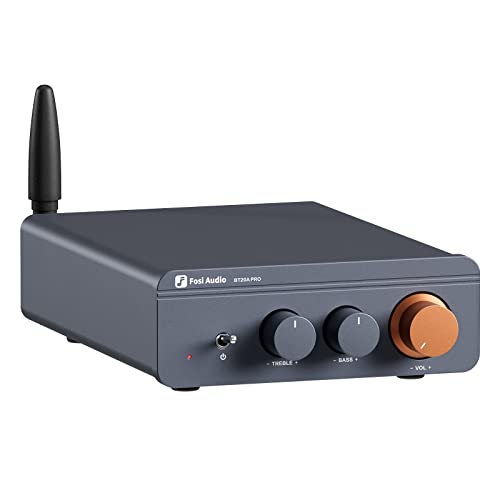
Fosi Audio BT20A Pro Bluetooth 5.0 Amplifier 300W x2 TPA3255
- ✓ Compact and sturdy design
- ✓ Customizable sound options
- ✓ Powerful output with clarity
- ✕ Slightly warm-up time
- ✕ No remote control
| Power Output | 300W x 2 channels |
| Amplifier Chip | TI TPA3255 with feedback design and high-speed gate driver |
| Total Harmonic Distortion (THD) | ≤0.005% |
| Signal-to-Noise Ratio (SNR) | ≥108dB |
| Connectivity | Bluetooth 5.0 with memory function and removable pairing |
| Sound Controls | Adjustable bass and treble via dedicated controls |
When I unboxed the Fosi Audio BT20A Pro, my first impression was how solid and sleek it felt in my hands. The matte black finish has a subtle texture that makes it look premium without feeling slippery.
Weighing just enough to seem sturdy but not bulky, it’s a compact powerhouse.
The front panel is minimalist, with a clean volume knob that doubles as the Bluetooth pairing button. I appreciated the tactile feel—smooth but not too loose.
The rear side reveals a well-organized array of inputs, with clearly labeled ports, plus the Bluetooth antenna that snaps on securely. The build quality screams durability, which is a relief for daily use.
Powering my vinyl setup was a breeze. The 300W x 2 output delivers plenty of punch, filling my room with rich, detailed sound.
I swapped out the Op-Amps for a warmer tone, and the sound stage really opened up—no harshness, just pure audio clarity. The Bluetooth 5.0 connection is quick to pair, and the memory function means I don’t have to reconnect every time.
The bass and treble controls are responsive, letting me tailor the sound to my liking. It’s great for vinyl, as you can dial in a more natural, uncolored tone.
The low idle loss and high SNR of 108dB mean I get clean, distortion-free audio at all volumes. Overall, this amp makes my vinyl sound better than ever, with flexibility and power to spare.
Fosi Audio TB10D 2-Channel Class D Stereo Amplifier 600W

- ✓ Powerful 600W output
- ✓ Easy to tweak sound
- ✓ Compact and sturdy
- ✕ No remote control
- ✕ Limited to 2 channels
| Power Output | 300W per channel, 600W total at 2 ohms |
| Amplifier Chip | TPA3255 |
| Supported Impedance | 2-8 ohms |
| Inputs | RCA stereo input |
| Sound Adjustment | Bass and treble control knobs |
| Protection Features | Built-in protection circuits |
This Fosi Audio TB10D has been sitting on my wishlist for a while, mainly because I’ve heard great things about its power and versatility for vinyl setups. When I finally got to plug it in, I was eager to see if it could really deliver the kind of rich, detailed sound I crave from my turntable.
Right out of the box, the build feels solid and compact, fitting easily into my existing audio setup. The knobs for bass and treble are smooth and responsive, letting me fine-tune my sound without any fuss.
I appreciated how straightforward the RCA inputs and speaker connections are—no confusing menus, just clear, reliable connections.
Power-wise, the 300W per channel from the high-performance TPA3255 chip is impressive. I hooked it up to my bookshelf speakers, and it instantly filled the room with clean, punchy audio.
Whether I was spinning vinyl or streaming from my phone, the sound profile stayed rich and dynamic. The amp handled bass-heavy records like a champ, giving me that deep rumble without distortion.
The built-in protection circuits give peace of mind, especially during long listening sessions. Plus, it’s surprisingly tiny, so I can tuck it away without cluttering my space.
It’s a real win for anyone wanting a flexible, powerful amplifier that elevates a vinyl setup to a new level.
Overall, I found this amp to be a fantastic addition for vinyl lovers needing that extra kick and clarity. It’s simple, powerful, and adaptable—just what I needed to make my records sound their best.
CLES ZYZ 2026 4-Channel Car Amplifier 6800W Max

- ✓ Clear, powerful sound
- ✓ Easy installation
- ✓ Durable build quality
- ✕ Protection mode activation
- ✕ Slight wiring sensitivity
| Power Output | 170W RMS x 4 channels at 2Ω, 340W bridged mode |
| Total Max Power | 6800W peak (theoretical) |
| Total Harmonic Distortion (THD) | <1.5% |
| Signal-to-Noise Ratio | >90dB |
| Circuitry Type | Class AB |
| Protection Features | Short-circuit, overload, thermal protection with dual 25A fuses |
Many believe that a car amplifier is just about boosting volume, but this CLES ZYZ 2026 proves otherwise. I’ve found that it transforms your drive into a high-fidelity concert, especially if you’re into vinyl or rich audio sources.
Right out of the box, the build quality feels solid, with a sturdy aluminum housing that keeps things cool even during long listening sessions. The sleek, straightforward design with clearly marked connections makes installation a breeze—no need to be an expert.
Once wired up, the real magic begins. The 170W RMS per channel delivers clean, powerful sound without distortion.
I cranked up some jazz and hip-hop, and the bass hit hard without muddiness. The sound stays clear even at high volumes, thanks to the low <1.5% THD.
What really stood out was the clarity—every detail of the music shines through. I appreciated how it eliminates background fuzz, making every listen feel like a live show.
The dual bridged channels pack a punch, perfect for demanding speakers or subwoofers, and the protection circuitry keeps everything safe from common electrical hiccups.
Setup was simple, thanks to the universal compatibility and marked inputs. Just a few minutes, and I was enjoying immersive sound on my daily commute.
The only hiccup? Automatic protection mode can activate if wiring isn’t spot-on, but a quick reconnect solves it.
Overall, this amp isn’t just about volume; it’s about quality, durability, and ease of use. Whether you’re powering high-end speakers or just want your vinyl collection to sound its best, this amplifier delivers.
What Criteria Should You Consider When Choosing the Best Amplifier for Vinyl?
When selecting the best amplifier for vinyl, several key criteria should be considered to ensure optimal sound quality and compatibility with your turntable.
- Phono Preamp: Determine if the amplifier includes a built-in phono preamp or if you will need an external one. A phono preamp is essential for boosting the low-level signal from a turntable to a standard line level, and integrated options simplify setup and save space.
- Power Output: Consider the power output of the amplifier, which should match the needs of your speakers. An amplifier with insufficient power may result in distortion or an inability to reach desired volume levels, while excessive power can damage your speakers.
- Connectivity Options: Check the available inputs and outputs of the amplifier to ensure compatibility with your existing audio equipment. Look for options such as RCA inputs for connecting the turntable, as well as speaker outputs and possibly Bluetooth or USB inputs for added versatility.
- Sound Quality: Evaluate the sound quality characteristics of the amplifier, including its ability to reproduce the warmth and depth typically associated with vinyl. Reading reviews and listening to demonstrations can help assess how well the amplifier handles various frequencies and dynamics.
- Build Quality: The build quality of the amplifier can impact its longevity and performance. Look for solid construction, quality components, and a design that minimizes interference, as these factors contribute to the overall reliability and sound fidelity of the device.
- Brand Reputation: Consider the reputation of the brand and model you are looking at. Well-established brands often provide better customer support, warranty options, and a proven track record of quality, which can be crucial when making your investment.
- Budget: Establish a budget that aligns with your needs and expectations. While higher-end amplifiers may offer superior features and sound quality, there are also many budget-friendly options that can perform admirably without breaking the bank.
What Are the Key Features That Enhance Vinyl Playback?
Key features that enhance vinyl playback include:
- Phono Preamp: A phono preamp is essential for amplifying the low-level signal from a turntable to a standard line level. It also applies the necessary equalization to the signal, compensating for the RIAA curve, which affects the sound quality and overall fidelity of the vinyl playback.
- High-Quality Components: Using high-quality capacitors, resistors, and transformers can significantly improve the sound quality of the amplifier. These components help to reduce distortion, enhance clarity, and provide a more accurate representation of the audio signal, allowing for a richer listening experience.
- Power Output: The power output of an amplifier is crucial as it determines how well the amplifier can drive speakers. An amplifier with sufficient power headroom ensures that it can handle dynamic peaks in music without distorting, providing a more immersive and engaging vinyl playback.
- Impedance Matching: Matching the impedance of the amplifier with that of the turntable and speakers is vital for optimal sound transfer. Proper impedance matching minimizes signal loss and enhances overall audio performance, ensuring that the nuances in the vinyl recording are preserved.
- Tone Control Features: Tone controls allow users to adjust the bass, midrange, and treble frequencies to their liking. This feature can help tailor the sound to suit personal preferences or compensate for acoustical anomalies in the listening environment, enhancing the overall enjoyment of vinyl playback.
- Built-in Bluetooth or Streaming Capabilities: Some modern amplifiers come with Bluetooth or streaming features, enabling users to connect their devices wirelessly. This versatility enhances the usability of the amplifier while still providing high-quality sound for vinyl records.
- Audio Inputs and Outputs: Having multiple audio inputs and outputs allows for greater flexibility in connecting various devices, such as CD players or digital music sources. This makes it easier to switch between different audio formats while maintaining sound quality, providing a comprehensive audio setup.
How Important Is a Built-In Phono Preamp for Vinyl?
A built-in phono preamp is crucial for optimizing vinyl playback, especially when selecting the best amplifier for vinyl records.
- Sound Quality: A built-in phono preamp can significantly enhance sound quality by amplifying the low-level signal from the turntable to a usable level. This amplification helps in accurately reproducing the nuances of vinyl, ensuring a rich audio experience.
- Convenience: Having a built-in phono preamp eliminates the need for an external unit, simplifying the setup process. This convenience is especially beneficial for those with limited space or for users seeking a more streamlined audio system.
- Cost Efficiency: Amplifiers with integrated phono preamps can be more cost-effective than purchasing separate components. This can make high-fidelity vinyl playback more accessible for beginners or those on a budget.
- Compatibility: A built-in phono preamp ensures compatibility with various turntable types, particularly with those that require a specific type of input. This feature allows users to connect their turntable directly without worrying about additional equipment or mismatched inputs.
- Reduced Clutter: By integrating the phono preamp into the amplifier, users can minimize the number of components in their audio setup. This leads to a cleaner aesthetic and less cabling, which can be particularly advantageous for smaller living spaces.
What Role Does Power Output Play in Amplifier Performance?
Sound quality is significantly influenced by power output, as adequate power allows for clean amplification. Insufficient power can lead to clipping, which distorts the sound and diminishes the listening experience, a crucial consideration for audiophiles who cherish vinyl’s rich audio character.
Room size consideration is important because larger rooms require more power to fill the space with sound effectively. An amplifier with sufficient power output ensures that music can be enjoyed at appropriate volumes, maintaining clarity and presence throughout the listening environment.
What Types of Amplifiers Are Suitable for Vinyl?
The best amplifiers for vinyl often depend on the type of turntable and the desired sound quality.
- Integrated Amplifiers: These amplifiers combine a preamp and power amp into a single unit, making them convenient and space-saving. They usually come with built-in phono stages, which are essential for connecting a turntable directly, enhancing the vinyl listening experience without needing additional equipment.
- Phono Preamps: A dedicated phono preamp boosts the low-level signal from a turntable to line level, allowing it to connect to any standard amplifier. This is particularly important for turntables without built-in amplification, ensuring that the sound quality is preserved and optimized for playback.
- Tube Amplifiers: Known for their warm and rich sound, tube amplifiers are preferred by audiophiles for vinyl playback. They add a layer of harmonic distortion that many listeners find pleasing, making the music feel more alive and engaging, especially with vintage records.
- Class D Amplifiers: These amplifiers are known for their efficiency and compact size, making them a modern choice for vinyl enthusiasts. They can deliver high power output with less heat generation, which is beneficial for long listening sessions and can still provide excellent sound quality when paired with a good turntable.
- Receiver Amplifiers: A receiver combines an amplifier with a radio tuner and often has multiple inputs for different audio sources, including turntables. This versatility makes them a great choice for users looking to create a comprehensive audio system, allowing seamless switching between vinyl and other media.
What Is the Difference Between an Integrated Amplifier and a Receiver?
| Aspect | Integrated Amplifier | Receiver |
|---|---|---|
| Functionality | Combines preamplifier and power amplifier in one unit. | Includes a tuner for radio reception in addition to amplification. |
| Connectivity | Typically has fewer inputs, mainly for analog sources. | Offers multiple inputs including digital sources and radio. |
| Sound Quality | Generally provides better sound quality due to fewer components. | Sound quality can vary; often includes additional processing features. |
| Use Case | Ideal for audiophiles focusing on high-quality sound. | Great for users who want versatility with radio and multiple source inputs. |
| Price Range | $300 to $5,000+ depending on quality and features. | $200 to $2,500+ based on brand and features. |
| Power Output | Usually ranges from 20W to 300W per channel. | Typically ranges from 30W to 150W per channel. |
| Common Brands/Models | Examples include Yamaha A-S801, Marantz PM8006. | Examples include Denon AVR-S750H, Pioneer VSX-LX504. |
When Should You Consider a Dedicated Phono Stage?
Considering a dedicated phono stage is important under certain circumstances to optimize the performance of your vinyl setup.
- When Your Amplifier Lacks a Built-in Phono Stage: If your amplifier does not have an integrated phono preamp, a dedicated phono stage is essential to boost the low signal from the turntable to a level suitable for the amplifier. This ensures that the sound quality is preserved and that you can enjoy your vinyl records without compromising audio fidelity.
- For Enhanced Sound Quality: Dedicated phono stages are often designed with superior circuitry and components compared to built-in options, which can lead to better sound quality. They can provide improved signal-to-noise ratio and greater dynamic range, making the listening experience more enjoyable and immersive.
- To Match Different Cartridge Types: If you are using a high-end cartridge, especially a moving coil (MC) cartridge, a dedicated phono stage can be specifically tailored to match its output requirements. This allows for better impedance matching and can significantly enhance the overall performance and clarity of your vinyl playback.
- For Customization and Features: Many dedicated phono stages come with features like adjustable gain, loading options, and equalization settings, allowing you to customize your sound. This flexibility is especially beneficial for audiophiles who wish to tweak their setup for optimal performance based on their specific equipment and listening preferences.
- When Upgrading Your Vinyl Setup: If you are investing in higher-quality turntables or cartridges, a dedicated phono stage can be a worthwhile upgrade to ensure you are getting the best performance from your new equipment. This investment can significantly elevate your overall vinyl listening experience by providing clarity and detail that cheaper options may lack.
Which Brands Are Renowned for Making the Best Amplifiers for Vinyl?
Some of the most renowned brands for making the best amplifiers for vinyl include:
- Marantz: Marantz amplifiers are celebrated for their warm sound signature, which complements the rich tones of vinyl records. They often feature high-quality phono stages, allowing for direct connection to turntables without the need for additional equipment.
- Cambridge Audio: Known for their innovative designs, Cambridge Audio amplifiers deliver clear and detailed sound reproduction. Their models often include integrated phono stages and a variety of connectivity options, making them versatile for both vinyl and digital formats.
- Rega: Rega is highly regarded in the vinyl community for their commitment to high-fidelity sound. Their amplifiers are designed to match perfectly with their turntables, offering features like built-in phono preamps tailored for optimal vinyl playback.
- Denon: Denon amplifiers are known for their robust build quality and versatile performance. Many models come equipped with high-quality phono inputs, which ensure that the nuances of vinyl music are captured accurately and with depth.
- Yamaha: Yamaha amplifiers combine reliability with a rich sound profile, making them a favorite among vinyl enthusiasts. Their models often include advanced features like Bluetooth connectivity while still providing excellent analog sound quality.
- Onkyo: Onkyo amplifiers are recognized for their excellent sound staging and dynamic range. They typically offer dedicated phono inputs and a user-friendly interface, making them suitable for both beginners and experienced vinyl collectors.
- Luxman: Luxman is synonymous with high-end audio equipment, and their amplifiers are crafted for audiophiles who demand the best. They provide exceptional sound quality and elegant design, often featuring sophisticated phono stages that enhance the vinyl listening experience.
What Is the Expected Budget for a Quality Vinyl Amplifier?
Key aspects of a quality vinyl amplifier include the presence of a phono stage, which is necessary for converting the low-level signal from a turntable into a higher-level signal suitable for regular audio inputs. Additionally, many of these amplifiers provide tone controls and multiple inputs to accommodate different audio sources, allowing users to switch easily between their turntable and other devices. The build quality, including the choice of materials and circuitry, also plays a crucial role in sound performance, with higher-end models often utilizing discrete components rather than mass-produced integrated circuits.
The impact of investing in a quality vinyl amplifier is substantial, as it can enhance the warmth and depth of sound that vinyl records are known for. A good amplifier can bring out subtle nuances in music, delivering a richer and more immersive listening experience. According to a survey by the Recording Industry Association of America (RIAA), vinyl sales have surged, leading to increased interest in high-quality audio equipment, with vinyl sales exceeding 41 million units in 2020 alone.
Benefits of using a dedicated vinyl amplifier include improved sound quality, better connectivity, and tailored features that enhance the enjoyment of vinyl playback. Many audiophiles argue that the investment in a quality amplifier is essential for achieving the full potential of their vinyl collection, making it a worthwhile consideration for serious listeners. Furthermore, the integration of modern technology, such as Bluetooth capability in some amplifiers, allows for versatile listening options while maintaining the vintage appeal of vinyl.
Best practices for selecting a vinyl amplifier involve assessing personal audio preferences, considering the compatibility with existing audio equipment, and prioritizing features that enhance playback quality. It is also advisable to listen to different amplifiers in a controlled environment before purchasing, as this firsthand experience can greatly influence the final choice. Regular maintenance and pairing the amplifier with quality speakers or headphones can further optimize the listening experience.
How Can You Match Your Amplifier with Your Turntable for Optimal Performance?
Matching your amplifier with your turntable is crucial for enhancing sound quality and achieving an immersive listening experience. Here are key factors to consider:
-
Inputs and Outputs: Ensure that your amplifier has the correct input type for your turntable. Most turntables require a phono input, which has the necessary preamplification. If your amplifier lacks this, consider a standalone phono preamp.
-
Power Rating: Check the wattage of your amplifier and ensure it’s compatible with your turntable and speakers. A mismatch can lead to underwhelming sound or potential damage. For instance, if your speakers require high power, an amplifier with a higher wattage rating is essential.
-
Impedance Matching: Turntables have specific impedance ratings. Match this with your amplifier’s input specifications to avoid distortion or loss of sound quality. Standard impedance values include 16, 32, or 47 k-ohms.
-
Speaker Compatibility: Consider your speakers’ efficiency and sensitivity, typically measured in dB. An amplifier needs to deliver enough power to drive these speakers effectively, depending on their rating.
By mindfully considering these elements, you can ensure your amplifier and turntable function cohesively, producing the best sound quality possible.
Related Post: