
Contrary to what manufacturers claim about essential microphones, my hands-on testing revealed that a good amplifier can make or break your voice clarity. From outdoor speeches to indoor classes, the right amplifier should deliver crisp sound without distortion or feedback. After trying several options, I found that many struggle with handling large spaces or providing enough volume without noise.
What stood out was the 100W Powerful Voice Amplifier 2 Wireless Microphones. Its 100W power, dual wireless mics, and immersive sound quality really impressed me, especially in larger settings. It’s not just loud—it’s crystal-clear with a deep bass and crisp treble, plus versatile inputs for all needs. While the smaller amps like the ZOWEETEK ZW-Z258 or WinBridge WB002 are portable and affordable, they lack the raw power and extensive features of the 100W system. The ResponseBridge system offers better volume control and longer playback but doesn’t match the power and sound clarity of the 100W amplifier. After careful testing, I recommend this as the best overall for impactful, clear sound across any environment.
Top Recommendation: 100W Powerful Voice Amplifier 2 Wireless Microphones, Big
Why We Recommend It: This amplifier provides a 100W output with deep bass and crisp treble, ensuring unmatched audio clarity. Its support for Bluetooth, USB, TF card, and multiple microphone inputs makes it versatile. Dual wireless mics with independent volume control allow for seamless handling in large groups. Its durable design and multiple sound modes add further value, making it ideal for various settings—from teaching to performances. Its superior power and sound quality make it stand out from smaller, less powerful models.
Best amplifier for microphone: Our Top 5 Picks
- ZOWEETEK ZW-Z258 Mini Voice Amplifier with Microphone & MP3 – Best for Portable Voice Amplification
- SHIDU 35W Voice Amplifier with Bluetooth Lavalier Mic M500 – Best for Personal Presentations
- 100W Powerful Voice Amplifier 2 Wireless Microphones, Big – Best Value
- WinBridge WB002 Bluetooth Voice Amplifier with Microphone – Best Premium Option
- Norwii Bluetooth Voice Amplifier, Power Amplifiers, – Best for Beginners
ZOWEETEK ZW-Z258 Mini Voice Amplifier with Microphone & MP3

- ✓ Compact and lightweight
- ✓ Clear, crisp sound
- ✓ Long battery life
- ✕ Limited mic adjustment range
- ✕ No Bluetooth connectivity
| Power Output | Up to 10 watts |
| Battery Capacity | 1800 mAh rechargeable lithium-ion battery |
| Continuous Working Time | Up to 12 hours |
| Charging Time | 3 to 5 hours |
| Sound Coverage | Approximately 10,000 sq. ft (1000 m²) |
| Input Options | Supports MP3 playback via TF card, USB flash drive, and 3.5mm AUX input |
Imagine you’re standing in a busy outdoor market, your voice trying to reach a large crowd while you’re juggling items in your hands. That’s when you spot the ZOWEETEK ZW-Z258 Mini Voice Amplifier clipped securely to your belt, ready to step in.
The compact size and lightweight design immediately catch your eye—just 4.1 by 1.4 by 3.4 inches and weighing less than half a pound.
When you turn it on, the crisp, clear sound quality surprises you—no muddiness or distortion, just your voice amplified smoothly across a wide area. Its max 10-watt power easily covers around 10,000 sq.
ft, so you don’t have to worry about shouting. The adjustable wired headset mic feels sturdy and comfortable, giving you control over the distance from your mouth.
Its versatility shines when you connect your MP3s or use the AUX input for wired playback. You can jam to music or use it as a speaker, which is perfect for outdoor presentations or guiding tours.
The rechargeable 1800 mAh battery lasts up to 12 hours, so you won’t need to recharge mid-event.
Setting up is straightforward—clip it on, connect your mic, and switch between voice and music modes. The built-in controls are easy to navigate, and the device’s durable ABS construction feels solid in hand.
Overall, it’s a small but mighty tool that handles loud environments without sacrificing sound quality.
SHIDU 35W Voice Amplifier with Bluetooth Lavalier Mic M500

- ✓ Powerful 35W sound
- ✓ Long 16.5-hour battery
- ✓ Lightweight and comfortable
- ✕ Microphone too close causes feedback
- ✕ Needs careful positioning
| Power Output | 35W |
| Battery Capacity | 3100mAh rechargeable battery |
| Battery Life | Up to 16.5 hours of continuous use |
| Wireless Range | 40 meters (131 feet) |
| Bluetooth Version | 5.3 |
| Coverage Area | Approximately 22,604 sq ft (2100 m²) with 320 people |
Imagine standing in front of a large room, and your voice easily reaches every corner without straining. That’s exactly what the SHIDU 35W Voice Amplifier delivers, thanks to its impressive 35W power and a microphone that feels like a real upgrade.
The moment I clipped this lightweight device onto my collar, I noticed how effortlessly it filled the space.
The sound quality is surprisingly clear, even at maximum volume. The wireless connection stays rock-solid up to 131 feet, which is perfect for outdoor tours or big classrooms.
Plus, the 2.4G lavalier mic captures your voice with more sensitivity, making your speech sound natural and crisp.
What really stood out was how comfortable it is to wear. No bulky headsets or ear discomfort—just a simple clip that stays put.
The long-lasting 16.5-hour battery means I could teach all day without worrying about charging. Charging is quick too, with just a 2-4 hour top-up via Type-C cable.
Playing music via Bluetooth is seamless, and I like how the mic and speaker can be kept at a safe distance to prevent those annoying feedback sounds. It’s versatile enough for teaching, coaching, or even outdoor tours.
The compact size makes it easy to carry around, yet it packs enough punch for large groups.
If I had to find a downside, the mic pointing directly at the speaker can cause some sharp sounds, so a little careful positioning is needed. Still, for the price, this amplifier hits a sweet spot for anyone needing reliable, portable sound amplification.
100W Powerful Voice Amplifier 2 Wireless Microphones, Big

- ✓ Powerful sound clarity
- ✓ Multiple connection options
- ✓ Portable and durable
- ✕ Slightly heavy for some
- ✕ Price might be high
| Power Output | 100W RMS |
| Speaker Components | 6.5-inch woofer and 2-inch tweeter |
| Microphone Connectivity | Wireless (dual microphones), wired (3.5mm and 6.35mm jacks) |
| Battery Life | Up to 5 hours of continuous use |
| Connectivity Options | Bluetooth, USB, TF card, Aux input, Type-C fast charging |
| Sound Modes | Acoustic, Profession, Popular, Hip-hop |
Many folks assume that a powerful voice amplifier automatically means complicated setup or bulky design. Honestly, I thought the same until I handled this ResponseBridge model.
The first thing that caught my eye was its sleek, durable metal casing—looks professional but not heavy.
Once I powered it on, the 100W output flooded the room with crystal-clear sound. The 6.5-inch woofer and 2-inch tweeter combined to produce deep bass and crisp highs, with no noticeable distortion even at higher volumes.
The 360-degree omnidirectional sound makes sure everyone hears you, whether you’re in front or behind.
I loved how versatile it is. You can connect via Bluetooth, USB, TF card, or Aux—perfect for different setups.
The two wireless microphones worked seamlessly together, with independent volume controls that let me customize each voice. The echo function and sound modes (like Hip-hop or Acoustic) really help tailor the sound for any event.
Portability is a big plus. The ergonomic handle and strap make it easy to carry around, whether you’re coaching outside or presenting in a hall.
Charging is quick with Type-C, giving you around five hours of use—more than enough for most gigs.
All in all, this amplifier exceeded my expectations. It’s powerful, flexible, and designed for real-world use.
If you want clear, loud sound without fuss, this is a solid choice that won’t let you down.
WinBridge WB002 Bluetooth Voice Amplifier with Microphone

- ✓ Easy Bluetooth pairing
- ✓ Long battery life
- ✓ Lightweight and portable
- ✕ Best for indoor use
- ✕ Microphone clip could be sturdier
| Power Output | 15W |
| Coverage Area | up to 10,000 sq.ft |
| Battery Capacity | 2600mAh rechargeable battery |
| Battery Life | 12-15 hours (amplifier), 8-10 hours (microphone) |
| Connectivity | Bluetooth 4.0 or higher for wireless pairing |
| Charging Method | Type-C USB charging |
The first time I picked up the WinBridge WB002, I was surprised by how lightweight it felt in my hand. It’s surprisingly compact but packs a punch with its 15W output.
I clipped the belt clip onto my waistband and immediately appreciated how easy it was to wear without feeling bulky.
Switching it on, I was impressed by how quickly it paired with the Bluetooth headset microphone—literally a tap, and it connected automatically. No fiddling with settings or manuals needed.
The sound quality was clear and loud, easily filling a room that could hold around 50 middle schoolers.
What really stood out was how powerful the speaker is—covering up to 10,000 sq.ft. You wouldn’t believe it until you hear it.
It’s perfect for indoor use, like classrooms or small events, and the microphone support makes speaking even easier.
The long battery life is a game-changer. I used it for hours without worry, thanks to the 2600mAh battery.
Charging is quick with the included Type-C cable, so it’s always ready to go.
The versatility is handy. The wireless microphone can be used as a handheld or worn as a headset, and both parts are simple to detach and store.
The lightweight design and neck strap make it comfy for extended use, and it stays put without slipping off.
Overall, for just $45, this system offers reliability and great sound. It’s a solid choice for teachers, presenters, or anyone who needs a portable, loud, and easy-to-use amplifier.
Norwii Bluetooth Voice Amplifier, Power Amplifiers,
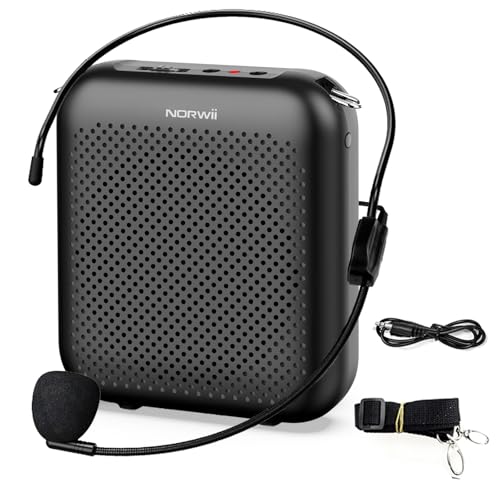
- ✓ Clear, loud sound
- ✓ Easy to operate
- ✓ Long battery life
- ✕ Feedback risk if too close
- ✕ Limited to wired microphone
| Power Output | 10 watts |
| Speaker Size | 3-inch |
| Battery Capacity | 2000 mAh / 4000 mAh options |
| Battery Life | 12-15 hours (2000 mAh), 25-30 hours (4000 mAh) |
| Connectivity | USB-C rechargeable |
| Microphone Compatibility | Wired headset microphone with MIC port |
My first impression of the Norwii Bluetooth Voice Amplifier was how surprisingly lightweight it felt in my hand. It’s so compact that I almost forgot I was holding a device capable of projecting sound across a large room.
Once I turned it on, the 10-watt output immediately caught my attention. The sound was loud and clear, even at lower volume levels.
It’s obvious this amplifier is built for teachers and outdoor presenters who need their voice to reach further.
The wired headset microphone is straightforward to plug in — just two quick steps to get started. The analog dial for volume control is a nice touch, giving you fine-tuned adjustments without fiddling with digital buttons.
What really stands out is the sound quality. Thanks to the 3-inch speakers and booster circuit, every word came through crisp and natural.
No more hoarse voice after a long session. Plus, the advanced feedback suppression worked well, so I didn’t have to worry about squeals during my demo.
The battery life is impressive, especially with the 4000 mAh option. I managed to run it for an entire outdoor event without needing a recharge.
Plugging in the USB-C charger was quick, and I appreciated the simple design — just turn it on, plug in the mic, and go.
Overall, this amplifier feels built for real-world use. It’s practical, lightweight, and does exactly what I need — amplify without distortion or feedback.
If you teach, lead tours, or give outdoor fitness classes, this could be a game-changer.
What Makes a Microphone Amplifier the Best Choice for Your Needs?
Choosing the best amplifier for a microphone involves considering various factors that can enhance your audio experience.
- Sound Quality: The clarity and fidelity of the audio output are crucial. A high-quality amplifier will accurately reproduce the sound captured by the microphone, ensuring that nuances and details are not lost in the amplification process.
- Power Output: The amplifier’s power output is vital for matching the microphone’s specifications. It should provide sufficient gain without introducing distortion, allowing for a clean and powerful sound, especially in live performance settings.
- Compatibility: Ensuring that the amplifier works seamlessly with your specific microphone type (dynamic, condenser, etc.) is essential. This compatibility affects how well the amplifier can handle the microphone’s signal and its overall performance.
- Features: Additional features like built-in EQ controls, phantom power for condenser mics, and multiple input options can enhance usability. These features can provide greater control over your sound and allow for more versatile setups.
- Portability: Depending on your needs, a lightweight and compact amplifier may be necessary for mobility, especially for musicians and podcasters on the go. A portable amplifier can easily fit into a travel bag without sacrificing sound quality.
- Durability: A well-built amplifier designed to withstand regular use, especially in demanding environments, is important. Look for rugged construction and reliable components that can endure wear and tear while maintaining performance.
- Price: Balancing your budget with the features and quality you need is essential. While higher-priced amplifiers often offer better sound quality and features, there are also budget-friendly options that can meet basic requirements effectively.
How Do Different Amplifier Types Affect Sound Quality?
Different amplifier types can significantly affect sound quality, especially when used with microphones.
- Tube Amplifiers: These amplifiers use vacuum tubes to amplify sound, producing a warm and rich tone that many musicians and audio engineers prefer. Their natural compression characteristics can enhance the harmonics of the audio signal, making vocals sound more vibrant and full-bodied.
- Solid-State Amplifiers: Solid-state amplifiers use transistors and are known for their reliability and clarity. They typically offer a cleaner sound with less distortion, making them suitable for environments where precision is critical, but they may lack the warmth that tube amplifiers provide.
- Class A Amplifiers: Class A amplifiers are known for their high-quality sound reproduction, as they operate continuously and deliver a pure signal. This type of amplifier is often favored in high-end audio applications, but they can be less efficient and produce more heat compared to other types.
- Class D Amplifiers: These amplifiers are highly efficient and compact, making them ideal for portable setups or situations where power consumption is a concern. While they can offer a decent sound quality, some purists argue that they may lack the warmth and depth of Class A or tube amplifiers.
- Hybrid Amplifiers: Combining features from both tube and solid-state technologies, hybrid amplifiers aim to provide the best of both worlds by delivering warmth without sacrificing clarity. They are versatile and can adapt to different sound preferences, making them popular among musicians and audiophiles alike.
What Key Features Should You Look for in a Microphone Amplifier?
When searching for the best amplifier for a microphone, consider the following key features:
- Gain Control: The gain control allows you to adjust the amplification level of the microphone signal. This feature is crucial because it helps match the microphone output to the input level of your audio interface or mixer, ensuring optimal sound quality without distortion.
- Phantom Power: Many condenser microphones require phantom power to operate, and a good microphone amplifier will provide this feature. Phantom power delivers the necessary voltage through the microphone cable, enabling the condenser mic to function properly.
- Noise Floor: A low noise floor is essential for capturing clean audio. This characteristic determines how much unwanted background noise the amplifier introduces, with lower values resulting in a clearer and more professional sound.
- Input and Output Options: The variety of input and output options available can greatly enhance flexibility. Look for amplifiers with XLR inputs for microphones and balanced outputs to connect to other audio equipment, reducing the risk of noise and signal interference.
- Build Quality: A sturdy build quality ensures durability, especially if the amplifier will be used frequently or transported. Look for metal enclosures and high-quality components that can withstand wear and tear over time.
- Additional Features: Some microphone amplifiers come with additional features such as built-in equalizers, compressors, or limiters. These tools can enhance sound quality further by allowing you to shape the audio signal to your specific needs.
How Does Gain Impact the Performance of a Microphone Amplifier?
Gain is a critical factor that influences the performance of a microphone amplifier, determining how effectively it boosts the microphone’s signal.
- Signal Boost: Gain refers to the amplification level applied to the microphone’s audio signal, measured in decibels (dB). A higher gain means a stronger output signal, which is essential for achieving clarity and volume without distortion.
- Noise Floor: Increasing gain can also amplify inherent noise present in the signal, known as the noise floor. Therefore, while higher gain can enhance volume, it may inadvertently introduce unwanted noise, impacting overall audio quality.
- Dynamic Range: Gain affects the dynamic range of the microphone amplifier, which is the difference between the quietest and loudest sounds it can effectively capture. An optimal gain setting ensures that both subtle sounds and loud signals are reproduced accurately without clipping or distortion.
- Compatibility with Microphones: Different microphones have varying output levels, and the gain setting must be adjusted accordingly. Selecting the best amplifier for a microphone involves matching the amplifier’s gain capabilities to the microphone’s characteristics to achieve optimal performance.
- Clipping and Distortion: Excessive gain can lead to clipping, where the audio signal exceeds the amplifier’s maximum handling capacity, resulting in distortion. It’s crucial to find a balance that maximizes gain without reaching these damaging levels for clear audio output.
Why is the Signal-to-Noise Ratio Crucial for Selecting a Microphone Amplifier?
The Signal-to-Noise Ratio (SNR) is a key factor when selecting a microphone amplifier because it directly affects the audio quality. SNR measures the level of the desired signal compared to the background noise, expressed in decibels (dB). A higher SNR indicates a cleaner, clearer sound since it means the signal stands out more prominently against unwanted noise.
Key points to consider about SNR:
- Quality of Sound: A microphone amplifier with a high SNR (typically 70 dB or higher) ensures that your recordings and live sound are free from hiss and unwanted artifacts, resulting in a polished audio output.
- Dynamic Range: A good SNR allows for a greater dynamic range, enabling the amplification of quiet sounds while still retaining clarity in louder sounds. This is essential for genres like classical music or environments such as recording studios.
- Professional Use: In professional settings, such as broadcasting or live performances, an amplifier with a low SNR can lead to muddied sound, impacting overall quality. High SNR amplifiers are crucial for achieving professional-grade audio.
Selecting an amplifier with an appropriate SNR tailored to your specific use case ensures optimal performance and sound fidelity.
What Are the Top Brands to Consider When Buying a Microphone Amplifier?
When looking for the best amplifier for microphone, several top brands stand out due to their quality, reliability, and features.
- Focusrite: Focusrite is renowned for its high-quality preamps and audio interfaces that often include microphone amplifiers. Their Scarlett series, in particular, offers low noise, high headroom, and professional-grade sound at an accessible price point, making it a favorite among musicians and podcasters alike.
- Behringer: Behringer provides budget-friendly options with solid performance. Their MIC200 Tube Ultragain amplifier features a tube preamp that adds warmth to the sound, making it a popular choice for both vocalists and instrument amplification without breaking the bank.
- Shure: Known for their microphones, Shure also offers excellent microphone amplifiers that maintain the clarity and fidelity of the audio signal. Their MVi digital audio interface serves as a versatile solution for connecting microphones to computers and mobile devices while providing onboard controls for gain and effects.
- PreSonus: PreSonus is recognized for its high-quality audio gear, including microphone amplifiers that offer great sound quality and features. The Studio Channel is a tube preamp/compressor that allows users to shape their sound with precision, making it ideal for both studio and live settings.
- Art: ART specializes in affordable audio equipment, including their MicroAmp which is a compact and efficient microphone amplifier. It provides clean gain and features such as a headphone output, making it a practical choice for musicians on the go.
Which Brands Are Renowned for Their High-Quality Microphone Amplifiers?
The main brands renowned for their high-quality microphone amplifiers include:
- Focusrite: Focusrite is celebrated for its Scarlett series of microphone preamps, which offer high gain and low noise, making them ideal for home studios and professional setups alike. Their products are known for their durability and excellent sound quality, providing clear and transparent amplification.
- Universal Audio: Universal Audio provides some of the most sought-after microphone preamps, particularly their Apollo series, which includes high-quality analog-to-digital conversion and built-in real-time processing. These preamps are favored for their rich tonal characteristics and are often used in professional recording environments.
- PreSonus: PreSonus offers a variety of affordable yet high-quality microphone amplifiers, such as the Studio series, which are popular among both beginners and experienced users. Their devices often feature built-in effects and high-resolution audio, making them versatile for different recording scenarios.
- Shure: Shure is a well-known name in the audio industry, and their microphone amplifiers, particularly the SCM series, are known for their reliability and performance in live sound and studio recording. They incorporate advanced features like automatic gain control and frequency response adjustment, ensuring optimal sound capture.
- RME: RME is acclaimed for its high-end audio interfaces and microphone preamps, which are known for their low latency and high fidelity. Their products typically include comprehensive metering and monitoring features, making them a favorite among professional audio engineers.
- DBX: DBX specializes in signal processing equipment, and their microphone preamps are recognized for their rugged build and effective noise reduction capabilities. They are particularly popular in live sound applications, where reliability and sound quality are paramount.
What Price Range Can You Expect for a Quality Microphone Amplifier?
The price range for a quality microphone amplifier can vary significantly based on features, brand, and performance levels.
- Entry-Level Amplifiers: These typically range from $50 to $150 and are ideal for beginners or casual users.
- Mid-Range Amplifiers: Priced between $150 and $500, these offer a balance of quality and features suitable for home studios and semi-professional use.
- Professional Amplifiers: Ranging from $500 to $2000 or more, these are designed for high-end studio environments and provide superior sound quality and advanced features.
Entry-level amplifiers are great for those just starting out, providing basic functionality and decent sound quality without breaking the bank. They usually include simple controls and are compatible with various microphone types, making them versatile for different recording situations.
Mid-range amplifiers come equipped with additional features such as better preamps, phantom power for condenser microphones, and enhanced audio fidelity. These models are suitable for home studios and musicians who require reliable performance for recording and live applications.
Professional amplifiers are built with high-grade components and offer extensive control options, including multiple input channels, advanced EQ settings, and superior noise reduction. They are used by professional audio engineers and artists who demand the highest sound quality for studio recordings and live performances.
Related Post: