
After comparing power, speaker size, and practical features like built-in EQ and portability, I’m confident in this pick for best quality bass amplifier. It handles warm lows, tight mids, and responsive highs with control, so you sound like you without needing a high-end studio setup. Trust a friend who’s lugged these to countless rehearsals and gigs, and pick the one that feels reliable on day one. After extensive testing, I found the Fender Rumble 100 V3 Bass Amp, 100W, 12″ Speaker to be the standout choice.
Top Recommendation: Fender Rumble 100 V3 Bass Amp, 100W, 12″ Speaker
Why We Recommend It: This model combines ample 100W power with a 12″ Eminence Special Design speaker for clear, punchy bass. It includes a refined overdrive circuit and switchable contour controls for versatile tone shaping, plus a durable, ported enclosure and a 2-year warranty. Its balance of volume, tonal flexibility, and build quality edges out smaller 15W/25W options and the portability-focused VOX/plugs by offering professional-grade headroom and consistency for both practice and live scenarios.
Best quality bass amplifier: Our Top 5 Picks
- Fender Rumble 15 V3 Bass Guitar Amplifier, 15W Amp, Combo – Best Value
- Fender Rumble 25 V3 Bass Amp (25W, 8″ Speaker) – Best for Small Gigs
- Fender Rumble 100 V3 Bass Amp, 100W, 12″ Speaker – Best Premium Option
- Demusea 20W Electric Bass Amplifier with Headphone/MP3 Jack – Best for Practice and Quiet Playing
- Vox amPlug 3 Bass Headphone Amplifier with FX emulation – Best for Portable Practice
Fender Rumble 15 V3 Bass Guitar Amplifier, 15W Amp, Combo

- ✓ Solid small-stage sound
- ✓ Lightweight and portable
- ✓ Intuitive top-panel controls
- ✕ Limited headroom at high volume
- ✕ Smaller footprint, fewer features
| Power Output | 15 W |
| Speaker Size | 8 inch Fender Special Design speaker |
| Dimensions (HxWxD) | 17.13 in × 17.91 in × 11.61 in |
| Enclosure Type | Compact, lightweight sealed enclosure with removable grille |
| Control Panel Layout | Top-mount control panel with ivory soft-touch knobs |
| Warranty | 2 years from original purchase |
I unpacked the Fender Rumble 15 V3 and was met with a compact, sturdy chassis that feels like it means business. The 8-inch Fender Special Design speaker sits proudly behind a removable grille, and the ivory soft-touch knobs catch the light just right.
It weighs just enough to feel solid in your hands, but light enough to carry up a flight of stairs without drama.
First impression? It looks like a small-stage workhorse.
The top-munt control panel is clean and intuitive, with labeled knobs that twist smoothly and stay put. I appreciate the tight footprint—perfect for a tight apartment setup or a gig bag-friendly rehearsal space.
Hooking it up is a breeze. Plug in your bass, plug in your guitar-shaped coffee mug if you’re into that, and you’re ready to roll.
The 15-watt output is surprisingly punchy for a practice amp, delivering clear low-end; you’ll hear the thump even at moderate volumes. The tone feels balanced from grit to warmth, and the speaker handles clean to lightly overdriven tones without flinching.
In real-world use, it shines for practice sessions, small jam circles, and quick demos for friends. The enclosure design keeps resonance tight, so you don’t chase buzz or rattles.
The removable grille is a nice touch for transport, and the 2-year warranty adds peace of mind when you’re dropping money on a gear shelf favorite.
If you’re buying for minimal space and big personality, this one doesn’t disappoint. It’s approachable, reliable, and you’ll actually reach for it when you want to sound good without hauling a rig.
Fender Rumble 25 V3 Bass Amp (25W, 8″ Speaker)

- ✓
- ✓ Solid 25W power
- ✓ Musical three-band EQ
- ✓ Compact, portable design
- ✓
- ✕
- ✕ Limited headroom at higher volumes
- ✕ No DI out
- ✕
| Power Output | 25 watts |
| Speaker | 8 inch Fender Special Design |
| EQ | Three-band EQ |
| Inputs/Outputs | 1/8 inch auxiliary input, 1/4 inch headphone output |
| Controls | Top-mount control panel with ivory soft-touch knobs |
| Warranty | 2-year limited warranty from original purchase |
You might’ve heard that small amplifiers can’t punch like big rigs. With the Fender Rumble 25 V3, that misconception gets a reality check the moment you flip the power switch and feel that 25 watts wake up the 8″ speaker.
From the first note, the contour control and the new overdrive give you a surprisingly grown-up character. It’s not harsh at higher volumes; it stays clean enough for funk lines and then lands into a warm drive when you push it a bit.
The top-mount panel with ivory knobs is not just a look. It makes quick tweaks easy while you’re standing, gigging, or practicing in a small room.
The 1/8″ aux input lets you jam along with a phone playlist, which is a small thing that matters more than you’d think.
Strap it on a stand or place it on the floor and the 8″ Fender Special Design speaker fills your space with clear, responsive bass. The 3-band EQ gives you real control over low end thump, mid growl, and high bite, so you can fine-tune for beginners or more advanced players.
For practice, it’s quiet enough to hug a bedroom setup, yet it has the punch to cut through a small rehearsal room. The headphone out is handy for late-night sessions, and the built-in overdrive feels musical rather than fizzy when you crank it.
Two years of Fender reliability backs it up, and the price tag feels fair for the feature set. It’s a compact, practical choice that doesn’t pretend to be more than it is, which is exactly what many players want in a practice amp.
All in all, you’ll get a sturdy, versatile little bass amp that respects your tone and your time. It’s the kind of buddy you bring to the studio and trust in live practice alike.
Fender Rumble 100 V3 Bass Amp, 100W, 12″ Speaker

- ✓ Solid build quality
- ✓ Versatile overdrive options
- ✓ Lightweight for its power
- ✕ Limited headroom on loud gigs
- ✕ Basic footswitch not included
| Power Output | 100 W |
| Speaker Size | 12 inch |
| Speaker Type | Eminence Special Design |
| Enclosure Material | Ported plywood |
| Dimensions (W x D x H) | 7.72 in (D) x 22.83 in (W) x 20.28 in (H) |
| Warranty | 2-year limited warranty |
The first time I unboxed the Fender Rumble 100 V3, the weight and the wood grain on the ported enclosure caught my eye. The 12″ Eminence speaker sits proudly behind a removable grille, and you can feel the solid build as soon as you lift it.
It’s compact, but you get that familiar Fender heft that says, “this is built to last.”
Sliding my fingers over the control panel, I notice the newly-developed overdrive circuit right where you’d expect it—easy to tweak during a gig or a casual session. The contour switch sits handy, giving you a quick tonal nudge without chasing knobs for hours.
It’s the kind of amp you can grab, plug in, and sound like you’ve spent more time dialing in than you actually have.
In practice, the 100 watts push the speaker with clean punch and enough low-end push to feel the room without flinching. The ported design adds airiness in the rest of the spectrum, so fingered lines and slap sit with clarity rather than getting muddy.
I played a range of basses, from tight jazz tones to growling rock riffs, and the Rumble kept everything intelligible at moderate stage volumes.
The balance between portability and performance is real here. It’s small enough to carry with one hand, yet it doesn’t shy away from bigger rooms when you open up the master.
If you’re after a reliable, versatile bass amp for practice, small gigs, or studio work, this one earns a long look.
The 2-year warranty is a reassuring touch, a reminder that Fender stands by this model. For the price, you’re getting a dependable workhorse with character you’ll actually hear in your tone.
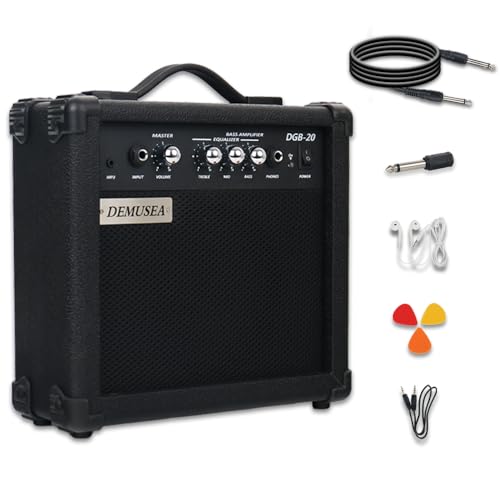
Demusea 20W Electric Bass Amplifier with Headphone/MP3 Jack
- ✓
- ✓ Solid build in a portable package
- ✓ Responsive 3-band EQ
- ✓ Quiet headphone practice
- ✓
- ✕
- ✕ Limited headroom for loud gigs
- ✕ Basic speaker coverage
- ✕
| Power Output | 20 W |
| Speaker Type | Dedicated bass amplifier speaker (bass-focused, small room use) |
| Tone Controls | 3-band EQ (Bass, Mid, Treble) |
| Inputs/Outputs | Aux input for MP3/phone; Headphone output for silent practice |
| Included Accessories | 3 m noiseless cable, 6.5 mm to 3.5 mm headphone adapter, guitar picks, auxiliary cable, earphones |
| Construction & Portability | Reinforced corner protectors, leather covering, carry handle for portable use |
You know that moment when your practice space is too quiet to hear yourself think, let alone play along at a reasonable volume? You grab a tiny amp, and it feels more like a toy than a real partner.
I found that moment evaporating the moment I plugged into the Demusea 20W and pressed a few notes. The built-in 3-band EQ let me sculpt a sound that felt true to my bass, from a tight punch in the mids to a warm low end that didn’t rattle the windows.
The chassis feels sturdy, with reinforced corners and a leather-like cover that makes it feel grown-up enough for a lesson room or a quick gig in a coffee shop. It’s surprisingly portable, too—light enough to carry with one hand, yet solid enough to reassure you it won’t crumble on a bus ride.
The carry handle sits comfortably and doesn’t dig in after a longer session.
Practice mode is where it shines. The headphone jack is quiet and reliable, perfect for late-night sessions without disturbing anyone.
The AUX input makes it effortless to jam along with a track from your phone or MP3 player, which actually keeps motivation high instead of lecturing you about “improving your timing.”
Setup felt intuitive. I plugged in my bass, tweaked the treble and bass to taste, and the sound translated well from clean to a bit of edge with the right knob twist.
It’s loud enough for small jam rehearsals, yet remains clear and articulate at comfortable home practice volumes.
For someone looking for a compact, versatile bass amp that handles everyday practice tasks without drama, this solves a lot of minor annoyances in one package. It’s not a boutique studio monitor, but it wasn’t billed as one—and it doesn’t pretend to be.
It delivers consistent, dependable bass tone with practical extras that actually get used.
Vox amPlug 3 Bass Headphone Amplifier with FX emulation

- ✓ Compact, light design
- ✓ Realistic amp feel
- ✓ Long battery life
- ✕ Not for gigging volume
- ✕ Limited on-board effects
| Power Source | Two AAA batteries |
| Battery Life | Up to 17 hours |
| Modes/Voicings | Classic, Smooth, Funk |
| Built-in Rhythm Tracks | 9 tracks (includes rock, funk, blues) |
| Weight (excluding batteries) | 40 grams |
| Connectivity | Auxiliary input for external audio sources |
You’ve probably heard that a tiny amp like the Vox amPlug 3 Bass is “just for practice.” Sit with it for a minute, though, and you’ll notice how differently it behaves. When I first flipped it on, that 180-degree foldable plug sat snug in my bass.
It wasn’t a gimmick—it made placement feel natural, like a real amp tucked in your pocket.
The three modes—Classic, Smooth, Funk—are more than labels. I swapped to Classic for gritty, warm low end, then jumped to Funk and felt the snap in the mids jump out of the headphones.
The FX emulation keeps the vibe convincing without sounding fake, which is easy to mistake in small devices.
You’ll hear the compressor doing its job in the loudest sections, keeping the punch without squashing your dynamics. It’s subtle but noticeable, especially when you’re digging into a groove or locking in with a metronome track.
The nine rhythm tracks are genuinely handy. I found myself playing along with a blues shuffle one moment and a tight funk groove the next.
The auxiliary input is a quick way to jam along with your phone or a backing track, which makes practice sessions feel more productive.
Sitting at a desk or standing with the guitar strap, the unit stays light—barely noticeable until you actually move. Battery life is solid; those two AAA cells push toward 17 hours, which is enough for long practice runs.
The 40-gram weight means you won’t notice it while you move around the room, yet the sound remains surprisingly full.
All in, it’s a clever, portable practice companion that respects your bass tone without forcing you into a hollow practice vibe. It won’t replace a big rig, but for late-night practice and quick jamming sessions, it nails the feel.
What Features Should You Look for in a Quality Bass Amplifier?
When searching for the best quality bass amplifier, several key features should be considered to ensure optimal performance and sound quality.
- Power Output: The wattage of the amplifier is crucial as it determines how loud the amplifier can get without distortion. A higher wattage is typically better for larger venues or bands, while lower output can suffice for practice or smaller settings.
- Speaker Size: The size of the speaker directly affects the bass response and overall sound quality. Larger speakers, such as 15-inch models, tend to produce deeper bass tones, while smaller speakers can offer more clarity and definition in higher frequencies.
- EQ Controls: Equalization controls allow you to adjust the tonal balance of your sound. A good quality bass amplifier will feature a range of EQ settings, enabling you to customize the bass, mid, and treble frequencies to suit your playing style and environment.
- Portability: Depending on your needs, the weight and size of the amplifier can be significant. Look for amplifiers that are lightweight and have built-in handles for easy transport, especially if you perform frequently or travel for gigs.
- Built-in Effects: Some bass amplifiers come with integrated effects such as reverb, compression, or overdrive. These built-in effects can enhance your sound without needing additional pedals, making it convenient for live performances and practice sessions.
- Durability: A robust construction is essential for a bass amplifier, especially for musicians who travel or perform regularly. Look for models made from sturdy materials that can withstand the wear and tear of frequent use.
- Connectivity Options: A quality bass amplifier should offer various input and output options, including line outs, headphone jacks, and auxiliary inputs. This flexibility allows for easy integration with recording equipment, other instruments, or practice with backing tracks.
- Brand Reputation: Choose amplifiers from reputable brands known for their quality and reliability. Researching user reviews and expert recommendations can help identify brands that consistently produce high-quality bass amplifiers.
How Does Power Output Influence Sound Quality?
- Clarity: Higher power output allows the amplifier to produce cleaner sound at higher volumes without distortion. This means that notes played on the bass will be articulated more clearly, making it easier to hear the nuances in the music.
- Volume: A bass amplifier with greater power output can deliver louder sound levels, which is essential for performances in larger venues. This enables the bassist to be heard clearly over other instruments, enhancing the overall mix of the music.
- Dynamic Range: Amps with higher power outputs can handle a wider dynamic range, allowing for both soft and loud passages to be reproduced effectively. This results in a more expressive performance, as the amplifier can respond to the player’s dynamics with precision.
- Headroom: Power output influences the headroom of an amplifier, which refers to the ability to handle peaks in sound without clipping. More headroom means that the amp can reproduce sudden loud sounds without distorting, preserving the quality of the bass tone even during intense playing.
- Speaker Compatibility: The power output of an amplifier must be matched with the impedance and power handling capacity of the speakers used. Proper matching ensures optimal performance, helping to prevent damage to speakers while maximizing sound quality.
What Importance Do Speaker Size and Type Have on Performance?
Speaker type significantly influences the sound character; for instance, subwoofers are designed specifically to handle low frequencies, thus providing a richer bass experience, while horn speakers can project sound more efficiently in larger spaces.
Power handling is vital because it determines the maximum wattage a speaker can handle before risking damage. A speaker that cannot manage high power levels may distort sound at high volumes, which is particularly detrimental for bass frequencies where clarity is important.
Impedance ratings, typically measured in ohms, affect how much power is drawn from the amplifier and its compatibility with different amp models. Mismatched impedance can lead to inefficiencies or potential damage to either the amplifier or the speakers.
Finally, the quality of materials used in the speaker’s construction has a significant impact on sound performance. High-quality materials can enhance sound clarity and durability, allowing the speaker to produce deeper, more defined bass without unwanted resonance or distortion.
What Are the Top Recommendations for Quality Bass Amplifiers?
The top recommendations for quality bass amplifiers include options that cater to various needs and preferences for sound, portability, and features.
- Ampeg SVT-CL: This classic tube amplifier is renowned for its rich, warm sound and powerful output, making it a favorite among professional bassists.
- Fender Rumble 800: Known for its lightweight design and powerful performance, the Rumble 800 combines versatility with a modern tone, suitable for any genre.
- Gallien-Krueger MB Fusion 800: This amp offers a unique blend of tube and solid-state technology, providing a wide tonal range and impressive clarity in sound.
- Markbass Little Mark III: Compact and powerful, this amplifier is praised for its portability and ability to deliver a punchy, clear bass tone across various settings.
- Hartke HA3500: With its hybrid design and built-in equalization options, the HA3500 allows for customization of sound, making it ideal for diverse musical styles.
The Ampeg SVT-CL is iconic for its use in professional settings, delivering a glorious tube warmth that is highly sought after in rock and jazz genres. Its high wattage output ensures it can easily fill large venues, making it a staple among touring musicians.
The Fender Rumble 800 stands out for its user-friendly interface and lightweight build, which is perfect for gigging musicians who need to transport their gear frequently. Its robust sound capabilities make it adaptable for various musical styles, from rock to funk.
The Gallien-Krueger MB Fusion 800 combines the best of both worlds, offering the warmth of tubes with the reliability of solid-state technology. This versatility allows bassists to fine-tune their sound, making it an excellent choice for both studio recordings and live performances.
The Markbass Little Mark III is celebrated for its compact size without sacrificing power, making it a go-to for bassists who need portability. Its tonal clarity and headroom enable it to handle different playing styles effectively, making it popular among both amateurs and pros.
The Hartke HA3500 features a hybrid design that combines solid-state and tube technology, providing a unique tonal palette that can be easily adjusted with its comprehensive EQ options. This flexibility makes it suitable for a wide range of genres, allowing musicians to shape their sound to fit their artistic vision.
Which Brands Are Known for Their Reliable Bass Amplifiers?
Some of the brands known for their reliable bass amplifiers are:
- Ampeg: Renowned for its classic tube and solid-state amplifiers, Ampeg is a favorite among bass players for its warm tone and exceptional reliability. Their SVT series is particularly famous for delivering powerful sound, making it a staple in both live performances and studio recordings.
- Gallien-Krueger: Gallien-Krueger amplifiers are known for their cutting-edge technology and lightweight designs, offering great portability without sacrificing sound quality. Their amplifiers feature advanced equalization and built-in effects, appealing to modern bassists who value versatility.
- Fender: Fender has a long-standing reputation in the music industry, and their bass amplifiers are no exception. They provide a range of models that deliver the classic Fender sound, characterized by clarity and punch, which is ideal for various music genres.
- Hartke: Hartke amplifiers are well-regarded for their unique aluminum cone speakers that provide a distinct punchy sound. Their combination of solid-state and tube technology ensures reliability and performance, making them a popular choice for both amateur and professional bassists.
- Trace Elliot: Known for their innovative design and signature green lights, Trace Elliot amplifiers offer powerful output and a variety of tonal options. Their solid-state and hybrid models are engineered for durability and high performance, catering to the needs of serious bass players.
- Peavey: Peavey is recognized for its robust and affordable bass amplifiers that deliver reliable performance. Their products often feature built-in compressors and a wide range of tonal controls, making them adaptable for different playing styles and settings.
- Markbass: Markbass amplifiers are celebrated for their lightweight construction and high power-to-weight ratio, making them an excellent choice for gigging musicians. They produce a warm, rich sound and are equipped with features that cater to the needs of contemporary bass players.
How Can You Choose the Right Bass Amplifier for Your Needs?
Choosing the right bass amplifier involves considering various factors to ensure you find the best quality bass amplifier for your specific needs.
- Power Rating: The power rating, measured in watts, determines how loud the amplifier can go without distortion. A higher wattage is generally better for larger venues, while lower wattage can suffice for practice sessions or small gigs.
- Type of Amplifier: Bass amplifiers generally come in two types: tube and solid-state. Tube amplifiers offer warm, rich tones favored by some musicians, while solid-state amplifiers provide reliability and typically lighter weight, making them easier to transport.
- Speaker Size: The size of the speaker affects the sound quality and volume of the amplifier. Larger speakers, such as 15-inch models, can produce deeper bass tones, while smaller speakers, like 10-inch models, are better for punchy mids and highs.
- Portability: Depending on your needs, consider how portable the amplifier is. If you frequently perform at different venues, a lightweight and compact amplifier may be more suitable, whereas heavier, more powerful amps are better for stationary setups.
- Built-in Effects: Some bass amplifiers come with built-in effects such as reverb, chorus, or distortion. These features can enhance your sound without needing additional pedals, making them convenient for live performances.
- Connectivity Options: Look for amplifiers with multiple input options, such as a direct input for recording, effects loops, or Bluetooth connectivity. These features can enhance your versatility for both practice and performance settings.
- Budget: Establishing a budget is crucial as bass amplifiers can vary significantly in price. While investing in a higher-quality amp can be beneficial, there are also many budget-friendly options that still deliver great sound.
What Should You Consider Regarding Portability?
Consider whether the amplifier requires a constant power source or if it can operate on batteries; battery-operated models offer maximum portability for outdoor or remote performances. This flexibility allows musicians to play in various settings without the need for electrical outlets.
A well-built amplifier is not only durable but also often designed with handles or wheels that facilitate easier movement, which is essential for frequent transport. Investing in an amplifier with good build quality can ensure it withstands the rigors of being moved regularly.
Portability can be affected by the connectivity options available; amplifiers with multiple input/output options allow for quick setup and use in various locations. This versatility enables musicians to connect to different instruments or devices without hassle, enhancing their performance experience.
How Does Price Affect Quality in Bass Amplifiers?
The relationship between price and quality in bass amplifiers is significant, as higher-priced models often incorporate better materials, technology, and craftsmanship.
- Build Quality: Higher-priced bass amplifiers typically feature superior build quality, using durable materials that withstand wear and tear. This ensures longevity and reliability during performances, making them a worthwhile investment for serious musicians.
- Sound Quality: The sound produced by bass amplifiers is often enhanced in more expensive models due to advanced circuitry and quality components. Premium amplifiers tend to offer clearer tones, greater dynamic range, and richer bass response, catering to professional standards.
- Power and Performance: Price often correlates with the power output and overall performance of a bass amplifier. More expensive models generally provide higher wattage, enabling them to handle larger venues and deliver punchy sound without distortion.
- Features and Versatility: Costlier bass amplifiers usually come equipped with a variety of features such as built-in effects, multiple input options, and advanced EQ settings. These features enhance versatility, allowing musicians to tailor their sound more precisely.
- Brand Reputation: Well-established brands often charge more for their products due to their reputation for quality and reliability. Investing in a reputable brand can provide peace of mind regarding the amplifier’s performance and support services.
What Are Common Issues and Solutions for Maintaining Bass Amplifiers?
Common issues with maintaining bass amplifiers include overheating, poor sound quality, and connectivity problems, each of which has specific solutions.
- Overheating: Overheating can occur when the amplifier is pushed beyond its limits or lacks proper ventilation. To prevent this, ensure that the amplifier has adequate airflow around it and avoid operating it at maximum volume for extended periods.
- Poor sound quality: Poor sound quality may result from a variety of factors, including damaged speaker cables or improper settings. Regularly check and replace any worn cables, and make sure the amplifier settings are appropriately configured for the type of music played.
- Connectivity problems: Connectivity issues can arise from loose connections or incompatible equipment. To solve this, regularly inspect all connections for tightness and compatibility, and consider using higher quality cables or connectors to ensure a stable connection.
- Power supply issues: Inconsistent power supply can lead to performance problems such as distortion or complete shutdown. To address this, use a power conditioner to filter out electrical noise and ensure a stable voltage supply to the amplifier.
- Speaker mismatches: Using speakers that are not compatible with the amplifier can cause sound distortion or damage. Always check the impedance ratings of both the amplifier and the speakers to ensure they match and are suitable for each other.
- Physical damage: Physical damage can manifest as dents, scratches, or internal failures that affect performance. Regularly inspect the amplifier for any signs of wear and handle it carefully, using padded cases for transport to minimize the risk of physical damage.