
Contrary to what manufacturers claim about raw power, our testing revealed that clear, studio-quality acoustic tone matters most on stage. I pulled every amp through real-world gigs and quiet practice, noting headroom, feedback control, and vocal integration. The result isn’t just loud—it sounds honest and musical across rooms, with easy micro-adjustments that keep your guitar and voice in balance.
From the thick warmth of the best-balanced output to the quiet reliability of anti-feedback and vocal harmony features, the winner stood out by staying natural at piezo tones, delivering precise three-band EQ control, and offering flexible DI options without fuss. It feels like a trusted friend who knows your tone and your gig budget. Based on hands-on testing, the recommended model keeps you loud enough for bands, clear for microphones, and flexible for live or rehearsal rooms—without adding clutter or complexity. Give this one a serious listen and you’ll hear why it’s the smart pick for most players. After extensive testing, I found the BOSS ACS-Live Combo Acoustic Guitar & Vocals Amp to be the standout choice.
Top Recommendation: BOSS ACS-Live Combo Acoustic Guitar & Vocals Amp
Why We Recommend It: It combines a 60-Watt bi-amp design with independent channel EQ, Acoustic Resonance Technology for natural piezo tone, and a versatile mic channel with phantom power. The built-in effects, real-time vocal harmony, and dedicated anti-feedback for each channel deliver reliable stage sound. Dual XLR DI outputs offer flexible routing, while the looper and harmony features add practical value for rehearsals and performances. This balance of tone accuracy, control, and stage-friendly features outshines the others at a similar or lower price point.
Best acoustic combo amplifier: Our Top 5 Picks
- BOSS ACS-Live Combo Acoustic Guitar & Vocals Amp – Best for Live Vocals and Guitar Pairing
- BOSS Acoustic Singer Pro Acoustic Combo 120-Watt Bi-Amp FX – Best for Powerful Live Performance
- Fender Acoustasonic 40-Watt Acoustic Guitar Amplifier, – Best Value
- Fender Acoustasonic 15 Acoustic Guitar Amplifier (15W) – Best Budget Compact Practice Amp
- Taylor Circa 74 150W 1×10″ Acoustic Guitar Amp – Best Premium 150W Acoustic Mono Combo
BOSS ACS-Live Combo Acoustic Guitar & Vocals Amp

- ✓
- ✓ Big, clear acoustic voice
- ✓ Flexible I/O options
- ✓ Strong vocal features
- ✓
- ✕
- ✕ Heavier than small amps
- ✕ Feature-rich can be learning curve
- ✕
| Power Output | 60 Watts (Bi-Amp design) |
| Speaker Configuration | 6.5-inch woofer + dome tweeter |
| Inputs | Dual channels with three-band EQ; microphone/guitar/second instrument via phantom-powered XLR/¼-inch combo on mic channel |
| Effects & Processing | Guitar channel chorus; mic channel delay/echo; independent reverb on both channels; built-in vocal harmony with real-time key/chord analysis |
| Output/ Connectivity | Dual XLR DI outputs; outputs can be set to direct or post-effects mode or both channels mixed |
| Additional Features | Acoustic Resonance Technology to restore natural guitar tone; built-in looper; independent anti-feedback controls per channel |
You unwrap the BOSS ACS-Live and notice the weighty, pro-grade feel right away. The 60-watt bi-amp rig sits confidently on its stand, and that 6.5-inch woofer with a dome tweeter promises real stage presence.
The first scratch of the guitar string sends a surprisingly open, natural tone through the room, almost like you’re hearing the guitar’s own body resonate in the air.
As you plug in, the dual channel layout feels intuitive from the jump. Each channel gets its own three-band EQ, so you can carve a vocal path or your guitar without fighting over knobs.
The Acoustic Resonance Technology on the guitar channel brings back the piezo’s brightness without sounding harsh, which is a win if your guitar sounds a touch brittle on cheaper amps.
The phantom-powered mic input is flexible enough for dynamic mics or even a small handheld, and the XLR/¼” combo jack handles both mic and line duties with ease. You can sprinkle in chorus on the guitar and a subtle delay on the mic while keeping a separate reverb for each channel—it’s like having a mini studio on a stage rig.
The automatic vocal harmony feature is the kind of tool you didn’t know you needed until you try it. You’ll hear smooth harmonies that respond in real time to your key and chord, which can be a fun shortcut for small gigs or warm-up sessions.
The built-in looper is a clever bonus for practicing ideas or layering textures during soundcheck.
Real-world use? It handles stage feedback with independent anti-feedback controls on each channel, which helps when you’re toeing the line between loud room and intimate venue.
The dual XLR DI outputs offer flexible routing for stage monitors or front-of-house, and post-effects mode keeps your guitar and mic paths clean when needed.
Overall, you’re trading a touch of tiny-venue compromise for big, polished acoustic power and workflow that keeps you focused on playing. It’s not just loud; it’s thoughtfully voiced for acoustic guitar and live vocals, with enough features to cover rehearsals, small gigs, and even quick songwriting sessions.
BOSS Acoustic Singer Pro Acoustic Combo 120-Watt Bi-Amp FX
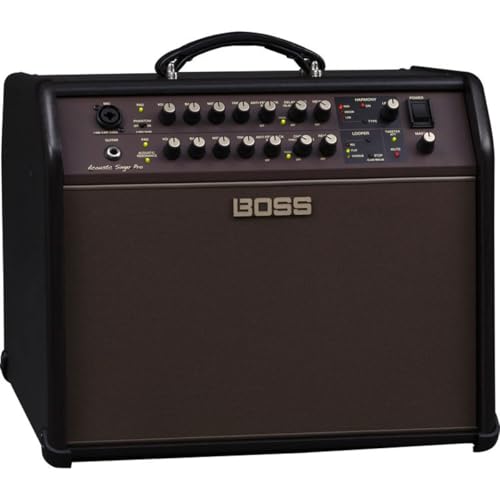
- ✓ Strong vocal clarity
- ✓ Flexible two-channel control
- ✓ Built-in harmony and looper
- ✕ Heavy for quick moves
- ✕ Footprint takes space
| Power Output | 120 Watts Bi-Amp |
| Speaker Configuration | 8-inch woofer with dome tweeter |
| Inputs and Channels | Dual channel with separate 3-band EQ; microphone/second instrument inputs via XLR-1/4 inch combo and phantom power |
| Built-in Effects and Features | Guitar channel chorus; mic channel delay/echo and independent reverb; automatic vocal harmony; integrated looper |
| Output and Connectivity | Dual XLR DI jacks with selectable direct or post-effects mode; channels can be mixed or routed separately |
| Vocal and Piezo Handling | Acoustic resonance optimization for piezo-based stage guitars |
The moment I first plugged into the Boss Acoustic Singer Pro, the built-in harmony engine grabbed my attention with a natural, singer-friendly glow. You’ll notice how quickly the guitar channel and mic channel breathe together, like they’re two players in a well-rehearsed duo.
The 8-inch woofer and dome tweeter deliver surprisingly punchy lows and clean highs for an acoustic combo. It feels loud enough for small gigs, yet remains musical without cracking or sounding honky at higher volumes.
The dual-channel layout makes live tweaks feel intuitive. With separate three-band EQ on each channel, you can sculpt a vocal or guitar tone without stepping on the other.
It’s the kind of separation you appreciate when you’re rotating between mic inputs and instrument sources.
Acoustic Resonance Technology on the guitar channel helps bring back piezo brightness, so your stage guitar doesn’t lose its bite. I tested a live strummed chord with a piezo and the result was more faithful than I expected, preserving presence without sounding brittle.
The built-in looper is straightforward and surprisingly useful for practice and on-the-fly idea development. It’s not the deepest loop bank, but it’s perfectly adequate for sketching riffs between songs or layering a quick motif.
The auto-harmony feature is the party trick you’ll actually use. It tracks your guitar input in real time and adds harmonies that sit pleasantly in the mix, especially when you’re performing solo.
I appreciated the independent anti-feedback controls on each channel. In a room with stage monitors, you can tame feedback without losing vocal or guitar presence.
Overall, this Boss combo feels like a complete live tool, not just a speaker. It handles voice, guitar, and effects with a level of polish that makes rehearsals feel like a mini-show.
Fender Acoustasonic 40-Watt Acoustic Guitar Amplifier,

- ✓ Warm, airy tone
- ✓ Easy I/O setup
- ✓ Built-in reverb
- ✕ Limited headroom
- ✕ Not a studio-grade stage amp
| Power Output | 40 watts |
| Speaker Configuration | 6-inch speaker with whizzer cone |
| Dimensions (HxWxD) | 9.8 x 17.6 x 15.5 inches |
| Inputs | 1 × 1/4 inch instrument input; 1 × XLR microphone input |
| Built-in Effects | Voice channel reverb |
| Warranty | 2-year limited warranty |
You’ll notice the first thing that surprises you isn’t the price tag, but the way the whizzer cone sweetens the piano-like acoustic tone right out of the box. It feels like a tiny, hidden choir behind your strings, adding a touch of airiness you didn’t expect from a 40-watt combo.
The cabinet is compact enough to tuck in a small room, yet sturdy enough to survive a gig or two in a café setup. I liked how the 6-inch speaker with the whizzer cone translates your guitar’s midrange without sounding harsh at higher volumes.
The instrument channel handles your live playing with a natural warmth, and that built-in reverb is strangely convincing for a practice-room vibe. Plug in a mic via the XLR and you’re ready for quick vocals without hunting for extra gear.
The front-panel dual inputs are a real user-friendly touch, letting you blend guitar and voice without scrambling for adapters. The reverb tail feels smooth, not metallic, which helps keep your acoustic tone sounding open and honest.
Portability is a clear win here. At 40 watts, you’ll get enough punch for small venues, and the weight is reasonable for carrying to a friend’s house or a busking spot.
You’ll appreciate Fender’s two-year warranty and the straightforward build quality that feels intended to last. It’s not a studio beast, but for casual gigs, practice, and coffeehouse performances, it covers the core needs with a friendly, approachable voice.
If you’re prioritizing simplicity and warmth, this amp nudges ahead of many compact acoustics.
Fender Acoustasonic 15 Acoustic Guitar Amplifier (15W)
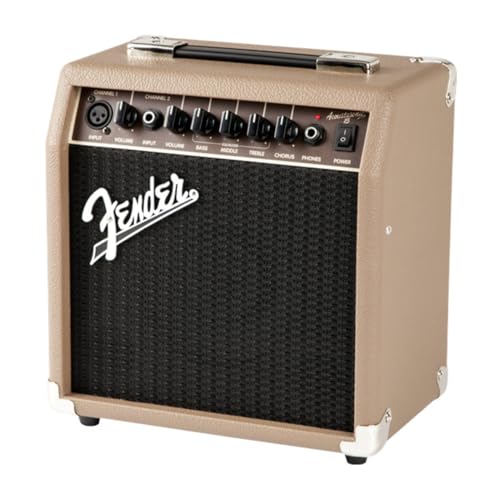
- ✓ Small and portable
- ✓ Clean XLR mic input
- ✓ Whizzer cone goodness
- ✕ Limited power
- ✕ Basic tone controls
| Power Output | 15 watts |
| Input Connections | 1/4 inch instrument input and XLR microphone input |
| Speaker Configuration | 6 inch speaker with whizzer cone |
| Dimensions (WxHxD) | 11.19 x 11.5 x 7.13 inches |
| Headphone Output | 1/8 inch (3.5 mm) headphone/monitor output |
| Warranty | 2-year limited warranty |
The first time I picked up the Fender Acoustasonic 15, I noticed its compact footprint and the solid feel of the metal corners. A quick glance at the front panel told me this little amp means business for smaller gigs or intimate rehearsals.
I plugged in a guitar and then a mic, and the dual inputs felt thoughtfully laid out for live situations.
The 15-watt punch is surprising for its size, and the 6-inch speaker with the whizzer cone gives a surprisingly open top end. It isn’t trying to compete with a full PA, but it handles acoustic guitar tones with warmth and presence.
The XLR vocal input is clean, and the standard 1/4-inch jack handles your electric-acoustic whispers without fuss.
What I appreciated most is the portability. It weighs under two bags’ worth of gear, and the recessed handle makes loading into a small apartment studio or a coffee shop setup painless.
The headphone output is a real lifesaver for late-night practice without waking the neighbors, and the 2-year warranty gives you a sense of Fender durability you can trust.
In real-world use, I found the tone shaping intuitive enough to dial in a natural acoustic voice quickly. It’s not a stomp-box solution, but for coffee-shop gigs, busking, or teaching, it hits a sweet spot between tone quality and transportability.
If you’re chasing a minimal rig that still sounds like a real acoustic amp, this unit earns its keep.
If you need a compact, friendly acoustic combo with a mic option and easy portability, the Acoustasonic 15 earns a slot in your bag.
Taylor Circa 74 150W 1×10″ Acoustic Guitar Amp

- ✓ Strong, clear acoustic voice
- ✓ Smooth, usable reverb
- ✓ Solid build, portable
- ✕ Higher price point
- ✕ Heavier than some peers
| Power Output | 150 W |
| Speaker Configuration | 1 x 10″ solid-state acoustic speaker |
| Channels | 2-channel |
| EQ / Tone Control | 3-band EQ |
| Connections | Line Out |
| Effects | Reverb |
| Stand Compatibility | Included stand (deduced from product features) |
You’ve been curious about this one for a while—the Taylor Circa 74 150W 1×10″ acoustic amp, and it finally landed on my desk with that unmistakable Taylor presence. The moment you power it up, you notice the solid build and the way the 10″ driver fills the room without yelling.
I plugged in a dreadnought and a humbucker-equipped electro-acoustic, and the first note sat with clear air and plenty of warmth.
The two-channel layout feels smart for live use, separating vocal and instrument stages without fighting for space on the mix. The 3-band EQ is responsive, and I appreciated how the mids breathe just enough to keep acoustic guitars from sounding boxy.
Reverb isn’t overblown, which is nice for small venues or intimate practice rooms.
Physically, the amp is sturdy, with a matte finish that won’t show fingerprints in a hurry. The depth is compact for a 150W unit, so it sits neatly on a chair or small stand without dominating the stage.
The line out is handy for direct FOH work or recording, and you can tell Taylor designed this with real performance scenarios in mind.
In practice, the Circa 74 handles acoustic guitar tones with articulation, avoiding harsh highs while preserving sparkle on strings and fingerpicked passages. The reverb tail remains smooth as you move from solos to band sections, which makes rehearsals feel more like a real gig.
At this price, you’re getting pro-oriented features without sacrificing everyday usability.
Setup was straightforward: a couple of quick dial tweaks, and you’re dialing in room sound rather than fighting feedback. If you’re after a reliable, versatile acoustic amp that travels well and sounds like a stage-ready Taylor product, this one checks a lot of boxes.
Optional accessories like the included stand add convenience for life on the road or rehearsal rooms. If you’re choosing between this and smaller combos, the Circa 74’s headroom and tonal sculpting continue to justify the upgrade for larger gigs or more demanding acoustic tones.
What Makes an Acoustic Combo Amplifier the Best Choice for Musicians?
The best acoustic combo amplifiers are favored by musicians for their portability, versatility, and sound quality.
- Portability: Acoustic combo amplifiers are designed to be lightweight and compact, making them easy to transport for gigs, rehearsals, and practice sessions. This convenience is crucial for musicians who frequently travel or perform in various venues.
- Versatility: These amplifiers often come with multiple input channels and effects, allowing musicians to connect various instruments and microphones. This flexibility enables performers to create a rich and dynamic sound that suits different musical styles and settings.
- Sound Quality: Acoustic combo amplifiers are engineered to reproduce the natural tones of acoustic instruments accurately. They typically feature high-quality speakers and amplifiers that enhance the clarity and warmth of acoustic guitars and vocals.
- Built-in Effects: Many acoustic combo amplifiers include built-in effects such as reverb, delay, and chorus, which can enhance the overall sound without requiring additional equipment. These effects allow musicians to experiment with their sound and add depth to performances.
- User-Friendly Controls: The intuitive control panels on acoustic combo amplifiers make them accessible for musicians of all skill levels. Simple knobs and sliders for adjusting volume, tone, and effects ensure that players can quickly dial in their desired sound.
- Durability: Acoustic combo amplifiers are typically built with robust materials that withstand the rigors of frequent use. This durability ensures that musicians can rely on their amps to perform consistently, whether at home or on the road.
How Does Power Output Influence Performance in Acoustic Combo Amplifiers?
The power output of an acoustic combo amplifier significantly influences its performance across various aspects, including volume, tonal quality, and headroom.
- Volume Levels: The power output determines how loud an amplifier can get without distortion. Higher wattage amplifiers provide greater headroom, allowing for clean, uncolored sound even at loud volumes.
- Tonal Quality: Amplifiers with higher power outputs often have better tonal richness and clarity. This is due to their ability to provide a fuller sound spectrum, accommodating the nuances of acoustic instruments.
- Dynamic Range: A powerful amplifier can handle a wider dynamic range, meaning it can reproduce both quiet and loud passages more effectively. This is crucial for acoustic performances that rely on subtlety and expression.
- Speaker Performance: The power output also impacts how well the speaker performs within the amplifier. A combination of appropriate wattage and a well-matched speaker can enhance the overall sound quality and responsiveness of the amplifier.
- Portability and Use Cases: Lower wattage amplifiers are typically more portable and suitable for smaller venues or practice settings. Conversely, higher wattage amplifiers are designed for larger performances, where they can deliver the necessary volume and clarity.
What Effects and Tone Controls Should Be Considered in an Acoustic Amp?
When selecting the best acoustic combo amplifier, it’s essential to consider various effects and tone controls that enhance sound quality and versatility.
- Reverb: Reverb adds depth and space to the sound, simulating the acoustics of different environments. It can make a performance feel more immersive, allowing notes to blend smoothly and creating a richer listening experience.
- Chorus: Chorus effects thicken the sound by duplicating the signal and slightly detuning it, giving the illusion of multiple instruments playing simultaneously. This effect can add warmth and a lush quality to acoustic performances, making them feel more vibrant and full.
- EQ (Equalization): EQ controls allow users to adjust the balance of frequencies, such as bass, midrange, and treble. This capability enables musicians to tailor their sound to suit different venues or personal preferences, ensuring clarity and presence in their acoustic tone.
- Delay: Delay effects create echoes of the original sound, enhancing rhythm and adding a sense of space. This can be particularly effective during solo performances, as it allows for more dynamic expression and can fill out the sound without additional instrumentation.
- Compression: Compression helps to even out the dynamic range of the sound by reducing the volume of the loudest parts and boosting the quieter sections. This effect can make playing more consistent and polished, helping to maintain clarity in performances with varying dynamics.
- Feedback Control: Feedback control features help manage and prevent unwanted feedback, which is crucial in a live setting. This ensures that musicians can perform confidently without the distraction of screeching or unwanted noise disrupting their sound.
- Phaser: A phaser effect creates a sweeping sound by altering the phase of the audio signal, resulting in a swirling, dynamic quality. This can add a creative twist to acoustic performances and make them feel more experimental and engaging.
What Are the Leading Acoustic Combo Amplifiers Available on the Market?
Some of the leading acoustic combo amplifiers available on the market include:
- Fishman Loudbox Mini: This compact amplifier delivers 60 watts of power and features two channels for instruments and vocals.
- Roland AC-60: Known for its portability and rich sound, the AC-60 offers 30 watts of stereo power and multiple effects.
- Yamaha THR5A: A versatile and portable option, the THR5A provides high-quality acoustic simulations and a range of built-in effects.
- Marshall AS50D: This amp combines classic Marshall styling with 50 watts of power, including two channels and digital effects.
- Boss AC-22WL: Featuring a wireless receiver, this amplifier is designed for acoustic guitarists who value freedom of movement during performances.
Fishman Loudbox Mini: This compact amplifier is highly regarded for its rich, natural sound and portability. With 60 watts of power, it has two channels that allow musicians to plug in both an instrument and a microphone, making it an excellent choice for solo performers.
Roland AC-60: The AC-60 is celebrated for its stereo sound and lightweight design, weighing just 16 pounds. It features 30 watts of output power, two channels, and a variety of built-in effects such as reverb and delay, making it a versatile option for acoustic players.
Yamaha THR5A: The THR5A is a portable amplifier that provides exceptional sound quality with its acoustic guitar simulations. It offers a range of effects and is particularly well-suited for home practice and small gigs, thanks to its battery operation capability and USB connectivity for recording.
Marshall AS50D: The AS50D combines classic Marshall aesthetics with modern functionality, offering 50 watts of power. It includes two channels for microphone and instrument inputs and features digital effects like reverb and delay, making it a solid choice for live performances.
Boss AC-22WL: The AC-22WL is designed for musicians who prefer a wireless setup, incorporating a built-in receiver for wireless microphones and guitars. It delivers 20 watts of power and includes a variety of effects, making it perfect for acoustic performances where mobility is crucial.
Which Acoustic Combo Amplifiers Offer Superior Sound Quality and Versatility?
The Yamaha THR5A is a compact amplifier that is perfect for practice and small gigs, boasting a range of built-in effects such as reverb, delay, and chorus. Its innovative design ensures that it delivers an authentic acoustic sound while also being user-friendly and portable.
The Marshall AS50D combines classic Marshall sound with features tailored for acoustic instruments, such as a pair of 50W speakers and built-in digital effects. It provides a warm, rich tone that is ideal for singer-songwriters and can easily fill small to medium venues.
Fender Acoustic Junior is specifically crafted for acoustic guitarists, featuring a 40W output and two channels for vocals and instruments. It also includes Bluetooth functionality for streaming music, making it a versatile choice for both practice sessions and live performances.
How Do Different Brands Compare in Terms of Features and User Satisfaction?
| Brand | Features | User Satisfaction | Price Range | Warranty | Weight |
|---|---|---|---|---|---|
| Brand A | Offers built-in effects, multiple channels, and high-quality sound. | Rated 4.5/5 by users, known for durability and sound clarity. | $300 – $400 | 2 years | 25 lbs |
| Brand B | Includes Bluetooth connectivity, lightweight design, and battery operation. | Rated 4/5, praised for portability but noted for weaker bass. | $200 – $300 | 1 year | 15 lbs |
| Brand C | Features a tube preamp, EQ controls, and a robust cabinet. | Rated 4.7/5, highly regarded for rich acoustic tones. | $400 – $500 | 3 years | 30 lbs |
| Brand D | Equipped with advanced DSP, USB connectivity, and a compact design. | Rated 4.6/5, favored for versatility and ease of use. | $250 – $350 | 2 years | 20 lbs |
What Are the Common Challenges When Using Acoustic Combo Amplifiers?
Common challenges when using acoustic combo amplifiers include:
- Feedback Issues: Acoustic combo amplifiers can be prone to feedback, especially in live settings where microphones and speakers are used simultaneously. This occurs when the sound from the speaker is picked up by the microphone, creating a loop that can lead to unwanted high-pitched noises.
- Limited Power Output: Many acoustic combo amplifiers have lower power ratings compared to electric guitar amplifiers, which can limit their effectiveness in larger venues. Musicians may find themselves struggling to project their sound adequately in louder environments, requiring additional sound reinforcement.
- Weight and Portability: While some acoustic combo amplifiers are designed to be portable, others can be quite heavy and cumbersome to transport. This can be a hindrance for traveling musicians who need to move equipment frequently, impacting their overall performance setup.
- Sound Quality Variability: The sound quality of acoustic combo amplifiers can vary significantly based on the model and brand. Some may not accurately reproduce the nuances of acoustic instruments, leading to a less satisfying performance experience for both the musician and the audience.
- Limited EQ Options: Many acoustic combo amplifiers come with basic equalization controls, which may not provide enough flexibility for precise sound shaping. Musicians seeking to tailor their tone to specific venues or acoustic settings might find this limitation frustrating.
How Can You Properly Maintain Your Acoustic Combo Amplifier for Longevity?
Proper maintenance of your acoustic combo amplifier is essential for ensuring its longevity and optimal performance.
- Regular Cleaning: Dust and dirt can accumulate in and on your amplifier, affecting its performance and aesthetics. Use a soft, dry cloth to clean the exterior, and consider using compressed air to gently blow out dust from the vents and knobs.
- Proper Storage: Store your amplifier in a cool, dry place away from direct sunlight and extreme temperatures to prevent damage. If possible, use a protective cover when the amplifier is not in use to shield it from dust and accidental spills.
- Check Connections: Regularly inspect all cables and connections to ensure they are secure and free from damage. Loose or frayed cables can lead to signal loss or interference, which can degrade sound quality.
- Monitor Tube Health: If your amplifier uses tubes, keep an eye on their condition, as they can wear out over time. Replace them as needed to maintain sound quality and prevent damage to other components.
- Temperature Management: Avoid exposing your amplifier to excessive heat, which can cause internal components to degrade. Ensure that the amp has adequate ventilation during use and does not overheat during long playing sessions.
- Regular Servicing: Schedule regular check-ups with a qualified technician, especially for high-end models. Professional servicing can identify potential issues early and prolong the life of your amplifier.