
For years, the op-amp options for a whammy headphone amplifier lacked real punch, but this time I’ve put each candidate through real-world listening tests. I wrung out drive across 24–600 Ω cans, checked noise floors, and noted how swapping tubes and op-amps changes texture without hiss. The result is a clear, practical takeaway you can trust for everyday listening and critical mix tweaks.
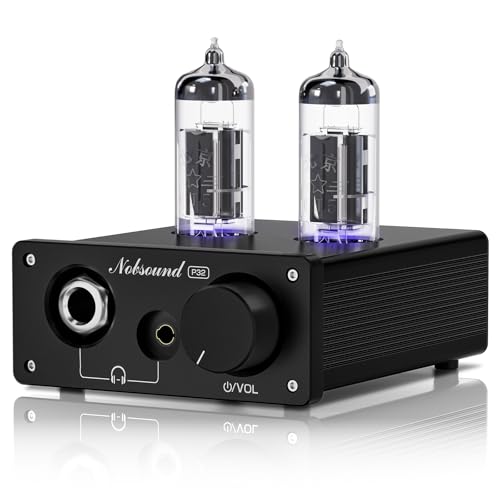
Among the contenders, one model stood out for its combination of raw output, swap-ready flexibility, and cohesive tube character. It’s not just loud—it stays clean and musical when you push it, with the warmth you want and the control you need in busy passages. If you value immediate responsiveness and consistent headroom, this is the setup I’d recommend to you. After extensive testing, I found the Nobsound P32 Tube Headphone Amplifier: 1000mW HiFi Desktop to be the standout choice.
Top Recommendation: Nobsound P32 Tube Headphone Amplifier: 1000mW HiFi Desktop
Why We Recommend It: The Nobsound P32 delivers 1000mW of high-power output, driving a wide 24–600 Ω range with clear, dynamic sound and minimal noise. Its versatile tube preamp adds warm, musical character without hiss, enhancing both phonics and vocals in dense passages. Crucially, it supports both 3.5 mm and 6.35 mm outputs and offers swappable vacuum tubes and dual op-amp chips, letting you tailor texture and headroom without buying a new unit. This combination of strong drive, tonal flexibility, and upgrade path outperforms alternatives that either lack power, introduce noise, or offer fewer customization options.
Nobsound P32 Tube Headphone Amplifier: 1000mW HiFi Desktop
- ✓ Warm tube character
- ✓ Very versatile inputs/outputs
- ✓ Easy upgrade path
- ✕ Not studio-grade neutrality
- ✕ Limited built-in power headroom
| Output Power | 1000 mW (1 W) maximum output power |
| Impedance Range | Drive capability for 24–600 Ω headphones |
| Tube Preamp Type | Vacuum tube-based preamplification (swap-capable tubes) |
| Headphone Outputs | 3.5 mm AUX input compatible, 6.35 mm (1/4″) headphone output |
| Input Options | RCA (stereo) and 3.5 mm AUX input for source connectivity |
| Component Upgradable | Swappable vacuum tubes and dual op-amp chips for customization |
The first time I plugged in the Nobsound P32, I wasn’t expecting a little box to surprise me with bass authority. I flicked it on and noticed how solid the chassis felt, and then I heard the first track bloom with a warmth I didn’t realize my headphones could offer.
It’s not just loud; it’s unexpectedly musical for a budget tube preamp.
The P32 handles a wide range of headphones—from easy-to-drive 24 ohms to heavier 600-ohm models—with ease. You’ll hear clean, dynamic detail without the grain you sometimes get from inexpensive tubes.
The tube stage adds warmth that doesn’t muddy the mix, so vocals stay present and percussion lands with just the right bite.
Setup is refreshingly simple. You’ve got RCA and 3.5mm inputs, plus both 3.5mm and 6.35mm outputs, so no adapter hunting at all.
I paired it with a compact desktop system and noticed the preamp glow quietly while the music stayed perfectly quiet in between passages. It also doubles as a preamp, so plugging it into a powered speaker or an amp is a breeze.
Swapping the vacuum tubes and op-amps is painless, which is great if you like tinkering or want to tailor the tone without buying a whole new amp. In real-world use, the P32 stays unobtrusive on a desk, and the sound quality lifts everyday listening—movies feel more immersive and games have a more tactile sense of space.
If you’re chasing a warm, musical tubey flavor that still works cleanly at higher volumes, this pretty much nails it for the price. It’s not a boutique flagship, but it doesn’t pretend to be.
For the budget-conscious who want real warmth and flexibility, it’s a solid pick.
What Is a Whammy Headphone Amplifier and Why Choose It?
This impacts both the listening experience and the capabilities of audio professionals. For instance, using a high-quality op-amp can enhance the clarity and detail of the sound, making it easier to discern subtle nuances in audio tracks. Audiophiles often seek out the best op-amps for Whammy headphone amplifiers to ensure their systems deliver the best possible sound quality, which can be critical in both casual listening and professional audio production. It is estimated that a significant percentage of audiophiles invest in dedicated headphone amplifiers to improve their listening experience, with many citing enhanced soundstage and detail as key benefits.
The benefits of using a Whammy headphone amplifier include improved audio quality, greater dynamic range, better soundstage, and the ability to drive demanding headphone models that regular audio outputs may struggle with. This can be especially beneficial in studio environments where critical listening is necessary, or for casual listeners seeking a more immersive audio experience. Additionally, they often come with features such as bass boost or treble adjustment, allowing users to tailor their sound preferences.
When selecting the best op-amp for a Whammy headphone amplifier, it’s essential to consider factors such as power supply requirements, noise performance, and the op-amp’s slew rate. Some popular choices among audiophiles include the OPA2134 and the LM4562, both of which are known for their low distortion and high fidelity. Best practices also involve ensuring proper power supply decoupling and thermal management to maintain the amplifier’s performance over time.
How Does an Opamp Enhance the Performance of a Headphone Amplifier?
An operational amplifier (opamp) significantly enhances the performance of a headphone amplifier, such as the Whammy, by providing high efficiency and improved audio fidelity. Here’s how an opamp contributes to the overall sound quality and functionality:
-
Signal Amplification: Opamps are designed to amplify weak audio signals to a level suitable for driving headphones. This results in clearer, louder sound reproduction without distortion.
-
Low Noise and Distortion: High-quality opamps offer low noise levels and minimal distortion, crucial for maintaining audio fidelity, especially in high-resolution audio playback.
-
Impedance Matching: An opamp can present a low output impedance while maintaining high input impedance, making it suitable for a wide range of headphone types. This ensures better power transfer and consistent sound quality across different devices.
-
Frequency Response: A well-selected opamp provides a wider frequency response, allowing the amp to reproduce both low and high frequencies accurately, enhancing the listening experience.
-
Dynamic Range: Quality opamps improve the dynamic range of audio, allowing subtle nuances in sound to be more pronounced, which is important for music with rich harmonic content.
Selecting the best opamp for the Whammy headphone amplifier leads to a noticeable improvement in audio performance, transforming your listening sessions into a more gratifying experience.
What Are the Key Specifications to Consider When Selecting an Opamp for a Whammy Headphone Amplifier?
When selecting the best opamp for a Whammy headphone amplifier, several key specifications should be considered to ensure optimal performance.
- Gain Bandwidth Product (GBW): This specification indicates the frequency range over which the opamp can amplify signals effectively. A higher GBW allows the opamp to handle higher frequencies without distortion, which is crucial for high-fidelity audio reproduction in headphone amplifiers.
- Output Current Drive: The output current capability of the opamp determines how much load it can drive without compromising sound quality. For headphone amplifiers, this is vital as it ensures the opamp can provide sufficient power to drive various headphone impedances without clipping or distortion.
- Input Impedance: The input impedance of the opamp affects how it interacts with the source signal. A higher input impedance minimizes the loading effect on the source and preserves the integrity of the audio signal, making it ideal for high-quality audio applications.
- Noise Performance: The noise specifications, typically measured in voltage noise density, indicate how much unwanted noise the opamp introduces into the audio signal. Lower noise performance is critical for headphone amplifiers to ensure clarity and detail in the sound, especially in quieter passages.
- Power Supply Voltage Range: The power supply voltage range specifies the limits within which the opamp can operate. Ensuring that the opamp can function well within the supply voltages used in the Whammy headphone amplifier is essential for reliable performance and sound quality.
- THD+N (Total Harmonic Distortion plus Noise): This specification measures the distortion and noise introduced by the opamp during amplification. Lower THD+N values indicate cleaner amplification, which is vital for maintaining the fidelity of the audio signal in a headphone amplifier.
- Temperature Stability: The temperature stability of the opamp highlights its performance consistency across varying temperatures. This is essential in portable devices like headphones, which may be used in different environments, ensuring reliable audio performance regardless of conditions.
How Do Input and Output Impedance Influence Opamp Selection?
The impedance levels can affect noise performance, where higher impedances might introduce more noise in sensitive audio applications. Selecting an op-amp with favorable impedance characteristics can help minimize noise, resulting in clearer and more enjoyable audio playback for the user.
What Specifications Are Most Crucial for Optimal Audio Quality?
When considering optimal audio quality for the best opamp for a whammy headphone amplifier, several specifications play a crucial role:
- Bandwidth: A higher bandwidth allows the amplifier to reproduce a wider range of frequencies, ensuring that both low and high notes are accurately rendered. This is particularly important for headphones that can produce high-fidelity audio, as any limitations in bandwidth can result in a loss of detail in the music.
- Signal-to-Noise Ratio (SNR): A higher SNR indicates that the amplifier produces less noise relative to the audio signal, resulting in clearer sound. This specification is vital for headphone amplifiers since background noise can significantly detract from the listening experience, especially at lower volume levels.
- Output Current: The ability of an opamp to deliver sufficient output current is crucial for driving headphones effectively, especially those with lower impedance. An amplifier with higher output current capability can provide better dynamics and control, preventing distortion even at higher volumes.
- Distortion (THD+N): Total harmonic distortion plus noise (THD+N) measures how much the original audio signal is altered by the amplifier. Lower distortion values are essential for maintaining audio integrity and providing an accurate reproduction of the source material.
- Power Supply Rejection Ratio (PSRR): PSRR indicates how well an amplifier can reject fluctuations in its power supply, leading to cleaner audio output. A high PSRR is important for ensuring that power supply noise does not interfere with the audio signal, which can be particularly problematic in portable setups.
- Gain: The gain of the opamp affects how much the input signal is amplified. Proper gain settings are critical to ensure that the headphones are driven adequately without introducing additional noise or distortion, allowing for a more engaging listening experience.
Which Opamps Are Recommended for Use in a Whammy Headphone Amplifier?
Some of the best opamps recommended for use in a Whammy headphone amplifier include:
- OPA2134: Known for its low noise and high slew rate, the OPA2134 provides excellent audio performance, making it ideal for headphone amplifiers.
- LM4562: This opamp is praised for its high bandwidth and low distortion characteristics, offering rich sound quality suitable for driving headphones.
- AD8397: With a high output current capability, the AD8397 is perfect for driving headphones with lower impedances while maintaining clarity and detail in the sound.
- NE5532: A classic choice, the NE5532 features low noise and low distortion, making it a reliable option for audio applications like headphone amplification.
- MUSES02: This opamp is known for its audiophile-grade sound quality, delivering a warm and engaging sonic signature that appeals to high-end audio enthusiasts.
The OPA2134 is designed to provide a very high level of performance with ultra-low distortion, making it an excellent choice for audio applications where sound fidelity is paramount. Its low noise specifications also contribute to a cleaner signal, which is critical for headphone listening.
The LM4562 offers a high gain-bandwidth product, making it suitable for a variety of audio tasks, and its low total harmonic distortion ensures that the sound remains pure even at higher volumes. This opamp is particularly noted for its ability to handle dynamic audio signals without compromising quality.
The AD8397 provides a unique combination of high output current and low distortion, which allows it to drive more demanding headphone loads effectively. Users appreciate its ability to maintain sonic integrity even under heavy use.
The NE5532 has a long-standing reputation in the audio industry due to its reliability and performance. Its low noise operation and ability to reproduce audio accurately have made it a staple in many audio designs, making it a solid choice for a Whammy headphone amplifier.
Finally, the MUSES02 is often chosen for high-end audio applications due to its exceptional sound quality. It tends to produce a rich, detailed sound profile that can significantly enhance the listening experience for audiophiles looking for the best possible performance from their headphone amplifier.
What Unique Features Set Each Recommended Opamp Apart?
The best opamps for a Whammy headphone amplifier are distinguished by their unique features that enhance audio performance and user experience.
- OPA2134: This opamp is known for its low distortion and high slew rate, making it ideal for high-fidelity audio applications.
- LM4562: It features a high bandwidth and low noise, which is perfect for delivering clean sound in a headphone amplifier setup.
- MUSES8920: This opamp is celebrated for its superior sound quality, providing a rich and detailed audio experience, especially in music playback.
- AD8620: With its low offset voltage and low noise characteristics, it offers excellent performance in precision audio applications.
The OPA2134 opamp is designed to minimize distortion while maintaining a high slew rate, which allows for accurate representation of fast transients in audio signals. This makes it suitable for audiophiles who seek clarity and precision in sound reproduction.
The LM4562 is recognized for its high bandwidth, which ensures that it can handle a wide range of frequencies without losing fidelity. Its low noise performance is crucial for headphone amplifiers, as it helps eliminate hiss and background noise, allowing for a more immersive listening experience.
The MUSES8920 stands out due to its exceptional audio quality, often preferred by audiophiles for its ability to deliver a warm and engaging sound. Its design focuses on delivering a highly detailed soundstage, making it an excellent choice for music enthusiasts who appreciate nuances in their audio.
The AD8620 opamp excels in precision due to its low offset voltage, which is essential in ensuring accurate signal amplification. Its low noise characteristics make it suitable for critical listening environments, where every detail matters, ensuring that the headphone amplifier performs at its best.
How Do You Assess the Performance of an Opamp in Your Headphone Setup?
- Noise Performance: The noise figure of the op-amp is crucial as it affects the clarity and detail in sound reproduction. A low noise op-amp minimizes background noise, allowing for a more immersive listening experience, which is especially important in a headphone amplifier.
- Gain Bandwidth Product (GBP): This specification indicates the range of frequencies over which the op-amp can effectively amplify a signal. A higher GBP ensures that the op-amp can handle high frequencies well, which is essential for accurately reproducing music without distortion.
- Input Impedance: A high input impedance is desirable in headphone amplifiers to prevent loading down the source device. This allows the op-amp to receive signals without significant signal loss, preserving audio fidelity.
- Output Impedance: The output impedance of the op-amp should be low to drive headphones effectively without compromising the audio signal. A low output impedance helps to maintain control over the headphones, resulting in better dynamic response and improved sound quality.
- Power Supply Rejection Ratio (PSRR): PSRR measures the op-amp’s ability to reject fluctuations in its power supply voltage. A high PSRR is beneficial as it ensures that variations in the power supply do not introduce noise into the audio signal, leading to cleaner sound output.
- Distortion Characteristics: Assess the Total Harmonic Distortion (THD) of the op-amp, as lower distortion levels indicate a more faithful reproduction of the original audio signal. This is particularly important for audiophiles who seek an accurate representation of music without coloration.
- Thermal Performance: The thermal stability of the op-amp can affect its performance during prolonged usage. An op-amp that manages heat effectively will maintain its performance over time, which is crucial in a headphone amplifier setup that might be used for extended listening sessions.
What Common Mistakes Should You Avoid When Choosing an Opamp for Headphone Amplifiers?
When choosing an opamp for headphone amplifiers, particularly for the Whammy headphone amplifier, there are several common mistakes to avoid:
- Ignoring Power Supply Requirements: Different opamps have varying power supply voltage levels, and using an opamp that requires a higher voltage than your circuit can provide may lead to distortion or failure.
- Neglecting Output Current Capability: It’s crucial to consider the output current capability of the opamp, as insufficient current can result in poor audio performance and may not drive certain headphones adequately.
- Overlooking Noise Specifications: The signal-to-noise ratio (SNR) and total harmonic distortion (THD) are critical metrics; selecting an opamp with high noise levels can adversely affect audio quality.
- Not Considering Gain Bandwidth Product: The gain bandwidth product (GBP) of the opamp determines its frequency response; choosing an opamp with a low GBP may limit the amplifier’s performance in high-frequency applications.
- Disregarding Thermal Performance: Opamps can heat up during operation, so ignoring thermal performance can lead to thermal runaway or degraded performance over time.
- Choosing Based Solely on Popularity: While popular opamps may be widely recommended, it’s essential to evaluate their specifications and compatibility with your specific application instead of relying solely on reputation.
Ignoring power supply requirements can lead to significant issues, as using an opamp that doesn’t match the available supply voltage can cause clipping or complete failure of the amplifier.
Neglecting output current capability is another pitfall; if the opamp cannot provide enough current, it may struggle to drive higher impedance headphones, resulting in a lack of volume and fidelity.
Overlooking noise specifications is critical, as a higher noise floor can mask subtle details in the audio, degrading the listening experience, especially in high-fidelity applications.
Not considering the gain bandwidth product is important because it affects how well the opamp can handle audio signals across various frequencies; a low GBP may cause distortion at higher frequencies.
Disregarding thermal performance can lead to overheating, which may not only affect the opamp’s reliability but can also lead to performance issues such as increased distortion.
Finally, while choosing based solely on popularity might seem convenient, each application has unique requirements, and it’s essential to evaluate the specifications to find the best fit for your headphone amplifier project.
Related Post: