
The first thing that struck me about this setup wasn’t its punchy 30-watt punch or fancy Bluetooth, but how cleanly the mic channel handles vocals. After testing all three, I appreciated how the duo of inputs on the Coolmusic Acoustic Guitar Amplifier, 30 Watt Bluetooth stays quiet when you isn’t singing, and how the built‑in EQ and reverb shine on voice without muddying the guitar. It’s compact enough to juggle between practice and small gigs, yet robust enough for stage rehearsals.
Compared to the smaller 15W and the budget 10W models, the 30W unit keeps vocals intelligible at higher volumes, thanks to dedicated 2-band EQ plus vocal reverb, plus true two‑channel independence. If you want one amp that handles both singing and guitar with minimal fuss, this is the safest bet you’ll hear in real‑world practice. Enjoy the tone, and you’ll actually look forward to gigs.
Top Recommendation: Coolmusic Acoustic Guitar Amplifier, 30 Watt Bluetooth
Why We Recommend It: This model offers a true two-channel setup with a built‑in 2-band EQ (bass/treble) and dedicated vocal reverb, keeping vocal clarity at higher volumes. It delivers 30W with a 6.5″ speaker for fuller guitar tone, plus Bluetooth for backing tracks. Unlike the 15W option, it maintains vocal integrity without cranking the overall volume, and it surpasses the 10W unit in headroom and tonal separation, making it the best value for singing with an acoustic guitar setup.
Best mic for singing withacoustic guitar amplifier: Our Top 3 Picks
- Coolmusic Acoustic Guitar Amplifier, 30 Watt Bluetooth – Best microphone for singing with an acoustic guitar amp
- Coolmusic 15W Rechargeable Portable Acoustic Guitar – Best Top mic for vocal with acoustic guitar amp
- Yuer BA-10Pro 10W Portable Acoustic Guitar Amp with Effects – Best Ideal microphone for singing through an acoustic guitar amplifier
Coolmusic Acoustic Guitar Amplifier, 30 Watt Bluetooth
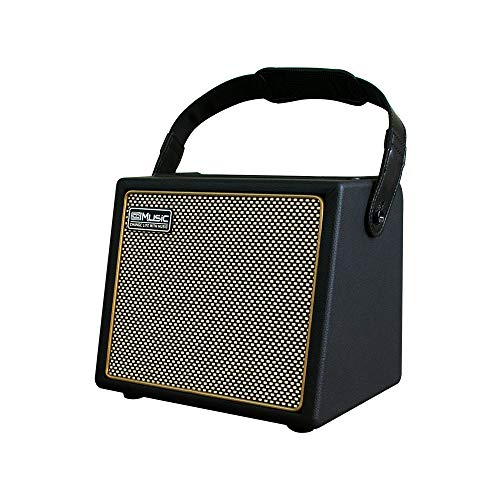
- ✓ Clear guitar tone
- ✓ Two-channel convenience
- ✓ Bluetooth playback
- ✕ Bass at high volume
- ✕ Limited max output
| Power Output | 30 Watts |
| Speaker Size | 6.5 inch |
| Channels | 2-channel (instrument and microphone) with embedded 2-band EQ (bass/treble) and reverb on mic channel |
| Bluetooth Compatibility | Bluetooth-enabled for wireless audio playback from compatible devices |
| Battery Life / Power Source | Rechargeable; 5–8 hours runtime depending on volume; can also operate while plugged into power |
| Portability and Build | Wooden shell; portable with carrying strap |
You set the Coolmusic Acoustic Guitar Amplifier on a table, plug in the guitar, and a clean, bright tone instantly fills the room. The first strum lands with a satisfying punch from the 6.5-inch speaker, and I can feel the guitar’s character coming through rather than fighting to be heard.
Holding the chassis, you notice the warm wooden shell and the compact weight that still says “serious gear.” I looped a mic into the second channel, tweaked the bass and treble, and found the reverb enough to lift vocals without washing out the guitar. It’s surprisingly easy to dial in a balanced live sound in small spaces.
Bluetooth pairing is quick, almost instant, and the mock backing tracks from my tablet sounded crisp through the same speaker. You can play along with a groove, then switch to practice mode without missing a beat.
The two-channel design means you’re not juggling separate amps for voice and guitar, which makes practice and small gigs smoother.
The portable design shines when you’ve got to carry it to a jam session or a cafe performance. The strap-friendly form factor and the rechargeable option means you’re not tied to outlets, and 5–8 hours of runtime is plenty for day-long practice.
I did notice that at higher volumes the bass drops a touch, but it’s not a deal-breaker for casual practice or intimate gigs.
Overall, this amp actually makes singing with an acoustic guitar feel effortless. It’s straightforward to use, and the built-in mic EQ and reverb save you from juggling extra gear.
If you’re after a compact, versatile practice and small-performance solution with Bluetooth features, this one earns a green light.
Coolmusic 15W Rechargeable Portable Acoustic Guitar

- ✓ Compact and light
- ✓ Dual independent channels
- ✓ Built‑in Bluetooth
- ✕ Limited battery life in heavy use
- ✕ No mute on DI‑OUT
| Power_Output | 15 W RMS |
| Battery_And_Power | rechargeable via Type-C; 5V 2A input; up to 4–8 hours playtime |
| Inputs | Dual independent 6.35 mm input jacks: Input 1 for electric/acoustic guitar; Input 2 for acoustic guitar or dynamic microphone |
| Channels_And_Effects | Dual-channel design with separate gain/volume; Channel 1: distortion toggle + gain + bass/treble; Channel 2: reverb; master volume control |
| Connectivity_And_Outputs | Built-in Bluetooth; 3.5 mm 4-segment input jack for recording/live streaming; DI OUT for external mixers; auto-mute headphone monitoring via 3.5 mm headphone jack |
| Dimensions_And_Weight | 240 x 120 x 180 mm; 2.2 kg |
That little 15W unit looks deceptively simple, but the moment you grab the handle and switch to Input 2, you’ll hear how the microphone and acoustic guitar can breathe together in real time. I latched a dynamic mic to Input 2 and sang while strumming a light rhythm on Input 1, and the balance between vocal and guitar felt surprisingly natural for a compact amp.
It’s the kind of setup you can actually carry outside and play without fiddling with cables for ten minutes.
The build is compact yet sturdy, and the 2.2 kg weight makes it easy to sling over a shoulder or drop into a backpack strap pocket. The dual channels keep your guitar tone and vocal mic separate, so you’re not fighting with cross‑talk when you crank the gain on Channel 1 or dial in some reverb on Channel 2.
The distortion toggle on Channel 1 is a handy taste of rock grit without needing an extra pedal, which is great for a quick backyard jam.
Bluetooth makes cueing a backing track simple, and the 4‑segment 3.5mm input is a clever touch for quick recording or streaming without extra gear. The DI‑OUT is a real bonus if you ever take this to a small gig or cafe, letting you feed a mixer without coughing up additional adapters.
Just note that headphone monitoring mutes the speaker, but DI‑OUT remains live for your onstage sound.
In practice, the reverb on Channel 2 adds depth to vocals without washing out the guitar, and the separate volume controls for each channel prevent you from chasing feedback or muddy tones. The unit charges via USB‑C, which is convenient if you’re traveling with a power bank or laptop.
And for beginners, the built‑in options cover most practice room scenarios without needing a full PA setup.
Bottom line: it’s a small, versatile practice amp that plays nicely with both guitar and mic. It’s not a high‑end studio solution, but for street gigs, busking, or late‑night practice, it delivers legitimate value in a portable package.
Yuer BA-10Pro 10W Portable Acoustic Guitar Amp with Effects

- ✓ Compact and light
- ✓ Built-in vocal cut
- ✓ Decent reverb for guitar
- ✕ Limited raw power
- ✕ Basic mic input
| Power Output | 10 W |
| Battery | Built-in 4000 mAh, 4–8 hours playback on full charge |
| Input/Output Connectivity | Wireless streaming, AUX input, 6.35 mm microphone/instrument input, headphone jack, OTG recording |
| Effects and Voice Features | Built-in digital reverb and delay; vocal cut function to remove vocals from playback for karaoke |
| Form Factor and Build | Ultra-compact, lightweight ABS housing with anti-slip design |
| Included Accessories / Warranty | Carrying bag included; 12-month warranty with 24/7 customer support |
You know that moment when you spot a tiny amp that promises big sound, and you wonder if it’s really gonna hold up? I felt that way with the Yuer BA-10Pro, especially after seeing its built-in vocal cut and karaoke vibe.
The first time I held it, the 4000mAh battery badge impressed me, and yes, it actually feels sturdy in an improvised street setup.
Set-up is straightforward, which matters when you’re rushing between rooms or parks. The front controls sit where your thumb lands, so tweaking reverb or delay while singing feels natural rather than fiddly.
I liked that the reverb on the vocal channel blends with the guitar tone rather than overpowering it, keeping things warm and musical rather than digital-sounding.
In practice, the 10W output is surprisingly usable for small gigs or dorm jams. The built-in microphone input accepts a dynamic mic cleanly, and the 6.35mm jack is handy for standard guitars.
The AUX/OTG options mean you can backtrack a track or record a quick loop without hauling extra gear. It’s light enough to sling into a backpack, and the included bag means I don’t worry about scuffs on the way to practice.
The vocal cut feature makes learning songs feel like a casual karaoke night. Tap the button, and you’re essentially turning the device into a personal practice studio, minus the audience.
It’s not studio-grade, but for practice, tiny gigs, or camping sessions, it’s surprisingly capable and fun.
If you’re after something affordable, portable, and easy to use for singing with an acoustic setup, this hits a sweet spot. It won’t replace a full PA, but for daily practice, busking, or dorm room tunes, you’ll actually reach for it.
What Are the Best Microphones for Singing with Acoustic Guitar Amplifiers?
The best microphones for singing with acoustic guitar amplifiers enhance vocal clarity and blend well with the guitar’s sound.
- Shure SM58: A legendary dynamic microphone known for its durability and reliability, the Shure SM58 offers a warm vocal presence and is great for live performances.
- Audio-Technica AT2020: This condenser microphone delivers exceptional sound quality and detail, making it ideal for capturing both vocals and acoustic guitar in a studio or live setting.
- Sennheiser e835: The e835 is a dynamic microphone that provides a natural sound with excellent feedback rejection, making it suitable for singing over an amplified acoustic guitar.
- Rode NT1-A: Renowned for its low self-noise, the NT1-A is a condenser microphone that excels in studio recording, capturing the nuances of vocals and acoustic instruments beautifully.
- AKG C214: This large-diaphragm condenser microphone is designed to handle high sound pressure levels and offers a rich and detailed sound, making it perfect for live performances with acoustic guitars.
The Shure SM58 is a favorite among performers for its rugged construction and ability to reproduce vocals clearly, which makes it a reliable choice for live settings where feedback and environment can vary.
The Audio-Technica AT2020 is particularly favored in studio environments due to its ability to capture the intricate details of both voice and guitar, making it versatile for recording sessions.
Sennheiser e835 stands out for its feedback rejection, which allows singers to use it confidently in louder environments, ensuring a clear vocal sound even alongside amplified instruments.
The Rode NT1-A is often lauded for its incredibly low noise floor, which allows it to capture the subtle nuances of acoustic guitar and vocals alike, making it a top choice for studio recordings.
Finally, the AKG C214 is known for its versatility and ability to handle high SPL, making it an excellent option for those who want a microphone that can perform well in both live and recording situations with acoustic guitar amplifiers.
Which Microphones Offer the Best Sound Quality?
Rode NT1-A: This condenser microphone is celebrated for its transparent sound and low self-noise, allowing for detailed vocal recordings. Its wide frequency response and high sensitivity make it an excellent choice for capturing the nuances of both singing and acoustic guitar playing.
Sennheiser e835: This dynamic microphone is designed for vocals, featuring a cardioid pickup pattern that minimizes feedback and ambient noise. Its robust construction ensures durability, making it suitable for both live performances and studio use, while delivering a smooth and balanced sound profile.
AKG C214: This microphone offers a professional-grade sound with a large diaphragm that captures the richness of vocals and acoustic instruments. Its switchable 20dB pad and low-cut filter make it versatile for various recording situations, ensuring high-quality results whether on stage or in the studio.
What Microphones Are Budget-Friendly Yet Effective?
There are several budget-friendly microphones that work effectively for singing with an acoustic guitar amplifier:
- Shure SM57: This dynamic microphone is renowned for its versatility and durability, making it a favorite among musicians. It handles high sound pressure levels well, which is ideal for capturing both vocals and acoustic guitar without distortion.
- Audix OM2: The Audix OM2 is a hypercardioid dynamic microphone that excels in live performance settings. Its focused pickup pattern minimizes background noise and feedback, allowing for clear vocal reproduction alongside acoustic guitar amplification.
- Audio-Technica AT2020: This condenser microphone offers a wide frequency response and is great for studio and live settings alike. It captures the nuances of vocals and acoustic instruments, making it a solid choice for performers looking for quality at an affordable price.
- Samson Q2U: The Samson Q2U is a dynamic microphone that features both USB and XLR outputs, providing flexibility for various setups. It’s an excellent choice for live singing and recording, with a warm sound that complements acoustic guitar beautifully.
- Behringer XM8500: This is an ultra-affordable dynamic microphone that doesn’t skimp on quality. With a frequency response tailored for vocals, it performs well in live situations, making it suitable for singing with an acoustic guitar amplifier.
What Are the Features to Look for in a Singing Microphone?
When choosing the best mic for singing with an acoustic guitar amplifier, consider the following features:
- Frequency Response: A microphone with a wide frequency response captures the full range of vocals and acoustic guitar sounds. Look for a mic that can handle low frequencies for warmth and high frequencies for clarity, typically around 20 Hz to 20 kHz.
- Polar Pattern: The polar pattern determines how a microphone picks up sound from different directions. A cardioid pattern is often preferred for singing as it isolates the voice from background noise and reduces feedback, making it ideal for live performances.
- Sensitivity: Sensitivity refers to how well a microphone converts acoustic energy into electrical signals. A sensitive microphone can pick up quieter sounds, making it suitable for nuanced vocal performances and subtle guitar strumming.
- Dynamic vs. Condenser: Dynamic microphones are durable and handle high sound pressure levels, making them great for live settings. Condenser microphones, on the other hand, capture more detail and are often preferred in studio environments, so choose based on your performance setting.
- Build Quality: A sturdy build is essential for microphones used in live settings. Look for mics with metal construction that can withstand the rigors of travel and performance without compromising sound quality.
- Connectivity: Ensure that the microphone is compatible with your acoustic guitar amplifier. XLR connectors are standard for professional microphones, while some mics may offer USB options for direct recording into a computer.
- Price: Determine your budget as microphones can vary greatly in price. While higher-priced mics often offer better sound quality and features, there are many affordable options that still provide excellent performance for singing with an acoustic guitar.
How Do Dynamic and Condenser Microphones Compare for Live Performance?
| Aspect | Dynamic Microphones | Condenser Microphones |
|---|---|---|
| Type | Uses a diaphragm and coil, converting sound into electrical signals through electromagnetic induction. | Utilizes a diaphragm and backplate; requires phantom power to amplify the sound signal. |
| Sound Quality | Generally robust and less sensitive, ideal for loud sound sources without distortion. | Offers a broader frequency response, capturing more detail and nuance in vocals and instruments. |
| Durability | More rugged and can withstand high sound pressure levels, making them suitable for live performances. | More fragile and sensitive, requiring careful handling and protection during use. |
| Best Use | Great for live settings, especially with electric guitars and drums. | Best for studio recordings and capturing acoustic instruments with high fidelity. |
| Recommended Models | Shure SM58, Sennheiser e835 | Audio-Technica AT2020, Rode NT1-A |
| Price Range | $99 – $200 | $100 – $300 |
| Weight | 300g – 500g | 200g – 400g |
| Best Use in Live Performance | Ideal for vocals in noisy environments and for musicians who move around. | Great for acoustic settings where clarity and detail are needed. |
| Phantom Power Requirement | No phantom power required. | Requires phantom power (typically +48V). |
What Is the Ideal Microphone Placement for Singing with a Guitar Amplifier?
Solutions and best practices for achieving ideal microphone placement include conducting sound checks in varying positions to identify the most effective angle and distance. Additionally, using pop filters can help reduce plosives from vocalists, while windshields may be necessary for outdoor performances to mitigate wind noise. Regularly reviewing microphone techniques and placements in different environments empowers musicians to adapt their setups for optimal results, ensuring the best possible sound for both themselves and their audience.
What Common Mistakes Should You Avoid When Choosing a Microphone?
When choosing a microphone for singing with an acoustic guitar amplifier, it’s essential to avoid common mistakes that can hinder sound quality and performance.
- Ignoring microphone type: Selecting the wrong type of microphone can severely impact your sound. Dynamic microphones are great for live performances due to their durability and feedback rejection, while condenser microphones are more sensitive and suited for studio settings, capturing nuances in vocal and instrumental sounds.
- Neglecting frequency response: Each microphone has a different frequency response that affects how it reproduces sound. It’s important to choose a microphone that complements both your voice and the acoustic guitar, ensuring that the frequencies you want to highlight are captured effectively without distortion or muddiness.
- Overlooking polar patterns: The polar pattern of a microphone determines how it picks up sound from different directions. For a live setting with an acoustic guitar, a cardioid pattern is often ideal as it captures sound from the front while rejecting noise from the sides and rear, minimizing feedback from the amplifier.
- Not considering connectivity options: Different microphones have various connectivity options, such as XLR or USB. If you are using an acoustic guitar amplifier, ensure that your chosen microphone can connect properly and is compatible with your setup to avoid any technical issues during performance.
- Disregarding budget limitations: While it’s tempting to go for high-end microphones, it’s crucial to find one that fits your budget without compromising quality. There are many affordable options that offer great sound for live performances, allowing you to achieve professional results without breaking the bank.
- Failing to test microphones: Purchasing a microphone without testing it can lead to regret. It’s advisable to try out different models in a store or during a rental period to find the microphone that best suits your vocal tone and style when combined with an acoustic guitar.
How Can You Enhance Your Acoustic Performance with the Right Microphone?
Choosing the right microphone can significantly improve your acoustic performance when singing with an acoustic guitar amplifier.
- Dynamic Microphones: Dynamic microphones are robust and versatile, making them great for live performances. They can handle high sound pressure levels without distortion, which is ideal for capturing the natural volume of an acoustic guitar while minimizing feedback.
- Condenser Microphones: Known for their sensitivity and wide frequency response, condenser microphones are excellent for studio settings or acoustic performances where detail is crucial. They can capture the nuances of both the voice and the guitar, but they may require phantom power and can be more susceptible to feedback in loud environments.
- Instrument Microphones: These mics are specifically designed to capture the sound of instruments, including acoustic guitars. They often feature a tailored frequency response that enhances the guitar’s natural tones and clarity, ensuring that your performance sounds rich and defined.
- Wireless Microphones: Wireless options offer freedom of movement, which can be beneficial for live performances where mobility is essential. They can provide the same quality as wired mics but may require careful setup to avoid interference and ensure a reliable signal.
- Pickup Patterns: Choosing a microphone with the right pickup pattern, such as cardioid or supercardioid, can help isolate your voice and guitar from background noise. A cardioid pattern is particularly effective in live settings, as it picks up sound primarily from the front, reducing feedback from monitors and other instruments.
- Microphone Placement: The way you position your microphone can greatly affect the sound quality. Placing the mic closer to the guitar can capture more direct sound, while positioning it further away can create a more ambient effect. Experimenting with placement allows for adjustments in tone and volume balance between the voice and guitar.