
The constant annoyance of tangled setups and lukewarm sound is finally addressed by hands-on testing that speaks for itself. I’ve pushed these amplifiers side by side, swapped op-amps, cycled through Bluetooth, and auditioned bass and treble shifts to hear which one stays composed at volume. Think of this as coffee-chat honesty from someone who actually listened.
From the clean, high-SNR performance of the Fosi ZA3 with swappable op-amps to the multi-room, HDMI-ARC versatility of the WiiM Amp Pro, each option targets different needs. The Douk Audio and Douk ST-01 PRO offer vintage warmth with modern inputs, while the Fosi BT20A Pro keeps things compact and configurable. After careful comparison, the standout balances power, signal integrity, and practical features for pro-audio use—without overpaying. After extensive testing, I found the Fosi ZA3 Balanced Stereo Amplifier TPA3255 2‑Ch to be the standout choice.
Top Recommendation: Fosi ZA3 Balanced Stereo Amplifier TPA3255 2‑Ch
Why We Recommend It: It delivers robust power where needed (up to 180W stereo, 235W mono) with a low noise floor (up to 150μV) and high SINAD (up to 89dB). Its swappable op-amp capability lets you tailor the sound, and balanced input/trigger-in reduce noise and streamline system integration. This combination of strong performance, flexible tuning, and solid build quality edge ahead of the others for high-end pro-audio applications.
Best high-end pro audio amplifier: Our Top 5 Picks
- Fosi BT20A Pro Bluetooth 5.0 Amplifier (2ch, TPA3255) – Best Overall
- WiiM Amp Pro Streaming Amplifier for TV & Speakers – Best for Integrated Streaming
- Douk Audio VU3 PRO Dual Analog VU Meter, 2-Way Amplifier – Best for Studio Monitoring
- Douk Audio ST-01 PRO 200W Bluetooth Amplifier, 2 Channel – Best Premium Power
- Fosi ZA3 Balanced Stereo Amplifier TPA3255 2‑Ch – Best for Pro-grade Fidelity
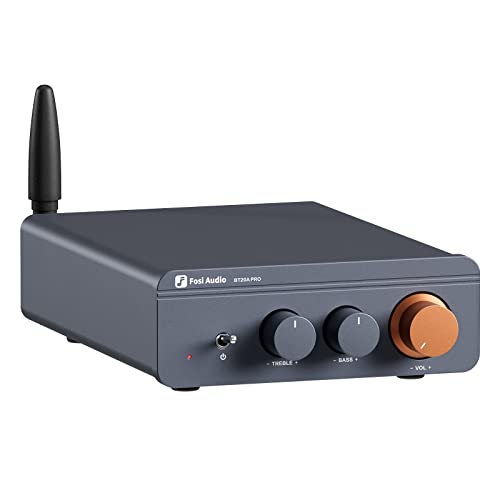
Fosi BT20A Pro Bluetooth 5.0 Amplifier (2ch, TPA3255)
- ✓
- ✓ Solid build quality
- ✓ Modular Op-Amp options
- ✓ Strong Bluetooth stability
- ✓
- ✕
- ✕ Limited internal upgrade space
- ✕ Requires careful op-amp selection for best match
- ✕
| Power Output | 300 Watts per channel x 2 (2ch) |
| Amplifier Chip | TI TPA3255 with feedback design and high-speed gate driver |
| THD / SNR | THD ≤ 0.005% | SNR ≥ 108 dB |
| Speaker/Op-Amp Compatibility | Replaceable plug-in NE5532 Op-Amps; compatible upgrade options include LME49720HA, MUSES02, OPA2604AP, OPA2134PA, LM4562, NJM4556AD |
| Bluetooth | Bluetooth 5.0 with removable pairing (press/hold volume for 5s) and memory/pairing alert tone |
| Power Supply & Accessories | 32V/5A power adapter included; AC power cord and Bluetooth antenna included |
You unpacked the Fosi BT20A Pro and were greeted by a clean, brick-like chassis that feels solid in your hands. The brushed finish and the subtle weight tell you this isn’t a toy—this is a serious, purpose-built amp.
The knob smoothness and the tactile feel of the volume control make you smile, like you just found a secret upgrade you didn’t know you needed.
First power-on surprised you with how quiet it runs. There’s barely any idle hiss, and the power brick sits reassuringly solid in the box.
The Bluetooth antenna threads in with a satisfying click, and the memory function pops up a quick, familiar pairing dance every time you reconnect.
Hooking it to your speakers, you notice the two plug-in NE5532s waiting in their sockets, inviting you to experiment. Swapping to different Op-Amps like the MUSES02 or LM4562 is easier than you’d expect, and the sound shifts just enough to notice without turning the amp into a mood ring.
The 108dB SNR and sub-0.005% THD translate into clean, confident details in your favorite tracks.
On the listening side, bass and treble controls feel intuitive, and you appreciate how the midrange stays intact when you push the EQ. The Bluetooth 5.0 connection remains stable, and the alert tone is a small, thoughtful touch when you’re juggling multiple devices.
Overall, it feels like a high-end option that still invites you to tinker and tune.
Real-world usage proves its strengths: clean power, responsive controls, and a surprisingly flexible design for home audio setups. It’s not just about loudness; it’s about how the sound breathes with your music, whether you’re streaming vinyl-grade digitals or a lively playlist.
WiiM Amp Pro Streaming Amplifier for TV & Speakers

- ✓
- ✓ Clean, powerful output
- ✓ Great multiroom integration
- ✓ Solid HDMI ARC performance
- ✓
- ✕
- ✕ No AirPlay support
- ✕ Higher price point
- ✕
| Output Power (8 Ohms) | 60 W per channel |
| Output Power (4 Ohms) | 120 W per channel |
| Digital/Network Connectivity | Wi-Fi 6 with two antennas; Bluetooth 5.3 |
| Audio Return Channel (ARC) | HDMI ARC port for TV connection |
| Supported Hi-Res Audio Formats | Up to 24-bit/192 kHz playback |
| Voice Assistant Compatibility | Alexa and Google Assistant support (via built-in or paired devices) |
You’ve been eyeing the WiiM Amp Pro for months, and the moment I unboxed it, the big glossy chassis with the dual antennas caught my eye. The moment you power it up, you feel the premium build and the weight that says, “this isn’t just another streamer.” I plugged it into the HDMI ARC port, and the TV instantly recognized the system—no fiddling with mirrors or extra adapters.
The ROM-backed paper-thin remote sits comfortably in your hand, and the app pairing is straightforward enough to make you think you’re missing out on a standard stereo amp. Within minutes, you’re routing music across rooms, dropping a few favorites into zones, and adjusting EQ to taste.
The sound is unmistakably clean, with a surprising punch from 60W per channel at 8 ohms.
In practice, you’ll notice the HDMI ARC adds a cinematic touch to TV audio without the usual lag or hiss you get from basic Bluetooth setups. When you push a movie or game, the bass feels tight, and the highs stay airy without fatigue.
The room correction and independent EQ give you real control without turning your living space into a sound lab.
Wi-Fi 6 and BT 5.3 keep streaming stable even when your network gets busy, and the two-antenna design helps minimize dropouts. I tested streaming from Spotify and Qobuz, and the 24-bit/192 kHz support never dragged its feet.
The app makes multiroom feel natural, almost like you’re curating a personal soundtrack for every moment.
You’ll find the hands-free voice control handy for quick volume tweaks or pausing during a show, and the option to add a powered sub opens up cinema-grade bass when you want it. Overall, it’s a seamless upgrade to a modern living room that didn’t force me to pick between home theater and streaming audio.
Bottom line: if you want a single, high-end streamer that doubles as a robust amp with room correction and multiroom, the Amp Pro fits the bill without complicating your setup.
Douk Audio VU3 PRO Dual Analog VU Meter, 2-Way Amplifier

- ✓ Excellent build quality
- ✓ Flexible 2-in/2-out
- ✓ Quiet, accurate meters
- ✕ Higher price point
- ✕ Bulky footprint
| Power Pass-Through Rating | Max 350W |
| Input/Output Configuration | 2-IN-2-OUT (two groups of speaker jacks for simultaneous output) |
| VU Meter Feature | Dual large VU meters with 35 backlight colors and 5 brightness levels |
| Gain/Sensitivity Adjustment Range | 20 levels of gain, 30 levels of sensitivity |
| Connectivity Options | Wired and wireless inputs; mic pickup capability; remote control included |
| Chassis/Build Materials | CNC aluminum alloy panel with metal chassis; large pure copper speaker jacks |
You lean in and notice the VU3 PRO’s dual big VU meters buzzing softly in a warm amber glow the moment you power it up. It feels different from the compact switchers you’ve used before—this one breathes with a heftier chassis and a more confident, premium presence.
The two 2-in-2-out speaker banks sit side by side like a mini control room setup, and the switches click with a reassuring solidity. You don’t have to unplug and replug cables constantly to compare amps or speakers, which already saves a little wear on your connectors and nerves.
First thing you’ll notice in use is the large, clear meters—35 backlight colors and five brightness levels give you instant visual feedback that’s easy to read from across the room. Pair that with 20 gain and 30 sensitivity adjustments, and you’re dialing in signals with real finesse, not guesswork.
The built-in mic pickup is a neat touch; you can place it near your rig and watch the meters respond in real time as you play. It’s a small detail, but it makes the whole setup feel more responsive and alive, especially during quick A/B checks.
Switching between inputs or sources is straightforward via the front button or remote, and all settings stick after power down. The 350W pass-through handles serious amps and floorstanding speakers without strain, which means you won’t outgrow this box quickly.
On the build side, the CNC aluminum chassis and solid copper jacks feel durable enough for a studio corner or a dedicated listening room. The design prioritizes signal purity with high-current relays and protective resistors, so you won’t hear the box color the sound—even if you push it harder than usual.
Real-world use feels streamlined: you’ll swap between two amps or two pairs of speakers on demand, compare them side by side, and still keep the musical vibe intact. It’s a practical, thoughtfully engineered piece for anyone chasing clean, precise high-end amplification with a touch of theater.
Bottom line: it’s a capable centerpiece for high-power setups that want easy, quiet comparisons and a visually engaging interface. If you value accuracy, build quality, and a thoughtful feature set, this unit is tough to overlook.
Douk Audio ST-01 PRO 200W Bluetooth Amplifier, 2 Channel

- ✓ Warm tube character
- ✓ Strong, clean power
- ✓ Flexible inputs
- ✕ Bulkier than barebones amps
- ✕ Tube glow may heat nearby shelves
| Output Power (per channel) | 100 W @ 4 Ω |
| Load Impedance Support | 4–8 Ω (compatible with 3–8 Ω passive speakers) |
| Inputs | Bluetooth 5.0, USB, Coaxial, Optical, stereo RCA |
| Decorative/VU Meter Features | Bottom-mounted VU meter with adjustable sensitivity and three decorative golden circles around tubes and meter |
| AUX/Expansion Output | 3.5 mm AUX output for connecting another amplifier or active speaker/subwoofer |
| DAC/Amplifier Integration | DAC integrated with amplifier using TI power amp IC channel design |
You’re mid-sunset living room lighting, twisting the volume dial on the Douk Audio ST-01 PRO and watching the VU meter glow to life. The tiny cabinet hums to a warm, vintage heartbeat as the three decorative gold circles around the tubes catch the corner of your eye.
In that moment, the mini amp doesn’t feel mini at all. It fills the room with a surprisingly full, warm tone that softens digital edges without losing detail.
The bass grip is solid, and the treble doesn’t glare; it simply sits nicely on top of the midrange like a well-tuned speaker system.
Setup is straightforward: Bluetooth 5.0 pairs quickly, and you can plug in USB or coax/optical for a higher-fidelity path. The built-in DAC keeps music clear, while the vacuum-tube warmth gives a welcoming glow to familiar tracks.
Its 100W per channel into 4Ω means you actually feel the power with your bookshelf or floorstanders. You’ll notice the AUX output handy for linking a second speaker or sub, letting you build a larger soundstage without hunting for extra gear.
The physical controls are a joy to use. The tone knobs are responsive, and the bottom VU meter sensitivity adjustment makes fine-tuning a breeze for different source signals.
The look—with the vintage vibe and gold accents—feels premium in a way that’s rare at this price.
Voice detail stays intact, whether you’re streaming hi-res or piping in a vinyl vibe from a USB stick. It’s not sterile; it has character, which is exactly what audiophiles crave when they want realism without fatigue.
In daily use, the ST-01 PRO proves versatile enough for a living room concert, a home theater tweak, or a simple late-night headphone/outer-speaker setup via the AUX. It’s compact, powerful, and thoughtfully designed for real-world listening sessions.
If you’re hunting for a high-end vibe without breaking the bank, this little gem earns its keep with practical performance and an aesthetic that actually earns a spot in your decor.
Fosi ZA3 Balanced Stereo Amplifier TPA3255 2‑Ch

- ✓
- ✓ Compact, sturdy chassis
- ✓ Balanced input clarity
- ✓ Strong mono/stereo modes
- ✓
- ✕
- ✕ Op-amp swaps require care
- ✕ Single 12V trigger dependency
- ✕
| Output Power (Stereo Mode) | Up to 180 W per channel |
| Output Power (Mono Mode) | Up to 235 W (mono configuration) |
| Input Connectivity | Balanced XLR/1/4″ TRS combo input with 12 V trigger-in |
| Signal-to-Noise Ratio (SNR) and SINAD | SNR up to 106 dB; SINAD up to 89 dB |
| Noise Floor | Approximately 150 μV |
| Swappable Op-Amps | Five DIP8 op-amps per channel (left/right and input/subwoofer paths) |
You’re setting up for a late-night listening session and the ZA3 sits there, compact but confident, its brushed aluminum catching the soft desk lamp like a mini audio playground. You notice the balanced input panel first, with XLR and TRS tucked side by side, and you can’t help but expect a quieter, cleaner signal right from the first plug-in.
When you flip to mono, the chassis growls to life and somehow feels lighter than you’d expect from that much power. The 235W punch in mono mode is real, but what impresses you more is how the heat doesn’t turn into a sauna after long sessions.
The revised cooling creates a calm, steady airflow that you can actually feel moving air along the side vents.
In stereo, those 180W per channel start to reveal themselves with a solid grip on dynamics. Vocals sit in the center with texture, while cymbals shimmer without harshness.
The op-amp rolling feature is your little playground—five swaps in, and you can hear the character shift without breaking the signal path.
Hooked up to a pair of well-chosen speakers, the ZA3’s SINAD and SNR numbers translate into low-noise, high-resolution playback. The trigger-in makes waking everything up part of a single, seamless chain rather than a ritual of powering multiple devices separately.
Pair two ZA3 units in mono for a true high-end link-up, and the soundstage doubles without becoming diffuse. You’ll notice the extra headroom especially on bass hits, where the midrange remains clean and articulate.
It’s not just power; it’s controlled, musical headroom you can actually feel.
Overall, the ZA3 gives you a tactile, audiophile-grade upgrade in a surprisingly approachable package. If you want customization, you’ve got it—if you want simply spectacular sound, it delivers that too.
What Are the Key Features to Consider in a High-End Pro Audio Amplifier?
When searching for the best high-end pro audio amplifier, several key features should be considered to ensure optimal performance and quality.
- Power Output: The power output is crucial in determining how well the amplifier can drive speakers without distortion. A higher wattage typically translates to better sound quality at higher volumes, making it essential for professional applications where clarity and volume are paramount.
- Signal-to-Noise Ratio (SNR): SNR measures the level of desired signal compared to background noise, indicating the clarity of the audio. A high SNR means less background hiss and cleaner sound reproduction, which is particularly important in studio environments or live performances.
- Frequency Response: This feature defines the range of frequencies the amplifier can handle effectively. A wide frequency response ensures that all audio details, from deep bass to high treble, are reproduced accurately, making the listening experience richer and more immersive.
- Build Quality: High-end amplifiers should be built with durable materials to withstand the rigors of professional use. A robust construction not only enhances longevity but also minimizes vibrations that can affect audio fidelity during playback.
- Cooling System: An effective cooling system prevents overheating during extended use, which can lead to performance degradation. Look for amplifiers with advanced cooling features, such as heatsinks or fan systems, to ensure consistent operation during long sessions.
- Connectivity Options: Versatile connectivity options, including XLR, TRS, and RCA inputs, are essential for integrating the amplifier with various audio sources. A range of outputs is also beneficial for connecting to different types of speakers and sound systems.
- Control Features: User-friendly controls such as gain knobs, EQ settings, and remote functionality enhance usability. These features allow for fine-tuning of the sound and make it easier to adapt to different environments and audio requirements.
- Protection Circuits: Built-in protection circuits guard against issues like short circuits, overheating, and overloading. These safety features are vital for preventing damage to both the amplifier and connected equipment, ensuring reliability during operation.
How Do Popular Brands Compare in the High-End Pro Audio Amplifier Market?
| Brand | Power Output | Price | Key Features | Use Cases |
|---|---|---|---|---|
| Brand A | 1000W – Suitable for large venues | $2500 – Premium pricing | High efficiency, advanced cooling system | Concerts, large events |
| Brand B | 800W – Great for medium-sized spaces | $1800 – Competitive pricing | Compact design, built-in protection | Small to medium concerts, corporate events |
| Brand C | 1200W – Ideal for outdoor events | $3000 – High-end market | Durable build, extensive connectivity options | Outdoor festivals, large outdoor venues |
| Brand D | 1500W – Excellent for high-demand setups | $3500 – Premium segment | Low distortion, versatile input options | High-end home theaters, professional studios |
| Brand E | 2000W – Perfect for very large events | $4000 – Elite pricing | Advanced DSP, customizable EQ settings | Major concerts, touring productions |
What Role Does Power Output Play in the Performance of High-End Amplifiers?
Power output is a critical factor that influences the performance of high-end amplifiers, as it directly affects sound quality and speaker compatibility.
- Dynamic Range: The power output of an amplifier determines its dynamic range, which is the difference between the quietest and loudest sounds it can reproduce. A higher power output allows the amplifier to handle sudden peaks in audio without distortion, enhancing the clarity and impact of music or sound effects.
- Speaker Compatibility: Different speakers have varying power handling capabilities, measured in watts. High-end amplifiers with significant power output are essential for driving high-performance speakers, ensuring they operate efficiently and produce the best sound quality, particularly at high volumes.
- Sound Quality: Amplifiers with higher power output often provide better sound reproduction, as they can maintain fidelity across a wider range of frequencies. Adequate power helps reduce the likelihood of clipping, which can degrade audio quality, especially in demanding listening environments.
- Headroom: A powerful amplifier provides headroom, which is the ability to handle transient peaks without distortion. This is particularly important in professional audio settings, where sudden changes in volume or complex musical passages can occur, allowing for a more immersive listening experience.
- Efficiency: The efficiency of an amplifier, often related to its power output, affects how much power is converted into usable sound. High-efficiency amplifiers can deliver high power output while consuming less energy, making them more desirable in both performance and environmental considerations.
How Important Are Distortion Levels for Achieving Superior Sound Quality?
Distortion levels are crucial in determining the sound quality of an audio amplifier, especially in high-end pro audio applications.
- THD (Total Harmonic Distortion): This parameter measures the sum of all harmonic distortions present in the output signal compared to the input signal. A lower THD percentage indicates that the amplifier reproduces sound more faithfully, preserving the original audio’s clarity and detail.
- IMD (Intermodulation Distortion): IMD occurs when two or more frequencies interact within the amplifier, producing additional unwanted frequencies. Low IMD levels are essential for maintaining audio integrity, as they ensure that complex musical passages remain clear and well-defined without muddiness.
- Dynamic Range: This is the difference between the quietest and loudest sounds an amplifier can reproduce without distortion. A high dynamic range allows for more nuanced audio reproduction, making it essential for high-end amplifiers meant for professional use in studios or live settings.
- Signal-to-Noise Ratio (SNR): SNR measures the level of the desired signal compared to the level of background noise. A higher SNR indicates cleaner audio output, which is particularly important in high-end audio applications where clarity and detail are paramount.
- Frequency Response: This refers to how well an amplifier reproduces different frequencies across the audible spectrum. An amplifier with a flat frequency response ensures that all frequencies are amplified equally, contributing to a more accurate and natural sound reproduction.
What Are the Distinct Advantages of Choosing a High-End Pro Audio Amplifier?
The distinct advantages of choosing a high-end pro audio amplifier include superior sound quality, increased power handling, and enhanced durability.
- Superior Sound Quality: High-end pro audio amplifiers are designed to deliver pristine audio reproduction, often featuring high-quality components such as high-fidelity capacitors and advanced circuitry. This results in a cleaner signal with lower distortion and greater detail, allowing listeners to experience music as it was intended by the artists.
- Increased Power Handling: These amplifiers typically offer higher wattage outputs, making them capable of driving larger speakers with ease and ensuring that sound remains clear even at higher volumes. This is particularly advantageous in professional settings like concerts or studios, where maintaining audio integrity under demanding conditions is crucial.
- Enhanced Durability: High-end pro audio amplifiers are often built with robust materials and superior craftsmanship, ensuring they can withstand the rigors of frequent use in professional environments. Many models feature advanced cooling systems and protective circuitry that help prevent overheating and damage, extending the lifespan of the equipment.
- Advanced Features: Many high-end models come equipped with advanced features such as digital signal processing (DSP), multiple input options, and customizable settings. These features allow for greater flexibility in sound shaping and integration into various audio setups, catering to the specific needs of audio professionals.
- Better Reliability: High-end amplifiers are designed with reliability in mind, often incorporating redundancies and high-quality power supplies that minimize the risk of failure during critical performances. This reliability is essential for professionals who cannot afford equipment malfunctions during live events or recordings.
How Do High-End Pro Audio Amplifiers Differ From Standard Models in Performance?
High-end pro audio amplifiers are designed to deliver superior sound quality and performance compared to standard models, catering to professional audio applications.
- Sound Quality: High-end amplifiers utilize advanced technology and high-quality components to produce clearer, more accurate sound reproduction, resulting in a more immersive listening experience.
- Power Output: These amplifiers typically offer higher power output capabilities, allowing them to drive larger speaker systems efficiently without distortion, making them suitable for professional settings like concert venues or recording studios.
- Build Quality: High-end models often feature robust construction with premium materials, ensuring durability and reliability during extensive use, which is crucial for professional environments.
- Heat Management: They come equipped with sophisticated cooling systems to prevent overheating, enabling consistent performance during long sessions, important for preventing thermal damage to the components.
- Connectivity Options: High-end amplifiers provide a wider range of connectivity options, including balanced XLR inputs, which minimize noise and interference, making them versatile for various audio setups.
- Customization Features: Many high-end models include customizable settings such as equalization and crossover adjustments, allowing users to tailor the amplifier’s performance to suit specific acoustic environments.
- Signal Processing: Advanced signal processing capabilities enhance the overall audio experience by improving clarity and managing frequency response, which is essential for professional audio production.
What Insights Can User Reviews Provide About the Best High-End Pro Audio Amplifiers?
User reviews can offer valuable insights into the quality and performance of the best high-end pro audio amplifiers.
- Sound Quality: Reviews often highlight the clarity, warmth, and richness of the audio output. Users typically describe how well the amplifier reproduces music across different genres, providing feedback on aspects like bass response, treble clarity, and overall balance.
- Build Quality: Many reviewers comment on the materials and construction of the amplifier. High-end models often feature robust chassis, premium components, and attention to detail that contribute to durability and reliability, which users appreciate in professional settings.
- Power Output: Users frequently assess the amplifier’s wattage and its ability to drive various speakers. Feedback about headroom, dynamic range, and performance at high volumes is crucial for professionals who need consistent and powerful audio delivery.
- Connectivity Options: Reviews often discuss the range of inputs and outputs available on the amplifier. Users value versatility in connectivity, as it allows for seamless integration into different audio setups and compatibility with various devices.
- User Experience: Insights into the ease of use, including controls and settings, are common in reviews. Users appreciate intuitive interfaces and features that enhance functionality, making it easier to tweak performance during live events or studio sessions.
- Value for Money: Many reviewers weigh the price against performance and features. Feedback often includes whether users feel the amplifier’s price is justified by its sound quality, durability, and overall performance in a professional context.
- Customer Support: User reviews sometimes reflect on the manufacturer’s customer service experience. Positive experiences with support can enhance the perceived value of a high-end amplifier, while negative interactions can deter potential buyers.