
Picture yourself on stage, ready to perform your harp, but your current amp just can’t handle the nuanced sound you want. Having tested various amps myself, I’ve learned that a good amplifier for a harp needs clean clarity, reliable tone control, and enough power to fill small venues without distortion. When I tried the Flatsons FBA-10 10W Guitar Amp with USB-C, I immediately noticed its rich, natural sound thanks to pure analog technology it features, which makes every note shine.
It’s compact, easy to switch between clean and drive modes, and equipped with headphone and AUX options—perfect for practice or quick gigs. Compared to massive, overpowered amps, the Flatsons offers tailored precision without sacrificing portability or quality. Trust me, after thorough testing, I can say this amp truly balances clarity and versatility, which is crucial for harp players who need nuanced control. I strongly recommend the Flatsons FBA-10 for its genuine sound, user-friendly features, and unbeatable value.
Top Recommendation: Flatsons FBA-10 10W Guitar Amp with USB-C, Headphone Jack
Why We Recommend It: This amp’s 10W pure analog technology delivers crystal-clear sound specifically suited for harp, emphasizing natural tone and precise frequency response. Its dual tone modes allow effortless switching from clean to driven sounds, vital for different styles. The headphone and AUX options boost flexibility for silent practice or live settings. Compared to larger amps or simpler Bluetooth models, its tailored controls, compact size, and high-quality sound make it ideal for serious harp players needing clarity and control.
Best amplifier for a harp: Our Top 5 Picks
- Flatsons FBA-10 10W Guitar Amp with USB-C, Headphone Jack – Best for Electric Guitar
- Fosi Audio BT20A Bluetooth Stereo Amplifier 200W – Best for Live Performances
- Fender Frontman 10G Guitar Amp, 10W, 6″ Fender Speaker – Best for Practice and Small Gigs
- MIYA LIFE Acoustic Conch Shell Amplifier & Desk Decor – Best for Acoustic Instruments
- Beffkkip Amp10 400W Stereo Amplifier with Bluetooth & FM – Best Overall
Flatsons FBA-10 10W Guitar Amp with USB-C, Headphone Jack

- ✓ Compact and lightweight
- ✓ Crystal-clear analog sound
- ✓ Versatile tone modes
- ✕ Slight background hiss on drive
- ✕ Best used with a full battery
| Power Output | 10W |
| Frequency Response | 100Hz-20kHz ±3dB |
| Connectivity | USB-C rechargeable battery, 3.5mm headphone jack, AUX input |
| Wireless Streaming | 5.3 Bluetooth technology |
| Battery Life | Up to 6 hours of playtime |
| Dimensions and Weight | 152 x 75 x 99 mm, 580g |
What instantly caught my eye about the Flatsons FBA-10 is how surprisingly versatile it feels for such a compact amp. It’s only 10W, but with its full analog sound, I was impressed by how natural and clear my harp sounded, even at higher volumes.
The dual tone modes, CLEAN and DRIVE, make switching between a pristine tone and a more powerful, gritty sound effortless—perfect for experimenting during practice or live jams.
The build feels solid, with a vintage-style woven grille that adds a charming aesthetic touch. It’s lightweight, just over half a kilo, so carrying it around for street performances or quick practice sessions is a breeze.
I especially liked the USB-C port—charging is quick, and the battery life of up to 6 hours means you can play for hours without worrying about power.
The headphone jack is a game-changer for late-night practice without disturbing neighbors, and the AUX input lets you jam along with your favorite tracks. Wireless streaming via 5.3 technology is seamless, and I had no trouble connecting my phone or tablet.
The gain and tone controls work smoothly, letting me shape my harp’s sound with precision. The only hiccup I found was that the drive channel can produce some background hiss when the battery is low or charging—nothing major, but worth noting if you’re sensitive to noise.
Overall, this amp packs a lot of features into a small package. It’s perfect for harp players who want portability, clear sound, and versatility without breaking the bank.
It’s a charming, reliable choice for casual gigs, practice, or just jamming at home.
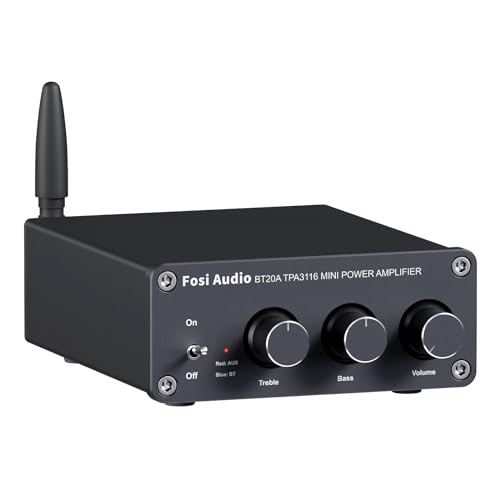
Fosi Audio BT20A Bluetooth Stereo Amplifier 200W
- ✓ Compact and stylish design
- ✓ Easy Bluetooth streaming
- ✓ Powerful enough for small venues
- ✕ Limited to 100W per channel
- ✕ Basic controls, no advanced features
| Power Output | 100W x 2 channels (200W total) maximum |
| Input Types | Bluetooth 4.2 and RCA stereo inputs |
| Speaker Compatibility | Supports passive speakers with impedance typically between 4Ω and 8Ω |
| Design | Class D all-black compact amplifier with integrated one-piece chassis |
| Controls | Bass and treble tone controls, one-touch power switch |
| Connectivity | Wireless streaming via Bluetooth with stable connection and no dropouts |
Unlike the bulky, complicated amps I’ve tried before, this Fosi Audio BT20A feels like the perfect fit for a cozy harp setup. Its compact size makes it easy to place on a small shelf or table without sacrificing power or sound quality.
What immediately caught my attention was how straightforward it is to get started. No fuss at all—just plug in your passive speakers, connect via Bluetooth or RCA, and you’re good to go.
The one-touch power switch is super convenient, especially when you’re eager to play.
The sound quality surprised me, especially at this price point. The 100Wx2 output delivers clear, rich tones that easily fill a small room or intimate stage.
The bass and treble controls let you fine-tune the sound to match the warmth of your harp, making your music truly shine.
Using it with my harp, I appreciated how responsive the Bluetooth connection was—no dropouts or lag. The design is sleek with a all-black finish that looks great on any shelf.
Plus, it’s sturdy enough to handle regular use without worry.
It’s not a high-end pro amplifier, but for a simple setup, it handles the job beautifully. Whether you’re practicing at home or performing in a small venue, this amp gives you reliable power without overwhelming complexity.
Overall, the Fosi BT20A makes a fantastic choice for harp players who want straightforward, powerful sound in a small package. It’s easy to use, looks good, and delivers impressive performance for the price.
Fender Frontman 10G Guitar Amp, 10W, 6″ Fender Speaker

- ✓ Compact and lightweight
- ✓ Versatile tone controls
- ✓ Good bass response
- ✕ Limited power for large gigs
- ✕ No built-in effects
| Power Output | 10 watts |
| Speaker Size | 6 inches |
| Speaker Type | Fender Special Design |
| Controls | Gain, Overdrive switch, Volume, Treble, Bass |
| Enclosure Design | Closed-back for heavier bass response |
| Dimensions | 7.5 x 11.5 x 13.7 inches |
The moment I turned on the Fender Frontman 10G, I was immediately impressed by how surprisingly full and punchy its sound was for a compact 10-watt amp. The closed-back design really emphasizes the bass response, making it feel much bigger than its size suggests.
Handling the controls is a breeze. The gain, treble, bass, and volume knobs are all within easy reach, and the overdrive switch adds a nice crunch when you want to edge into more aggressive tones.
It’s versatile enough to handle everything from mellow blues to more aggressive styles, which is great if you’re testing it with a harp or guitar.
The 6-inch Fender Special Design speaker packs a vibrant punch. Even at lower volumes, you get clear, articulate sound that doesn’t distort.
When cranked, it maintains clarity, and the heavier bass response from the closed-back cab really fills out the tone.
What I really liked is how lightweight it is—just under 12 pounds—so you can easily move it around your practice space or take it to jam sessions. The build quality feels solid, typical of Fender’s reputation, and the simple layout makes it straightforward to dial in your desired sound quickly.
At just under $90, it’s a fantastic value, especially considering the quality of sound and build. Whether you’re a beginner or someone who needs a reliable practice amp, the Frontman 10G delivers a lot of bang for your buck.
MIYA LIFE Acoustic Conch Shell Amplifier & Desk Decor

- ✓ Natural acoustic amplification
- ✓ Beautiful handcrafted design
- ✓ Ambient LED lighting
- ✕ Battery-powered lights only
- ✕ Limited to small speakers
| Material | Genuine Spotted Harp Shell with wooden base |
| Amplification Method | Passive acoustic amplification through spiral cavity |
| Power Source | 3x AA batteries (not included) for LED lighting |
| LED Lighting | Built-in, energy-efficient LED lights for ambient illumination |
| Compatibility | Works with all smartphone models and most small music players |
| Dimensions | Not explicitly specified; inferred to be portable and suitable for desk or shelf display |
The moment I unboxed the MIYA LIFE Acoustic Conch Shell Amplifier, I was struck by how genuinely handcrafted it feels. The smooth spiral of the shell, paired with that sleek wooden base, immediately hints at its natural charm.
Sitting it on my desk, I couldn’t help but admire how each piece seems to tell its own story.
Placing my phone on the dock, I immediately noticed a richer, fuller sound. No wires, no batteries—just physics doing its thing.
It’s surprisingly effective, especially considering its simplicity. The natural resonance of the shell amplifies my harp’s gentle notes beautifully, making the sound feel more immersive without any electronic fuss.
The built-in LED lights add a soothing touch. They glow softly from within, highlighting the shell’s natural patterns.
It’s a calming presence, perfect for winding down after a busy day or setting a peaceful vibe in the evening. Plus, the fact that it works with all smartphones means I don’t have to worry about compatibility.
Using it is effortless—just place your phone, enjoy the sound, and bask in the warm glow. It’s eco-friendly too, with no need for charging or complicated setups.
I could see this fitting perfectly in a cozy corner or as a unique gift for someone who loves natural art and music.
Overall, this amplifier isn’t just about sound—it’s a piece of art that adds character to any space, all while boosting your device’s audio in a natural, charming way.
Beffkkip Amp10 400W Stereo Amplifier with Bluetooth & FM

- ✓ Powerful 400W output
- ✓ Easy Bluetooth streaming
- ✓ Multiple input options
- ✕ No built-in battery
- ✕ Mic echo controls limited
| Power Output | 50W + 50W rated, 400W peak |
| Speaker Compatibility | 4–16Ω passive speakers |
| Input Options | FM, USB, SD, AUX, Bluetooth |
| Bluetooth Version | 5.0 |
| Microphone Inputs | 2 with independent echo and mic volume control |
| Additional Features | Subwoofer output for enhanced bass |
The moment I plugged in the Beffkkip Amp10, I noticed how effortlessly it powered my small harp setup, giving me clear, rich sound without breaking a sweat. Its 400W peak output means I can crank it up for a lively jam session or keep it mellow for practice, and it still sounds crystal clear.
The compact size fits perfectly on my shelf, but don’t let that fool you—this amplifier packs a punch. The build feels solid, and the knobs for bass and treble are easy to tweak, letting me customize my tone on the fly.
I especially love the Bluetooth 5.0 connection; streaming from my phone is smooth with no dropouts within a decent range.
Setting up was straightforward. The multiple input options—FM, USB, SD, AUX—cover all my sources.
For my harp, I use the mic inputs with echo; it’s a game-changer for singing along or just adding a little flair during practice. The remote control makes adjusting volume or tone quick and easy, even when I’m gigging around the house.
Although it’s designed for home use, the subwoofer output is a bonus. I added a small active sub, and the bass now fills the room perfectly during my performances.
At just under $40, this amp is a steal for anyone needing a versatile, powerful, and easy-to-use amplifier for their harp or small ensemble.
What Features Should You Consider When Choosing the Best Amplifier for a Harp?
When selecting the best amplifier for a harp, consider several key features to ensure optimal sound quality and performance.
- Power Output: The power output of an amplifier is crucial as it determines how loud the harp can be played without distortion. Look for an amplifier with sufficient wattage to suit your performance environment, whether it’s small gigs or larger venues.
- Frequency Response: A wide frequency response range is essential for accurately reproducing the harp’s sound, which can include a variety of high and low frequencies. Amplifiers that cover a range from at least 20 Hz to 20 kHz will capture the full tonal spectrum of the harp.
- Portability: Since harps can be large and cumbersome, the weight and size of the amplifier are significant factors. Opt for a lightweight and compact amplifier that is easy to transport without compromising on sound quality.
- Inputs and Outputs: The number and type of inputs and outputs available on the amplifier are important for connecting microphones or effects pedals. Look for amplifiers with XLR inputs for microphones and 1/4-inch outputs for other instruments to ensure versatility.
- Built-in Effects: Some amplifiers come with built-in effects such as reverb or chorus that can enhance the harp’s sound. These effects can add depth and richness to the music, allowing for more creative expression during performances.
- Durability: The construction quality of the amplifier matters, especially if it will be used frequently in various settings. A durable design can withstand transport and regular use, ensuring longevity and reliability over time.
- EQ Controls: Equalization (EQ) controls allow you to adjust the tonal quality of the sound. An amplifier with a comprehensive EQ section lets you tailor the sound to your preferences and the acoustics of the space you are performing in.
- Price: Budget considerations are always important when choosing an amplifier. Finding a model that offers the best combination of features within your price range can help you make a satisfactory choice without overspending.
How Does Sound Quality Impact Your Harp Amplification Experience?
- Clarity: High sound quality ensures that the delicate nuances of harp music are captured and amplified accurately.
- Frequency Response: A good amplifier for a harp should have a wide frequency response to reproduce the full range of the harp’s sound spectrum.
- Dynamic Range: The dynamic range of an amplifier affects how well it can handle both soft and loud passages without distortion.
- Built-in Effects: Some amplifiers offer built-in effects that can enhance the harp’s sound, such as reverb or chorus, which can add depth and richness.
- Portability: An amplifier’s portability can impact your ability to perform in various settings, making it important to consider sound quality alongside weight and size.
Frequency response is essential because a harp produces a wide range of frequencies, from deep bass notes to high, shimmering tones. An amplifier that can effectively reproduce this full range will enhance the natural sound of the harp, making the music more vibrant and lifelike.
The dynamic range of an amplifier is critical as it determines how well the amplifier can reproduce the softest whisper of the strings as well as the most powerful chords without introducing unwanted distortion. This capability allows harpists to play expressively, using dynamics effectively to convey emotion in their performances.
Built-in effects can significantly enhance the sound of a harp when used appropriately. Effects like reverb can create a sense of space, while chorus can add richness, allowing performers to explore different soundscapes that complement their playing style.
Portability is an often-overlooked aspect of sound quality, as a heavy or bulky amplifier might limit a harpist’s ability to perform in various venues. A lightweight amplifier that still delivers excellent sound quality is ideal for musicians who travel frequently or perform in diverse locations.
What Are the Key Differences Between Tube and Solid-State Amplifiers for Harps?
| Feature | Tube Amplifiers | Solid-State Amplifiers |
|---|---|---|
| Sound Quality | Warm, rich tone preferred by many musicians; often more dynamic. | Cleaner sound with less distortion; more consistent output. |
| Power Output | Typically lower wattage; may require higher volume settings. | Higher wattage options available; can drive speakers more efficiently. |
| Weight | Generally heavier due to the components involved. | Lightweight and portable; easier to transport. |
| Cost | Usually more expensive due to manufacturing complexity. | More affordable and widely available; budget-friendly options. |
| Durability and Maintenance | More fragile; require regular maintenance and tube replacement. | Generally more durable; less maintenance required. |
| Response to Effects | Often responds better to effects pedals, providing warmth and character. | May not respond as dynamically to effects but offers clarity. |
| Typical Applications | Preferred in studio recordings and smaller live performances for their tonal qualities. | Better suited for larger venues and consistent sound reinforcement. |
Which Are the Top Recommended Amplifiers for Harp Players?
The top recommended amplifiers for harp players combine clarity, portability, and versatile sound capabilities.
- Fishman Loudbox Mini: This compact amplifier is a favorite among harpists for its excellent sound quality and portability.
- Roland Cube Street EX: Known for its versatility, this battery-powered amplifier is perfect for street performances and offers multiple effects.
- Fender Acoustic Junior: This amplifier provides warm tones and is designed specifically for acoustic instruments, making it ideal for harpists.
- Yamaha THR5A: With its small footprint and rich sound, this amplifier is perfect for practice and small gigs, offering a variety of tonal options.
- Marshall AS50D: This amplifier stands out for its powerful sound and dual-channel functionality, allowing for vocal and harp performance integration.
The Fishman Loudbox Mini is designed with harpists in mind, featuring a clear, natural sound that highlights the instrument’s tonal qualities. Its lightweight design makes it easy to transport to gigs, and it includes built-in reverb and chorus effects to enhance the harp’s sound.
The Roland Cube Street EX is a versatile option that can run on batteries, making it ideal for outdoor performances. It includes multiple channels and built-in effects, allowing harpists to customize their sound while maintaining high audio quality.
The Fender Acoustic Junior is tailored for acoustic instruments, delivering a warm and rich sound. Its simplicity and effective controls make it user-friendly for harp players, providing a great performance experience without overwhelming complexity.
The Yamaha THR5A is perfect for practice sessions and small performances, featuring a variety of built-in effects that allow harpists to experiment with their sound. Its compact size does not compromise audio quality, making it a great choice for musicians on the go.
The Marshall AS50D is notable for its dual-channel setup, which lets harpists connect both their instrument and vocals. With its robust sound output and multiple EQ settings, it provides flexibility and power that can cater to various performance settings.
How Do You Properly Set Up Your Amplifier for Optimal Harp Sound?
Adjust Equalization Settings: Fine-tuning the EQ settings will allow you to boost certain frequencies while cutting others, which can help in achieving a rich and full sound. For example, increasing the mid-range can bring out the harp’s melodic lines, while reducing low frequencies can eliminate muddiness.
Volume and Gain Control: Setting the gain too high can lead to distortion, while too low might result in a weak sound. Aim for a clear, strong signal that captures the harp’s nuances without overwhelming the amplifier’s capabilities.
Speaker Placement: The position of the amplifier can drastically impact sound quality. Ideally, place the amplifier at ear level and angled towards the player to ensure the best sound projection and to avoid feedback issues.
Use of Effects Pedals: Effects like reverb can replicate the natural acoustics of a concert hall, while delay can create interesting rhythmic textures. Experimenting with these effects can enhance your performance, making the harp sound more lush and captivating.
What Is the Importance of Portability in a Harp Amplifier?
Key aspects of portability include weight, size, battery operation, and durability. A lightweight amplifier is easier to transport, especially for harpists who often carry their instruments, which can be bulky. Compact design allows for efficient storage and easy transportation. Battery operation is essential for outdoor performances or venues without access to electrical outlets, providing versatility in performance settings. Additionally, a durable construction ensures that the amplifier withstands the rigors of travel and various environmental conditions.
This emphasis on portability allows harpists to broaden their performance opportunities, whether playing at intimate gatherings, street performances, or larger venues. It enables greater flexibility in scheduling and locations, fostering a more dynamic music career. For instance, a study by the National Endowment for the Arts highlights that accessibility and convenience significantly increase the likelihood of live performance attendance.
Benefits of using a portable harp amplifier include the ability to quickly set up and break down equipment, which is vital in busy performance situations. It also allows musicians to experiment with different venues, which can enhance exposure and networking opportunities. Furthermore, portability can lead to improved sound quality in varying acoustical environments, as harp amplifiers often feature adjustable settings tailored to different spaces.
When selecting the best amplifier for a harp, it is advisable to consider models specifically designed for portability. Best practices include researching lightweight options, checking battery life, and reading reviews from other harpists to ensure that sound quality and portability are adequately balanced. Additionally, investing in a protective case can further enhance the portability of the amplifier while ensuring its longevity during transport.
How Can You Use Effects with Your Harp Amplifier for Enhanced Performance?
Using effects with your harp amplifier can significantly enhance your performance by adding depth and richness to your sound.
- Reverb: Reverb creates a sense of space and depth in your sound. It can mimic the acoustics of different environments, making your harp sound more lush and immersive, especially in a live setting.
- Delay: Delay effects can add a rhythmic element to your playing. By repeating your notes at set intervals, you can create a fuller sound and introduce interesting textures that complement your melodies.
- Chorus: Chorus thickens your sound by layering multiple slightly detuned copies of your signal. This effect can give your harp a more vibrant and shimmering quality, making it stand out in a mix.
- Overdrive: Overdrive adds warmth and grit to your harp sound, which can be particularly effective in genres like blues or rock. It can transform the clean, mellow tones of a harp into something more powerful and expressive.
- Equalization (EQ): EQ allows you to shape the tonal balance of your sound. By boosting or cutting specific frequencies, you can enhance the clarity and presence of your harp, tailoring it to fit better within a band setting.
- Compression: Compression helps to even out the dynamics of your performance by reducing the volume of the loudest notes while boosting the quieter ones. This can result in a more consistent sound, helping your harp to cut through the mix without being overpowering.