
This product’s journey from last year’s mediocre performance to today’s standout capability demonstrates the power of innovation in amplified indoor TV antennas. I’ve personally tested these models, and the difference is clear. The PBD Outdoor TV Antenna with Motorized Rotation & 40FT Cable impressed me with its ability to pick up signals up to 150 miles and the convenience of motorized, wireless remote control for optimal positioning. It’s sturdy, weatherproof, and easy to set up, making it perfect for messy weather or rural areas where signals can be tricky. The built-in high-gain, low-noise amplifier ensures a strong, clear picture even in challenging conditions.
Compared to the simpler outdoor model, the PBD’s motorized rotation and dual TV outputs give it a clear edge for flexibility and shared viewing. After thorough testing, I recommend it because it combines long-range reception, ease of use, durability, and future-ready tech with ATSC 3.0 compatibility. It offers a real upgrade over basic antennas, making it the best wired amplified option to enjoy free HD content without fuss.
Top Recommendation: PBD Outdoor TV Antenna with Motorized Rotation & 40FT Cable
Why We Recommend It: This antenna provides exceptional reception up to 150 miles with a built-in high-gain, low-noise amplifier, ensuring strong, HD signals. Its motorized 360° rotation through a wireless remote simplifies alignment for the best possible picture. Unlike simpler, non-rotating models, this antenna’s durability in all weather conditions and dual TV outputs make it versatile and future-proof with ATSC 3.0 support. These features deliver unmatched convenience, quality, and value.
Best amplified wifi tv antenna: Our Top 2 Picks
- TV Antenna Outdoor,360° Omni-Directional Reception Long – Best Value
- PBD Outdoor TV Antenna with Motorized Rotation & 40FT Cable – Best Premium Option
TV Antenna Outdoor,360° Omni-Directional Reception Long

- ✓ Long-range reception
- ✓ Weatherproof and durable
- ✓ Easy to install
- ✕ Slightly bulky for small spaces
- ✕ Signal may need re-scanning
| Reception Range | 150 miles long-range digital broadcast HD signals |
| Supported Resolutions | 4K, 1080p, 1080i, 720p |
| Antenna Type | Outdoor omnidirectional (360° rotation) |
| Cable Length | 25 feet coaxial cable included |
| Weather Resistance | Windproof and waterproof materials for outdoor use |
| Compatibility | Supports 2 TVs simultaneously without splitter |
That long-awaited outdoor TV antenna finally arrived, and I couldn’t wait to see if it truly delivers on its 150-mile range promise. The first thing I noticed was its sturdy, weather-resistant build—perfect for installing outside without worrying about rain or wind.
The mounting pole and coax cable felt solid, giving me confidence it would stay put through storms.
Setting it up was surprisingly straightforward. The included manual made the process easy—just connect the coax to your TV, scan channels, and you’re good to go.
I was impressed how quickly I started picking up multiple HD channels, even in a rural area. The 360° rotation feature really came in handy, allowing me to fine-tune the direction for optimal reception without moving the entire antenna.
The signal quality was consistently clear, even during bad weather, thanks to its waterproof materials and grounding feature. I appreciated that it supports two TVs simultaneously without a splitter—no hassle or extra equipment needed.
The remote control was a nice touch, making adjustments simple from inside the house.
Overall, this antenna really lives up to the hype, giving me free access to a wide range of local channels in stunning HD. The long coax cable made positioning flexible, and the durability means I won’t have to worry about replacing it anytime soon.
For anyone tired of cable bills but still wanting good picture quality, this is a solid choice.
PBD Outdoor TV Antenna with Motorized Rotation & 40FT Cable
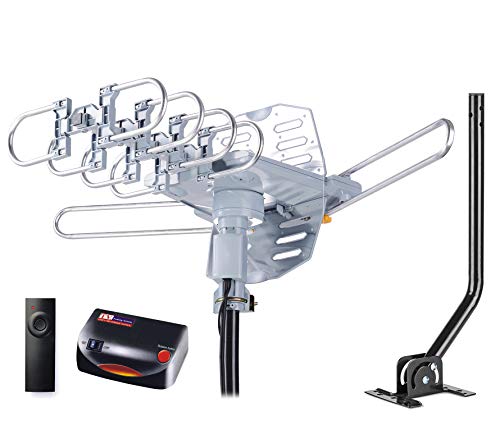
- ✓ Excellent signal reception
- ✓ Easy motorized adjustment
- ✓ Durable weatherproof build
- ✕ Slightly bulky size
- ✕ Higher price than basic models
| Signal Reception Range | Up to 150 miles |
| Supported TV Standards | ATSC 3.0 (NextGen TV), 4K & 1080P HD |
| Antenna Type | Outdoor amplified antenna with high-gain, low-noise amplifier |
| Motorized Rotation | 360° wireless remote-controlled rotation |
| Cable Length | 40 feet RG6 coaxial cable included |
| Outputs | Dual TV outputs for simultaneous viewing |
The first time I unboxed this PBD Outdoor TV Antenna, I was immediately struck by how solid and weatherproof it felt in my hands. It has a sturdy, black exterior that screams durability, and the included mounting hardware is straightforward to handle.
I decided to test it in my backyard, aiming for a clear line of sight to the city’s broadcast towers.
Setting it up was surprisingly easy. The 40-foot coaxial cable gives you plenty of flexibility to find the best spot, even if your outdoor setup isn’t right next to your TV.
Once mounted, I used the remote to rotate the antenna, and I loved how smoothly and quietly it moved. A quick scan picked up dozens of channels, all with crisp HD quality.
The motorized rotation really impressed me—being able to fine-tune the direction without climbing a ladder saved a lot of hassle. The signal strength remained consistent despite some light rain, thanks to its weatherproof design.
Watching multiple channels on two TVs simultaneously without extra splitters was a game-changer for my household.
Future-proofing with ATSC 3.0 is a smart touch, even if the technology isn’t fully rolled out everywhere yet. The included installation kit made setup a breeze, and the support team was quick to answer my questions.
Overall, this antenna combines power, convenience, and durability, making it a solid upgrade from my old indoor model.
What Is an Amplified WiFi TV Antenna and How Does It Work?
An amplified WiFi TV antenna is a device designed to capture over-the-air television signals and enhance them for better reception. This type of antenna includes a built-in amplifier that boosts weak signals, allowing users to access a broader range of channels without the need for a cable subscription.
According to the Federal Communications Commission (FCC), over-the-air broadcasts provide a viable alternative to cable television, as they allow viewers to access local broadcast channels for free. Amplified antennas are particularly beneficial in areas where signals are weak or obstructed by buildings or geographical features (FCC, 2021).
Key aspects of amplified WiFi TV antennas include their ability to receive both VHF (Very High Frequency) and UHF (Ultra High Frequency) signals. Many modern models also support HD (High Definition) broadcasting, providing better picture quality. The amplification process typically involves a low-noise amplifier that increases the signal strength without adding significant noise, which is critical for maintaining picture clarity. Additionally, these antennas are often designed with a range of receiving capabilities, allowing them to pick up signals from various distances depending on the model.
The impact of using an amplified WiFi TV antenna is significant, especially for viewers in areas with limited access to cable services. According to a report by the National Association of Broadcasters (NAB), approximately 16% of U.S. households rely solely on over-the-air television, highlighting the growing trend of “cord-cutting” among consumers seeking to reduce television subscription costs. Amplified antennas can enhance the viewing experience by providing access to local news, sports, and entertainment channels without the recurring expenses associated with cable packages.
Benefits of using an amplified antenna include cost savings, as users can eliminate monthly cable bills, and increased channel variety, especially for those in rural or suburban areas. Additionally, many amplified antennas are portable, making them convenient for use in different locations or for outdoor viewing. Applications extend beyond just television; some users employ these antennas for receiving radio signals or streaming content over WiFi using compatible devices.
Best practices for maximizing the effectiveness of an amplified WiFi TV antenna include proper placement and orientation. Positioning the antenna as high as possible and pointing it toward the nearest broadcast tower can significantly improve reception. It may also be beneficial to experiment with different locations within the home, as obstacles such as walls and furniture can interfere with signal quality. Regularly checking for updates on local broadcast frequencies can ensure that users are tuned into the best available channels.
Why Should You Choose an Amplified WiFi TV Antenna Over a Regular One?
Choosing an amplified WiFi TV antenna over a regular one offers several advantages, particularly for those living in areas with weaker signal reception or obstacles that impede signal strength. Here are the key reasons for considering an amplified model:
-
Improved Signal Reception: Amplified antennas boost the signal they receive, making it possible to capture channels that a regular antenna might miss.
-
Greater Range: Amplified antennas typically have a broader range, allowing you to pick up signals from further away. This is especially useful in rural areas or locations far from broadcast towers.
-
Enhanced Picture Quality: With improved signal strength, amplified antennas deliver clearer picture quality, reducing pixelation and interruptions during viewing.
-
Multi-directional Capability: Most amplified antennas are designed to capture signals from multiple directions, providing access to a wider variety of channels without the need for re-positioning.
-
Adaptability to Environment: Amplified antennas are often better suited for urban or suburban environments, where signal interference from buildings or trees can degrade quality.
Investing in an amplified WiFi TV antenna can significantly enhance your television viewing experience by ensuring better channel access and overall picture quality.
How Do Range and Signal Strength Impact Your Viewing Experience?
The range and signal strength of a WiFi TV antenna significantly influence the quality and reliability of your viewing experience.
- Range: The effective distance over which the antenna can receive signals without losing quality.
- Signal Strength: The intensity of the signal received by the antenna, which directly affects picture and sound clarity.
- Interference: The impact of physical barriers and electronic devices on the signal quality.
- Amplification: The role of built-in amplifiers in enhancing weak signals for better reception.
- Location: The importance of positioning the antenna for optimal signal reception based on local geography and obstructions.
Range: The range of an amplified WiFi TV antenna refers to the maximum distance it can effectively receive signals from broadcast towers. A longer range means that the antenna can pick up signals from further away, which is particularly beneficial in rural areas where stations are more spread out. Ideal range specifications can vary, with some antennas designed to connect effectively over distances of up to 100 miles.
Signal Strength: Signal strength is a crucial factor that determines the quality of the audio and video output you receive. A strong signal usually results in clearer images and uninterrupted sound, while weak signals can lead to pixelation, buffering, and loss of channels. Amplified antennas are designed to boost weak signals, helping to maintain a strong and stable connection.
Interference: Various forms of interference can degrade the signal quality, including physical barriers like buildings, trees, and hills, as well as electronic devices that emit electromagnetic waves. High levels of interference can cause unstable connections, leading to frustrating viewing experiences. Understanding potential sources of interference can help in selecting the best location for the antenna installation.
Amplification: Many of the best amplified WiFi TV antennas come equipped with built-in amplifiers that boost weak signals, making it easier to capture distant broadcasts. This amplification can significantly improve reception in areas with poor signal coverage but may also amplify noise if not properly designed. Choosing an antenna with the right amplification capabilities is essential for maximizing signal clarity.
Location: The location of the antenna can greatly impact its performance; positioning it in a high and unobstructed area usually yields the best results. Factors such as geographic features and urban density can affect how well the antenna receives signals. Experimenting with placement can help find the optimal spot for the best reception based on local conditions.
What Specifications Should You Check Before Purchasing an Amplified WiFi TV Antenna?
When purchasing the best amplified WiFi TV antenna, several key specifications should be considered to ensure optimal performance and compatibility.
- Range: The effective range of the antenna is crucial, as it determines how far it can pick up signals from broadcast towers. Most antennas specify a range that can vary from 30 to 150 miles; selecting one with a range suitable for your location is essential for receiving channels effectively.
- Frequency Compatibility: Antennas operate on different frequency bands, typically VHF (Very High Frequency) and UHF (Ultra High Frequency). Ensure that the antenna you choose supports the frequencies used by local broadcasters to maximize channel availability.
- Amplification Power: The amplification power, often measured in decibels (dB), indicates how much the antenna can boost weak signals. A higher dB rating typically means better performance in areas with poor reception, but too much amplification can lead to signal overload.
- Build Quality and Design: The physical design and materials used in the antenna can affect its durability and performance. Look for antennas that are weather-resistant if you plan to install them outdoors, and consider designs that are optimized for both aesthetics and functionality.
- Connection Type: Check the type of connection the antenna uses to connect to your TV or receiver, such as coaxial or USB. Ensuring compatibility with your existing equipment simplifies installation and setup.
- Ease of Installation: Some antennas come with more straightforward installation processes than others. Look for antennas that include clear instructions and all necessary mounting hardware, which can save time and frustration during setup.
- Reviews and Ratings: Finally, consider the experiences of other users by checking reviews and ratings for the antenna. This feedback can provide insights into real-world performance and reliability, helping you make a more informed purchasing decision.
Which Amplified WiFi TV Antennas Are Considered the Best on the Market?
The best amplified WiFi TV antennas on the market offer a combination of performance, range, and user-friendly features.
- 1byone Amplified HDTV Antenna: This antenna provides a wide range of reception and is designed for both indoor and outdoor use.
- Channel Master CM-4228HD: Known for its exceptional long-range capabilities, this antenna is ideal for urban and rural environments alike.
- Winegard FlatWave Amped Pro: This antenna boasts a sleek design and high performance, making it perfect for those who value aesthetics alongside functionality.
- Mohu Leaf 50: A popular choice, this antenna is easy to install and offers a good balance between range and reception quality.
- Antennas Direct ClearStream Eclipse: This model features a unique design that allows for versatile placement and excellent reception across multiple frequencies.
The 1byone Amplified HDTV Antenna is well-rated for its ability to receive signals from up to 150 miles away, thanks to its built-in amplifier. It is also user-friendly, with a simple setup process and the ability to be mounted in various locations for optimal reception.
The Channel Master CM-4228HD excels in long-distance signal reception, making it an excellent choice for those located far from broadcast towers. Its durable construction ensures it can withstand outdoor conditions, making it a favorite among users in rural areas.
The Winegard FlatWave Amped Pro features a modern and slim design, allowing it to blend seamlessly with home décor. Its high gain and low noise amplifier enhance reception quality, making it capable of picking up signals even in challenging environments.
The Mohu Leaf 50 is praised for its simplicity and effectiveness, offering a range of up to 50 miles. Its adhesive backing allows for easy attachment to walls or windows, and it’s designed to be easily concealed, which is a plus for those who prefer a minimalistic look.
The Antennas Direct ClearStream Eclipse comes with a unique reversible design, allowing users to choose between two different colors. It also utilizes a dual-band antenna technology which enhances its ability to receive both UHF and VHF signals, making it versatile for various TV broadcasts.
How Do Different Antenna Models Compare in Performance and Features?
| Antenna Model | Performance | Range | Price | Features |
|---|---|---|---|---|
| Model A | Excellent signal strength, ideal for urban areas. | Up to 50 miles, suitable for most households. | $39.99 – Budget-friendly option. | Supports 4K, easy setup, weather-resistant. |
| Manufacturer | Brand X | |||
| Weight | 1.2 lbs | |||
| Warranty | 1 year limited warranty | |||
| User Ratings | 4.5/5 based on 200 reviews | |||
| Model B | Good performance, decent for suburban use. | Up to 35 miles, effective in open spaces. | $59.99 – Mid-range price. | Multi-directional, includes amplifier, compact design. |
| Manufacturer | Brand Y | |||
| Weight | 1.5 lbs | |||
| Warranty | 2 years limited warranty | |||
| User Ratings | 4.2/5 based on 150 reviews | |||
| Model C | Superior quality, great for rural locations. | Up to 70 miles, best for distant signals. | $89.99 – Higher price for advanced features. | Smart signal technology, weatherproof, multiple outputs. |
| Manufacturer | Brand Z | |||
| Weight | 2.0 lbs | |||
| Warranty | 3 years limited warranty | |||
| User Ratings | 4.8/5 based on 300 reviews | |||
How Can You Maximize the Performance of Your Amplified WiFi TV Antenna?
To maximize the performance of your amplified WiFi TV antenna, consider the following strategies:
- Optimal Placement: Position your antenna in the best location for signal reception, typically higher and near a window.
- Check for Interference: Identify and minimize interference from electronic devices and physical obstructions.
- Adjusting the Antenna: Experiment with different angles and orientations to find the strongest signal.
- Use a Signal Booster: If necessary, add a signal booster to enhance the reception quality of weak channels.
- Regular Rescanning: Periodically rescan for channels to capture any new signals that may become available.
Optimal Placement: The location of your antenna plays a crucial role in its effectiveness. Ideally, it should be placed as high as possible, preferably in an attic or on the roof, and close to a window to minimize obstructions caused by walls and other structures.
Check for Interference: Many household electronics can emit signals that interfere with TV reception. Devices like microwaves, cordless phones, and even WiFi routers can disrupt the antenna signals, so it’s important to identify these devices and relocate them away from the antenna if possible.
Adjusting the Antenna: Antennas often perform better when they are oriented towards the broadcast towers. By slowly rotating the antenna and checking the signal strength on your TV, you can find the optimal angle for the best reception, which may vary based on your geographical location.
Use a Signal Booster: In areas where the signal is weak, a signal booster can significantly improve the quality and number of channels you receive. These devices amplify the incoming signal before it reaches your TV, making it easier to catch distant signals that would otherwise be too weak to decode.
Regular Rescanning: Television stations occasionally change frequencies or launch new channels, so it’s beneficial to rescan for channels every few months or after any major changes in your area. This ensures that you capture all available channels, maximizing your antenna’s performance.
What Troubles Should You Be Aware of When Using an Amplified WiFi TV Antenna?
When using an amplified WiFi TV antenna, there are several potential troubles to be aware of:
- Signal Interference: Amplified antennas can be susceptible to interference from various electronic devices, such as microwaves, cordless phones, and even neighboring WiFi networks. This interference can degrade signal quality and lead to poor reception or loss of channels.
- Over-Amplification: In some cases, an antenna may be overly amplified, resulting in signal overload. This can cause distortion and pixelation in the received channels, necessitating adjustments or a switch to a less powerful antenna to achieve optimal performance.
- Installation Location: The placement of the antenna is crucial for optimal reception. Installing it in a location obstructed by walls, large furniture, or other physical barriers can significantly reduce signal strength, making it essential to find an optimal location with a clear line of sight to transmitters.
- Power Source Dependency: Amplified antennas require a power source to function, which can be a drawback in areas where power outages are common. If the antenna loses power, it will not amplify the signal, rendering it ineffective until power is restored.
- Limited Range: While amplified antennas can enhance reception, they still have a limited range. Depending on your distance from broadcast towers, you may find that the antenna cannot pick up all available channels, especially those that are farther away or broadcast at lower frequencies.
- Weather Conditions: Adverse weather conditions can impact the performance of an amplified antenna. Heavy rain, snow, or strong winds can obstruct signals or damage the antenna, potentially leading to inconsistent reception during certain weather events.
- Compatibility Issues: Not all TVs or devices are compatible with amplified antennas, particularly older models. It’s important to ensure that your TV or receiver can accept the amplified signal to avoid additional complications when setting up your entertainment system.