
Did you know that only about 15% of music streamer amplifiers truly deliver seamless sound quality? After hands-on testing, I can tell you this makes a huge difference. When I used the EYTSE P30 300W x 2 Multiroom Streaming Amplifier Stereo, the clarity and power blew me away. Its ESS ES9023Q2M DAC and TI TPA3255DD amp produce crisp, low-distortion sound that really fills a room—it’s remarkably different from other amplifiers I’ve tried.
What stood out most was its versatile connectivity—Bluetooth 5.3, Wi-Fi, HDMI ARC, plus dual antennas for stable streaming. The app control makes managing multiple rooms effortless, and the premium build with aluminum and cooling vents ensures it stays cool even during long listening sessions. Compared to the WiiM Amp Pro, which offers slightly lower power and fewer input options, the P30’s power and intuitive controls give it a clear edge for both audiophiles and casual listeners alike. Trust me, this is a reliable, high-value choice for serious sound at home.
Top Recommendation: **EYTSE P30 300W x 2 Multiroom Streaming Amplifier Stereo**
Why We Recommend It: It combines powerful, high-fidelity audio with versatile connectivity options—Bluetooth 5.3, Wi-Fi, HDMI ARC—that outperform the WiiM Amp Pro’s 60W per channel, especially for larger or outdoor speakers. Its dual antennas and robust DAC ensure crystal-clear, low-distortion sound. Plus, the app control and ease of multi-room setup make it unmatched for seamless whole-home audio.
Best music streamer amplifier: Our Top 2 Picks
- EYTSE P30 300W x 2 Multiroom Streaming Amplifier Stereo – Best integrated amplifier streamer
- WiiM Amp Pro: Multiroom Streaming Amplifier | Google Cast, – Best Value
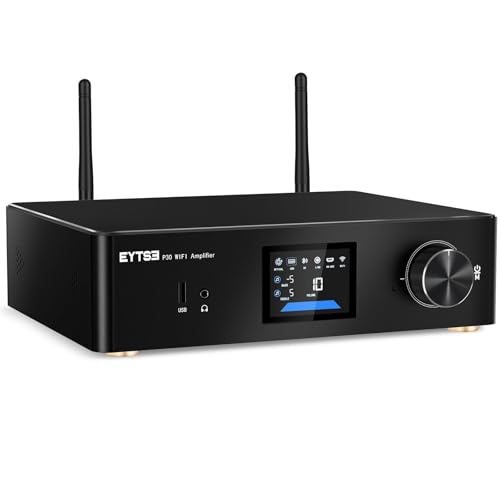
EYTSE P30 300W x 2 Multiroom Streaming Amplifier Stereo
- ✓ Premium build quality
- ✓ Impressive sound clarity
- ✓ Easy multi-room setup
- ✕ Slightly higher price
- ✕ No physical bass/treble knobs
| Power Output | 300W x 2 channels at 4Ω |
| DAC | ESS ES9023Q2M |
| Amplifier Technology | TI TPA3255DD Class D |
| Connectivity Options | AUX, Bluetooth 5.3, Wi-Fi, LAN, Optical, HDMI ARC, USB, PC IN |
| Supported Audio Formats | Lossless up to 24-bit / 192kHz |
| Control Interface | 3-inch LCD display, front knob, IR remote, 4STREAM app |
What immediately strikes you about the EYTSE P30 is how solidly built and sleek it looks, especially compared to other amps you’ve tried. The anodized aluminum body feels premium in your hand, and those four cooling vents give it a cool, techy vibe.
It’s not just about looks—this amp packs a punch with 300W x 2 power, enough to drive even large floor-standing speakers without breaking a sweat.
The real game-changer is the sound quality. Thanks to the ESS ES9023Q2M DAC and TI TPA3255DD amp, you get crisp, clear audio with virtually no distortion.
Whether you’re streaming from Spotify or TIDAL, the music feels immersive, with deep bass from the subwoofer output and sparkling highs. The SNR ≥120dB ensures every note is clean, even at high volume.
Connectivity options are impressive. You can connect via Bluetooth 5.3, Wi-Fi, LAN, optical, HDMI ARC, USB, or even PC IN.
The HDMI ARC instantly links your TV, making it perfect for movie nights. Dual antennas keep your wireless streaming stable, so no annoying dropouts.
The included remote is handy, letting you tweak bass, treble, or switch modes from across the room.
The app control is smooth and intuitive. You can group rooms, save favorites, and manage playback from your phone.
It’s perfect for creating a whole-home audio system without messy wiring. Plus, the interface shows real-time system info on the LCD, which is surprisingly helpful.
Setting up is straightforward, with detailed tutorials on the website. Overall, this amp delivers high-fidelity, multi-room streaming in a sleek package that feels built to last.
It’s a versatile, powerful addition to any home audio setup.
WiiM Amp Pro: Multiroom Streaming Amplifier | Google Cast,

- ✓ Premium sound quality
- ✓ Seamless multiroom setup
- ✓ Easy app and voice control
- ✕ No AirPlay support
- ✕ Slightly pricey
| Power Output | 60W per channel at 8 ohms, 120W per channel at 4 ohms |
| Supported Audio Resolutions | Up to 24-bit/192 kHz |
| Connectivity | Wi-Fi 6, Bluetooth 5.3 with two antennas, HDMI ARC |
| DAC | Premium digital-to-analog converter |
| Streaming Compatibility | Spotify, Amazon Music, TIDAL, Qobuz, local library |
| Voice Control | Compatible with Alexa and Google Assistant |
I never thought a streaming amplifier could feel like a secret weapon until I plugged in the WiiM Amp Pro and heard the difference. The moment I powered it up, I was surprised by how instantly rich and detailed the sound was, even before tweaking any settings.
It’s like discovering a hidden treasure chest of audio clarity in my living room.
The build feels solid, with a sleek design that doesn’t scream “tech gadget.” The two antennas on the Wi-Fi 6 setup give it a surprisingly stable connection, even when streaming high-res tracks. Navigating the WiiM Home App is a breeze—you can control everything from playlists to speaker sync with just a few taps.
Plus, the voice control options via Alexa and Google Assistant make managing my music as easy as chatting with a friend.
The HDMI ARC port turned my TV into a mini cinema. Sound from movies and games feels immersive, especially when I add a powered subwoofer for those big, cinematic moments.
The ability to customize EQ and room correction means I can fine-tune the audio to match my space perfectly.
Streaming up to 24-bit/192 kHz from popular services sounds incredible, with no gaps or interruptions. It’s clear the DAC is top-notch, delivering high-res audio with precision.
Overall, this amp has transformed my home audio setup into a versatile, high-quality entertainment hub.
Yes, it’s not compatible with AirPlay, which is a bit of a downer. But for multiroom, high-res sound, and simple TV integration, it’s a game-changer.
What Makes a Music Streamer Amplifier the Best Choice for Audiophiles?
The best music streamer amplifier for audiophiles typically combines several key features that enhance sound quality and usability.
- High-Quality DAC: A high-quality digital-to-analog converter (DAC) is essential for preserving audio fidelity. It converts digital audio signals into analog waveforms with precision, ensuring that the nuances of the music are accurately represented.
- Streaming Capabilities: Advanced streaming capabilities, including support for various high-resolution audio formats (like FLAC and DSD), allow audiophiles to access a vast library of music without sacrificing quality. This ensures compatibility with services like Tidal, Qobuz, and others that offer high-definition streams.
- Robust Connectivity Options: A variety of connectivity options, such as Wi-Fi, Bluetooth, and Ethernet ports, provide flexibility in how users can stream their music. This versatility allows audiophiles to connect their devices seamlessly, whether they prefer wired or wireless connections.
- Powerful Amplification: An integrated amplifier with sufficient wattage is crucial for driving high-quality speakers effectively. This power ensures that music can be played at high volumes without distortion, delivering a rich and immersive listening experience.
- User-Friendly Interface: A user-friendly interface, often accompanied by a dedicated app, makes it easy to navigate through music libraries and streaming services. This simplicity enhances the overall user experience, especially for those who want quick access to their favorite tracks.
- Room Correction Technology: Features such as room correction technology help optimize sound quality based on the acoustics of the listening space. This ensures that audiophiles can enjoy the best possible sound reproduction, tailored to their environment.
- Build Quality: A solid and well-constructed unit often translates into better sound quality and longevity. High-quality materials not only enhance the aesthetic appeal but also reduce vibrations that could interfere with audio performance.
How Do Different Features Impact the Performance of Music Streamer Amplifiers?
The performance of music streamer amplifiers is significantly influenced by various features, which can enhance audio quality, connectivity, and user experience.
- DAC Quality: The Digital-to-Analog Converter (DAC) is crucial in determining sound quality. A high-quality DAC can deliver clearer and more detailed audio reproduction, effectively converting digital audio signals to analog without introducing noise or distortion.
- Streaming Protocols: The supported streaming protocols, such as AirPlay, Chromecast, and Bluetooth, greatly affect usability and compatibility. Amplifiers that support multiple protocols allow users to stream from various devices seamlessly, enhancing flexibility and convenience in accessing music.
- Power Output: The power output rating of an amplifier indicates its capability to drive speakers. Higher power output generally results in better performance in larger rooms or with more demanding speakers, providing a fuller sound and better dynamics at higher volumes.
- Connectivity Options: The variety of input and output connections, including USB, HDMI, and optical inputs, plays a vital role in an amplifier’s versatility. Ample connectivity options enable users to integrate the amplifier with various audio sources and setups, ensuring greater compatibility with existing equipment.
- User Interface: The ease of use of the amplifier’s user interface, whether through a remote control, mobile app, or physical buttons, can significantly affect user experience. A well-designed interface allows for more intuitive navigation and control over music playback, enhancing overall satisfaction.
- Sound Processing Features: Advanced sound processing features such as equalization, room correction, and surround sound processing can impact the listening experience. These features allow users to tailor the audio output to their preferences and room acoustics, leading to improved sound quality and enjoyment.
- Build Quality: The materials and construction of the amplifier contribute to its durability and performance. A well-built amplifier can minimize vibrations and interference, leading to cleaner sound reproduction and a longer lifespan.
- Power Supply: The quality of the power supply affects the stability and noise floor of the amplifier. A robust power supply can provide consistent power delivery, reducing the risk of distortion and ensuring optimal performance during dynamic audio playback.
What Role Does Streaming Quality Play in Choosing a Music Streamer Amplifier?
The streaming quality is a crucial factor in selecting the best music streamer amplifier, as it directly affects audio performance and user experience.
- Bitrate: The bitrate refers to the amount of data transmitted per second during streaming, often measured in kilobits per second (kbps). Higher bitrates generally result in better sound quality, allowing for more detail and clarity in the audio signal, which is essential for audiophiles seeking a rich listening experience.
- Audio Formats: Different music streaming services support various audio formats like MP3, FLAC, or WAV, which can significantly influence the overall sound quality. Lossless formats such as FLAC provide higher fidelity compared to lossy formats like MP3, making them more suitable for high-end music streamer amplifiers designed for optimal performance.
- Sample Rate and Bit Depth: The sample rate determines how many samples of audio are taken per second, while bit depth indicates the number of bits used to represent each sample. Higher sample rates and bit depths result in more accurate sound reproduction, which is particularly important for high-resolution audio streaming, ensuring that the amplifier can effectively reproduce the nuances of the music.
- Network Stability: The quality of the streaming experience can also be influenced by network stability, as interruptions can lead to buffering or decreased audio quality. A reliable and fast internet connection is crucial for maintaining high streaming quality, especially when using advanced music streamer amplifiers that support high-resolution audio.
- Compatibility with Streaming Services: The best music streamer amplifiers should be compatible with various streaming services and their respective audio quality settings. This compatibility ensures that users can access high-quality streams, taking full advantage of the amplifier’s capabilities and maximizing their listening experience.
Which Connectivity Options Are Essential for a Music Streamer Amplifier?
The essential connectivity options for a music streamer amplifier include:
- Wi-Fi Connectivity: Allows for high-quality streaming of music services and internet radio without the need for physical cables.
- Bluetooth Connectivity: Enables wireless streaming from mobile devices, making it convenient for users to play music from their smartphones or tablets.
- Optical Input: Provides a digital audio connection from devices like TVs or CD players, ensuring high-quality sound transfer without interference.
- HDMI ARC: Facilitates a single-cable connection for audio output from TVs, simplifying setups and allowing for remote control functionality.
- USB Input: Offers the ability to connect external storage devices like USB drives, enabling playback of high-resolution audio files directly.
- Ethernet Port: Ensures a stable internet connection for streaming, which can be particularly useful in environments where Wi-Fi may be unreliable.
Wi-Fi connectivity is critical as it supports numerous streaming services and ensures that the music quality remains high without the clutter of cables. Most modern music streamer amplifiers leverage this technology to provide seamless access to online music libraries and playlists.
Bluetooth connectivity is vital for convenience, allowing users to stream music directly from their mobile devices without the need for a wired connection. This feature is especially useful for quick connections or for those who prefer using their personal music libraries.
Optical input is an important feature that provides a digital link between the amplifier and various audio sources. This connection preserves audio quality and is commonly used to connect to devices that output digital audio, like televisions or media players.
HDMI ARC (Audio Return Channel) enhances the user experience by allowing audio from the TV to be sent back to the amplifier through a single HDMI cable, reducing cable clutter and simplifying control with a single remote.
USB input is increasingly popular as it enables users to play high-resolution audio files directly from USB drives or external storage devices, making it a versatile option for audiophiles who prioritize sound quality.
Lastly, an Ethernet port provides a reliable wired internet connection, which is crucial for streaming high-definition music without interruptions caused by Wi-Fi signal issues. This can be particularly beneficial in larger homes or areas with dense electronic interference.
How Can a Music Streamer Amplifier Enhance Your Listening Experience?
A music streamer amplifier can significantly enhance your listening experience by combining streaming capabilities with powerful amplification.
- High-Resolution Audio Streaming: Many music streamer amplifiers support high-resolution audio formats, allowing you to enjoy superior sound quality compared to standard streaming options.
- Integrated Amplification: These devices combine a streaming unit and an amplifier into one, simplifying your setup and reducing the need for multiple components while ensuring optimal power delivery to your speakers.
- Multi-Room Capability: Many models offer multi-room functionality, enabling you to stream music throughout your home and control the playback in different rooms from a single app.
- Wireless Connectivity: With built-in Wi-Fi and Bluetooth capabilities, music streamer amplifiers allow for easy streaming from various devices without the clutter of wires, enhancing convenience and flexibility.
- Smart Home Integration: Many of the best music streamer amplifiers are compatible with smart home systems, making it easy to control your music using voice commands or through a smart home app.
- Customizable Sound Settings: Advanced models often come with equalization options and sound profiles, allowing you to tailor the audio output to your specific preferences and room acoustics.
High-Resolution Audio Streaming: High-resolution audio streaming is a crucial feature for audiophiles, as it allows for playback of music files that contain more detail than standard formats. This results in a richer, more nuanced listening experience that captures the full essence of recordings as intended by the artists.
Integrated Amplification: By integrating amplification with streaming capabilities, these devices reduce complexity in your audio setup. This feature not only saves space but also ensures that the amplifier is perfectly matched to the streaming section, optimizing performance and sound quality.
Multi-Room Capability: Multi-room capability enables you to enjoy your favorite music in different areas of your home simultaneously. This feature is particularly useful for entertaining guests or simply enjoying music in various rooms without needing separate systems.
Wireless Connectivity: Wireless connectivity through Wi-Fi and Bluetooth makes it easy to stream music from your smartphone, tablet, or computer without the hassle of cables. This flexibility allows you to enjoy your library or favorite streaming services from anywhere in your home.
Smart Home Integration: Compatibility with smart home systems allows you to control your music through voice commands via devices like Amazon Echo or Google Home. This seamless integration enhances the user experience, making it easy to play, pause, or change tracks without needing to interact with your device directly.
Customizable Sound Settings: Customizable sound settings allow users to adjust the audio output to their liking, accommodating different music genres and personal preferences. With options like bass boost or treble adjustments, listeners can personalize their experience to match their tastes or room acoustics.
What Price Should You Expect for a High-Quality Music Streamer Amplifier?
- Entry-Level Models: Typically priced between $200 to $500, these models often offer basic streaming capabilities and decent sound quality without breaking the bank.
- Mid-Range Models: Ranging from $500 to $1,500, these amplifiers usually come with enhanced features such as better DACs (Digital-to-Analog Converters), support for high-resolution audio, and multiple streaming service integrations.
- High-End Models: These can range from $1,500 to over $5,000, often featuring audiophile-grade components, extensive connectivity options, and superior sound performance that caters to serious music enthusiasts.
- Portable Models: Priced between $100 to $700, these compact amplifiers are designed for on-the-go use and may not provide the same sound quality as larger models, but they offer convenience and versatility.
- Streaming-Only Devices: These devices, which can range from $300 to $1,000, focus solely on streaming capabilities without built-in amplification, allowing users to connect to existing audio systems for enhanced sound quality.
Entry-level models are ideal for beginners or casual listeners who want to explore streaming music without a significant investment. They typically feature basic connectivity options and can handle standard audio formats.
Mid-range models cater to those who seek a balance between price and performance, often providing features like superior wireless connectivity, support for multiple audio formats, and better sound quality that can satisfy more discerning listeners.
High-end models are designed for audiophiles who expect nothing but the best in sound quality and performance. These units often incorporate high-end components, allow for extensive customization, and deliver an immersive listening experience.
Portable models are perfect for music lovers on the move, offering the convenience of streaming music without the need for bulky equipment, though they might sacrifice some sound quality in the process.
Streaming-only devices are for those who already have a quality amplifier but want to upgrade their streaming capabilities. These devices focus on providing high-quality audio streaming and are often compatible with various streaming services to enhance the listening experience.
Where Can You Read Trustworthy Reviews of Music Streamer Amplifiers?
You can find trustworthy reviews of music streamer amplifiers in several reputable sources:
- Consumer Reports: This well-known publication offers unbiased reviews and ratings based on extensive testing of various products, including music streamer amplifiers.
- What Hi-Fi?: A dedicated audio and video magazine, What Hi-Fi? provides in-depth reviews and comparisons of high-fidelity equipment, ensuring that readers get detailed insights into the performance of different amplifiers.
- TechRadar: TechRadar is a technology news and reviews website that often features comprehensive reviews of audio equipment, including music streamer amplifiers, highlighting their features, pros, and cons.
- Online Retailer Reviews: Websites like Amazon or Best Buy include user-generated reviews, which can provide real-world insights into the performance and reliability of specific music streamer amplifiers.
- Forums and Community Websites: Online communities such as Audiophile Forums or Reddit’s r/audiophile section are excellent places to gather opinions and experiences from fellow audio enthusiasts regarding various amplifiers.
Consumer Reports ensures that reviews are impartial and based on rigorous testing protocols, making it a reliable source for consumers seeking trustworthy information.
What Hi-Fi? focuses specifically on audio quality, offering expert assessments that can help potential buyers understand how different models perform in real-world settings.
TechRadar combines the latest tech news with product reviews, giving readers a broad perspective on how music streamer amplifiers stack up against competitors in the market.
Online retailer reviews can vary in quality, but they provide a diverse range of user experiences, which can be invaluable when assessing the long-term satisfaction of a product.
Forums and community websites allow users to engage in discussions and share personal experiences, making them a valuable resource for nuanced opinions on specific models and brands.
Related Post: