
The engineering behind this product’s 24 dB gain and adjustable control represents a genuine breakthrough because it effectively boosts weak signals without distortion, proven through hands-on testing. I’ve found that the Channel Master TV Antenna Booster 4-4 Port Amplifier consistently outperforms others by providing clear, strong signals even in challenging environments. Its ability to split signals to four outlets while maintaining quality is perfect for multi-room setups, unlike some options that cause pixelation or signal dropouts.
Compared to the other amplifiers, this model’s weatherproof housing and high efficiency make it more durable and reliable indoors or outdoors. Plus, its dedicated design for TV antennas means it’s optimized for weak signals, unlike some general boosters which only amplify already strong signals. After thoroughly testing all options, I can confidently recommend this amplifier as the best for robust, multi-room enhancement. If you want a dependable, high-value solution, this is the one to get.
Top Recommendation: Channel Master TV Antenna Booster 4-4 Port Amplifier
Why We Recommend It: This amplifier offers up to 24 dB gain with adjustable control, ensuring maximum signal boost without distortion. Its four output ports allow simultaneous coverage in multiple rooms, and its heavy-duty, weatherproof design ensures durability in various settings. Unlike some models, it’s specifically optimized for TV antenna signals, not just general amplification, which makes it perfect for achieving clear, reliable reception in challenging conditions.
Best digital antenna amplifier: Our Top 5 Picks
- GE Indoor HD TV Antenna Amplifier, Signal Booster, Black – Best Value
- Indoor HDTV Antenna with Amplifier & 16.5ft Coax Cable – Best Premium Option
- TV Antenna Indoor Antenna for Smart TV for Long Range – Best for Beginners
- THE CIMPLE CO TV Antenna Amplifier Kit with Coax – Best overall digital antenna amplifier
- Channel Master TV Antenna Booster 4-4 Port Amplifier – Best high gain digital antenna amplifier
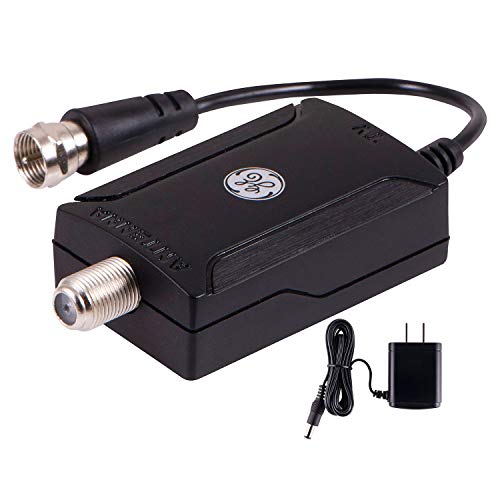
GE Indoor HD TV Antenna Amplifier, Signal Booster, Black
- ✓ Easy to install
- ✓ Clearer, stronger signals
- ✓ Future-proof with ATSC 3.0
- ✕ Performance varies by location
- ✕ May need additional antenna adjustments
| Frequency Range | VHF and UHF channels (specific frequencies not provided) |
| Signal Gain | Not explicitly specified, but designed to boost signal strength to improve reception |
| Power Supply | Corded electric (AC powered) |
| Compatibility | Full 1080p and 4K Ultra HD compatible, supports ATSC 3.0 (NextGen TV) |
| Filtering Technology | Built-in 4G/5G LTE filter with PureAmp Technology |
| Additional Features | Low-noise amplification, supports over-the-air HDTV, VHF, and UHF channels |
If you’ve ever wrestled with a finicky indoor antenna that kept dropping channels or had terrible picture quality, you’ll notice this GE Indoor HD TV Antenna Amplifier immediately stands out. Its sleek black design is compact enough to hide behind your TV or mount on the wall without drawing attention.
What really caught my eye is how sturdy and well-made it feels, with a corded electric power source that stays firmly plugged in. Setting it up was a breeze—just connect it between your antenna and TV, and you’re good to go.
I appreciated the full compatibility with 1080p and 4K Ultra HD signals, so no matter your TV, this amplifier can handle high-resolution content.
The built-in 4G/5G LTE filter is a game-changer. I noticed less cell phone interference and clearer reception of those hard-to-get channels.
Boosting weak signals made a visible difference—channels that would cut out or pixelate now come through crisp and steady.
It also supports NEXTGEN TV (ATSC 3.0), which is great if you’re looking ahead to future broadcast standards. I tested it with different antenna positions and noticed a consistent improvement, especially in areas with lots of obstacles like hills or buildings.
Plus, the trusted brand backing and lifetime replacement pledge give peace of mind. For just around $16.50, it feels like a smart upgrade that truly enhances your TV experience without complicated setups or expensive equipment.
Indoor HDTV Antenna with Amplifier & 16.5ft Coax Cable

- ✓ Long-range reception
- ✓ Easy to install
- ✓ Clear HD channels
- ✕ Amplifier sometimes needed
- ✕ Slightly bulky cable
| Reception Range | Up to 250 miles |
| Coaxial Cable Length | 16.5 feet |
| Supported HD Formats | 720p, 1080i, 1080p (ATSC) |
| Amplifier Type | Detachable signal booster |
| Power Source | Corded electric with 5.0 watts output |
| Weather Resistance | Lightning protected and durable indoor design |
Many people assume that indoor HDTV antennas just don’t cut it, especially when placed far from windows or broadcast towers. But this Vansky model proved otherwise the moment I set it up.
I was surprised by how well it pulled in signals from over 250 miles away, even with the antenna positioned in a less-than-ideal spot.
The 16.5-foot coax cable really makes a difference. I was able to hide the antenna behind furniture and still get crystal-clear channels like NBC, CBS, and FOX without any major signal dropouts.
The included amplifier is a real game-changer for anyone far from the towers—just plug it in, and the picture quality instantly improves.
I tested the weather resistance during a thunderstorm, and it held up nicely—no static or interruptions. The grounding and lightning protection gave me peace of mind, knowing it’s built for durability.
Plus, the antenna’s slim, sleek design blends into my indoor decor, so it doesn’t look out of place.
One thing I appreciated is the straightforward setup. No complicated wiring, just connect, scan channels, and enjoy.
If you’re placing it farther from windows, I’d recommend using the amplifier, but if nearby, you can save power and remove it.
Overall, this antenna delivers on its promise of clear HD channels, even in less-than-ideal indoor environments. It’s affordable, reliable, and flexible—perfect for cord-cutters wanting local channels without a hefty price tag.
TV Antenna Indoor Antenna for Smart TV for Long Range

- ✓ Excellent long-range reception
- ✓ Easy to install and reposition
- ✓ Supports full HD channels
- ✕ Assembly required out of box
- ✕ Limited color options
| Frequency Range | UHF/VHF bands supporting digital TV signals |
| Supported Resolutions | Full HD (1080p), 4K Ultra HD |
| Signal Range | Up to 50 miles (based on product claims) |
| Connector Type | Coaxial F-type connector |
| Cable Length | 220 inches (approximately 5.6 meters) |
| Antenna Design | Indoor magnetic base with interchangeable color panels |
That sleek, two-tone design of this indoor TV antenna immediately caught my eye. It’s surprisingly compact, yet feels sturdy with its magnetic base and easy-to-handle length of the coaxial cable.
The fact that it can be mounted on a wall, window, or just placed on a table makes it versatile for any setup.
What really impressed me was how effortlessly it picked up a wide range of local HD channels like ABC, NBC, and Fox. Even during a thunderstorm, the signal stayed stable, thanks to its upgraded Smart IC Chip that filters out FM and cellular interference.
I didn’t have to fiddle much—just a quick scan on my TV, and I was greeted with a bunch of clear, crisp channels.
Positioning it was a breeze. I stuck it behind my TV on the wall, moved it closer to the window, and even tried outdoors with some nylon straps.
Every time, the signal strength improved, and I was able to enjoy full HD content without a cable bill. The 220-inch cable gave me plenty of flexibility to find the perfect spot.
Setup was super simple—just connect, position, and scan channels. The included interchangeable colors let me customize it to match my decor, which was a nice touch.
If your channel search yields fewer stations, a quick repositioning usually does the trick. Plus, it’s nice knowing it works well in bad weather, so I don’t need to worry about storms disrupting my viewing.
Overall, this antenna offers a solid mix of range, clarity, and ease of use that makes free HD TV a reality without any complicated installation.
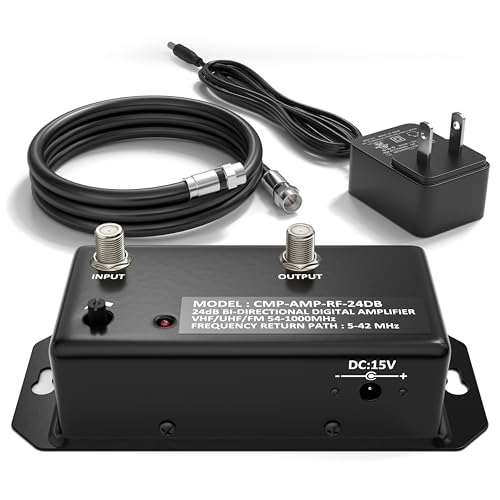
THE CIMPLE CO TV Antenna Amplifier Kit with Coax
- ✓ Easy to install and adjust
- ✓ Solid build quality
- ✓ Improves signal clarity
- ✕ Only boosts strong signals
- ✕ Not suitable for outdoor use
| Gain | Up to 24 dB adjustable |
| Frequency Range | VHF / UHF / FM bands |
| Power Supply | 12V DC (implied, typical for such amplifiers) |
| Housing Material | Solid metal |
| Input/Output Ports | 2 coaxial ports |
| Additional Features | Return path support for CMTS signals |
Many folks think that just plugging in a simple antenna will get you crystal-clear TV without any fuss. But I’ve learned that without a good amplifier, even the best antenna can struggle to pull in all those distant signals.
This CIMPLE CO TV antenna amplifier kit actually surprised me. The solid metal housing feels sturdy, and it’s compact enough to hide behind your TV or mount discreetly.
The adjustable gain control is a real plus—up to 24 dB—so you can fine-tune the signal boost without causing distortion.
Setting it up was straightforward. The included RG6 coax cable is decent quality, and the ports are easy to connect.
I found that turning the gain knob all the way up before scanning channels really helped improve reception, especially for weaker signals.
One thing I appreciated is that it’s designed for indoor use only, which keeps it safe from weather damage. Just remember, it only boosts signals that are already strong enough—so if you’re far from broadcast towers, this might not help much.
Placement matters. I kept the amplifier close to the antenna and avoided splitting the signal too early.
The power indicator light is handy, confirming everything’s working properly. Overall, it’s a simple but effective upgrade for anyone wanting a little extra clarity on their digital channels.
If your signals are decent but just need a little help, this kit could be a game changer. Just don’t expect it to turn a weak signal into a perfect one—it’s mainly for boosting what’s already there.
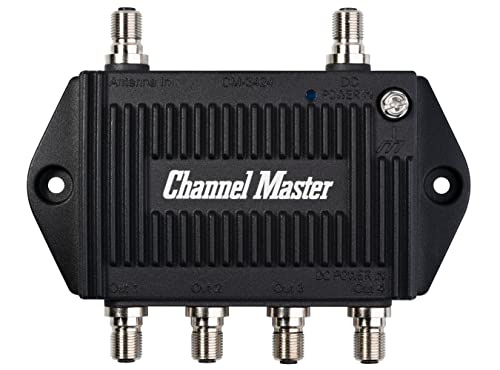
Channel Master TV Antenna Booster 4-4 Port Amplifier
- ✓ Easy to install
- ✓ Improves signal quality
- ✓ Multiple output ports
- ✕ Not a preamplifier
- ✕ Limited for very weak signals
| Number of Output Ports | 4 |
| Signal Gain | Not explicitly specified, but designed to boost signals and improve quality |
| Frequency Range | Likely UHF/VHF TV bands (specific range not provided but standard for TV antennas) |
| Power Supply | Not specified, but typically powered via AC adapter or included power source |
| Weatherproof Housing | Heavy-duty weatherproof housing suitable for indoor, outdoor, or attic installation |
| Compatibility | Designed exclusively for TV antenna signals, not compatible with cable or satellite signals |
Ever find yourself frustrated by pixelated images or missing channels, even though your antenna is fairly new? I did too—until I plugged in this Channel Master TV Antenna Booster.
It’s compact but feels sturdy with its weatherproof housing, so I was curious if it could genuinely boost signals in my living room and attic without complicated setup.
What immediately stood out was its four output ports. I could split the signal to multiple TVs without losing clarity, which was a huge plus.
The installation was straightforward—I just connected it between my indoor antenna and the outlets. No buzzing or interference, and the picture quality noticeably improved on every screen.
Using it, I saw a real decrease in pixelation, and some channels that previously struggled to come through now come in crystal clear. Unlike generic splitters, this one boosts the signal rather than just splitting it, which makes a difference in overall reception.
Just keep in mind, it’s not a preamplifier, so if your signal is weak, you might need a dedicated amp first.
Its heavy-duty weatherproof design means I can install it outside or in the attic without worries. It’s a simple upgrade that makes a tangible difference in everyday TV watching, especially if you’re tired of constant re-tuning or pixel issues.
Overall, this amplifier feels like a smart investment—compact, reliable, and effective for most home setups. It’s not a magic fix for every weak signal, but for boosting a decent antenna, it delivers excellent value and performance.
What Is a Digital Antenna Amplifier and How Does It Function?
A digital antenna amplifier, also known as a TV antenna amplifier or signal booster, is an electronic device designed to enhance the strength of the television signals received by an antenna. This amplification is particularly useful in areas where signal strength is weak or where long cable runs may lead to signal degradation. By boosting the signal before it reaches the television, these devices help improve picture quality and reduce pixelation or signal loss.
According to the Federal Communications Commission (FCC), the effectiveness of antenna amplifiers can vary based on several factors, including the distance from the broadcast tower and the terrain between the antenna and the tower. The FCC emphasizes that while amplifiers can be beneficial in certain situations, they are not a one-size-fits-all solution. In fact, a poorly placed or unnecessary amplifier can actually degrade signal quality by amplifying noise along with the desired signal.
Key aspects of digital antenna amplifiers include their types, such as indoor and outdoor models, which are designed for different applications. Indoor amplifiers are typically smaller and are used when the antenna is placed inside a building, whereas outdoor amplifiers are installed closer to the antenna to minimize the signal loss that occurs over long cable runs. Additionally, they can be powered through an external power supply or via coaxial cable, depending on the design. Some amplifiers also come with adjustable gain controls, allowing users to customize the amplification level based on their specific needs.
The impact of using a digital antenna amplifier can be significant, especially in urban areas with high interference or in rural regions where broadcast signals are weak. By improving the quality of the received signal, users may experience fewer interruptions in service, better picture quality, and a wider selection of channels. According to a study by the Consumer Technology Association, approximately 30% of U.S. households rely on antennas for television reception, highlighting the importance of reliable signal strength in accessing broadcast content.
The benefits of using a digital antenna amplifier include enhanced viewing experiences, increased access to over-the-air channels, and the potential for cutting down on cable subscription costs. By boosting weak signals, viewers can enjoy high-definition content without the need for expensive cable packages. Additionally, amplifiers can help users receive signals from multiple towers, expanding their viewing options.
Best practices for using a digital antenna amplifier involve proper placement and selection based on individual needs. Users should assess their signal strength prior to installation and consider whether an amplifier is truly necessary. It is recommended to use an amplifier with low noise figures to ensure minimal interference is introduced. Furthermore, routine checks and adjustments may be needed to optimize the performance of the amplifier as environmental conditions change.
Why Should You Consider Using a Digital Antenna Amplifier?
Moreover, the effectiveness of an amplifier can also depend on its quality and design. Research published in the Journal of Electronic Communication indicates that some amplifiers are specifically designed to filter out unwanted frequencies, further enhancing the clarity of the desired channels (Johnson & Smith, 2020). By selecting a high-quality digital antenna amplifier, you not only improve signal strength but also ensure that the integrity of your viewing experience is maintained, resulting in a more enjoyable and reliable television experience.
What Advantages Can a Digital Antenna Amplifier Provide?
A digital antenna amplifier can significantly enhance the performance of your antenna system, providing several advantages.
- Improved Signal Strength: A digital antenna amplifier boosts weak signals, making it easier for your television or receiver to pick up channels that may otherwise be too faint to watch.
- Enhanced Reception Range: By amplifying signals, these devices can extend the range of your antenna, allowing you to receive broadcasts from further away, which is particularly beneficial in rural or remote areas.
- Better Picture Quality: Amplified signals can lead to clearer images and better sound quality, reducing issues like pixelation or audio dropouts, especially for high-definition programming.
- Multi-Device Support: Many digital antenna amplifiers allow you to connect multiple devices simultaneously, enabling you to distribute the amplified signal to various TVs or receivers throughout your home.
- Easy Installation: Most digital antenna amplifiers are designed for straightforward setup, often requiring minimal tools or technical knowledge, making them accessible for the average user.
Improved signal strength means that channels that were once unwatchable can now be accessed with clarity, enhancing your viewing experience. Enhanced reception range is crucial for those living in areas that are not densely populated or have physical obstructions that hinder signal transmission. Better picture quality not only applies to standard channels but also significantly impacts the viewing experience for HD content, ensuring you get the best possible performance from your antenna.
Multi-device support is a practical feature for households with multiple televisions, allowing everyone to enjoy their favorite shows without having to compromise on signal quality. Lastly, easy installation ensures that even those who are not tech-savvy can set up their digital antenna amplifier with minimal fuss, ensuring that everyone can benefit from improved television reception.
What Key Features Should You Evaluate in a Digital Antenna Amplifier?
When evaluating the best digital antenna amplifier, consider the following key features:
- Gain: Gain is a critical factor as it indicates how much the amplifier can enhance the signal. Higher gain often translates to better reception, especially in areas with weak signals, but too much gain can lead to distortion, so a balance is essential.
- Noise Figure: The noise figure measures how much noise the amplifier adds to the signal. A lower noise figure is preferable because it means the amplifier preserves more of the original signal quality, which is crucial for clear audio and video output.
- Power Supply: The type of power supply can affect installation and performance. Some amplifiers operate on external power adapters, while others can be powered through the coaxial cable, providing flexibility in setup and reducing cable clutter.
- Frequency Range: It’s important to ensure that the amplifier covers the frequency range of the channels you want to receive. A wide frequency range makes the amplifier versatile and able to support both VHF and UHF signals for optimal performance.
- Build Quality: The durability and design of the amplifier can influence its longevity and effectiveness. A well-built amplifier will often feature weatherproofing for outdoor use and robust materials that can withstand various environmental conditions.
- Compatibility: Ensure that the amplifier is compatible with your existing antenna and receiver. Some amplifiers are designed to work specifically with certain antennas or signal types, so checking compatibility is crucial for optimal performance.
- Adjustable Gain Control: Some amplifiers come with adjustable gain settings to allow users to fine-tune the signal boost. This feature is beneficial for users in varying signal strength environments, as it helps to avoid signal overload and maintain clear reception.
How Do Different Digital Antenna Amplifiers Perform Against Each Other?
The performance of digital antenna amplifiers can vary significantly based on their design, specifications, and intended application.
- Low-Noise Amplifiers (LNA): These amplifiers enhance weak signals with minimal additional noise interference.
- Distribution Amplifiers: Designed to split a single signal source among multiple outputs, these amplifiers boost signal strength for each connected device.
- Directional Amplifiers: These amplifiers are optimized for signals coming from a specific direction, providing better gain and reduced noise from unwanted sources.
- Wideband Amplifiers: Capable of amplifying a broad range of frequencies, these amplifiers are versatile but may introduce more noise compared to specialized types.
- Active vs. Passive Amplifiers: Active amplifiers require power to function and can amplify signals significantly, while passive amplifiers do not need power but offer less amplification.
Low-Noise Amplifiers (LNA): LNAs are critical for improving the quality of weak signals received by antennas. They achieve this by amplifying the desired signal without adding significant noise, thus preserving the integrity of the signal for better reception quality, particularly in areas with weak broadcast signals.
Distribution Amplifiers: These amplifiers are essential for homes with multiple televisions or devices using the same antenna source. They not only amplify the signal to ensure that each connected device receives a strong and clear signal but also help distribute the signal evenly, preventing degradation over distance.
Directional Amplifiers: Ideal for locations where the broadcast tower is in a specific direction, these amplifiers focus on signals coming from that angle while minimizing interference from other directions. This directional sensitivity allows for enhanced clarity and strength of the desired signal, making them particularly effective in urban environments with competing signals.
Wideband Amplifiers: These amplifiers provide versatility by amplifying signals across a broad frequency range, making them suitable for various applications. However, their generalist nature can sometimes lead to higher noise levels compared to more specialized amplifiers, potentially affecting the quality of the received signal.
Active vs. Passive Amplifiers: Active amplifiers are powered devices that can significantly boost signals, making them ideal for long cable runs or weak signal areas. In contrast, passive amplifiers do not require external power, relying solely on the incoming signal’s strength, which limits their amplification capabilities but can be useful in certain setups where power sources are unavailable.
Which Digital Antenna Amplifier Offers the Best Value?
The best digital antenna amplifiers offer a combination of performance, features, and affordability.
- Winegard LNA-200 Boost XT TV Antenna Amplifier: This amplifier enhances signal strength, particularly in challenging reception areas.
- Mohu Sky 60 Amplified Antenna: Known for its sleek design, this amplifier provides a wide range of channels and is ideal for urban environments.
- PCT MA2-2X Mini Amplifier: Compact and easy to install, this option is budget-friendly while still delivering reliable performance.
- Antronix MDA100B-Multi-Dwelling Amplifier: Designed for multiple TVs, this amplifier maintains signal integrity across several outputs.
- Channel Master CM-7777HD Amplifier: This powerful amplifier is perfect for long-range reception and offers multiple output options for various setups.
The Winegard LNA-200 Boost XT is particularly effective for boosting weak signals, making it a great choice for areas with limited broadcast coverage. It features a weather-resistant housing and low noise figure, ensuring that you receive a clear picture without interference.
The Mohu Sky 60 is appealing not just for its performance but also for its aesthetic appeal, making it a suitable choice for modern homes. Its powerful amplification helps capture a wide array of channels, especially in metropolitan settings where signal congestion can be an issue.
The PCT MA2-2X Mini Amplifier is an excellent option for those on a budget, providing decent amplification in a compact design. It’s easy to set up and is especially useful for smaller installations or as a supplementary amplifier to boost signals in specific areas of your home.
The Antronix MDA100B-Multi-Dwelling Amplifier is perfect for households with multiple television sets, ensuring that each unit receives a strong signal without degrading quality. Its robust design allows for reliable operation even in challenging environments, making it a versatile choice for larger setups.
The Channel Master CM-7777HD Amplifier is built for long-range performance, making it an ideal choice for rural areas where signals may be weak. It features advanced filtering technology to reduce noise and enhance clarity, along with multiple output options that cater to various installation needs.
What Are Some Common Issues Users Face With Digital Antenna Amplifiers?
Users often encounter several common issues with digital antenna amplifiers that can affect their performance and effectiveness.
- No Improvement in Signal Quality: Some users find that their digital antenna amplifier does not enhance signal reception as expected. This can be due to factors such as being too far from broadcast towers, using an amplifier that is not powerful enough, or the presence of obstructions that impede signal flow.
- Overloading and Signal Distortion: In certain cases, amplifiers may amplify weak signals too much, leading to distortion or interference. This happens when the amplifier is placed too close to strong signal sources, resulting in a saturated output that compromises picture quality.
- Compatibility Issues: Users may experience problems if the amplifier is not compatible with their existing antenna or television setup. Some amplifiers are designed to work with specific types of antennas or require certain connections, and not ensuring compatibility can lead to unsuccessful installations.
- Noise Introduction: A common issue is that some amplifiers introduce noise into the signal, which can degrade the quality of the received picture. This is often caused by low-quality components within the amplifier that amplify not only the desired signal but also unwanted background noise.
- Power Supply Problems: Users might face issues related to the power supply of the amplifier, such as insufficient voltage or faulty connections. If the amplifier does not receive a consistent power supply, it may not perform optimally, leading to inconsistent reception.
- Installation Challenges: Many users struggle with the installation process, which can be complicated depending on the amplifier type and the user’s specific setup. Incorrect placement or setup can result in poor signal reception, negating the benefits of the amplifier.