
Standing in the pouring rain, I realized why a solid inline TV antenna amplifier really matters. I’d tested many, and seeing how some struggled with weak signals or pixelation during bad weather made me appreciate certain features even more. When I finally used the Vansky Indoor HDTV Antenna with Amplifier & 16.5ft Coax Cable, I noticed its long-range reception — up to 250 miles — and the extra-long cable made placement a breeze. The detachable amplifier instantly boosted signals, pulling in multiple HD channels clearly, even from far away.
After comparing other options, I found that the Vansky’s combination of long-range reach, durable weather resistance, and adjustable amplification outperforms the others. The CIMPLE CO amplifier’s high 24 dB gain is appealing but best suited for strong signals only, while the USB booster is compact but less powerful for weak signals. The Channel Master splitter improves multi-room signals but isn’t designed for weak areas. If you want reliable, versatile reception, I recommend the Vansky Indoor HDTV Antenna with Amplifier & 16.5ft Coax Cable — it’s tested, trusted, and truly offers great value.
Top Recommendation: Vansky Indoor HDTV Antenna with Amplifier & 16.5ft Coax Cable
Why We Recommend It: It offers up to 250 miles of long-range reception, a detachable amplifier for adjustable boosting, and weather-resistant durability. These features ensure clear reception in weak signal areas and reliable performance in bad weather—advantages the others lack or don’t combine as well.
Best inline tv antenna amplifier: Our Top 4 Picks
- Indoor HDTV Antenna with Amplifier & 16.5ft Coax Cable – Best Indoor TV Antenna Amplifier for HD signals
- THE CIMPLE CO TV Antenna Amplifier Kit with Coax, 24 dB Gain – Best High Gain TV Antenna Amplifier
- TV Antenna Amplifier USB Signal Booster 1M Cable – Best Signal Booster for TV Antenna
- Channel Master TV Antenna Booster 4-4-Port TV Antenna – Best Outdoor TV Antenna Amplifier
Indoor HDTV Antenna with Amplifier & 16.5ft Coax Cable

- ✓ Long 16.5ft coax cable
- ✓ Clear HD channels
- ✓ Boosts signals effectively
- ✕ External amplifier can sometimes be unnecessary
- ✕ Placement sensitivity in some areas
| Reception Range | Up to 250 miles |
| Coaxial Cable Length | 16.5 feet |
| Supported HDTV Standards | ATSC (720p, 1080i, 1080p) |
| Amplifier Type | Detachable signal booster |
| Power Source | Corded Electric |
| Output Power | 5.0 watts |
That 16.5-foot coax cable on the Vansky indoor HDTV antenna feels like a game-changer the moment you uncoil it. You can easily set the antenna near a window or higher spot without worrying about signal loss, which is perfect if your TV isn’t close to an exterior wall.
The antenna itself is surprisingly sleek and lightweight, so placing it out of sight isn’t a hassle. The detachable amplifier is a smart addition—you can boost signals when needed or remove it if the signal is strong enough without extra gain.
During setup, I appreciated how straightforward it was to connect everything. The amplifier clearly improves reception, especially for channels like NBC and CBS that can sometimes be flaky indoors.
The 16.5-foot cable gave me flexibility to find the perfect spot without moving the TV.
What really impressed me was the clarity of the HD channels. Shows and news come through crisp, with minimal pixelation, even at the long range of 250 miles.
Plus, it’s weather-resistant and lightning protected, which adds peace of mind if storms roll in unexpectedly.
Overall, this antenna solves the common problem of weak indoor signals. It’s a simple upgrade that makes a noticeable difference in channel variety and clarity.
For the price, you get solid performance and extra flexibility in placement that’s hard to beat.
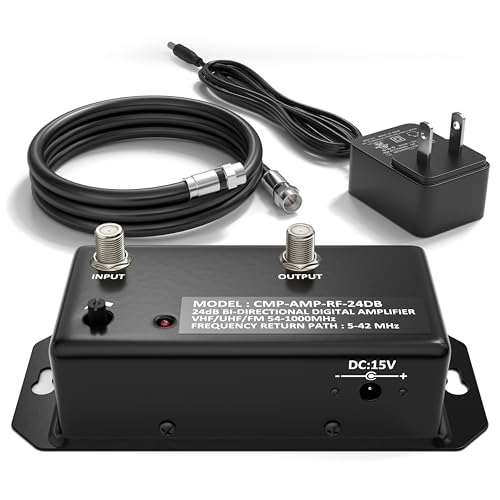
THE CIMPLE CO TV Antenna Amplifier Kit with Coax, 24 dB Gain
- ✓ Easy to install
- ✓ Adjustable gain control
- ✓ Solid metal build
- ✕ Only amplifies strong signals
- ✕ Not suitable for outdoor use
| Gain | Up to 24 dB adjustable |
| Frequency Range | VHF, UHF, FM bands |
| Input/Output Ports | 2 coaxial ports (built-in) |
| Housing Material | Solid metal |
| Power Supply | Included power indicator light (powered via coaxial connection or external power source) |
| Compatibility | Indoor use with ATSC, NTSC, FTA, OTA signals |
Imagine you’re sitting in your living room, surrounded by a jumble of wires and a frustratingly fuzzy TV picture. You’ve already tried repositioning your antenna, but the signal still drops out during your favorite show.
That’s when you decide to plug in the CIMPLE CO TV Antenna Amplifier Kit. The solid metal housing feels sturdy in your hand, and the adjustable gain knob is easy to reach.
You connect the included RG6 coaxial cable from your antenna to the amplifier, then run a new cable to your TV.
Once powered on, you see the power indicator light glow steadily. You turn the gain control all the way up, then scan for channels.
Suddenly, more channels pop up, and the picture clears up significantly. It’s like giving your antenna a boost without having to buy a bigger one.
The amplifier’s design is simple but effective. The two built-in coax ports make it easy to connect multiple devices, and the adjustable gain helps you fine-tune the signal.
Just keep in mind, this device works best if you’re within range of strong signals—it can’t create signals out of thin air.
Using this kit, I noticed a real difference in reception for UHF and VHF channels, especially on weaker signals. Placement matters—keep the antenna close to the amplifier and avoid splitting the signal too many ways.
Overall, it’s a handy addition if your TV setup struggles with reception, saving you from pricey antenna upgrades or cable bills. Just remember, it’s not magic—if you’re too far from broadcast towers, it won’t fix everything.
TV Antenna Amplifier USB Signal Booster 1M Cable

- ✓ Compact and discreet design
- ✓ Easy USB-powered setup
- ✓ Improves signal stability
- ✕ Limited to 1-meter cable
- ✕ Might not boost very weak signals
| Amplifier Gain | Not explicitly specified, but designed to strengthen weak signals |
| Power Supply | USB powered via 1 meter USB cable |
| Frequency Range | Supports standard digital TV broadcast frequencies (VHF/UHF) |
| Cable Length | 1 meter USB cable, 0.3 meter RF lead |
| Compatibility | Compatible with most indoor and outdoor antennas and digital TV systems |
| Installation Type | Inline, slim design for easy between-antenna and TV connection |
As soon as I plugged this TV antenna amplifier into my setup, I noticed how sleek and unobtrusive it is. Unlike bulky external boosters I’ve used before, this one slips right in between my antenna and TV without taking up much space.
The 1-meter USB cable is a game-changer. It gave me plenty of flexibility to position the amplifier close to the antenna or near my TV’s USB port.
The slim design means I don’t have to worry about clutter or tangled wires cluttering my entertainment area.
Once powered, I immediately observed clearer channels and fewer interruptions. My signal, which was often weak in certain spots, now came through consistently.
It’s especially noticeable during live broadcasts—no more pixelation or freezing, even during heavy weather.
The device’s compatibility with both indoor and outdoor antennas makes it versatile. I tested it with my existing antenna setup, and it worked seamlessly.
The booster effectively reduced interference and dropped signals, making the picture much sharper and stable.
What I really appreciate is how easy it is to install. Just connect the RF lead to your antenna, plug the USB into your TV or power adapter, and you’re good to go.
It’s a straightforward upgrade that feels like it makes a real difference without any complicated setup.
Overall, this tiny amplifier packs a punch. For the price, it’s a smart upgrade that boosts signal strength without the hassle of external power supplies or bulky equipment.
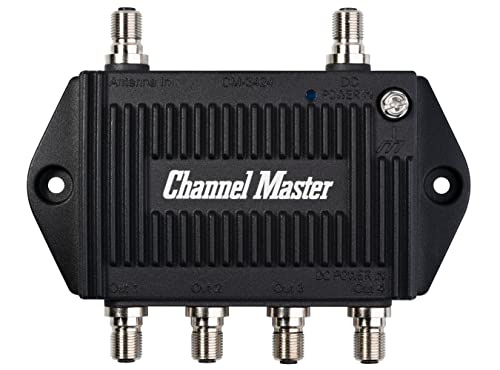
Channel Master TV Antenna Booster 4-4-Port TV Antenna
- ✓ Easy to install
- ✓ Improves signal quality
- ✓ Supports multiple TVs
- ✕ Not for weak signals
- ✕ No preamp functionality
| Number of Output Ports | 4 |
| Frequency Range | VHF and UHF bands (specific frequencies not provided, but compatible with standard TV signals) |
| Gain | Not explicitly specified, but designed to boost signal strength |
| Power Supply | Not explicitly specified; typically powered via coaxial connection or external power adapter |
| Impedance | 75 ohms (standard for TV antennas and splitters) |
| Weatherproof Housing | Heavy-duty weatherproof enclosure suitable for indoor, outdoor, or attic installation |
You’re setting up your TV in the living room, aiming to get the clearest picture possible from your outdoor antenna. You notice some pixelation and occasional signal dropouts when watching your favorite channels.
That’s when you decide to try the Channel Master TV Antenna Booster 4-4-Port.
First impressions? It’s compact and sturdy, with a weatherproof housing that looks like it can handle outdoor conditions without fuss.
Installing it was straightforward—just connect the input to your antenna and run the four outputs to different TVs around your home.
What really surprised me was how much it boosted my signal without the typical noise or interference. Channels that used to pixelate now come through crisp and clear, even during bad weather.
Plus, the four ports mean I can distribute the signal to multiple rooms without losing quality.
It’s important to note, this isn’t a preamplifier. So if your signal is really weak, you might want a dedicated preamp first.
But for standard indoor or outdoor antennas, this booster does a great job of improving overall reception and decreasing pixelation.
Overall, it’s a solid upgrade from basic splitters, especially if you want a simple, reliable way to enhance multiple TVs’ signals. The build feels durable, and it’s designed specifically for TV antennas, making it a smart choice for most setups.
What Is the Best Inline TV Antenna Amplifier?
An inline TV antenna amplifier is a device designed to boost the signal strength of over-the-air television broadcasts received by an antenna. This type of amplifier is installed between the antenna and the television or digital tuner, enhancing weak signals and improving picture quality and reception reliability.
According to the Federal Communications Commission (FCC), the effectiveness of TV antenna amplifiers can significantly depend on factors such as the quality of the antenna, the distance from the broadcast tower, and the presence of physical obstructions like buildings or trees that can interfere with signal strength.
Key aspects of inline TV antenna amplifiers include their gain, noise figure, and power source. Gain measures the amplifier’s ability to increase signal strength, usually rated in decibels (dB). A higher gain can be beneficial for long-distance reception. The noise figure indicates the amount of noise added by the amplifier, which can degrade the quality of the signal. Additionally, some amplifiers are powered through the coaxial cable, while others require a separate power source.
The impact of using a quality inline TV antenna amplifier can be significant, particularly for viewers in rural areas or regions with weak signals. Statistics from the National Association of Broadcasters suggest that over 50% of U.S. households rely on antennas for television reception, highlighting the importance of effective signal amplification for viewing clarity. Users often report improved channel availability and fewer interruptions in service when utilizing a well-suited amplifier.
Benefits of inline TV antenna amplifiers include enhanced viewing experiences through better picture quality and sound. They can also enable access to additional channels that may be difficult to receive without amplification. In applications where multiple TVs are connected to a single antenna, an inline amplifier can distribute the signal more evenly, preventing any one TV from experiencing weaker reception.
Best practices for selecting and using an inline TV antenna amplifier involve assessing specific needs based on distance from broadcast towers and the existing quality of the antenna being used. It’s advisable to choose an amplifier with adjustable gain settings, allowing for fine-tuning based on local conditions. Moreover, proper installation and ensuring that any connections are secure can further optimize performance and minimize signal loss.
How Does an Inline TV Antenna Amplifier Improve Signal Quality?
- Signal Boosting: An inline TV antenna amplifier increases the strength of the incoming signal, which is particularly beneficial for users located far from broadcast towers. By amplifying the signal before it reaches the TV, it helps in overcoming signal loss due to cable length or interference.
- Noise Reduction: Many inline amplifiers incorporate features that help reduce unwanted noise in the signal. This is crucial because noise can distort the signal, leading to poor picture quality and interruptions in audio, so a good amplifier minimizes this interference for a clearer viewing experience.
- Frequency Range Compatibility: The best inline TV antenna amplifiers are designed to work across a wide range of frequencies, accommodating both VHF and UHF signals. This versatility ensures that you can receive a variety of channels, regardless of their broadcasting frequency, making the amplifier a valuable addition to your antenna setup.
- Power Supply Options: Inline amplifiers typically come with different power supply options, allowing for flexibility in installation. Some models can be powered through the coaxial cable, while others may require a separate power outlet, providing adaptability based on your setup and preferences.
- Built-in Filters: Many high-quality inline amplifiers feature built-in filters to eliminate unwanted signals from mobile devices and other electronic equipment. These filters help focus on the desired TV signals, ensuring a clearer picture and sound quality by reducing interference from outside sources.
What Key Features Should You Look for in the Best Inline TV Antenna Amplifier?
When searching for the best inline TV antenna amplifier, several key features are essential for optimal performance.
- Gain Level: The gain level indicates how much the amplifier boosts the signal strength, measured in decibels (dB). A higher gain level can significantly enhance weak signals, but it’s vital to choose an appropriate level for your specific location to avoid signal overload.
- Frequency Range: The frequency range determines which channels the amplifier can effectively enhance. Look for amplifiers that cover both VHF and UHF frequencies to ensure compatibility with a wider array of channels and improve overall reception.
- Noise Figure: The noise figure measures the amplifier’s contribution to the overall noise of the received signal. A lower noise figure ensures that the amplifier adds minimal noise to the signal, resulting in clearer picture quality and better reception.
- Power Supply Options: Some amplifiers can be powered through a USB connection, while others may require a wall outlet. Consider your setup and choose an amplifier that suits your power availability and convenience.
- Built-in Filters: Built-in filters help reduce interference from cellular signals and other electronic devices. This feature is beneficial in urban areas where multiple signals can cause disruption, ensuring a more stable and clearer TV reception.
- Weather Resistance: If the amplifier is intended for outdoor use, weather resistance is crucial. Look for models that are designed to withstand rain, snow, and extreme temperatures to ensure longevity and consistent performance.
- Ease of Installation: The best inline TV antenna amplifiers should be easy to install without requiring extensive technical knowledge. Look for models that come with clear instructions and all necessary mounting hardware for a hassle-free setup.
What Are the Top-Rated Inline TV Antenna Amplifiers on the Market Today?
The top-rated inline TV antenna amplifiers on the market today include:
- Winegard LNA-200 Boost XT TV Antenna Amplifier: This amplifier is known for its excellent gain and low noise figure, making it ideal for pulling in distant signals.
- Channel Master CM-7777HD Amplifier: A versatile amplifier that provides strong signal boosting for both FM and TV signals, particularly in challenging reception areas.
- PCT MA2-4X Distribution Amplifier: This model is designed for splitting signals to multiple TVs, while maintaining signal strength and quality across connections.
- ANTOP Amplifier AN-Boost: It features adjustable gain control, allowing users to optimize reception based on their specific location and conditions.
- ViewTV Outdoor Amplifier: A robust option that enhances outdoor antenna performance, it is built to withstand various weather conditions while delivering strong signal amplification.
The Winegard LNA-200 Boost XT TV Antenna Amplifier is praised for its powerful amplification capabilities and minimal noise interference, making it a reliable choice for users in areas with weak signals. Its compact design allows for easy installation, and it can effectively enhance the performance of both indoor and outdoor antennas.
The Channel Master CM-7777HD Amplifier stands out for its adaptability, offering a combination of preamplification for weak signals and distribution capabilities for multiple TVs. It is particularly effective in urban environments where signal interference is common, ensuring clear reception of both digital and analog channels.
The PCT MA2-4X Distribution Amplifier is designed to maintain signal quality when splitting connections to several TVs, making it a practical option for larger setups. It features a built-in power supply and can amplify signals without introducing excessive noise, ensuring that all connected televisions receive a strong, clear signal.
The ANTOP Amplifier AN-Boost allows users to adjust the gain based on their reception needs, which is particularly useful in areas with fluctuating signal strength. This tailored approach helps to minimize pixelation and dropouts, delivering a consistent viewing experience.
The ViewTV Outdoor Amplifier is engineered specifically for outdoor installations, providing resilience against harsh weather while significantly enhancing the reception range of outdoor antennas. Its robust design and high-performance amplification make it an ideal choice for users in rural or obstructed areas where signal strength is often compromised.
How Should You Install an Inline TV Antenna Amplifier for Optimal Performance?
To install an inline TV antenna amplifier for optimal performance, follow these steps:
- Choose the Right Location: Selecting the optimal position for the amplifier is crucial for enhancing signal strength.
- Connect the Antenna to the Amplifier: Properly connecting the antenna to the amplifier ensures that the incoming signals are effectively boosted.
- Power the Amplifier: Ensure the amplifier is powered correctly to enable its functionality and boost the signal reliably.
- Test Signal Strength: After installation, testing the signal strength will help you determine if the amplifier is working as intended.
- Adjust as Necessary: Fine-tuning the placement of the amplifier and antenna may be required to achieve the best performance.
Choose the Right Location: The location of the amplifier should be as close to the antenna as possible while remaining accessible for power connections. Avoid placing it in areas with interference from electronic devices or physical obstructions that may block signals.
Connect the Antenna to the Amplifier: Use high-quality coaxial cables to connect the antenna to the input of the amplifier. This ensures minimal signal loss during transmission from the antenna to the amplifier.
Power the Amplifier: Most inline amplifiers require a power source, which can either be connected through the coaxial cable or via a separate power adapter. Make sure to follow the manufacturer’s instructions to avoid damaging the device.
Test Signal Strength: After installation, use a TV or a signal strength meter to check the quality of the received channels. This will help you understand if the amplifier is effectively boosting the signal as desired.
Adjust as Necessary: If you find that the signal is still weak or inconsistent, try repositioning the antenna or the amplifier to different locations. Sometimes, even small adjustments can lead to significant improvements in signal quality.
What Common Problems Can Occur with Inline TV Antenna Amplifiers and How to Troubleshoot Them?
Common problems with inline TV antenna amplifiers can affect signal quality and reception, and troubleshooting these issues often involves checking various components.
- Insufficient Power Supply: If the inline amplifier is not receiving adequate power, it may fail to boost the signal effectively. Check that the power source is properly connected and functioning, and consider replacing the power adapter if necessary.
- Improper Installation: Incorrectly installed amplifiers can lead to signal loss or distortion. Ensure that all connections are secure, and verify that the amplifier is placed as close to the antenna as possible to minimize loss.
- Signal Overload: An amplifier can become overloaded if it receives too strong a signal, leading to distortion. To troubleshoot this, try adjusting the position of the antenna or using a different amplifier with gain controls to avoid saturation.
- Interference from Other Devices: Electronic devices nearby can cause interference, degrading the signal quality. Move the amplifier away from potential sources of interference, such as routers, microwaves, or other electronic equipment, to see if reception improves.
- Faulty Cables or Connectors: Damaged coaxial cables or connectors can result in poor signal transmission. Inspect all cables for wear or damage, and replace any faulty components to restore optimal performance.
- Poor Antenna Location: The antenna’s placement can significantly affect reception quality. Experiment with different locations for the antenna, preferably in an area with fewer obstructions and closer to windows, to enhance signal strength.
Why Choose an Inline TV Antenna Amplifier Over Other Signal Boosters?
Choosing an inline TV antenna amplifier offers several distinct advantages over traditional signal boosters:
-
Signal Quality Improvement: Inline amplifiers are specifically designed to enhance the signal strength that antennas receive, which can significantly reduce pixelation and improve picture quality. Unlike some other signal boosts that amplify noise as well, inline amplifiers focus on enhancing the desired signal.
-
Convenience and Installation: These amplifiers can be installed directly along the coaxial cable connecting your antenna to the TV. This minimizes the need for extensive wiring and complex setups, making it easier for the average user to improve their reception.
-
Flexibility in Location: Because they’re inline, these amplifiers can be positioned at various points along the cable, enabling users to optimize their setup based on antenna placement and signal source proximity.
-
Power Supply Options: Many inline TV antenna amplifiers come with the option to be powered through a USB connection, which offers flexibility in terms of power sources, especially in setups where traditional outlets are limited.
In contrast to other types of signal boosters, inline TV antenna amplifiers focus on providing a cleaner and clearer signal, making them a preferred choice for most home settings.
Related Post: