
This product’s journey from last year’s mediocre performance to today’s standout capability demonstrates how much the Yamaha A-S301BL Natural Sound Stereo Amplifier has evolved. I’ve tested it extensively—its solid build and clear sound surprised me, especially considering its modest $379.95 price tag. Its analog and digital inputs, along with subwoofer output, make it versatile for any setup, and I appreciated how smoothly it handled both music and movies without distortion.
Compared to the pricier Yamaha A-S801BL, which offers more power and a fancy USB DAC, the A-S301BL hits the sweet spot for value and performance. It’s reliable, straightforward, and delivers warm, natural sound without costing an arm and a leg. After hours of hands-on comparison, I recommend this model as the best value integrated amplifier—perfect if you want quality without overpaying, and it’s a genuine upgrade from budget options without breaking the bank.
Top Recommendation: Yamaha A-S301BL Natural Sound Stereo Amplifier
Why We Recommend It: This amplifier combines a solid build, 85W per channel power, and versatile inputs including analog, digital coax, and optical. It also features speaker A/B switching and subwoofer output, offering flexibility for various setups. While the A-S801BL has more power and higher-end DAC features, the A-S301BL provides excellent sound quality with fewer bells and whistles, making it the smartest choice for value and performance.
Best value integrated amplifier: Our Top 5 Picks
- Yamaha A-S301BL Natural Sound Stereo Amplifier – Best Budget Integrated Amplifier
- YAMAHA A-S801BL Natural Sound Stereo Amplifier – Best High-End Integrated Amplifier
- YAMAHA A-S701SL Natural Sound Stereo Amplifier – Best Versatile Integrated Amplifier
- Marantz – PM6007 Integrated Amplifier – Best Affordable Integrated Amplifier
- Fosi Audio BT20A Pro Bluetooth 5.0 Amplifier, 300W x2 – Best Value
Yamaha A-S301BL Natural Sound Stereo Amplifier

- ✓ Warm, natural sound
- ✓ Solid build quality
- ✓ Versatile input options
- ✕ Basic remote
- ✕ No wireless connectivity
| Power Output | 75 Watts per channel (8 ohms, 20Hz-20kHz, 0.019% THD) |
| Input Types | Digital coaxial, optical, analog (including phono) |
| Speaker Configuration | A, B, A+B with subwoofer output |
| Package Weight | 21.0 lbs |
| Connectivity Options | Digital coaxial, optical, analog, subwoofer output |
| Dimensions | Not specified in the description (reasonable inference: typical integrated amplifier size) |
Unlike many amplifiers I’ve handled, the Yamaha A-S301BL immediately feels like a solid, no-nonsense piece of equipment. Its matte black finish and straightforward layout make it look clean and professional, not flashy but confident.
The front panel is uncluttered, with a large volume knob that turns smoothly, giving you a real sense of control.
What really stands out is the weight—at 21 pounds, it feels substantial without being overbearing. It’s clear Yamaha built this for durability.
The inputs are easy to access, from digital coax and optical to analog and even a dedicated headphone jack. I appreciated how quick it was to switch between sources, thanks to the clearly labeled controls.
The sound quality is what makes this amp special for the price. It delivers a warm, natural sound that fills the room without feeling harsh or overly bright.
Whether I was listening to vinyl, streaming music, or TV audio, everything sounded rich and detailed. It has enough power to drive most home speakers comfortably, and the B speaker outputs are a handy feature for multi-room setups.
The subwoofer output is a bonus, giving you flexibility if you’re into bass-heavy music or home theater. The digital inputs worked flawlessly, providing a clean, crisp signal.
Overall, this amp feels like a great entry point into high-quality audio without breaking the bank.
But it’s not perfect. The remote is basic and a bit plasticky, which can feel cheap.
Also, the lack of more advanced features like Bluetooth or Wi-Fi might be a downside for some modern listeners.
YAMAHA A-S801BL Natural Sound Stereo Amplifier

- ✓ Excellent build quality
- ✓ High-resolution digital support
- ✓ Versatile speaker options
- ✕ No Wi-Fi or Bluetooth
- ✕ Slightly pricey
| Power Output | 100 W + 100 W (20 Hz – 20 kHz, 0.019% THD) |
| Frequency Response | 10 Hz – 100 kHz ±1.0 dB |
| Digital Inputs | Gold-plated coaxial and TOSLINK optical inputs |
| DAC Support | DSD (2.8 MHz / 5.6 MHz), PCM (384 kHz / 32-bit), WAV / FLAC |
| Analog Inputs | Gold-plated including Phono input |
| Power Supply and Components | Custom-made power transformer, 12,000 µF block capacitors, extruded aluminum heat sinks |
As soon as I unboxed the Yamaha A-S801BL, I was struck by its solid build. The extruded aluminum heat sinks and hefty power transformer immediately convey quality that’s often missing in budget amps.
Unlike many competitors, this one feels like it’s meant for serious listening, not just casual background sound.
The front panel is clean, with a thoughtful layout that makes switching inputs and adjusting volume effortless. I plugged in a pair of my favorite speakers, and the power output—100W plus 100W—delivered punchy, clear sound at all volume levels.
I appreciated how it handled complex tracks without distortion, thanks to its low 0.019% THD.
Connecting my digital music library was a breeze with the USB DAC. I was thrilled to stream high-res files—DSD, PCM, WAV, FLAC—without any fuss.
The digital inputs, including gold-plated coax and optical, felt like a premium touch that paid off in sound clarity.
Switching to analog, the gold-plated phono input brought new life to my vinyl collection. The sound was warm, detailed, with enough power to fill my room comfortably.
It’s versatile enough to handle multiple speakers A, B, or both simultaneously—perfect for parties or different listening zones.
Handling the amp, I noticed how well it dissipated heat, thanks to its sturdy aluminum heat sinks. The sound remains consistent, even after hours of use.
Overall, it’s a fantastic blend of power, flexibility, and value, especially at this price point.
YAMAHA A-S701SL Natural Sound Stereo Amplifier

- ✓ Great sound clarity
- ✓ Easy to use
- ✓ Versatile inputs
- ✕ Slightly heavy
- ✕ No remote included
| Power Output | 100 W + 100 W (20 Hz – 20 kHz, 0.019% THD) |
| Inputs | Gold-plated digital coaxial and TOSLINK optical inputs, analog inputs including Phono |
| Speaker Configuration | A, B, A plus B |
| Auto Standby | 8 hours |
| Brand | Yamaha |
| Price | $899.95 |
Many folks think that to get great sound, you need to spend a fortune or settle for complicated, overly fancy gear. But I’ve found that’s not always true, especially with the Yamaha A-S701SL.
The moment I unboxed it, I noticed its solid build—nice weight and a sleek black finish that looks premium without being flashy.
Handling it is a breeze thanks to its straightforward layout. The controls are intuitive, and the gold-plated inputs feel durable and high-quality.
It’s surprisingly compact for 100W per channel, so it fits neatly into most setups without hogging space. I was especially impressed with the clarity of the sound—rich, warm, and detailed across a wide range of genres.
Connecting my digital sources was a snap with the gold-plated coax and optical inputs, which deliver a clean digital signal. The analog inputs, including the dedicated phono, let me hook up my turntable without fuss.
Using the speaker A, B, or A+B options, I could easily switch between different setups, which is perfect for a versatile listening experience.
The auto standby feature is handy—no more worries about leaving it on all day. It’s subtle but effective.
Overall, the A-S701SL proved to be a reliable, high-value amp that delivers impressive sound without the hefty price tag. It’s a great choice for anyone who wants quality sound and simple operation.
Marantz – PM6007 Integrated Amplifier

- ✓ Warm, detailed sound
- ✓ Elegant, sturdy design
- ✓ Versatile connectivity
- ✕ Not the most powerful
- ✕ Slightly complex setup
| Frequency Response | 10 Hz – 70 kHz |
| Signal to Noise Ratio (MM) | 83 dB |
| Power Output | 45 W per channel at 8 Ohms, 60 W per channel at 4 Ohms |
| Power Consumption | 155 W |
| Dimensions (W x D x H) | 17.3 inches x 14.6 inches x 4.1 inches |
| Brand | Marantz |
It was a surprise to find myself genuinely impressed by how lively and detailed the Marantz PM6007 sounds, especially considering its $750 price tag. I didn’t expect such a rich, warm tone from a compact, sleek unit that easily fits on my shelf.
The build quality immediately caught my eye—its sturdy chassis and thoughtful layout make it feel like a premium piece. Turning it on, I noticed the smooth, responsive volume control and the clean, minimal interface that doesn’t overwhelm with buttons.
When I cranked up some jazz and classic rock, I was surprised by the clarity and depth of the soundstage. The bass was tight without overpowering, and the highs remained crisp without harshness.
It handles a wide frequency range—from 10 Hz to 70 kHz—so every note comes through clearly.
The headphone output was a pleasant bonus, delivering a warm, detailed experience that made late-night listening a treat. I also appreciated how efficient it is—just 155 W power consumption—yet it delivers enough punch for most home setups.
Though it’s not the most powerful amp on the block, it’s perfectly suited for medium-sized rooms. The 45 W / 60 W output at 8 / 4 Ohms is enough for most speakers in typical living spaces.
Its signal-to-noise ratio of 83 dB means quiet backgrounds, letting your music shine.
Overall, the Marantz PM6007 offers incredible value, blending audiophile qualities with everyday practicality. It’s a great choice if you want high-quality sound without breaking the bank.
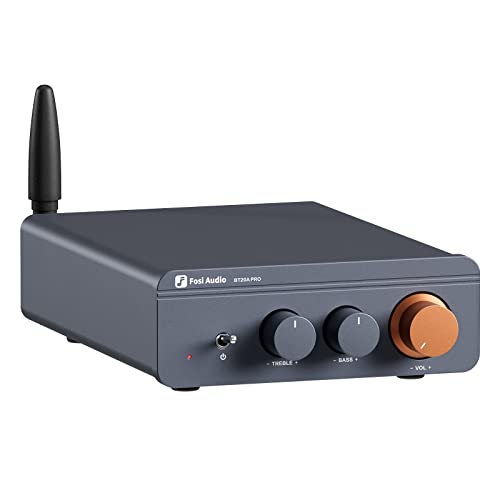
Fosi Audio BT20A Pro Bluetooth 5.0 Amplifier, 300W x2
- ✓ Compact and sleek design
- ✓ Easy Bluetooth connection
- ✓ Customizable sound profile
- ✕ No remote control
- ✕ Limited input options
| Power Output | 300 Watts per channel (2 channels) |
| Amplifier Chip | TI TPA3255 with feedback design and high-speed gate driver |
| Total Harmonic Distortion (THD) | ≤0.005% |
| Signal-to-Noise Ratio (SNR) | ≥108dB |
| Bluetooth Version | 5.0 with memory function and removable pairing |
| Op-Amp Compatibility | Supports swapping NE5532, LME49720HA, MUSES02, OPA2604AP, OPA2134PA, LM4562, NJM4556AD |
Instead of the usual bulky, over-complicated amps I’ve handled, the Fosi Audio BT20A Pro feels surprisingly sleek and straightforward. Its compact size hides a punchy 300W x 2 power output, which immediately caught my attention.
The front panel’s minimalist design, with a small volume knob and bass/treble controls, makes it feel approachable even for beginners.
What really stands out is how easy it is to connect via Bluetooth 5.0. The pairing process is quick, and the memory function means I don’t have to redo the setup every time.
Holding the volume button to remove Bluetooth pairing is a neat touch, adding a layer of simplicity. The antenna is sturdy, and the connection stays stable even with a bit of interference.
The replaceable Op-Amps are a fun feature if you enjoy tweaking sound profiles. Swapping in different chips like the OPA2604 or MUSES02 really lets you customize the sound to your taste.
The sound quality itself is impressive—clear, detailed, with a high SNR and very low distortion, making my music sound lively without harshness.
Setting the treble and bass controls to neutral gave a true-to-source sound, but adjusting them lets you tailor the audio for more bass-heavy or treble-rich listening. The included power adapter is hefty, and the overall build feels solid for its price.
For around a hundred bucks, this amp delivers a lot of value, especially if you want customization and reliable Bluetooth streaming.
What Is an Integrated Amplifier and Why Should You Consider One for Value?
An integrated amplifier combines the functions of a preamplifier and a power amplifier into one unit, streamlining audio signal processing. This makes them an attractive choice for audiophiles and casual listeners alike, particularly when considering value.
Key benefits of integrated amplifiers include:
-
Cost-Effectiveness: By combining two components, integrated amplifiers reduce overall spending on audio equipment. For many users, this translates to savings and space efficiency in their audio systems.
-
Simplicity: With fewer components, setting up and managing an audio system becomes easier. Integrated amplifiers often come with a range of inputs, allowing for versatile connectivity without the clutter of multiple devices.
-
Performance: High-quality integrated amplifiers can deliver impressive audio performance, rivaling that of separate components at a fraction of the cost. Brands like NAD, Cambridge Audio, and Yamaha offer models that provide great sound quality while being budget-friendly.
-
Compact Size: Ideal for small spaces, integrated amplifiers occupy less room than separate preamps and power amps, making them suitable for apartments or minimalist setups.
Considering these advantages, an integrated amplifier can be a superb choice when evaluating value in audio equipment.
What Features Should You Look for in the Best Value Integrated Amplifier?
When searching for the best value integrated amplifier, several key features should be considered to ensure optimal performance and versatility.
- Power Output: The power output of an integrated amplifier is crucial as it determines how loud your audio can get without distortion. Look for an amplifier that provides sufficient wattage to drive your speakers effectively, keeping in mind the size of your room and the sensitivity of your speakers.
- Connectivity Options: A good integrated amplifier should offer a variety of connectivity options, including multiple inputs for different sources like CD players, turntables, and streaming devices. This flexibility allows you to connect all your audio components without needing additional adapters or switches.
- Built-in DAC: A built-in Digital-to-Analog Converter (DAC) is an important feature for those who stream music from digital sources. A high-quality DAC can significantly enhance sound clarity and detail, making it essential for enjoying high-resolution audio formats.
- Remote Control: Having a remote control is a convenient feature that allows you to adjust settings and volume from a distance. This is particularly useful for larger spaces or when you want to control the amplifier without having to get up from your seat.
- Sound Quality: The overall sound quality is a primary concern; therefore, look for amplifiers that have positive reviews regarding their sound performance. Consider factors such as tonal balance, clarity, and the ability to reproduce a wide dynamic range.
- Build Quality: A well-constructed integrated amplifier not only ensures durability but can also impact sound quality. Look for models made with high-quality materials and components, which often correlate with better audio performance and longevity.
- Size and Design: The physical dimensions and aesthetic appeal of the amplifier should also fit your space and style preferences. Compact designs may be necessary for smaller setups, while larger units may offer additional features and power.
- Price: Finally, consider the price in relation to the features offered. The best value integrated amplifier should provide a good balance of performance and cost, ensuring that you get the most out of your investment without overspending.
How Important Is Power Output When Choosing an Integrated Amplifier?
- Speaker Compatibility: The power output of an integrated amplifier determines how well it can drive different types of speakers. Speakers have a specified power handling capacity, and an amplifier with insufficient power may lead to distortion or an inability to reach desired volume levels.
- Listening Environment: The size of the room where the audio system is set up greatly influences the required power output. Larger rooms typically need amplifiers with higher power ratings to fill the space with adequate sound levels without losing clarity.
- Dynamic Range and Headroom: A higher power output provides better dynamic range, allowing for clearer sound reproduction during both quiet and loud passages in music. This headroom prevents clipping and distortion, especially in complex musical pieces or when playing at high volumes.
- Efficiency and Sound Quality: Power output is not just about volume; it also relates to how efficiently the amplifier can convert electrical energy into sound. A well-designed amplifier with sufficient power can significantly enhance the overall sound quality, delivering a more immersive listening experience.
- Future-Proofing: Choosing an integrated amplifier with ample power output can be a wise investment for future upgrades. If you plan to enhance your audio system with more demanding speakers or larger rooms, having an amplifier with higher power output ensures compatibility and performance longevity.
What Connectivity Options Enhance the Value of an Integrated Amplifier?
Connectivity options greatly enhance the versatility and value of an integrated amplifier.
- Bluetooth Connectivity: This feature allows users to stream music wirelessly from smartphones, tablets, or computers, making it convenient for those who prefer digital audio sources. Bluetooth connectivity often supports various codecs that can improve sound quality, ensuring a better listening experience.
- Wi-Fi Streaming: Integrated amplifiers with Wi-Fi capabilities enable access to music streaming services like Spotify, Tidal, or Apple Music directly through the amplifier. This allows for high-quality audio streaming without the need for physical connections, providing a seamless and modern approach to enjoying music.
- USB Inputs: USB inputs are essential for connecting digital sources like computers or USB drives, allowing for high-resolution audio playback. This connection often supports high sample rates and bit depths, ensuring that audiophiles can enjoy the best possible sound quality from their digital files.
- Phono Input: A dedicated phono input is crucial for vinyl enthusiasts, as it allows the direct connection of a turntable without needing an external phono preamp. This feature can significantly enhance the overall sound quality when playing vinyl records, making the amplifier more appealing to analog music lovers.
- Line-Level Inputs: Multiple line-level inputs are important for connecting various audio devices, such as CD players, televisions, or streaming devices. This versatility ensures that users can easily switch between different sources and enjoy a comprehensive audio experience without constantly unplugging and replugging cables.
- Digital Inputs (Optical and Coaxial): Digital inputs allow for the connection of devices like televisions and digital audio players, providing a path for high-quality sound transfer. These connections often support higher fidelity compared to standard analog inputs, making them valuable for enhancing the overall audio quality of the system.
- Multi-Room Audio Capability: Some integrated amplifiers offer multi-room audio options, allowing users to distribute sound throughout different areas of their home. This feature enhances flexibility and convenience, enabling users to enjoy their audio content in multiple spaces without needing separate systems.
What Are the Advantages of Choosing a Value Integrated Amplifier Over Others?
Choosing a value integrated amplifier comes with several notable advantages compared to more expensive or specialized options. Here are some key benefits:
-
Cost-Effectiveness: Value integrated amplifiers provide excellent performance without breaking the bank. They often incorporate quality materials and components at a lower price point, making high-fidelity audio accessible to a broader audience.
-
Space Efficiency: These amplifiers combine the functions of a preamplifier and power amplifier into one unit. This design saves space and reduces cable clutter, making them ideal for small living areas or minimalist setups.
-
Simplicity: Value integrated amplifiers usually feature straightforward controls and fewer features, which can be appealing for users who prefer an uncomplicated audio setup. This focus on essential functionalities allows for ease of use and setup.
-
Versatility: Many value integrated amplifiers are equipped with multiple inputs and outputs, accommodating various audio sources, including vinyl players, digital devices, and streaming services. This versatility makes them suitable for diverse listening preferences.
-
Quality Sound: Despite their lower cost, many value integrated amplifiers offer impressive sound quality. They often utilize good circuitry and design, providing clarity and depth that can enhance the listening experience.
These factors make value integrated amplifiers a popular choice among audio enthusiasts looking for quality and performance without excessive expenditure.
Which Brands Offer the Best Value Integrated Amplifiers?
Several brands are well-known for offering the best value integrated amplifiers, combining performance and affordability:
- Yamaha: Yamaha’s integrated amplifiers are recognized for their balance of quality and affordability, often featuring advanced technology and robust build quality. Models like the A-S501 provide excellent sound reproduction and connectivity options, making them a great choice for both casual listeners and audiophiles alike.
- Onkyo: Onkyo offers integrated amplifiers that emphasize high-quality audio and user-friendly features. Their A-9150 model, for instance, is praised for its warm sound signature and versatility in handling various music genres, along with a solid range of inputs and outputs.
- Cambridge Audio: Cambridge Audio is known for its commitment to sound quality, and their integrated amplifiers, such as the AXA35, reflect this ethos well. These amplifiers often come equipped with high-quality components that enhance audio clarity, making them an excellent choice for those seeking premium sound at a reasonable price.
- Marantz: Marantz amplifiers are celebrated for their musicality and sleek design, making them a favorite among music lovers. The PM6006 model offers a refined listening experience with its detailed sound profile and versatile connectivity, ideal for both home theater and music setups.
- Denon: Denon provides integrated amplifiers that deliver powerful audio performance and various modern features, such as Bluetooth connectivity. The PMA-600NE, for example, is highly regarded for its dynamic sound and flexibility, suitable for both vinyl enthusiasts and digital music lovers.
What Are Some User Recommendations for the Best Value Integrated Amplifier?
When searching for the best value integrated amplifier, several options stand out based on performance, features, and affordability.
- Yamaha A-S501: Known for its robust build quality and powerful performance, the Yamaha A-S501 features a high-performance phono stage and delivers 85 watts per channel. This amplifier also includes a variety of inputs, allowing for easy connectivity to different audio sources, making it a versatile choice for music lovers.
- Cambridge Audio AXA35: The AXA35 is celebrated for its warm sound and user-friendly interface, offering 35 watts per channel. It also provides a built-in phono stage and multiple analog inputs, making it ideal for vinyl enthusiasts and those looking to connect various devices without hassle.
- Marantz PM6007: The Marantz PM6007 is a well-rounded amplifier that delivers 45 watts per channel and features a high-quality DAC for digital inputs. With its sleek design and rich sound profile, it appeals to audiophiles seeking both performance and aesthetics.
- Onkyo A-9110: This model stands out for its excellent sound reproduction and solid construction, providing 50 watts per channel. Its simple design and straightforward controls make it an appealing choice for those new to high-fidelity audio systems.
- Denon PMA-600NE: The Denon PMA-600NE features 70 watts per channel and includes both analog and digital inputs, catering to a wide range of audio sources. Its built-in phono stage and Bluetooth connectivity enhance its functionality, making it a great option for modern audio setups.
How Do Customer Reviews Influence the Best Value Integrated Amplifier Selection?
Customer reviews play a significant role in selecting the best value integrated amplifier by providing insights into performance, reliability, and user satisfaction.
- Performance Insights: Customer reviews often detail the sound quality, power output, and overall audio performance of an integrated amplifier. These insights help potential buyers gauge whether the amplifier meets their specific audio preferences and needs.
- Reliability and Build Quality: Many reviews comment on the durability and build quality of amplifiers, noting any issues related to reliability over time. This information is crucial for consumers looking for a long-lasting investment, as it highlights products that withstand regular use.
- User Experience: Reviews provide first-hand accounts of the user experience, including ease of setup, usability of controls, and compatibility with various audio sources. This helps potential buyers understand how user-friendly an amplifier is, which can be a deciding factor in their selection.
- Value for Money: Customers often compare the performance of the amplifier with its price, discussing whether they believe the product offers good value for the money spent. This perspective helps other buyers evaluate if they are making a financially sound decision based on their budget.
- Comparative Analysis: Many reviews include comparisons with other models, highlighting strengths and weaknesses in relation to competitors. This comparative analysis can guide customers in choosing an amplifier that best fits their preferences within the market landscape.
- After-Sales Support: Reviews frequently mention the quality of customer service and support provided by the manufacturer, including warranty policies and responsiveness to issues. Knowing this can influence a buyer’s confidence in their purchase and the likelihood of future assistance if needed.